

Why You’ll Love This Microwave Lemon Curd
Microwave Lemon Curd is one of those little kitchen wins that feels fancy but takes hardly any effort. It is bright, silky, and ready in about 11 minutes, which makes it a great pick for busy mornings, quick desserts, and last-minute treats for guests. If you like recipes that fit into real life and still taste homemade, this one belongs in your rotation.
- Easy to make: You whisk everything in one bowl, microwave in short bursts, and stir between rounds. No double boiler needed, no constant babysitting, and no complicated steps.
- Quick cooking time: With just 5 minutes of prep and about 6 minutes of cooking, you can have a fresh batch of lemon curd ready before the coffee finishes brewing.
- Bright flavor: Fresh lemon juice and finely grated zest give this curd a bold citrus taste that is sweet, tangy, and just rich enough to feel special.
- Flexible for serving: It works as a spread, filling, topping, or swirl, so one recipe can play many roles in breakfast, dessert, and snack time.
This is the kind of recipe that makes a plain slice of toast feel like a bakery treat.
For home cooks who want something simple but memorable, Microwave Lemon Curd is a smart choice. It uses everyday ingredients, can be made ahead, and stores well in the fridge, which is perfect for busy parents, students, working professionals, and anyone who likes having a tasty jar ready to go. It also fits right in with CookyCooky style: easy recipes that travel well, share well, and bring people together.
If you enjoy lemon desserts, you may also like these easy lemon bars or a buttery treat like classic shortbread cookies for serving with your curd.
Jump to:
- Why You’ll Love This Microwave Lemon Curd
- Essential Ingredients for Microwave Lemon Curd
- Main Ingredients
- Ingredient Notes
- Special Dietary Options
- How to Prepare the Perfect Microwave Lemon Curd: Step-by-Step Guide
- First Step: Gather and prep your ingredients
- Second Step: Whisk the base until smooth
- Third Step: Add the butter cubes
- Fourth Step: Microwave in short bursts
- Fifth Step: Check for doneness
- Sixth Step: Finish with lemon zest and strain if needed
- Seventh Step: Cool, store, and serve
- Protein and Main Component Alternatives
- Egg swaps and what to know
- Butter substitutions
- When you need to work around ingredients
- Vegetable, Sauce, and Seasoning Modifications
- Fruit-forward flavor ideas
- Seasoning tweaks
- Serving-style modifications
- Mastering Microwave Lemon Curd: Advanced Tips and Variations
- Pro cooking techniques
- Flavor variations
- Presentation tips
- Make-ahead options
- How to Store Microwave Lemon Curd: Best Practices
- Refrigeration
- Freezing
- Reheating
- Meal prep considerations
- Microwave Lemon Curd Nutrition
- FAQs: Frequently Asked Questions About Microwave Lemon Curd
- How do you make lemon curd in the microwave?
- How long does it take to make microwave lemon curd?
- How long does homemade microwave lemon curd last in the fridge?
- Can you freeze microwave lemon curd?
- What are ways to use microwave lemon curd?
- Microwave Lemon Curd
- Ingredients
- Instructions
- Last Step:
- Notes
- Nutrition
- Did you make this recipe?
Essential Ingredients for Microwave Lemon Curd
Before you start, gather everything so the process stays smooth and stress-free. This recipe uses simple pantry staples plus fresh lemons for that clean, sunny flavor people love in Microwave Lemon Curd.
Main Ingredients
- 1 cup sugar – Sweetens the curd and balances the tart lemon juice.
- Finely grated zest from 2 lemons – Adds fresh lemon oil and gives the curd its bold citrus aroma.
- 1/2 cup lemon juice – Supplies the tangy flavor that makes lemon curd shine.
- 2 egg yolks – Add richness and help create a smooth, custard-like texture. Reserve the whites for another use.
- 3 large eggs – Give the curd body and help it thicken as it cooks.
- 4 ounces salted butter, 1 stick, cut into cubes – Makes the curd creamy and glossy.
- 1/8 teaspoon salt – Use only if you are using unsalted butter; it sharpens the flavor and keeps the curd balanced.
Ingredient Notes
- Fresh lemons work best because bottled juice can taste flat.
- Use a lemon zester or rasp tool to remove only the yellow part of the peel. The white pith underneath is bitter.
- Room-temperature eggs whisk more smoothly and help the mixture cook evenly.
- Butter should be cut into cubes so it melts quickly in the microwave.
Special Dietary Options
- Vegan: This recipe depends on eggs and butter, so a direct vegan swap will change the texture. For a plant-based version, look for a dedicated vegan lemon curd recipe made with dairy-free butter and thickening starch.
- Gluten-free: This recipe is naturally gluten-free, so no changes are needed.
- Low-calorie: You can reduce the sugar slightly, but the curd may taste sharper and be a bit less smooth. It is best to keep the butter and eggs for proper texture.
For another bright dessert idea, try pairing this curd with strawberries and cream bars for a pretty spring dessert tray.
How to Prepare the Perfect Microwave Lemon Curd: Step-by-Step Guide
This recipe is simple, but the little details matter. Stirring often, using the right bowl, and watching the texture as it cooks will help you get that silky finish every time. If you have made stovetop curd before, you will be happy to know the microwave version cuts out extra fuss while still giving you the same bright flavor.
First Step: Gather and prep your ingredients
Start by measuring out 1 cup sugar, 1/2 cup lemon juice, 2 egg yolks, 3 large eggs, 4 ounces salted butter cut into cubes, and the finely grated zest from 2 lemons. If your butter is unsalted, also measure 1/8 teaspoon salt. Use a large microwave-safe bowl with enough room for whisking, because the mixture needs to be stirred well between microwave bursts.
If you want the smoothest result, let your eggs sit at room temperature for a little while before mixing. This helps them blend more easily and lowers the chance of uneven cooking. A good whisk and a fine-mesh strainer are also handy tools to keep close by.
Second Step: Whisk the base until smooth
Add the sugar, eggs, egg yolks, lemon juice, and salt if needed into the bowl. Whisk everything together until the mixture looks smooth and even. You do not need to beat in a lot of air, but the goal is to fully combine the ingredients so the sugar starts dissolving and the eggs are well distributed.
At this stage, the mixture may look a little thin. That is exactly what you want. The thickening happens in the microwave, so do not worry if it does not look like curd yet.
Third Step: Add the butter cubes
Drop in the butter cubes and give the bowl one more quick whisk. The butter will begin to melt as the curd heats. Cutting the butter into cubes helps it melt faster and more evenly, which is especially useful when you are working with short microwave intervals.
Salted butter gives the curd a balanced taste, but if you only have unsalted butter, the small pinch of salt keeps the flavor from tasting one-note. That tiny bit makes the lemon pop a little more.
Fourth Step: Microwave in short bursts
Microwave the mixture on high for 45 seconds. Then stop and whisk vigorously. This first stir is important because it helps distribute the heat and keeps the eggs from cooking too quickly in one spot. Microwave power varies a lot, so a strong whisk between bursts makes a big difference.
Continue microwaving in 45-second intervals, whisking after each round, for about 4 to 7 minutes total. Most microwaves will land closer to 5 to 7 minutes, but the exact time depends on wattage and how cold the ingredients were at the start. The curd may look loose at first, then suddenly begin to thicken as it nears the finish line.
Whisking between microwave bursts is the secret to a smooth curd. It helps prevent scrambled egg bits and gives you a glossy finish.
Fifth Step: Check for doneness
The curd is ready when it coats the back of a metal spoon or reaches 175°F. If you use a thermometer, that temperature gives you a very reliable cue. The curd should look thicker, creamy, and lightly glossy. It will still seem a little softer than the final texture you want, because it continues to firm up as it cools.
If you are unsure, it is better to stop once the curd coats the spoon rather than overcook it. Overheating can make the eggs curdle, and the texture may turn grainy. If that happens, a quick strain can save the batch.
Sixth Step: Finish with lemon zest and strain if needed
Take the bowl out of the microwave and whisk it well. Then stir in the finely grated lemon zest. Adding the zest at the end keeps its flavor fresh and bright. If you notice any tiny lumps, pass the curd through a fine-mesh strainer for a silky smooth finish.
This step is worth the extra minute if you want a polished result. It gives the curd that luscious texture you expect from bakery-style lemon filling.
Seventh Step: Cool, store, and serve
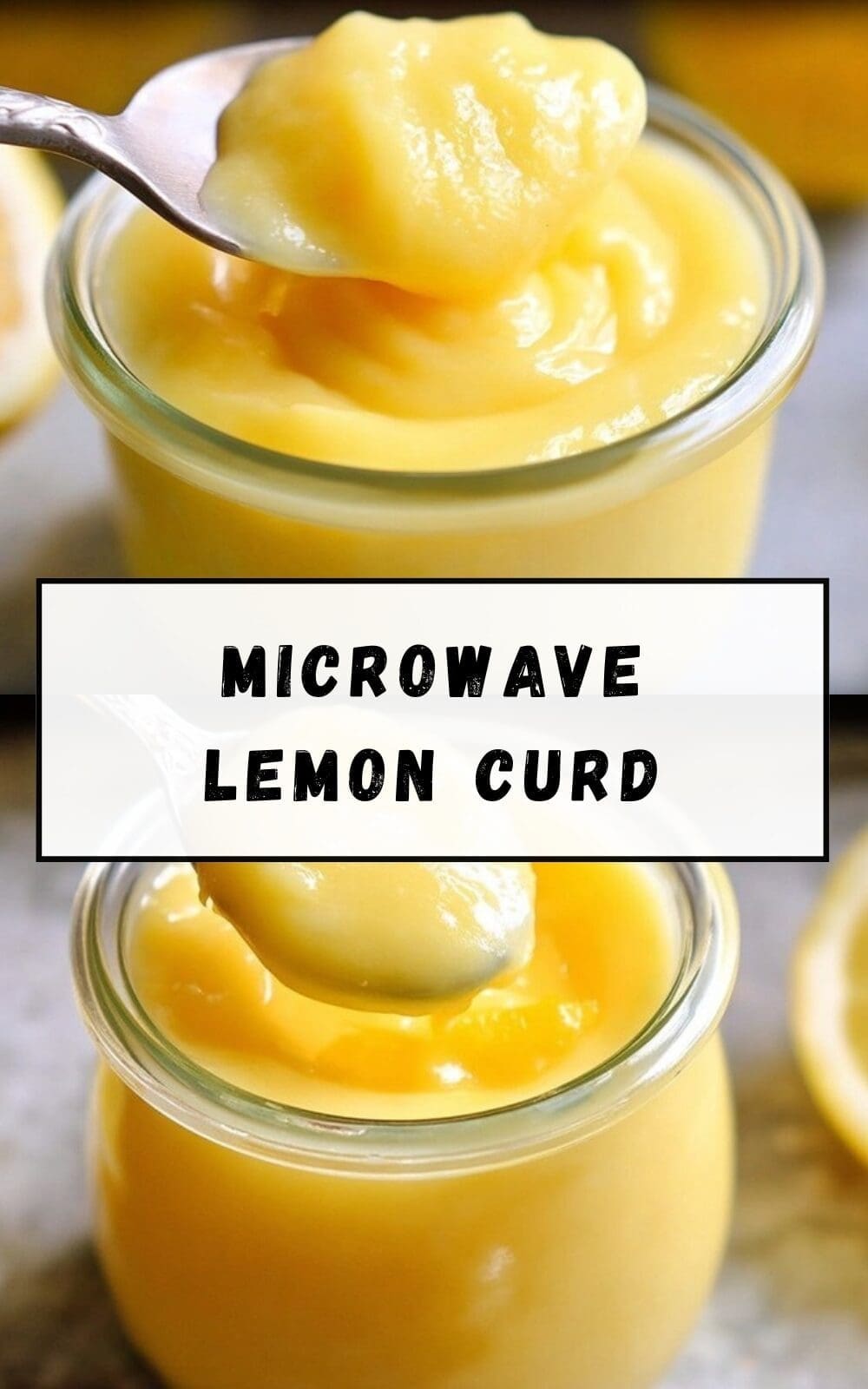
Let the curd cool to room temperature. As it cools, it will thicken more, so do not worry if it still seems a bit loose right after cooking. Once cooled, cover it and store it in the refrigerator. After chilling, it becomes beautifully spreadable and ready for toast, filling, or topping.
If you are making a dessert spread for a brunch table, this is the moment to plan your serving ideas. Microwave Lemon Curd is wonderful on pancakes, waffles, crepes, and scones, or spooned over fresh fruit. It also plays nicely with fluffy desserts like strawberry mousse when you want a sweet and tangy contrast.
Preparation time: 5 minutes
Cooking time: 6 minutes
Total time: About 11 minutes
Protein and Main Component Alternatives
Egg swaps and what to know
This recipe gets its structure from eggs, so changing them will affect the texture. If you need an egg-free option, a traditional curd method will not work the same way, because eggs are what thicken and enrich the mixture. For that reason, the best egg-free approach is to use a separate vegan lemon curd recipe built for plant-based ingredients.
If you are out of egg yolks but have whole eggs, you can still make this recipe because it already uses both whole eggs and yolks. The yolks add extra richness, while the whole eggs help the curd set. That mix gives a smooth, spoonable texture without needing any extra thickeners.
Butter substitutions
Salted butter is the easiest choice here because it adds flavor and works well with the lemon. If you only have unsalted butter, add 1/8 teaspoon salt to keep the taste balanced. For a dairy-free version, plant-based butter may work, but the texture and flavor may change a bit. Choose a firm vegan butter that melts cleanly.
For a lighter result, some cooks reduce the butter slightly, but that can make the curd less rich and less glossy. If you want the classic lemon curd feel, the full butter amount is the way to go.
When you need to work around ingredients
If you have extra egg whites left over, save them for omelets, egg white scrambles, or meringues. That makes this recipe nice for meal planning because nothing goes to waste. You can also use the reserved whites in another sweet treat later in the week.
For a brunch spread, you might serve this curd alongside homemade donut holes or fresh baked treats for dipping and spreading.
Vegetable, Sauce, and Seasoning Modifications
Fruit-forward flavor ideas
Even though this recipe is all about lemon, you can pair it with other flavors in fun ways. A spoonful of raspberry sauce, strawberry sauce, or mixed berry topping makes the tart citrus taste even brighter. That is one reason this curd works so well on cakes, pastries, and parfaits.
If you want a deeper flavor, try serving it with berries, stone fruit, or lightly sweetened whipped cream. Those additions soften the sharp lemon notes without hiding them.
Seasoning tweaks
A tiny pinch of salt can make the citrus taste more vivid, especially if you use unsalted butter. If you enjoy a little extra perfume in desserts, you can pair lemon curd with vanilla whipped cream or a dusting of powdered sugar when serving. Keep the seasoning simple so the lemon stays center stage.
For a cozy dessert board, this curd is a nice match for crisp cookies like buttery shortbread cookies, which help balance the tartness with a mellow, buttery bite.
Serving-style modifications
You can also adjust how you serve it rather than how you cook it. Thin it slightly with a spoonful of warm water or lemon juice if you want a drizzle for pancakes or cake slices. Leave it thicker if you want a filling for tart shells or layer cakes. That flexibility makes it useful for both everyday snacks and special occasion desserts.
Microwave Lemon Curd also works well in make-ahead dessert trays for church groups, neighborhood potlucks, and holiday gatherings. It is easy to spoon into small jars or cups and pass around at a crowd-friendly table.
Mastering Microwave Lemon Curd: Advanced Tips and Variations
Pro cooking techniques
The biggest secret to smooth lemon curd is control. Microwave in short bursts, whisk often, and stop as soon as the curd coats the back of a spoon. If your microwave runs hot, you may need less time than expected. If it runs weak, you may need a minute or two more. Watching texture matters more than chasing the clock.
Use a whisk with a slim shape so you can scrape the corners of the bowl well. That helps prevent hot spots. A glass or ceramic microwave-safe bowl also gives you a little more confidence than a shallow plastic dish.
Flavor variations
Once you have the basic method down, you can play with the flavor. Add a little orange or lime zest for a mixed citrus curd. A pinch of vanilla can soften the tart edge. If you want a dessert board with extra charm, spoon the curd over berries or layer it with whipped cream for a mousse-style treat.
For a spring brunch, serve it with waffles, pancakes, or crepes. For a holiday dessert tray, spoon it into tart shells or use it as a filling between cake layers. It also tastes wonderful next to a crumbly cookie or buttery pastry.
If the curd ever looks slightly lumpy, do not panic. A fine-mesh strainer can smooth things right out.
Presentation tips
For serving, place the curd in a small glass bowl or jar so the bright yellow color stands out. Add a little lemon zest on top, or garnish with thin lemon slices and fresh berries. If you are bringing it to a gathering, tiny jars with lids make it easy to transport and share.
That kind of simple presentation fits perfectly with CookyCooky’s friendly, community-minded style. It is the sort of dish that feels welcome at brunch tables, church events, and family get-togethers.
Make-ahead options
This recipe is a great make-ahead choice because it keeps well in the fridge for up to 7 to 10 days. You can also freeze it for up to one year in freezer-safe containers with headspace. That makes it useful when you want to prep dessert components before a party or holiday meal.
For another easy make-ahead sweet, you might enjoy creamy strawberry Jello pie as part of a no-stress dessert spread.
How to Store Microwave Lemon Curd: Best Practices
Refrigeration
Store cooled lemon curd in an airtight container in the refrigerator. It keeps well for 7 to 10 days, though the flavor is best within the first week. To help prevent a skin from forming, press plastic wrap directly onto the surface before sealing the container.
Freezing
You can freeze Microwave Lemon Curd for up to one year. Spoon it into freezer-safe containers or bags, leaving some headspace for expansion. If using bags, flatten them for faster thawing and easier storage. Thaw overnight in the refrigerator, then stir well before serving because slight separation can happen.
Reheating
If you want to loosen chilled curd, warm it gently in very short microwave bursts, about 10 seconds at a time, stirring between each one. Do not overheat it or the texture may become grainy. Usually, a little stirring is enough to bring it back to a spreadable consistency.
Meal prep considerations
This is a smart batch-cooking recipe because it travels well and can be portioned into small jars for snacks, lunchbox treats, or dessert cups. Label the container with the date so you know when it was made. If you are prepping for an event, make it a day ahead so the flavor has time to settle and the texture can fully chill.
Microwave Lemon Curd Nutrition
Here is the nutrition information per tablespoon serving for this Microwave Lemon Curd recipe.
| Nutrient | Amount |
|---|---|
| Calories | 60 |
| Carbohydrates | 7g |
| Protein | 1g |
| Fat | 4g |
| Saturated Fat | 2g |
| Cholesterol | 36mg |
| Sodium | 30mg |
| Potassium | 10mg |
| Fiber | 1g |
| Sugar | 6g |
| Vitamin A | 128 IU |
| Vitamin C | 1mg |
| Calcium | 5mg |
| Iron | 1mg |
This is a rich condiment, so a little goes a long way. That makes it easy to add flavor without overdoing it.
FAQs: Frequently Asked Questions About Microwave Lemon Curd
How do you make lemon curd in the microwave?
To make microwave lemon curd, gather ½ cup fresh lemon juice, ¾ cup sugar, 2 whole eggs, 2 egg yolks, ½ cup unsalted butter (cubed), and 1 tbsp lemon zest. Whisk juice, sugar, eggs, yolks, and zest in a large microwave-safe bowl until smooth and pale yellow. Microwave on high for 45 seconds, then whisk vigorously. Repeat 4-6 times, adding butter cubes after the first interval, until it thickens to coat a spoon (about 175-180°F). It should be glossy and smooth. Strain if needed to remove bits. Cool, then refrigerate. This method avoids a double boiler and takes under 10 minutes active time. Use room-temperature eggs for best results and a fine zester for zest, avoiding the bitter white pith. Yields about 2 cups. (92 words)
How long does it take to make microwave lemon curd?
Microwave lemon curd takes about 10 minutes total. Prep ingredients in 2 minutes: whisk lemon juice, sugar, eggs, yolks, and zest. Then microwave in 45-second bursts on high, whisking well each time—usually 4-6 intervals. Add butter after the first or second round. It thickens around 5-7 minutes of total microwaving when it reaches 175-180°F and coats the back of a spoon. No constant stirring like stovetop versions. Let it cool 5 minutes before jarring. Factors like microwave wattage (1000W ideal) or egg size may add 1-2 minutes. Always whisk thoroughly between bursts for silky texture. Perfect for quick desserts. (108 words)
How long does homemade microwave lemon curd last in the fridge?
Homemade microwave lemon curd keeps 7-10 days in the fridge in an airtight container or jar. Cover surface with plastic wrap before sealing to prevent a skin forming. For best flavor, use within a week. Check for off smells or mold before eating—discard if changed. Made with fresh eggs and citrus, it’s perishable due to no preservatives. Freezing extends life up to 1 year: portion into freezer bags, thaw overnight in fridge. Stir after thawing as it may separate slightly. Avoid room temperature storage beyond 2 hours to prevent bacterial growth. Label jars with dates for safety. Ideal for meal prep. (102 words)
Can you freeze microwave lemon curd?
Yes, freeze microwave lemon curd up to 1 year without losing quality. Spoon into freezer-safe jars or bags, leaving headspace for expansion. Flatten bags for quick thawing. Freeze flat portions for easy use. Thaw in the fridge overnight or 4-6 hours; stir well as separation can occur. Microwave gently in 10-second bursts if needed to loosen. Avoid refreezing thawed curd. Great for bulk prep—make a double batch and save half. Post-thaw, it retains silky texture and bright lemon flavor. Use in pies, tarts, or yogurt parfaits. Pro tip: add a pinch of salt before freezing to preserve taste. (98 words)
What are ways to use microwave lemon curd?
Microwave lemon curd shines in many dishes. Spread on toast, scones, pancakes, or waffles for breakfast. Layer in trifles, fill tarts, cakes, or Pavlovas. Swirl into cheesecake batter or yogurt. Top ice cream, cheesecake, or panna cotta; pair with berries or shortbread. Make mousse by folding into whipped cream. Fill crepes or macarons. Gift in jars with ribbon. For savory twists, thin with olive oil for salad dressing or drizzle on grilled fish. One batch (2 cups) fills 12 tarts. Pairs well with gingerbread or meringues. Store-bought can’t match its fresh zing—experiment in thumbprint cookies too. (96 words)

Microwave Lemon Curd
🍋 Craft silky, tangy lemon curd in under 10 minutes with your microwave—effortless homemade luxury!
🥄 Versatile wonder for toast, cakes, tarts, or yogurt—bright flavor boosts any dessert or breakfast.
- Total Time: 11 minutes
- Yield: 32 servings (2 cups)
Ingredients
– 1 cup sugar for sweetening the curd and balancing the tart lemon juice
– Finely grated zest from 2 lemons for adding fresh lemon oil and giving the curd its bold citrus aroma
– 1/2 cup lemon juice for supplying the tangy flavor that makes lemon curd shine
– 2 egg yolks for adding richness and helping create a smooth, custard-like texture
– 3 large eggs for giving the curd body and helping it thicken as it cooks
– 4 ounces salted butter, 1 stick, cut into cubes for making the curd creamy and glossy
– 1/8 teaspoon salt for sharpening the flavor and keeping the curd balanced
Instructions
1-First Step: Gather and prep your ingredients Start by measuring out 1 cup sugar, 1/2 cup lemon juice, 2 egg yolks, 3 large eggs, 4 ounces salted butter cut into cubes, and the finely grated zest from 2 lemons. If your butter is unsalted, also measure 1/8 teaspoon salt. Use a large microwave-safe bowl with enough room for whisking, because the mixture needs to be stirred well between microwave bursts. If you want the smoothest result, let your eggs sit at room temperature for a little while before mixing. This helps them blend more easily and lowers the chance of uneven cooking. A good whisk and a fine-mesh strainer are also handy tools to keep close by.
2-Second Step: Whisk the base until smooth Add the sugar, eggs, egg yolks, lemon juice, and salt if needed into the bowl. Whisk everything together until the mixture looks smooth and even. You do not need to beat in a lot of air, but the goal is to fully combine the ingredients so the sugar starts dissolving and the eggs are well distributed. At this stage, the mixture may look a little thin. That is exactly what you want. The thickening happens in the microwave, so do not worry if it does not look like curd yet.
3-Third Step: Add the butter cubes Drop in the butter cubes and give the bowl one more quick whisk. The butter will begin to melt as the curd heats. Cutting the butter into cubes helps it melt faster and more evenly, which is especially useful when you are working with short microwave intervals. Salted butter gives the curd a balanced taste, but if you only have unsalted butter, the small pinch of salt keeps the flavor from tasting one-note. That tiny bit makes the lemon pop a little more.
4-Fourth Step: Microwave in short bursts Microwave the mixture on high for 45 seconds. Then stop and whisk vigorously. This first stir is important because it helps distribute the heat and keeps the eggs from cooking too quickly in one spot. Microwave power varies a lot, so a strong whisk between bursts makes a big difference. Continue microwaving in 45-second intervals, whisking after each round, for about 4 to 7 minutes total. Most microwaves will land closer to 5 to 7 minutes, but the exact time depends on wattage and how cold the ingredients were at the start. The curd may look loose at first, then suddenly begin to thicken as it nears the finish line. Whisking between microwave bursts is the secret to a smooth curd. It helps prevent scrambled egg bits and gives you a glossy finish.
5-Fifth Step: Check for doneness The curd is ready when it coats the back of a metal spoon or reaches 175°F. If you use a thermometer, that temperature gives you a very reliable cue. The curd should look thicker, creamy, and lightly glossy. It will still seem a little softer than the final texture you want, because it continues to firm up as it cools. If you are unsure, it is better to stop once the curd coats the spoon rather than overcook it. Overheating can make the eggs curdle, and the texture may turn grainy. If that happens, a quick strain can save the batch.
6-Sixth Step: Finish with lemon zest and strain if needed Take the bowl out of the microwave and whisk it well. Then stir in the finely grated lemon zest. Adding the zest at the end keeps its flavor fresh and bright. If you notice any tiny lumps, pass the curd through a fine-mesh strainer for a silky smooth finish. This step is worth the extra minute if you want a polished result. It gives the curd that luscious texture you expect from bakery-style lemon filling.
7-Seventh Step: Cool, store, and serve Let the curd cool to room temperature. As it cools, it will thicken more, so do not worry if it still seems a bit loose right after cooking. Once cooled, cover it and store it in the refrigerator. After chilling, it becomes beautifully spreadable and ready for toast, filling, or topping. If you are making a dessert spread for a brunch table, this is the moment to plan your serving ideas. Microwave Lemon Curd is wonderful on pancakes, waffles, crepes, and scones, or spooned over fresh fruit. It also plays nicely with fluffy desserts like strawberry mousse when you want a sweet and tangy contrast.
Last Step:
Please leave a rating and comment letting us know how you liked this recipe! This helps our business to thrive and continue providing free, high-quality recipes for you.Notes
🍋 Zest only the yellow peel with a rasp or zester to avoid bitter white pith.
🕳️ Strain through a fine-mesh sieve if lumps appear for ultra-smooth curd.
❄️ Refrigerate up to 10 days or freeze up to 1 year in airtight containers.
- Prep Time: 5 minutes
- Cooling: Room temperature
- Cook Time: 6 minutes
- Category: Dessert
- Method: Microwave
- Cuisine: American
- Diet: Vegetarian, Gluten-Free
Nutrition
- Serving Size: 1 tablespoon
- Calories: 60 calories
- Sugar: 6g
- Sodium: 30mg
- Fat: 4g
- Saturated Fat: 2g
- Unsaturated Fat: 2g
- Trans Fat: 0g
- Carbohydrates: 7g
- Fiber: 0g
- Protein: 1g
- Cholesterol: 36mg


