

Why You’ll Love This Kung Pao Chicken
Kung Pao Chicken is a favorite for good reason, blending bold flavors that make every bite exciting. This recipe keeps things simple yet delivers a mix of sweet, sour, and savory tastes with a special numbing heat from Sichuan pepper. You’ll appreciate how it brings people together, just like the dishes on my blog that are perfect for sharing at potlucks or family dinners.
One of the best parts is how easy it is to prepare, making it ideal for busy parents or working professionals. It packs in health benefits too, with lean protein from chicken thigh that keeps you full and energized. Plus, it’s versatile for different diets, like swapping ingredients for gluten-free options, so everyone at your gathering can enjoy it.
If you’re a food enthusiast or new to cooking, the distinctive flavor from ingredients like dried chilies and roasted peanuts will wow your taste buds. Imagine serving this at a picnic and seeing smiles all around it’s that kind of dish that creates lasting memories.
Jump to:
- Why You’ll Love This Kung Pao Chicken
- Essential Ingredients for Kung Pao Chicken
- How to Prepare the Perfect Kung Pao Chicken: Step-by-Step Guide
- Dietary Substitutions to Customize Your Kung Pao Chicken
- Mastering Kung Pao Chicken: Advanced Tips and Variations
- Preparation Time Details
- How to Store Kung Pao Chicken: Best Practices
- FAQs: Frequently Asked Questions About Kung Pao Chicken
- What makes Kung Pao Chicken different from other Chinese stir-fry dishes?
- How can I adjust the spiciness of Kung Pao Chicken for different tastes?
- What is the best type of chicken to use when making Kung Pao Chicken at home?
- Can I make Kung Pao Chicken without traditional Chinese black vinegar, and what are good substitutes?
- How long does it take to cook Kung Pao Chicken once the ingredients are ready, and what should the sauce look like?
- Kung Pao Chicken
- Ingredients
- Instructions
- Last Step:
- Notes
- Nutrition
- Did you make this recipe?
Essential Ingredients for Kung Pao Chicken
Gathering the right ingredients is the key to making authentic Kung Pao Chicken that bursts with flavor. This section lists everything you need based on the classic recipe, ensuring you have all the essentials for a delicious meal. I’ll focus on the precise measurements and details provided to help you shop and prepare with ease.
- Chicken thigh: for one serving, cut into bite-sized pieces
- Cornstarch (cornflour): quantity not specified, but used to mix with light soy sauce until dissolved, and later for thickening
- Light soy sauce: quantity not specified, but 1.5 tablespoons of the sauce mixture is used for marinating the chicken
- Dark soy sauce: quantity not specified
- Chinese black vinegar: quantity not specified (or use substitutes like rice wine vinegar, white vinegar, or mild balsamic)
- Chinese cooking wine (Shaoxing wine): quantity not specified (or substitutes like dry sherry, mirin, or sake)
- Sugar: quantity not specified
- Sesame oil: quantity not specified
- Water: quantity not specified, but added to the remaining sauce mixture
- Peanut oil or other cooking oil: quantity not specified, but used for stir-frying
- Garlic: quantity not specified, minced
- Ginger: quantity not specified, finely chopped
- Dried chilies: quantity not specified, with seeds mostly removed; adjust to taste
- Green onions: quantity not specified, with white and green parts separated
- Ground Sichuan peppercorns: quantity not specified; adjust to taste
- Roasted unsalted peanuts: quantity not specified, used whole or halved
These ingredients create the sauce’s thick, glossy finish and add texture with the peanuts. For special dietary needs, you can swap light soy sauce with tamari for a gluten-free version or use firm tofu instead of chicken for a vegan twist.
How to Prepare the Perfect Kung Pao Chicken: Step-by-Step Guide
Getting Kung Pao Chicken just right is all about following simple steps that anyone can handle, even if you’re a student just starting in the kitchen. First, mix cornstarch and light soy sauce until dissolved, then add the remaining sauce ingredients except water to create a flavorful base. Once that’s done, toss the chicken thigh pieces with 1.5 tablespoons of this mixture and let it marinate for 10 to 20 minutes for extra juiciness. Check out our Chicken and Broccoli Stir-Fry for more stir-fry tips.
Next, add water to the rest of the sauce mixture to balance the flavors. Heat peanut oil in a wok over high heat, then stir-fry the minced garlic, finely chopped ginger, and dried chilies until they release their aroma this only takes a minute or two. Add the marinated chicken and cook until it turns white, then mix in the white parts of the green onions and continue cooking until the chicken is fully done.
Pour in the sauce along with ground Sichuan peppercorns, and simmer while stirring until everything thickens to a syrupy consistency. Finally, stir in the roasted unsalted peanuts and green parts of the green onions, adjusting the Sichuan peppercorns for your preferred heat level. The whole process takes about 25 minutes total, with 15 minutes prep and 10 minutes cooking, and it’s ready to serve with steamed rice or cauliflower rice for a low-carb option that fits busy lifestyles.
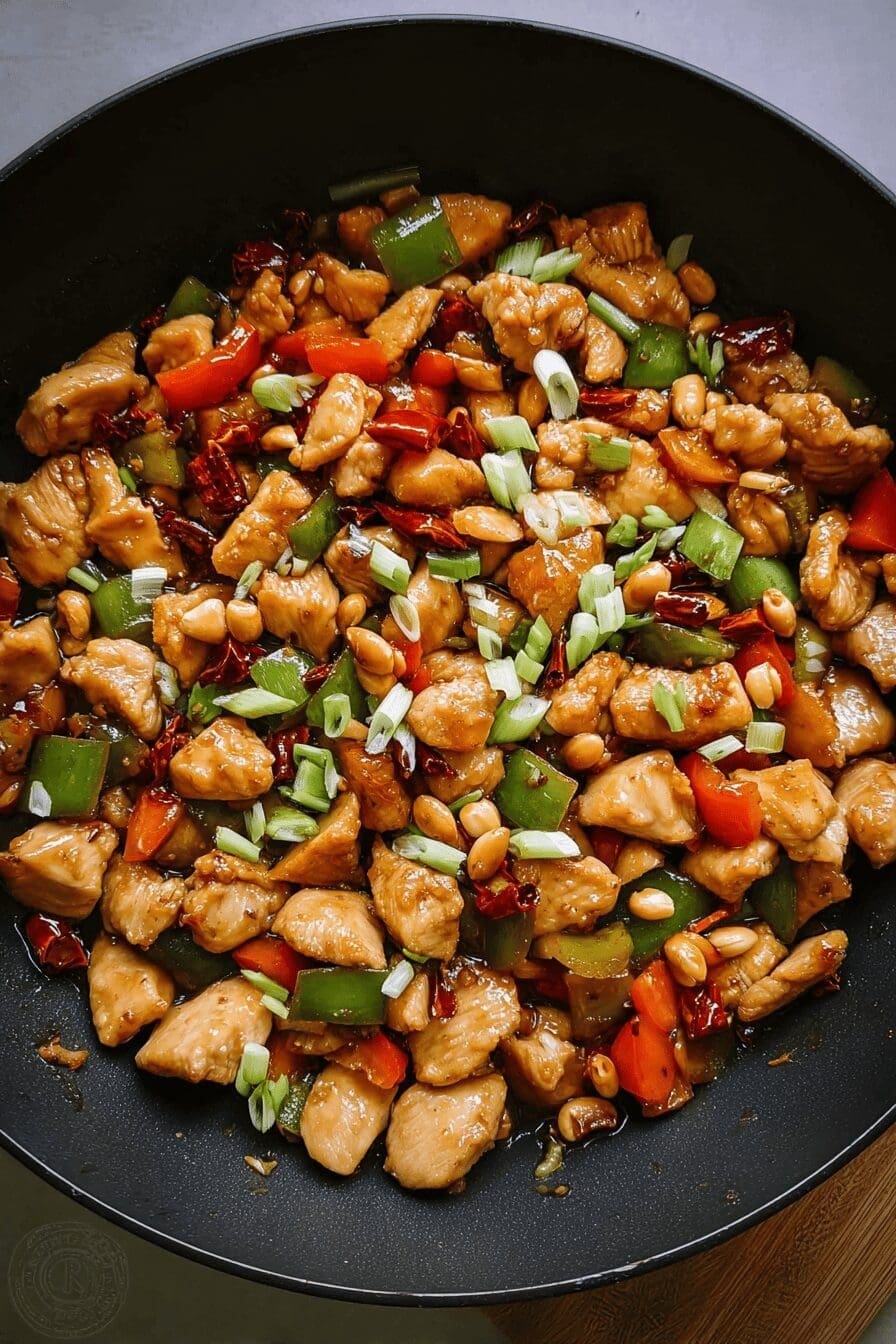
Dietary Substitutions to Customize Your Kung Pao Chicken
One of the great things about Kung Pao Chicken is how easy it is to tweak for different needs, whether you’re a diet-conscious individual or cooking for seniors with specific preferences. For protein swaps, try using tofu or tempeh instead of chicken thigh to make it plant-based, which keeps the dish juicy and flavorful. If you want leaner options, shrimp or turkey work well, adding their own textures without losing the classic taste.
When it comes to vegetables and sauces, you can add bell peppers, snap peas, or zucchini for more crunch and nutrition. For gluten-free versions, replace soy sauce with tamari or coconut aminos to maintain that umami kick. Don’t forget to adjust spices by cutting back on dried chilies if you’re making it milder, or add fresh herbs like cilantro for an extra layer of flavor these changes help everyone enjoy the meal at gatherings.
Incorporating these substitutions keeps the bold mix of sweet, sour, and savory intact while making the recipe adaptable. Remember, if you’re avoiding alcohol, swap Shaoxing wine with chicken broth to keep things authentic yet accessible.
Mastering Kung Pao Chicken: Advanced Tips and Variations
Once you’ve nailed the basics, you can level up your Kung Pao Chicken with some pro techniques that make it even better for food enthusiasts. Use high-heat stir-frying in a well-seasoned wok to get that authentic texture the quick cooking helps keep the chicken thigh juicy and locks in flavors. Marinating the protein properly, like with the baking soda method for chicken breast, ensures tenderness every time. Explore our Szechuan Chicken recipe for more spicy ideas.
For flavor twists, try adding toasted sesame oil for a nutty depth or swap peanuts for cashews to change the crunch. Presentation matters too, so serve it in warmed bowls with chopped scallions and sesame seeds on top for a fresh look. If you’re into meal prep, make the sauce and chop veggies ahead, storing them separately to keep everything crisp reheat in a skillet to preserve that stir-fried goodness.
These tips make the dish flexible for various occasions, like community events or family dinners. Remember, the sauce should be thick and syrupy, concentrating those sweet and savory notes for the best taste.
Preparation Time Details
Plan for about 15 minutes of prep and 10 minutes of cooking, totaling 25 minutes, so it’s perfect for quick weeknight meals.
How to Store Kung Pao Chicken: Best Practices
Storing your Kung Pao Chicken the right way helps it stay tasty for leftovers, which is great for busy parents or working professionals. Keep it in an airtight container in the fridge and eat it within 3-4 days to maintain its fresh flavors and textures. If you want to save it longer, freeze portions in freezer-safe bags for up to 2 months, so you can pull out a quick meal when needed.
When reheating, use a skillet over medium heat to keep the chicken juicy and the peanuts crispy avoid the microwave if possible to prevent sogginess. For meal prep, store proteins and veggies separately and combine them just before eating to retain that signature stir-fry vibe. This approach makes it easy to enjoy Kung Pao Chicken on the go, fitting right into your routine for picnics or gatherings.
| Nutrient | Amount per Serving |
|---|---|
| Calories | 555 |
| Carbohydrates | 18 grams |
| Protein | 28 grams |
| Fat | 41 grams |
| Saturated Fat | 8 grams |
| Cholesterol | 122 mg |
| Sodium | 604 mg |
| Potassium | 480 mg |
| Fiber | 2 grams |
| Sugar | 10 grams |
| Vitamin A | 185 IU |
| Vitamin C | 2.1 mg |
| Calcium | 34 mg |
| Iron | 1.8 mg |
This table shows the nutritional breakdown, helping you see why it’s a balanced choice for healthy eating.
FAQs: Frequently Asked Questions About Kung Pao Chicken
What makes Kung Pao Chicken different from other Chinese stir-fry dishes?
Kung Pao Chicken is distinguished by its bold combination of sweet, sour, and savory flavors, complemented by a distinctive numbing heat from Sichuan peppercorns. Unlike many other Chinese stir-fries, it has a thicker, glossy sauce that clings to the ingredients rather than being soupy. The use of dried red chilies and roasted peanuts adds texture and a spicy kick, setting it apart from milder or more saucy stir-fry dishes.
How can I adjust the spiciness of Kung Pao Chicken for different tastes?
The heat in Kung Pao Chicken primarily comes from dried red chilies and Sichuan peppercorns. To make it less spicy, reduce the number of dried chilies and remove their seeds before cooking. For a milder flavor, you can use fewer or no dried chilies while still including Sichuan peppercorns for aroma. If you prefer more heat, add extra chilies but balance carefully to avoid overpowering the dish.
What is the best type of chicken to use when making Kung Pao Chicken at home?
Chicken thigh meat is ideal for Kung Pao Chicken due to its higher fat content, which makes the meat juicier and more tender when stir-fried. If you only have chicken breast, tenderize it beforehand by slicing thinly or using a baking soda soak to prevent dryness. This preparation helps the chicken stay moist and absorb the flavors more effectively.
Can I make Kung Pao Chicken without traditional Chinese black vinegar, and what are good substitutes?
Yes, if you don’t have Chinese black vinegar, you can substitute it with rice wine vinegar, which has a similar mild tanginess. White vinegar or balsamic vinegar can also be used, but use them sparingly since these have stronger or different flavor profiles. Adjust the amount gradually to maintain the balanced sweet-and-sour taste typical of Kung Pao sauce.
How long does it take to cook Kung Pao Chicken once the ingredients are ready, and what should the sauce look like?
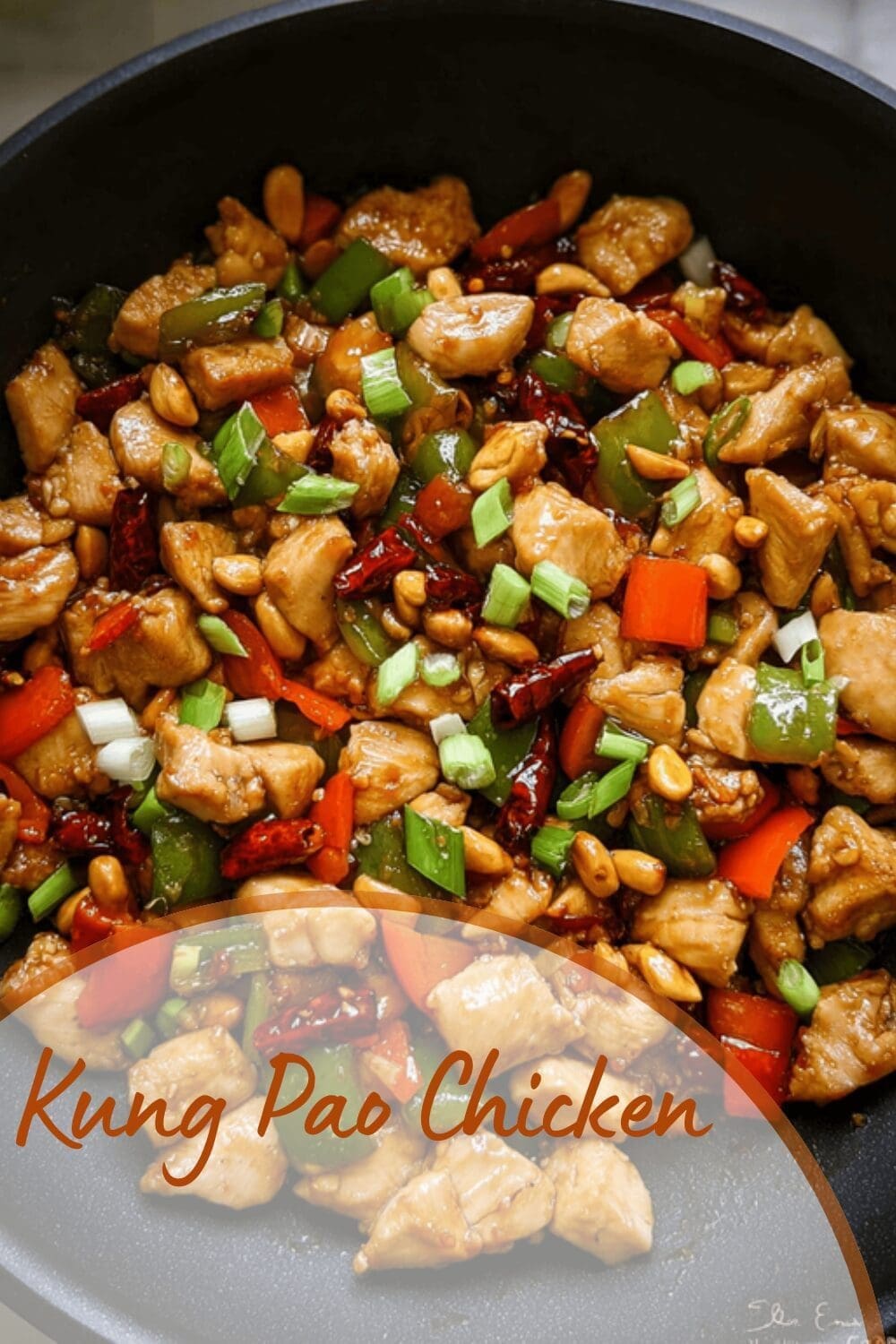
After prepping ingredients, the actual cooking time for Kung Pao Chicken is about 5 to 7 minutes. The sauce should reduce quickly to a thick, glossy, syrup-like consistency that coats the chicken and vegetables evenly. It will develop a deep brown color and a concentrated, multi-layered flavor—sweet, tangy, spicy, and savory all at once.

Kung Pao Chicken
🔥 This Kung Pao Chicken recipe delivers a perfect balance of sweet, sour, and savory flavors enhanced by the distinctive numbing heat of Sichuan pepper.
🥜 Crispy roasted peanuts add delightful texture, making this dish a satisfying and flavorful meal to try at home.
- Total Time: 25 minutes
- Yield: 4 servings
Ingredients
– Chicken thigh for one serving, cut into bite-sized pieces
– Cornstarch (cornflour) used to mix with light soy sauce until dissolved, and later for thickening
– Light soy sauce, 1.5 tablespoons of the sauce mixture used for marinating the chicken
– Dark soy sauce
– Chinese black vinegar (or substitutes like rice wine vinegar, white vinegar, or mild balsamic)
– Chinese cooking wine (Shaoxing wine) (or substitutes like dry sherry, mirin, or sake)
– Sugar
– Sesame oil
– Water added to the remaining sauce mixture
– Peanut oil or other cooking oil used for stir-frying
– Garlic, minced
– Ginger, finely chopped
– Dried chilies with seeds mostly removed; adjust to taste
– Green onions with white and green parts separated
– Ground Sichuan peppercorns; adjust to taste
– Roasted unsalted peanuts, used whole or halved
Instructions
1-First, mix cornstarch and light soy sauce until dissolved, then add the remaining sauce ingredients except water to create a flavorful base.
2-Once that’s done, toss the chicken thigh pieces with 1.5 tablespoons of this mixture and let it marinate for 10 to 20 minutes for extra juiciness.
3-Next, add water to the rest of the sauce mixture to balance the flavors.
4-Heat peanut oil in a wok over high heat, then stir-fry the minced garlic, finely chopped ginger, and dried chilies until they release their aroma this only takes a minute or two.
5-Add the marinated chicken and cook until it turns white, then mix in the white parts of the green onions and continue cooking until the chicken is fully done.
6-Pour in the sauce along with ground Sichuan peppercorns, and simmer while stirring until everything thickens to a syrupy consistency.
7-Finally, stir in the roasted unsalted peanuts and green parts of the green onions, adjusting the Sichuan peppercorns for your preferred heat level.
Last Step:
Please leave a rating and comment letting us know how you liked this recipe! This helps our business to thrive and continue providing free, high-quality recipes for you.Notes
🐔 Opt for chicken thigh for juicier meat; tenderize chicken breast with baking soda when used.
🧂 Substitute light soy sauce with all-purpose soy sauce if necessary; dark soy sauce adds color and flavor.
🌶️ Adjust dried chili and Sichuan peppercorn quantities to control the dish’s heat; remove chili seeds to reduce spiciness while retaining flavor.
- Prep Time: 15 minutes
- Cook Time: 10 minutes
- Category: Main Dish
- Method: Stir-Frying
- Cuisine: Chinese
- Diet: Gluten-Free, Low-Carb (with cauliflower rice)
Nutrition
- Serving Size: 1 serving
- Calories: 555
- Sugar: 10 g
- Sodium: 604 mg
- Fat: 41 g
- Saturated Fat: 8 g
- Trans Fat: 0 g
- Carbohydrates: 18 g
- Fiber: 2 g
- Protein: 28 g
- Cholesterol: 122 mg


