

Why You’ll Love This Hainanese Chicken Rice
Hainanese Chicken Rice is one of those dishes that looks simple on the plate but feels special from the first bite. It combines tender poached chicken, fragrant jasmine rice, and three bold sauces that bring everything to life. If you like meals that are comforting, filling, and great for sharing, this recipe belongs in your rotation.
- Easy to prep at home: The method is straightforward once you break it into steps. You poach the chicken, toast the rice, and blend the sauces while everything cooks, so the process feels organized instead of stressful.
- Good balance of protein and carbs: Each serving gives you a satisfying mix of chicken and rice, which makes it a hearty meal for lunch or dinner. It also pairs well with a light side salad or steamed vegetables if you want to round out the plate.
- Flexible for different needs: You can adjust the chicken, rice, and sauce portions to fit your table. It works for family dinners, meal prep, and even small gatherings where everyone can build their own plate.
- Big flavor from simple ingredients: Ginger, scallions, garlic, chili, and dark soy sauce create deep flavor without a long list of hard-to-find items. That rich taste is what makes Hainanese Chicken Rice so memorable.
If you have ever wanted a meal that feels both comforting and a little special, this is the kind of recipe that delivers every time.
For readers who enjoy chicken dinners with strong flavor, you may also like this herb butter chicken recipe or this sticky chicken vegetable fried rice for another satisfying meal idea.
According to WebMD’s guide to chicken nutrition, chicken is a strong source of lean protein, which helps make this dish filling and balanced when served with rice and broth.
Jump to:
- Why You’ll Love This Hainanese Chicken Rice
- Essential Ingredients for Hainanese Chicken Rice
- Chicken
- Rice
- Ginger-Garlic Sauce
- Sweet Dark Soy Sauce
- Chili Sauce
- Special Dietary Options
- How to Prepare the Perfect Hainanese Chicken Rice: Step-by-Step Guide
- First Step: Prep the chicken and aromatics
- Second Step: Poach the chicken gently
- Third Step: Check doneness and chill the chicken
- Fourth Step: Toast and cook the rice
- Fifth Step: Make the ginger-garlic sauce
- Sixth Step: Make the sweet dark soy sauce
- Seventh Step: Make the chili sauce
- Final Step: Carve and serve
- Protein and Main Component Alternatives
- Chicken swaps
- Rice and broth alternatives
- Vegetable, Sauce, and Seasoning Modifications
- Vegetable ideas
- Sauce and seasoning changes
- Mastering Hainanese Chicken Rice: Advanced Tips and Variations
- Pro cooking techniques
- Flavor variations
- Presentation tips
- Make-ahead options
- How to Store Hainanese Chicken Rice: Best Practices
- Refrigeration
- Freezing
- Reheating
- Meal prep considerations
- Frequently Asked Questions About Hainanese Chicken Rice
- What is the best chicken to use for Hainanese chicken rice?
- How do you know when poached chicken is done for Hainanese chicken rice?
- Why use an ice bath for chicken in Hainanese chicken rice recipe?
- How do you cook the rice for Hainanese chicken rice?
- What sauces go with Hainanese chicken rice and how to make them?
- Hainanese Chicken Rice
- Ingredients
- Instructions
- Last Step:
- Notes
- Nutrition
- Did you make this recipe?
Essential Ingredients for Hainanese Chicken Rice
This recipe uses simple ingredients, but each one matters. The chicken poaching liquid gives flavor to the rice, the chicken fat adds richness, and the three sauces bring the dish together.
Chicken
- 1 small chicken, 3 to 3 1/2 pounds, 1.5 kg, preferably buddhist-style with head and feet on, or organic
- 1 tablespoon salt
- 12 to 14 cups water
- 4 to 5 slices ginger
- 2 whole scallions
- Ice, for the bath
Rice
- 2 ounces chicken fat, taken from the cavity of the chicken
- 1 teaspoon neutral oil, such as vegetable, canola, or avocado oil
- 4 cloves garlic, minced
- 3 cups uncooked white jasmine rice, washed and drained
- Stock from cooking the chicken
- 2 teaspoons salt
Ginger-Garlic Sauce
- 4-inch piece ginger, roughly chopped
- 2 cloves garlic
- 3 tablespoons neutral oil, such as vegetable, canola, or avocado oil
- A pinch of salt
Sweet Dark Soy Sauce
- 1/4 cup water
- 1.25 ounces sugar, about 2 sizable chunks, or 2.5 tablespoons granulated sugar
- 1/4 cup dark soy sauce
Chili Sauce
- 3 fresh red chilies, medium spice level, holland chilies recommended
- 1.5-inch piece ginger
- 2 cloves garlic
- 1/4 teaspoon salt
- 1/2 teaspoon sugar
- 1/4 teaspoon sugar
- 1 tablespoon fresh lime juice, juice of half a lime
- 1/2 teaspoon white vinegar
- 2 tablespoons chicken broth from boiling the chicken, or enough for your preferred saucy consistency
Special Dietary Options
- Vegan: Use firm tofu or king oyster mushrooms in place of chicken, vegetable broth instead of chicken stock, and plant-based butter or oil for the rice base.
- Gluten-free: This dish is naturally gluten-free if your dark soy sauce is labeled gluten-free.
- Low-calorie: Reduce the rice portion, use less chicken fat, and serve extra broth and sauce on the side instead of pouring everything over the plate.
How to Prepare the Perfect Hainanese Chicken Rice: Step-by-Step Guide
First Step: Prep the chicken and aromatics
Wash the chicken well and set aside the chicken fat from the cavity. Pat the chicken dry, then rub it lightly with salt for a nice sheen. Set it aside while you get the poaching pot ready. Slice the ginger, trim the scallions, and measure out your water so the process moves smoothly.
Second Step: Poach the chicken gently
Bring 12 to 14 cups of water, the ginger slices, and the whole scallions to a boil in a large stockpot. Lower the chicken breast-side up into the boiling water. Adjust the water level so the breast just pokes above the surface, then bring it back to a boil. Remove the chicken briefly to pour out any cold water inside the cavity, then lower it back in.
Bring the pot to a boil once more, then reduce the heat to a very gentle simmer and cover the pot. Cook for 30 to 35 minutes, which works out to about 10 to 11 minutes per pound. Larger chickens may need a little more time. Try not to uncover the pot while it cooks so the temperature stays steady.
Third Step: Check doneness and chill the chicken
To check if the chicken is done, insert a toothpick into the thigh. The juices should run clear. Once cooked, prepare a large ice bath. Remove the chicken carefully and submerge it in the ice bath for 15 minutes. This stops the cooking and helps lock in the juices. Drain it well, then cover it with plastic wrap until serving time.
The ice bath is one of the most important steps. It helps the chicken stay juicy while giving the skin a smooth, pleasing texture.
Fourth Step: Toast and cook the rice
While the chicken cools, heat a wok or large skillet over medium heat. Add the chicken fat and 1/2 teaspoon oil until you have about 1 tablespoon of rendered fat. Stir in the minced garlic and fry it briefly, but do not let it burn. Add the washed and drained jasmine rice and stir continuously for 2 minutes so the grains toast evenly.
Transfer the toasted rice to a rice cooker. Add chicken stock until it reaches the 4-cup line, then stir in the salt and cook. If you do not have a rice cooker, soak the rice in 4 cups chicken stock with salt for 20 minutes in a pot. Cover and bring it to a boil, then reduce to low heat and simmer for 15 minutes, until the rice is tender and the liquid is absorbed.
Fifth Step: Make the ginger-garlic sauce
Grind the ginger and garlic finely in a food processor. Heat the oil in a saucepan and fry the ginger and garlic gently until aromatic and lightly caramelized. Do not rush this part. If the mixture starts to thicken too much, stir in a spoonful of hot chicken water to loosen it. Add salt to taste and transfer the sauce to a small dish.
Sixth Step: Make the sweet dark soy sauce
Heat the water and sugar in a saucepan over medium heat. Stir constantly until the sugar dissolves and thickens into a syrup. Stir in the dark soy sauce, then transfer the mixture to a serving dish. This sauce adds a sweet, salty finish that balances the rice and chicken.
Seventh Step: Make the chili sauce
Grind the chilies, ginger, and garlic finely in a food processor or mortar and pestle. Add the salt, sugar, lime juice, white vinegar, and chicken broth. Pulse or stir until the sauce reaches your preferred consistency. Use more broth for a looser sauce or less broth for a thicker paste. The broth helps the flavors blend and gives the sauce extra depth.
Final Step: Carve and serve
Carve the chicken into serving pieces and arrange it with the rice and all three sauces. If you like, serve a cup of seasoned hot chicken broth on the side. The broth makes the meal feel even more comforting and gives everyone a little extra warmth at the table.
| Component | Key Flavor | What It Adds |
|---|---|---|
| Poached chicken | Clean, gentle, savory | Juicy main protein |
| Jasmine rice | Fragrant, rich, lightly garlicky | Comforting base |
| Ginger-garlic sauce | Bright, sharp, aromatic | Fresh lift |
| Sweet dark soy sauce | Sweet, salty, glossy | Deep umami finish |
| Chili sauce | Spicy, tangy, savory | Heat and balance |
Protein and Main Component Alternatives
Chicken swaps
If you cannot find a buddhist-style whole chicken, choose organic, pasture-raised, or air-chilled chicken. These birds tend to stay juicy and hold their shape well during poaching. A smaller bird works best for even cooking, but you can scale up carefully if needed.
For a faster weeknight version, you can also use bone-in chicken thighs and breasts, though the flavor will be a little different from the classic whole-chicken method. The poaching liquid still gives the meat plenty of taste.
Rice and broth alternatives
White jasmine rice gives the classic fragrance and texture, but medium-grain white rice can work in a pinch. If you want a lighter plate, reduce the rice and add extra chicken broth on the side. For a fuller meal, pair it with steamed greens or cucumber slices.
If you are cooking for a larger group, the rice can be scaled up easily. Just keep the broth ratio close and taste for salt before serving.
Vegetable, Sauce, and Seasoning Modifications
Vegetable ideas
Hainanese Chicken Rice is often served with simple sides, and that keeps the focus on the chicken and sauces. Still, a few fresh vegetables can work nicely alongside it. Try sliced cucumber, blanched bok choy, steamed Chinese broccoli, or quick-pickled carrots for color and crunch.
If you want a more filling meal, serve it with a light soup or a crisp green salad. Those sides bring freshness without taking over the main dish.
Sauce and seasoning changes
The three sauces are what make this meal so memorable, but you can adjust them to fit your taste. Use fewer chilies for a milder sauce, or add a bit more chicken broth if you want a looser texture. If your ginger-garlic sauce gets too thick, stir in hot chicken water to bring it back.
For a deeper savory finish, keep the rice stock simmering uncovered so it reduces slightly and concentrates in flavor. That extra step gives the rice more character without adding extra ingredients.
For more comforting chicken dinner ideas, you might also enjoy this lemon shallot chicken recipe or this chicken and broccoli stir fry when you want something simple and family-friendly.
Mastering Hainanese Chicken Rice: Advanced Tips and Variations
Pro cooking techniques
Use a large ice bath after poaching because it stops the cooking fast and helps the skin tighten. Stir the rice continuously while toasting so the garlic does not burn and the grains toast evenly. Keep the simmer very gentle while the chicken cooks, since a hard boil can make the meat tough.
Another useful trick is to simmer the chicken stock uncovered for a bit before using it for the rice. That concentrates flavor and gives the rice a richer finish. If you are using the stovetop method, keep an eye on the liquid so the rice does not dry out too quickly.
Flavor variations
You can add a touch more ginger to the rice for a brighter flavor or a little extra lime juice to the chili sauce for more tang. Some cooks like to add a spoonful of the sweet soy sauce directly over the chicken, while others prefer it just on the rice. Both ways work well.
If you like heat, keep the chili sauce thicker and sharper. If you prefer a smoother plate, make the sauces a little looser and serve them lightly over the chicken.
Presentation tips
Arrange the carved chicken neatly beside a mound of glossy rice. Spoon the sauces into small bowls so people can choose their own mix of flavors. A few cucumber slices or herbs on the side make the plate look fresh and inviting.
Make-ahead options
You can make all three sauces ahead of time and store them in the fridge. The chicken can also be cooked earlier in the day, chilled, and sliced before serving. The rice is best fresh, but leftovers still reheat well if stored properly.
Johns Hopkins Medicine explains that ginger has long been studied for its digestive and wellness benefits, which is one reason the ginger sauces in this dish feel so bright and comforting.
How to Store Hainanese Chicken Rice: Best Practices
Refrigeration
Store the chicken, rice, and sauces in separate airtight containers. The chicken and rice will keep well in the refrigerator for up to 3 days. The sauces can last a little longer, usually around 3 to 5 days, depending on how fresh your ingredients are.
Freezing
You can freeze the cooked chicken and rice, though the texture is best when fresh. Wrap the chicken tightly or place it in freezer-safe containers. Freeze the rice in small portions so it thaws more evenly. The sauces are best made fresh, but the chili sauce can sometimes freeze for short storage.
Reheating
Reheat the chicken gently so it does not dry out. A covered skillet with a splash of broth works well. For the rice, add a spoonful of water or stock before warming it in the microwave or on the stove. Stir the sauces before serving, and add a little broth or hot water if they thicken too much.
Meal prep considerations
If you are cooking for busy weekdays, poach the chicken and make the sauces in advance. Then cook the rice fresh the next day using the reserved stock. That way, you get the best texture without repeating the most time-consuming work.
Frequently Asked Questions About Hainanese Chicken Rice
What is the best chicken to use for Hainanese chicken rice?
For authentic Hainanese chicken rice, choose a whole Buddhist-style poussin chicken from a Chinese grocery store, ideally with head and feet intact—these birds have superior texture and flavor due to their breed and free-range rearing. If unavailable, opt for organic, pasture-raised whole chickens or Bell & Evans air-chilled ones, which stay juicy when poached. Avoid standard supermarket broilers, as they can turn dry or rubbery. Weigh about 3-4 pounds for 4 servings. Rinse under cold water, pat dry, and stuff with ginger and garlic before poaching in simmering water with aromatics like scallions and pandan leaves for 30-40 minutes. This setup yields tender meat and gelatinous skin, key to the dish’s appeal. (92 words)
How do you know when poached chicken is done for Hainanese chicken rice?
Test doneness by inserting a toothpick or skewer into the thickest part of the thigh, right up to the bone. Clear juices running out mean it’s fully cooked—expect this after 30-40 minutes of gentle poaching for a 3-4 pound bird. The internal temperature should hit 165°F (74°C) if using a thermometer. Avoid overcooking to prevent dryness; the breast should feel firm but springy. Immediately plunge into an ice bath for 5-10 minutes afterward—this halts residual cooking, firms the skin for a silky texture, and locks in moisture. Pat dry before chilling or serving sliced. This simple check ensures restaurant-quality results every time. (102 words)
Why use an ice bath for chicken in Hainanese chicken rice recipe?
An ice bath right after poaching is crucial for Hainanese chicken rice: it rapidly cools the chicken, stopping the cooking process to keep meat juicy and tender. It also tightens the skin into a smooth, gelatinous layer without sogginess, mimicking Singapore or Malaysian hawker versions. Submerge the whole poached chicken in ice water for 5-10 minutes until chilled, then drain and air-dry in the fridge for 1-2 hours. Skip this, and the skin turns mushy while juices escape. Pro tip: Add ice cubes to the poaching water’s reserved broth for rice cooking to boost flavor. This step takes minutes but elevates texture dramatically. (98 words)
How do you cook the rice for Hainanese chicken rice?
The rice gets its signature richness from chicken fat and poaching broth. For a rice cooker: rinse 2 cups (about 3 US cups or 4 cooker cups) jasmine rice, toast in 2-3 tbsp reserved chicken fat over medium heat until fragrant. Transfer to cooker, add 4 cups hot chicken stock (to the 4-cup line), salt, and fried shallots; cook on standard setting. Stovetop alternative: after toasting, add stock, bring to boil, simmer covered 15 minutes off heat. Fluff and rest 10 minutes. This infuses savory depth—far better than plain rice. Serves 4; scale up proportionally. (96 words)
What sauces go with Hainanese chicken rice and how to make them?
Traditional Hainanese chicken rice pairs with three sauces: fiery chili, pungent ginger-garlic, and sweet dark soy. Chili: Blend 6 red chilies, 2 garlic cloves, ginger knob, lime juice, salt—thin with poaching water if needed; mortar works too. Ginger-garlic: Pound 4 garlic cloves, 2 tbsp ginger, salt; mix in hot oil for fragrance—if too thick, add chicken water. Dark soy: ¼ cup dark soy, sugar, oyster sauce; simmer briefly. Prep ahead; store fridge 3-5 days. These cut richness perfectly—adjust spice to taste. No processor? Use mortar for authentic texture. Drizzle over sliced chicken and rice for full flavor. (104 words)
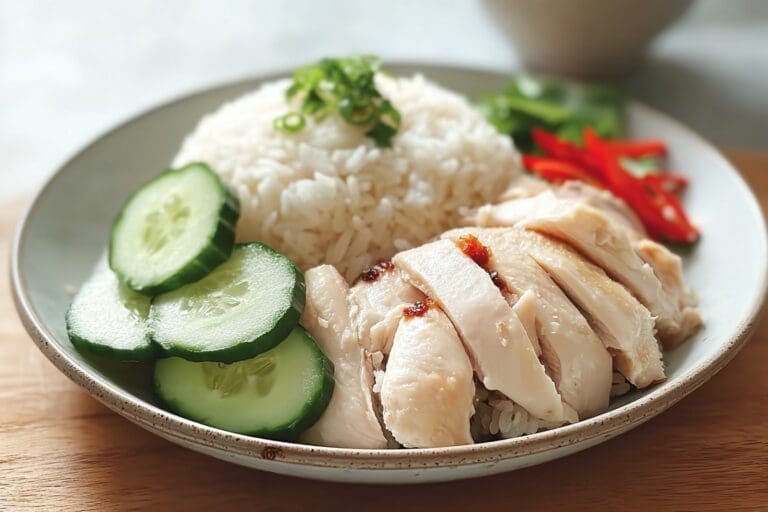
Hainanese Chicken Rice
🍗🍚 Silky poached Hainanese Chicken over fragrant jasmine rice with trio dipping sauces – tender juicy protein, aromatic perfection!
🌿 Iconic Singaporean comfort: healthy ginger-chili-soy flavors elevate simple meal – family feast worth the simmer!
- Total Time: 2 hours 35 minutes
- Yield: 6 servings
Ingredients
– 1 small chicken, 3 to 3 1/2 pounds, 1.5 kg, preferably buddhist-style with head and feet on, or organic
– 1 tablespoon salt
– 12 to 14 cups water
– 4 to 5 slices ginger
– 2 whole scallions
– Ice for the bath
– 2 ounces chicken fat taken from the cavity of the chicken
– 1 teaspoon neutral oil such as vegetable, canola, or avocado oil
– 4 cloves garlic minced
– 3 cups uncooked white jasmine rice washed and drained
– Stock from cooking the chicken
– 2 teaspoons salt
– 4-inch piece ginger roughly chopped
– 2 cloves garlic
– 3 tablespoons neutral oil such as vegetable, canola, or avocado oil
– A pinch of salt
– 1/4 cup water
– 1.25 ounces sugar about 2 sizable chunks or 2.5 tablespoons granulated sugar
– 1/4 cup dark soy sauce
– 3 fresh red chilies medium spice level holland chilies recommended
– 1.5-inch piece ginger
– 2 cloves garlic
– 1/4 teaspoon salt
– 1/2 teaspoon sugar
– 1/4 teaspoon sugar
– 1 tablespoon fresh lime juice juice of half a lime
– 1/2 teaspoon white vinegar
– 2 tablespoons chicken broth from boiling the chicken or enough for your preferred saucy consistency
Instructions
1-First Step: Prep the chicken and aromatics Wash the chicken well and set aside the chicken fat from the cavity. Pat the chicken dry, then rub it lightly with salt for a nice sheen. Set it aside while you get the poaching pot ready. Slice the ginger, trim the scallions, and measure out your water so the process moves smoothly.
2-Second Step: Poach the chicken gently Bring 12 to 14 cups of water, the ginger slices, and the whole scallions to a boil in a large stockpot. Lower the chicken breast-side up into the boiling water. Adjust the water level so the breast just pokes above the surface, then bring it back to a boil. Remove the chicken briefly to pour out any cold water inside the cavity, then lower it back in. Bring the pot to a boil once more, then reduce the heat to a very gentle simmer and cover the pot. Cook for 30 to 35 minutes, which works out to about 10 to 11 minutes per pound. Larger chickens may need a little more time. Try not to uncover the pot while it cooks so the temperature stays steady.
3-Third Step: Check doneness and chill the chicken To check if the chicken is done, insert a toothpick into the thigh. The juices should run clear. Once cooked, prepare a large ice bath. Remove the chicken carefully and submerge it in the ice bath for 15 minutes. This stops the cooking and helps lock in the juices. Drain it well, then cover it with plastic wrap until serving time.
4-Fourth Step: Toast and cook the rice While the chicken cools, heat a wok or large skillet over medium heat. Add the chicken fat and 1/2 teaspoon oil until you have about 1 tablespoon of rendered fat. Stir in the minced garlic and fry it briefly, but do not let it burn. Add the washed and drained jasmine rice and stir continuously for 2 minutes so the grains toast evenly. Transfer the toasted rice to a rice cooker. Add chicken stock until it reaches the 4-cup line, then stir in the salt and cook. If you do not have a rice cooker, soak the rice in 4 cups chicken stock with salt for 20 minutes in a pot. Cover and bring it to a boil, then reduce to low heat and simmer for 15 minutes, until the rice is tender and the liquid is absorbed.
5-Fifth Step: Make the ginger-garlic sauce Grind the ginger and garlic finely in a food processor. Heat the oil in a saucepan and fry the ginger and garlic gently until aromatic and lightly caramelized. Do not rush this part. If the mixture starts to thicken too much, stir in a spoonful of hot chicken water to loosen it. Add salt to taste and transfer the sauce to a small dish.
6-Sixth Step: Make the sweet dark soy sauce Heat the water and sugar in a saucepan over medium heat. Stir constantly until the sugar dissolves and thickens into a syrup. Stir in the dark soy sauce, then transfer the mixture to a serving dish. This sauce adds a sweet, salty finish that balances the rice and chicken.
7-Seventh Step: Make the chili sauce Grind the chilies, ginger, and garlic finely in a food processor or mortar and pestle. Add the salt, sugar, lime juice, white vinegar, and chicken broth. Pulse or stir until the sauce reaches your preferred consistency. Use more broth for a looser sauce or less broth for a thicker paste. The broth helps the flavors blend and gives the sauce extra depth.
8-Final Step: Carve and serve Carve the chicken into serving pieces and arrange it with the rice and all three sauces. If you like, serve a cup of seasoned hot chicken broth on the side. The broth makes the meal feel even more comforting and gives everyone a little extra warmth at the table.
Last Step:
Please leave a rating and comment letting us know how you liked this recipe! This helps our business to thrive and continue providing free, high-quality recipes for you.Notes
🛁 Ice bath post-poach locks juicy tenderness, silky skin texture.
🍚 Toast rice with fat/garlic for restaurant fragrant depth.
🌶️ Adjust chili sauce broth for perfect drizzling consistency.
- Prep Time: 30 minutes
- Cook Time: 2 hours 30 minutes
- Category: Main Dish
- Method: Poaching
- Cuisine: Singaporean
Nutrition
- Serving Size: 1/6 recipe
- Calories: 746 kcal
- Sugar: 8g
- Sodium: 2779mg
- Fat: 32g
- Saturated Fat: 8g
- Unsaturated Fat: 22g
- Trans Fat: 0g
- Carbohydrates: 86g
- Fiber: 2g
- Protein: 26g
- Cholesterol: 81mg


