

Why You’ll Love Watermelon Mochi
Watermelon mochi is one of those summer treats that feels fun, fresh, and a little bit special without asking much from you in the kitchen. It comes together in about 20 minutes, then the fridge does the rest of the work. That makes it a great pick for busy parents, students, working professionals, and anyone who wants a sweet treat without a long bake time.
- Fast and easy: With just a few pantry ingredients and simple stovetop cooking, this recipe fits into a packed day.
- Fresh flavor: Strained watermelon juice gives every bite a soft fruit taste and a pretty pink color.
- Flexible for many diets: The recipe is naturally gluten-free and vegan, which makes it helpful for mixed group gatherings.
- Great for sharing: Cut into neat squares, it travels well for picnics, potlucks, and church suppers.
If you like chilled fruit desserts, this recipe sits nicely beside other crowd-friendly sweets like strawberry frose frozen rose or a simple tray of shortbread cookies. It has that same easy-to-serve charm, but with a chewy texture that makes it stand out.
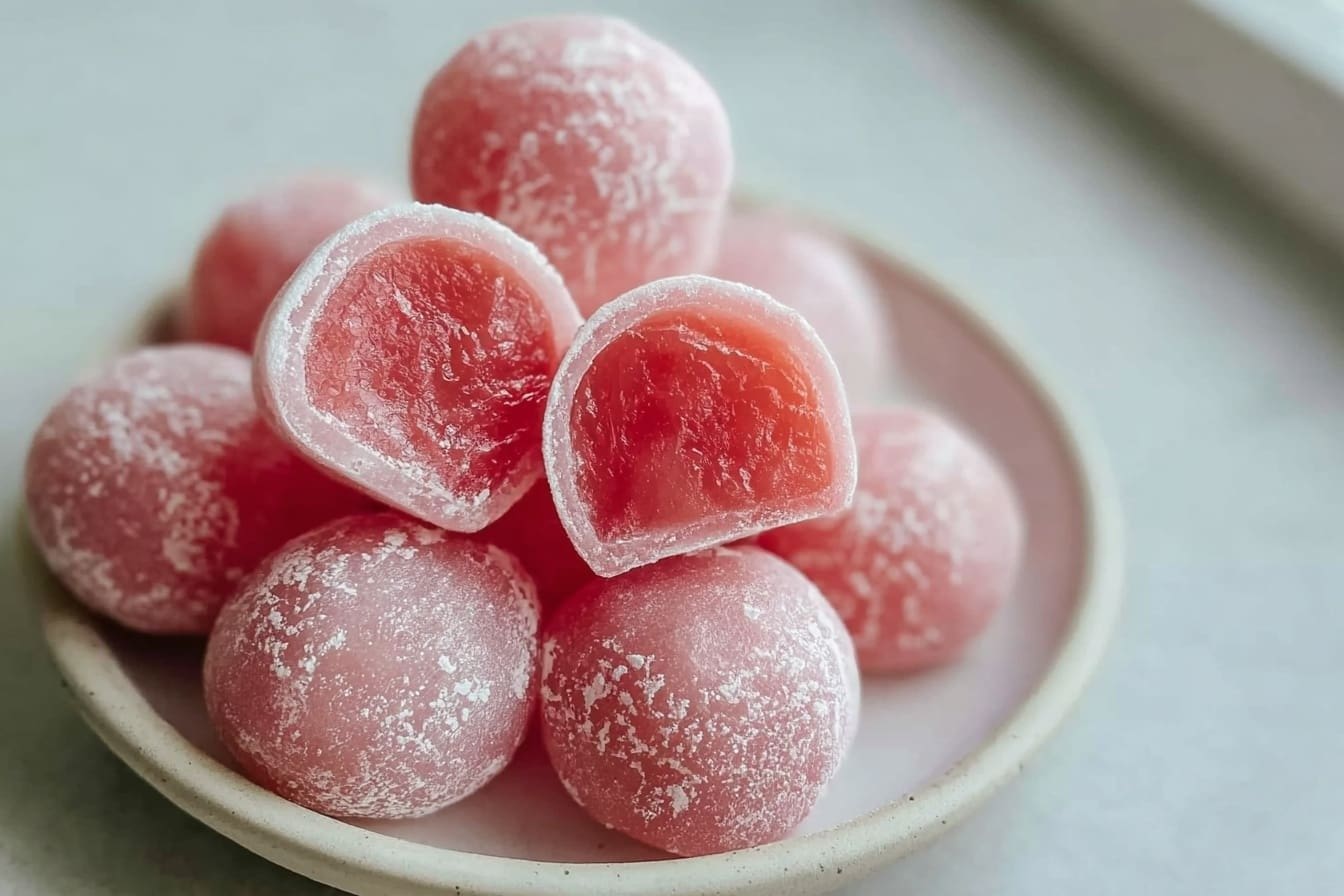
Sweet, chewy, and cool from the fridge, watermelon mochi brings summer energy to any table.
For a little extra background on why watermelon works so well in warm-weather recipes, this guide to the wonders of watermelon is a helpful read.
Jump to:
- Why You’ll Love Watermelon Mochi
- Essential Ingredients for Watermelon Mochi
- Special Dietary Options
- How to Prepare the Perfect Watermelon Mochi: Step-by-Step Guide
- First Step: Make the watermelon juice
- Second Step: Mix the dry ingredients
- Third Step: Add the watermelon juice and oil
- Fourth Step: Cook the mochi mixture
- Fifth Step: Transfer and smooth
- Sixth Step: Chill until set
- Seventh Step: Unmold and cut into squares
- Final Step: Coat and serve
- Dietary Substitutions to Customize Your Watermelon Mochi
- Protein and Main Component Alternatives
- Vegetable, Sauce, and Seasoning Modifications
- Mastering Watermelon Mochi: Advanced Tips and Variations
- Pro cooking techniques
- Flavor variations
- Presentation tips
- Make-ahead options
- How to Store Watermelon Mochi: Best Practices
- Refrigeration
- Freezing
- Reheating
- Meal prep considerations
- FAQs: Frequently Asked Questions About Watermelon Mochi
- How long does watermelon mochi last?
- Is watermelon mochi gluten-free and vegan?
- Why is my watermelon mochi hard and how do I fix it?
- Can you freeze watermelon mochi?
- How do you make watermelon mochi more colorful and flavorful?
- Watermelon Mochi
- Ingredients
- Instructions
- Last Step:
- Notes
- Nutrition
- Did you make this recipe?
Essential Ingredients for Watermelon Mochi
The ingredient list is short, which is part of the charm. Each item plays a specific role in making the mochi soft, chewy, and lightly sweet. Be sure to measure carefully, since this recipe depends on the right balance of starch, juice, and sugar.
- 200g glutinous rice flour, about 1 1/2 cups – This creates the chewy mochi base.
- 65g granulated sugar, about 1/3 cup – Adds sweetness and helps the finished squares taste balanced.
- 40g corn starch, about 1/3 cup – Helps set the texture and keeps the mochi from feeling too sticky.
- 240ml strained watermelon juice, about 1 cup – Brings flavor, color, and moisture to the dough.
- 1 1/2 tablespoons vegetable oil – Adds a little softness and helps the mixture cook smoothly.
- Extra corn starch for dusting – Prevents sticking when you unmold, slice, and coat the squares.
| Ingredient | Amount | What it does |
|---|---|---|
| Glutinous rice flour | 200g, 1 1/2 cups | Gives the mochi its classic chewy bite |
| Granulated sugar | 65g, 1/3 cup | Adds sweetness and balances the fruit |
| Corn starch | 40g, 1/3 cup | Helps the dough set and stay easy to handle |
| Watermelon juice | 240ml, 1 cup | Flavors and colors the mochi |
| Vegetable oil | 1 1/2 tablespoons | Keeps the mixture soft and smooth |
Special Dietary Options
- Vegan: This recipe is already vegan as written.
- Gluten-free: Glutinous rice flour is made from rice, so it works for gluten-free cooking, but check labels for cross-contact if needed.
- Low-calorie: Reduce the sugar a little if your watermelon is very sweet, or serve smaller pieces for lighter portions.
How to Prepare the Perfect Watermelon Mochi: Step-by-Step Guide
This recipe is simple, but the texture comes from paying attention to each step. If you have made chewy desserts before, you will notice that mochi likes steady heat, gentle stirring, and a little patience during chilling. Keep your ingredients measured before you start so the cooking process stays smooth.
First Step: Make the watermelon juice
Start by blending fresh watermelon flesh until smooth. Then strain it through a fine sieve to remove any pulp. You need 1 cup, or 240ml, of strained juice for the recipe. Using ripe, deep-red watermelon gives the mochi a brighter pink color and a fuller summer taste.
If your watermelon is very sweet, taste the juice before you begin. You can keep the sugar at 65g, or adjust slightly to match the fruit. This small step makes a big difference in the final flavor.
Second Step: Mix the dry ingredients
In a medium bowl, add 200g glutinous rice flour, 65g granulated sugar, and 40g corn starch. Whisk them together so the mixture looks even and free of lumps. A well-mixed dry base helps the mochi cook smoothly and keeps the texture uniform.
At this stage, it can help to set out your mold. A lined 12cm x 12cm pan or dish works well. Lining it with parchment paper makes unmolding much easier later.
Third Step: Add the watermelon juice and oil
Pour in the strained watermelon juice and 1 1/2 tablespoons vegetable oil. Whisk until the batter looks smooth and thin. It should remind you of a loose, pourable batter before cooking.
Make sure there are no dry pockets at the bottom of the bowl. Scrape around the sides as you mix. If the batter looks lumpy, keep whisking until everything blends together.
Fourth Step: Cook the mochi mixture
Pour the batter into a nonstick pan and set it over medium heat. Stir constantly for 5 to 8 minutes. The mixture will start thin, then gradually thicken and become more translucent. This change is the sign that the starches are cooking properly.
Keep stirring so the bottom does not catch. If you stop too long, the mixture can stick or cook unevenly. When it turns thick, glossy, and a little stretchy, it is ready to come off the heat. For a faster option, you can cook it in microwave bursts of 1 minute, stirring between each round, until it thickens.
Fifth Step: Transfer and smooth
Spoon the hot mochi mixture into your lined 12cm x 12cm mold. Use a spatula to smooth the top so the surface sets evenly. Try to press it gently into the corners without flattening it too hard. A smooth top gives you nicer squares later.
If the mixture feels sticky, lightly starch your spatula. You can also starch your hands if you need to press or shape anything by hand.
Sixth Step: Chill until set
Place the mold in the refrigerator for 1 to 2 hours. This resting time helps the mochi firm up enough to slice cleanly. If you try to cut it too soon, the edges may stick or collapse.
For extra neat squares, chill it for the full 2 hours if you have time. The texture becomes easier to handle, especially for first-time mochi makers.
Seventh Step: Unmold and cut into squares
Once the mochi is set, lift it out of the mold and place it on a clean surface dusted with cornstarch. Dust the top lightly as well, then use a sharp knife to slice it into 12 equal pieces. If the knife starts to stick, coat the blade with a little cornstarch.
Cutting the mochi with a quick, firm motion usually gives the cleanest edges. You can also re-chill the slab for a few minutes if it feels too soft to slice neatly.
Final Step: Coat and serve
After slicing, coat all sides of each piece with more cornstarch. This keeps the squares from sticking to each other and helps them hold their shape. Arrange them on a plate and serve them chilled for the best chewy texture.
These 12 squares are lovely on their own, but they also fit in well with a dessert spread. If you enjoy handheld sweets for a party tray, you might also like chocolate covered pretzels for a salty-sweet contrast.
For the best cut, chill first, slice second, and dust generously with starch.
Dietary Substitutions to Customize Your Watermelon Mochi
Protein and Main Component Alternatives
Watermelon mochi does not rely on protein the way a savory dish does, but you can still swap the main starches if needed. If corn starch is not a good fit, try tapioca starch or arrowroot starch in the same amount. Both can help the mochi set while keeping the recipe friendly for different needs.
If you want a richer texture, some home cooks like to add a tiny bit of butter to the hot mixture, though that changes the recipe from vegan. Another option is replacing part of the watermelon juice with another fruit juice, such as strawberry or peach juice, for a different flavor profile.
Vegetable, Sauce, and Seasoning Modifications
Since this recipe is a sweet dessert, the main changes come from flavor add-ins rather than vegetables or sauces. A little lime zest can brighten the taste, while finely chopped mint gives it a fresh garden note. If your watermelon is mild, add a touch more sugar or a small spoonful of honey or agave if vegan rules are not a concern.
You can also experiment with serving styles. Dust the squares with extra cornstarch, roll them in toasted coconut, or pair them with fresh berries. These small changes help the recipe fit different seasons, parties, or dietary preferences without losing the soft chew that makes watermelon mochi so appealing.
Mastering Watermelon Mochi: Advanced Tips and Variations
Once you make watermelon mochi once, you will likely want to tweak it a little the next time. That is part of the fun. This dessert is forgiving, but a few smart habits can make the texture smoother and the flavor brighter.
Pro cooking techniques
Stir constantly while cooking so the starches heat evenly. If you want a softer result, try steaming the batter instead of cooking it in a pan. Some cooks also prefer to microwave the batter in 1-minute bursts, stirring after each round until it thickens and turns translucent. That method can save a little time on busy days.
Keep your hands and work surface dusted with starch whenever you handle the mochi. This makes slicing and coating much easier. If the pieces start to soften after cutting, pop them back into the fridge for a short re-chill before serving.
Flavor variations
Mint and lime zest are easy ways to add a fresh lift. You can also swap in other fruit juices, like strawberry or mixed berry, if you want a different summer flavor. A tiny bit of butter gives the mochi a softer mouthfeel, though it changes the recipe away from vegan.
For more dessert inspiration with a soft, creamy feel, you might enjoy a treat like strawberry mousse when you are planning a warm-weather menu.
Presentation tips
For parties and potlucks, arrange the squares on a chilled platter and dust them lightly with starch right before serving. You can garnish with mint leaves, tiny watermelon cubes, or a fine sprinkle of lime zest. The bright pink color already does a lot of the work, so simple plating looks best.
Make-ahead options
You can make the slab earlier in the day, chill it, and cut it right before serving. That is especially helpful if you are preparing snacks for a picnic or community gathering. Because the recipe makes 12 squares, it is easy to scale for a small group or double for a larger crowd.
How to Store Watermelon Mochi: Best Practices
Refrigeration
Store watermelon mochi in an airtight container in the refrigerator for up to 2 days. Place parchment paper between layers if needed so the pieces do not stick together. The texture is best on day one, but chilled leftovers still taste good.
Freezing
If you want longer storage, freeze the pieces for up to 1 month. Wrap each square in parchment paper, then place them in a freezer bag. Thaw overnight in the fridge before eating. A quick microwave burst can help restore softness after thawing.
Reheating
Watermelon mochi does not need traditional reheating, but if it feels too firm from the fridge, microwave each piece for 20 to 30 seconds on low power. Stop as soon as it softens. Too much heat can make the texture gummy.
Meal prep considerations
This recipe works well for batch prep because it slices into 12 neat squares. Make it the day before a picnic, school lunch, or potluck, then keep it chilled until serving time. Just remember that freshness matters most here, so it is best enjoyed soon after making.
FAQs: Frequently Asked Questions About Watermelon Mochi
How long does watermelon mochi last?
Watermelon mochi tastes best fresh, so eat it the same day it’s made for the softest texture and brightest flavor. Store leftovers in an airtight container in the fridge, where it stays good for up to 2 days. After that, it hardens and loses moisture. If it’s too firm from the fridge, microwave each piece for 20-30 seconds on low power to soften it without making it gummy. Avoid leaving it at room temperature longer than 2 hours to prevent spoilage. For longer storage, freezing works (see freezing question), but freshness is key for that signature chewy bite. Always check for off smells or mold before eating. (78 words)
Is watermelon mochi gluten-free and vegan?
Yes, traditional watermelon mochi is both gluten-free and vegan. Glutinous rice flour, the main ingredient, comes from rice and contains no gluten despite the name—it’s the starch that gives the sticky chew. The recipe skips animal products like gelatin or dairy, relying on watermelon juice, sugar, and rice flour. Double-check labels on store-bought flour for cross-contamination if celiac is a concern. This makes it perfect for dietary restrictions. Add coconut milk for creaminess without compromising vegan status. Nutrition per piece (approx. 50g): 120 calories, mostly from carbs, with vitamin C from watermelon. (92 words)
Why is my watermelon mochi hard and how do I fix it?
Hard mochi often results from overcooking the dough, too little liquid in the batter, leaving cooked dough uncovered too long, or insufficient kneading. To fix: If overcooked, add a teaspoon of water or juice next time and stir gently. Prevent drying by covering immediately after cooking. Knead for 5-10 minutes until smooth and elastic. For already hard mochi, steam for 2-3 minutes or microwave 20 seconds with a damp paper towel over it. Store properly in an airtight container. Test batter consistency—it should be thick like pancake batter. Practice makes perfect for that ideal soft chew. (96 words)
Can you freeze watermelon mochi?
Yes, you can freeze watermelon mochi to extend its life up to 1 month. Wrap each piece individually in parchment paper to prevent sticking, then place in a freezer bag, squeezing out air. Thaw overnight in the fridge for best results. Once thawed, microwave for 15-20 seconds to restore softness, as freezing slightly toughens the texture. Avoid refreezing thawed mochi. This method works well for batch prep. Label bags with dates. Pro tip: Freeze on a tray first for 1 hour to keep shapes intact before bagging. Enjoy within days of thawing. (89 words)
How do you make watermelon mochi more colorful and flavorful?
For vibrant pink-red color, use very ripe watermelon with deep flesh—strain juice for purity. Reduce 1 cup juice to ¾ cup by simmering 5 minutes to concentrate pigments and sweetness. Add 1-2 drops natural red food coloring if needed, or beet juice for boost. Taste juice first: sweet varieties need less sugar (start with ¼ cup); milder ones pair with 2 tbsp honey or agave. Knead in finely chopped mint or basil post-cooking for fresh twists. This intensifies taste without artificial additives. Store away from light to preserve color. Yields 12-15 pieces. (94 words)

Watermelon Mochi
🍉 Juicy watermelon mochi offers chewy, refreshing bites packed with summer fruit flavor – hydrating and delightful!
🌞 Quick stovetop cook and easy chill make it a cooling treat to beat the heat with minimal effort.
- Total Time: 2 hours
- Yield: 12 squares
Ingredients
– 200g glutinous rice flour, about 1 1/2 cups for chewy mochi base
– 65g granulated sugar, about 1/3 cup for sweetness and balanced taste
– 40g corn starch, about 1/3 cup for setting texture and preventing stickiness
– 240ml strained watermelon juice, about 1 cup for flavor, color, and moisture
– 1 1/2 tablespoons vegetable oil for softness and smooth cooking
– Extra corn starch for dusting to prevent sticking
Instructions
1-First Step: Make the watermelon juice Start by blending fresh watermelon flesh until smooth. Then strain it through a fine sieve to remove any pulp. You need 1 cup, or 240ml, of strained juice for the recipe. Using ripe, deep-red watermelon gives the mochi a brighter pink color and a fuller summer taste. If your watermelon is very sweet, taste the juice before you begin. You can keep the sugar at 65g, or adjust slightly to match the fruit. This small step makes a big difference in the final flavor.
2-Second Step: Mix the dry ingredients In a medium bowl, add 200g glutinous rice flour, 65g granulated sugar, and 40g corn starch. Whisk them together so the mixture looks even and free of lumps. A well-mixed dry base helps the mochi cook smoothly and keeps the texture uniform. At this stage, it can help to set out your mold. A lined 12cm x 12cm pan or dish works well. Lining it with parchment paper makes unmolding much easier later.
3-Third Step: Add the watermelon juice and oil Pour in the strained watermelon juice and 1 1/2 tablespoons vegetable oil. Whisk until the batter looks smooth and thin. It should remind you of a loose, pourable batter before cooking. Make sure there are no dry pockets at the bottom of the bowl. Scrape around the sides as you mix. If the batter looks lumpy, keep whisking until everything blends together.
4-Fourth Step: Cook the mochi mixture Pour the batter into a nonstick pan and set it over medium heat. Stir constantly for 5 to 8 minutes. The mixture will start thin, then gradually thicken and become more translucent. This change is the sign that the starches are cooking properly. Keep stirring so the bottom does not catch. If you stop too long, the mixture can stick or cook unevenly. When it turns thick, glossy, and a little stretchy, it is ready to come off the heat. For a faster option, you can cook it in microwave bursts of 1 minute, stirring between each round, until it thickens.
5-Fifth Step: Transfer and smooth Spoon the hot mochi mixture into your lined 12cm x 12cm mold. Use a spatula to smooth the top so the surface sets evenly. Try to press it gently into the corners without flattening it too hard. A smooth top gives you nicer squares later. If the mixture feels sticky, lightly starch your spatula. You can also starch your hands if you need to press or shape anything by hand.
6-Sixth Step: Chill until set Place the mold in the refrigerator for 1 to 2 hours. This resting time helps the mochi firm up enough to slice cleanly. If you try to cut it too soon, the edges may stick or collapse. For extra neat squares, chill it for the full 2 hours if you have time. The texture becomes easier to handle, especially for first-time mochi makers.
7-Seventh Step: Unmold and cut into squares Once the mochi is set, lift it out of the mold and place it on a clean surface dusted with cornstarch. Dust the top lightly as well, then use a sharp knife to slice it into 12 equal pieces. If the knife starts to stick, coat the blade with a little cornstarch. Cutting the mochi with a quick, firm motion usually gives the cleanest edges. You can also re-chill the slab for a few minutes if it feels too soft to slice neatly.
8-Final Step: Coat and serve After slicing, coat all sides of each piece with more cornstarch. This keeps the squares from sticking to each other and helps them hold their shape. Arrange them on a plate and serve them chilled for the best chewy texture. These 12 squares are lovely on their own, but they also fit in well with a dessert spread. If you enjoy handheld sweets for a party tray, you might also like chocolate covered pretzels for a salty-sweet contrast.
Last Step:
Please leave a rating and comment letting us know how you liked this recipe! This helps our business to thrive and continue providing free, high-quality recipes for you.Notes
🍉 Select ripe, deep-red watermelon for vibrant color and intense flavor.
🤲 Dust hands and work surface heavily with starch to avoid sticking during handling.
❄️ Refrigerate 1-2 hours fully before slicing for neat, clean edges.
- Prep Time: 5 minutes
- Chill Time: 1.5 hours
- Cook Time: 15 minutes
- Category: Dessert
- Method: Stovetop
- Cuisine: Japanese
- Diet: Vegan
Nutrition
- Serving Size: 1 square
- Calories: 120 kcal
- Sugar: 10 g
- Sodium: 5 mg
- Fat: 2 g
- Saturated Fat: 0.5 g
- Unsaturated Fat: 1.5 g
- Trans Fat: 0 g
- Carbohydrates: 25 g
- Fiber: 0.5 g
- Protein: 1 g
- Cholesterol: 0 mg