Why You’ll Love This Tom Kha Gai
If you’re looking for a tasty and straightforward dish that brings the bright flavors of Thai coconut chicken soup to your table, Tom Kha Gai might become your new favorite. This soup combines rich, creamy elements with fresh herbs to create a meal that’s as comforting as it is exciting. Below, I’ll share a few reasons why this recipe stands out for home cooks like you.
- Ease of preparation: What’s great about making Tom Kha Gai is how quickly it comes together, with just about 15 minutes of prep and 25 minutes of cooking time. You don’t need fancy tools or advanced skills simply simmer the ingredients on your stovetop for a soup that’s ready in under an hour. This makes it perfect for busy parents or working professionals who want a homemade Tom Kha Gai recipe without spending the whole evening in the kitchen.
- Health benefits: Tom Kha Gai offers a nutritious balance with plenty of protein from chicken and fresh vegetables, plus healthy fats from coconut milk. Each serving packs around 25 grams of protein and only 8 grams of carbohydrates, making it a smart choice for diet-conscious individuals or those watching their intake. The herbs like lemongrass and galangal add vitamins and a burst of antioxidants, supporting overall wellness while you enjoy this flavorful Thai coconut chicken soup.
- Versatility: One of the best parts of this Tom Kha Gai recipe is how easily it adapts to different needs, whether you’re cooking for students on a budget or seniors seeking lighter meals. You can swap proteins like fish or seafood for the chicken, or go vegan with vegetable broth and tofu for a plant-based twist. This flexibility ensures everyone from food enthusiasts to community organizers can tailor it to their gatherings.
- Distinctive flavor: The unique blend of creamy coconut milk, zesty lime, and aromatic herbs in Tom Kha Gai sets it apart from other soups, offering a perfect mix of tangy, spicy, and savory notes. It’s that special herbal aroma from galangal and lemongrass that makes every bite of this Tom Kha Gai recipe feel truly authentic yet approachable. Whether you’re new to Thai cooking or a longtime fan, this soup’s depth of flavor will keep you coming back for more.
This Tom Kha Gai recipe not only simplifies Thai flavors but also brings people together, much like the potluck dishes on my blog. For those interested in more chicken-based ideas, check out our easy chicken and broccoli stir-fry guide to pair with your soup. With its quick prep and adaptable nature, it’s no wonder this soup has become a go-to for many home cooks seeking a rewarding meal.
Jump to:
- Why You’ll Love This Tom Kha Gai
- Essential Ingredients for Tom Kha Gai
- Main Ingredients
- Special Dietary Options
- How to Prepare the Perfect Tom Kha Gai: Step-by-Step Guide
- First Step: Gather and Prepare Ingredients
- Second Step: Boil the Stock and Cook the Chicken
- Third Step: Infuse the Flavors
- Fourth Step: Season and Finish
- Final Step: Garnish and Serve
- Dietary Substitutions to Customize Your Tom Kha Gai
- Protein and Main Component Alternatives
- Vegetable, Sauce, and Seasoning Modifications
- Mastering Tom Kha Gai: Advanced Tips and Variations
- How to Store Tom Kha Gai: Best Practices
- FAQs: Frequently Asked Questions About Tom Kha Gai
- What is Tom Kha Gai and what makes it different from other Thai soups?
- Can I substitute galangal in Tom Kha Gai if I can’t find it fresh?
- How should I store Tom Kha Gai, and how long does it keep?
- Is Tom Kha Gai gluten-free and suitable for special diets?
- What are some common variations or additions to Tom Kha Gai?
- Tom Kha Gai
- Ingredients
- Instructions
- Last Step:
- Notes
- Nutrition
- Did you make this recipe?
Essential Ingredients for Tom Kha Gai
Getting the ingredients right is key to crafting an authentic Tom Kha Gai, that creamy Thai coconut chicken soup full of layered flavors. In this section, I’ll break down the main ingredients with their exact measurements and explain why each one matters, helping you understand how they contribute to the dish. This will make it easier for beginners to shop and prepare, while offering options for special diets.
Main Ingredients
- 2 cups unsalted chicken stock – This forms the base of the soup, providing a savory foundation that lets the other flavors shine without added saltiness.
- 1 ½ cups coconut milk – Adds the creamy texture that’s signature to Tom Kha Gai, balancing the heat and herbs with its rich, tropical taste.
- ½ teaspoon table salt – Enhances the overall seasoning, helping to draw out the natural flavors of the chicken and vegetables in this Thai coconut chicken soup.
- 1 lb boneless skinless chicken thighs, cut into 1-inch pieces – The main protein that offers tender, juicy results; it’s packed with flavor and cooks quickly for this Tom Kha Gai recipe.
- 1 stalk lemongrass (bottom half), smashed and cut into 2-inch pieces – Infuses a fresh, citrusy aroma that defines the soup’s authenticity, though it’s removed before serving.
- 12 thin slices galangal – Brings a unique, peppery warmth that’s essential for the herbal depth in Tom Kha Gai; it’s similar to ginger but more floral.
- 5 kaffir lime leaves, bruised and torn – These add a bright, tangy note that complements the coconut milk, making the soup feel lively and fresh.
- 1-3 Thai chilies, smashed – Provide adjustable heat, allowing you to control the spiciness based on your preference in this Tom Kha Gai recipe.
- 2 tablespoons fish sauce – Adds umami and saltiness, enhancing the savory profile while tying all the ingredients together.
- 1 teaspoon finely chopped palm sugar or granulated sugar – Balances the acidity and spice with a touch of sweetness, rounding out the flavors.
- 5.5 oz oyster mushrooms, torn into bite-sized pieces – Offer a meaty texture and earthy taste that absorb the soup’s flavors beautifully.
- 2 ½ tablespoons fresh lime juice – Brings a zesty finish that brightens the dish, added at the end to preserve its fresh tang.
- Chopped green onion and/or cilantro for garnish – These add a pop of color and freshness, elevating the presentation of your Tom Kha Gai.
- Jasmine rice, optional for serving – A classic side that soaks up the soup’s broth, making the meal more filling and satisfying.
Special Dietary Options
For those with specific needs, Tom Kha Gai adapts well. Here’s how to modify it:
- Vegan: Swap the unsalted chicken stock for vegetable broth, use tofu or assorted Asian mushrooms instead of chicken, and replace fish sauce with soy sauce or a vegan alternative to keep that umami without animal products.
- Gluten-free: This recipe is naturally gluten-free since it relies on fresh ingredients, but double-check any store-bought items like fish sauce to ensure they’re free from additives.
- Low-calorie: Opt for light coconut milk and increase the vegetables, like adding more mushrooms, to boost volume while cutting down on fats and calories in your Tom Kha Gai.
For more ideas on adapting chicken recipes, explore our Hawaiian chicken with coconut rice recipe, which shares similar tropical vibes. Using these ingredients ensures your Tom Kha Gai turns out just right every time.
How to Prepare the Perfect Tom Kha Gai: Step-by-Step Guide
Making Tom Kha Gai at home is a rewarding process that brings the essence of Thai coconut chicken soup to your kitchen. Follow this detailed guide to create a flavorful dish that’s easy to customize. We’ll go step by step, incorporating tips for timing and adaptations along the way.
First Step: Gather and Prepare Ingredients
Start by measuring out all your ingredients to make the process smooth. Chop the chicken into 1-inch pieces and prepare the aromatics like smashing the lemongrass and slicing the galangal. This mise en place helps everything come together quickly, especially if you’re adapting for a vegan version by using vegetable broth and tofu instead.
Second Step: Boil the Stock and Cook the Chicken
Bring 2 cups of unsalted chicken stock and ½ teaspoon of table salt to a boil in a large pot over medium heat. Add the 1 lb of boneless skinless chicken thighs and let them simmer gently for 15 minutes until tender. If you’re using chicken breast, marinate it in 1 tablespoon of fish sauce first and reduce cooking time to avoid overcooking, making this Tom Kha Gai recipe flexible for different preferences.
Third Step: Infuse the Flavors
Once the chicken is nearly done, stir in 1 ½ cups of coconut milk, the prepared lemongrass, 12 thin slices of galangal, 5 kaffir lime leaves, 1-3 smashed Thai chilies, 5.5 oz of torn oyster mushrooms, 1 tablespoon of fish sauce, and 1 teaspoon of sugar. Let the mixture simmer for about 5 minutes to blend the flavors. For a low-calorie option, add more vegetables here to bulk up the soup without extra calories.
Fourth Step: Season and Finish
Taste the soup and add the remaining 1 tablespoon of fish sauce if needed for more depth. Turn off the heat, then stir in 2 tablespoons of fresh lime juice and adjust to your liking for that perfect tangy kick. Remember, elements like lemongrass and galangal are for infusion only, so remove them or inform guests before serving this Tom Kha Gai.
Final Step: Garnish and Serve
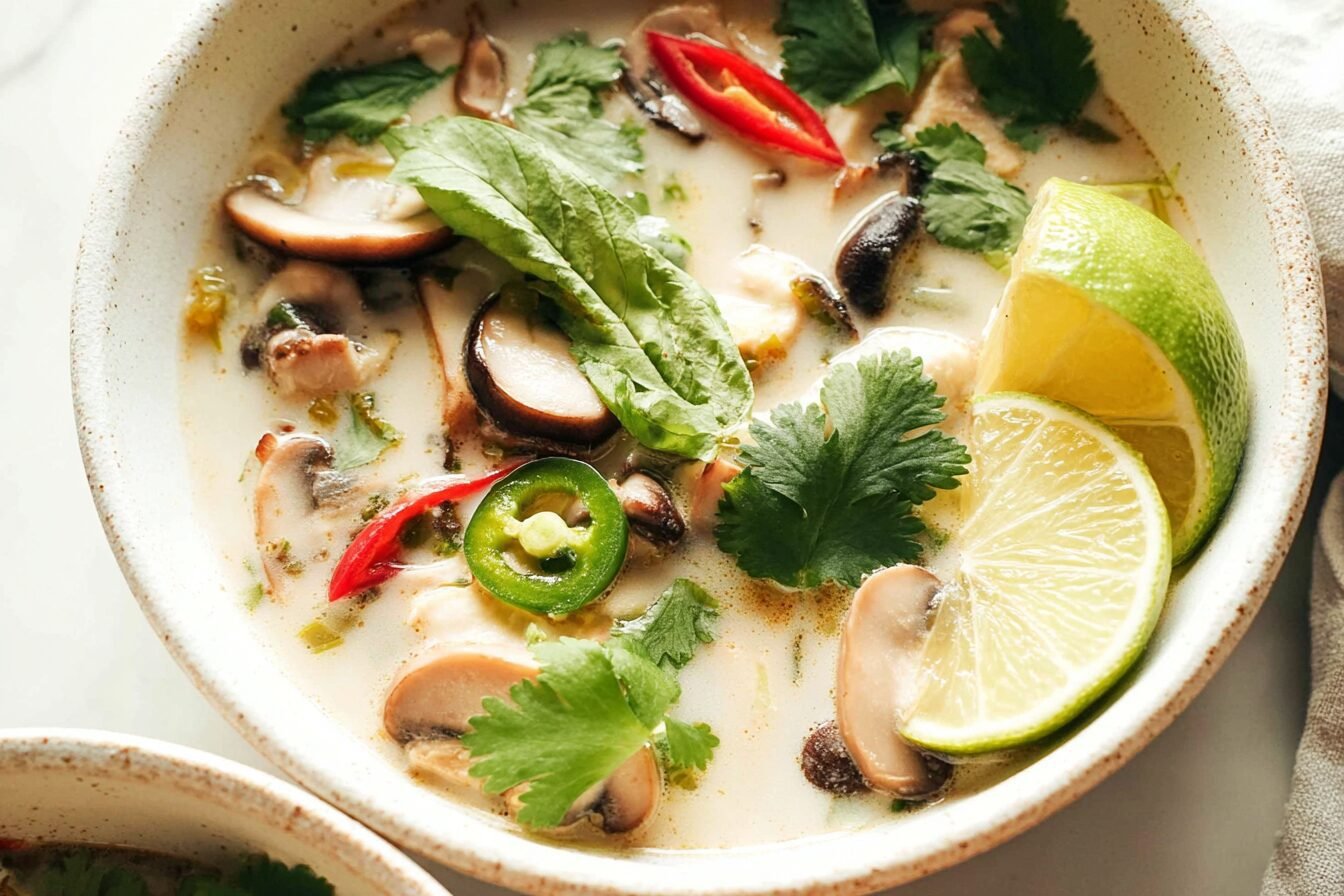
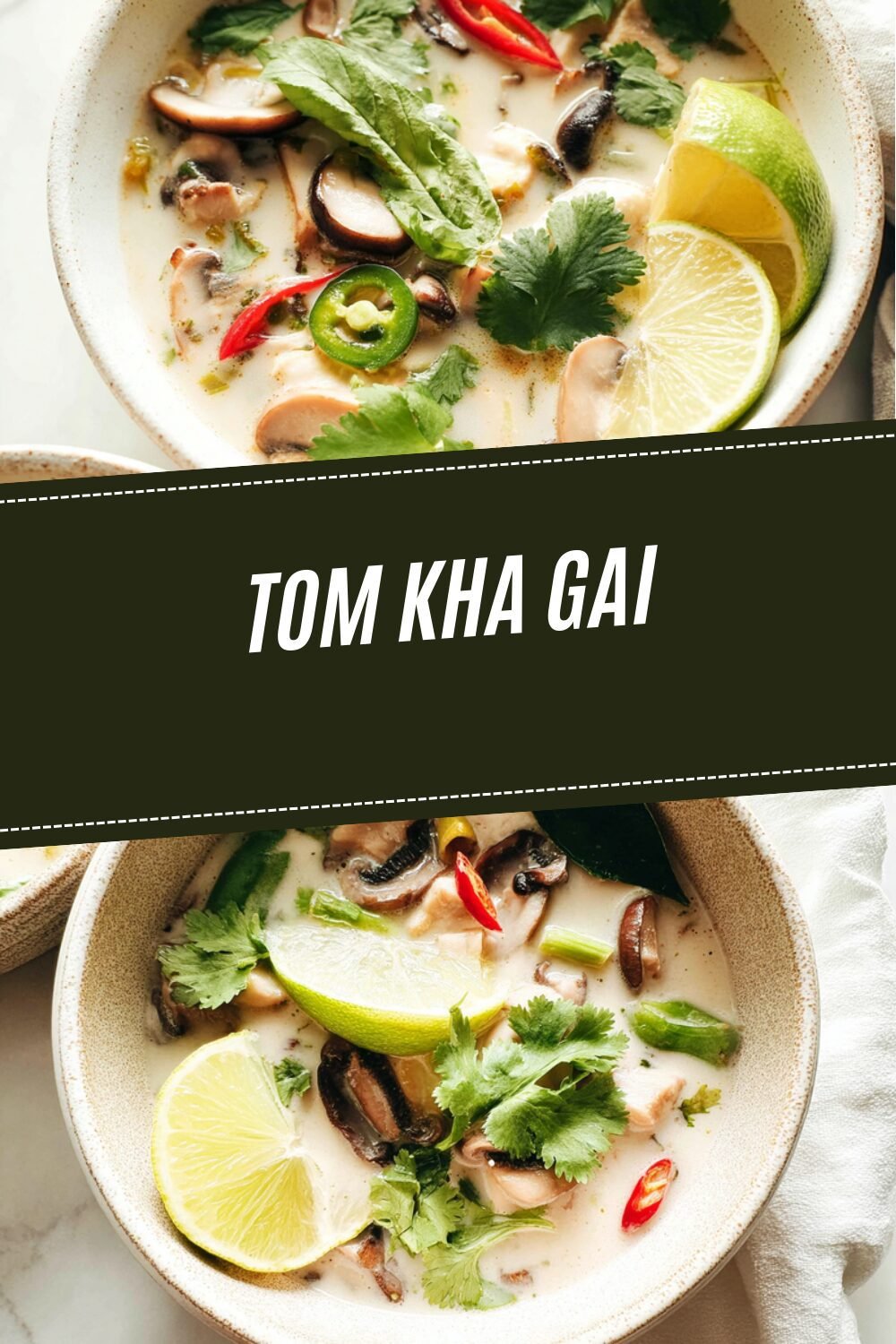
Garnish with chopped green onion and cilantro, then serve hot, optionally with jasmine rice. This step adds a fresh touch and makes the dish visually appealing for your gathering. If you’re preparing for gluten-free diners, ensure all components are checked, as this Tom Kha Gai recipe naturally fits many dietary needs.
With these steps, you’ll have a delicious Tom Kha Gai ready in no time, perfect for busy weeknights or community events. For more chicken soup inspiration, check out our related recipes on the site.
Dietary Substitutions to Customize Your Tom Kha Gai
Protein and Main Component Alternatives
Swapping proteins in Tom Kha Gai lets you tailor it to what you have on hand or your dietary goals. For instance, instead of 1 lb of chicken thighs, try using fish or seafood for a lighter version that cooks in just a few minutes. Tofu works great for vegans, absorbing the soup’s flavors while keeping the creamy texture intact, making your Tom Kha Gai adaptable and delicious.
Vegetable, Sauce, and Seasoning Modifications
You can vary the vegetables by adding more oyster mushrooms or even tomatoes for extra umami, especially in vegan adaptations. For sauces, swap fish sauce with soy sauce to accommodate gluten-free needs, and adjust seasonings like Thai chilies to control the heat. These changes keep the essence of Tom Kha Gai while making it suitable for different tastes and seasons.
Mastering Tom Kha Gai: Advanced Tips and Variations
Taking your Tom Kha Gai to the next level involves some pro techniques and creative twists. Here are ways to enhance this Thai coconut chicken soup for better results every time.
- Pro cooking techniques: Simmer gently to infuse flavors without overcooking the chicken, and always taste as you go for the perfect balance. Using frozen galangal can save time, as you slice it while partially thawed for the best extraction of its unique taste.
- Flavor variations: Experiment with adding chili paste for extra heat or incorporating Thai basil for a fresh twist, creating new versions of Tom Kha Gai that suit your mood.
- Presentation tips: Serve in bowls with vibrant garnishes like cilantro to make it visually appealing for your gatherings, turning a simple soup into a centerpiece.
- Make-ahead options: Prepare the base ahead and store it without lime juice, adding it fresh when reheating to maintain that zesty flavor for busy schedules.
| Tip Category | Description |
|---|---|
| Infusion Method | Smash herbs before adding to release more flavor in your Tom Kha Gai. |
| Storage Hack | Freeze in portions for easy meals later, keeping the soup’s quality high. |
How to Store Tom Kha Gai: Best Practices
Proper storage keeps your Tom Kha Gai fresh and flavorful, whether you’re meal prepping or saving leftovers. Follow these guidelines to enjoy it later without losing that creamy Thai essence.
- Refrigeration: Store in an airtight container for up to five days; add fresh herbs only when serving to keep flavors vibrant.
- Freezing: Freeze for up to two months in freezer-safe bags, but leave out lime juice until reheating for the best taste in your Tom Kha Gai.
- Reheating: Warm gently on the stove or in the microwave, stirring to maintain the soup’s texture and safety.
- Meal prep considerations: Batch cook and portion for easy grabs, making this Thai coconut chicken soup ideal for weekly planning.
FAQs: Frequently Asked Questions About Tom Kha Gai
What is Tom Kha Gai and what makes it different from other Thai soups?
Tom Kha Gai is a traditional Thai coconut soup made with chicken, galangal, kaffir lime leaves, lemongrass, and fresh lime juice. Its distinct creamy, tangy, and mildly spicy flavor sets it apart from other Thai soups like Tom Yum, which is clearer and more sour. The use of coconut milk gives Tom Kha Gai a rich texture, while the galangal root provides a unique herbal aroma essential to its authentic taste.
Can I substitute galangal in Tom Kha Gai if I can’t find it fresh?
Fresh galangal is key to the authentic flavor of Tom Kha Gai, but if unavailable, frozen galangal is a reliable alternative that preserves much of its distinct taste. Dried galangal can also be used but should be soaked to rehydrate before cooking. Ginger is not recommended as a substitute because it alters the soup’s signature flavor significantly.
How should I store Tom Kha Gai, and how long does it keep?
Tom Kha Gai stores well in the refrigerator for up to five days when kept in an airtight container. For longer storage, freeze the soup for up to two months. To maintain fresh flavors, it’s best to add delicate ingredients like fresh lime juice and herbs only when serving. Reheat gently on the stove or in the microwave until warm.
Is Tom Kha Gai gluten-free and suitable for special diets?
Traditional Tom Kha Gai is naturally gluten-free, as it uses coconut milk and fresh herbs without wheat-based ingredients. However, some store-bought broths or sauces might contain gluten, so check labels carefully. The soup can also be made dairy-free and low-carb, making it suitable for a variety of dietary preferences.
What are some common variations or additions to Tom Kha Gai?
While chicken is the classic protein for Tom Kha Gai, many variations include shrimp, tofu, or mushrooms to suit different tastes. Some recipes add chili paste or fresh chili peppers for extra heat. Fresh herbs like cilantro or Thai basil are often added as garnish, and substituting coconut cream for milk can create a richer, thicker soup.

Tom Kha Gai
🍲 Enjoy the rich and creamy flavors of Thai cuisine with this comforting Tom Kha Gai coconut chicken soup.
🌿 Packed with aromatic herbs and spices, this recipe offers a nourishing, flavorful dish perfect for any occasion.
- Total Time: 40 minutes
- Yield: 4 servings 1x
Ingredients
2 cups unsalted chicken stock
1 ½ cups coconut milk
½ teaspoon table salt
1 lb boneless skinless chicken thighs, cut into 1-inch pieces
1 stalk lemongrass (bottom half), smashed and cut into 2-inch pieces
12 thin slices galangal
5 kaffir lime leaves, bruised and torn
1–3 Thai chilies, smashed
2 tablespoons fish sauce
1 teaspoon finely chopped palm sugar or granulated sugar
5.5 oz oyster mushrooms, torn into bite-sized pieces
2 ½ tablespoons fresh lime juice
Chopped green onion and/or cilantro for garnish
Jasmine rice, optional for serving
Instructions
1-First Step: Gather and Prepare Ingredients Start by measuring out all your ingredients to make the process smooth. Chop the chicken into 1-inch pieces and prepare the aromatics like smashing the lemongrass and slicing the galangal. This mise en place helps everything come together quickly, especially if you’re adapting for a vegan version by using vegetable broth and tofu instead.
2-Second Step: Boil the Stock and Cook the Chicken Bring 2 cups of unsalted chicken stock and ½ teaspoon of table salt to a boil in a large pot over medium heat. Add the 1 lb of boneless skinless chicken thighs and let them simmer gently for 15 minutes until tender. If you’re using chicken breast, marinate it in 1 tablespoon of fish sauce first and reduce cooking time to avoid overcooking, making this Tom Kha Gai recipe flexible for different preferences.
3-Third Step: Infuse the Flavors Once the chicken is nearly done, stir in 1 ½ cups of coconut milk, the prepared lemongrass, 12 thin slices of galangal, 5 kaffir lime leaves, 1-3 smashed Thai chilies, 5.5 oz of torn oyster mushrooms, 1 tablespoon of fish sauce, and 1 teaspoon of sugar. Let the mixture simmer for about 5 minutes to blend the flavors. For a low-calorie option, add more vegetables here to bulk up the soup without extra calories.
4-Fourth Step: Season and Finish Taste the soup and add the remaining 1 tablespoon of fish sauce if needed for more depth. Turn off the heat, then stir in 2 tablespoons of fresh lime juice and adjust to your liking for that perfect tangy kick. Remember, elements like lemongrass and galangal are for infusion only, so remove them or inform guests before serving this Tom Kha Gai.
5-Final Step: Garnish and Serve Garnish with chopped green onion and cilantro, then serve hot, optionally with jasmine rice. This step adds a fresh touch and makes the dish visually appealing for your gathering. If you’re preparing for gluten-free diners, ensure all components are checked, as this Tom Kha Gai recipe naturally fits many dietary needs.
Last Step:
Please leave a rating and comment letting us know how you liked this recipe! This helps our business to thrive and continue providing free, high-quality recipes for you.Notes
🌿 Frozen galangal can be used if fresh is unavailable; slice while partially thawed and refreeze leftovers.
🍗 Substitute chicken breast for thighs with marinating in fish sauce first and shorter cooking time.
🌱 For vegan version, use vegetable broth, add mushrooms or tofu, and replace fish sauce with soy or vegan fish sauce.
- Prep Time: 15 minutes
- Cook Time: 25 minutes
- Category: Soup
- Method: Simmering
- Cuisine: Thai
- Diet: Gluten-Free
Nutrition
- Serving Size: 1 bowl
- Calories: 332 kcal
- Sugar: 2 g
- Sodium: 1426 mg
- Fat: 23 g
- Saturated Fat: 17 g
- Trans Fat: 0 g
- Carbohydrates: 8 g
- Fiber: 1 g
- Protein: 25 g
- Cholesterol: 108 mg