

Why You’ll Love This Thai Basil Pesto
Thai Basil Pesto is the kind of quick sauce that makes busy cooking feel easy. In about 15 minutes, you can blend a bright, bold pesto recipe that works for weeknight dinners, meal prep, and last-minute snacks. It is a great fit for home cooks, students, working professionals, and anyone who wants a fast asian inspired pesto sauce without a long ingredient list.
- Easy to make: This quick thai basil pesto comes together in a mini food processor with no cooking required, so cleanup stays simple and the whole process feels low-stress.
- Good for different diets: The sauce is naturally dairy-free and vegan, and it can be made gluten-free when you use tamari instead of soy sauce.
- Full of flavor: Thai basil gives the pesto a sweet, spicy note with a mild licorice taste that makes it stand out from a regular basil pesto.
- Flexible for many meals: Use this thai basil pesto sauce on noodles, rice, pasta, toast, soups, stir-fries, grilled meats, or fish.
If you like bold sauces that can do a lot of work in the kitchen, this Thai Basil Pesto is a smart recipe to keep on repeat.
It also fits the kind of food that travels well and feeds a crowd, which makes it a nice match for gatherings, potlucks, and family meals. If you enjoy easy make-ahead recipes, you may also like this sticky chicken vegetable fried rice for a fast and satisfying meal idea.
Jump to:
- Why You’ll Love This Thai Basil Pesto
- Essential Ingredients for Thai Basil Pesto
- Special Dietary Options
- How to Prepare the Perfect Thai Basil Pesto: Step-by-Step Guide
- First Step: Wash and dry the basil
- Second Step: Add the basil to the processor
- Third Step: Add the remaining ingredients
- Fourth Step: Blend to the texture you like
- Fifth Step: Taste and adjust
- Sixth Step: Store it the right way
- Final Step: Serve and enjoy
- Preparation Time and Storage at a Glance
- Protein and Main Component Alternatives
- Vegetable, Sauce, and Seasoning Modifications
- Mastering Thai Basil Pesto: Advanced Tips and Variations
- Pro cooking techniques
- Flavor variations
- Presentation tips
- Make-ahead options
- How to Store Thai Basil Pesto: Best Practices
- FAQs: Frequently Asked Questions About Thai Basil Pesto
- What’s the difference between Thai basil and regular basil?
- Can I use regular basil instead of Thai basil in pesto?
- How long does Thai basil pesto last in the fridge or freezer?
- What are some ways to use Thai basil pesto?
- Is Thai basil pesto vegan?
- Thai Basil Pesto
- Ingredients
- Instructions
- Last Step:
- Notes
- Nutrition
- Did you make this recipe?
Essential Ingredients for Thai Basil Pesto
Here is the full ingredient list for this thai basil pesto recipe. Each item plays a role in the texture and flavor, so it helps to measure everything before you start.
- 2 cups packed, washed, and dried Thai basil leaves – Fresh leaves picked from the stems give this pesto its signature flavor. Italian basil can be used as a supplement if needed, but Thai basil gives a more authentic result.
- 2 tablespoons roasted, unsalted cashew nuts – Cashews add creaminess and help create a smooth pesto texture.
- 2 tablespoons roasted, unsalted peanuts – Peanuts bring a nutty depth that works well with the Thai-inspired flavor.
- 2 garlic cloves, crushed – Garlic adds sharpness and balance.
- 1/2 teaspoon chili flakes – Use this amount for gentle heat, or increase to 3/4 teaspoon or more for a spicier pesto.
- 60 ml mild-flavored olive oil or sesame oil – Oil helps the pesto blend smoothly and gives it a spoonable texture.
- 1/2 teaspoon sea salt – This seasons the pesto, or you can substitute 1 teaspoon soy sauce or tamari for a deeper savory taste.
- 1 teaspoon rice wine vinegar – Vinegar adds brightness and helps balance the richness.
- 1 teaspoon caster sugar – Sugar rounds out the heat and acidity.
- Juice from 1/2 lime, to taste – Lime adds a fresh, tangy finish that makes the sauce taste lively.
| Ingredient | Purpose | Simple Swap |
|---|---|---|
| Thai basil | Provides the main flavor | Italian basil as a supplement |
| Cashews and peanuts | Add body and richness | Use one nut or a mix |
| Olive oil or sesame oil | Helps blend and carry flavor | Canola or grapeseed oil |
| Sea salt | Boosts savory flavor | Soy sauce or tamari |
| Lime juice | Adds brightness | More or less to taste |
Special Dietary Options
- Vegan: This recipe is already vegan because it does not use cheese or dairy.
- Gluten-free: Use tamari instead of soy sauce if you want a gluten-free version.
- Low-calorie: Use a little less oil and keep portions small when serving over rice or pasta.
How to Prepare the Perfect Thai Basil Pesto: Step-by-Step Guide
First Step: Wash and dry the basil
Start by washing the Thai basil leaves well, then dry them fully. This step matters because excess water can thin out the pesto and dull the flavor. Pick the leaves from the stems so you are working only with the tender parts of the herb.
Second Step: Add the basil to the processor
Place the basil leaves in a mini food processor bowl. A small processor works best because this recipe makes about 1 cup total, which is just the right amount for a quick sauce. If you do not have a mini processor, a small blender can work, but you may need to stop and scrape the sides more often.
Third Step: Add the remaining ingredients
Add the roasted cashews, roasted peanuts, crushed garlic, chili flakes, olive oil or sesame oil, sea salt or your soy sauce or tamari substitute, rice wine vinegar, caster sugar, and lime juice. At this point, the bowl should already smell bright and savory. The mix of Thai basil, nuts, and lime is what gives this asian pesto its unique flavor.
Fourth Step: Blend to the texture you like
Pulse and blend until a pesto-like paste forms. Stop the machine every so often to scrape down the sides so everything mixes evenly. You can keep the texture chunky if you like a rustic spoonable sauce, or blend longer for a smoother thai sauce that spreads well on toast or works nicely as a noodle topper.
If the pesto seems too thick, add a small splash more oil. If it looks too loose, add a few more basil leaves or a little more nuts if you have them. The goal is a soft paste that holds its shape but still drizzles or spoons easily. If you enjoy easy chicken dinners that pair well with strong sauces, you might also like this honey soy chicken recipe for a flavorful meal idea.
Fifth Step: Taste and adjust
Taste the pesto and check the balance. Add more lime juice if you want extra tang, more chili flakes if you want more heat, or a pinch more salt if it tastes flat. This is the best time to make the recipe fit your own taste, since Thai basil pesto can be bold, bright, or spicy depending on how you like it.
Sixth Step: Store it the right way
Spoon the pesto into a clean jar or container. Drizzle a thin layer of olive oil on top before sealing it tightly. That little layer helps slow browning and keeps the color fresher. Store it in the fridge if you plan to use it soon, or freeze it for later.
Final Step: Serve and enjoy
Use your pesto right away, or save it for later meals. It tastes great with noodles, rice, pasta, soups, stir-fries, roasted vegetables, or grilled proteins. For a casual meal, spread it on toast and top with sliced tomato or avocado. For a fuller dinner, spoon it over chicken, fish, or shrimp.
For the best flavor, taste the pesto after blending and adjust the lime and salt before serving.
Preparation Time and Storage at a Glance
- Total time: About 15 minutes
- Fridge life: Up to 1 week
- Freezer life: Up to 4 months
Protein and Main Component Alternatives
Thai Basil Pesto is flexible, so you can adjust it based on what you have on hand. If Thai basil is hard to find, use Italian basil as a supplement or as a full swap in a pinch. The flavor will be milder and less spicy, but the sauce will still be tasty and useful for pasta, rice, and sandwiches.
For the nuts, cashews and peanuts work well together, but you can also lean on one or the other. Cashews give a smoother texture, while peanuts bring a more obvious roasted flavor. If you need a nut-free version, you can try sunflower seeds, though the taste will change a bit.
The oil is another place where you can switch things up. Mild olive oil is a classic choice, but sesame oil brings a deeper Asian-inspired note. Canola or grapeseed oil can also work if you want a more neutral base. If you like recipes with bold flavor and easy pairing options, this pesto can sit nicely alongside dishes like chicken and broccoli stir fry.
For more savory depth, use tamari instead of sea salt. This helps the pesto lean a little more toward an asian sauce feel. If you want a sharper flavor, add a touch more lime or vinegar. For a hotter finish, increase the chili flakes slowly so the heat does not take over the basil.
Vegetable, Sauce, and Seasoning Modifications
This pesto works well with different vegetables and serving ideas, so it is easy to match the season or the meal. Toss it with steamed broccoli, snap peas, green beans, or roasted carrots for a fast side dish. Stir it into noodles with mushrooms or cabbage for a quick lunch. You can even thin it with a little warm water or extra oil to make a loose dressing for rice bowls and grain salads.
If you want a brighter taste, add more lime juice just before serving. If you want a saltier, deeper flavor, use soy sauce or tamari instead of sea salt. Rice wine vinegar gives the sauce a gentle tang, but a small splash of lime plus vinegar can make it pop even more. For heat, add extra chili flakes, fresh sliced chilies, or a spoonful of chili oil.
As a topping, Thai basil pesto can be spooned over soup, rice noodles, baked potatoes, or grilled seafood. It also works as a simple spread for toast, sandwiches, and wraps. Since it is dairy-free, it fits vegan meals too, and it can help bring more flavor to simple vegetable plates without much work.
Mastering Thai Basil Pesto: Advanced Tips and Variations
Once you have made this Thai Basil Pesto once, it is easy to start adjusting it to match your pantry and taste. The best version is the one that fits the meal you are making, so do not be afraid to make small changes.
Pro cooking techniques
Use fully dried basil leaves so the pesto stays bright and does not turn watery. Pulse the food processor instead of blending nonstop at first, which helps you control the texture. If the blades struggle, stop and push the mixture down with a spoon. This is especially helpful when making a chunkier pesto recipe.
For a cleaner finish, taste at the end rather than adding too much salt early. Lime can brighten the whole sauce, but a little goes a long way. If you want a smoother paste, let the processor run a bit longer while adding the oil in a steady stream. If you prefer more texture, stop before the mixture becomes too fine.
Flavor variations
To make the pesto more fragrant, add a tiny bit more sesame oil. To keep it light and fresh, stick with olive oil. For a stronger Asian inspired pesto sauce, use tamari instead of salt and add a little extra chili. If you want something closer to a classic thai basil pesto sauce, keep the ingredients simple and let the basil shine.
You can also stir a spoonful into hot rice, then top it with a fried egg, or mix it into cold noodles for a quick lunch. It pairs well with chicken, shrimp, fish, tofu, and roasted vegetables. For another family-friendly dinner that travels well, try this Mexican chicken and rice recipe.
Presentation tips
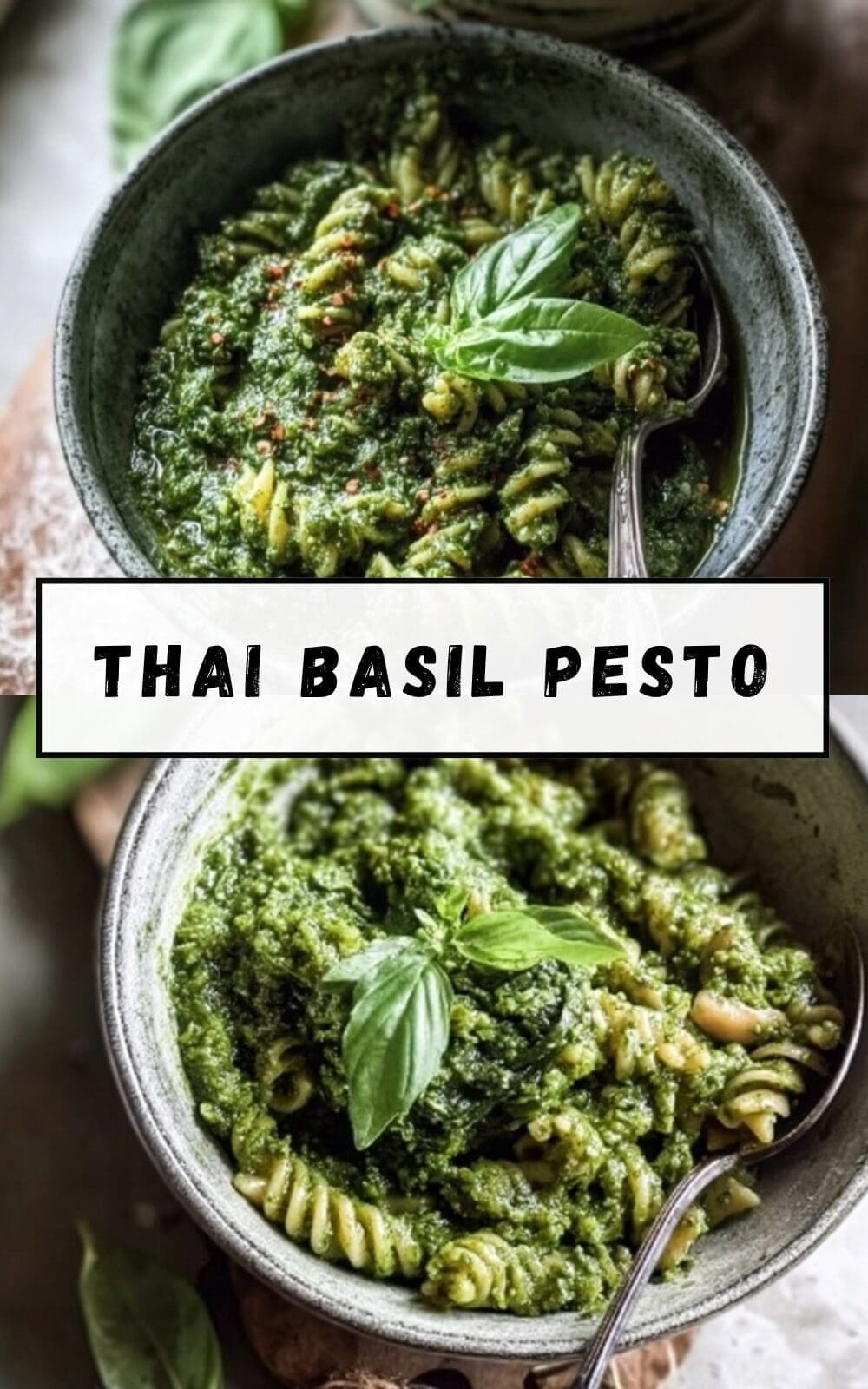
Serve the pesto in a small bowl with a drizzle of oil on top and a few fresh basil leaves for color. If you are using it on toast or crostini, add sliced tomato, cucumber, or avocado. For dinner plates, a small spoonful on the side looks neat and lets everyone add as much as they want.
Make-ahead options
This is a great sauce to make before a busy week. Blend it ahead of time, store it in a jar, and keep it ready for quick meals. You can also freeze it in small portions so you only thaw what you need. That makes it helpful for students, busy parents, and anyone who likes quick meals with less prep later.
How to Store Thai Basil Pesto: Best Practices
Thai basil pesto stores well if you keep air away from the surface. For the fridge, place it in an airtight jar or container and top it with a thin layer of oil before sealing. It will keep for up to one week, though the color and flavor are best in the first few days.
For freezing, spoon the pesto into small containers or ice cube trays. Once frozen, move the cubes to a freezer-safe bag or sealed container. It can stay frozen for up to four months. Thaw only what you need in the refrigerator overnight, then stir before using.
Do not store it in a metal container, since that can affect the taste. If the top starts to darken a little, just scrape off the surface and stir the rest. This pesto is great for meal prep because one batch can be used in small portions over several meals.
| Storage Method | How Long It Lasts | Best Tip |
|---|---|---|
| Refrigerator | Up to 1 week | Top with oil and seal tightly |
| Freezer | Up to 4 months | Freeze in cubes for easy portions |
FAQs: Frequently Asked Questions About Thai Basil Pesto
What’s the difference between Thai basil and regular basil?
Thai basil has narrower leaves with serrated edges and purple stems, making it sturdier than regular sweet basil, which features rounded leaves and delicate green stems. Flavor-wise, Thai basil delivers a sweet taste with anise-like licorice notes and a mild spice, while sweet basil offers a sweeter profile with hints of black pepper and mint. In pesto, Thai basil brings an authentic Asian twist that regular basil can’t fully replicate, but the difference shines in dishes like stir-fries or noodle bowls. Grow Thai basil in warm conditions for best results, or find it fresh at Asian markets. This swap affects the overall taste profile, so test small batches first. (92 words)
Can I use regular basil instead of Thai basil in pesto?
Yes, you can substitute Italian sweet basil for Thai basil in pesto recipes, but expect a milder flavor without the signature licorice and spicy kick. For every cup of Thai basil called for, use the same amount of sweet basil—wash, dry, and blend as directed. To mimic the Asian vibe, add a pinch of star anise or a dash of fish sauce if not vegan. It’s a quick fix if Thai basil is unavailable at your local store; check farmers’ markets or grow it indoors year-round. Taste and adjust salt or lime for balance after blending. This keeps the pesto vibrant for pasta or marinades. (98 words)
How long does Thai basil pesto last in the fridge or freezer?
Store Thai basil pesto in an airtight container in the fridge for up to one week, or freeze it in ice cube trays for up to four months—transfer frozen cubes to a freezer bag for easy portioning. Before sealing, drizzle a thin layer of neutral oil like grapeseed on top to block air and prevent browning, preserving that fresh green color. Thaw overnight in the fridge and stir well before use. Avoid metal containers to prevent off-flavors. Label with dates for safety. This method keeps it ready for quick meals like rice bowls or grilled meats. (96 words)
What are some ways to use Thai basil pesto?
Thai basil pesto adds bold flavor to many dishes: toss with noodles, rice, or pasta; mix into stir-fries or soups like pumpkin; spread on avocado toast with tomato; use as a marinade or topping for steak, chicken, or fish; or serve with crackers and crostini for appetizers. Thin with oil for salad dressing, or dollop on roasted veggies. Start with 1-2 tablespoons per serving and adjust. It pairs well with coconut milk dishes or spring rolls. Experiment in meal prep—freeze portions for busy weeknights. One batch yields versatile uses beyond traditional Italian pesto. (92 words)
Is Thai basil pesto vegan?
Yes, traditional Thai basil pesto is fully vegan, relying on basil, garlic, nuts like peanuts or cashews, lime juice, soy sauce, and oil—no cheese or dairy involved. Confirm ingredients: skip fish sauce for strict vegan compliance, opting for tamari instead. Blend fresh for creaminess without animal products. It’s naturally gluten-free if using tamari. Nutrition perks include healthy fats from nuts and vitamin C from lime. Serve guilt-free at potlucks or as a dip. Customize with chilies for heat. Store as noted to maintain freshness for vegan meal plans. (89 words)

Thai Basil Pesto
🌿🧄 Thai Basil Pesto Recipe blends spicy Thai basil, nuts, chili into vibrant Asian pesto – fiery umami upgrade for any dish!
🍜 15-min no-cook vegan sauce: toss pasta, rice, stir-fries – quick flavor explosion fridge staple!
- Total Time: 15 minutes
- Yield: 1 cup (8 servings)
Ingredients
– 2 cups packed, washed, and dried Thai basil leaves
– 2 tablespoons roasted, unsalted cashew nuts
– 2 tablespoons roasted, unsalted peanuts
– 2 garlic cloves, crushed
– 1/2 teaspoon chili flakes
– 60 ml mild-flavored olive oil or sesame oil
– 1/2 teaspoon sea salt
– 1 teaspoon rice wine vinegar
– 1 teaspoon caster sugar
– Juice from 1/2 lime, to taste
Instructions
1-First Step: Wash and dry the basil Start by washing the Thai basil leaves well, then dry them fully. This step matters because excess water can thin out the pesto and dull the flavor. Pick the leaves from the stems so you are working only with the tender parts of the herb.
2-Second Step: Add the basil to the processor Place the basil leaves in a mini food processor bowl. A small processor works best because this recipe makes about 1 cup total, which is just the right amount for a quick sauce. If you do not have a mini processor, a small blender can work, but you may need to stop and scrape the sides more often.
3-Third Step: Add the remaining ingredients Add the roasted cashews, roasted peanuts, crushed garlic, chili flakes, olive oil or sesame oil, sea salt or your soy sauce or tamari substitute, rice wine vinegar, caster sugar, and lime juice. At this point, the bowl should already smell bright and savory. The mix of Thai basil, nuts, and lime is what gives this asian pesto its unique flavor.
4-Fourth Step: Blend to the texture you like Pulse and blend until a pesto-like paste forms. Stop the machine every so often to scrape down the sides so everything mixes evenly. You can keep the texture chunky if you like a rustic spoonable sauce, or blend longer for a smoother thai sauce that spreads well on toast or works nicely as a noodle topper. If the pesto seems too thick, add a small splash more oil. If it looks too loose, add a few more basil leaves or a little more nuts if you have them. The goal is a soft paste that holds its shape but still drizzles or spoons easily. If you enjoy easy chicken dinners that pair well with strong sauces, you might also like this honey soy chicken recipe for a flavorful meal idea.
5-Fifth Step: Taste and adjust Taste the pesto and check the balance. Add more lime juice if you want extra tang, more chili flakes if you want more heat, or a pinch more salt if it tastes flat. This is the best time to make the recipe fit your own taste, since Thai basil pesto can be bold, bright, or spicy depending on how you like it.
6-Sixth Step: Store it the right way Spoon the pesto into a clean jar or container. Drizzle a thin layer of olive oil on top before sealing it tightly. That little layer helps slow browning and keeps the color fresher. Store it in the fridge if you plan to use it soon, or freeze it for later.
7-Final Step: Serve and enjoy Use your pesto right away, or save it for later meals. It tastes great with noodles, rice, pasta, soups, stir-fries, roasted vegetables, or grilled proteins. For a casual meal, spread it on toast and top with sliced tomato or avocado. For a fuller dinner, spoon it over chicken, fish, or shrimp.
Last Step:
Please leave a rating and comment letting us know how you liked this recipe! This helps our business to thrive and continue providing free, high-quality recipes for you.Notes
🌿 Fresh Thai basil key – licorice-spicy authentic zing!
🛢️ Oil top before seal – prevents brown oxidation!
🔥 Dial chili flakes – customize heat level perfect!
- Prep Time: 15 minutes
- Category: Sauce
- Method: Blending
- Cuisine: Thai
- Diet: Vegan, Dairy-Free
Nutrition
- Serving Size: 2 tablespoons
- Calories: 99 kcal
- Sugar: 1g
- Sodium: 149mg
- Fat: 10g
- Saturated Fat: 1g
- Unsaturated Fat: 9g
- Trans Fat: 0g
- Carbohydrates: 2g
- Fiber: 0.5g
- Protein: 1g
- Cholesterol: 0mg


