

Why You’ll Love This Red Curry Salmon
Red Curry Salmon brings together bold flavor, fast cooking, and a silky coconut sauce that feels special without being fussy. If you need a dinner that fits a busy weeknight but still tastes like something you would order out, this one checks the box.
- Easy to make: This red curry salmon recipe comes together in about 35 minutes, with simple steps and everyday cookware. You sear the fish, build the sauce in the same pan, then let everything simmer together.
- Good for you and filling: Salmon gives you plenty of protein, while coconut milk, carrots, and broccolini add richness, color, and nutrients. Each serving has about 27 grams of protein, which helps make this meal satisfying.
- Flexible for different needs: You can swap the fish sauce for soy sauce, switch the vegetables, or adjust the spice level to fit your table. That makes Red Curry Salmon a smart choice for mixed tastes.
- Big flavor in every bite: Thai red curry paste, lime juice, basil, and cilantro give the sauce a warm, fresh, and slightly tangy taste that pairs beautifully with tender salmon.
When you want a dinner that feels cozy, colorful, and a little different from the usual rotation, Red Curry Salmon is a great pick.
If you enjoy easy salmon meals, you may also like this sweet and spicy firecracker salmon or this simple salmon with avocado recipe for another quick seafood dinner.
Jump to:
- Why You’ll Love This Red Curry Salmon
- Essential Ingredients for Red Curry Salmon
- Main Ingredients
- Ingredient Notes Worth Knowing
- Special Dietary Options
- How to Prepare the Perfect Red Curry Salmon: Step-by-Step Guide
- First Step: Prep the salmon and vegetables
- Second Step: Sear the salmon
- Third Step: Set the salmon aside
- Fourth Step: Build the curry base
- Fifth Step: Simmer the vegetables
- Sixth Step: Finish with lime and salmon
- Seventh Step: Serve and enjoy
- Dietary Substitutions to Customize Your Red Curry Salmon
- Protein and Main Component Alternatives
- Vegetable, Sauce, and Seasoning Modifications
- Mastering Red Curry Salmon: Advanced Tips and Variations
- Pro cooking techniques
- Flavor variations
- Presentation tips
- Make-ahead options
- How to Store Red Curry Salmon: Best Practices
- Refrigeration
- Freezing
- Reheating
- Meal prep considerations
- FAQs: Frequently Asked Questions About Red Curry Salmon
- What is the best coconut milk for red curry salmon recipe?
- Can I skip fish sauce in red curry salmon?
- How do I sear salmon for red curry salmon without sticking?
- What vegetables can I use in red curry salmon?
- How do I store and reheat red curry salmon leftovers?
- Red Curry Salmon
- Ingredients
- Instructions
- Last Step:
- Notes
- Nutrition
- Did you make this recipe?
Essential Ingredients for Red Curry Salmon
This Thai-inspired curry uses a short list of ingredients, but each one plays an important part. The salmon stays rich and tender, the coconut milk makes the sauce creamy, and the curry paste adds that deep red color and warm spice people love in a red curry salmon recipe.
Main Ingredients
- 1 pound fresh salmon – The star of the dish. Cut into four pieces so it cooks evenly and soaks up the sauce later.
- Salt and pepper to taste – A simple seasoning that helps the salmon taste clean and balanced before searing.
- 1 tablespoon olive oil – Helps the fish brown in the skillet without sticking.
- 1 tablespoon butter – Adds extra flavor and gives the sauce a richer finish.
- 1/2 medium onion, chopped – Builds the savory base of the curry.
- 2 cloves garlic, minced – Adds sharp, fragrant flavor.
- 2 heaping tablespoons Thai red curry paste – Brings the classic red curry flavor, color, and heat.
- 1/2 teaspoon fish sauce – Optional, but it adds a savory depth that makes the sauce taste fuller.
- 1 can (13.5 ounce) full-fat coconut milk – Creates the creamy sauce that ties everything together.
- 1/2 teaspoon brown sugar – Balances the heat and salt with a gentle sweetness.
- 1/2 cup matchstick-cut carrots – Adds color, crunch, and a little natural sweetness.
- 1 heaping cup chopped broccolini – Brings a fresh green bite and cooks quickly in the curry sauce.
- 1 teaspoon lime juice – Brightens the dish and wakes up all the flavors.
- 2 tablespoons torn or chopped fresh basil – Adds a sweet herbal note at the end.
- 2 tablespoons chopped fresh cilantro – Gives the curry a fresh finish and a bright green garnish.
Ingredient Notes Worth Knowing
Full-fat coconut milk matters here because it gives the sauce body and a smooth, rich texture. If you want a thinner sauce, you can still use light coconut milk, but the result will be less creamy.
Broccolini works especially well in this dish because it cooks quickly and stays a little crisp. If you cannot find it, regular broccoli florets, green beans, or asparagus can step in.
For the best red curry salmon, use fresh salmon if possible and keep the vegetable pieces small so everything cooks in the same short window.
Special Dietary Options
- Vegan: Swap the salmon for pressed tofu or chickpeas, use vegan butter, and replace fish sauce with soy sauce or tamari.
- Gluten-free: This dish is naturally gluten-free if your red curry paste and fish sauce are labeled gluten-free. Tamari also works as a substitute.
- Low-calorie: Use a little less butter, add extra broccolini, and serve the curry with cauliflower rice instead of regular rice.
| Ingredient | What It Does | Simple Swap |
|---|---|---|
| Full-fat coconut milk | Makes the sauce creamy | Light coconut milk plus a little cornstarch slurry |
| Fish sauce | Adds savory depth | Soy sauce or tamari |
| Broccolini | Adds color and crunch | Broccoli, green beans, asparagus |
| Salmon | Rich protein centerpiece | Tofu or shrimp |
How to Prepare the Perfect Red Curry Salmon: Step-by-Step Guide
This recipe moves fast, so it helps to have everything chopped and ready before you turn on the stove. Once the salmon goes into the pan, the rest of the dish comes together quickly. That is one reason Red Curry Salmon works so well for weeknights.
First Step: Prep the salmon and vegetables
Cut 1 pound of fresh salmon into four even pieces. Pat the fish dry with paper towels, then season both sides with salt and pepper. Chop the onion, mince the garlic, cut the carrots into matchsticks if needed, and chop the broccolini into bite-size pieces.
Dry salmon matters because moisture makes it stick. If you are cooking for someone who does not like fish skin, you can leave the skin on for searing and remove it later.
Second Step: Sear the salmon
Set a skillet over medium-high heat and add 1 tablespoon olive oil plus 1 tablespoon butter. Let the pan get hot before the fish goes in. Place the salmon skin-side down and cook for about 5 minutes.
Flip the salmon and cook for 2 to 3 minutes more, just until nearly done. If the fish sticks, give it another moment before turning. Salmon often releases from the pan once it has browned enough.
Third Step: Set the salmon aside
Move the salmon to a plate. You can remove the skin now if you prefer, though it is fine to leave it on. Drain off extra oil from the skillet, leaving about 1 tablespoon behind for the sauce base.
This little step keeps the curry from turning greasy. It also gives the onion a clean surface for sautéing.
Fourth Step: Build the curry base
Add the chopped onion to the skillet and cook for about 3 minutes, until lightly browned. Stir in the garlic and 2 heaping tablespoons Thai red curry paste, then cook for 1 minute. This short cooking time helps the curry paste bloom and bring out its fragrance.
Next, stir in the fish sauce if using, along with the full-fat coconut milk and brown sugar. Add the carrots and broccolini, then bring the sauce to a gentle simmer.
Fifth Step: Simmer the vegetables
Let the curry bubble gently for about 5 minutes. The vegetables should soften but still keep a little bite. This tender-crisp texture gives the dish more interest and keeps the broccolini bright.
If you like softer vegetables, let them simmer a minute or two longer. For a slightly lighter sauce, stir in a splash of water if the curry looks too thick.
Sixth Step: Finish with lime and salmon
Stir in 1 teaspoon lime juice, then return the salmon to the pan. Spoon some sauce over the fish and warm everything for about 2 minutes. Taste and add more salt, pepper, or lime juice if needed.
Finish with fresh basil and cilantro. The herbs add a fresh pop that balances the creamy curry sauce.
Seventh Step: Serve and enjoy
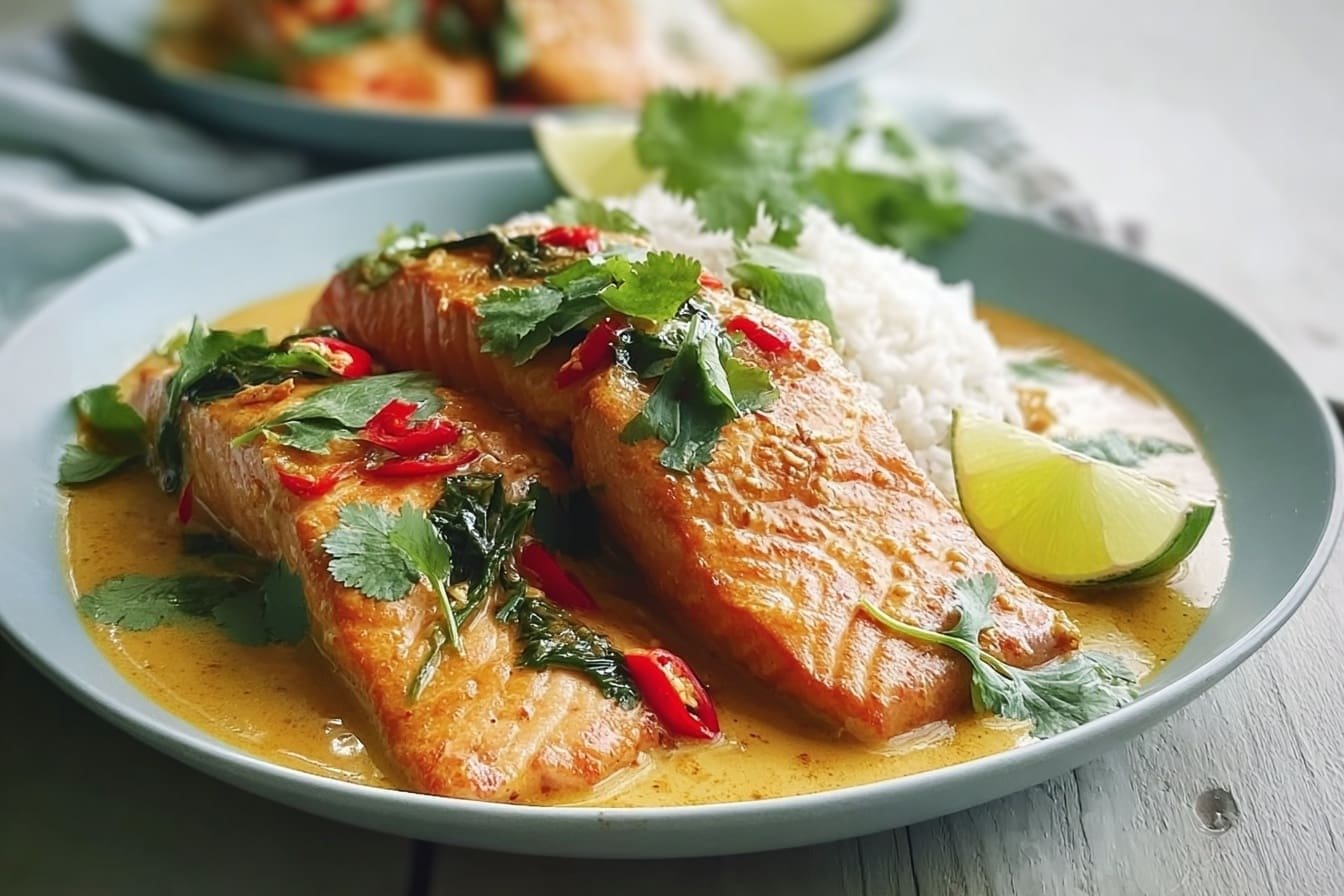
Serve Red Curry Salmon right away while the sauce is hot and silky. It goes well with jasmine rice, basmati rice, or even cauliflower rice if you want a lower-carb option. You can also spoon the curry into bowls with extra herbs on top for a cozy, restaurant-style feel.
The best red curry salmon is tender in the middle, lightly sauced, and finished with fresh herbs just before serving.
Dietary Substitutions to Customize Your Red Curry Salmon
Protein and Main Component Alternatives
If salmon is not what you have on hand, this recipe still leaves room for flexibility. Shrimp cooks even faster and works well in the same sauce. Cubes of tofu also fit nicely if you want a plant-based version with a creamy Thai curry flavor.
- Salmon: Swap with shrimp, cod, tofu, or chickpeas.
- Butter: Use all olive oil if you want a dairy-free version.
- Fish sauce: Replace with soy sauce, tamari, or a little mushroom seasoning.
Vegetable, Sauce, and Seasoning Modifications
You can change the vegetables depending on the season or what is in your fridge. Peas, bell peppers, and asparagus work especially well. If you want more heat, add Thai chilis or red pepper flakes. If you want a milder bowl, keep the curry paste amount the same and skip extra spice.
- For more vegetables: Add bell peppers, peas, asparagus, zucchini, or green beans.
- For less heat: Use a slightly smaller amount of curry paste.
- For more brightness: Add extra lime juice at the end.
- For herb swaps: Skip cilantro and use scallions if that suits your taste better.
These kinds of swaps make Red Curry Salmon useful for different diets and tastes without changing the heart of the dish.
Mastering Red Curry Salmon: Advanced Tips and Variations
Once you make this recipe once, it becomes easy to tweak. A few small moves can help you get better texture, better balance, and a prettier bowl.
Pro cooking techniques
Start with a hot pan. That is one of the biggest tricks for good salmon. A hot skillet helps the fish brown instead of steam. Also, do not force the fish to move if it sticks. Give it another minute and it will usually release on its own.
Cutting the vegetables small also helps the dish cook evenly in a short time. This matters especially if you are making dinner after a long day and want everything done fast.
Flavor variations
If you want a stronger Thai flavor, add a little extra curry paste. For more sweetness, increase the brown sugar just slightly. For a sharper finish, add a little more lime juice before serving.
You can also try a few additions:
- Thai basil instead of regular basil
- A pinch of turmeric for more color
- A spoonful of peanut butter for a thicker sauce
- Red pepper flakes for a little heat
Presentation tips
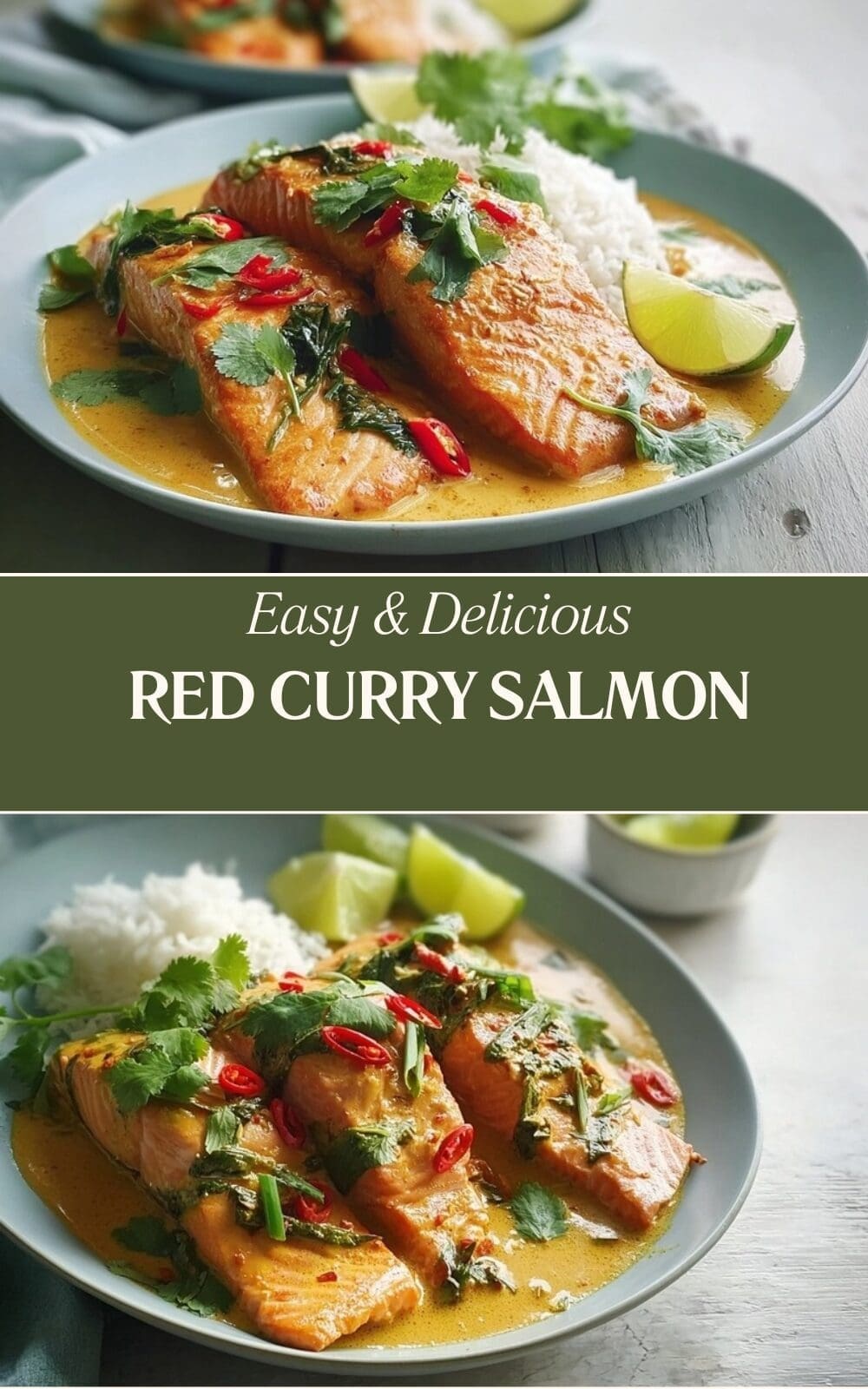
Spoon the curry into a shallow bowl so the salmon sits partly above the sauce. Top with basil and cilantro right before serving so the herbs stay fresh. A wedge of lime on the side looks nice and gives everyone the option to add more brightness.
For a meal that feels fit for guests, serve this with a simple rice side and a crisp salad. If you want another easy main dish for company, take a look at grilled Japanese salmon for a different flavor profile.
Make-ahead options
You can chop the onion, garlic, carrots, broccolini, and herbs ahead of time and store them in the fridge. The salmon should stay cold until you are ready to cook. The curry sauce also comes together quickly, so this is a good recipe for nights when you want less last-minute work.
How to Store Red Curry Salmon: Best Practices
If you have leftovers, this curry holds up well in the fridge for a short time. The sauce can actually taste even better the next day because the flavors settle in together.
Refrigeration
Store leftover red curry salmon in an airtight container in the refrigerator for up to 3 days. Let it cool before sealing the container so excess steam does not water down the sauce. Keep rice in a separate container if possible.
Freezing
Freezing is not the best option for this dish because salmon can turn softer after thawing, and coconut sauce may separate a bit. If you do freeze it, keep the curry in a freezer-safe container for up to 1 month and thaw it in the fridge overnight.
Reheating
Warm leftovers slowly in a skillet over low heat. Add a splash of water or coconut milk if the sauce has thickened too much. You can also use the microwave in short bursts, covered loosely, until the salmon is hot.
For the best texture, reheat gently and stop as soon as the salmon is warmed through.
Meal prep considerations
This recipe can be part of a simple meal prep plan if you keep the fish and sauce stored with rice on the side. For the best texture, cook the salmon fresh and prep only the vegetables and sauce base ahead of time.
FAQs: Frequently Asked Questions About Red Curry Salmon
What is the best coconut milk for red curry salmon recipe?
For the creamiest red curry salmon, choose full-fat coconut milk like Thai Kitchen brand. It has a rich texture that thickens the sauce perfectly, unlike lighter or watery brands that can make the curry thin and separate. Shake the can well before opening to mix the cream and liquid. Use about 1-2 cans (13.5 oz each) depending on your batch size. If you only have light coconut milk, add a teaspoon of cornstarch slurry to help it thicken while simmering. This simple swap keeps the sauce velvety and coats the salmon beautifully. Always check labels for additives, as pure coconut milk without gums yields the best flavor. (78 words)
Can I skip fish sauce in red curry salmon?
Yes, you can omit fish sauce from red curry salmon, but it adds a savory umami depth that balances the curry’s heat and sweetness. For a substitute, use low-sodium soy sauce or tamari (1:1 ratio, about 1-2 tablespoons), though it won’t replicate the exact fermented fish flavor. Vegan options include mushroom powder or a splash of Worcestershire sauce (fish-free version). Taste the sauce after simmering the curry paste and coconut milk, then adjust salt levels gradually. Without it, add a pinch of sea salt or extra lime juice at the end for brightness. This keeps the dish flavorful even for picky eaters. (92 words)
How do I sear salmon for red curry salmon without sticking?
To sear salmon perfectly for red curry salmon, pat fillets dry with paper towels to remove moisture, which causes sticking. Heat a non-stick or cast-iron skillet over medium-high with 1 tablespoon neutral oil (like avocado) until shimmering hot—about 2 minutes. Place salmon skin-side down first, press gently with a spatula for 10 seconds to crisp the skin, then don’t move it. Cook 4-5 minutes until edges turn opaque, then flip for 2-3 minutes. If it sticks, wait longer; the proteins will release naturally. Season simply with salt before searing. This method gives crispy skin that holds up in the curry sauce. (98 words)
What vegetables can I use in red curry salmon?
Red curry salmon traditionally uses quick-cooking veggies like sliced carrots, broccolini, or green beans that soften in 5-7 minutes. Swap them freely with snow peas, red bell peppers, asparagus tips, zucchini, or baby corn—cut into bite-sized pieces for even cooking. Add heartier ones like potatoes earlier in the simmer. Aim for 2-3 cups total to balance the sauce without overcrowding. Stir-fry veggies briefly in the curry paste before adding coconut milk and salmon for better flavor infusion. This flexibility makes the recipe work with what’s in your fridge while keeping textures crisp-tender. (89 words)
How do I store and reheat red curry salmon leftovers?
Store leftover red curry salmon in an airtight container in the fridge for up to 3 days. The flavors meld nicely overnight, but avoid freezing as the salmon’s texture becomes mushy from moisture crystals. To reheat, warm gently in a saucepan over low heat with a splash of water or coconut milk to loosen the sauce—stir occasionally for 5-7 minutes until hot (internal temp 145°F). Microwave in short bursts works too, covered loosely. Serve over fresh rice. For salads, flake cold salmon into greens with lime dressing. Always cool fully before storing to prevent bacterial growth. (94 words)
Red Curry Salmon
🐟🥥 Salmon Coconut Curry Recipe sears tender salmon in creamy Thai red coconut sauce – omega-3 protein power!
🌿 Quick one-pan broccolini-carrot simmer: fragrant, spicy family favorite in 35 min!
- Total Time: 35 minutes
- Yield: 4 servings
Ingredients
– 1 pound fresh salmon
– Salt and pepper to taste
– 1 tablespoon olive oil
– 1 tablespoon butter
– 1/2 medium onion, chopped
– 2 cloves garlic, minced
– 2 heaping tablespoons Thai red curry paste
– 1/2 teaspoon fish sauce
– 1 can (13.5 ounce) full-fat coconut milk
– 1/2 teaspoon brown sugar
– 1/2 cup matchstick-cut carrots
– 1 heaping cup chopped broccolini
– 1 teaspoon lime juice
– 2 tablespoons torn or chopped fresh basil
– 2 tablespoons chopped fresh cilantro
Instructions
1-First Step: Prep the salmon and vegetables. Cut 1 pound of fresh salmon into four even pieces. Pat the fish dry with paper towels, then season both sides with salt and pepper. Chop the onion, mince the garlic, cut the carrots into matchsticks if needed, and chop the broccolini into bite-size pieces.
2-Second Step: Sear the salmon. Set a skillet over medium-high heat and add 1 tablespoon olive oil plus 1 tablespoon butter. Let the pan get hot before the fish goes in. Place the salmon skin-side down and cook for about 5 minutes. Flip the salmon and cook for 2 to 3 minutes more, just until nearly done. If the fish sticks, give it another moment before turning. Salmon often releases from the pan once it has browned enough.
3-Third Step: Set the salmon aside. Move the salmon to a plate. You can remove the skin now if you prefer, though it is fine to leave it on. Drain off extra oil from the skillet, leaving about 1 tablespoon behind for the sauce base.
4-Fourth Step: Build the curry base. Add the chopped onion to the skillet and cook for about 3 minutes, until lightly browned. Stir in the garlic and 2 heaping tablespoons Thai red curry paste, then cook for 1 minute. This short cooking time helps the curry paste bloom and bring out its fragrance. Next, stir in the fish sauce if using, along with the full-fat coconut milk and brown sugar. Add the carrots and broccolini, then bring the sauce to a gentle simmer.
5-Fifth Step: Simmer the vegetables. Let the curry bubble gently for about 5 minutes. The vegetables should soften but still keep a little bite. This tender-crisp texture gives the dish more interest and keeps the broccolini bright. If you like softer vegetables, let them simmer a minute or two longer. For a slightly lighter sauce, stir in a splash of water if the curry looks too thick.
6-Sixth Step: Finish with lime and salmon. Stir in 1 teaspoon lime juice, then return the salmon to the pan. Spoon some sauce over the fish and warm everything for about 2 minutes. Taste and add more salt, pepper, or lime juice if needed. Finish with fresh basil and cilantro. The herbs add a fresh pop that balances the creamy curry sauce.
7-Seventh Step: Serve and enjoy. Serve Red Curry Salmon right away while the sauce is hot and silky. It goes well with jasmine rice, basmati rice, or even cauliflower rice if you want a lower-carb option. You can also spoon the curry into bowls with extra herbs on top for a cozy, restaurant-style feel.
Last Step:
Please leave a rating and comment letting us know how you liked this recipe! This helps our business to thrive and continue providing free, high-quality recipes for you.Notes
🧽 Pat salmon very dry – no sticking, perfect sear!
🥥 Full-fat coconut milk essential for rich creaminess.
🔥 Hot pan first – crisp skin, juicy inside every time.
- Prep Time: 15 minutes
- Cook Time: 20 minutes
- Category: Main Dish
- Method: Stovetop
- Cuisine: Thai
- Diet: Pescatarian
Nutrition
- Serving Size: 1 salmon piece with sauce
- Calories: 458 kcal
- Sugar: 4g
- Sodium: 176mg
- Fat: 35g
- Saturated Fat: 22g
- Unsaturated Fat: 13g
- Trans Fat: 0g
- Carbohydrates: 12g
- Fiber: 2g
- Protein: 27g
- Cholesterol: 70mg


