

Why You’ll Love This Pancit Bihon
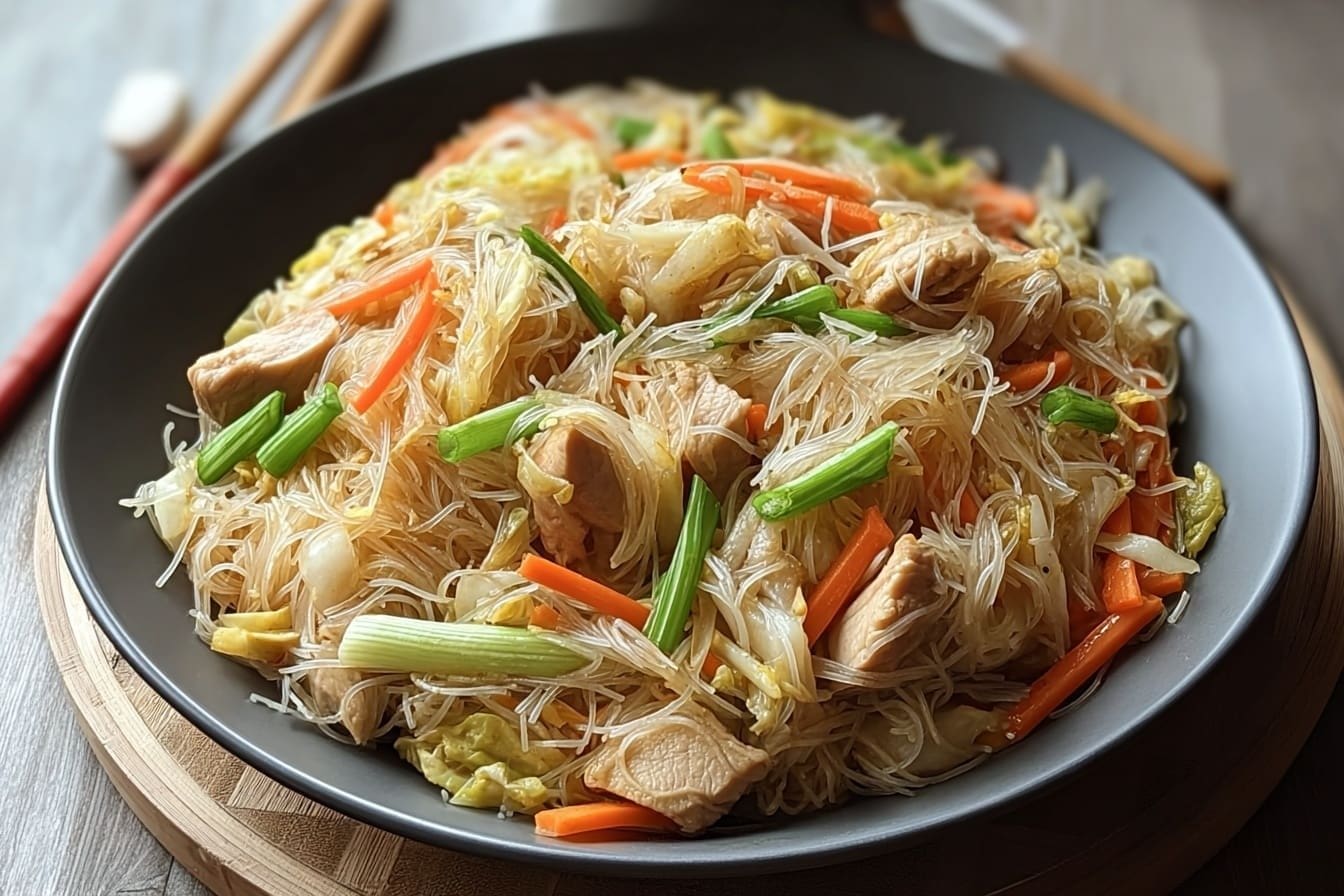
Pancit Bihon is one of those dishes that feels like a celebration even on a regular Tuesday. This Pancit Bihon Recipe brings together tender rice noodles, savory pork and chicken, and crisp vegetables in a way that is simple, filling, and family friendly. If you are looking for a Quick Pancit Bihon Recipe that still tastes like something special, this one checks all the boxes.
- Easy to make: This Pancit Bihon Guisado comes together in about 55 minutes, and most of that time is hands-off simmering. Soaking the noodles, stirring the wok, and finishing the dish is all very manageable, even on a busy weeknight.
- Good mix of nutrients: With chicken, pork, cabbage, carrots, snow peas, and celery leaves, this Filipino Pancit gives you protein, fiber, and colorful vegetables in one pan. It is a comforting meal that still fits into real-life eating habits.
- Flexible for different eaters: This Easy Pancit Bihon Guisado can be changed for plant-based diets, lighter meals, or pantry-friendly cooking. Tofu, snap peas, bell peppers, or vegan broth all work well.
- Big flavor, simple ingredients: Soy sauce and chicken powder give the noodles a rich savory taste, while the vegetables add crunch and freshness. That balance is what makes this Traditional Pancit Bihon Guisado so popular at gatherings.
Pancit Bihon is the kind of recipe that makes a table feel fuller, even before the first bite.
This dish also fits the kind of food your readers want for potlucks, church meals, and family dinners. It travels well, reheats nicely, and pairs with all the classic sides people love, which makes it a natural fit for community meals.
For more crowd-friendly dishes, you might also like this fast noodle stir fry recipe or this easy dirty rice for a hearty side.
Jump to:
- Why You’ll Love This Pancit Bihon
- Essential Ingredients for Pancit Bihon
- Main Ingredients
- Special Dietary Options
- How to Prepare the Perfect Pancit Bihon: Step-by-Step Guide
- First Step: Soak the noodles
- Second Step: Sauté the aromatics
- Third Step: Cook the pork and chicken
- Fourth Step: Build the broth
- Fifth Step: Add the vegetables
- Sixth Step: Remove solids from the liquid
- Seventh Step: Season the broth
- Eighth Step: Cook the bihon
- Ninth Step: Return the meat and vegetables
- Final Step: Serve hot
- Dietary Substitutions to Customize Your Pancit Bihon
- Protein and Main Component Alternatives
- Vegetable, Sauce, and Seasoning Modifications
- Mastering Pancit Bihon: Advanced Tips and Variations
- Pro cooking techniques
- Flavor variations
- Presentation tips
- Make-ahead options
- How to Store Pancit Bihon: Best Practices
- Refrigeration
- Freezing
- Reheating
- Meal prep considerations
- Nutrition Information for Pancit Bihon
- FAQs: Frequently Asked Questions About Pancit Bihon
- What is pancit bihon?
- How do you cook pancit bihon?
- What vegetables go in pancit bihon?
- How long does pancit bihon last in the fridge?
- Can you substitute meat in pancit bihon?
- Pancit Bihon
- Ingredients
- Instructions
- Last Step:
- Notes
- Nutrition
- Did you make this recipe?
Essential Ingredients for Pancit Bihon
Here is everything you need for a flavorful Pancit Bihon Guisado Recipe. This ingredient list follows the classic version with pork, chicken, and vegetables, just like you would expect from a comforting Rice Noodle Stir Fry.
Main Ingredients
- 1 lb pancit bihon (rice noodles) – the base of the dish and the part that soaks up all the savory sauce
- 1/2 lb pork, cut into small thin slices – adds rich flavor and hearty texture
- 1/2 lb cooked chicken, deboned and sliced thinly – gives extra protein and makes the dish filling
- 1/8 lb snow peas – bring fresh crunch and bright color
- 1 cup carrots – add sweetness and a little firmness
- 1/2 small cabbage, chopped – helps bulk up the dish with mild flavor
- 1 cup celery leaves, finely chopped – adds a fresh herbal note
- 1 onion, chopped – builds the flavor base
- 1/2 tbsp garlic, minced – gives the classic savory aroma
- 2 teaspoons chicken powder – seasons the broth and deepens the taste
- 5 tbsp soy sauce – gives the noodles their signature color and salty umami flavor
- 3 to 4 cups water – creates the cooking liquid for the noodles and meat
- 3 tbsp cooking oil – used for sautéing the aromatics and meat
Special Dietary Options
- Vegan: Swap the pork and chicken for tofu, and use vegan broth or water with a bit more soy sauce or mushroom sauce.
- Gluten-free: Pancit bihon is naturally made with rice noodles, but choose a gluten-free soy sauce or tamari.
- Low-calorie: Use less oil, add more cabbage and snow peas, and reduce the pork while keeping the chicken and vegetables balanced.
| Ingredient | Role in the dish |
|---|---|
| Bihon noodles | Absorb sauce and give the dish its classic texture |
| Pork and chicken | Add protein and savory depth |
| Carrots, cabbage, snow peas, celery leaves | Bring color, crunch, and freshness |
| Soy sauce and chicken powder | Create the familiar Filipino savory flavor |
If you are building a bigger meal, these noodles pair nicely with dishes like chicken chorizo paella for another festive dinner idea.
How to Prepare the Perfect Pancit Bihon: Step-by-Step Guide
Making Pancit Bihon is a lot easier than it looks. The trick is to keep everything moving in the wok, add the vegetables at the right time, and not let the noodles get mushy. Start by soaking the bihon in water while you get the rest ready. That little bit of prep makes the rest of the cooking go smoothly.
First Step: Soak the noodles
Place the 1 lb pancit bihon in water and let it soak for about 10 minutes. You want the noodles softened, not falling apart. Drain them well before cooking so they do not water down the sauce later.
Second Step: Sauté the aromatics
Heat 3 tbsp cooking oil in a large wok over medium heat. Add the chopped onion and minced garlic, then sauté until fragrant. This only takes a minute or two, but it sets up the flavor for the whole Filipino Pancit dish.
Third Step: Cook the pork and chicken
Add the 1/2 lb pork and 1/2 lb cooked chicken to the wok. Stir-fry for about 2 minutes until the pork starts to brown a bit. If you want to add Chinese sausage for extra flavor, this is the time to slice in some Chorizo Macau and let it cook with the meat.
The smell of garlic, onion, and sizzling meat is usually the moment everyone starts wandering into the kitchen.
Fourth Step: Build the broth
Sprinkle in 2 teaspoons chicken powder, then pour in 3 to 4 cups water. Bring it to a simmer and let everything cook for about 15 minutes. This step helps the pork finish cooking and gives the broth a nice savory base for the noodles.
Fifth Step: Add the vegetables
Stir in the carrots, snow peas, cabbage, and celery leaves. Simmer for a few minutes until the vegetables are tender but still crisp. Avoid overcooking them, since part of the charm of Traditional Pancit Bihon Guisado is the fresh crunch and bright color.
Sixth Step: Remove solids from the liquid
Take the vegetables and meat out of the pot and set them aside, leaving the liquid behind. This helps the noodles cook in the seasoned broth without turning the vegetables soft and dull.
Seventh Step: Season the broth
Mix 5 tbsp soy sauce into the remaining liquid. Taste the broth if needed and adjust carefully. This is where the noodle base gets that deep color and salty, savory flavor that makes Pancit Bihon Guisado so satisfying.
Eighth Step: Cook the bihon
Add the soaked bihon to the pot and stir it gently. Keep cooking until the liquid is absorbed and the noodles are coated. Be patient here and stir often so the noodles do not clump together or stick to the pan.
Ninth Step: Return the meat and vegetables
Add the pork, chicken, and vegetables back into the wok. Toss everything together and let it simmer for 1 to 2 minutes so the flavors blend. At this point, the dish should look glossy, colorful, and ready for the table.
Final Step: Serve hot
Serve the Quick Pancit Bihon Recipe right away while it is warm. It is traditionally paired with white bread, crispy lumpiang shanghai, and calamansi squeezed on top. A little calamansi juice really wakes up the flavors, so do not skip it if you have some on hand.
If you like this kind of simple noodle meal, you may also enjoy another quick noodle stir fry for a busy weeknight.
Dietary Substitutions to Customize Your Pancit Bihon
Protein and Main Component Alternatives
This recipe is easy to adapt when you do not have the exact ingredients on hand or when you need a different style of meal. The classic Pancit Bihon Recipe uses pork and chicken, but you can switch things up without losing the spirit of the dish.
- Tofu: Use firm tofu for a plant-based version. Cube it, pan-fry it first, then add it in near the end so it stays intact.
- Shrimp: Add shrimp for a lighter seafood version of Filipino Rice Noodle Stir Fry. It cooks fast, so toss it in near the end.
- Chinese sausage: Chorizo Macau adds sweetness and a smoky finish. It is a great choice if you want a more festive bowl.
- More chicken: If you want a leaner version, use extra chicken and reduce the pork.
Vegetable, Sauce, and Seasoning Modifications
You can also change the vegetables based on what is in your fridge or what is in season. Snap peas can replace snow peas, and bell peppers can add extra color even though they are not traditional. Some cooks also add bok choy, green beans, or mushrooms for more variety.
- For gluten-free cooking: Use tamari or a certified gluten-free soy sauce.
- For lower sodium: Start with less soy sauce and add more only if needed.
- For extra flavor: A small splash of mushroom sauce can add depth without much effort.
- For more vegetables: Add shredded cabbage, sliced peppers, or thin green beans.
The nice thing about Easy Pancit Bihon Guisado is that it still tastes like the dish you know even when you make small changes. That makes it perfect for home cooks who need flexibility without starting from scratch.
Mastering Pancit Bihon: Advanced Tips and Variations
Once you have made Pancit Bihon Guisado a few times, you will start noticing little details that make a big difference. The noodles should be soft but not soggy, the vegetables should still have life, and the seasoning should taste balanced from the first bite to the last.
Pro cooking techniques
Keep your wok or large pan roomy so the noodles can move around. If the pan is too crowded, the bihon can clump. Stir with tongs or a wide spoon and work quickly once the noodles hit the liquid. If needed, add a small splash of water while cooking to keep the noodles from drying out too soon.
Flavor variations
Want a richer version of this Quick Pancit Bihon Recipe? Add a little more garlic or some sliced Chinese sausage. Want a brighter taste? Serve with extra calamansi on the side. For a more colorful plate, bell peppers look great and add a sweet bite.
Presentation tips
When serving for a potluck or family gathering, pile the noodles into a large platter and top them with the meat and vegetables so the colors show through. A few calamansi wedges on the side make the dish look fresh and inviting. It also pairs nicely with fried sides like crispy lumpiang shanghai or with a bread basket for a filling spread.
Make-ahead options
You can prep the vegetables and slice the meat earlier in the day, then cook the dish closer to mealtime. That is especially helpful for busy parents, students, or church groups putting together a shared meal. If you want another make-ahead friendly dish, try this easy macaroni salad for gatherings.
Pancit Bihon is at its best when it feels lively, colorful, and just a little bit glossy on the plate.
How to Store Pancit Bihon: Best Practices
Leftovers are a good thing here. Pancit Bihon keeps well, which makes it useful for meal prep, lunch boxes, and next-day snacks.
Refrigeration
Cool the pancit to room temperature first, then place it in an airtight container. It will keep in the fridge for up to 5 days. Try not to leave it out too long before storing, since quick cooling helps keep it safe and fresh.
Freezing
If you want to save it longer, portion the noodles into freezer-safe bags or containers. Frozen pancit can last up to 2 months. Flattening the bags a bit can help them thaw faster later.
Reheating
For the best texture, reheat the noodles gently. Use the microwave with a cover or a damp towel so the noodles stay moist, or warm them in a pan with a splash of water. Stir once or twice while reheating so everything heats evenly.
Meal prep considerations
This dish works well for batch cooking because the noodles, meat, and vegetables hold together nicely. If you know you will eat leftovers, slightly undercook the vegetables the first time so they stay pleasant after reheating. That way, your Filipino Pancit still tastes good on day two or three.
Nutrition Information for Pancit Bihon
Here is the nutrition estimate per serving for this recipe. It is useful for home cooks who are watching portions or trying to balance meals during the week.
| Nutrient | Per Serving |
|---|---|
| Calories | 240 kcal |
| Carbohydrates | 23g |
| Protein | 13g |
| Fat | 11g |
| Saturated Fat | 4g |
| Polyunsaturated Fat | 2g |
| Monounsaturated Fat | 5g |
| Trans Fat | 0.03g |
| Cholesterol | 42 mg |
| Sodium | 845 mg |
| Potassium | 423 mg |
| Fiber | 3 g |
| Sugar | 4 g |
| Vitamin A | 2980 IU |
| Vitamin C | 29 mg |
| Calcium | 62 mg |
| Iron | 1 mg |
Because this dish includes protein and vegetables, it can fit into many meal plans. If you want to keep it lighter, use less oil and lean more on the vegetables. For a higher protein version, add extra chicken or tofu.
FAQs: Frequently Asked Questions About Pancit Bihon
What is pancit bihon?
Pancit bihon, also known as pancit bihon guisado, is a classic Filipino noodle dish made with thin rice vermicelli called bihon. It features stir-fried noodles tossed with pork, chicken, shrimp or other proteins, and fresh vegetables like carrots, cabbage, snow peas, and bell peppers. Seasoned with soy sauce, garlic, onions, and chicken broth, it offers savory, umami flavors. This quick-cooking dish is a staple at Filipino celebrations like birthdays and fiestas, symbolizing long life due to the long noodles. A typical serving includes about 2-3 ounces of dry bihon per person, yielding 4-6 servings from one recipe. It’s naturally gluten-free from rice noodles but check soy sauce labels. Prep time is 15 minutes, cook time 20 minutes for easy home cooking. (98 words)
How do you cook pancit bihon?
To cook pancit bihon, start by soaking 8 oz dry bihon noodles in warm water for 10 minutes until softened, then drain. In a wok, heat 2 tbsp oil over medium heat and sauté 3 minced garlic cloves and 1 chopped onion until fragrant. Add ½ lb sliced pork and ½ lb chicken, cooking until browned. Pour in 2 cups chicken broth, ¼ cup soy sauce, and 1 tsp chicken powder; simmer 5 minutes. Blanch veggies (1 carrot julienned, 2 cups cabbage, handful snow peas) separately for 1-2 minutes. Add drained noodles and veggies to wok, toss until liquid absorbs and noodles are tender, about 5-7 minutes. Adjust salt and serve hot. Avoid overcooking noodles to prevent mushiness. Serves 4-6. (112 words)
What vegetables go in pancit bihon?
Traditional pancit bihon uses carrots (sliced thin), cabbage (shredded), snow peas or snap peas, and celery leaves for crunch and color. Common additions include green beans, bell peppers, and bok choy. For 8 oz noodles, use 1 carrot, 2 cups cabbage, 1 cup snow peas, and optional ½ cup sliced bell peppers. Blanch veggies in boiling water 1-2 minutes to keep them crisp, then shock in ice water. Sauté briefly with noodles to blend flavors without sogginess. These add nutrition: carrots provide vitamin A, cabbage offers fiber. Experiment with kale or broccoli for twists, but stick to quick-cooking types to match the dish’s fast prep. This keeps the stir-fry vibrant and balanced. (104 words)
How long does pancit bihon last in the fridge?
Cooked pancit bihon stays fresh in the fridge for up to 5 days when stored properly. Cool it to room temperature within 2 hours of cooking to avoid bacteria growth, then transfer to an airtight container. Do not leave at room temp longer than 2 hours, or 1 hour if above 90°F. For freezing, portion into freezer bags and store up to 2 months; thaw overnight in fridge before reheating. Signs of spoilage include off smells, slime, or mold—discard if noticed. Reheat in microwave (covered, 1-2 minutes stirring midway) or stovetop with a splash of water to restore moisture. This makes it ideal for meal prep, yielding 4-6 portions. (102 words)
Can you substitute meat in pancit bihon?
Yes, customize pancit bihon easily for preferences. Replace pork and chicken with tofu (firm, cubed and fried), shrimp (sautéed 2 minutes), or Chinese sausage (lap cheong, sliced). For vegetarian, use mushrooms, extra veggies, or tempeh. Vegan option: swap chicken broth for vegetable broth or water with extra soy sauce/oyster mushroom sauce. Keep protein amount around 1 lb total for 8 oz noodles. A popular sub is ground turkey or beef for leaner protein. These changes maintain the dish’s savory taste—test seasoning as flavors vary. Quorn or seitan works too. This flexibility makes it family-friendly and adaptable for diets, without altering traditional methods. (98 words)
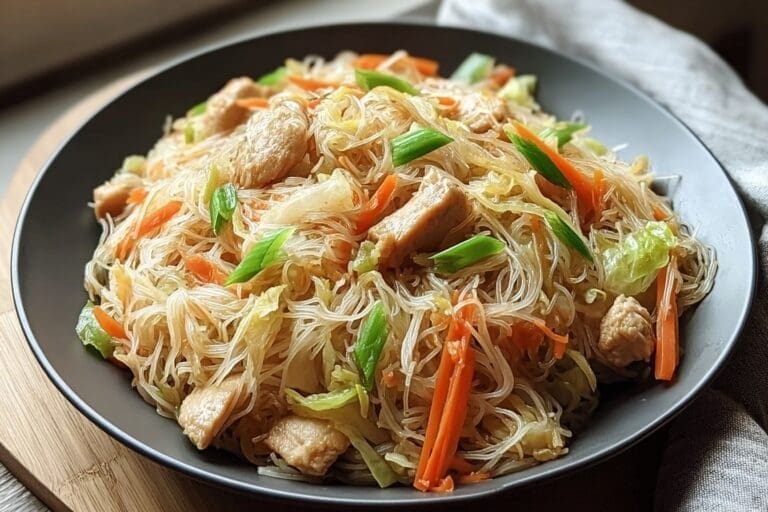
Pancit Bihon
🍜🔥 Quick Pancit Bihon Guisado Recipe stir-fries rice noodles with proteins and crisp veggies – gluten-free, veggie-packed Filipino stir-fry delight!
🇵🇭 Rice Noodle Stir Fry ready in 55 minutes for flavorful, balanced family meals with soy-savory punch!
- Total Time: 55 minutes
- Yield: 8 servings
Ingredients
– 1 lb pancit bihon (rice noodles) – the base of the dish and the part that soaks up all the savory sauce
– 1/2 lb pork, cut into small thin slices – adds rich flavor and hearty texture
– 1/2 lb cooked chicken, deboned and sliced thinly – gives extra protein and makes the dish filling
– 1/8 lb snow peas – bring fresh crunch and bright color
– 1 cup carrots – add sweetness and a little firmness
– 1/2 small cabbage, chopped – helps bulk up the dish with mild flavor
– 1 cup celery leaves, finely chopped – adds a fresh herbal note
– 1 onion, chopped – builds the flavor base
– 1/2 tbsp garlic, minced – gives the classic savory aroma
– 2 teaspoons chicken powder – seasons the broth and deepens the taste
– 5 tbsp soy sauce – gives the noodles their signature color and salty umami flavor
– 3 to 4 cups water – creates the cooking liquid for the noodles and meat
– 3 tbsp cooking oil – used for sautéing the aromatics and meat
Instructions
1-First Step: Soak the noodles Place the 1 lb pancit bihon in water and let it soak for about 10 minutes. You want the noodles softened, not falling apart. Drain them well before cooking so they do not water down the sauce later.
2-Second Step: Sauté the aromatics Heat 3 tbsp cooking oil in a large wok over medium heat. Add the chopped onion and minced garlic, then sauté until fragrant. This only takes a minute or two, but it sets up the flavor for the whole Filipino Pancit dish.
3-Third Step: Cook the pork and chicken Add the 1/2 lb pork and 1/2 lb cooked chicken to the wok. Stir-fry for about 2 minutes until the pork starts to brown a bit. If you want to add Chinese sausage for extra flavor, this is the time to slice in some Chorizo Macau and let it cook with the meat.
4-Fourth Step: Build the broth Sprinkle in 2 teaspoons chicken powder, then pour in 3 to 4 cups water. Bring it to a simmer and let everything cook for about 15 minutes. This step helps the pork finish cooking and gives the broth a nice savory base for the noodles.
5-Fifth Step: Add the vegetables Stir in the carrots, snow peas, cabbage, and celery leaves. Simmer for a few minutes until the vegetables are tender but still crisp. Avoid overcooking them, since part of the charm of Traditional Pancit Bihon Guisado is the fresh crunch and bright color.
6-Sixth Step: Remove solids from the liquid Take the vegetables and meat out of the pot and set them aside, leaving the liquid behind. This helps the noodles cook in the seasoned broth without turning the vegetables soft and dull.
7-Seventh Step: Season the broth Mix 5 tbsp soy sauce into the remaining liquid. Taste the broth if needed and adjust carefully. This is where the noodle base gets that deep color and salty, savory flavor that makes Pancit Bihon Guisado so satisfying.
8-Eighth Step: Cook the bihon Add the soaked bihon to the pot and stir it gently. Keep cooking until the liquid is absorbed and the noodles are coated. Be patient here and stir often so the noodles do not clump together or stick to the pan.
9-Ninth Step: Return the meat and vegetables Add the pork, chicken, and vegetables back into the wok. Toss everything together and let it simmer for 1 to 2 minutes so the flavors blend. At this point, the dish should look glossy, colorful, and ready for the table.
10-Final Step: Serve hot Serve the Quick Pancit Bihon Recipe right away while it is warm. It is traditionally paired with white bread, crispy lumpiang shanghai, and calamansi squeezed on top. A little calamansi juice really wakes up the flavors, so do not skip it if you have some on hand.
Last Step:
Please leave a rating and comment letting us know how you liked this recipe! This helps our business to thrive and continue providing free, high-quality recipes for you.Notes
🌭 Sauté thin-sliced Chinese sausage with meats for smoky extra flavor.
🥬 Avoid overcooking veggies to keep vibrant color and crunch.
🍋 Squeeze fresh calamansi on top when serving for zesty balance.
- Prep Time: 15 minutes
- Cook Time: 40 minutes
- Category: Main Dish
- Method: Stovetop
- Cuisine: Filipino
- Diet: Gluten-Free
Nutrition
- Serving Size: 1/8 recipe
- Calories: 240 kcal
- Sugar: 4g
- Sodium: 845mg
- Fat: 11g
- Saturated Fat: 4g
- Unsaturated Fat: 7g
- Trans Fat: 0g
- Carbohydrates: 23g
- Fiber: 3g
- Protein: 13g
- Cholesterol: 42mg


