

Best 15+ Spice Organization Ideas You NEED to Try
Best 15+ Spice Organization Ideas You NEED to Try
Spice storage can turn into a daily annoyance when jars are shoved in sideways, labels are hidden, and a spice you already own gets bought again.
In the source account, spices were spread across two cabinets, cumin ended up in four jars because it could never be found, and paprika was knocked over almost every time someone reached into the cabinet.
After a Sunday spent organizing and throwing out expired spices, the collection became easy to see, and the ideas below range from splurges to options that cost almost nothing.
Before buying anything, take inventory, check aroma and faded color, sort duplicates, separate bulk bags and baking spices from everyday savory staples, and measure the space you actually have.
Keep the basics in mind as you choose: cool, dark, dry placement away from heat and steam, airtight lids, purchase dates on labels, grouping by cooking use, and refills in first in, first out order.
- Cool, dark, dry placement away from heat and steam
- Airtight lids
- Purchase dates on labels
- Grouping by cooking use
- Refills in first in, first out order
Visibility is the test: if you cannot see a label, you will buy it twice.
Jump to:
- Best 15+ Spice Organization Ideas You NEED to Try
- Best 15+ Spice Organization Ideas You NEED to Try
- Tiered Bamboo Spice Shelf
- Glass Spice Jars With Labels
- Minimalist White Spice Drawer
- Alphabetical Spice Drawer
- Matching Glass Spice Containers
- Pull Out Spice Cabinet
- Wooden Spice Drawer Inserts
- Magnetic Spice Wall Display
- Door Mounted Spice Rack
- Floating Spice Shelves
- Lazy Susan Spice Organizer
- Slim Pull Out Pantry Rack
- Acrylic Pantry Spice Bins
- Color Coded Spice Labels
- Labeled Glass Pantry Canisters
Tiered Bamboo Spice Shelf
A tiered, stair step bamboo shelf raises the back row so it is not hidden behind the front row, and every label can be read at a glance.
The author’s own shelf was a cheap bamboo model that cost about $12, and it immediately made the back of the cabinet visible.
That small change suits a small kitchen because it uses the cabinet you already have, keeps jars upright, and removes the need to move the front row to check what is behind it.
Glass Spice Jars With Labels
Decanting spices into matching glass jars with labels on the front was, for the author, the storage idea with the biggest effect.
The result looked magazine worthy, not because the jars were fancy, but because matching shapes and clear fronts made the whole collection easy to scan.
Label the front, keep lids airtight, and add a purchase date so refills stay fresh and duplicates stay obvious.
Minimalist White Spice Drawer
This approach uses white lids and white labels with everything laid flat in a drawer, creating a clean and calm look.
It is a tidy system for a cook who likes visual calm, although the author found it a bit too precious for their own style of cooking.
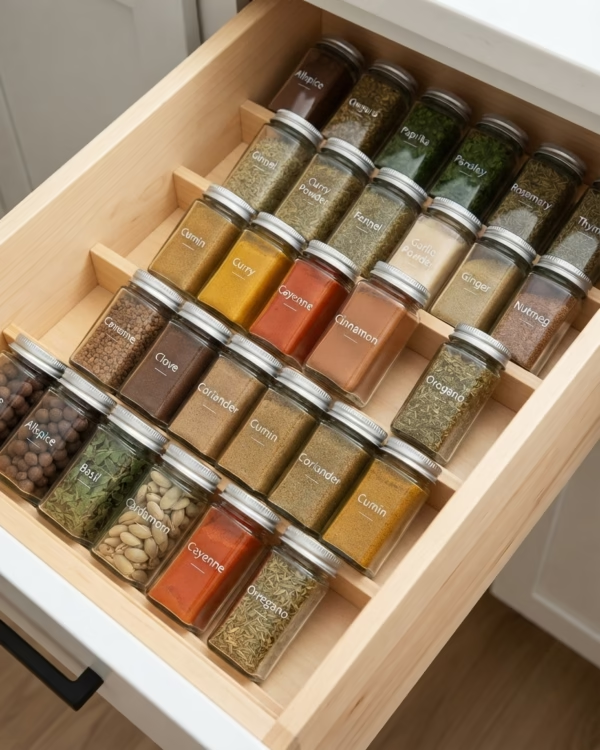
Alphabetical Spice Drawer
Spices are stored alphabetically in a drawer, a system that sounds odd at first and proves to be one of the simplest and most effective drawer methods in the source account.
The payoff is speed: oregano is located in one second rather than forty, because the order removes guessing and digging.
The author’s husband calls the system unhinged, yet he still asks where the cinnamon is, which says a lot about how memorable a simple order can be.
Keep labels on lids, keep the order strict after refills, and place the drawer where everyday cooking happens.
Matching Glass Spice Containers
Matching glass containers create an intentional, expensive looking result, even when the set itself is inexpensive.
The author bought a set of 24 jars online for about $30, and because the jars share the same size and the same lid, mismatched branded tins and random bags no longer clash.
The matching itself is what produces the costly appearance, an inexpensive trick that the author says works consistently.
Choose one size for most spices, reserve larger jars for the spices you use most, and keep the look calm by labeling in the same place on every jar.
Pull Out Spice Cabinet
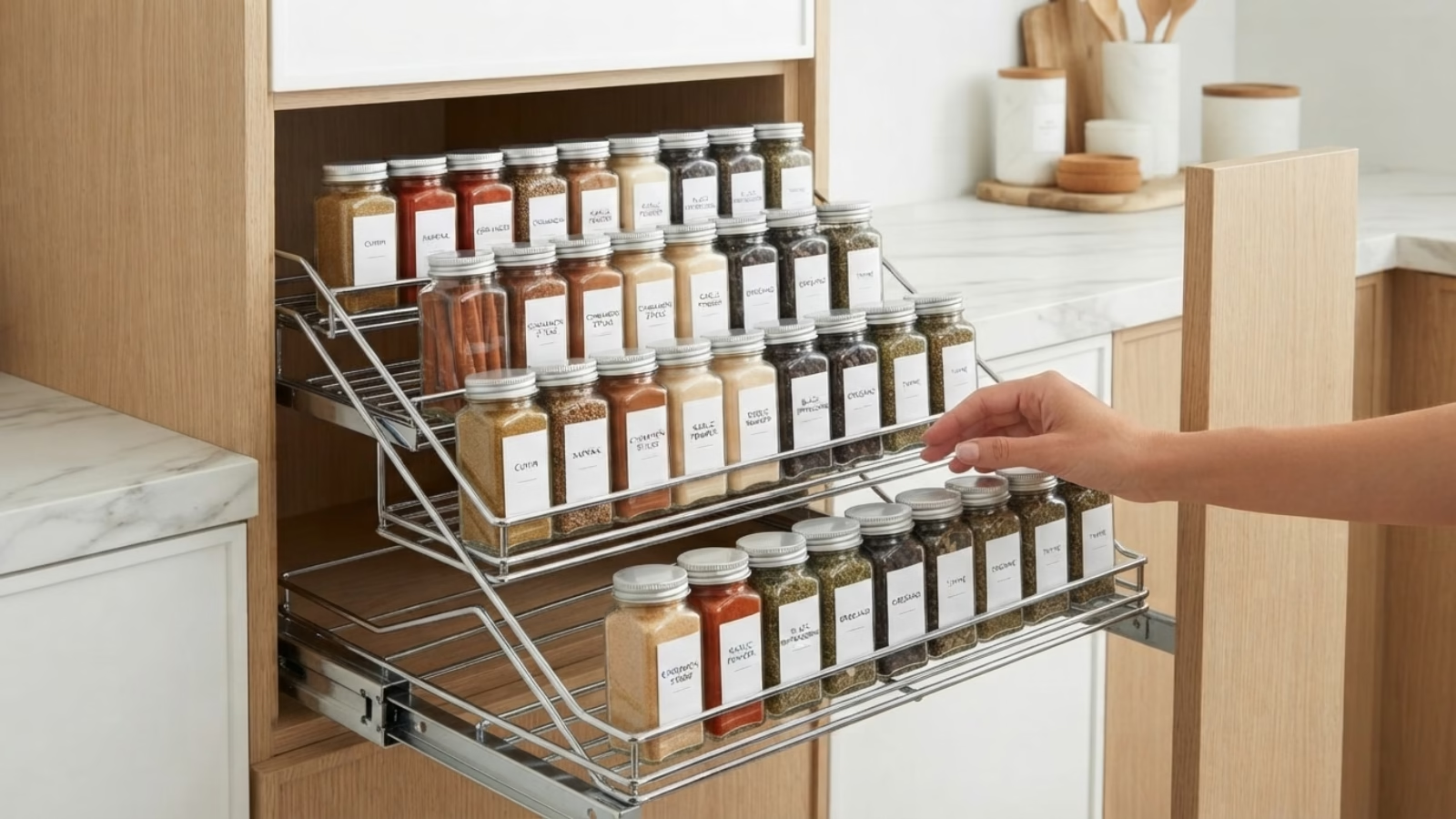
A pull out spice cabinet is a narrow cabinet that slides straight out, allowing every jar to be viewed from above and eliminating the need to dig toward the back.
In the author’s kitchen, a pull out fit into an unused three inch gap beside the stove, which she considers the best use she has made of otherwise useless space.
Measure the gap before ordering, check that the slide clears nearby handles, and group the jars by use so the most reached for spices sit nearest the front.
Wooden Spice Drawer Inserts
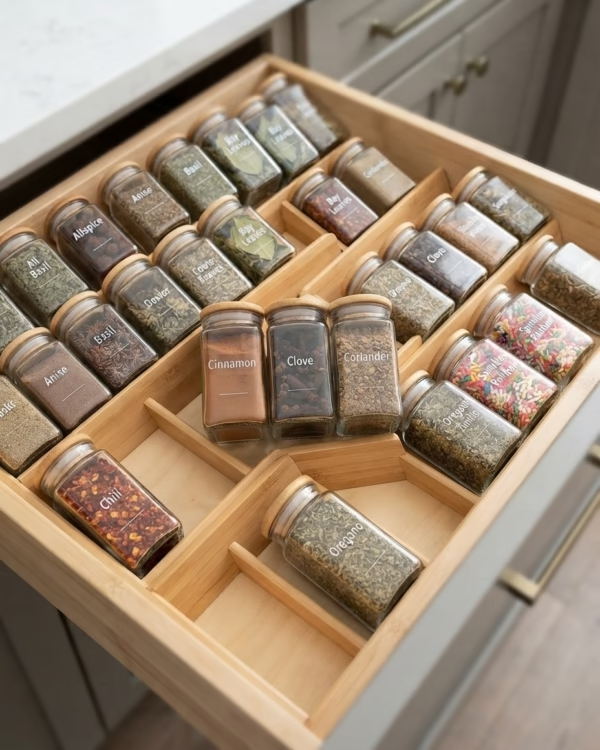
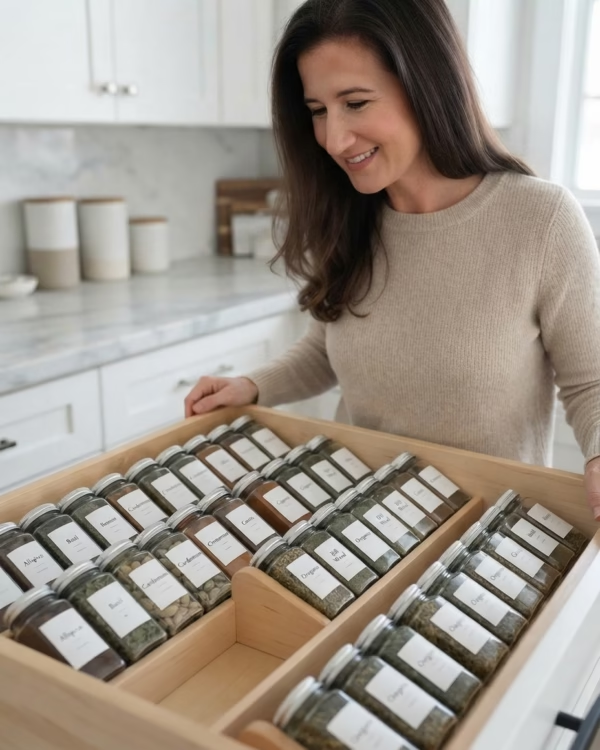
Angled wooden spice drawer inserts tilt jars upward so the lids can be read while the jars are lying down.
Much of effective spice drawer organization comes down to seeing the tops without lifting each jar, a small detail that saves time during everyday cooking.
The author chose bamboo inserts to match the kitchen and says they cut the drawer chaos in half.
Measure drawer depth, check jar height with lids on, and keep the most used jars where your hand lands first.
Magnetic Spice Wall Display
Small magnetic tins can be attached to a metal board mounted on the wall for a striking display that keeps spices visible and off the counter.
The author tried this and one tin fell off during dinner, covering the floor with turmeric, a warning to test the hold before trusting a full set.
The setup holds up when the tins are stuck to a steel board, but not on a weak magnetic strip, so the board matters more than the tins.
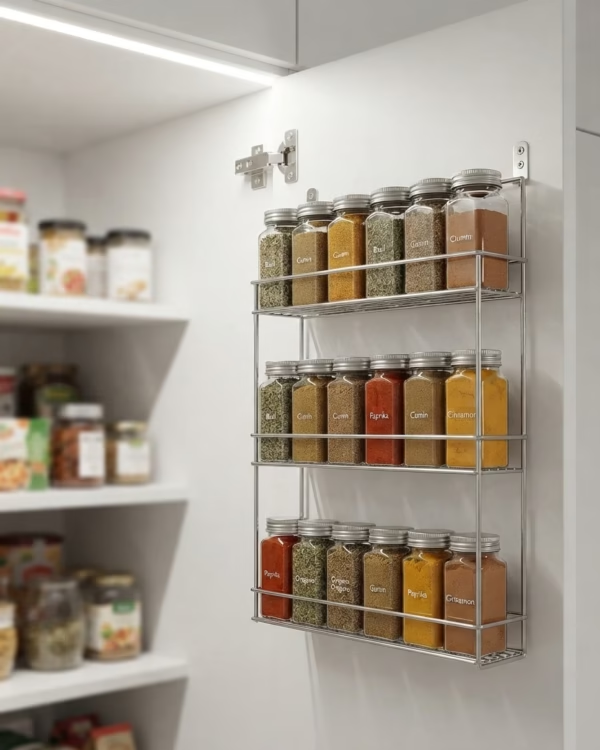
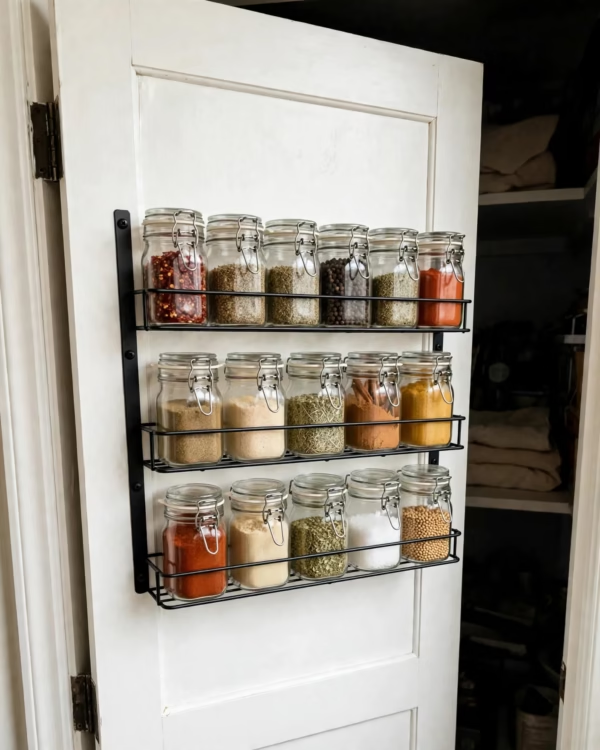
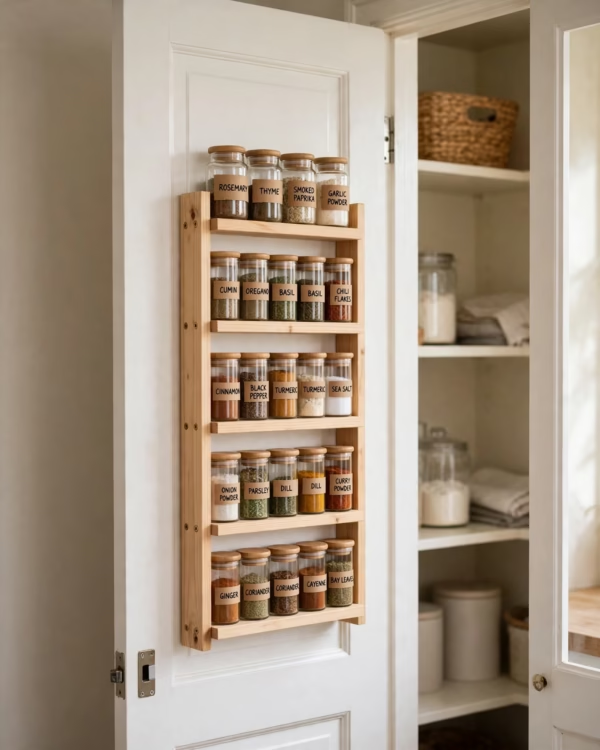
Door Mounted Spice Rack
A slim rack can be mounted on the inside of a cabinet door, using otherwise unused space and keeping jars in sight without taking a shelf.
The author screwed one onto a pantry door and gained room for all the baking spices, a useful split when baking and savory cooking need different groups.
The door still closes, though overloading it slightly affected how well it shuts, so load the rack evenly and leave a little room at the hinges.
Check screw length for the door panel, keep heavy jars low, and test the close before filling every slot.
Floating Spice Shelves
Two narrow floating shelves on the wall hold jars lined up like a small shop, turning everyday spices into a visible and easy to reach display.
The author placed theirs by the stove for everyday items such as salt, pepper and chili flakes, keeping them within arm’s reach while cooking.
For more room by room thinking, see Genius kitchen organization ideas for ways to keep a small kitchen calm without hiding jars in deep rows.
Lazy Susan Spice Organizer
A turntable placed in the cabinet lets you spin to reach spices instead of digging for them, which protects jars at the back from being knocked over.
The author has two, one for baking and one for savory, and uses the OXO ones at about $15 each.
Spinning and grabbing means no longer knocking over eight jars to reach one at the back, a clear win in a deep cabinet.
Measure the cabinet diameter, leave room for the spin, and keep the groups separate so baking spices do not mix with savory staples.
Slim Pull Out Pantry Rack
A slim pull out pantry rack is a tall, narrow rack that rolls out of a gap in the pantry, making use of overlooked inches of space.
The author’s rack fits between the fridge and the wall and holds more than its size suggests, which makes it a strong choice for a narrow gap.
Measure width, depth and height, check for a power cord or vent in the gap, and group jars by use so the rack rolls out ready for cooking.
Acrylic Pantry Spice Bins
Acrylic pantry spice bins are clear bins that group items by type so bulk bags and refills stay contained rather than loose in the pantry.
The author describes this as the backbone of their pantry spice organization, with separate bins for baking, savory items, and random single use spices bought for one recipe in 2022.
Each bin can be pulled out whole, which makes it easy to find a group, refill jars, and put the bin back without rearranging the whole pantry.
For wider pantry thinking, see Genius pantry organization ideas and pair the bins with clear labels and purchase dates.
Color Coded Spice Labels
Color coded spice labels use color to group spices by cuisine or type, and the author notes these are among the prettiest labeling ideas for anyone who loves a system.
The author chose plain white labels instead, but has seen color coded ones that look like art and suggests doing it if that suits your approach.
If you try color, keep the code simple, use one color per group, and write the spice name large enough to read at a glance.
Labeled Glass Pantry Canisters
Labeled glass pantry canisters are larger containers for spices bought in bulk, such as cinnamon and garlic powder used frequently.
The author says proper kitchen spice storage means matching the container to how much you actually use, with a big jar for the most used spices and small containers for the rest.
The canisters are labeled, sealed, and lined up, and refilling them is described as soothing, a small ritual that keeps the pantry honest about what is really there.
Start with the spices you reach for every week, give them room, and keep rarely used spices in smaller jars so they stay fresh and visible.
Check seals, keep canisters in a cool, dark, dry spot away from heat and steam, and refill in first in, first out order so older stock is used first.
A short closing check helps: labels facing forward, lids tight, groups by use, and no duplicate jar hiding behind a larger canister.
When the system is visible, cooking gets calmer, shopping gets simpler, and the spice collection finally matches the way you actually cook.