

Why You’ll Love This Miso Soup
This Miso Soup recipe brings the warm essence of Japanese comfort to your kitchen, making it a go-to choice for anyone wanting something simple yet packed with flavor. It’s quick to whip up, especially on busy weeknights, and uses just a few ingredients to create a nourishing bowl. Whether you’re a student or a busy parent, you’ll appreciate how Miso Soup fits into all kinds of meals.
One big plus is its ease of preparation. This Miso Soup comes together in about 20 minutes total, with 8 minutes of prep and 12 minutes of cooking, perfect for those tight schedules. It’s made with a dashi base from gently simmering a 3-inch piece of kombu in 4 cups of water for 10 minutes without boiling, which gives it that rich umami taste. This approach keeps things straightforward and helps preserve the soup’s natural goodness.
The health benefits are another reason to try it. Packed with probiotics from the fermented white miso paste, this soup boosts digestion and supports your immune system. At just 1/4 cup of white miso paste for a milder, sweeter flavor, it’s low in calories but full of vitamins, minerals, and antioxidants from ingredients like wakame seaweed and silken tofu. Miso Soup is nourishing and can easily become a staple for diet-conscious folks.
It’s also super versatile, adapting to different needs without losing its charm. You can make it vegetarian by skipping any dried bonito flakes in the dashi and add extras like shiitake mushrooms or daikon radish for more substance. For more ideas on easy meals that travel well, check out our grilled Japanese salmon recipe that pairs perfectly with this soup. Whether you’re serving it as a starter or a main dish with other Japanese foods, Miso Soup brings people together around the table.
Lastly, the distinctive flavor is what makes it stand out. The umami from the miso and dashi creates a savory depth that’s comforting and hard to forget. With 3 tablespoons of dried wakame soaked in warm water for 5 minutes, 1/3 cup of chopped green onion, and 6 ounces of silken tofu cubed, every bite feels fresh and balanced. This soup is rich in flavor and easy to customize, making it ideal for home cooks and food enthusiasts alike.
Jump to:
- Why You’ll Love This Miso Soup
- Essential Ingredients for Miso Soup
- How to Prepare the Perfect Miso Soup: Step-by-Step Guide
- Dietary Substitutions to Customize Your Miso Soup
- Mastering Miso Soup: Advanced Tips and Variations
- Flavor Variations
- How to Store Miso Soup: Best Practices
- FAQs: Frequently Asked Questions About Miso Soup
- What is miso soup made of?
- How do I prepare dashi for authentic miso soup?
- What type of miso paste should I use for miso soup?
- Can I boil miso soup during cooking?
- How should I store leftover miso soup, and how long does it last?
- Miso Soup
- Ingredients
- Instructions
- Last Step:
- Notes
- Nutrition
- Did you make this recipe?
Essential Ingredients for Miso Soup
Getting the ingredients right is key to making great Miso Soup, and we’ll break it down into a clear list. This section pulls together everything you need for an authentic recipe, focusing on precise measurements to help you shop and cook with ease.
- 3-inch piece of kombu
- 4 cups of water
- 1/4 cup of white miso paste (shiro miso, for a milder, sweeter taste)
- 3 tablespoons of dried wakame seaweed (soak in warm water for 5 minutes)
- 1/3 cup of chopped green onion
- 6 ounces of silken tofu, cubed (recommended for its smooth texture)
Remember, wakame expands a lot when soaked, so 3 tablespoons is just right for a full pot. For special twists, you can opt for vegan versions by using only kombu for the dashi. This setup not only keeps things simple but also lets you adjust based on what you have on hand.
| Ingredient | Quantity | Purpose |
|---|---|---|
| Kombu | 3-inch piece | Base for dashi broth |
| Water | 4 cups | Broth liquid |
| White miso paste | 1/4 cup | Flavor and fermentation |
| Dried wakame seaweed | 3 tablespoons | Texture and nutrients |
| Chopped green onion | 1/3 cup | Freshness and color |
| Silken tofu | 6 ounces, cubed | Protein and creaminess |
For dietary options, go with kombu-based dashi for vegan meals or check that miso is gluten-free. For low-calorie versions, stick to the listed amounts to keep it light.
How to Prepare the Perfect Miso Soup: Step-by-Step Guide
Making Miso Soup at home is straightforward and fun, starting with the dashi base for that authentic taste. Follow these steps to create a bowl that’s full of umami and ready in no time. It’s perfect for beginners, and you’ll see why it’s a favorite for quick meals.
First, prepare the dashi stock. Heat 4 cups of water with the 3-inch piece of kombu, simmering gently for 10 minutes without letting it boil to avoid bitterness. Once done, remove the kombu to keep the broth clear and flavorful.
Next, soak 3 tablespoons of dried wakame in warm water for 5 minutes until it softens, then drain it. This step adds those essential minerals and a nice oceanic flavor to your soup. Learn more about the health benefits of miso soup from reliable sources.
Now, cube 6 ounces of silken tofu for its smooth texture that blends well in the soup. Create a miso slurry by mixing 1/4 cup of white miso paste with some hot broth until it’s smooth, then stir it back into the pot. Avoid boiling at this point to preserve the probiotics and rich taste.
Add the soaked wakame, 1/3 cup of chopped green onion, and the cubed tofu to the pot. Simmer gently over very low heat for 1 to 2 minutes to let the flavors meld. Season with tamari to taste before serving, and you’re all set for a warm, comforting dish.
Dietary Substitutions to Customize Your Miso Soup
Everyone has different needs, so tweaking Miso Soup is easy and keeps it delicious. Start with the base ingredients and swap as needed to fit your diet. This way, you can enjoy it no matter your preferences.
For protein options, swap silken tofu with tempeh or chickpeas if you want more variety. If you’re not vegetarian, add cooked shrimp or shredded chicken for a heartier meal.
- Use spinach or kale instead of wakame for a fresh twist.
- Opt for tamari over soy sauce to make it gluten-free.
- Add sesame oil or grated ginger for extra warmth and spice.
These changes help maintain the soup’s core flavor while making it adaptable. For more protein-packed ideas, check out our chicken and broccoli stir-fry recipe that complements Miso Soup well.
Mastering Miso Soup: Advanced Tips and Variations
Once you’re comfortable with the basics, try these tips to level up your Miso Soup. Subtle changes can make it feel gourmet without much effort, perfect for impressing guests.
Gently warm the miso paste before adding it to enhance its aroma. For deeper flavor, use homemade dashi with kombu and a touch of bonito if desired. Add extras like shiitake mushrooms for earthiness or chili oil for a kick.
Presentation matters too, so serve in simple bowls with sliced scallions and sesame seeds. For make-ahead meals, prepare the dashi and ingredients separately to keep everything fresh.
Flavor Variations
Experiment with vegetables like daikon radish or greens to make it more filling. This keeps the soup nourishing and versatile for any occasion.
How to Store Miso Soup: Best Practices
Storing Miso Soup properly helps it stay tasty and safe for later. Follow these tips to enjoy it over a few days without losing quality.
Keep it in an airtight container in the fridge and eat within 2-3 days. If freezing, store the broth separately from tofu to avoid texture changes.
When reheating, warm gently on the stove without boiling to protect the miso. For meal prep, make the base in advance and assemble fresh portions as needed. Discover more on miso paste nutrition for long-term benefits.
FAQs: Frequently Asked Questions About Miso Soup
What is miso soup made of?
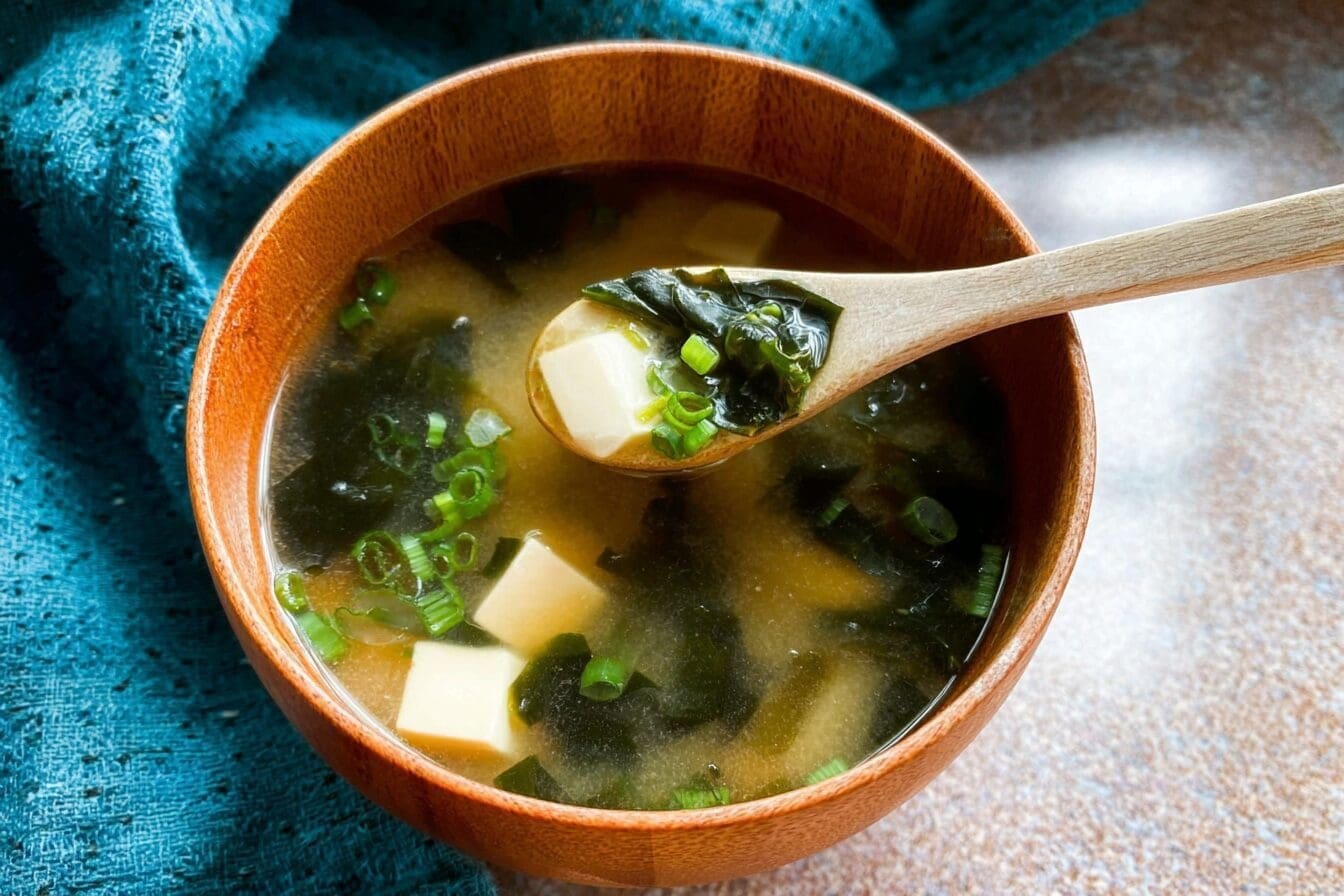
Miso soup is a traditional Japanese soup made from dashi broth and miso paste. Dashi is typically prepared by simmering kombu (kelp) and sometimes dried bonito flakes to create a flavorful umami base. The soup is then flavored with miso, a fermented soybean paste, and often includes additional ingredients such as wakame seaweed, soft tofu, and sliced green onions.
How do I prepare dashi for authentic miso soup?
To prepare dashi, start by rinsing a piece of kombu under cold water. Place it in cold water and heat gently, removing the kombu just before the water starts to boil to prevent bitterness. This process takes about 10 minutes. Optionally, dried bonito flakes can be added and strained out to deepen the flavor. This clear broth serves as the base to which miso paste is added.
What type of miso paste should I use for miso soup?
White miso (shiro miso) is commonly recommended for miso soup because it has a mild, slightly sweet flavor and is fermented for a shorter time than darker miso varieties. Red or mixed miso can also be used for a richer, saltier taste, but white miso is best if you want a lighter, more traditional soup.
Can I boil miso soup during cooking?
It’s best not to boil miso soup after adding the miso paste. Boiling miso can destroy its delicate flavors and beneficial probiotics. Instead, dissolve the miso paste into hot dashi off the heat or with gentle warming, then add any other ingredients like tofu or seaweed.
How should I store leftover miso soup, and how long does it last?
Leftover miso soup should be stored in an airtight container in the refrigerator and consumed within 2–3 days for the best flavor and safety. When reheating, warm it gently without bringing it to a full boil to preserve the nutrients and taste of the miso paste.

Miso Soup
🍲 Enjoy a traditional and nourishing Miso Soup with an authentic, easy-to-make homemade broth that delivers rich umami flavors.
🥢 This versatile soup offers a warm, comforting starter or side dish that complements any Japanese meal perfectly.
- Total Time: 20 minutes
- Yield: 4 servings
Ingredients
– 3-inch piece kombu for base for dashi broth
– 4 cups water for broth liquid
– 1/4 cup white miso paste for flavor and fermentation
– 3 tablespoons dried wakame seaweed for texture and nutrients
– 1/3 cup chopped green onion for freshness and color
– 6 ounces silken tofu, cubed for protein and creaminess
Instructions
1-First, prepare the dashi stock. Heat 4 cups of water with the 3-inch piece of kombu, simmering gently for 10 minutes without letting it boil to avoid bitterness. Once done, remove the kombu to keep the broth clear and flavorful.
2-Next, soak 3 tablespoons of dried wakame in warm water for 5 minutes until it softens, then drain it. This step adds those essential minerals and a nice oceanic flavor to your soup.
3-Now, cube 6 ounces of silken tofu for its smooth texture that blends well in the soup. Create a miso slurry by mixing 1/4 cup of white miso paste with some hot broth until it’s smooth, then stir it back into the pot. Avoid boiling at this point to preserve the probiotics and rich taste.
4-Add the soaked wakame, 1/3 cup of chopped green onion, and the cubed tofu to the pot. Simmer gently over very low heat for 1 to 2 minutes to let the flavors meld. Season with tamari to taste before serving, and you’re all set for a warm, comforting dish.
Last Step:
Please leave a rating and comment letting us know how you liked this recipe! This helps our business to thrive and continue providing free, high-quality recipes for you.Notes
🌡️ Avoid boiling the soup after adding miso to preserve beneficial probiotics.
🍄 Enhance the soup by adding vegetables like shiitake mushrooms, daikon radish, or leafy greens.
🌱 For a vegetarian version, omit dried bonito flakes often used in dashi stock.
- Prep Time: 8 minutes
- Simmering time: 12 minutes
- Cook Time: 12 minutes
- Category: Soup
- Method: Simmering
- Cuisine: Japanese
- Diet: Vegetarian, Gluten-Free (with gluten-free tamari)
Nutrition
- Serving Size: 1 cup
- Calories: 60 kcal
- Sugar: 2 g
- Sodium: 600 mg
- Fat: 2 g
- Saturated Fat: 0.5 g
- Unsaturated Fat: 1 g
- Trans Fat: 0 g
- Carbohydrates: 7 g
- Fiber: 1 g
- Protein: 4 g
- Cholesterol: 0 mg


