

Why You’ll Love These Mango Salsa Salmon Bowls
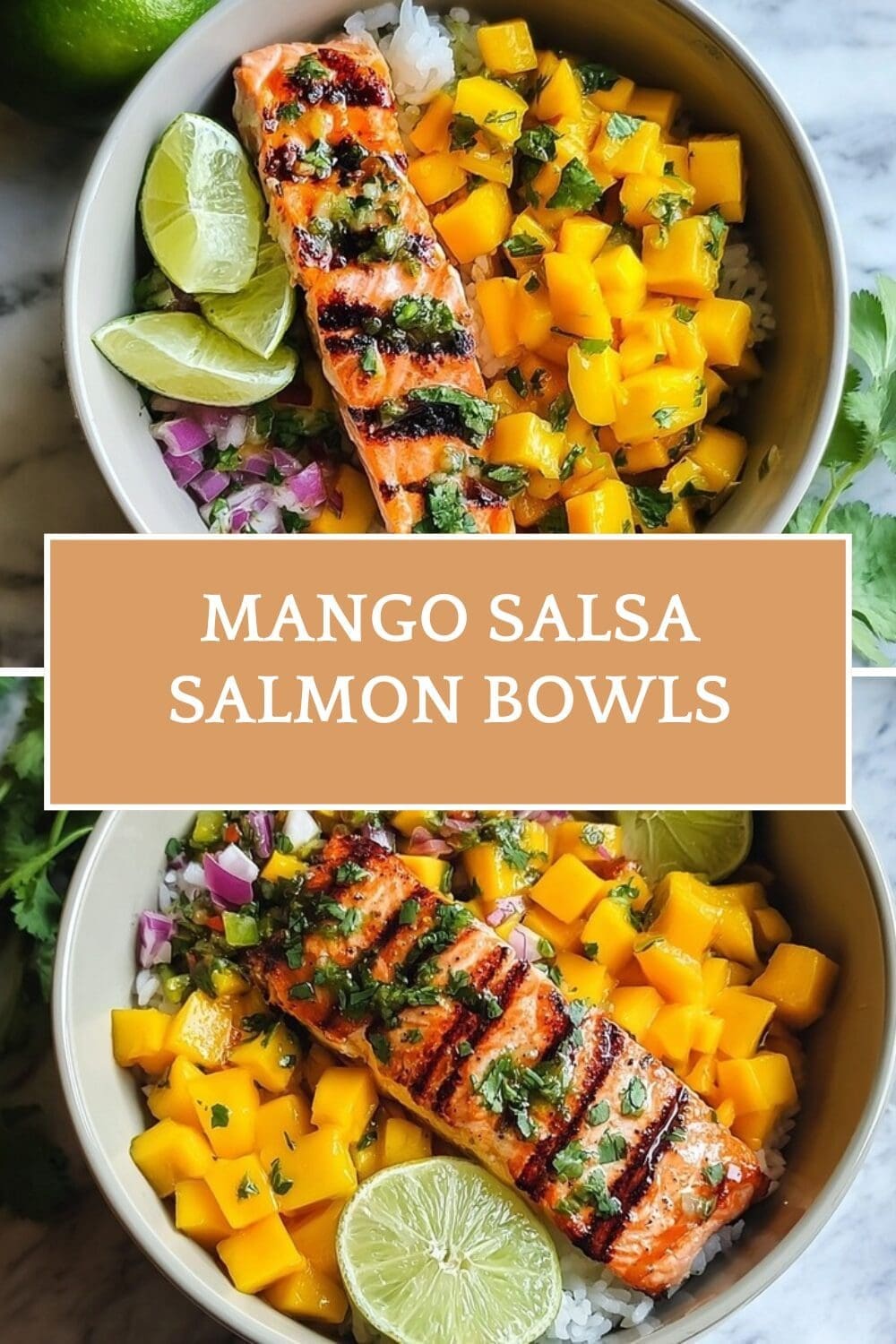
If you need a dinner that feels fresh, fast, and just a little fancy without turning your kitchen upside down, Mango Salsa Salmon Bowls are calling your name. This is the kind of meal that works for busy weeknights, relaxed weekends, and even casual gatherings when you want something colorful on the table that still feels easy.
- Fast and fuss-free: With just 15 minutes of prep and about 10 minutes of cooking, these mango salsa salmon bowls are a true weeknight win. The salmon bakes quickly, the rice cooks while you prep, and the mango avocado salsa comes together in one bowl.
- Loaded with good-for-you ingredients: Salmon brings protein and healthy fats, while mango, avocado, cilantro, lime, and red onion add fiber, vitamins, and bright flavor. According to the health benefits of salmon, this fish is a smart choice for a nourishing meal that still tastes amazing.
- Easy to adapt: These salmon bowls fit a lot of different eating styles. You can serve them over rice, swap in quinoa, or use more vegetables if you want a lighter bowl. They are also simple to adjust for spice level, salt level, and sweetness.
- Fresh flavor that pops: The sweet mango salsa, creamy avocado, and smoky salmon rub create a balance that keeps every bite interesting. If you love bright, tropical flavor, this is the recipe that brings it home.
This is the kind of dinner that looks like you worked hard, even though it comes together with very little effort.
If you enjoy seafood bowls with bold flavor, you might also love my firecracker salmon recipe for another easy salmon night idea.
Jump to:
- Why You’ll Love These Mango Salsa Salmon Bowls
- Essential Ingredients for Mango Salsa Salmon Bowls
- Ingredients for the Salmon
- Ingredients for the Mango Avocado Salsa
- For Serving
- Special Dietary Options
- How to Prepare the Perfect Mango Salsa Salmon Bowls: Step-by-Step Guide
- First Step: Mix the salsa
- Second Step: Cook the rice
- Third Step: Get the oven ready
- Fourth Step: Make the spice paste and coat the salmon
- Fifth Step: Bake until flaky
- Final Step: Build the bowls
- Protein and Main Component Alternatives
- Other proteins you can use
- Best grain and base swaps
- Vegetable, Sauce, and Seasoning Modifications
- Veggie add-ins that work well
- Sauce and seasoning swaps
- Seasonal and dietary adjustments
- Mastering Mango Salsa Salmon Bowls: Advanced Tips and Variations
- Pro cooking techniques
- Flavor variations
- Presentation tips
- Make-ahead options
- How to Store Mango Salsa Salmon Bowls: Best Practices
- Refrigeration
- Freezing
- Reheating
- Meal prep considerations
- FAQs: Frequently Asked Questions About Mango Salsa Salmon Bowls
- Can I use frozen mango in mango salsa for salmon bowls?
- How do I know when salmon is done cooking in mango salsa salmon bowls?
- Should I remove the skin from salmon before cooking mango salsa salmon bowls?
- How much salmon do I need for mango salsa salmon bowls?
- What are sugar alternatives for mango salsa salmon bowls if I’m diabetic?
- Mango Salsa Salmon Bowls
- Ingredients
- Instructions
- Last Step:
- Notes
- Nutrition
- Did you make this recipe?
Essential Ingredients for Mango Salsa Salmon Bowls
One of the best parts of Mango Salsa Salmon Bowls is how the ingredients pull double duty. The salmon gets a smoky-sweet spice rub, while the mango avocado salsa adds cool, juicy contrast. Here is everything you need for the full recipe, clearly broken down so shopping and prep stay simple.
Ingredients for the Salmon
- 1 to 2 pounds fresh salmon – enough for 2 to 4 servings, depending on appetite and whether you want leftovers
- 2 tablespoons brown sugar – helps the rub caramelize and adds a little sweetness
- 2 teaspoons smoked paprika – gives the salmon that deep smoky flavor
- 2 teaspoons onion powder – adds savory balance
- 1 teaspoon garlic powder – brings warm, familiar flavor
- 1/2 teaspoon chili powder – adds subtle heat
- 1/2 teaspoon kosher salt, adjust for larger fillets – seasons the salmon evenly
- 2 tablespoons olive oil – turns the spices into a paste and helps the rub stick
Ingredients for the Mango Avocado Salsa
- 2 mangoes, diced – the sweet, juicy star of the salsa
- 1 avocado, diced – adds creamy texture
- 1/4 cup minced cilantro – brings freshness
- 1/4 cup minced red onion – adds bite and crunch
- 1/2 jalapeño, minced, optional, to taste – gives a little kick if you like heat
- 1 teaspoon honey – rounds out the salsa with gentle sweetness
- 2 tablespoons lime juice plus 1 teaspoon lime zest – brightens every bite
- Salt to taste – ties all the flavors together
For Serving
- 1 1/2 cups rice – the base that soaks up the salsa and salmon juices
Special Dietary Options
- Vegan: Replace the salmon with roasted tofu, tempeh, or chickpeas, then keep the mango avocado salsa as written.
- Gluten-free: This recipe is naturally gluten-free when you check your spice labels and serve it with plain rice or quinoa.
- Low-calorie: Serve over cauliflower rice, use a little less avocado, and keep the salmon portion closer to 4 to 5 ounces per bowl.
| Part | Main Flavor | What It Does |
|---|---|---|
| Salmon rub | Smoky, sweet, savory | Builds a crisp, flavorful crust |
| Mango avocado salsa | Fresh, bright, juicy | Adds cool contrast and freshness |
| Rice | Mild, fluffy | Balances the bold toppings |
How to Prepare the Perfect Mango Salsa Salmon Bowls: Step-by-Step Guide
These mango salsa salmon bowls are simple enough for a Tuesday night, but they still feel special enough to serve to guests. Follow these steps and you will get tender salmon, a bright salsa, and a bowl that looks as good as it tastes.
First Step: Mix the salsa
Start by combining the diced mangoes, diced avocado, minced cilantro, minced red onion, minced jalapeño if you want a little heat, honey, lime juice, lime zest, and salt in a medium bowl. Stir gently so the avocado stays chunky instead of turning mushy. Taste the salsa and adjust the salt, honey, or lime if needed.
If your mangoes are a little tart, a touch more honey helps balance the flavor. If you are using thawed frozen mango, pat it dry first so the salsa does not get watery. This is also the moment to add extra diced vegetables if you want to make the bowl more filling.
Second Step: Cook the rice
Cook 1 1/2 cups rice according to the package instructions. White rice, jasmine rice, brown rice, or even quinoa can work if that is what you have on hand. While the rice cooks, you can move right into the salmon prep, which keeps this meal moving fast.
For meal prep, rice is a great base because it reheats well and holds up under the salmon and salsa. If you want a lighter bowl, swap part or all of the rice for cauliflower rice or shredded greens.
Third Step: Get the oven ready
Preheat the oven to 475°F. If you prefer broiling, heat the broiler to 500°F and place the rack about 6 inches from the top. Line a baking sheet with foil for easy cleanup.
This high heat is what gives the salmon quick cooking and a nicely caramelized top. Just keep a close eye on it, especially if you are using the broiler, because the brown sugar in the rub can darken quickly.
Fourth Step: Make the spice paste and coat the salmon
In a small bowl, mix the brown sugar, smoked paprika, onion powder, garlic powder, chili powder, kosher salt, and olive oil into a thick paste. Rub the mixture all over the salmon, placing the fish skin-side down on the prepared baking sheet.
The skin helps protect the fish while it cooks, and it also makes the salmon easier to lift after baking. If you prefer, you can remove the skin after cooking. For thinner fillets, start checking early so the fish does not dry out.
Fifth Step: Bake until flaky
Bake the salmon for 6 to 12 minutes, depending on the thickness of the fillet. The salmon is ready when it turns from translucent to opaque and flakes easily with a fork. If you are broiling, check often so the sugar in the rub does not burn.
For the best texture, pull the salmon from the oven as soon as it flakes easily and still looks juicy in the center.
A 1 to 1.5-pound fillet is usually the sweet spot for 2 to 3 servings with minimal leftovers. If you are cooking for a crowd, a larger fillet works just fine, but you may want to adjust the salt slightly.
Final Step: Build the bowls
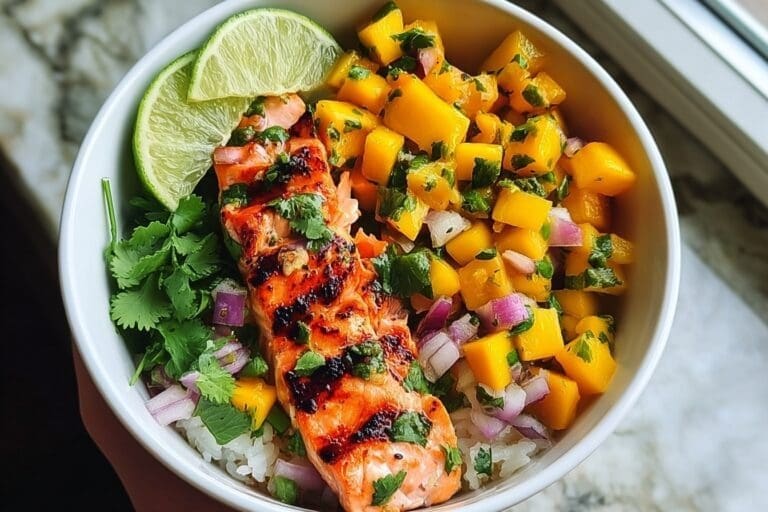
Spoon hot rice into each bowl, then top with flaked salmon and a generous scoop of mango avocado salsa. Add lime wedges if you want a fresh squeeze right before eating. The citrus really wakes everything up.
This is the moment where the whole dish comes together. The warm rice, smoky salmon, and cool salsa make every bite taste balanced and fresh. If you are serving family or friends, set the toppings out buffet-style and let everyone build their own bowl.
For another seafood idea with bold flavor, you might also like this salmon with avocado recipe.
Protein and Main Component Alternatives
Other proteins you can use
If salmon is not available, or if you want to mix things up, there are plenty of smart swaps that still work well with mango salsa and rice. The key is choosing something that cooks quickly and pairs nicely with the sweet-savory flavor profile.
- Cod: A mild white fish that cooks fast and takes on the spice rub nicely. It is a great option if you want a lighter seafood bowl.
- Chicken: Boneless, skinless chicken breast or thighs can be seasoned with the same rub and baked until done. This is a solid choice for picky eaters.
- Shrimp: Shrimp cooks even faster than salmon and tastes fantastic with mango salsa. Just keep the cook time short so they stay tender.
- Tofu: For a plant-based version, use extra-firm tofu and press it well before seasoning. It soaks up flavor beautifully.
Best grain and base swaps
Rice is classic, but it is far from the only choice. You can build these salmon bowls with quinoa, farro, cauliflower rice, or a bed of greens. If you want a more filling meal for hungry teens or working professionals, a grain bowl is a smart move.
For more seafood inspiration, take a peek at these air fryer salmon bites when you want something bite-sized and fast.
Vegetable, Sauce, and Seasoning Modifications
Veggie add-ins that work well
This recipe is flexible enough to welcome extra vegetables without losing its charm. If you want to stretch the meal or use what is already in your fridge, try adding cooked mushrooms, roasted asparagus, sautéed bell peppers, corn, or zucchini. These mix-ins help the bowls feel hearty while keeping the fresh flavor front and center.
For a deeper roasted note, toss vegetables with a little olive oil, salt, and pepper, then roast them on the same sheet pan if there is room. You can also keep things crisp by serving sliced cucumber or shredded cabbage on the side.
Sauce and seasoning swaps
The spice rub is easy to adjust based on what you like. If you want less sweetness, cut back on the brown sugar. If you want more heat, add extra chili powder or a pinch of cayenne. If you are out of brown sugar, coconut sugar, maple syrup, or Swerve brown sugar replacement are all workable substitutes.
The mango avocado salsa also has room for personality. Add more jalapeño for heat, use extra cilantro for brightness, or stir in diced cucumber for a cool crunch. If you like a tangier finish, add another splash of lime juice.
Seasonal and dietary adjustments
In the summer, fresh mangoes are usually at their best, but thawed frozen mango can absolutely step in when needed. In cooler months, this dish still feels sunny and fresh thanks to the lime and cilantro. For a lower-sodium version, reduce the salt in the rub and let the lime do more of the heavy lifting.
If you like seafood with a smoky edge, you might also enjoy grilled Japanese salmon for another flavorful dinner idea.
Mastering Mango Salsa Salmon Bowls: Advanced Tips and Variations
Pro cooking techniques
For the juiciest salmon, always watch the fish closely near the end of cooking. Salmon can go from perfect to dry fast, especially under a broiler. If your fillet is uneven in thickness, tuck the thinner end under slightly so it cooks more evenly. A foil-lined pan also helps the sugar in the rub caramelize without sticking.
Skin-side down is the way to go here. It protects the flesh from the direct heat and makes cleanup easier. If you want a slightly crispier top, finish the salmon under the broiler for the last minute, but only if you are watching it like a hawk.
Flavor variations
For a tropical twist, add diced pineapple to the salsa. For a warmer flavor, mix a tiny pinch of cumin into the spice rub. You can also swap the jalapeño for serrano if you want more heat, or leave it out completely for a family-friendly bowl.
Another fun twist is serving the salmon over coconut rice for a more island-style feel. That version is especially nice when you want the meal to feel a little more festive.
Presentation tips
To make the bowls look restaurant-worthy, layer the rice first, then add salmon pieces in large flakes, and spoon the salsa on top so the colors stay bright. Finish with lime wedges and a sprinkle of fresh cilantro. A few avocado slices on the side never hurt either.
Pretty bowls are nice, but the real win here is how quickly they disappear once everyone sits down to eat.
Make-ahead options
You can make the salsa a few hours ahead, but if you do, wait to add the avocado until closer to serving so it stays fresh. The salmon rub can be mixed ahead too, and the rice can be cooked earlier in the day. That makes this recipe a strong fit for busy parents, students, and anyone trying to get dinner on the table fast.
For another easy seafood dinner, check out this BBQ shrimp recipe when you want a quick meal with lots of flavor.
How to Store Mango Salsa Salmon Bowls: Best Practices
Refrigeration
Store leftover salmon and rice in separate airtight containers in the refrigerator for up to 3 days. Keep the salsa in its own container as well so the rice does not get soggy. If possible, press plastic wrap directly onto the salsa surface to help slow browning from the avocado.
Freezing
Cooked salmon can be frozen, but the salsa does not freeze well because the mango and avocado texture changes after thawing. If you plan ahead, freeze the salmon and rice separately, then make fresh salsa when you are ready to eat. This gives you the best texture and flavor.
Reheating
Reheat salmon gently in the microwave at low power or in a covered skillet over low heat. Rice can be warmed with a splash of water to bring back moisture. Add the salsa after reheating so it stays cool and fresh.
Meal prep considerations
This is a great meal-prep recipe if you like building quick lunches or dinners throughout the week. Portion the rice and salmon into containers, then pack the salsa in a separate small container. For the freshest taste, add the salsa right before serving.
FAQs: Frequently Asked Questions About Mango Salsa Salmon Bowls
Can I use frozen mango in mango salsa for salmon bowls?
Yes, frozen mango works well in mango salsa for salmon bowls if you thaw it first and chop it into small, uniform pieces about 1/4-inch dice. Pat it dry with paper towels to remove excess moisture, which prevents a watery salsa. Fresh mango gives a brighter flavor and firmer texture, but frozen is a convenient year-round option—especially when fresh isn’t in season. Mix it with diced avocado, red onion, cilantro, lime juice, and a pinch of salt for the best balance. This substitution keeps the salsa fresh-tasting and pairs perfectly with broiled salmon. Prep tip: Thaw overnight in the fridge for easiest handling. (72 words)
How do I know when salmon is done cooking in mango salsa salmon bowls?
Salmon is done when it turns from translucent to opaque pink and flakes easily with a fork. For this recipe, broil 6-8 minutes per side depending on thickness—check the thickest part by inserting a knife; it should separate into moist flakes with minimal translucency. Internal temperature reaches 145°F for safety, but many prefer 125°F for juicy results. Avoid overcooking to keep it tender alongside the mango salsa. Rest it 2-3 minutes post-cooking for even juiciness. Visual cues work best for home cooks without a thermometer. (89 words)
Should I remove the skin from salmon before cooking mango salsa salmon bowls?
No need to remove the skin before cooking—place salmon skin-side down on a foil-lined baking sheet for broiling. The skin protects the flesh, crisps up slightly, and makes flipping easier. After cooking, slide a spatula between the flesh and skin to lift it off cleanly; it peels away effortlessly when hot. Discard the skin or crisp it further in a skillet for a snack. This method keeps the salmon moist and infused with the spice rub of chili powder, garlic, and brown sugar. Saves prep time too. (92 words)
How much salmon do I need for mango salsa salmon bowls?
For 2-3 servings with minimal leftovers, use a 1 to 1.5-pound salmon fillet, yielding about 5-6 ounces per person after cooking. A 2-pound fillet serves 4-6 people generously. Cut into portions before broiling for even cooking and easy bowl assembly. Pair each with 1/2 cup cooked rice or quinoa, a scoop of mango avocado salsa, and greens. This scales simply: add 6-8 ounces raw salmon per extra serving. Thaw frozen fillets fully first, pat dry, and season evenly for best results. (85 words)
What are sugar alternatives for mango salsa salmon bowls if I’m diabetic?
Swap brown sugar in the spice rub with coconut sugar, pure maple syrup, or a zero-calorie option like Swerve brown sugar replacement—use equal amounts for similar caramel notes without spiking blood sugar. Coconut sugar has a lower glycemic index; maple syrup adds depth (reduce liquid slightly if needed). These maintain the rub’s balance with chili powder, garlic, and cumin for flavorful, crispy salmon. Test a small batch first. Full recipe serves balanced bowls under 400 calories per serving (excluding rice), focusing on fresh mango salsa for natural sweetness. (94 words)
Mango Salsa Salmon Bowls
🐟🥭 Smoky BBQ Salmon Bowls deliver omega-3 power with zesty mango avocado salsa – vibrant, heart-healthy bowl for quick dinners!
🍚🌶️ Fresh Mango Avocado Salsa brings sweet-tangy crunch to flaky salmon over rice – 25-minute tropical flavor explosion!
- Total Time: 25 minutes
- Yield: 4 servings
Ingredients
– 1 to 2 pounds fresh salmon
– 2 tablespoons brown sugar
– 2 teaspoons smoked paprika
– 2 teaspoons onion powder
– 1 teaspoon garlic powder
– 1/2 teaspoon chili powder
– 1/2 teaspoon kosher salt, adjust for larger fillets
– 2 tablespoons olive oil
– 2 mangoes, diced
– 1 avocado, diced
– 1/4 cup minced cilantro
– 1/4 cup minced red onion
– 1/2 jalapeño, minced, optional, to taste
– 1 teaspoon honey
– 2 tablespoons lime juice plus 1 teaspoon lime zest
– Salt to taste
– 1 1/2 cups rice
Instructions
1-First Step: Mix the salsa Start by combining the diced mangoes, diced avocado, minced cilantro, minced red onion, minced jalapeño if you want a little heat, honey, lime juice, lime zest, and salt in a medium bowl. Stir gently so the avocado stays chunky instead of turning mushy. Taste the salsa and adjust the salt, honey, or lime if needed. If your mangoes are a little tart, a touch more honey helps balance the flavor. If you are using thawed frozen mango, pat it dry first so the salsa does not get watery. This is also the moment to add extra diced vegetables if you want to make the bowl more filling.
2-Second Step: Cook the rice Cook 1 1/2 cups rice according to the package instructions. White rice, jasmine rice, brown rice, or even quinoa can work if that is what you have on hand. While the rice cooks, you can move right into the salmon prep, which keeps this meal moving fast. For meal prep, rice is a great base because it reheats well and holds up under the salmon and salsa. If you want a lighter bowl, swap part or all of the rice for cauliflower rice or shredded greens.
3-Third Step: Get the oven ready Preheat the oven to 475°F. If you prefer broiling, heat the broiler to 500°F and place the rack about 6 inches from the top. Line a baking sheet with foil for easy cleanup. This high heat is what gives the salmon quick cooking and a nicely caramelized top. Just keep a close eye on it, especially if you are using the broiler, because the brown sugar in the rub can darken quickly.
4-Fourth Step: Make the spice paste and coat the salmon In a small bowl, mix the brown sugar, smoked paprika, onion powder, garlic powder, chili powder, kosher salt, and olive oil into a thick paste. Rub the mixture all over the salmon, placing the fish skin-side down on the prepared baking sheet. The skin helps protect the fish while it cooks, and it also makes the salmon easier to lift after baking. If you prefer, you can remove the skin after cooking. For thinner fillets, start checking early so the fish does not dry out.
5-Fifth Step: Bake until flaky Bake the salmon for 6 to 12 minutes, depending on the thickness of the fillet. The salmon is ready when it turns from translucent to opaque and flakes easily with a fork. If you are broiling, check often so the sugar in the rub does not burn. For the best texture, pull the salmon from the oven as soon as it flakes easily and still looks juicy in the center. A 1 to 1.5-pound fillet is usually the sweet spot for 2 to 3 servings with minimal leftovers. If you are cooking for a crowd, a larger fillet works just fine, but you may want to adjust the salt slightly.
6-Final Step: Build the bowls Spoon hot rice into each bowl, then top with flaked salmon and a generous scoop of mango avocado salsa. Add lime wedges if you want a fresh squeeze right before eating. The citrus really wakes everything up. This is the moment where the whole dish comes together. The warm rice, smoky salmon, and cool salsa make every bite taste balanced and fresh. If you are serving family or friends, set the toppings out buffet-style and let everyone build their own bowl. For another seafood idea with bold flavor, you might also like this salmon with avocado recipe.
Last Step:
Please leave a rating and comment letting us know how you liked this recipe! This helps our business to thrive and continue providing free, high-quality recipes for you.Notes
🥭 Choose ripe mangoes for peak sweetness; frozen diced works in a pinch.
🐟 Keep salmon skin-side down – crisp it up or remove post-cook easily.
🔥 Broil for char but watch sugar rub to prevent burning.
- Prep Time: 15 minutes
- Cook Time: 10 minutes
- Category: Main Dish
- Method: Broiling
- Cuisine: Fusion
- Diet: High Protein
Nutrition
- Serving Size: 1 bowl
- Calories: 550 kcal
- Sugar: 15g
- Sodium: 400mg
- Fat: 25g
- Saturated Fat: 5g
- Unsaturated Fat: 18g
- Trans Fat: 0g
- Carbohydrates: 50g
- Fiber: 5g
- Protein: 35g
- Cholesterol: 100mg


