

Why You’ll Love This Kimchi
Kimchi stands out as a staple in Korean cuisine, offering a blend of flavors that appeals to home cooks, busy parents, and food enthusiasts alike. This fermented dish is simple to make, providing an accessible way to add probiotic-rich elements to your daily diet. Its versatility makes it easy to adapt for various meals, from sides at picnics to toppings on everyday dishes.
One key reason to try kimchi recipes is their health benefits, which enhance digestion and overall wellness through natural fermentation. Kimchi health benefits include a boost in vitamins A, B complex, and C, along with essential minerals like calcium and phosphorus. Whether you’re a student or a working professional, incorporating kimchi into your diet can support gut health while aligning with preferences for low-calorie, nutritious options.
Beyond nutrition, kimchi’s distinctive taste combines spicy, sour, and umami notes that elevate any meal. Its preparation process, involving salted vegetables and seasonings, ensures it’s suitable for community gatherings, much like the traditional Korean event called gimjang. For those seeking kimchi diet options, this dish fits well into balanced eating plans due to its high moisture content and low fat.
Benefits for Everyday Life
Kimchi is particularly appealing for busy parents and seniors because it stores well and can be made in advance. The probiotics from lactic acid bacteria, such as Lactobacillus, improve digestibility by breaking down plant fibers. This makes kimchi not just tasty but also a practical choice for travelers and newlyweds looking for easy, shareable foods.
In addition, various kimchi types allow for customization, like spicy napa cabbage kimchi or milder cucumber kimchi. Explore complementary Korean-inspired dishes to pair with kimchi for a complete meal. Overall, kimchi enhances community bonding, much like the hearty casseroles featured on this blog, making it a favorite for potlucks and family dinners.
Jump to:
- Why You’ll Love This Kimchi
- Benefits for Everyday Life
- Essential Ingredients for Kimchi
- Nutritional Breakdown of Key Ingredients
- How to Prepare the Perfect Kimchi: Step-by-Step Guide
- Detailed Fermentation Process
- Dietary Substitutions to Customize Your Kimchi
- Common Adaptations
- Mastering Kimchi: Advanced Tips and Variations
- Storage and Flavor Enhancements
- How to Store Kimchi: Best Practices
- FAQs: Frequently Asked Questions About Kimchi
- What is kimchi made of and how is it prepared?
- Why does kimchi have a strong smell and taste?
- What are the health benefits of eating kimchi?
- How is traditional kimchi stored and for how long does it last?
- What are the main types of kimchi and how do they differ?
- Kimchi
- Ingredients
- Instructions
- Last Step:
- Notes
- Nutrition
- Did you make this recipe?
Essential Ingredients for Kimchi
Creating authentic kimchi requires specific ingredients that form its base and flavor profile. These elements come from traditional Korean practices, ensuring the dish retains its probiotic qualities and nutritional value. Below is a comprehensive list of ingredients based on established recipes, extracted directly from detailed sources for precision.
- 1 kg napa cabbage – Provides the classic base and texture for fermentation.
- 500 g Korean radish – Adds crunch and balances the overall flavor.
- 100-200 g carrots (optional) – Contributes sweetness and color if desired.
- 4-6 cloves garlic – Enhances flavor and serves as a natural preservative.
- 3-4 stalks scallions – Offers a fresh, onion-like taste and aroma.
- 3-5 tablespoons Korean chili powder (gochugaru) – Adds signature heat and color to the mix.
- 2-3 tablespoons salted seafood or fish sauce – Provides umami and aids in fermentation.
- 1 tablespoon grated ginger – Brings warmth and depth to the seasoning.
- 1 teaspoon sugar – Helps balance acidity during fermentation.
- 100-150 g coarse salt – Used for salting vegetables to draw out moisture and preserve them, typically 50-75 g per 1 kg of vegetables for the initial step.
For special dietary needs, consider these adaptations: use soy sauce instead of fish sauce for vegan options, or opt for tamari to keep it gluten-free. Kimchi recipes often highlight these ingredients to ensure the final product is rich in vitamins and low in calories, with about 18-40 kcal per 100 grams.
Nutritional Breakdown of Key Ingredients
| Ingredient | Quantity | Nutritional Highlight |
|---|---|---|
| Napa cabbage | 1 kg | High in vitamins A and C, aids in fiber intake |
| Korean radish | 500 g | Rich in moisture and minerals like phosphorus |
| Gochugaru | 3-5 tablespoons | Contains antioxidants for anti-inflammatory benefits |
This structured list ensures readers can easily follow the exact quantities needed for kimchi recipes. For more on health benefits, check out The health benefits of fermented foods.
How to Prepare the Perfect Kimchi: Step-by-Step Guide
Preparing kimchi involves a careful process that transforms fresh vegetables into a fermented delight full of kimchi health benefits. Start by slicing the vegetables into uniform pieces to promote even salting and fermentation. The napa cabbage and Korean radish require salting with about 50-75 g of coarse salt per 1 kg to draw out moisture, which typically takes 3 to 12 hours depending on the recipe and temperature.
After salting, drain the excess liquid to prepare for seasoning. Next, mix the seasoning paste by combining Korean chili powder, minced garlic, grated ginger, salted seafood or fish sauce, sugar, and chopped scallions. Thoroughly coat the drained vegetables with this mixture for even flavor distribution, then pack them tightly into airtight containers.
Fermentation occurs at cool temperatures around 10°C for 24 to 48 hours, during which you should open the containers daily to release carbon dioxide. This step allows lactic acid bacteria like Lactobacillus to produce lactic acid, lowering the pH and creating the dish’s tangy umami flavor. Longer storage under colder conditions can enhance sourness over weeks or months.
Detailed Fermentation Process
The fermentation process enriches kimchi’s vitamin content, including B complex vitamins, and improves digestibility. For best results, tailor the steps to your kimchi diet preferences, such as reducing sugar for low-calorie versions. Follow these steps closely to achieve the perfect balance:
- Rinse and chop 1 kg napa cabbage and 500 g Korean radish into bite-sized pieces.
- Salt the vegetables with 100-150 g coarse salt and let sit for 3-12 hours, then drain.
- Prepare the paste with 3-5 tablespoons gochugaru, 4-6 cloves garlic, 1 tablespoon ginger, 2-3 tablespoons fish sauce, 1 teaspoon sugar, and 3-4 scallions.
- Mix the paste with vegetables and pack into jars.
- Ferment at room temperature for 1-3 days, then refrigerate.
This method aligns with traditional practices like gimjang, making kimchi a nutritious addition to gatherings. Pair your kimchi with complementary Korean-style recipes for enhanced meals.
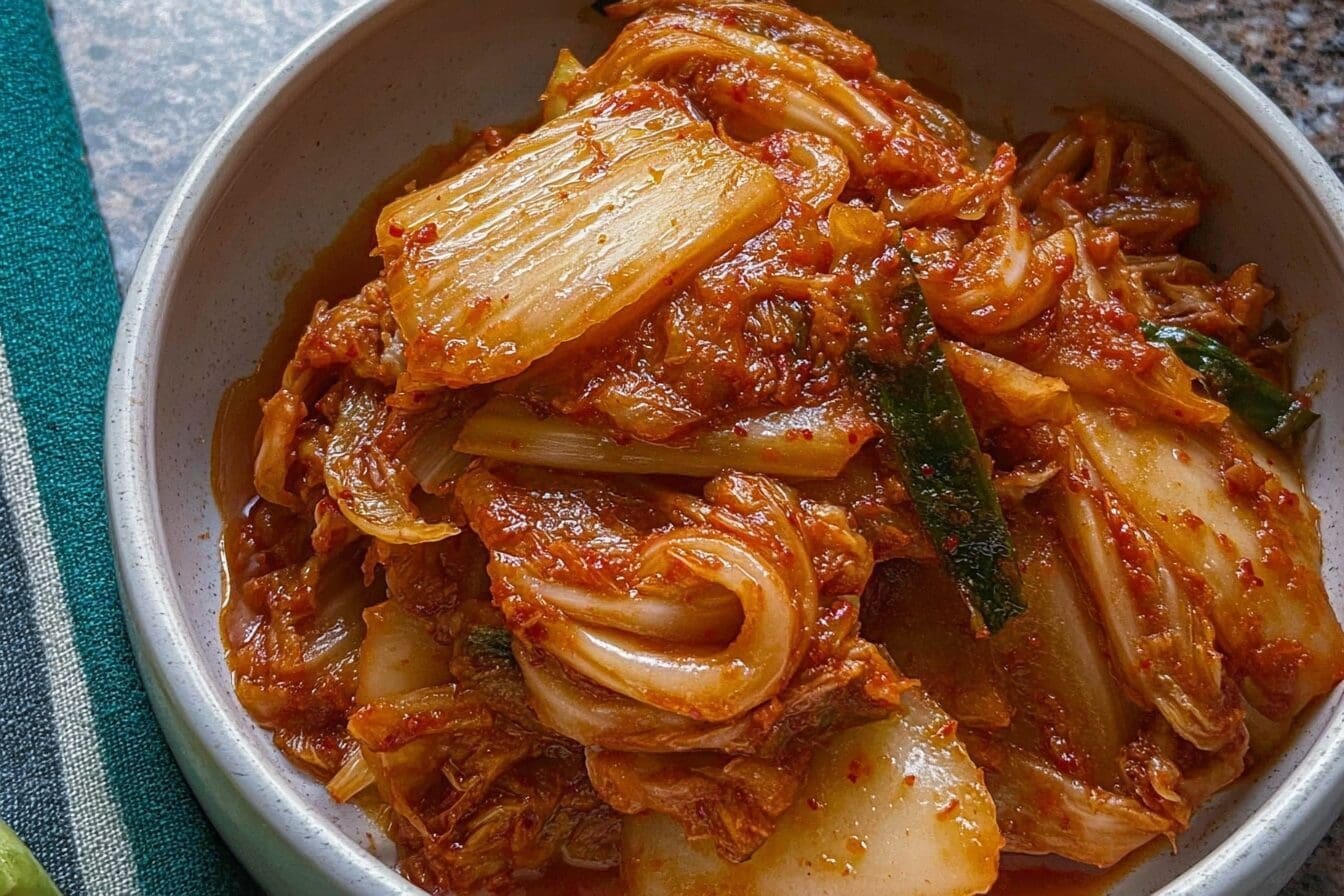
Dietary Substitutions to Customize Your Kimchi
Kimchi recipes can be adapted for various dietary needs, ensuring it’s accessible for everyone from baking enthusiasts to diet-conscious individuals. For instance, replace fish sauce with soy sauce to make it vegan while maintaining umami. These changes preserve the dish’s core health benefits, like its probiotic content and low-fat profile.
Other modifications include using tempeh instead of traditional seafood for protein alternatives or adding daikon radish for extra crunch. Adjusting seasonings, such as opting for gluten-free tamari, helps suit preferences for kimchi diet plans. Various kimchi types, like white kimchi without chili, offer milder options for seniors or those with spice sensitivities.
Common Adaptations
- Use mushroom powder instead of shrimp paste for vegan umami.
- Swap carrots for seasonal vegetables to vary texture and nutrition.
- Reduce sugar and use stevia for low-calorie versions.
As noted, kimchi’s nutritional profile, with 1-4 g of dietary fiber per 100 grams, remains strong even with substitutions.
Mastering Kimchi: Advanced Tips and Variations
To elevate your kimchi experience, focus on pro cooking techniques like massaging the cabbage before fermenting to release its crispness. Controlling fermentation temperature impacts flavor depth, with cooler conditions enhancing sourness over time. Experimenting with additions, such as apples for sweetness, can create unique variations suited to food enthusiasts.
Presentation tips include garnishing with sesame seeds for visual appeal, making kimchi ideal for community events. Various kimchi types, like watery kimchi, provide options for different tastes. Fermentation’s role in producing lactic acid enriches vitamins and supports gut health, aligning with kimchi health benefits for busy professionals.
Storage and Flavor Enhancements
For make-ahead options, prepare the base in advance and store in airtight containers. Longer fermentation can last months, increasing complexity while keeping sodium content low. As a probiotic-rich dish, kimchi complements meals like those in Health benefits of kimchi, ideal for a balanced diet.
How to Store Kimchi: Best Practices
Proper storage is key to preserving kimchi’s flavors and health benefits, such as its vitamin-enriched profile. Refrigerate in airtight containers to maintain freshness for 1-2 months, slowing fermentation to prevent over-souring. Freezing works for long-term needs but may alter texture, so use smaller portions for convenience.
Consume kimchi cold or warmed gently to retain probiotics from lactic acid bacteria. For meal prep, divide into servings to ease daily use, making it perfect for travelers and working professionals. Traditionally, kimchi was stored in buried jars, but modern methods ensure it fits into any kimchi diet routine.

FAQs: Frequently Asked Questions About Kimchi
What is kimchi made of and how is it prepared?
Kimchi is a traditional Korean dish made by fermenting vegetables like napa cabbage or radishes with salt and seasonings such as Korean chili powder (gochugaru), garlic, scallions, and fish sauce or salted seafood. The process begins by salting the vegetables to remove moisture, then mixing them with the seasoning paste before packing into containers to ferment. Fermentation usually takes 1 to 2 days at room temperature or longer in cooler conditions, allowing beneficial bacteria to develop the distinct tangy flavor.
Why does kimchi have a strong smell and taste?
Kimchi’s characteristic strong odor and spicy flavor come from ingredients like garlic, ginger, and fermented seafood, which release sulfur compounds and acids during fermentation. The natural production of lactic acid bacteria also contributes to its tanginess. The intensity varies with the fermentation time and ingredients used—fresh kimchi smells milder, while aged kimchi develops a more pungent aroma.
What are the health benefits of eating kimchi?
Kimchi is low in calories and rich in dietary fiber, vitamins A, B, C, calcium, and iron. Its fermentation process boosts probiotic content, supporting digestive health and strengthening the immune system. Additionally, antioxidants from chili powder and garlic offer anti-inflammatory effects. Regular consumption of kimchi can contribute to balanced gut flora and improved nutrient absorption.
How is traditional kimchi stored and for how long does it last?
Traditionally, kimchi was stored in large earthenware jars buried underground, which kept it cool and slowed fermentation. Today, kimchi is usually refrigerated to maintain freshness. Depending on the temperature and type, kimchi can last from several weeks to a few months. Proper storage in airtight containers slows spoilage and preserves flavor.
What are the main types of kimchi and how do they differ?
There are over 180 types of kimchi classified by main ingredients, seasoning, and fermentation time. Common varieties include napa cabbage kimchi (baechu kimchi), radish kimchi (kkakdugi), white kimchi (baek kimchi) without chili powder, and watery kimchi (mul kimchi). Each variety reflects regional preferences and seasonal produce, offering diverse textures and flavors from crunchy to soft and spicy to mild.
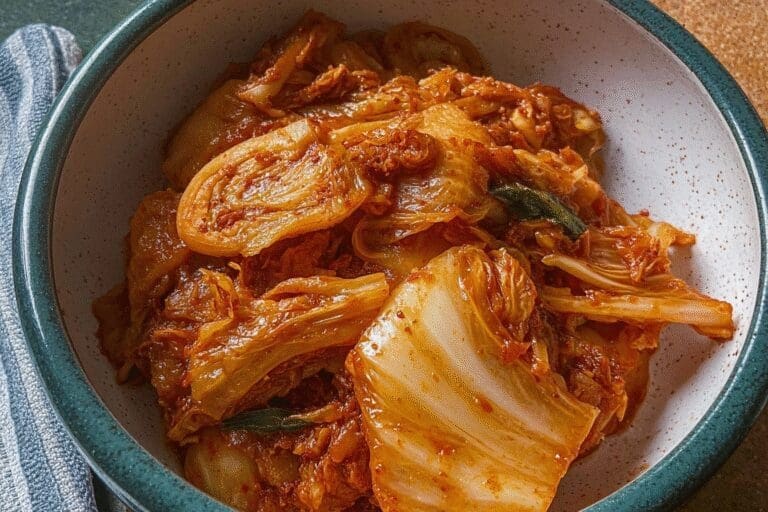
Kimchi
🥬 Experience the rich probiotic and nutritional benefits of Kimchi, a traditional Korean fermented vegetable dish.
🌶️ Enjoy its bold, spicy, sour, and umami flavors that enhance your daily meals with a healthy twist.
- Total Time: 12 hours plus fermentation
- Yield: About 2 to 3 liters of kimchi
Ingredients
– 1 kg napa cabbage Provides the classic base and texture for fermentation.
– 500 g Korean radish Adds crunch and balances the overall flavor.
– 100-200 g carrots (optional) Contributes sweetness and color if desired.
– 4-6 cloves garlic Enhances flavor and serves as a natural preservative.
– 3-4 stalks scallions Offers a fresh, onion-like taste and aroma.
– 3-5 tablespoons Korean chili powder (gochugaru) Adds signature heat and color to the mix.
– 2-3 tablespoons salted seafood or fish sauce Provides umami and aids in fermentation.
– 1 tablespoon grated ginger Brings warmth and depth to the seasoning.
– 1 teaspoon sugar Helps balance acidity during fermentation.
– 100-150 g coarse salt Used for salting vegetables to draw out moisture and preserve them, typically 50-75 g per 1 kg of vegetables for the initial step.
Instructions
1-Rinse and chop 1 kg napa cabbage and 500 g Korean radish into bite-sized pieces.
2-Salt the vegetables with 100-150 g coarse salt and let sit for 3-12 hours, then drain.
3-Prepare the paste with 3-5 tablespoons gochugaru, 4-6 cloves garlic, 1 tablespoon ginger, 2-3 tablespoons fish sauce, 1 teaspoon sugar, and 3-4 scallions.
4-Mix the paste with vegetables and pack into jars.
5-Ferment at room temperature for 1-3 days, then refrigerate.
Last Step:
Please leave a rating and comment letting us know how you liked this recipe! This helps our business to thrive and continue providing free, high-quality recipes for you.Notes
🌡 Maintain cool fermentation temperatures (around 10°C) for optimal flavor development.
🧂 Control salting carefully to balance texture and taste.
🥢 Open containers daily during initial fermentation to release carbon dioxide and prevent spoilage.
- Prep Time: 12 hours
- Fermentation time: 24 to 48 hours (or longer)
- Category: Side Dish
- Method: Salting and fermentation
- Cuisine: Korean
- Diet: Vegan, Gluten-Free
Nutrition
- Serving Size: 100 grams
- Calories: 18-40 kcal
- Sugar: 1 g
- Sodium: 300 mg
- Fat: <1 g
- Saturated Fat: 0 g
- Unsaturated Fat: 0 g
- Trans Fat: 0 g
- Carbohydrates: 4 g
- Fiber: 2 g
- Protein: 2 g
- Cholesterol: 0 mg


