

Why You’ll Love This Homemade Pie Crust
This homemade pie crust is a game-changer for anyone eager to try baking from scratch. It’s simple to make with just a few basic items from your kitchen, offering a flaky texture that elevates any pie. Whether you’re new to baking or have years of experience, this recipe delivers great results every time.
One of the best parts is how it supports your health with wholesome ingredients like flour and butter, which can be better than store-bought options full of preservatives. This crust adapts easily to various diets, making it a versatile choice for family gatherings. You’ll enjoy the rich, buttery flavor that makes every bite special.
Beyond taste, this recipe brings people together, fitting perfectly with potlucks and picnics as shared on Cooky Cooky. For more dessert ideas, check out our Lemon Raspberry Pie Recipe, which pairs wonderfully with a homemade crust. It’s all about creating those memorable moments around food that everyone loves.
Key Benefits of This Recipe
- Ease of preparation makes it quick and straightforward, ideal for busy parents and students.
- Health benefits come from using basic, less processed ingredients that align with diet-conscious choices.
- Versatility allows adjustments for different needs, like vegan or gluten-free options.
- Distinctive flavor adds a special touch to pies, appealing to baking enthusiasts and food lovers alike.
Making this crust at home means you control the quality, supporting the blog’s focus on community and shared meals. It’s perfect for events where you want to impress without much hassle, turning simple ingredients into something everyone remembers.
Jump to:
- Why You’ll Love This Homemade Pie Crust
- Key Benefits of This Recipe
- Essential Ingredients for Homemade Pie Crust
- How to Prepare the Perfect Homemade Pie Crust: Step-by-Step Guide
- Gathering and Mixing Ingredients
- Forming and Chilling the Dough
- Baking and Finishing Touches
- Dietary Substitutions to Customize Your Homemade Pie Crust
- Mastering Homemade Pie Crust: Advanced Tips and Variations
- How to Store Homemade Pie Crust: Best Practices
- FAQs: Frequently Asked Questions About Homemade Pie Crust
- How do I prevent my homemade pie crust from shrinking while baking?
- What can I use if I don’t have pie weights for blind baking?
- How do I fix pie dough that’s too tough to roll out?
- Can I mix pie crust dough without a food processor?
- How long can I store homemade pie dough in the fridge or freezer?
- Homemade Pie Crust
- Ingredients
- Instructions
- Last Step:
- Notes
- Nutrition
- Did you make this recipe?
Essential Ingredients for Homemade Pie Crust
Gathering the right ingredients is the first step to a perfect homemade pie crust. This section outlines everything you need, based on a reliable recipe that ensures flakiness and taste. Use fresh, high-quality items for the best outcome, and follow the measurements closely for success.
Below is a structured list of all ingredients required, pulled directly from the recipe summary. Each item includes precise quantities to make preparation easy and accurate.
- 2 1/2 cups all-purpose flour, plus extra for dusting
- 1/2 tablespoon sugar
- 1/2 teaspoon salt
- 1/2 pound cold unsalted butter (2 sticks), diced into 1/4-inch pieces
- 7 tablespoons ice water (7 to 8 tablespoons)
For special dietary options, you can swap ingredients as needed. This includes using plant-based butter for vegan diets or gluten-free flour blends to meet other preferences. Always measure carefully to keep the dough’s texture just right, which helps in creating that ideal flaky crust.
| Ingredient | Quantity | Purpose |
|---|---|---|
| All-purpose flour | 2 1/2 cups | Provides structure |
| Unsalted butter | 1/2 pound | Adds flakiness |
| Ice water | 7 tablespoons | Binds the dough |
These ingredients come together in about 10 minutes of prep time, leading to a total of 1 hour 10 minutes including chilling. This makes it a practical choice for working professionals and seniors looking for easy recipes.
How to Prepare the Perfect Homemade Pie Crust: Step-by-Step Guide
Creating a homemade pie crust starts with gathering your ingredients and tools, ensuring everything is cold to maintain that flaky texture. Begin by measuring out 2 1/2 cups of all-purpose flour, 1/2 tablespoon of sugar, and 1/2 teaspoon of salt. Use a food processor or a bowl for mixing, as outlined in the directions, to keep things simple and effective.
Gathering and Mixing Ingredients
First, pulse the flour, sugar, and salt together in a food processor until they are well combined. If you prefer mixing by hand, whisk them in a large bowl instead. This step ensures even seasoning and sets the base for your dough, making it easier for beginners to follow along.
Next, add the cold diced butter and pulse until the mixture looks like coarse crumbs with some pea-sized pieces. Avoid overmixing to preserve those butter pockets that create flakiness. For a great related recipe, try our Blackberry Pie Bars, which uses a similar crust technique.
Forming and Chilling the Dough
Gradually add ice water, one tablespoon at a time, pulsing or stirring until the dough holds together when pinched but isn’t sticky. Transfer it to a surface, shape it into a ball without kneading, and divide into two disks. Wrap these in plastic wrap and refrigerate for at least one hour, as this resting time is key to avoiding tough dough.
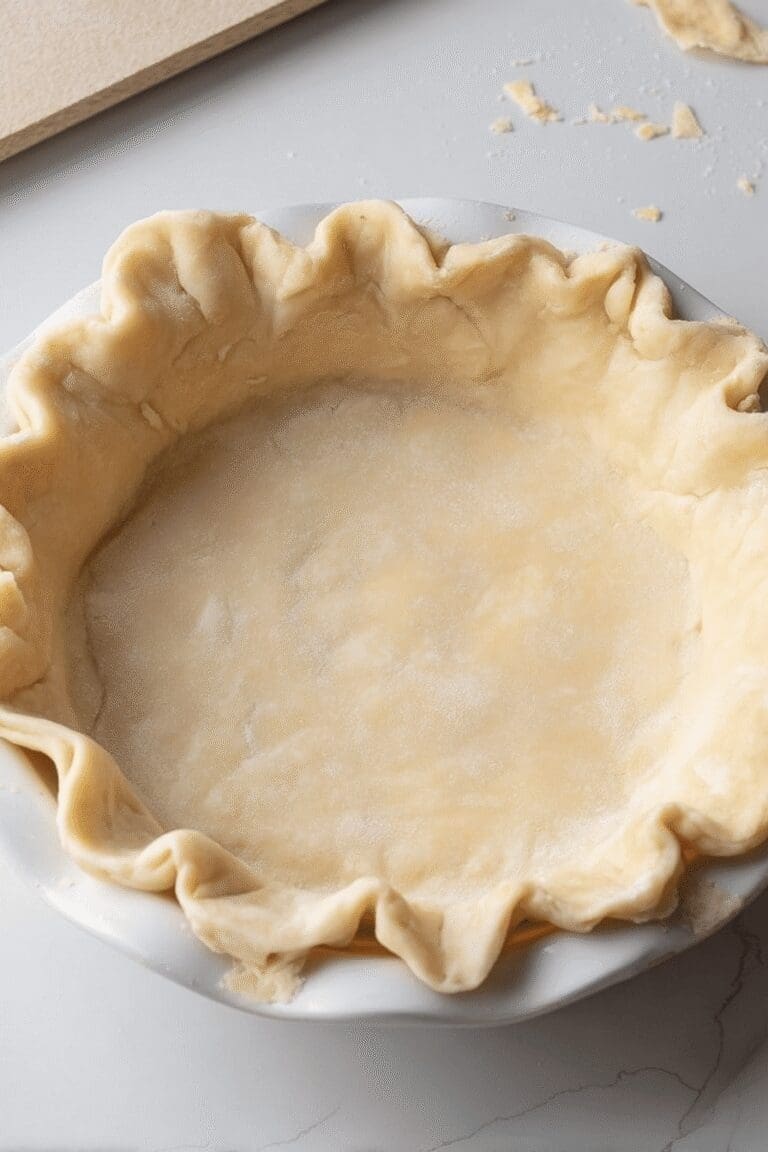
After chilling, roll out the dough on a lightly floured surface into a 12-inch circle. Carefully move it to your pie pan, press it in place, and tuck under any excess for a neat edge. To form a fluted rim, pinch the edge between your thumb and forefinger all around the pan.
Baking and Finishing Touches
For pies needing pre-baking, chill the crust in the freezer for 30 minutes first. Line it with parchment paper and fill with pie weights or dry beans, then bake at 425°F for 17 minutes. Remove the weights, prick the bottom with a fork, and bake for another 5 minutes until it’s golden and dry. Remember, preparation takes just 10 minutes, with a total time of 1 hour 10 minutes, making it ideal for busy parents.
Adapt for dietary needs by using substitutes like gluten-free flour at each step. This guide draws from nutritional info per serving, including 232 calories and 15g of fat, to help you make informed choices. With these steps, even newlyweds or community organizers can master a crust that brings people together at gatherings.
This method keeps things straightforward and fun, turning basic ingredients into a crust that’s perfect for any pie.
Dietary Substitutions to Customize Your Homemade Pie Crust
Making adjustments for different diets is simple with this homemade pie crust recipe. Start by swapping traditional butter with vegan alternatives like margarine or coconut oil for a dairy-free version. This change keeps the flakiness intact while meeting various needs, such as for travelers or seniors.
For gluten-free options, use rice flour or a blend of almond and tapioca flours in place of all-purpose flour. You can also experiment with adding herbs to the dough for extra flavor, or use plant-based milks instead of water to boost moisture. These tweaks ensure the crust remains tasty and adaptable.
Consider the nutritional breakdown, like 20g of carbohydrates per serving, when making changes. For instance, reducing sugar to 1/2 tablespoon can help with low-calorie goals, making it easier for diet-conscious individuals to enjoy. Overall, these substitutions maintain the recipe’s charm for food enthusiasts at any event.
Mastering Homemade Pie Crust: Advanced Tips and Variations
Taking your homemade pie crust to the next level involves smart techniques and creative twists. Use chilled fats cut into small pieces and handle the dough gently to boost flakiness, which is essential for that perfect texture. Add flavors like grated cheese or spices to the mix for a unique taste that stands out.
Presentation matters too, so try decorative crimping or an egg wash for a golden finish. For make-ahead convenience, prepare the dough ahead and freeze it for up to 3 months, then thaw in the fridge before use. These tips, combined with the recipe’s 1 hour chilling time, help baking enthusiasts save time while achieving professional results.
Remember the preparation advice: keep everything cold to avoid tough dough, as noted in the tips section. This approach not only enhances flavor but also makes the crust versatile for events like potlucks, linking back to (visit an external resource for a similar approach at this perfect pie crust guide).
How to Store Homemade Pie Crust: Best Practices
Proper storage keeps your homemade pie crust fresh and ready for use. Wrap the dough tightly in plastic and refrigerate it for up to 3 days to avoid drying out. This method works well for meal prep, allowing you to plan ahead for gatherings.
For longer storage, freeze the crust in an airtight container for up to 3 months, then thaw it in the fridge. When it’s time to bake, use it directly from the fridge without microwaving to preserve texture. These practices align with the recipe’s advice for maintaining quality over time.
FAQs: Frequently Asked Questions About Homemade Pie Crust
How do I prevent my homemade pie crust from shrinking while baking?
To prevent pie crust from shrinking, avoid overworking the dough as that develops gluten, causing contraction. After shaping, chill the dough in the refrigerator for at least 30 minutes before baking. This helps relax the gluten and solidify the fat. When blind baking, use pie weights or alternatives like dry beans to keep the crust in place. Also, avoid stretching the dough to fit the pan; it should fit naturally.
What can I use if I don’t have pie weights for blind baking?
If you don’t have pie weights, dry raw beans or rice make effective alternatives. Line the crust with parchment paper or foil, then fill it with your chosen item to keep the dough flat during baking. Keep in mind, beans used for this purpose shouldn’t be cooked afterward. Rice can be reused or added to recipes afterward after toasting in the oven.
How do I fix pie dough that’s too tough to roll out?
If pie dough feels tough or difficult to roll, it’s usually because it’s cold or overworked. Let the dough rest at room temperature for 10 to 20 minutes to soften slightly. Avoid adding extra flour during rolling as it can increase toughness. If overmixing caused excessive gluten, it may result in a dense crust after baking; next time, mix ingredients gently until just combined.
Can I mix pie crust dough without a food processor?
Yes, you can make pie crust dough by hand using a pastry cutter or two forks to cut cold butter into the flour. Start by whisking dry ingredients, then cut in chilled, diced butter until the mixture resembles coarse crumbs. Gradually add ice water until the dough forms a ball. This manual method allows for better control to avoid overmixing.
How long can I store homemade pie dough in the fridge or freezer?
Homemade pie dough can be kept in the refrigerator for up to 3 days if wrapped tightly to prevent drying. For longer storage, freeze the dough, wrapped in plastic and foil, for up to 3 months. Thaw frozen dough overnight in the refrigerator before rolling out. Always allow refrigerated dough to warm slightly at room temperature for easier handling.
Homemade Pie Crust
🥧 Achieve perfectly flaky homemade pastry every time with this easy pie crust recipe, crafted to simplify your baking process.
🍽️ Ideal for sweet or savory pies, this crust combines basic ingredients with a foolproof technique for consistent results.
- Total Time: 1 hour 10 minutes
Ingredients
– 2 1/2 cups all-purpose flour Provides structure
– 1/2 pound unsalted butter Adds flakiness
– 7 tablespoons ice water Binds the dough
Instructions
1-Gathering and Mixing Ingredients: First, pulse the flour, sugar, and salt together in a food processor until they are well combined. If you prefer mixing by hand, whisk them in a large bowl instead. This step ensures even seasoning and sets the base for your dough, making it easier for beginners to follow along.
2-Next, add the cold diced butter and pulse until the mixture looks like coarse crumbs with some pea-sized pieces. Avoid overmixing to preserve those butter pockets that create flakiness. For a great related recipe, try our Blackberry Pie Bars, which uses a similar crust technique.
3-Forming and Chilling the Dough: Gradually add ice water, one tablespoon at a time, pulsing or stirring until the dough holds together when pinched but isn’t sticky. Transfer it to a surface, shape it into a ball without kneading, and divide into two disks. Wrap these in plastic wrap and refrigerate for at least one hour, as this resting time is key to avoiding tough dough.
4-After chilling, roll out the dough on a lightly floured surface into a 12-inch circle. Carefully move it to your pie pan, press it in place, and tuck under any excess for a neat edge. To form a fluted rim, pinch the edge between your thumb and forefinger all around the pan.
5-Baking and Finishing Touches: For pies needing pre-baking, chill the crust in the freezer for 30 minutes first. Line it with parchment paper and fill with pie weights or dry beans, then bake at 425°F for 17 minutes. Remove the weights, prick the bottom with a fork, and bake for another 5 minutes until it’s golden and dry. Remember, preparation takes just 10 minutes, with a total time of 1 hour 10 minutes, making it ideal for busy parents.
Last Step:
Please leave a rating and comment letting us know how you liked this recipe! This helps our business to thrive and continue providing free, high-quality recipes for you.Notes
🧈 Use cold unsalted butter straight from the fridge to ensure flakiness.
💧 Add water one teaspoon at a time if dough is crumbly, avoiding stickiness.
🍴 Avoid overmixing or kneading to prevent tough, gluten-developed dough.
- Prep Time: 10 minutes
- Chilling Time: 1 hour
- Category: Pastry
- Method: Mixing and Baking
- Cuisine: American
Nutrition
- Calories: 232
- Sodium: 99 mg
- Fat: 15 g
- Saturated Fat: 9 g
- Carbohydrates: 20 g
- Protein: 2 g
- Cholesterol: 40 mg


