

Why You’ll Love This Grilled Octopus Salad
Grilled Octopus Salad is one of those dishes that feels special without being fussy. It brings bright Mediterranean flavor, tender seafood, and crisp vegetables together in one easy-to-serve bowl. If you want something fresh, bold, and a little different for dinner, this is a great one to keep in your back pocket.
- Easy to make at home: The octopus gets boiled first, which makes it tender, then it gets a quick grill for that smoky char. The active hands-on time is short, so even busy home cooks can pull it off.
- Good-for-you ingredients: Octopus is high in protein and low in fat, while celery, tomatoes, parsley, lemon, and olives add color, crunch, and bright flavor. For more nutrition details on octopus, see WebMD’s guide to octopus benefits.
- Flexible for different eaters: This salad works for low-carb, gluten-free, and diet-conscious meal plans. You can also skip the grilling step or use pre-cooked tentacles when you want dinner even faster.
- Big flavor payoff: The mix of olive oil, white wine vinegar, lemon, oregano, parsley, and black pepper gives the salad a fresh, zesty taste that balances the mild seafood flavor really well.
Grilled Octopus Salad tastes like something you would order at a seaside café, but it is simple enough for a weeknight meal at home.
If you are looking for a seafood recipe that feels fresh but still hearty enough to serve at a gathering, this one checks a lot of boxes. It also fits right in with the kind of food that travels well and brings people together, which is a big part of what Cooky Cooky is all about.
Jump to:
- Why You’ll Love This Grilled Octopus Salad
- Essential Ingredients for Grilled Octopus Salad
- Main ingredients
- Special dietary options
- How to Prepare the Perfect Grilled Octopus Salad: Step-by-Step Guide
- First step: get the octopus ready
- Second step: simmer until tender
- Third step: cool and separate the tentacles
- Fourth step: grill for a quick char
- Fifth step: cut into bite-size pieces
- Sixth step: build the salad base
- Seventh step: add the octopus and finish
- Dietary Substitutions to Customize Your Grilled Octopus Salad
- Protein and main component alternatives
- Vegetable, sauce, and seasoning modifications
- Mastering Grilled Octopus Salad: Advanced Tips and Variations
- Pro cooking techniques
- Flavor variations
- Presentation tips
- Make-ahead options
- How to Store Grilled Octopus Salad: Best Practices
- FAQs: Frequently Asked Questions About Grilled Octopus Salad
- Can you eat octopus safely?
- What does cooked octopus taste like?
- How do you boil octopus to make it tender?
- How do you grill octopus for salad?
- What ingredients go in grilled octopus salad?
- Grilled Octopus Salad
- Ingredients
- Instructions
- Last Step:
- Notes
- Nutrition
- Did you make this recipe?
Essential Ingredients for Grilled Octopus Salad
Here is everything you need for this grilled octopus salad recipe. The ingredient list uses simple Mediterranean staples, and each item plays a clear role in the final dish.
Main ingredients
- 4 to 5 pound whole octopus, thawed and rinsed – the star of the dish and the main source of protein.
- 2 bay leaves – added to the boiling water for a light herbal note.
- 2 tablespoons kosher salt for boiling – seasons the cooking water and helps flavor the octopus.
- 2 tablespoons olive oil – adds richness and helps coat the salad.
- 1 teaspoon white wine vinegar – adds a clean, tangy finish.
- Juice of 1/2 lemon – brightens the salad and balances the seafood flavor.
- 1 stalk celery, halved lengthwise and shaved – gives crunch and freshness.
- 1/4 red onion, sliced thin – adds sharp bite and color.
- 10 heirloom cherry tomatoes, halved – bring juicy sweetness and visual appeal.
- 1 teaspoon dried oregano – adds classic Mediterranean flavor.
- 1/2 cup Greek olives, rough chopped – adds salty depth and a briny finish.
- 2 to 3 tablespoons fresh parsley, chopped – gives the salad a fresh, herby lift.
- 1/2 teaspoon kosher salt for salad – seasons the finished dish.
- 1 teaspoon black pepper – adds mild heat and balance.
Special dietary options
- Vegan: Swap the octopus for grilled artichoke hearts, king oyster mushrooms, or chickpeas if you want a plant-based version.
- Gluten-free: This recipe is naturally gluten-free as written.
- Low-calorie: Keep the olive oil light, use extra lemon juice, and add more celery or tomatoes for volume without many extra calories.
If you like building simple Mediterranean-style meals, you may also enjoy this bright lemon cannellini bean bruschetta or a fresh side like homemade Greek seasoning to keep around for other dishes.
How to Prepare the Perfect Grilled Octopus Salad: Step-by-Step Guide
First step: get the octopus ready
Start by rinsing the 4 to 5 pound whole octopus under cool water if it has not already been cleaned. Bring a large pot of water to a boil, then add 2 tablespoons kosher salt and 2 bay leaves. This creates a lightly seasoned cooking liquid that helps build flavor from the start.
Once the water is boiling, use the dunk and lift technique. Hold the octopus by the head area and dip the tentacles into the boiling water a few times before fully submerging it. This helps the tentacles curl and gives the octopus a better shape for cooking and serving.
Second step: simmer until tender
After the octopus is fully in the pot, reduce the heat to a simmer. Cook it for at least 45 minutes to 1 hour, depending on size. You want the flesh to become tender enough that a knife or fork slides through with little resistance. If it still feels tough, keep simmering and test again in a few minutes.
Do not rush this step. Tender octopus makes the salad pleasant to eat, while undercooked octopus can turn chewy fast. That said, overcooking can also make it dry, so check it near the end of the cooking time.
Third step: cool and separate the tentacles
Once the octopus is tender, remove it from the water and let it cool until you can handle it safely. Cut off the tentacles and reserve them. Discard the head if you do not plan to use it. At this point, you should have soft, cooked tentacles ready for a quick char.
If you want to keep things simple, this is also where you can follow the tip to use pre-cooked frozen tentacles. That saves time and lets you move right to the grilling step.
Fourth step: grill for a quick char
Heat a grill or grill pan until it is hot. Grill the tentacles whole for about 1 minute, just long enough to add light char marks and a smoky note. Because the octopus is already cooked, this step is all about flavor and appearance, not long grilling time.
If you prefer, you can skip grilling and serve the octopus straight from the pot once it has cooled. That still gives you a tender salad, just with a softer texture and no char.
Fifth step: cut into bite-size pieces
After grilling, cut the tentacles into 1-inch pieces. Try to keep the cuts fairly even so the salad looks neat and serves well. If you like careful presentation, use clean knife cuts and trim the pieces into a shape that feels restaurant-style.
This is also a good moment to think about texture. The octopus should feel tender but still have a little bite, almost like a mix between calamari and lobster. That texture works really well in a salad with crunchy vegetables.
Sixth step: build the salad base
In a large bowl, combine 2 tablespoons olive oil, 1 teaspoon white wine vinegar, and the juice of 1/2 lemon. Then add the shaved celery, thinly sliced red onion, halved heirloom cherry tomatoes, 1 teaspoon dried oregano, rough chopped Greek olives, 2 to 3 tablespoons chopped parsley, 1/2 teaspoon kosher salt, and 1 teaspoon black pepper.
Toss everything together gently. Taste the mixture before adding the octopus. If it needs more salt, a little more vinegar, or another splash of oil, adjust it now. This is the easiest time to fix the balance.
Seventh step: add the octopus and finish
Add the reserved octopus pieces to the bowl and toss until everything is lightly coated. Try not to stir too aggressively, or you may break up the salad ingredients too much. You want each bite to carry a little bit of octopus, tomato, celery, onion, olive, and herb.
Serve the salad at room temperature for the best flavor. That is when the lemon, olives, oregano, and olive oil really come through. If it has been chilling in the fridge, let it sit out for a bit before serving.
| Recipe detail | Amount |
|---|---|
| Prep time | 5 minutes |
| Cook time | 1 hour 5 minutes |
| Total time | 1 hour 10 minutes |
| Yield | 4 servings |
| Serving size | 1 serving |
For another seafood option that keeps things simple, you might also like these easy BBQ shrimp for a fast weeknight dinner.
Dietary Substitutions to Customize Your Grilled Octopus Salad
Protein and main component alternatives
If you cannot find octopus, or if you want a different seafood feel, there are a few easy swaps. Pre-cooked frozen tentacles work well and save time. You can also use grilled shrimp, calamari, or even seared scallops if that is easier to buy where you live.
For a non-seafood version, grilled artichoke hearts, chickpeas, or roasted mushrooms can give you a similar hearty feel. These swaps work especially well if you still want the olive oil, lemon, oregano, and parsley flavor profile.
Vegetable, sauce, and seasoning modifications
Change the vegetables based on season and what you have on hand. Cucumbers, fennel, arugula, roasted red peppers, or baby potatoes can all fit in well. If you want more crunch, add extra celery or shaved fennel. If you want more color, use a mix of yellow and red cherry tomatoes.
You can also shift the seasoning a little. Add garlic, capers, or a pinch of red pepper flakes for more bite. Swap the white wine vinegar for red wine vinegar if that is what is in your pantry. For a softer finish, use more olive oil and less vinegar. If you want a brighter edge, add more lemon juice. The nice thing about Grilled Octopus Salad is that it is easy to adjust to your taste.
Mastering Grilled Octopus Salad: Advanced Tips and Variations
Pro cooking techniques
The biggest trick is getting the octopus tender before you grill it. Use a gentle simmer, not a hard boil, once the pot comes back down from boiling. Check the thickest part with a knife so you know when it is ready. If the octopus is tender, it will slice easily and feel soft but not mushy.
If you want extra char, pat the tentacles dry before grilling. Dry octopus browns better and picks up a little more color. A very hot grill or grill pan is best here. Since the octopus is already cooked, you only need a short time on the heat.
Flavor variations
There are lots of ways to change the flavor without losing the spirit of the dish. Add garlic to the dressing for a sharper flavor. Toss in capers for a saltier, brinier bite. Use fresh dill or mint along with the parsley if you want a lighter summer feel.
You can also add cooked potatoes for a more filling salad, which is great for lunch or for sharing at a potluck. If you want a more classic Mediterranean taste, use extra olives and oregano. For a peppery edge, add arugula and cracked black pepper.
Presentation tips
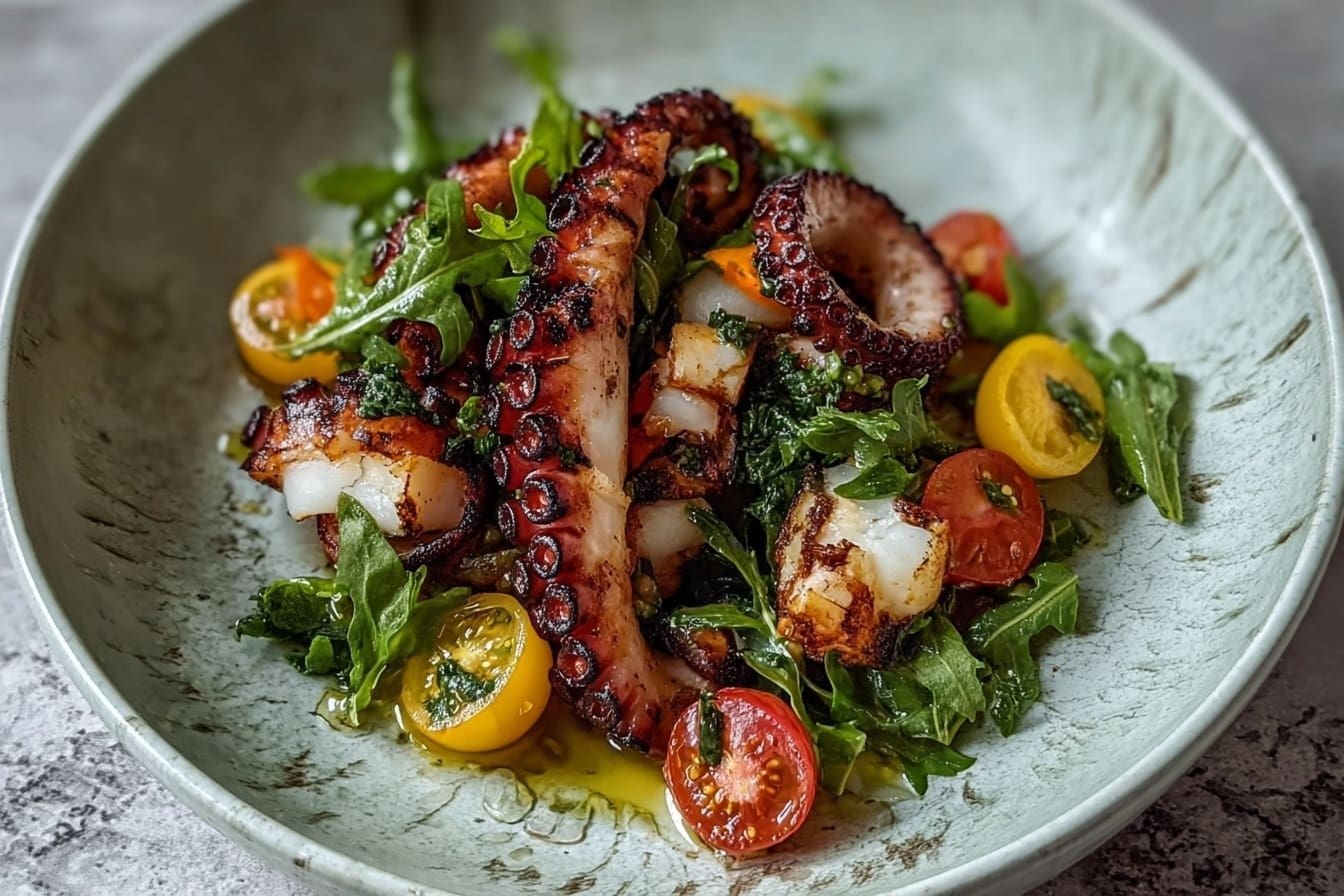
Cut the tentacles into clean, even pieces so the salad looks polished. Arrange the salad in a wide shallow bowl or on a platter instead of piling it into a deep dish. That lets the tomatoes, celery, and olives show through.
Finish with extra parsley on top, a few olive pieces, and maybe a small squeeze of lemon right before serving. That final fresh touch makes the whole dish look bright and inviting.
Make-ahead options
You can boil the octopus earlier in the day and store it until you are ready to grill. The dressing ingredients can also be mixed ahead of time, but wait to add the octopus until just before serving so it stays fresh and tidy. This makes the recipe helpful for busy schedules and last-minute get-togethers.
How to Store Grilled Octopus Salad: Best Practices
Refrigeration: Store leftovers in an airtight container in the refrigerator for up to 2 to 3 days. For the best texture, let the salad come to room temperature before serving again.
Freezing: Freezing is not the best choice for the finished salad because the tomatoes, celery, and herbs will soften too much. If needed, you can freeze cooked octopus on its own before mixing it with the salad ingredients.
Reheating: This salad is best served cold or at room temperature, not hot. If you want to warm the octopus slightly, do it very gently and briefly, then toss it back into the salad. Do not overheat it, or the texture can turn rubbery.
Meal prep considerations: If you are making this for a few days of lunches, keep the dressing and chopped vegetables separate from the octopus until serving. That helps the salad stay fresh and keeps the celery and onion crisp.
FAQs: Frequently Asked Questions About Grilled Octopus Salad
Can you eat octopus safely?
Yes, octopus is safe and nutritious to eat when prepared properly. Avoid raw octopus unless it’s from trusted sources like Japanese sashimi or Mediterranean dishes, as it may carry parasites. The beak and internal organs are the only inedible parts—most store-bought frozen octopus comes pre-cleaned. For grilled octopus salad, use the tentacles (and head if desired). Boil first to tenderize, then grill briefly. A 3-ounce serving provides 25 grams of protein, low fat, and minerals like iron and selenium. Always cook to an internal temperature of 140°F (60°C) to kill bacteria. Source fresh or frozen from reputable suppliers, and discard if it smells off.
What does cooked octopus taste like?
Cooked octopus has a mild, slightly sweet seafood flavor that absorbs marinades, herbs, and dressings well—think subtle brine without fishiness. Properly prepared, the texture mimics tender lobster or calamari: firm yet succulent. Overcooking makes it rubbery and chewy; undercooking leaves it tough. Boiling tenderizes it, while grilling adds smoky char. In grilled octopus salad, lemon, olive oil, garlic, and parsley brighten the taste. Pair with crisp veggies like fennel or arugula for contrast. Many describe it as “meaty seafood” with a clean finish. Experiment with Mediterranean spices for variety—over 70% of home cooks report loving it once mastered.
How do you boil octopus to make it tender?
Start with a cleaned 2-3 lb octopus. Bring a large pot of salted water to a rolling boil with bay leaves, lemon, or a wine cork for extra tenderness (the enzymes help break down proteins). Use the “dunk and lift” method: grasp the head, dunk tentacles into the boiling water 3-5 times until they curl and turn reddish-purple—this shocks the proteins. Submerge fully, reduce to simmer, and cook 45-60 minutes (1 hour per kg) until a paring knife pierces the thickest tentacle easily. Cool in ice water, then slice. This yields tender results for grilling. Test doneness early to avoid toughness—perfect base for salads.
How do you grill octopus for salad?
After boiling and cooling, pat dry the tentacles and brush with olive oil seasoned with salt, pepper, garlic, and lemon zest. Preheat a hot grill or grill pan to 450°F (230°C)—high heat for char without overcooking. Grill 1-2 minutes per side until golden-brown grill marks form and edges crisp slightly; total 4-6 minutes max since it’s pre-cooked. Avoid flipping too often. Rest 2 minutes, then slice into bite-sized pieces. This adds smoky flavor ideal for salad. Pro tip: Use a cast-iron skillet indoors if no grill. Yields tender, charred octopus ready to toss with greens, potatoes, olives, and vinaigrette.
What ingredients go in grilled octopus salad?
For 4 servings: 1.5 lbs boiled and grilled octopus tentacles (sliced), 4 cups mixed greens (arugula or romaine), 1 cup boiled baby potatoes (halved), 1/2 cup cherry tomatoes (halved), 1/4 cup red onion (sliced thin), 1/4 cup kalamata olives, fresh parsley or cilantro. Dressing: 1/4 cup olive oil, 2 tbsp lemon juice, 1 minced garlic clove, 1 tsp Dijon mustard, salt, pepper—whisk together. Toss everything gently. Optional: feta, capers, or chickpeas for heartiness. Prep time: 20 mins active after octopus. High-protein (30g/serving), low-carb meal clocks 350 calories. Store leftovers airtight up to 2 days; refresh with lemon. Link to full recipe in our octopus grilling guide.

Grilled Octopus Salad
🐙 Tender grilled octopus chunks in vibrant veggie salad – lean protein, low-carb Mediterranean freshness!
🥗 1-hour easy poach-to-grill method yields smoky flavor, perfect light lunch or appetizer.
- Total Time: 1 hour 10 minutes
- Yield: 4 servings
Ingredients
– 4 to 5 pound whole octopus, thawed and rinsed
– 2 bay leaves
– 2 tablespoons kosher salt for boiling
– 2 tablespoons olive oil
– 1 teaspoon white wine vinegar
– Juice of 1/2 lemon
– 1 stalk celery, halved lengthwise and shaved
– 1/4 red onion, sliced thin
– 10 heirloom cherry tomatoes, halved
– 1 teaspoon dried oregano
– 1/2 cup Greek olives, rough chopped
– 2 to 3 tablespoons fresh parsley, chopped
– 1/2 teaspoon kosher salt for salad
– 1 teaspoon black pepper
Instructions
1-First step: get the octopus ready
Start by rinsing the 4 to 5 pound whole octopus under cool water if it has not already been cleaned. Bring a large pot of water to a boil, then add 2 tablespoons kosher salt and 2 bay leaves. This creates a lightly seasoned cooking liquid that helps build flavor from the start.
Once the water is boiling, use the dunk and lift technique. Hold the octopus by the head area and dip the tentacles into the boiling water a few times before fully submerging it. This helps the tentacles curl and gives the octopus a better shape for cooking and serving.
2-Second step: simmer until tender
After the octopus is fully in the pot, reduce the heat to a simmer. Cook it for at least 45 minutes to 1 hour, depending on size. You want the flesh to become tender enough that a knife or fork slides through with little resistance. If it still feels tough, keep simmering and test again in a few minutes.
Do not rush this step. Tender octopus makes the salad pleasant to eat, while undercooked octopus can turn chewy fast. That said, overcooking can also make it dry, so check it near the end of the cooking time.
3-Third step: cool and separate the tentacles
Once the octopus is tender, remove it from the water and let it cool until you can handle it safely. Cut off the tentacles and reserve them. Discard the head if you do not plan to use it. At this point, you should have soft, cooked tentacles ready for a quick char.
If you want to keep things simple, this is also where you can follow the tip to use pre-cooked frozen tentacles. That saves time and lets you move right to the grilling step.
4-Fourth step: grill for a quick char
Heat a grill or grill pan until it is hot. Grill the tentacles whole for about 1 minute, just long enough to add light char marks and a smoky note. Because the octopus is already cooked, this step is all about flavor and appearance, not long grilling time.
If you prefer, you can skip grilling and serve the octopus straight from the pot once it has cooled. That still gives you a tender salad, just with a softer texture and no char.
5-Fifth step: cut into bite-size pieces
After grilling, cut the tentacles into 1-inch pieces. Try to keep the cuts fairly even so the salad looks neat and serves well. If you like careful presentation, use clean knife cuts and trim the pieces into a shape that feels restaurant-style.
This is also a good moment to think about texture. The octopus should feel tender but still have a little bite, almost like a mix between calamari and lobster. That texture works really well in a salad with crunchy vegetables.
6-Sixth step: build the salad base
In a large bowl, combine 2 tablespoons olive oil, 1 teaspoon white wine vinegar, and the juice of 1/2 lemon. Then add the shaved celery, thinly sliced red onion, halved heirloom cherry tomatoes, 1 teaspoon dried oregano, rough chopped Greek olives, 2 to 3 tablespoons chopped parsley, 1/2 teaspoon kosher salt, and 1 teaspoon black pepper.
Toss everything together gently. Taste the mixture before adding the octopus. If it needs more salt, a little more vinegar, or another splash of oil, adjust it now. This is the easiest time to fix the balance.
7-Seventh step: add the octopus and finish
Add the reserved octopus pieces to the bowl and toss until everything is lightly coated. Try not to stir too aggressively, or you may break up the salad ingredients too much. You want each bite to carry a little bit of octopus, tomato, celery, onion, olive, and herb.
Serve the salad at room temperature for the best flavor. That is when the lemon, olives, oregano, and olive oil really come through. If it has been chilling in the fridge, let it sit out for a bit before serving.
Last Step:
Please leave a rating and comment letting us know how you liked this recipe! This helps our business to thrive and continue providing free, high-quality recipes for you.Notes
❄️ Use pre-cooked frozen octopus tentacles to skip boiling step entirely.
🌡️ Serve salad at room temperature for optimal flavor melding.
🔪 Adjust olive oil, vinegar, and salt to your taste preference.
- Prep Time: 5 minutes
- Cook Time: 1 hour 5 minutes
- Category: Seafood
- Method: Boiling/Grilling
- Cuisine: Mediterranean
- Diet: Pescatarian
Nutrition
- Serving Size: 1 serving
- Calories: 320 kcal
- Sugar: 2 g
- Sodium: 800 mg
- Fat: 15 g
- Saturated Fat: 2 g
- Unsaturated Fat: 12 g
- Trans Fat: 0 g
- Carbohydrates: 8 g
- Fiber: 2 g
- Protein: 32 g
- Cholesterol: 110 mg


