

Best Coleslaw with Quick Pickled Vegetables
This is my best coleslaw recipe, and the reason is simple. I pickle the vegetables first, before the mayonnaise ever touches them.
Shredded carrot, white cabbage, and red onion spend a short time in a sweet vinegar solution, then get squeezed dry and folded into mayonnaise.
The result is creamy and tangy at the same time, and it stays that way instead of turning watery after an hour on the picnic table.
Here is everything that goes into it:

- 200 g carrots, shredded
- 200 g white cabbage or green cabbage, shredded
- 70 g red onion, 1 medium or 2 small, thinly sliced
- 150 ml white wine vinegar or apple cider vinegar
- 80 g granulated sugar
- 150 g mayonnaise
- Salt and freshly cracked black pepper, to taste
The recipe serves 4 people. Prep takes about 10 minutes, the pickling rest adds 30 minutes, and you are looking at roughly 40 minutes from start to finish. I weigh the vegetables on a kitchen scale, because it keeps the vinegar and sugar ratio honest from one batch to the next.
Because the dressing is mayonnaise only, this coleslaw is dairy free. Use a vegan mayonnaise and the whole dish becomes vegan, which makes it an easy side to bring when you are not sure who at the table avoids what.
I generally make it the morning of a cookout or the night before a potluck. It travels well in a lidded bowl, and it is one of those sides that quietly disappears before the main dish is even halfway gone.
For reference, here is the source nutrition per serving:
| Nutrient | Per serving |
|---|---|
| Calories | 214 |
| Carbohydrates | 33 g |
| Protein | 1 g |
| Fat | 9 g |
| Saturated fat | 1 g |
| Fiber | 3 g |
| Sugar | 26 g |
| Sodium | 327 mg |
| Cholesterol | 6 mg |
Jump to:
- Best Coleslaw with Quick Pickled Vegetables
- Quick pickled vegetables instructions
- Why pickle the vegetables for coleslaw?
- Assemble the coleslaw
- Recipe tips
- More salad
- FAQs
- What kind of vinegar is best for coleslaw with pickled vegetables?
- How long should I pickle the vegetables for coleslaw?
- How do you keep coleslaw from getting watery?
- How long does homemade coleslaw with pickled vegetables last in the fridge?
- Best coleslaw with quick pickled vegetables
- Ingredients
- Instructions
- Last Step:
- Nutrition
- Did you make this recipe?
Quick pickled vegetables instructions
Start with the pickling, because it needs about half an hour of resting time and nothing else can happen until it is done. The measurements are listed with the ingredients above, and the method itself is short.
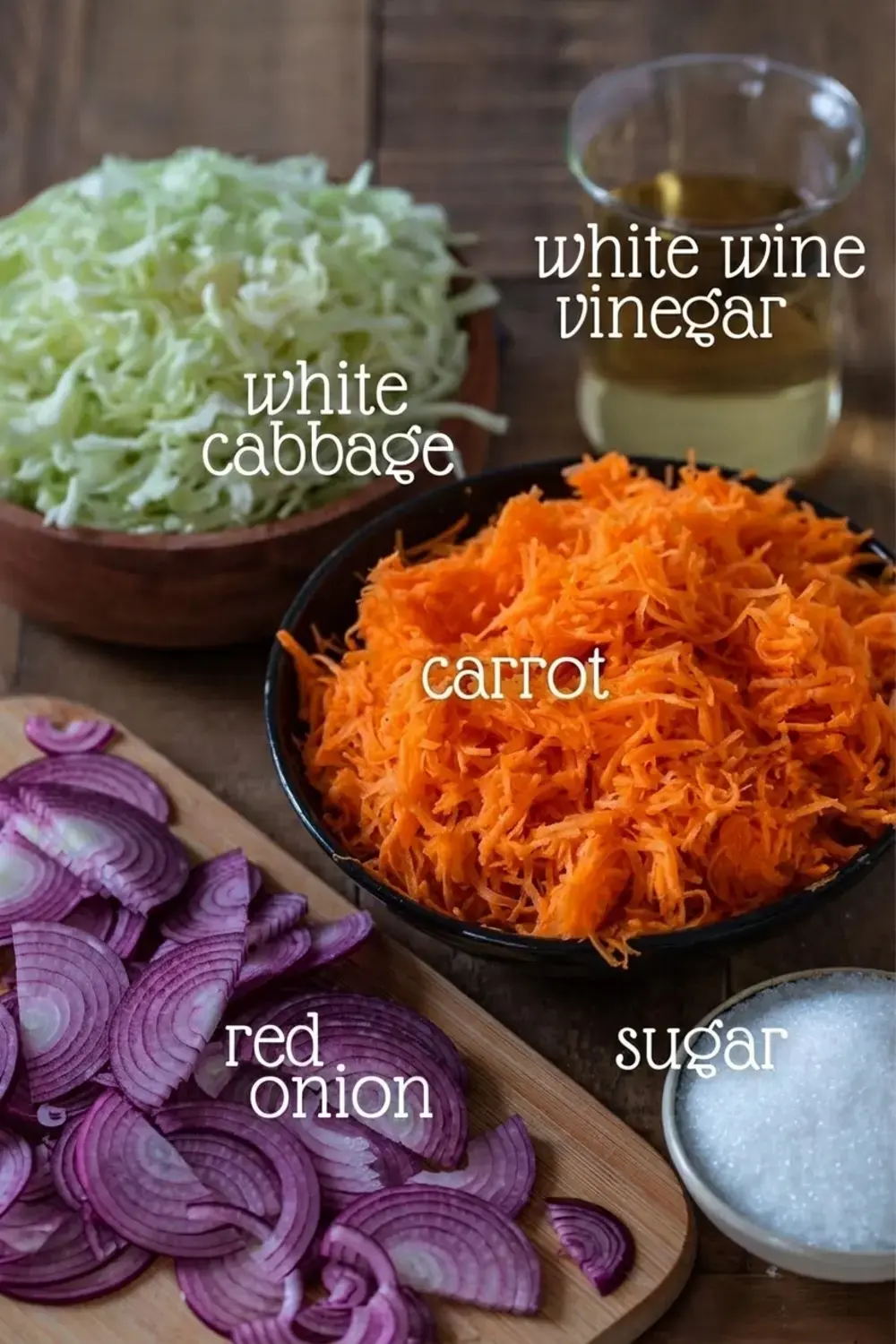
- Combine the shredded carrot, the shredded cabbage, and the thinly sliced red onions in a large bowl.
- Pour the sugar and the vinegar all over the vegetables.
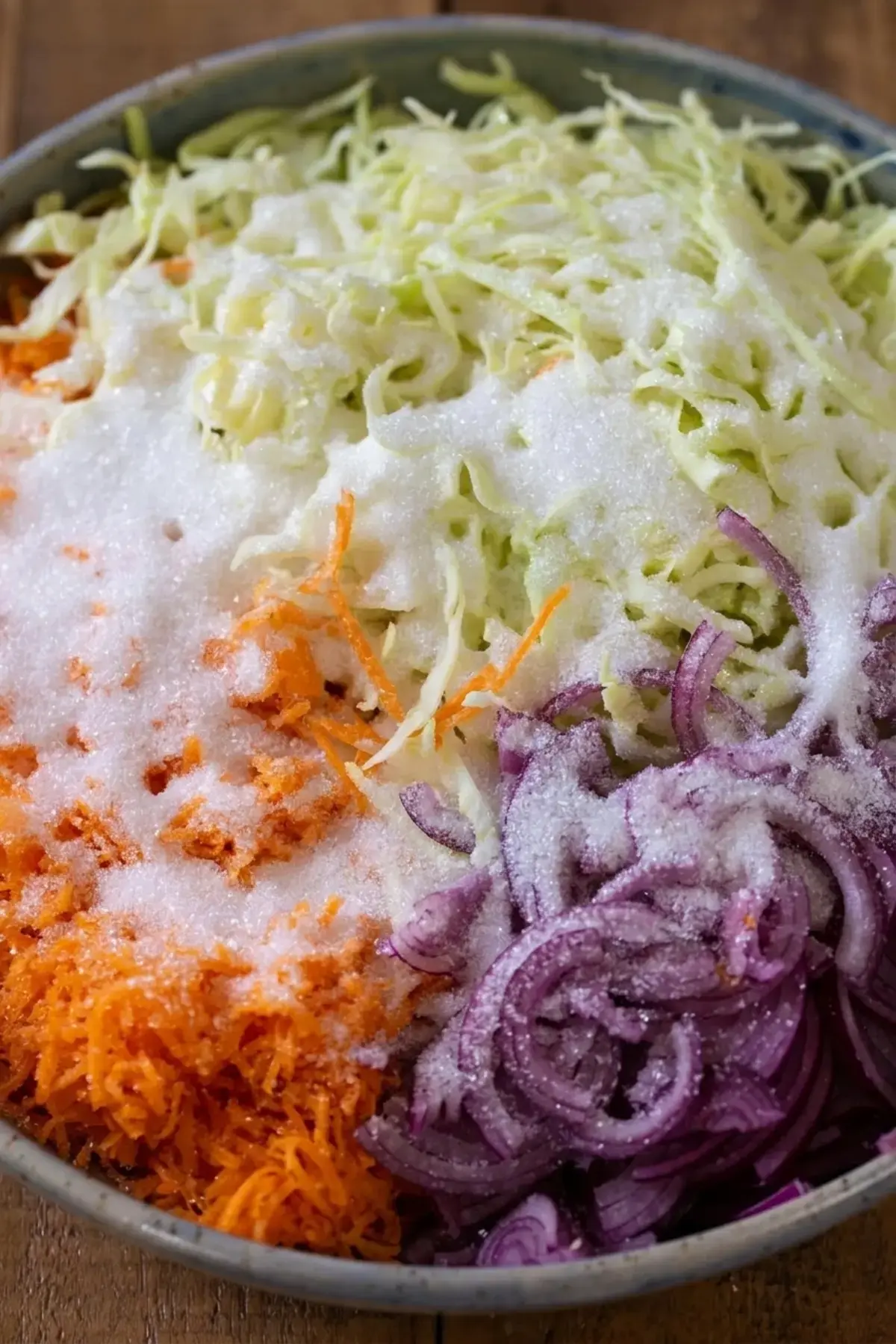
- Using your hands, massage the sugar and vinegar into the vegetables for about a minute. Every shred should be coated and glossy.
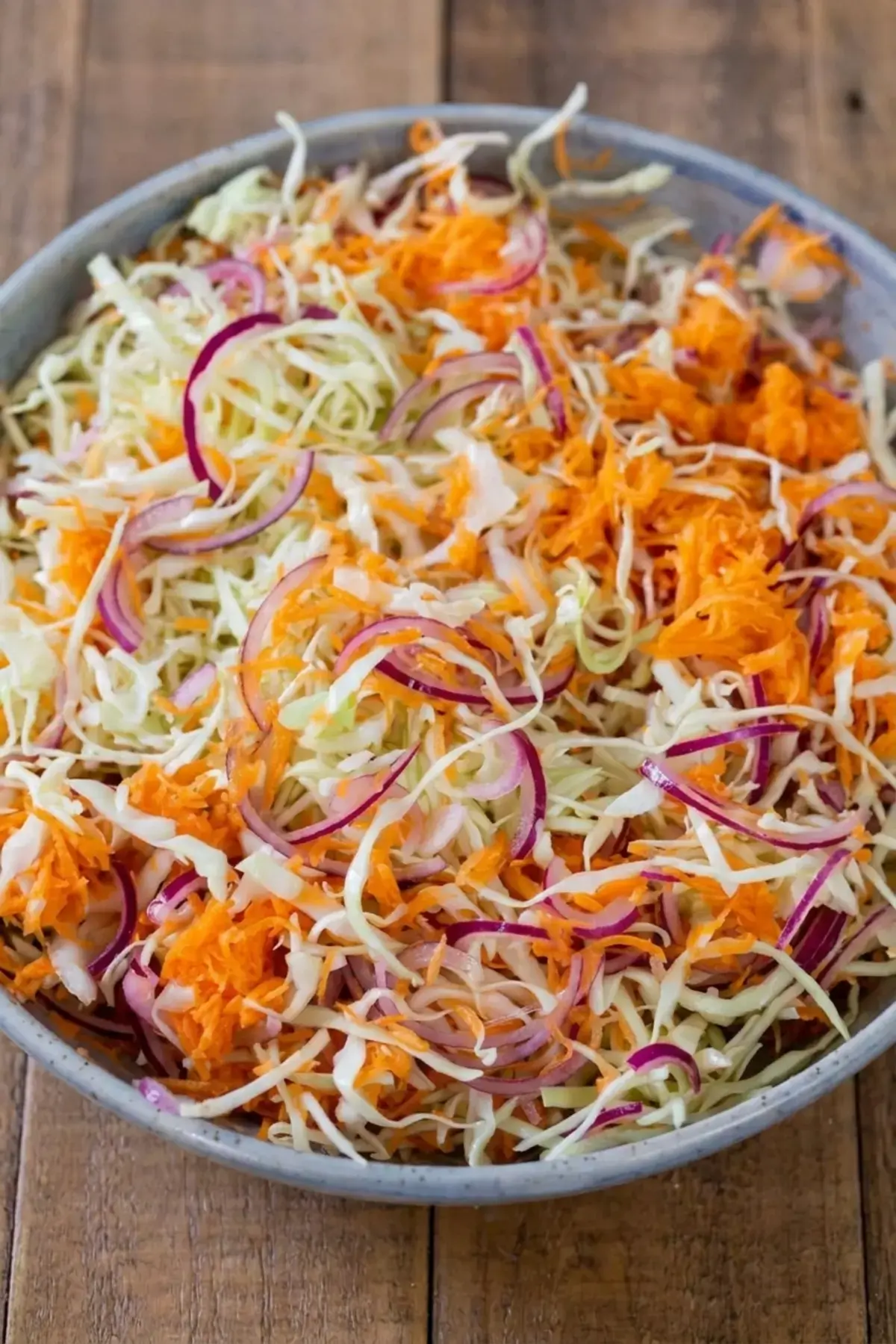
- Rest the bowl either in the fridge or at room temperature for 30 minutes, giving it a stir from time to time to redistribute the condiment around.
Either resting place works. I leave it on the counter when the kitchen is cool and move it to the fridge on hot days, mostly because cold vegetables feel better in a summer salad. The important part is the stirring, since the sugar sinks and the vinegar pools at the bottom of the bowl if you leave it alone.
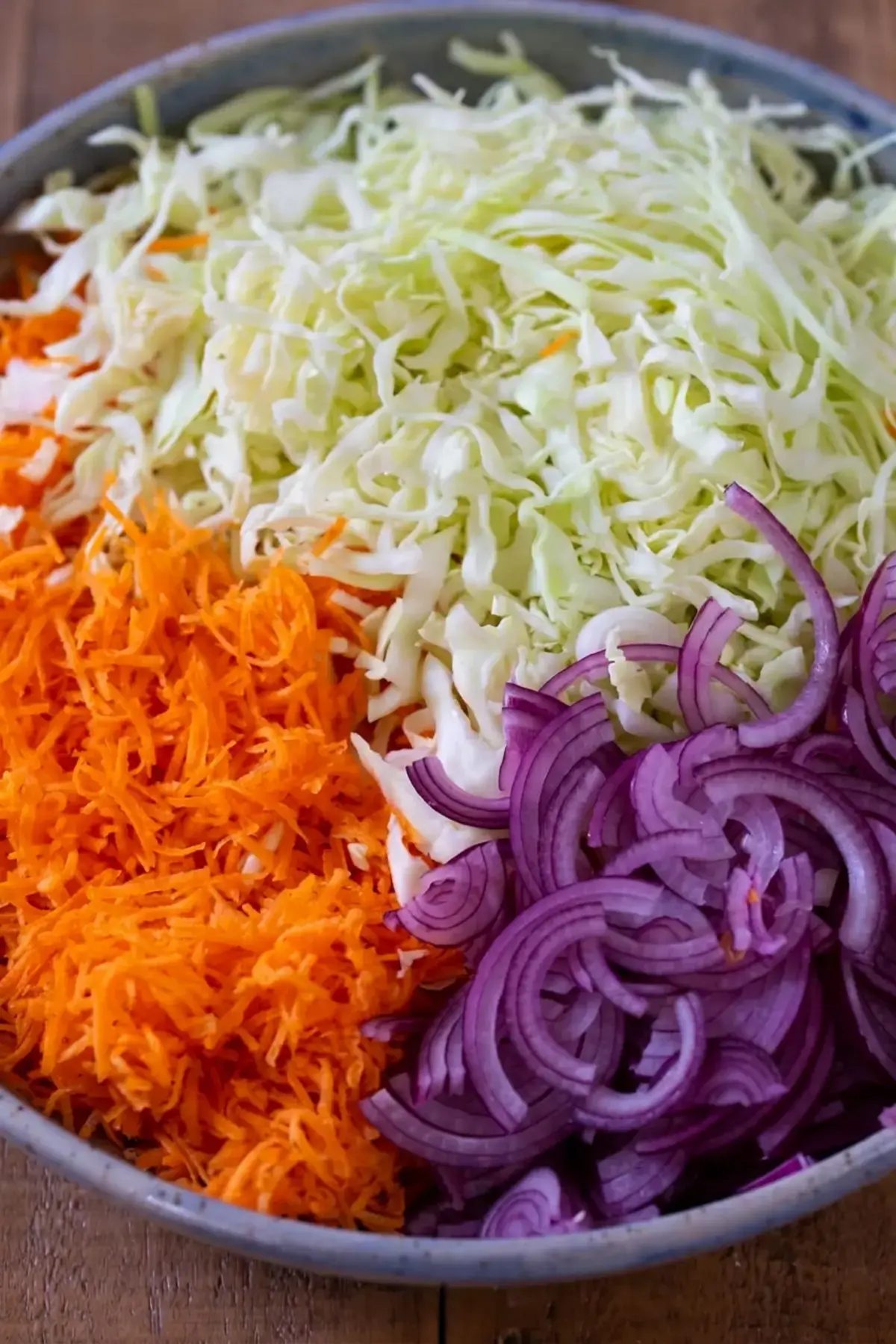
Massaging with your hands rather than stirring with a spoon matters more than it sounds. The pressure helps the sugar dissolve and pushes the vinegar into the folds of the cabbage, so the seasoning reaches the middle of the bowl instead of sitting on top of it.
After half an hour the vegetables will look softer and shinier than they did at the start. Do not be tempted to skip ahead. That short rest is what does the work.
Why pickle the vegetables for coleslaw?
Why pickle the vegetables at all? Why not stir vinegar, sugar, salt, and pepper straight into the mayonnaise and be done with it? Plenty of recipes do exactly that, and they taste fine on day one. I stopped making coleslaw that way years ago, and here is the reasoning behind the change.
The technique here is a quick unfermented pickle, sometimes called a refrigerator pickle. There is no canning, no fermentation, and no long wait, just vinegar, sugar, and a short rest. It is the same approach used for Swedish pickled red onions.
Instead of flavoring the mayonnaise, I keep the dressing plain and treat the vegetables before they ever meet the sauce.

- It prevents a watery coleslaw. Sugar and vinegar draw moisture out of raw vegetables. When you pickle first, that liquid leaves the cabbage and the carrot before the mayonnaise goes in, so the dressing stays thick instead of thinning out in the bowl.
- It makes raw red onion easier to digest. Red onion brings a sharp bite that some people find too aggressive. A light pickle tames it and leaves a milder, sweeter onion behind.
- It extends the shelf life. Dressed this way, the finished coleslaw keeps for up to 5 days in the fridge. Made the usual way, with vinegar going into the mayonnaise, it is closer to 3 days before it starts to slump.
- It protects the creaminess. Vinegar is mostly water. Adding it directly to mayonnaise thins the sauce and dulls its richness. Keeping the vinegar on the vegetables and out of the mayonnaise keeps the dressing exactly as creamy as it was in the jar.
There is a texture benefit as well. Pickled vegetables keep a little bite but lose the raw, squeaky quality that makes some coleslaw hard to eat. The cabbage softens just enough to feel tender under the fork while still giving you a crunch.
You also end up needing less salt later, because the vegetables already carry their own seasoning by the time the mayonnaise goes in. One thing worth saying clearly: this is not a preserving pickle. It is a quick flavor and texture step, and the finished coleslaw still belongs in the refrigerator.
Assemble the coleslaw
Once the 30 minutes are up, the vegetables are ready to be dressed. This part takes about two minutes.

- Squeeze the pickle juice out of the vegetables, either by pressing handfuls between your hands or by pressing them against a colander. Discard all of the pickle juice, dry the bowl with a paper towel, and put the vegetables back in.
- Add the mayonnaise and stir until everything is coated evenly.
- Taste it before you season. If it needs anything, stir in a little salt and freshly cracked black pepper.
The vegetables will have shrunk noticeably after squeezing, which is a good sign that the moisture is going into the sink instead of into your dressing. I squeeze in two or three batches so nothing slips out of my hands.

Go easy on the salt, or skip it entirely. Salt pulls moisture back out of the vegetables, and the mayonnaise you are using may already be well seasoned. Taste first, then decide. A little freshly cracked black pepper on top is a nice finish if you like that bite.
Recipe tips
A few small decisions make this coleslaw easier to put together, and none of them change the outcome in a bad way.
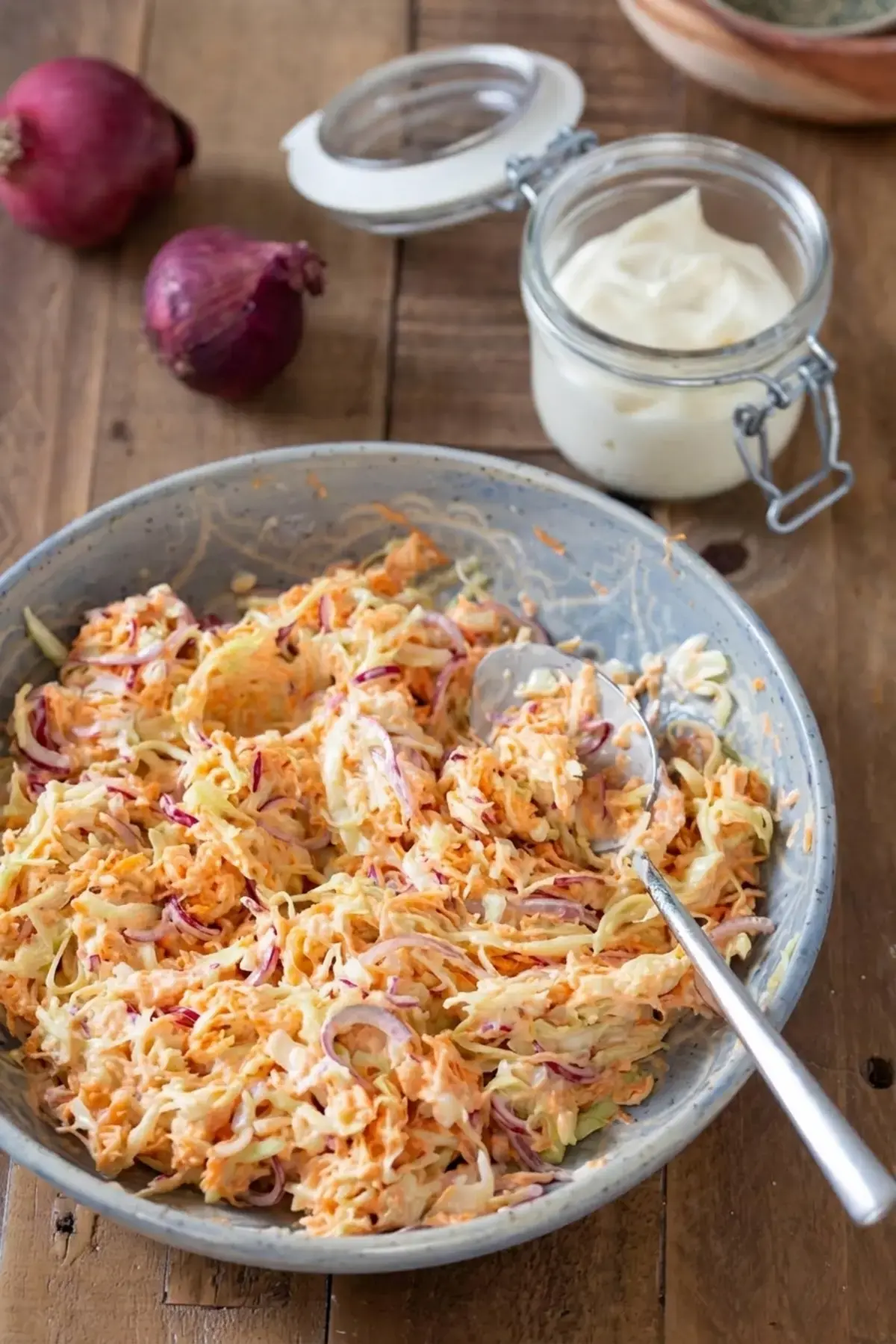
- Bagged or whole vegetables? You can buy shredded carrot and shredded cabbage, or shred whole vegetables yourself. Whole heads and whole carrots are cheaper, but they often leave leftovers. If coleslaw is the only thing on your list this week, a bag of coleslaw mix is the practical choice. If you go the bagged route, weigh what you use so the vinegar and sugar stay in proportion.
- Use a food processor for the carrots. Shredding carrots by hand takes a while. The food processor does it in seconds and rinses clean just as fast.
- Slice the onion thin. Halve the onion and cut it into thin half moons on a board, or use a mandoline if you have one. Thinner slices pickle faster and disappear into the dressing.
- Small onions are sweeter. Two small red onions taste sweeter than one large one, so I buy small when I can and use both.
- Storage. Keep the finished coleslaw in an airtight container in the fridge for up to 5 days. It is a genuine make ahead side, and it is often better on day two once the flavors settle.
Doubling the recipe for a crowd works well and the ratio stays the same. Because the vegetables are pickled first, a double batch does not turn soupy the way a mayonnaise heavy slaw can when it sits in a big bowl for hours.
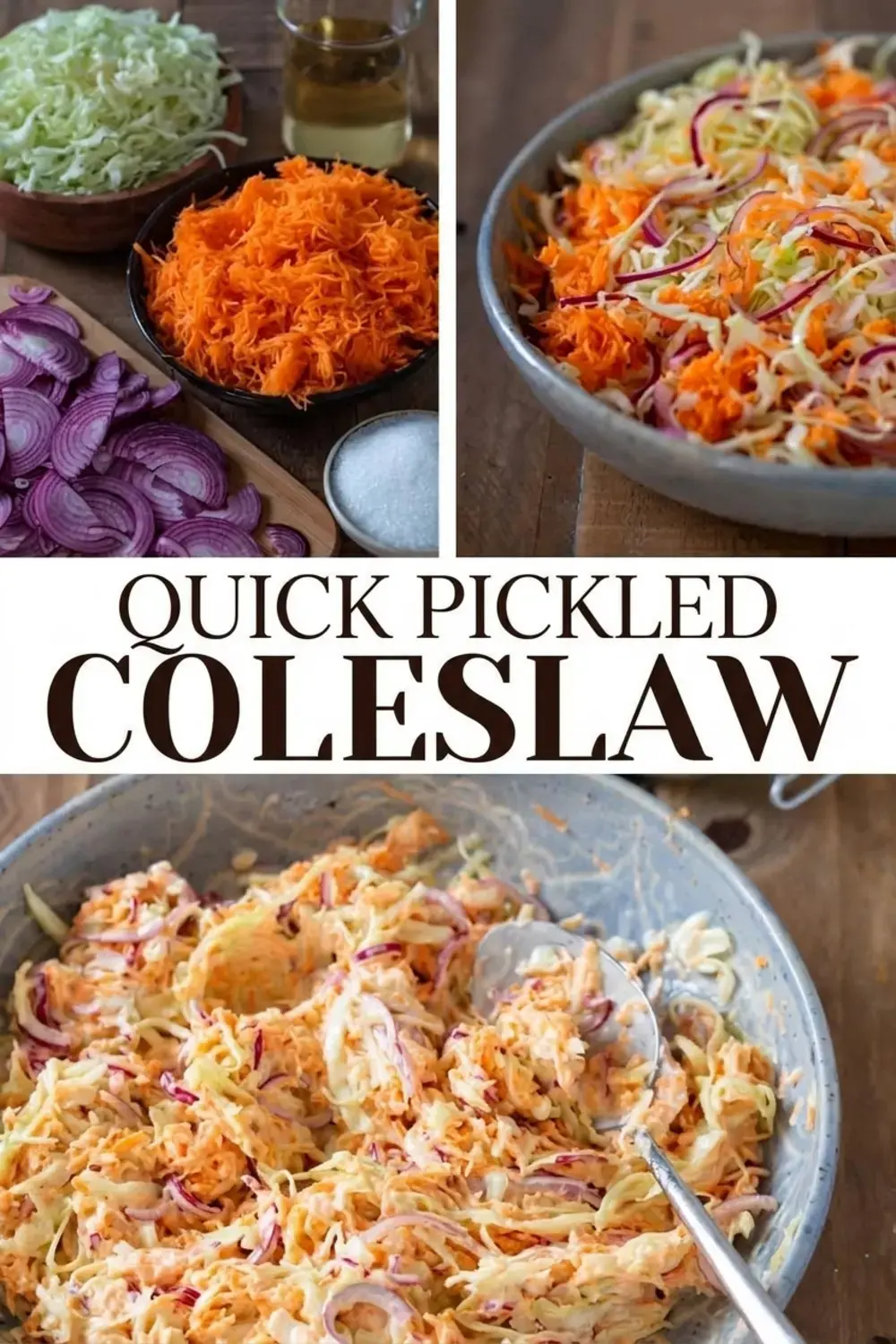
I also mix the coleslaw in the bowl I plan to serve it from, then cover and chill it. Fewer dishes to wash, and the slaw settles as it chills.
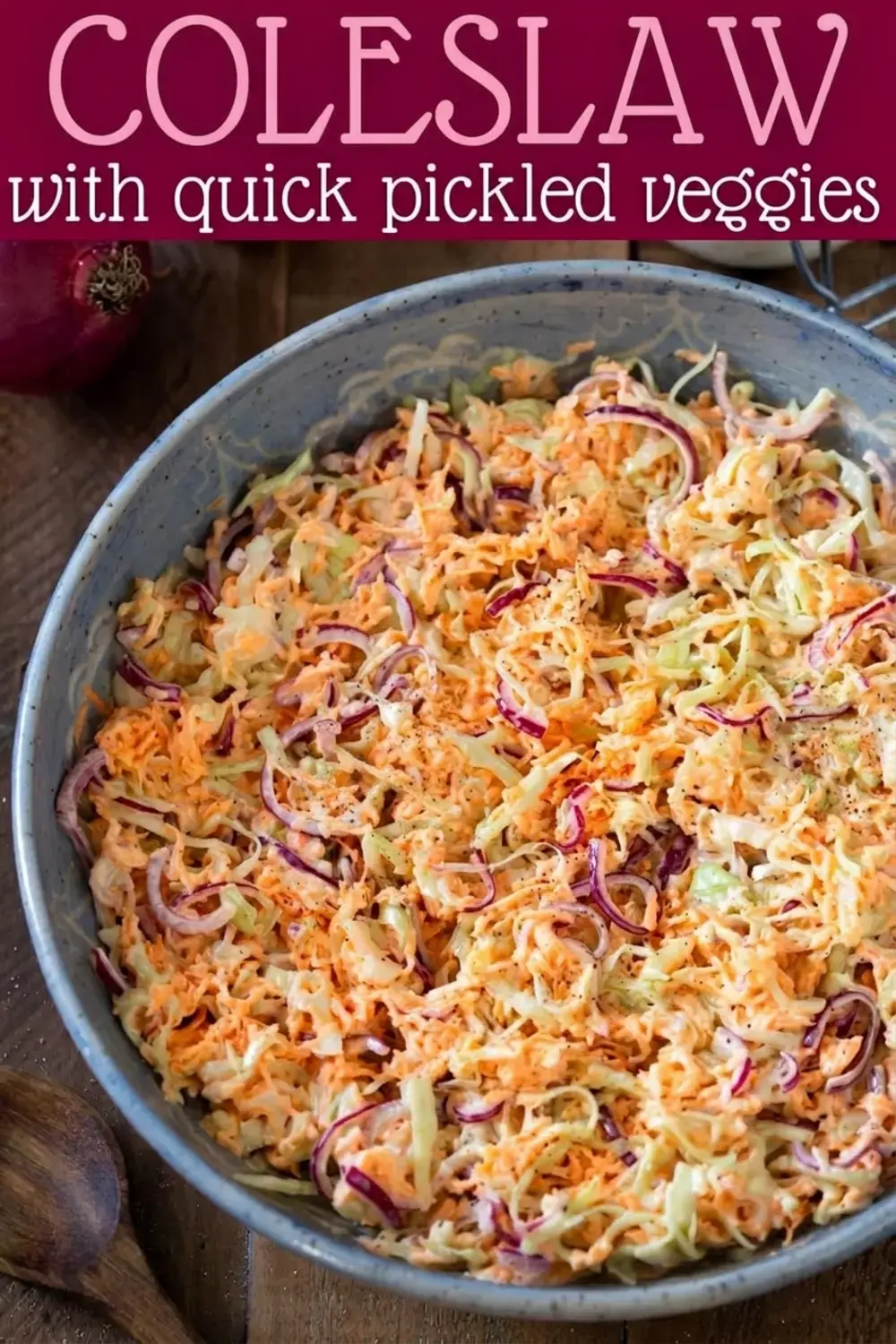
If the pickling step appeals to you, the same quick method works beautifully on red onions alone. That is the Swedish style version I make when I want a sharp, sweet condiment for sandwiches and grilled meats.
More salad
Coleslaw is rarely the only salad on the table, and cabbage holds up better than most leaves when a spread sits out for a few hours. It pairs well with anything off the grill, and it is the kind of bowl people come back to for a second spoonful.
If you like this style of side, the recipes I keep coming back to include a Thai red cabbage slaw with sriracha mayo for something spicier, roasted flower sprouts with pine nuts when I want a warm vegetable dish next to the cold ones, and a raw mushroom carpaccio for a lighter, more elegant plate.
They all follow the same idea as this coleslaw: a simple dressing, a little acid, and vegetables treated with care before they are served.
FAQs
What kind of vinegar is best for coleslaw with pickled vegetables?
White wine vinegar or apple cider vinegar both work well. White wine vinegar provides a bright, mild acidity that keeps the slaw versatile, while apple cider vinegar adds a fruity undertone that complements the carrots. The recipe calls for 150 ml (about 2/3 cup) of your chosen vinegar.
How long should I pickle the vegetables for coleslaw?
The vegetables should rest in the sugar and vinegar mixture for 30 minutes at room temperature or in the fridge. This quick pickling is enough to draw out moisture, soften the vegetables, and infuse them with tangy sweetness. You can pickle them for up to an hour or overnight for a deeper flavor.
How do you keep coleslaw from getting watery?
Pickling the vegetables before adding the mayonnaise is the key. The vinegar and sugar draw moisture out of the raw vegetables. After 30 minutes, squeeze the pickle juice out of the vegetables by pressing them against a colander, then discard the liquid and dry the bowl before adding the mayonnaise.
How long does homemade coleslaw with pickled vegetables last in the fridge?
This coleslaw keeps well for up to 5 days when stored in an airtight container in the refrigerator. The pickling process reduces moisture and adds acidity, which helps inhibit spoilage bacteria and extends the shelf life beyond that of a traditional coleslaw, which typically lasts about 3 days.

Best coleslaw with quick pickled vegetables
Best Coleslaw with Quick Pickled Vegetables This is my best coleslaw recipe, and the reason is simple. I pickle the vegetables first, before the mayonnaise ever touches them.
- Total Time: 40 min
- Yield: 4 people 1x
Ingredients
200 g carrots, shredded
200 g white cabbage or green cabbage, shredded
70 g red onion, 1 medium, or 2 small
150 ml white wine vinegar or apple cider vinegar
80 g granulated sugar
150 g mayonnaise
salt, to taste
black pepper, to taste
Instructions
For the quick pickle
1-Combine the shredded carrot, shredded cabbage and: Combine the shredded carrot, shredded cabbage and thinly sliced red onions in a large bowl.
2-Pour the sugar and vinegar all over: Pour the sugar and vinegar all over the vegetables then, using your hands, massage the condiment into the vegetables for about a minute.
3-Rest either in the fridge or at: Rest either in the fridge or at room temperature for 30 minutes, giving it a stir from time to time to redistribute the condiment around.
Make the coleslaw
4-Squeeze the pickle juice out of the: Squeeze the pickle juice out of the pickled vegetables pressing them between your hands or against a colander. Discard all the pickle juice and dry the bowl with a paper towel. Put vegetables back in.
5-Add the mayonnaise and stir in homogeneously: Add the mayonnaise and stir in homogeneously. Taste test and if desired stir in a sprinkle or salt and freshly cracked black pepper.
Last Step:
Please leave a rating and comment letting us know how you liked this recipe! This helps our business to thrive and continue providing free, high-quality recipes for you.- Prep Time: 10 min
- Cook Time: 0 min
- Method: no_cook
Nutrition
- Calories: 214
- Sugar: 26g
- Sodium: 327mg
- Fat: 9g
- Saturated Fat: 1g
- Carbohydrates: 33g
- Fiber: 3g
- Protein: 1g
- Cholesterol: 6mg


