

Why You’ll Love This Baked Alaska
Baked Alaska is the kind of dessert that makes people stop mid-conversation and stare for a second. It looks fancy, but once you break it down, it is really just a clever mix of brownies, ice cream, and toasted meringue. That makes it a great pick for holidays, birthdays, church suppers, potlucks, and any gathering where you want a dessert that gets talked about long after the plates are cleared.
- Easy to assemble ahead of time: The brownie base, ice cream dome, and meringue topping can all be prepared in stages, which is a big win for busy parents, students, and working professionals. You can freeze the parts, bring them together later, and finish with a quick torch or oven toast right before serving.
- Rich, crowd-pleasing flavor: This Brownie Baked Alaska recipe gives you fudgy chocolate, cold creamy ice cream, and sweet marshmallow-like meringue in every bite. The contrast of hot and cold is what makes Baked Alaska so memorable.
- Flexible for gatherings: You can choose any ice cream flavor, which means it can fit a crowd with different tastes. Chocolate, vanilla, mint chip, coffee, strawberry, or even a nutty flavor can all work well with the brownie base.
- Fun for special occasions: There is something joyful about slicing into a toasted meringue dome and revealing the frozen center. It feels festive without being too hard to make, which is perfect for home cooks who want a dessert with a little drama.
When a dessert looks this impressive and still comes together with simple ingredients, it becomes a real keeper for community meals and family celebrations.
If you love make-ahead desserts that travel well, this one belongs in your regular rotation. It brings the same kind of shareable, crowd-friendly spirit you might find in other party desserts like this rich Black Forest cake recipe or these easy chocolate chip cheesecake bars.
Jump to:
- Why You’ll Love This Baked Alaska
- Essential Ingredients for Baked Alaska
- Main Ingredients
- Helpful Equipment
- Special Dietary Options
- How to Prepare the Perfect Baked Alaska: Step-by-Step Guide
- First Step: Soften and shape the ice cream
- Second Step: Bake the brownie base
- Third Step: Stack and freeze again
- Fourth Step: Make the meringue
- Fifth Step: Invert and cover completely
- Sixth Step: Toast and serve
- Quick timing guide
- Dietary Substitutions to Customize Your Baked Alaska
- Protein and Main Component Alternatives
- Vegetable, Sauce, and Seasoning Modifications
- Mastering Baked Alaska: Advanced Tips and Variations
- Pro cooking techniques
- Flavor variations
- Presentation tips
- Make-ahead options
- How to Store Baked Alaska: Best Practices
- Refrigeration
- Freezing
- Reheating
- Meal prep considerations
- FAQs: Frequently Asked Questions About Baked Alaska
- What is Baked Alaska?
- How do you mold ice cream for Baked Alaska?
- Can you use brownies instead of sponge cake for Baked Alaska?
- How do you make meringue for Baked Alaska?
- Can you make Baked Alaska ahead of time?
- Baked Alaska
- Ingredients
- Instructions
- Last Step:
- Notes
- Nutrition
- Did you make this recipe?
Essential Ingredients for Baked Alaska
To make this Baked Alaska recipe, you only need a few main parts, but each one matters. The brownie layer gives structure and chocolate flavor, the ice cream creates that cool center, and the meringue acts like a toasted blanket around the outside. Since this dessert depends on timing and temperature, using the right measurements and a sturdy pan helps a lot.
Main Ingredients
- Two 1.5 quart containers of any flavor ice cream – This forms the frozen dome in the center. Choose a flavor you really enjoy because it is the star of each slice.
- Brownie batter for one 9-inch round cake pan – Homemade brownie batter gives the dessert a fudgy base that tastes richer than sponge cake and is easier to work with.
- 4 large egg whites, at room temperature – These are the foundation of the meringue and whip up best when they are not cold.
- 1 cup (200g) granulated sugar – This sweetens the meringue and helps create that glossy, stable texture.
- 1/2 teaspoon cream of tartar – This helps the egg whites hold their shape and beat into stiff peaks.
- 1/2 teaspoon pure vanilla extract – This adds a warm, sweet flavor to the meringue.
Helpful Equipment
- 1 9-inch 2.5 quart bowl – Used to shape the ice cream dome.
- Plastic wrap – Makes unmolding the ice cream dome much easier.
- 1 9-inch round cake pan – Needed for baking the brownie base.
- Parchment paper – Helps the brownie release cleanly.
- Kitchen torch or oven – Used to toast the meringue.
- Heatproof plate or baking sheet – Needed for the final assembly and toasting.
Special Dietary Options
- Gluten-free: Use a gluten-free brownie batter and make sure your ice cream is gluten-free.
- Lower sugar: Choose no sugar added ice cream and reduce sweetness elsewhere where possible, though the meringue still needs sugar for structure.
- Dairy-free: Use dairy-free ice cream and a brownie recipe made with plant-based butter or oil.
- Egg-free: Traditional meringue will not work without egg whites, so this version would need a separate whipped topping style dessert instead.
| Component | Role in the Dessert | Why It Matters |
|---|---|---|
| Ice cream | Frozen center | Creates the dramatic cold layer |
| Brownie base | Foundation | Adds fudgy texture and chocolate flavor |
| Meringue | Outer shell | Protects the ice cream while toasting beautifully |
For another fun party-friendly sweet, you might also like these pumpkin pie brownies, which bring the same cozy, make-ahead appeal.
How to Prepare the Perfect Baked Alaska: Step-by-Step Guide
Making Baked Alaska is all about planning ahead and moving steadily through each stage. The good news is that none of the steps are hard, and the dessert actually works best when you give it time to freeze at the right moments. If you keep the ice cream very firm and cover it completely with meringue, the final toasting goes smoothly.
First Step: Soften and shape the ice cream
Start by letting the ice cream soften for about 10 minutes, just until it is spreadable. Line a 9-inch 2.5 quart bowl with plastic wrap, leaving enough overhang to help lift it out later. Beat the softened ice cream until creamy, then spread it into the bowl and smooth the top. Cover and freeze for 8 hours to 3 days, or at least overnight, until the dome is solid.
Second Step: Bake the brownie base
Preheat the oven to 350°F (177°C). Grease a 9-inch round cake pan, line it with parchment paper, and pour in the brownie batter. Bake for 32 to 38 minutes, or until a toothpick comes out mostly clean. The center should still be fudgy, not dry, because that texture pairs so well with the cold ice cream. Cool the brownie completely, then release it from the pan.
Third Step: Stack and freeze again
Once the brownie is cool, remove the ice cream dome from the freezer and place the brownie layer on top. Cover the whole thing and freeze for 30 minutes. This short freeze helps the brownie and ice cream settle together so the dessert stays neat when you add the meringue.
Fourth Step: Make the meringue
Set a heatproof bowl over simmering water and whisk together 4 large egg whites, 1 cup (200g) granulated sugar, and 1/2 teaspoon cream of tartar. Keep whisking for about 4 minutes, until the sugar is dissolved and the mixture reaches about 160°F (71°C). This gentle heating step helps make the egg whites safe to eat. Transfer the mixture to a mixer, add 1/2 teaspoon pure vanilla extract, and beat until stiff glossy peaks form.
The Swiss meringue method gives you a smooth, stable topping that toasts beautifully and helps keep the ice cream insulated for a little while.
Fifth Step: Invert and cover completely
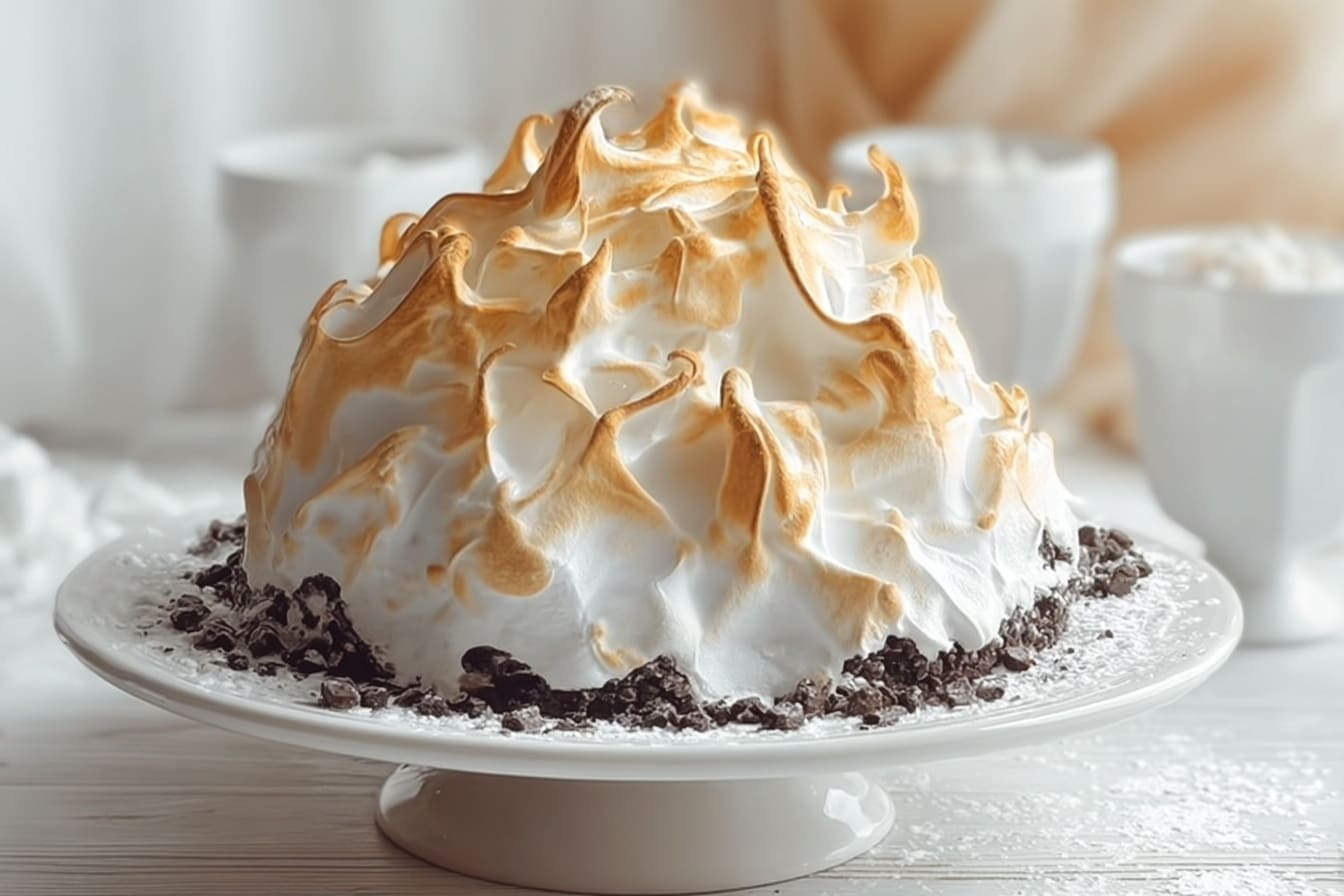
Preheat the oven to 450°F (232°C) if you plan to bake the topping instead of using a torch. Remove the ice cream and brownie from the freezer, peel away the plastic wrap, and invert it onto a heatproof plate or baking sheet. Spread the meringue all over the dessert, making sure there are no gaps or bare spots. Create swirls and peaks for a classic Baked Alaska look.
Sixth Step: Toast and serve
Use a kitchen torch to toast the meringue evenly, or bake it for 4 to 5 minutes until lightly browned. Serve it right away with a serrated knife, since the ice cream will begin to soften at room temperature. Leftovers can go back in the freezer, but this dessert is at its best when served fresh from the torch.
Quick timing guide
- Ice cream softening: about 10 minutes
- Brownie baking: 32 to 38 minutes
- Initial freezing: 8 hours to 3 days
- Assembly freeze: 30 minutes
- Toasting: 4 to 5 minutes if baking, or just a few minutes with a torch
Dietary Substitutions to Customize Your Baked Alaska
Protein and Main Component Alternatives
Even though this dessert is already pretty flexible, a few swaps can help fit different needs. If you want a lighter feel, use a smaller brownie base and pair it with a lighter ice cream flavor. If you need a dairy-free version, choose a plant-based ice cream and make a brownie recipe that uses oil instead of butter.
For an egg-free dessert, the classic meringue is not a good fit because it depends on egg whites. In that case, a whipped coconut topping or another stable frosting-style covering may work better, but the dessert would no longer be traditional Baked Alaska. If you are serving a group with mixed preferences, using two different ice cream flavors in layered bands can be a fun way to please more people at once.
Vegetable, Sauce, and Seasoning Modifications
This dessert does not use vegetables or sauce in the usual sense, but flavor add-ins can still change the final result. A pinch of espresso powder in the brownie batter deepens the chocolate flavor, while a little orange zest in the brownie or vanilla adds a brighter note. You can also top slices with chocolate sauce, raspberry sauce, or crushed cookies if you want more texture.
For a lighter serving idea, keep the toppings simple and let the toasted meringue do the work. A small scoop of fruit on the side can balance the richness nicely. If you enjoy party sweets with a playful look, you may also like the ideas in these Lucky Charm marshmallow treats, which have the same fun dessert-table energy.
Mastering Baked Alaska: Advanced Tips and Variations
Once you have made this dessert once, you will see why it is such a favorite for gatherings. A few small tricks can make the process smoother and the final result even prettier. The brownie base is preferred over sponge cake because it tastes richer and is easier to prepare, especially when you want a dessert that feels special without adding extra fuss.
Pro cooking techniques
Keep the ice cream very cold during assembly. If it starts to soften too much, put it back in the freezer before you add meringue. A firm base helps the dessert hold its shape, and the plastic wrap lined bowl makes unmolding much less stressful. When spreading meringue, seal every edge so the ice cream is fully covered.
Flavor variations
Any ice cream flavor can work, so feel free to play around. Chocolate brownie with mint chip ice cream is a classic-style pairing, while vanilla ice cream gives you a more balanced, simple slice. Strawberry, coffee, or peanut butter ice cream can also be delicious with the fudgy brownie.
Presentation tips
Use a spatula or spoon to create tall peaks in the meringue before torching. Those browned edges look lovely and give the dessert a bakery-style finish. If you want a more polished slice, run a serrated knife under hot water and dry it before cutting. That helps the knife glide through the meringue and brownie more cleanly.
Make-ahead options
This is a great dessert for busy schedules. Freeze the ice cream dome up to 3 days ahead, and make the brownie base up to 3 days before serving. The fully assembled dessert can freeze well for 1 to 2 days before final toasting. If you are transporting it, keep the whole dessert frozen in a cooler, then torch or bake it at the destination.
For church suppers, family reunions, and holiday meals, a dessert that can be prepped ahead is worth its weight in gold.
If you want another rich, shareable dessert for gatherings, try this peanut butter chocolate molten lava cake for a warm, gooey option.
How to Store Baked Alaska: Best Practices
Baked Alaska is best served right after toasting, but leftovers can still be saved if needed. The key is to keep everything as cold as possible so the ice cream stays firm and the meringue keeps its texture as long as it can. If you have leftovers, put them back in the freezer soon after serving.
Refrigeration
Refrigeration is not a great long-term choice because the ice cream will soften quickly. If the dessert has been out only briefly, keep it chilled just long enough to finish a meal, then move it back to the freezer. For best results, do not let it sit at room temperature for long.
Freezing
Wrap leftovers loosely and freeze them again after toasting. The meringue may lose some of its pretty peak shape, but the dessert will still taste good. If you need to store the assembled dessert before toasting, keep it frozen for 1 to 2 days, then toast right before serving.
Reheating
Do not reheat this dessert in the usual sense. Instead, toast the meringue at the end only, using a torch or a very hot oven for a few minutes. If you are serving leftovers, let them thaw only slightly, then eat them cold from the freezer or after a very quick rest at room temperature.
Meal prep considerations
This dessert works well for make-ahead planning, especially for events where you want to serve something special without last-minute stress. Just remember that the final texture is best when the dessert is assembled, toasted, and served right away.
FAQs: Frequently Asked Questions About Baked Alaska
What is Baked Alaska?
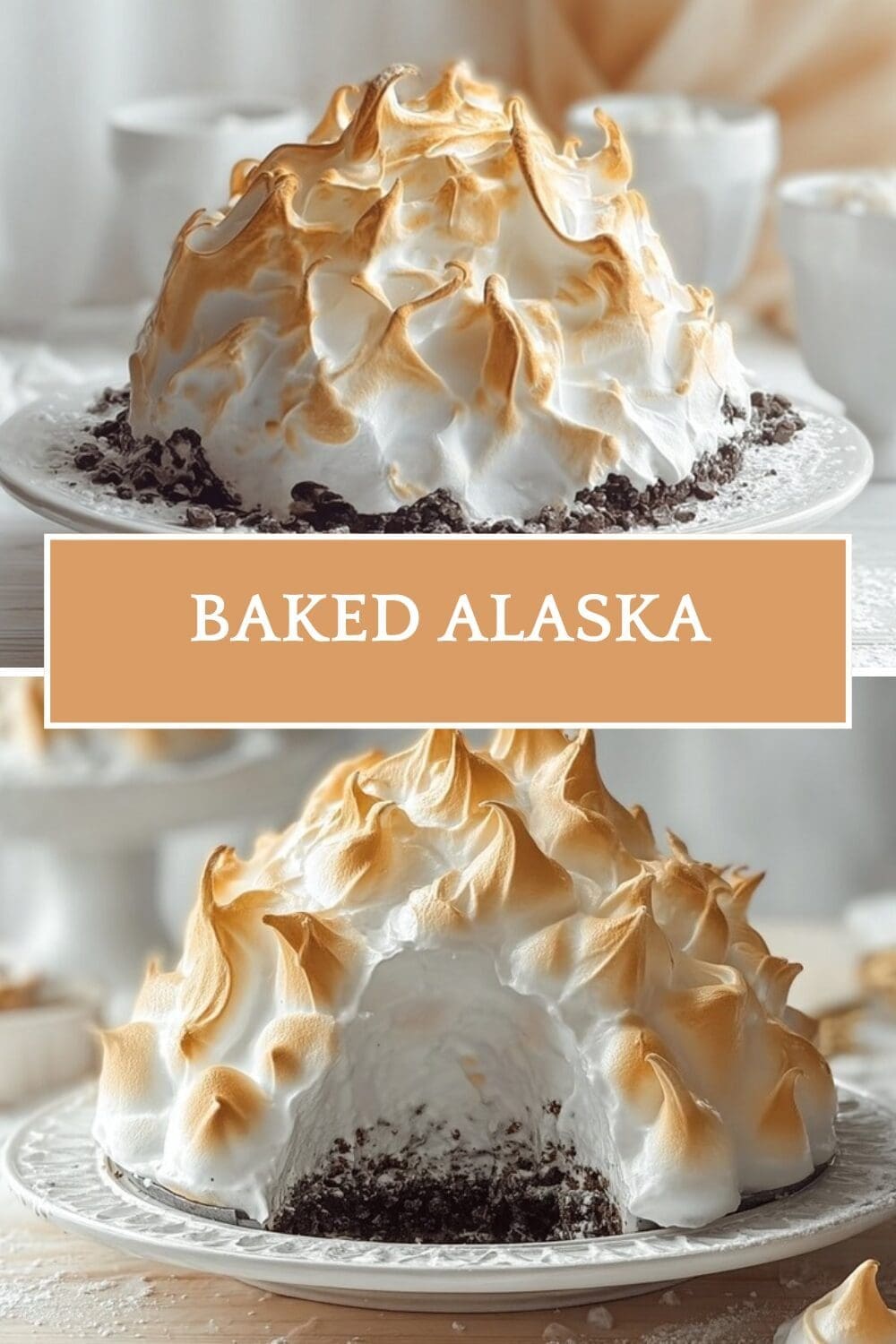
Baked Alaska is a striking dessert with three main layers: a base of sponge cake or brownies, a dome of firm ice cream, and a thick meringue topping that seals everything in. The magic happens when you bake or torch it briefly—the meringue insulates the ice cream, preventing it from melting despite the high heat. Traditionally, it uses vanilla ice cream, but modern versions mix flavors. To assemble, mold softened ice cream into a dome over the cake base, cover completely with meringue, and toast for 4-5 minutes at 500°F or use a kitchen torch for golden peaks. It serves 8-10 people and takes about 30 minutes active time plus freezing. This dessert dates back to the 1800s, named after Alaska’s cold climate contrasting the warm meringue. Perfect for parties, it wows guests with its dramatic presentation and creamy-crunchy texture.
How do you mold ice cream for Baked Alaska?
Start with a 9-inch bowl (about 2.5 quarts) lined with plastic wrap for easy release. Let your chosen ice cream soften at room temperature for 10-15 minutes until spreadable but not melted. Pack it firmly into the bowl, creating a smooth dome shape about 2 inches thick on top. Smooth the surface with a spatula, then freeze for at least 4 hours or overnight until rock-hard. This dome fits perfectly over a matching cake or brownie base. Pro tip: Use rectangular or block ice cream for easier scooping and layering multiple flavors like strawberry and chocolate for visual appeal. Once frozen solid, unmold by pulling the plastic wrap—it should pop out cleanly. This step ensures the ice cream holds up during toasting without leaking.
Can you use brownies instead of sponge cake for Baked Alaska?
Absolutely—brownies make an even richer, fudgier base that’s simpler to prepare. Bake a standard brownie batter in a 9-inch round pan for 20-25 minutes until set but fudgy. Cool completely, then place the frozen ice cream dome directly on top. Many prefer this swap because brownies add chocolate depth that pairs well with flavors like coffee or mint chip ice cream. It cuts assembly time since no separate cake baking is needed if using a mix. For best results, trim the brownie edges for a neat fit and freeze the base briefly before adding meringue. This variation serves the same 8-10 people and elevates the dessert’s indulgence without extra complexity. Test it for your next dinner party—guests rave about the gooey brownie contrast.
How do you make meringue for Baked Alaska?
For marshmallow-like meringue, use the Swiss method: Combine 6 egg whites, 1 ½ cups sugar, and ¼ tsp cream of tartar in a heatproof bowl over simmering water. Whisk constantly for 3-5 minutes until the sugar dissolves (temp reaches 160°F) and it’s foamy. Remove from heat and beat with an electric mixer on high for 8-10 minutes until stiff, glossy peaks form—rub a bit between fingers to confirm no grit. Spread generously over the ice cream dome and base, sealing edges completely to trap cold air. Pipe swirls for decoration. This yields enough for one large Baked Alaska. Avoid overbeating to prevent dryness. The meringue’s air pockets insulate the ice cream, a key science trick. Ready in 15 minutes, it toasts to perfection.
Can you make Baked Alaska ahead of time?
Yes, plan ahead for stress-free serving. Prepare the ice cream dome and brownie or cake base up to 3 days in advance—keep them frozen separately wrapped in plastic. Assemble with meringue 1-2 days ahead, then freeze uncovered briefly before wrapping airtight. Thaw in the fridge for 10 minutes before toasting to avoid cracking. Fully assembled and toasted Baked Alaska stores in the freezer for up to 24 hours, covered loosely. Serve straight from frozen for best texture—slice with a hot knife for clean cuts. This makes it ideal for holidays or events. Note: Don’t refreeze after toasting. Yields 8-10 servings; each slice is about 400-500 calories depending on flavors. For related recipes, check our brownie batter guide or ice cream flavor pairings.

Baked Alaska
🍦🍫 Spectacular Brownie Baked Alaska layers fudgy brownie, creamy ice cream under toasted meringue – decadent, make-ahead showstopper dessert!
🧁 Brownie Baked Alaska impresses guests with dramatic flair and customizable flavors for unforgettable celebrations!
- Total Time: 9 hours
- Yield: 10 servings
Ingredients
– Two 1.5 quart containers of any flavor ice cream for the frozen dome in the center
– Brownie batter for one 9-inch round cake pan for fudgy base
– 4 large egg whites, at room temperature for meringue
– 1 cup (200g) granulated sugar for meringue
– 1/2 teaspoon cream of tartar for meringue
– 1/2 teaspoon pure vanilla extract for meringue
Instructions
1-First Step: Soften and shape the ice cream Start by letting the ice cream soften for about 10 minutes, just until it is spreadable. Line a 9-inch 2.5 quart bowl with plastic wrap, leaving enough overhang to help lift it out later. Beat the softened ice cream until creamy, then spread it into the bowl and smooth the top. Cover and freeze for 8 hours to 3 days, or at least overnight, until the dome is solid.
2-Second Step: Bake the brownie base Preheat the oven to 350°F (177°C). Grease a 9-inch round cake pan, line it with parchment paper, and pour in the brownie batter. Bake for 32 to 38 minutes, or until a toothpick comes out mostly clean. The center should still be fudgy, not dry, because that texture pairs so well with the cold ice cream. Cool the brownie completely, then release it from the pan.
3-Third Step: Stack and freeze again Once the brownie is cool, remove the ice cream dome from the freezer and place the brownie layer on top. Cover the whole thing and freeze for 30 minutes. This short freeze helps the brownie and ice cream settle together so the dessert stays neat when you add the meringue.
4-Fourth Step: Make the meringue Set a heatproof bowl over simmering water and whisk together 4 large egg whites, 1 cup (200g) granulated sugar, and 1/2 teaspoon cream of tartar. Keep whisking for about 4 minutes, until the sugar is dissolved and the mixture reaches about 160°F (71°C). This gentle heating step helps make the egg whites safe to eat. Transfer the mixture to a mixer, add 1/2 teaspoon pure vanilla extract, and beat until stiff glossy peaks form.
5-Fifth Step: Invert and cover completely Preheat the oven to 450°F (232°C) if you plan to bake the topping instead of using a torch. Remove the ice cream and brownie from the freezer, peel away the plastic wrap, and invert it onto a heatproof plate or baking sheet. Spread the meringue all over the dessert, making sure there are no gaps or bare spots. Create swirls and peaks for a classic Baked Alaska look.
6-Sixth Step: Toast and serve Use a kitchen torch to toast the meringue evenly, or bake it for 4 to 5 minutes until lightly browned. Serve it right away with a serrated knife, since the ice cream will begin to soften at room temperature. Leftovers can go back in the freezer, but this dessert is at its best when served fresh from the torch.
Last Step:
Please leave a rating and comment letting us know how you liked this recipe! This helps our business to thrive and continue providing free, high-quality recipes for you.Notes
🔥 Kitchen torch gives superior even toasting over oven baking.
⏰ Freeze ice cream dome up to 3 days ahead for easy entertaining.
🛡️ Heat egg whites to 160°F for safe, bacteria-free meringue.
- Prep Time: 40 minutes
- Freeze: 8 hours
- Cook Time: 45 minutes
- Category: Dessert
- Method: Baking
- Cuisine: American
- Diet: Vegetarian
Nutrition
- Serving Size: 1 slice
- Calories: 650 kcal
- Sugar: 60g
- Sodium: 200mg
- Fat: 30g
- Saturated Fat: 18g
- Unsaturated Fat: 11g
- Trans Fat: 0.5g
- Carbohydrates: 85g
- Fiber: 3g
- Protein: 8g
- Cholesterol: 120mg


