
21+ Genius Toy Storage Ideas You NEED to Try
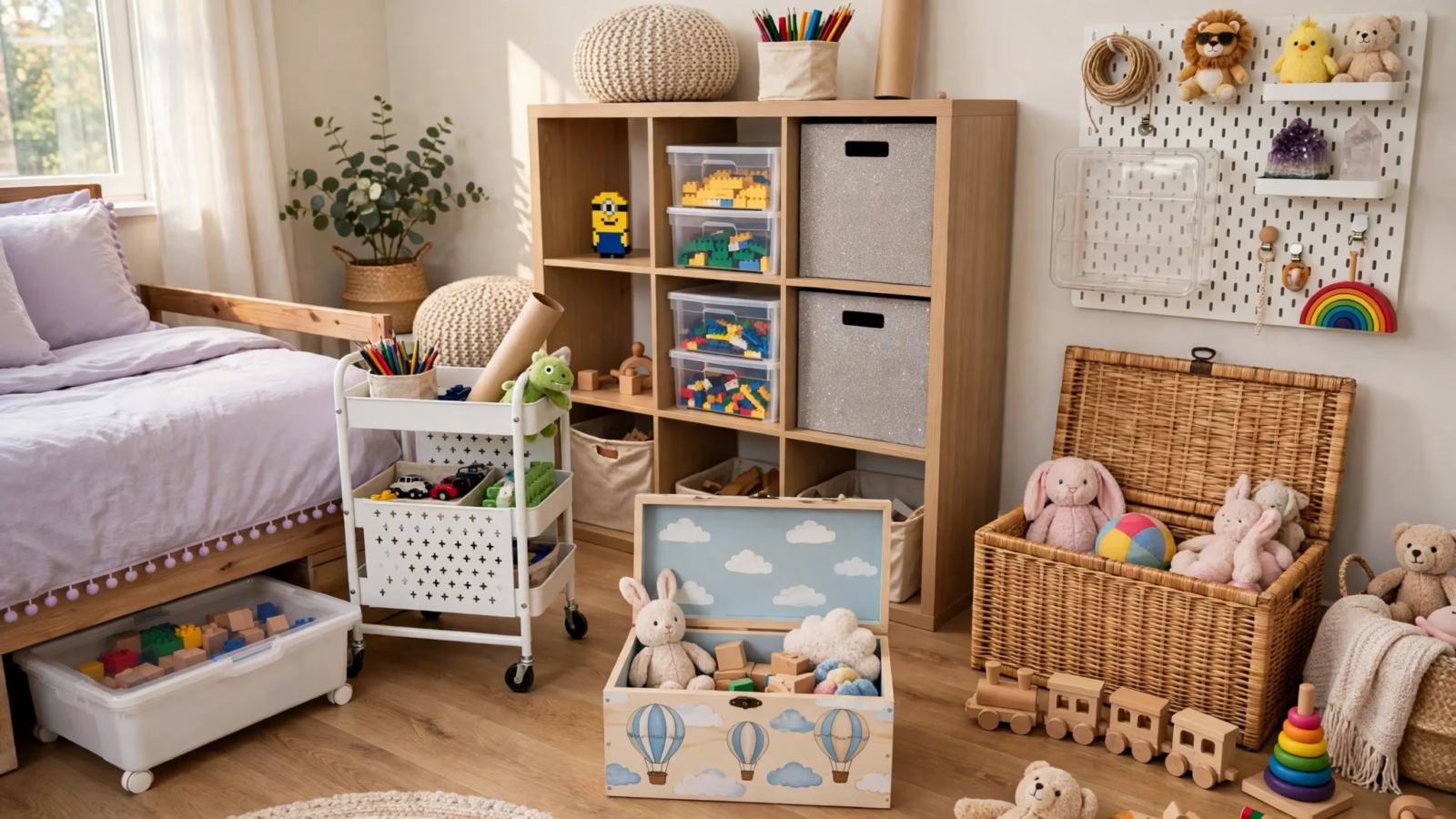
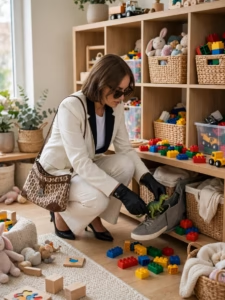
You know the feeling. You tidy the living room, you step back to enjoy it, and then you spot a plastic dinosaur in a shoe and feel a sharp Lego under your foot. That is toy clutter in a normal home, and it never seems to take a day off.
I babysit my best friend’s two children about twice a week, and I have helped redo their playroom twice. Friends and family now treat me as the person to ask about toy storage, not because my own home is perfect, but because these ideas have survived real toddler chaos.
This collection is the set I actually return to. Each idea is simple, low effort, and easy for a child to use. Some hide toys completely, some keep everyday toys in sight, and all of them aim for one thing: a quicker cleanup and a room you can enjoy again.
You do not need a perfect room to start. Pick one idea, try it for a week, and keep what works.
- Use under bed bins for toys that should stay out of sight but stay easy to reach.
- Use clear baskets so children can see what is inside without dumping everything out.
- Use color coded bins so even very young children can put toys away.
- Use a rolling cart for art supplies that can move to the table and back.
Pick one idea, try it for a week, and keep what works.
Jump to:
- 21+ Genius Toy Storage Ideas You NEED to Try
- Pull out under bed bins
- Stackable clear baskets
- Color coded cube shelves
- Rolling playroom carts
- Built in window bench drawers
- Labeled fabric storage boxes
- Wall mounted toy shelves
- Wicker basket corner
- Open bookcase display
- Hidden ottoman storage
- Wooden toy chest
- Low Montessori shelves
- Hanging mesh organizers
- Play table with drawers
- Closet cubby system
- Lego sorting trays
- Stuffed animal hammock
- Acrylic display boxes
Pull out under bed bins
The space under a child’s bed is easy to forget, and that is exactly why it works so well. Wheeled bins slide out when playtime starts and push back when it ends, so toys stay out of sight without being hard to reach.
In one home I know, a daughter keeps one bin for doll clothes and another for art supplies. She can pull out the bin she needs and put it away herself, which means less asking for help and less mess left on the floor.
Stackable clear baskets
Clear stackable baskets solve a very common problem. Children can see what is inside without emptying everything onto the floor, and you can stack the baskets to save room when space is tight.
I was not a fan of clear bins at first, but I changed my mind after seeing them in daily use. They are also easy to wipe clean, which matters a lot if a fruit snack has melted onto a fabric bin and left a sticky surprise.
Color coded cube shelves
Large cube shelf units, like the Kallax type, are central to many playrooms for a good reason. They give every group of toys a clear home, and they look tidy even when the bins inside are full of very different things.
Put a colored bin in each cube and assign a color to a category. Blue can mean blocks, pink can mean dolls, and yellow can mean art supplies. The system is so simple that a friend’s two year old can put her own toys away.
- Blue for blocks
- Pink for dolls
- Yellow for art supplies
Rolling playroom carts
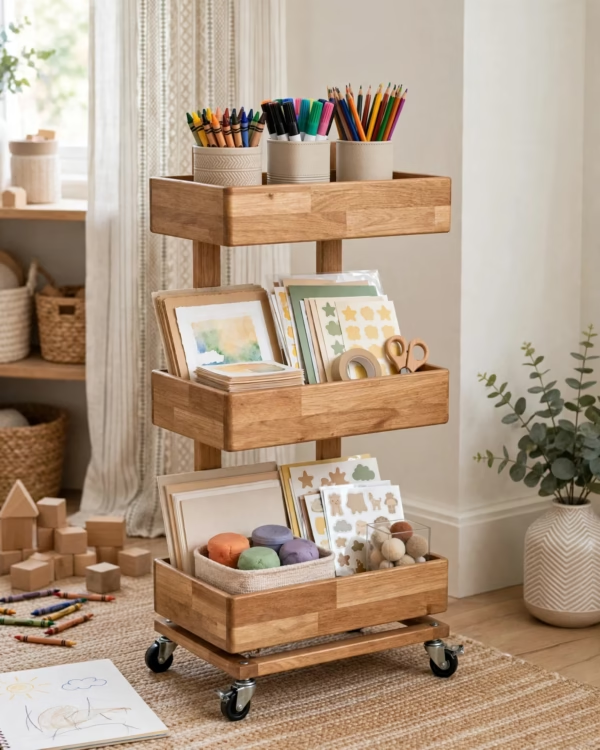
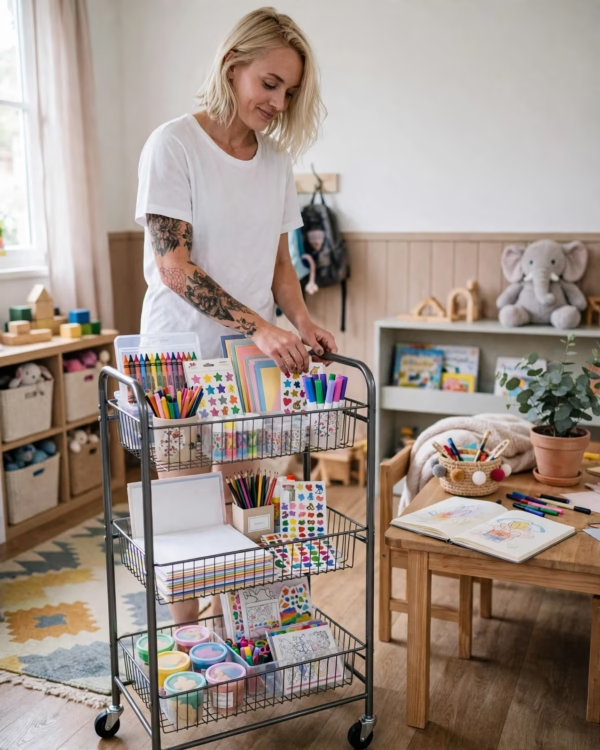
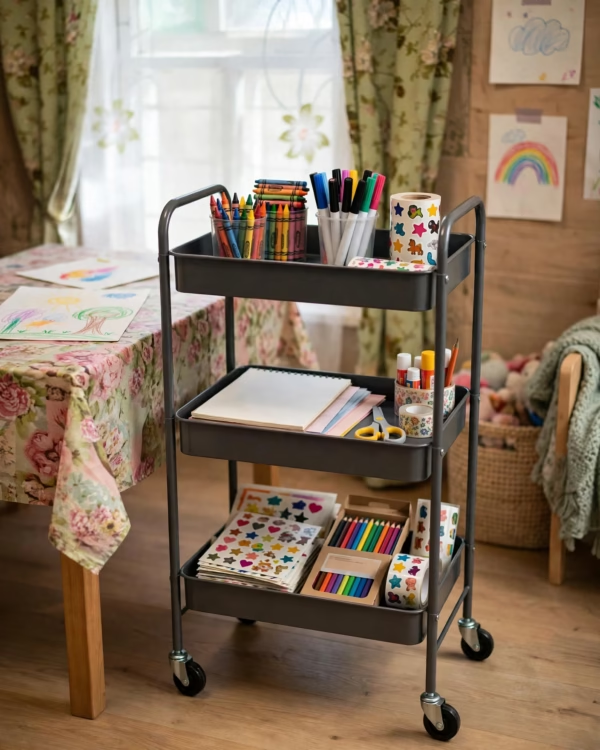
A three tier rolling cart is one of the easiest playroom helpers to use. Load it with art supplies like crayons, markers, paper, and stickers, roll it to the table for craft time, and roll it back when you are done.
That simple move saves a lot of asking for help. A child does not need an adult to reach a bin on a high shelf. For more playroom storage organization ideas that work, try a short daily reset before dinner or bedtime.
Built in window bench drawers
A built in bench with drawers underneath is a bigger project, but it can change a whole room. It suits a playroom or kids room that has a window and a small nook around it, where a seat can feel natural rather than forced.
You get storage and a reading nook in one piece of furniture. One example was built over a weekend.
Labeled fabric storage boxes
Fabric storage boxes with small label slots on the front are durable, friendly toy bins. They soften a shelf, they hold a good amount, and they give every box a clear job.
Children who can read can learn the words on the labels as they tidy up. Children who cannot read yet can use pictures instead, and one setup used laminated picture labels showing what belongs in each box. That mix means younger and older children can share the same system.
Wall mounted toy shelves
High wall mounted shelves are best for a small, special group of toys. They keep selected toys displayed while out of reach, which suits items like glitter glue that you do not want spread across a table.
They also work for toys meant to be shown off rather than played with daily, like fancy wooden blocks or a music box from grandma.
Wicker basket corner
Place a couple of large wicker baskets in a corner and let them do the heavy lifting. They can hold many stuffed animals, blocks, or similar toys, and they look nicer than plastic bins in a living room.
Cleanup is simple because kids can just dump items in, and a full tidy can take about two minutes.
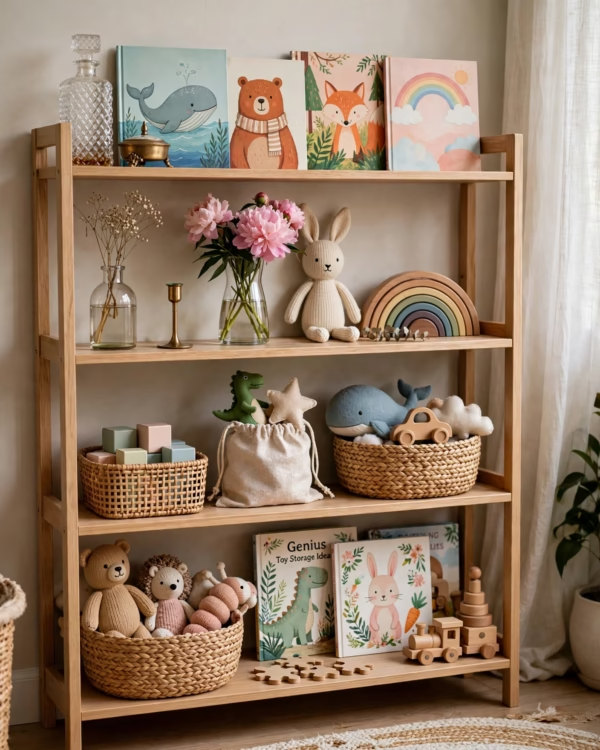
Open bookcase display
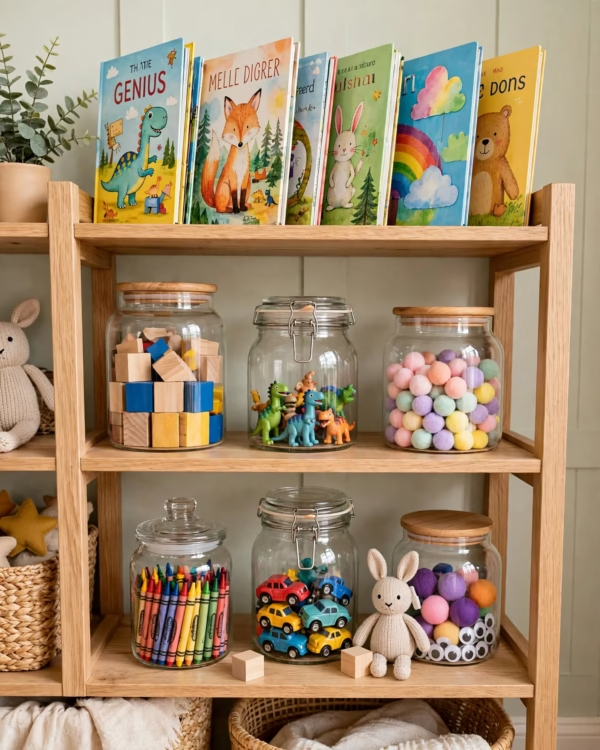
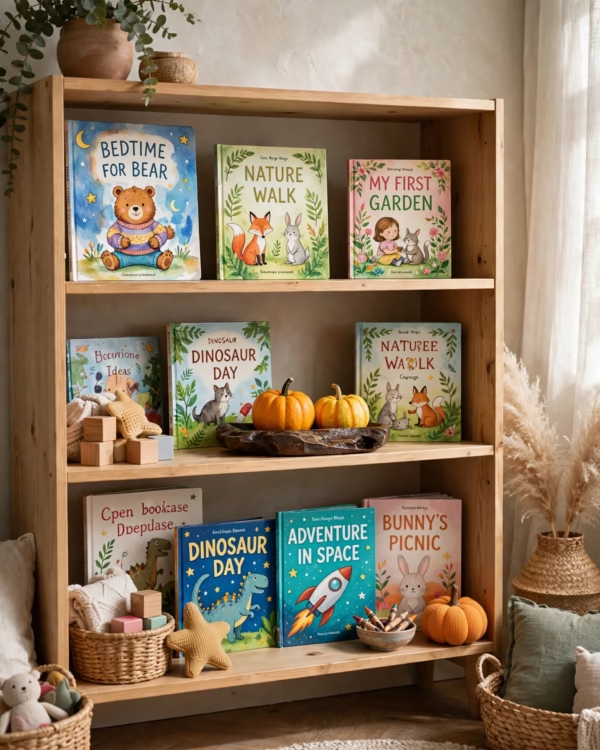
A forward facing book display changes how children choose books. When each front cover is visible, the shelf feels inviting, much more so than a spine out bookshelf where titles blur together.
Kids are more likely to pick a book to read when they can see the pictures at a glance. Keep the display low and rotate the front row now and then to keep it fresh.
Hidden ottoman storage
Storage ottomans are quiet heroes in a kids room. Lift the lid, put items inside, and close it. That is the whole routine, and it works because it is so easy to repeat.
They look like furniture but function as a toy bin, so guests may not realize the room is also a play area. For more furniture that hides clutter, see Genius hidden storage ideas and choose a piece that fits your room and your daily routine.
Wooden toy chest
A classic wooden toy chest never goes out of style. It looks nicer than another plastic bin, and it gives a room a warm, solid feeling that plastic cannot quite match.
It is also useful for large, bulky items that do not fit in baskets, like big vehicles, large dolls, or play sets with pieces that need room.
Low Montessori shelves
Low, open shelves placed at a child’s height are a smart option whether or not you follow Montessori ideas. Kids can see all their toys, choose what they want, and put items back on their own.
The setup encourages engaging with one toy at a time rather than dumping everything onto the floor at once, though results vary by child. Keep only a few toys on the shelves and rotate toys when space is tight so the shelf stays inviting.
Hanging mesh organizers
Hanging mesh organizers that clip onto a crib side or a shelf suit small items that tend to get lost. They can hold pacifiers, hair clips, and tiny figurines that often end up in the vacuum.
Because they hang vertically, they save floor space when room is limited, which makes them a good fit for a small bedroom or nursery corner.
Play table with drawers
A small kids table with built in drawers underneath keeps supplies organized right where play happens. Crayons go in one drawer and puzzle pieces in another, so nothing has to travel far.
Because the toys stay where the child plays, cleanup takes roughly thirty seconds, which makes a tidy before dinner or bedtime much easier.
Closet cubby system
A half empty closet in the playroom or a child’s room can be converted into a cubby system. Even a few stacked shelves and bins inside provide substantial hidden storage, and closing the doors hides the contents when guests visit.
One example is a friend who turned her daughter’s closet into a toy library, a place where toys are borrowed, enjoyed, and returned to their spot. Organize a small bedroom on a budget before you buy anything new, and use the same shelf and bin ideas inside the closet.
Lego sorting trays
Lego is treated as its own category because it presents unique storage challenges. Small pieces spread fast, they hide in carpet, and they seem to find bare feet at the worst possible moment.
Compartmentalized sorting trays let you organize pieces by color or size, which can help protect your feet from stray bricks. One friend’s son happily spends an hour sorting his Lego by color, which brings him calm and gives his mother the same sense of peace.
Stuffed animal hammock
A net hammock hung across a corner of the room near the ceiling can hold stuffed animals. Though it may sound silly at first, it looks cute with the stuffed animals nestled together as if sleeping.
It also frees up bed space and makes use of otherwise dead space. Keep the hammock low enough for a child to reach a favorite toy.
Acrylic display boxes
Clear acrylic display boxes suit a collector child with around forty small figurines, trading cards, or whatever they are currently obsessed with. They keep items dust free and on display, so a collection can be enjoyed every day instead of hidden in a box.
For more kids room storage ideas for any budget, let the child rotate pieces in and out as interests change, which may happen roughly every six days for some kids. That rotation keeps the display fresh, protects small pieces from dust and loss, and gives a child a reason to tidy a collection with pride.