

20 Pergola Ideas for a Backyard You Never Want to Leave
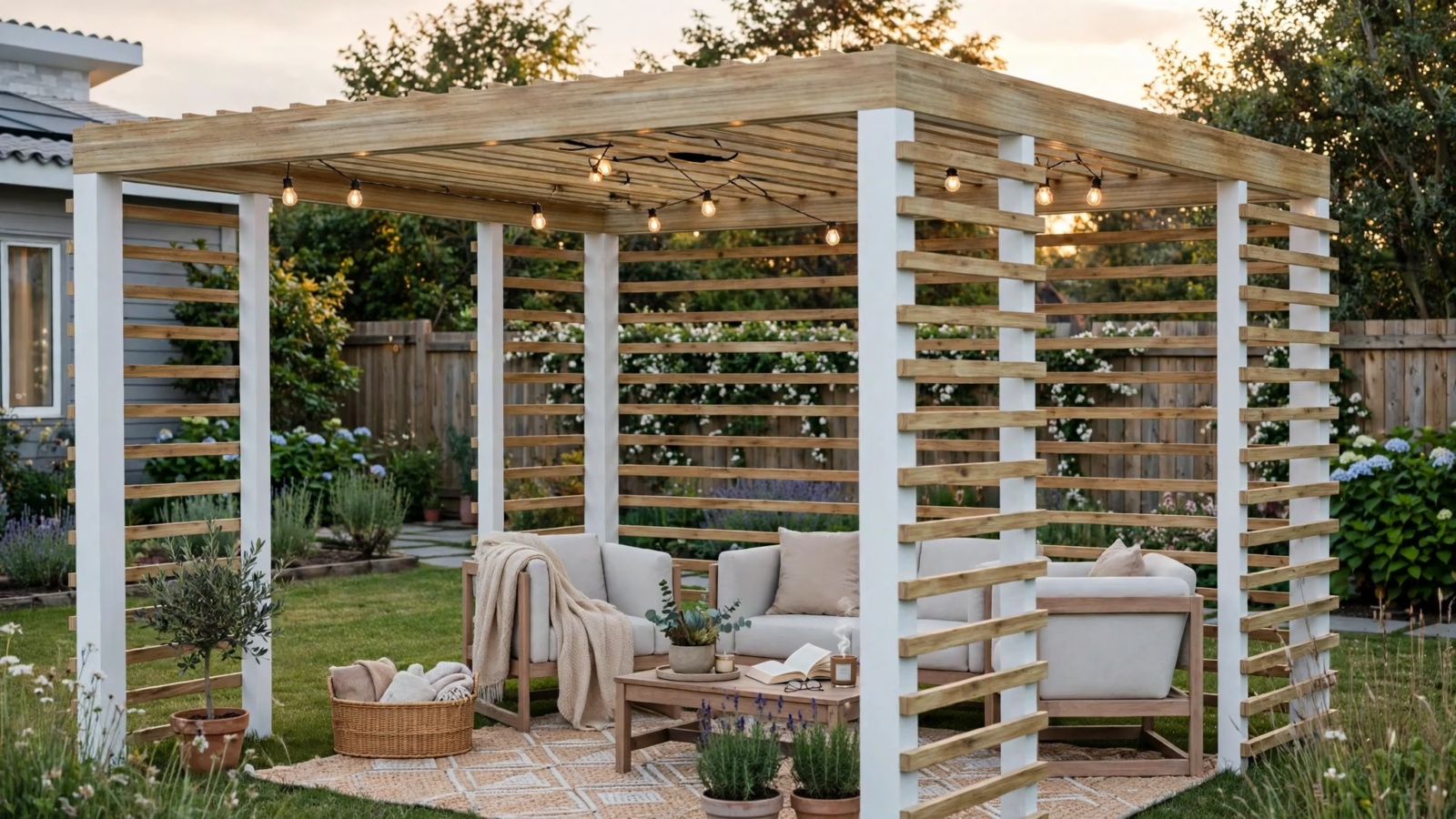
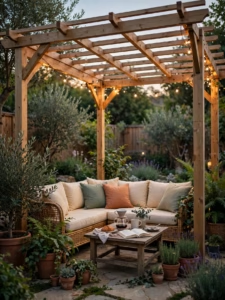
The author’s pergola transformed a previously overlooked yard into the family’s main outdoor living area, used for morning coffee, Saturday evening visits from neighbors, and reading until darkness.
Although the structure is simple, consisting of posts and beams without walls and often without a solid roof, it creates a defined outdoor room that draws people in.
The article presents twenty ideas for readers who are considering adding a pergola or have one that remains unused.
Explore backyard pergola ideas for outdoor living for more inspiration.
Jump to:
- 20 Pergola Ideas for a Backyard You Never Want to Leave
- 20 Ways to Plan, Build, and Style Your Pergola
- 1. Start With a Classic Wood Pergola
- 2. Pick the Right Spot in the Yard
- 3. Cover the Patio You Already Have
- 4. Or Go Sleek and Minimal
- 5. Add a Solid Roof for All-Weather Use
- 6. String the Lights (You Knew This Was Coming)
- 7. Train Vines Over the Top
- 8. Invest in Seating That Says Stay
- 9. Make It the Dinner Spot
- 10. Solve the Privacy Problem
- 11. Build It Yourself From a Kit
- 12. Small Yard? Small Pergola. Still Counts.
- 13. Decorate It Like a Room
- 14. Put a Fire Pit Nearby
- 15. Hang a Lantern From a Beam
- 16. Add a Hammock Zone
- 17. Host a Movie Night Under It
- 18. Brighten It Up With White Furniture
- 19. Give the Pool Some Shade
- 20. Make a Little Mediterranean Corner
20 Ways to Plan, Build, and Style Your Pergola
The ideas below move from planning and building to styling and everyday use, starting with structure and location.
- Plan first: watch where afternoon sun falls for a week, then test the spot with a table and two chairs for a weekend.
- Choose wood with care: cedar costs more but resists rot and insects, while pine costs less and lasts many years when sealing is kept up.
- Use what you already have: building over an existing concrete or paved patio keeps the floor finished and the cost lower.
- Plan for rain: a solid wood roof, clear polycarbonate panels, or a retractable canopy lets you stay outside in drizzle.
- Light it simply: warm white string lights rated for outdoor use, on a smart plug or simple timer, extend use after sunset.
- Screen only what needs screening: curtains, a lattice panel with a vine, tall planters, or a slatted screen can cover the side facing neighbors.
- Make it comfortable: deep chairs, thick cushions, and washable covers turn the structure into a place people actually use.
1. Start With a Classic Wood Pergola
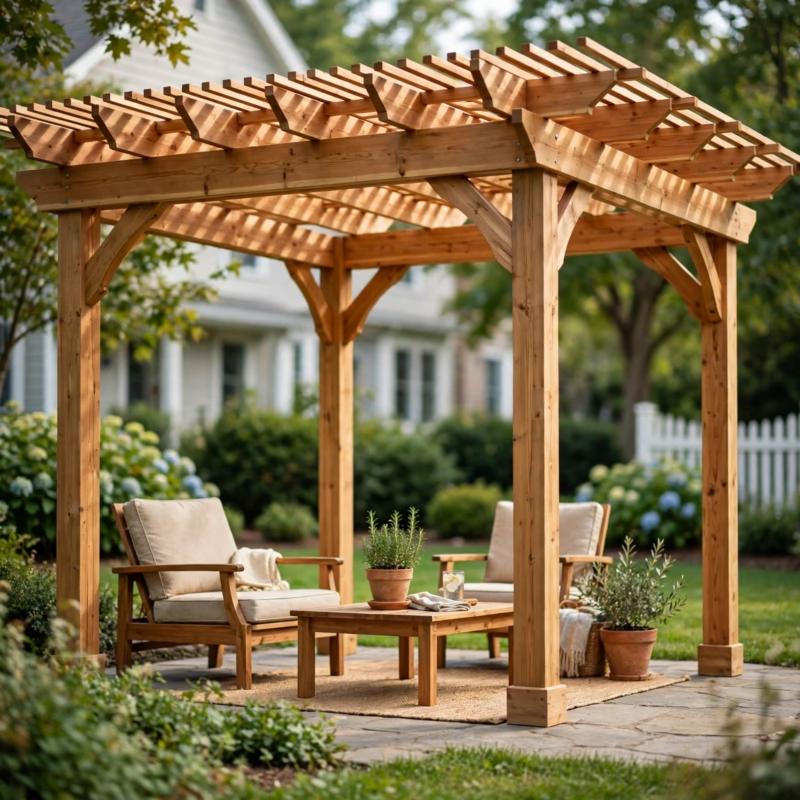
Wood is the material most people associate with pergolas, and cedar or pine suits almost any yard while aging well and allowing a later change of stain or paint color. Cedar costs more than pressure treated pine, but it naturally resists rot and insects.
Pine is the lower cost option and can last for many years when sealing is kept up. The author chose cedar and would repeat that choice, while noting that some pine pergolas remain in good condition after fifteen years.
2. Pick the Right Spot in the Yard
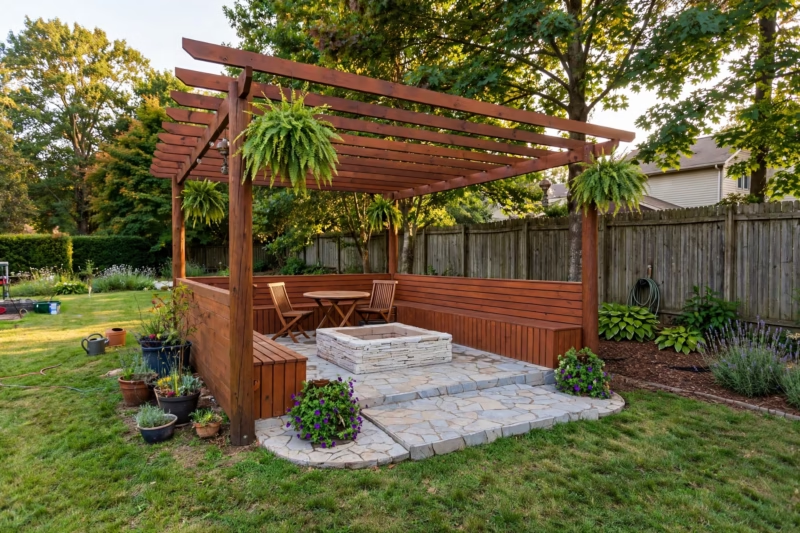
Choosing a location should begin with a week of observing where afternoon sun falls and where visitors naturally gather, because a pergola placed in an unused corner becomes an expensive feature that is only walked past.
The suggested test is to place a table and two chairs in the candidate spot for a weekend. Repeated use of those chairs indicates the right location, while never sitting there suggests the test has avoided a costly mistake.
3. Cover the Patio You Already Have
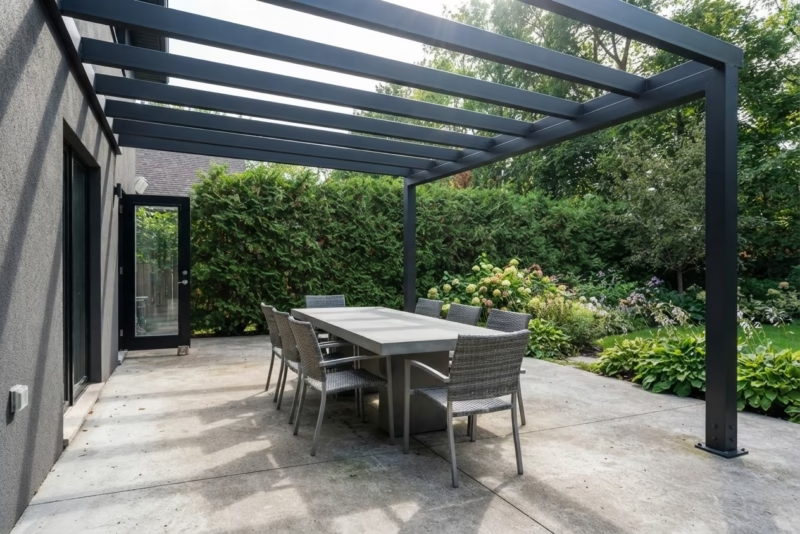
Building over an existing concrete or paved patio is presented as the simplest patio pergola approach, since the floor is already finished and the location has already proved useful, leaving only the overhead structure to add.
It is also usually the least expensive option because people often overlook flooring costs when budgeting. A pergola kit alone has one price, while adding a new stone patio underneath raises the total considerably, so the advice is to use the surface already available.
See Cozy awning ideas for patio setups for related shade ideas.
4. Or Go Sleek and Minimal
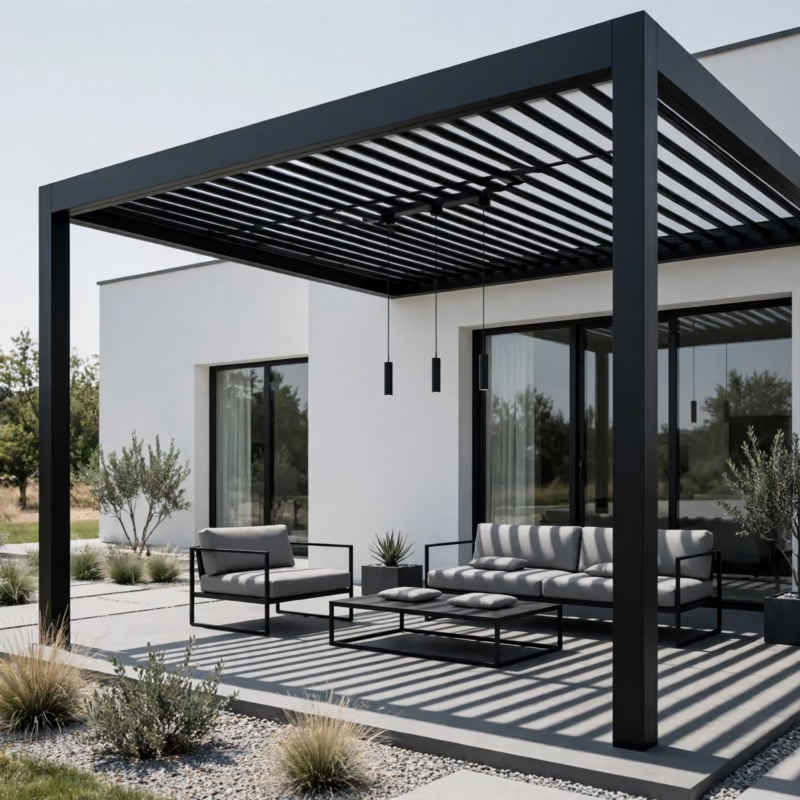
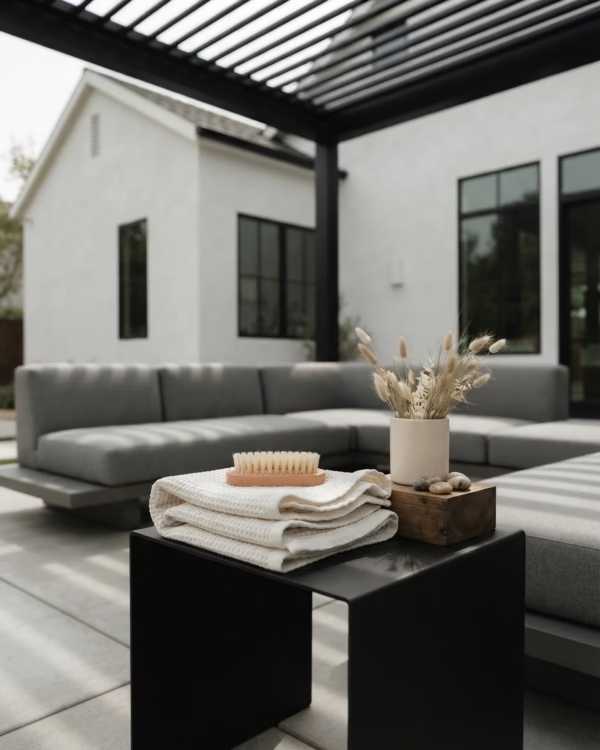
Modern pergola design stays restrained, relying on clean straight lines, a dark or neutral palette, slim furniture, and little extra ornament, so the frame itself supplies the visual interest. This style fits newer homes and flat roof architecture better than a traditional romantic garden pergola.
A black aluminum structure beside a white modern house creates a sharp contrast, while low gray seating allows shadows cast by the slats to provide decoration.
See modern patio pergola design ideas for contemporary inspiration.
5. Add a Solid Roof for All-Weather Use
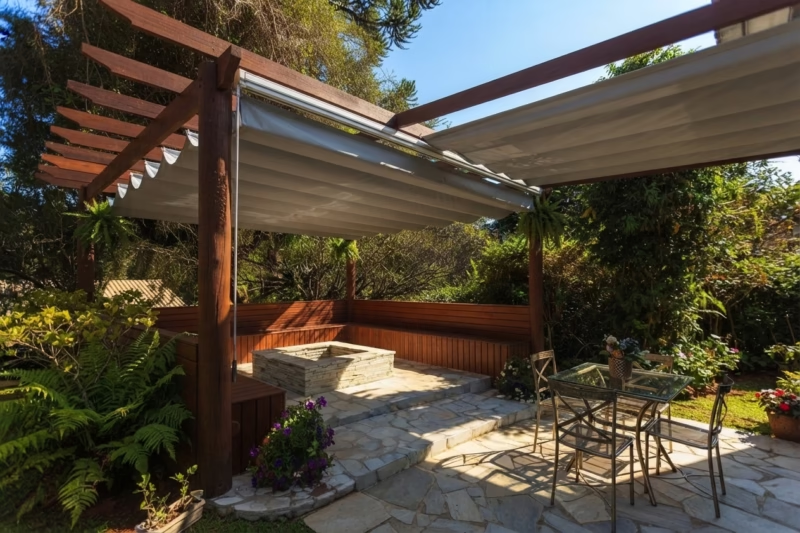
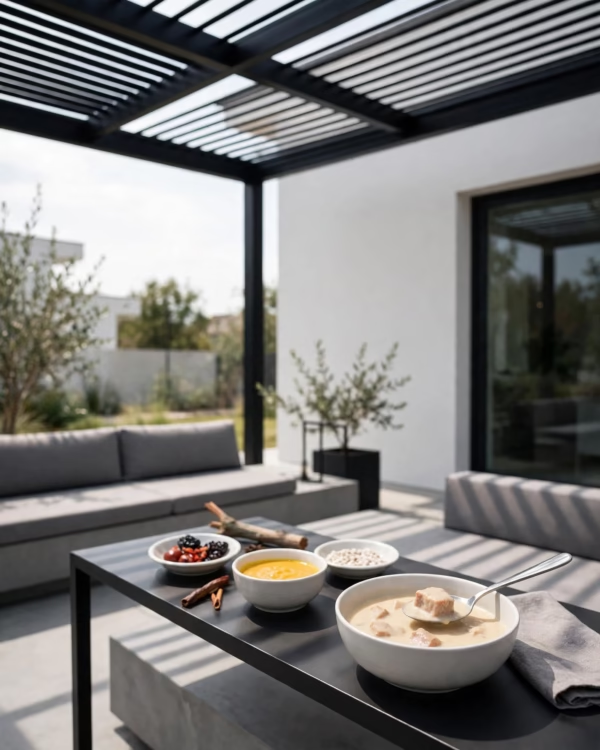
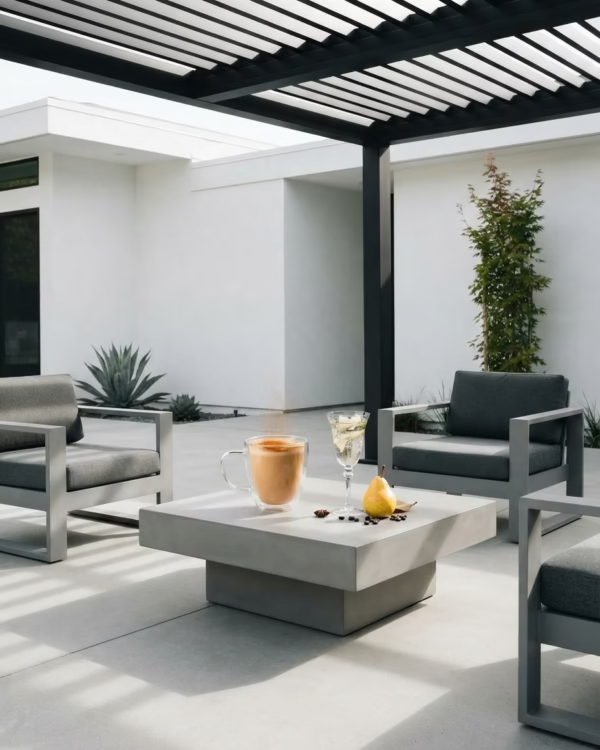
An open slatted roof works well until rain interrupts a meal, so a solid cover extends usability. Options include a solid wood roof, clear polycarbonate panels, or a retractable canopy that moves along a track.
The retractable version is the author’s favorite because it offers both open and closed settings: open it on sunny days and slide it shut during drizzle to remain outdoors.
It costs more than leaving the roof open, but roughly doubles the number of days the space gets used each year.
6. String the Lights (You Knew This Was Coming)
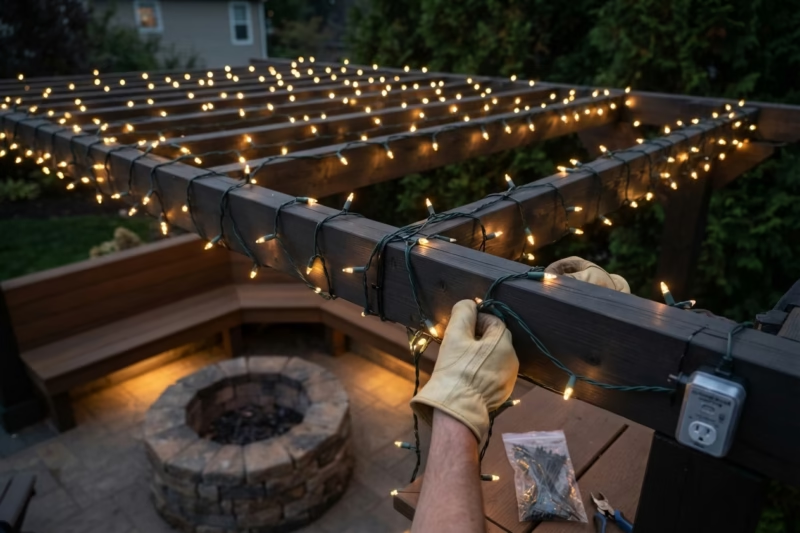
Warm white string lights wrapped around the beams remain the most effective lighting choice, taking about an hour to install at low cost while extending use for hours after sunset. Choose lights rated for outdoor use and connect them to a smart plug or simple timer so they switch on automatically in the evening.
Browse String light ideas for more lighting arrangements.
7. Train Vines Over the Top
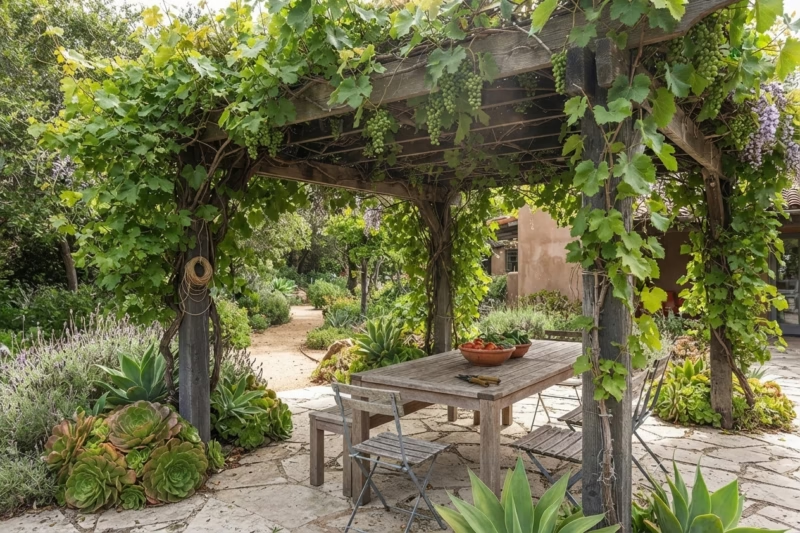
Growing vines over a pergola creates a living canopy, with wisteria suited to patient gardeners, clematis or climbing roses for earlier flowers, and grape vines for dense leaf cover plus edible fruit.
Vines require commitment: they need a few years to cover the top and annual pruning, or they may overgrow the structure. In return, they provide soft green shade that moves in the wind, an effect no purchased canopy can reproduce.
8. Invest in Seating That Says Stay
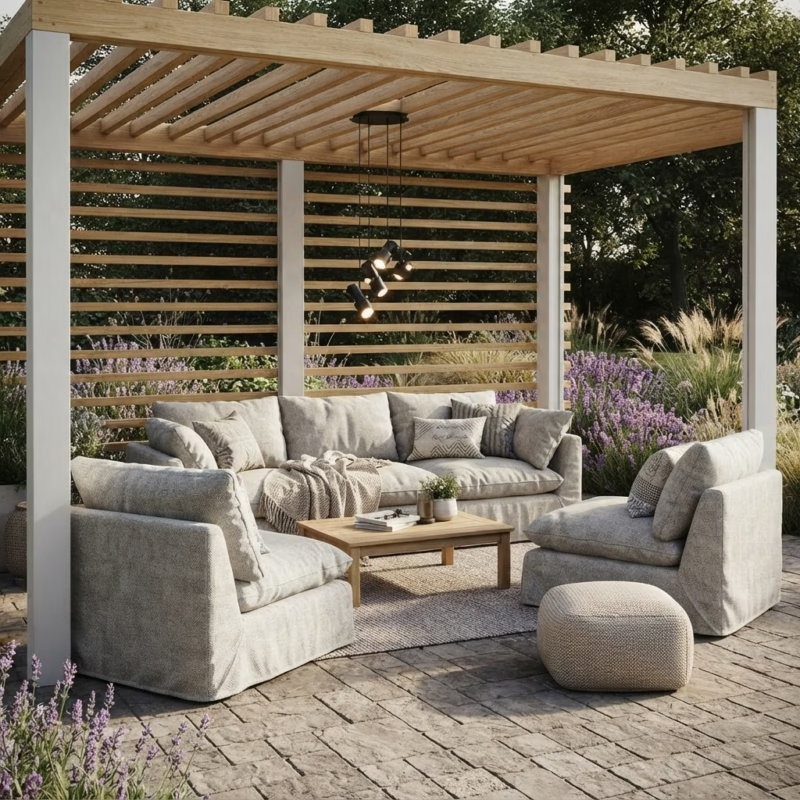
Comfortable seating is what turns a pergola from a photo backdrop into a place people actually spend time in, with deep chairs, thick cushions, and somewhere to rest your feet; when seating is inviting, other details matter much less.
Fewer, higher quality pieces work better than many rarely chosen stackable chairs, and removable, washable cushion covers are important because outdoor cushions are exposed to pollen, birds, and dropped food.
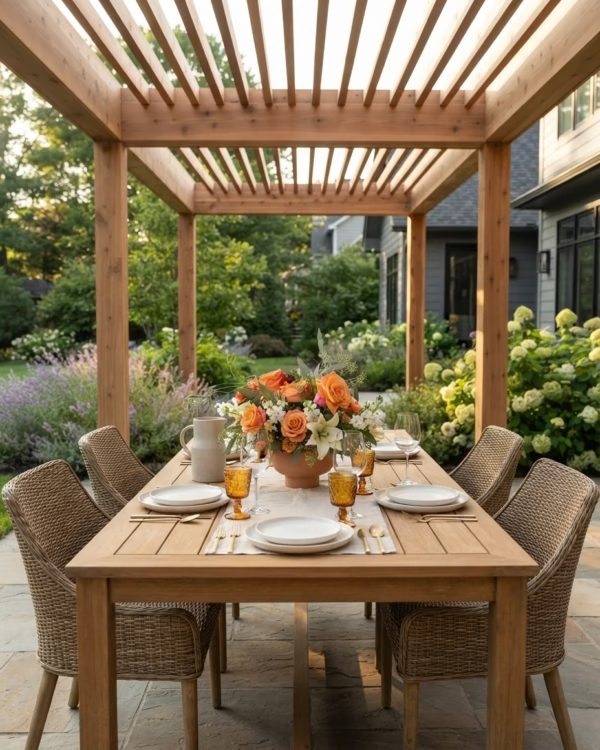
9. Make It the Dinner Spot
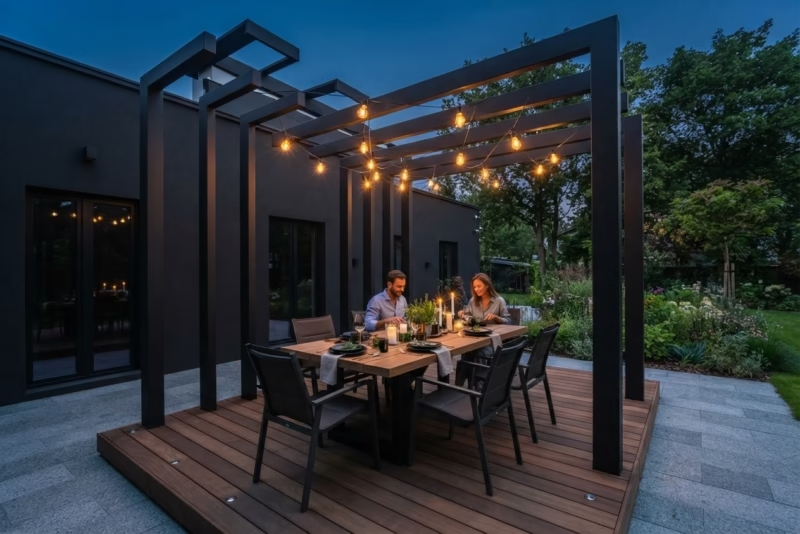
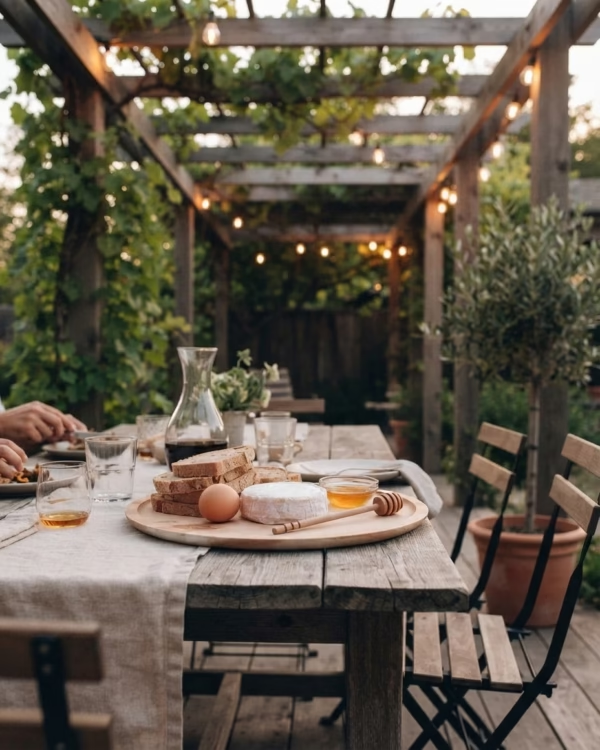
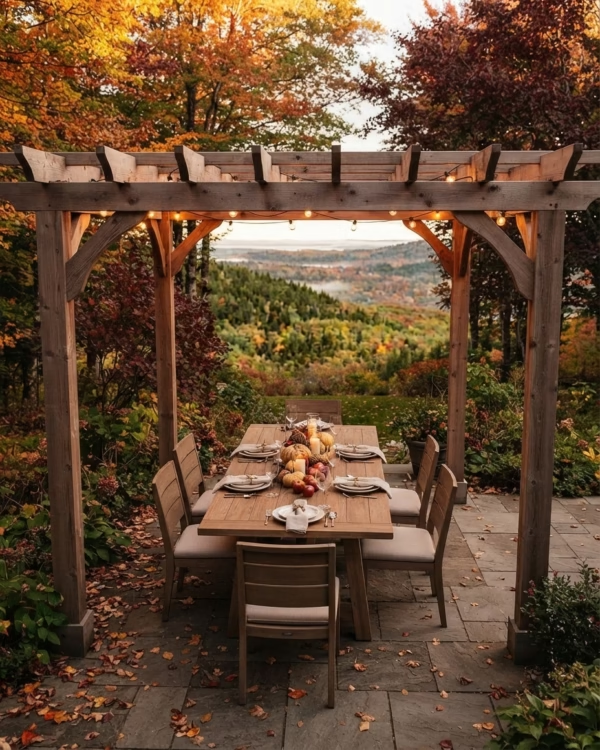
Placing a dining table beneath a pergola can make an ordinary weekday meal feel more like a holiday, even when the food itself is unchanged. The table should fit the available space with enough room to move chairs outward, roughly three feet behind each chair, and measuring should happen before purchase rather than afterward.
10. Solve the Privacy Problem
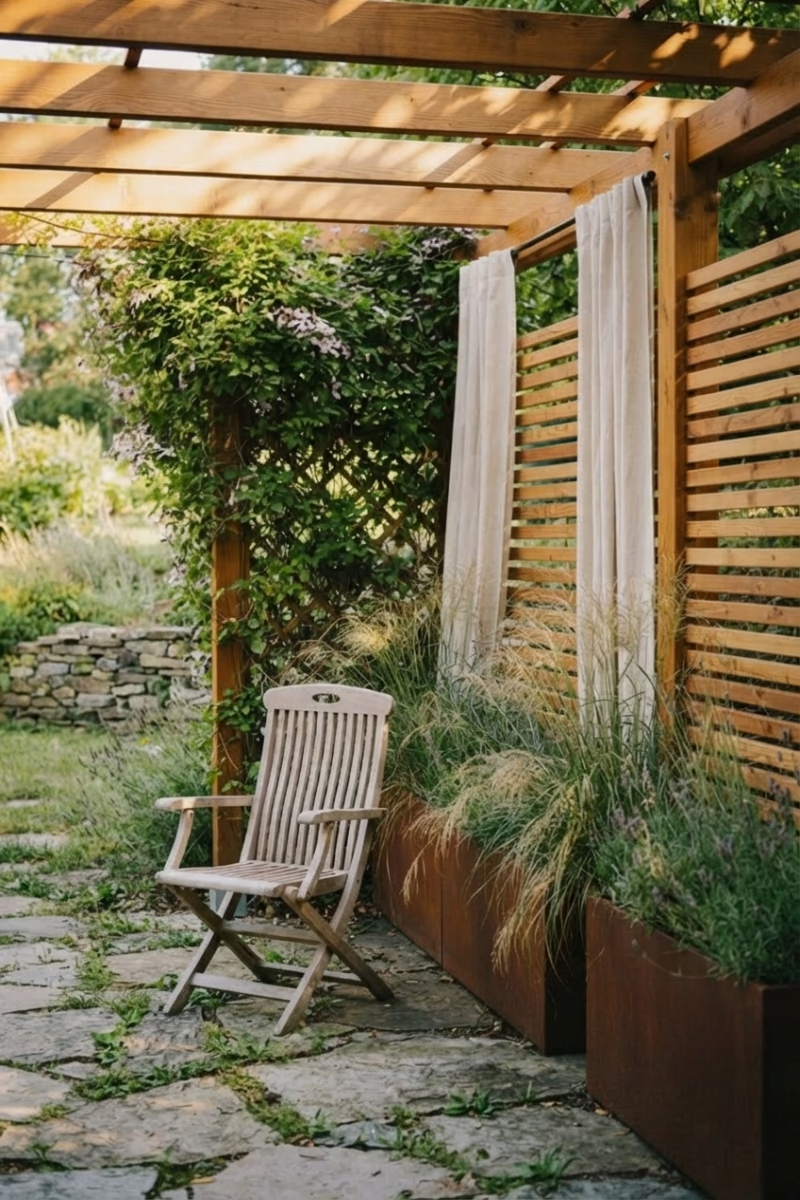
For a yard overlooked by neighbors, screening only the sides that face the problem can solve privacy concerns. Options include curtains on a rod, a lattice panel carrying a vine, tall planters filled with grasses, or a slatted wooden screen.
Curtains are quick, attractive, and retractable, while lattice with a vine takes more time but looks naturally integrated; screening even one side can change the atmosphere and make relaxing easier when the space no longer feels exposed.
11. Build It Yourself From a Kit
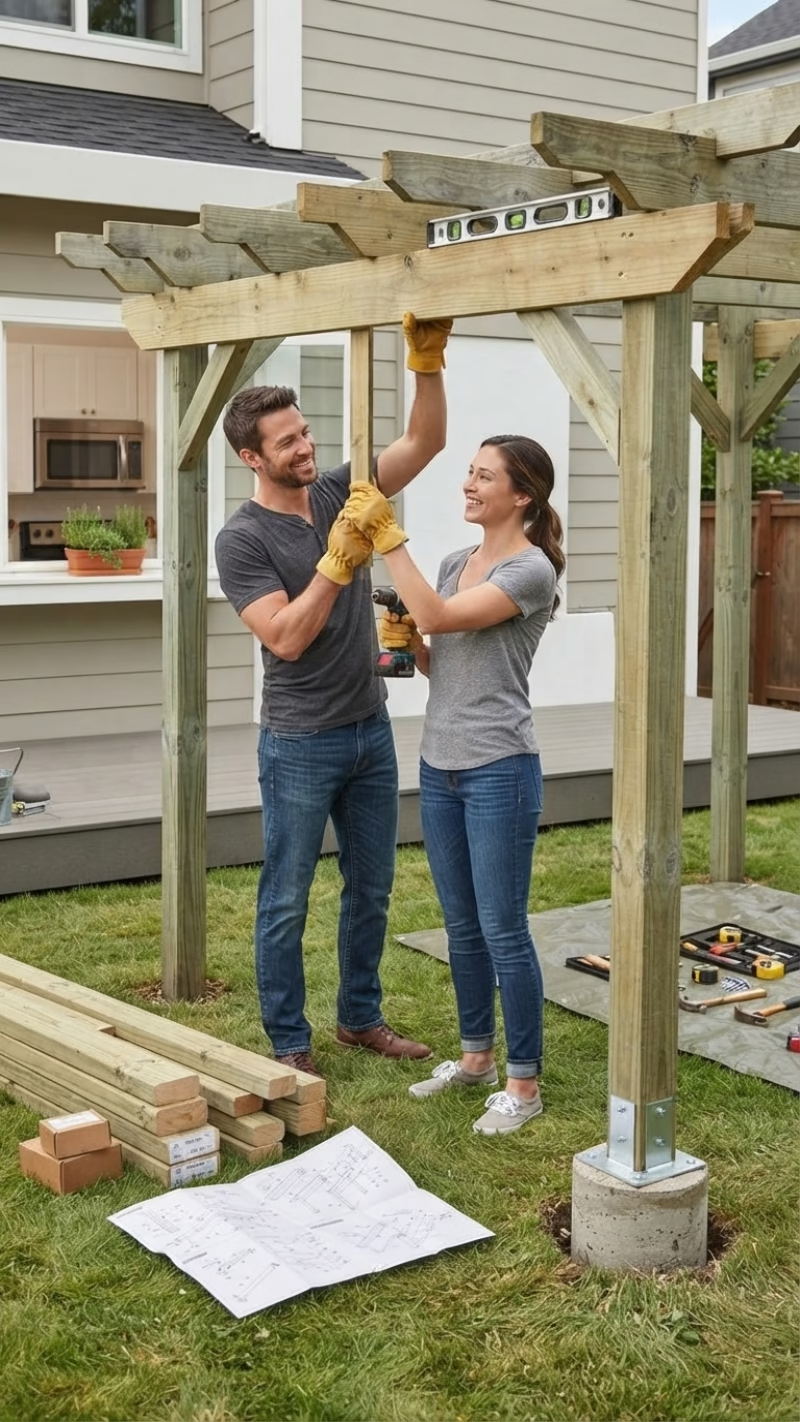
For most people, a kit is the most practical route to a do it yourself pergola because its parts arrive already cut and drilled with usable instructions, and two people can assemble it during a weekend.
Starting from raw lumber may cost less but involves considerably more measuring, which is often where weekend projects fail. The unseen work matters most: posts must be anchored properly, either in concrete footings or bolted to a slab, and level should be checked far more often than seems necessary, since a crooked structure remains crooked and noticeable, for example from a kitchen window.
12. Small Yard? Small Pergola. Still Counts.
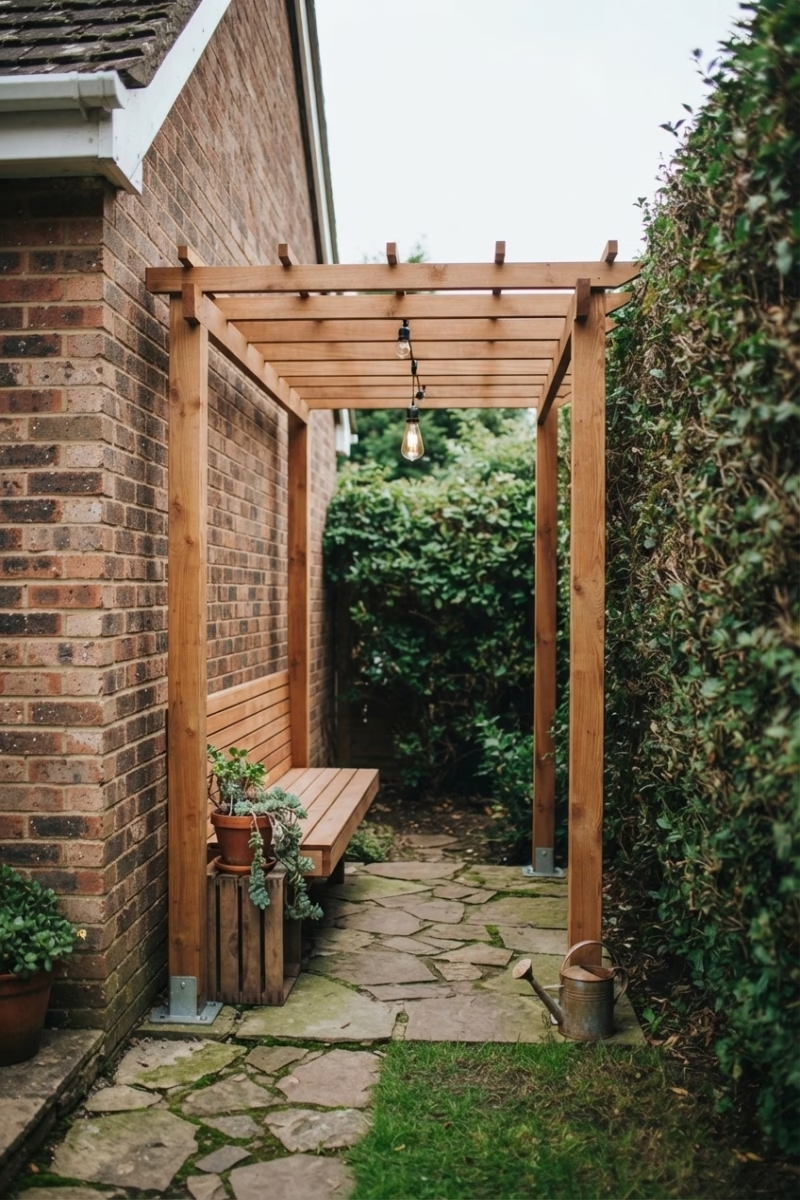
A large yard is not required, since some of the most appealing compact designs measure barely eight feet across. Examples include a bench beneath two posts and a few beams on a side patio, or a small frame above a back door with a light suspended from it.
In a compact space, a modest structure can have an outsized effect by giving the eye a focal point, so the area feels like a garden containing a seating spot rather than merely a strip of grass, changing the feeling of the same yard.
13. Decorate It Like a Room
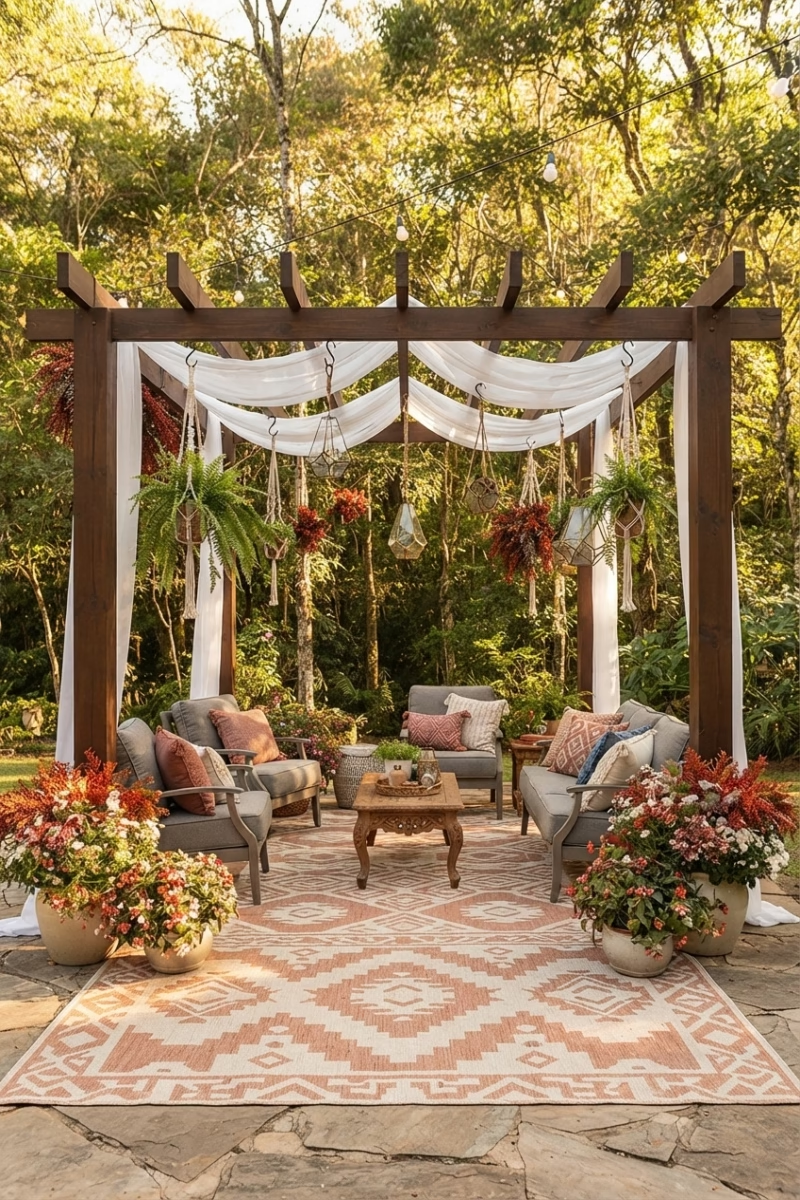
After the structure is built, it should be furnished as an indoor room would be. Effective decoration includes an outdoor rug to mark out the floor area, throw pillows, planters suspended from the crossbeams, and potted flowers placed at the posts.
The overhead beams are an often overlooked opportunity, acting like a ceiling full of ready made hooks for planters, lanterns, and one or two trailing plants, so the vertical space should be used.
14. Put a Fire Pit Nearby
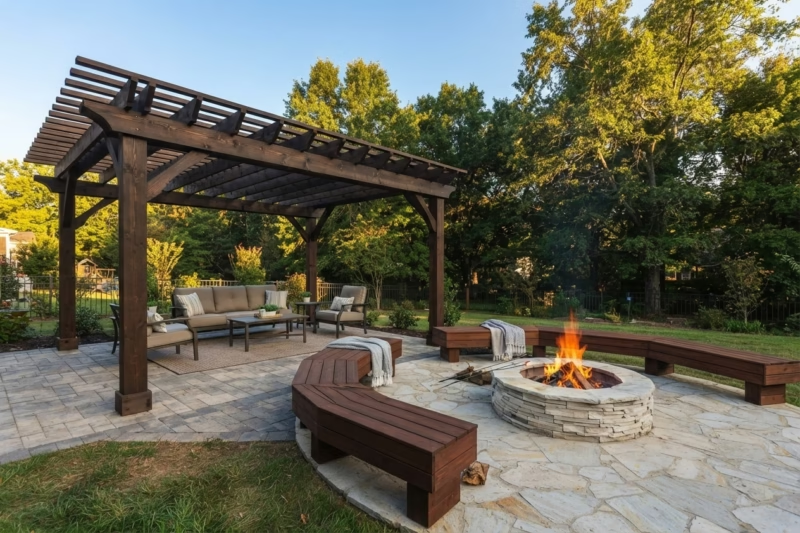
Adding a fire pit nearby can extend use of the pergola by a couple of months at each end of the season, turning cool April and October evenings into some of the best times to be outside rather than evenings when everyone retreats indoors at seven.
Placement matters for safety: an open flame should sit outside the structure with clearance on every side, so it belongs beside the pergola rather than underneath it, and local rules should be checked first.
Benches placed between the two areas can connect them so the whole space still feels like a single room.
15. Hang a Lantern From a Beam
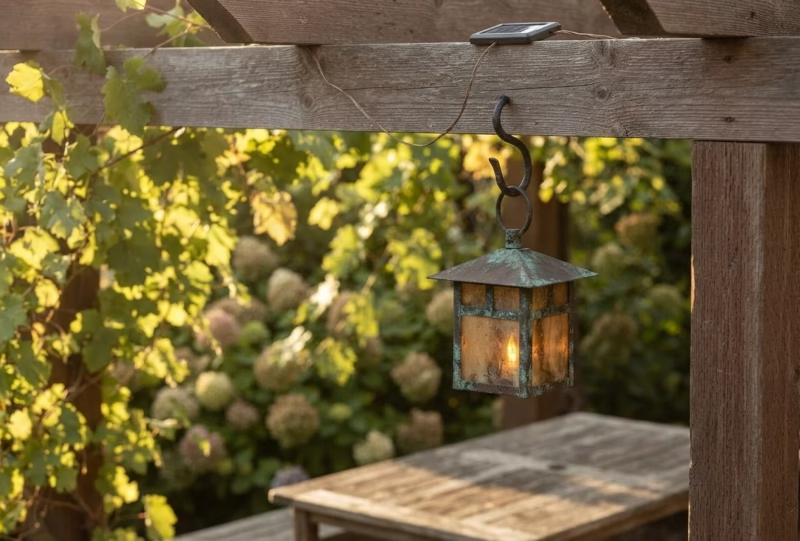
This idea is simply one old lantern hung from a beam on a hook, yet it delivers a large effect for very little effort or cost.
A solar lantern recharges itself and lights up each evening without further attention, while a battery candle lantern offers a flickering effect for those who prefer it.
Thrift stores commonly sell lanterns for a few dollars, and a single weathered metal lantern can add more character than an entire box of new decorations.
16. Add a Hammock Zone
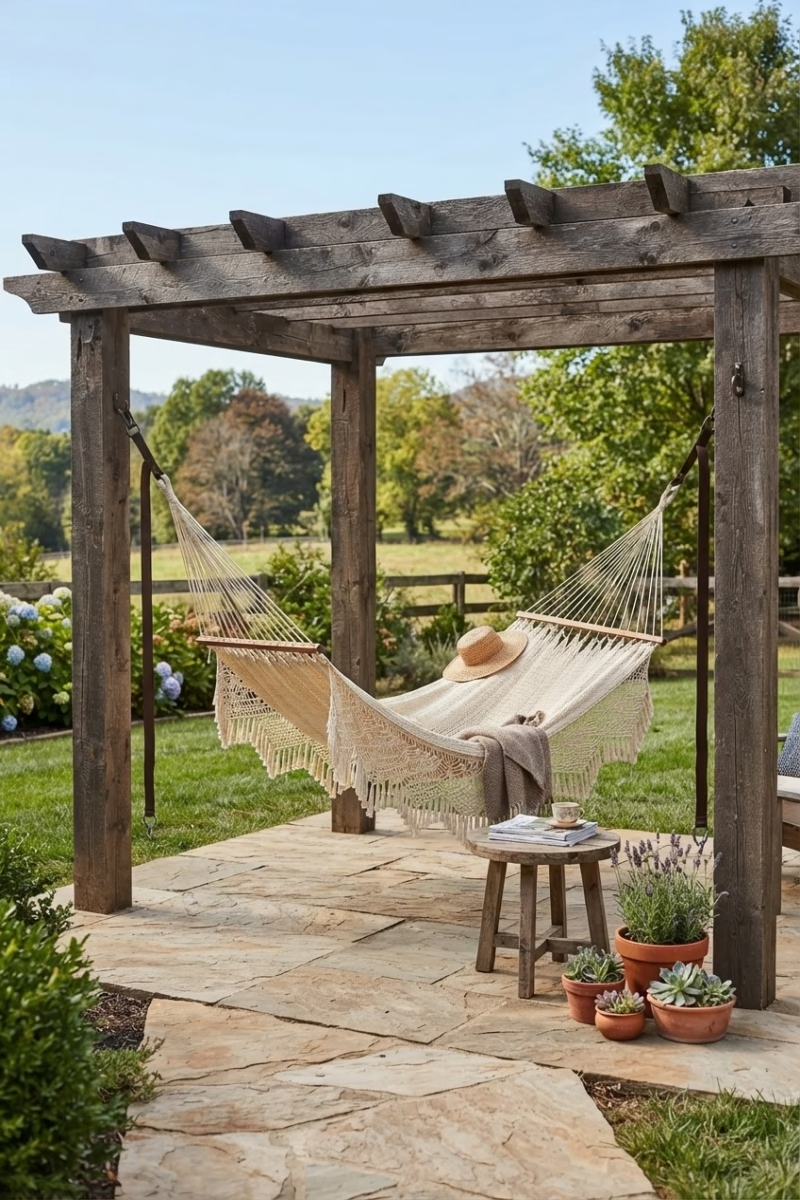
When pergola posts are firmly anchored, they can support a hammock, turning the space from mainly an outdoor dining area into a place for resting and napping. The hardware’s weight rating should be checked, and proper hammock straps should be used instead of improvised rope. Once someone settles in first, they are unlikely to want to leave it.
17. Host a Movie Night Under It
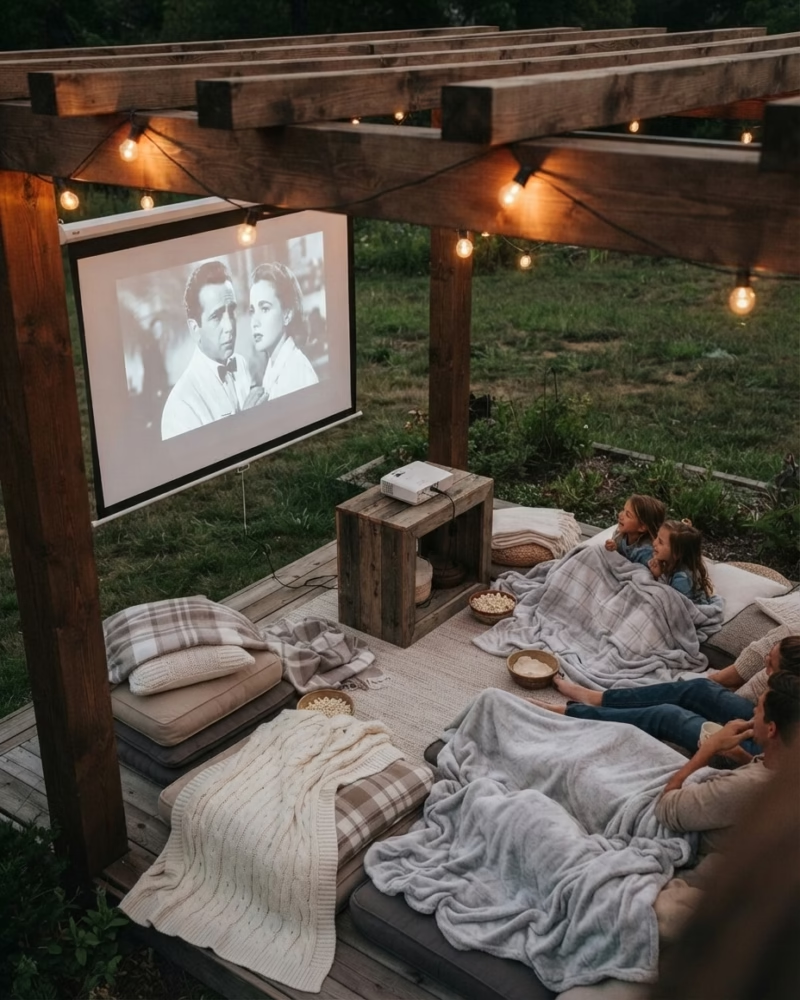
The same beams used for string lights can also support a projector screen or a white sheet pulled taut, allowing a small projector, outdoor cushions and popcorn to create an inexpensive outdoor cinema.
The setup appeals strongly to children and also to adults, who tend to conceal their enthusiasm more. Films should begin at dusk, and blankets are worth bringing because someone often feels cold about twenty minutes in.
18. Brighten It Up With White Furniture
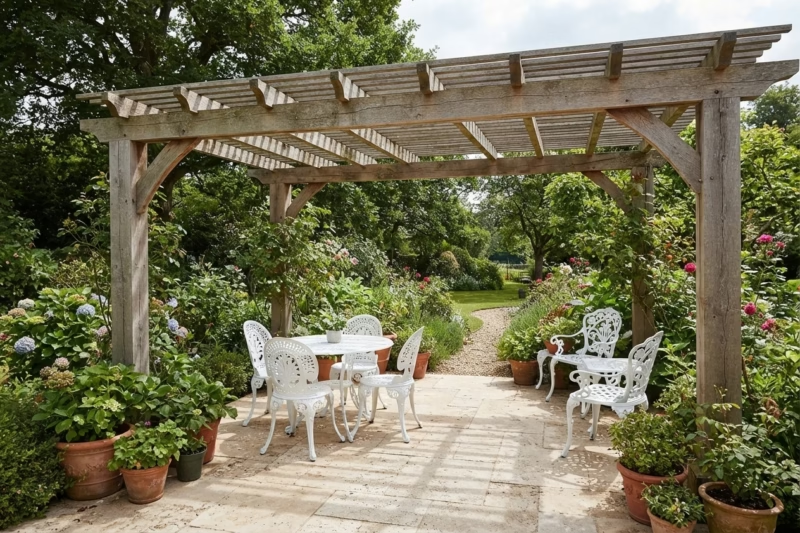
A large amount of wood can make a pergola area feel dominated by brown tones, and white furniture underneath provides an immediate contrast. The white stands out against greenery, brightens the shaded space and gives the corner the feel of a small garden café.
Although white outdoor furniture shows dirt, it can be wiped clean in two minutes, unlike dark cushions that conceal dirt until it transfers onto light colored clothing.
19. Give the Pool Some Shade
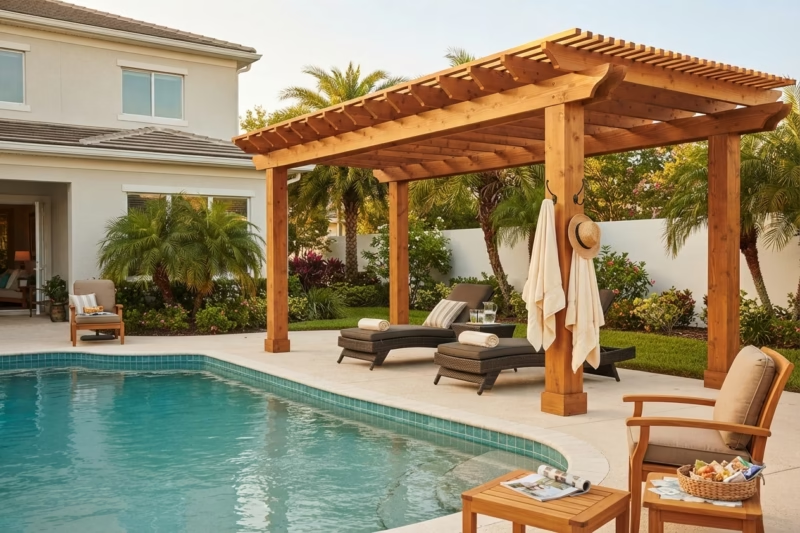
For a pool, placing a pergola along one side improves how the whole area functions by giving swimmers a shaded place to rest, keeping drinks and snacks out of the sun and providing grandparents with a comfortable spot to sit and supervise.
Lounge chairs beneath the slats and towels hung on a hook on a post help the pool area feel like a resort setup, encouraging everyone to stay outside all afternoon rather than repeatedly going indoors while wet.
20. Make a Little Mediterranean Corner
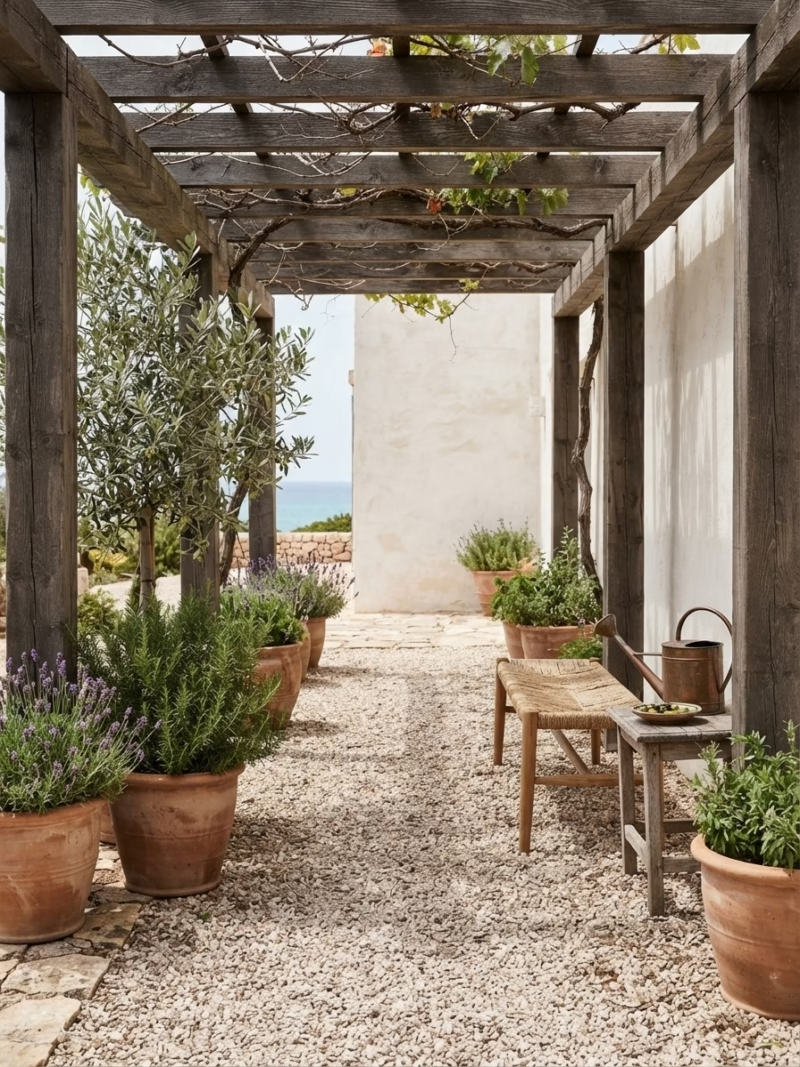
For a dreamy Mediterranean style retreat, grow olives in containers, lay gravel or stone underfoot, choose plain timber seating, and place rosemary and lavender in clay planters beside the supports. Together, these elements can evoke a seaside courtyard even in an ordinary suburban backyard.
Container olives generally thrive and, in colder regions, can be moved into a garage for winter. Rosemary also serves cooking, while lavender scent on a warm evening helps create a holiday like escape, which captures the pergola’s purpose.