

Why You’ll Love This Turkey Gravy Recipe
There’s something truly special about a rich, silky gravy drizzling over roasted turkey and fluffy mashed potatoes. This turkey gravy recipe delivers that restaurant-quality taste right from your own kitchen, and it couldn’t be easier to make. Whether you’re preparing a holiday feast or a Sunday family dinner, this homemade gravy will have everyone asking for seconds.
What makes this recipe stand out is how it transforms simple pan drippings into liquid gold. The entire process takes just 13 minutes from start to finish, making it perfect for busy home cooks who want maximum flavor with minimal effort. Plus, the techniques you’ll learn here apply to any gravy-making situation, from oven-baked chicken legs to beef roasts.
- Ease of preparation: With only 5 minutes of prep time and 8 minutes of cooking, this gravy comes together quickly while your turkey rests. The straightforward steps mean even beginner cooks can achieve smooth, lump-free results every single time.
- Health benefits: At just 47 calories per quarter-cup serving, this gravy adds flavor without excessive calories. It contains only 3 grams of fat and provides a modest protein boost, making it suitable for those watching their intake during holiday meals.
- Versatility: This same technique works beautifully with chicken, beef, or pork drippings. You can easily adapt the seasonings to complement any roasted meat, and the recipe doubles or triples effortlessly for larger gatherings.
- Distinctive flavor: The key to exceptional gravy lies in properly cooking the roux until it develops that nutty aroma and golden color. This step, often skipped in rushed preparations, creates depth of flavor that store-bought versions simply cannot match.
Jump to:
- Why You’ll Love This Turkey Gravy Recipe
- Essential Ingredients for Turkey Gravy Recipe
- Main Ingredients
- Special Dietary Options
- How to Prepare the Perfect Turkey Gravy Recipe: Step-by-Step Guide
- Step One: Collect and Strain the Pan Drippings
- Step Two: Separate the Fat from the Drippings
- Step Three: Create the Roux Base
- Step Four: Add the Liquid Gradually
- Step Five: Simmer and Season
- Step Six: Serve and Enjoy
- Dietary Substitutions to Customize Your Turkey Gravy Recipe
- Protein and Main Component Alternatives
- Vegetable, Sauce, and Seasoning Modifications
- Mastering Turkey Gravy Recipe: Advanced Tips and Variations
- Pro Cooking Techniques
- Flavor Variations
- Presentation Tips
- Make-Ahead Options
- How to Store Turkey Gravy Recipe: Best Practices
- Refrigeration
- Freezing
- Reheating
- Meal Prep Considerations
- FAQs: Frequently Asked Questions About Turkey Gravy Recipe
- How do I make turkey gravy if I don’t have enough pan drippings?
- How can I avoid lumps in my turkey gravy?
- How do I remove the raw flour taste from turkey gravy?
- Can I make turkey gravy without pan drippings?
- How do I store and reheat leftover turkey gravy?
- Turkey Gravy Recipe
- Ingredients
- Instructions
- Last Step:
- Notes
- Nutrition
- Did you make this recipe?
Essential Ingredients for Turkey Gravy Recipe
Creating the perfect gravy starts with understanding each ingredient’s role. The beauty of this turkey gravy recipe lies in its simplicity just five ingredients work together to create something truly delicious. Here’s everything you’ll need with precise measurements:
Main Ingredients
- ½ cup turkey pan drippings The flavorful liquid collected from roasting your turkey, containing rendered fat and caramelized juices that provide the authentic roasted flavor foundation for your gravy.
- 2 tablespoons butter Adds richness and helps create the roux base; supplement the fat from drippings if needed to reach the right consistency.
- ¼ cup all-purpose flour Acts as the thickening agent when combined with fat; cooking it properly removes the raw flour taste.
- 1 ½ cups chicken broth Provides liquid volume and additional flavor; use high-quality broth for the best results since this forms the bulk of your gravy.
- Pinch of freshly cracked black pepper Adds subtle warmth and complexity; freshly cracked pepper offers more pronounced flavor than pre-ground varieties.
- Salt to taste Essential for bringing all flavors together; add gradually and taste as you go.
Special Dietary Options
For those with dietary restrictions, this recipe can be easily modified:
- Gluten-free: Replace all-purpose flour with an equal amount of gluten-free all-purpose flour blend or cornstarch (use half the amount and skip the roux step).
- Dairy-free: Use olive oil or the reserved turkey fat in place of butter for a completely dairy-free version.
- Lower sodium: Choose low-sodium chicken broth and control salt addition to reduce overall sodium content.
How to Prepare the Perfect Turkey Gravy Recipe: Step-by-Step Guide
Follow these detailed instructions to create silky, flavorful gravy every time. Each step builds on the previous one, so take your time and enjoy the process.
Step One: Collect and Strain the Pan Drippings
After removing your turkey from the roasting pan, carefully pour all the liquid and browned bits into a heat-proof container. Place a fine mesh strainer over a liquid measuring cup and pour the drippings through it. This removes any solids, herbs, or burnt bits that could make your gravy grainy. Let the strained liquid rest for 3 to 5 minutes undisturbed. During this time, the fat will naturally separate and rise to the top, making it easy to remove.
The fat layer will be clearly visible as a lighter, oily substance floating above the darker, flavorful juices below. This separation step is crucial because it gives you control over how much fat goes into your gravy. Too much fat makes it greasy; too little prevents proper thickening.
Step Two: Separate the Fat from the Drippings
Using a spoon, carefully skim off approximately 3 tablespoons of the separated fat from the top of your measuring cup. Transfer this fat to a medium saucepan. If your turkey didn’t produce enough fat (which can happen with smaller birds), simply add butter to make up the difference. The combination of turkey fat and butter creates the ideal roux foundation.
Don’t discard the remaining drippings beneath the fat layer! Those dark, concentrated juices hold intense turkey flavor that will make your gravy taste authentic and robust. Save these for adding later in the process.
Step Three: Create the Roux Base
Heat your saucepan over medium heat, allowing the collected fat and butter to melt completely. Once melted and bubbling gently, sprinkle in the ¼ cup of all-purpose flour. Immediately begin whisking with a flat whisk or regular whisk, combining the flour and fat into a smooth paste. Continue whisking for approximately 1 ½ to 2 minutes until the mixture turns a golden brown color.
Important: Cooking the roux until golden brown is essential for removing that raw flour taste. You’ll know it’s ready when it smells slightly nutty and has a warm, toasted appearance. Rushing this step results in pasty, floury-tasting gravy.
The proper roux should be smooth and cohesive, coating the bottom of the pan. It shouldn’t appear dry or crumbly. If it does, add a touch more butter. If it’s too runny, sprinkle in a bit more flour.
Step Four: Add the Liquid Gradually
This step requires patience and constant whisking. Begin adding the remaining pan drippings and chicken broth to your roux, but do this slowly about ¼ cup at a time at first. Whisk vigorously as each addition integrates into the roux. The initial additions will be thick and pasty, but as you continue adding liquid, the mixture will smooth out and become pourable.
Once you’ve added about half the liquid, you can pour in the remainder more quickly while maintaining steady whisking motion. This gradual addition technique prevents those dreaded lumps from forming. The constant whisking motion creates friction that breaks down any flour particles trying to clump together.
Step Five: Simmer and Season
Bring your gravy mixture to a gentle boil, then immediately reduce the heat to medium-low. Simmer for about 5 minutes, whisking frequently to prevent scorching on the bottom. During this time, the flour granules will swell and release their starch, thickening the gravy to the perfect consistency.
The gravy will continue thickening as it simmers and even more as it cools. Test the consistency by dipping a spoon the gravy should coat the back of it rather than running off like water. Season with salt and freshly cracked black pepper to taste, remembering that the pan drippings already contain some salt.
Step Six: Serve and Enjoy
Remove the saucepan from heat and let it rest for a minute or two. The gravy will thicken slightly during this resting period. Give it a final whisk before transferring to your serving vessel. Pour generously over sliced turkey, mashed potatoes, or anything else that could use a savory boost.
If you’re making gravy ahead of time, it can be reheated gently with a splash of additional broth to restore the perfect consistency.
| Task | Duration |
|---|---|
| Prep Time | 5 minutes |
| Cook Time | 8 minutes |
| Total Time | 13 minutes |
| Servings | Approximately 6-8 (at ¼ cup each) |
Dietary Substitutions to Customize Your Turkey Gravy Recipe
Protein and Main Component Alternatives
This turkey gravy recipe adapts beautifully to different meat drippings. If you’re serving garlic butter steak and potatoes instead of turkey, simply substitute beef drippings using the exact same technique. The beef creates a deeper, more robust gravy that pairs wonderfully with roasted vegetables.
Chicken drippings work equally well and produce a lighter gravy that complements poultry dishes throughout the year. For those without any pan drippings, a combination of butter and quality stock creates excellent results. As noted by cooking experts at Tastes Better From Scratch, homemade gravy elevates any meal, and you don’t always need drippings to make it delicious.
Vegetable, Sauce, and Seasoning Modifications
Customize your gravy with various seasonings to match your meal’s flavor profile. Consider adding minced garlic (cooked with the roux) for a more robust taste. Fresh or dried herbs like thyme, sage, rosemary, or parsley bring classic holiday flavors. A splash of Worcestershire sauce adds umami depth, while a teaspoon of poultry seasoning creates that traditional Thanksgiving taste.
For mushroom lovers, sautéing finely minced mushrooms along with the roux creates an earthy, savory dimension. A touch of heavy cream stirred in at the end produces a richer, silkier texture perfect for special occasions.
Mastering Turkey Gravy Recipe: Advanced Tips and Variations
Pro Cooking Techniques
Professional chefs use several tricks to achieve restaurant-quality gravy. First, warm your broth before adding it to the roux cold liquid shocks the flour and can cause lumps. Second, use a flat whisk rather than a balloon whisk; the flat design reaches into pan corners better. Third, strain your finished gravy through a fine-mesh sieve for ultimate smoothness, especially if you’re serving guests.
Another professional tip: make a flavorful base by sautéing aromatic vegetables (onions, celery, garlic) in the fat before adding flour. This technique creates layers of flavor that elevate simple gravy into something memorable.
Flavor Variations
- Herb-Infused: Add ½ teaspoon dried thyme, sage, or rosemary to the simmering gravy for classic poultry seasoning notes.
- Garlic Lover’s: Cook 1-2 minced garlic cloves with the roux before adding liquid.
- Rich and Creamy: Stir in 2 tablespoons heavy cream or sour cream at the end for a luxurious texture.
- Wine-Enhanced: Add ¼ cup white wine along with the broth for sophisticated depth.
Presentation Tips
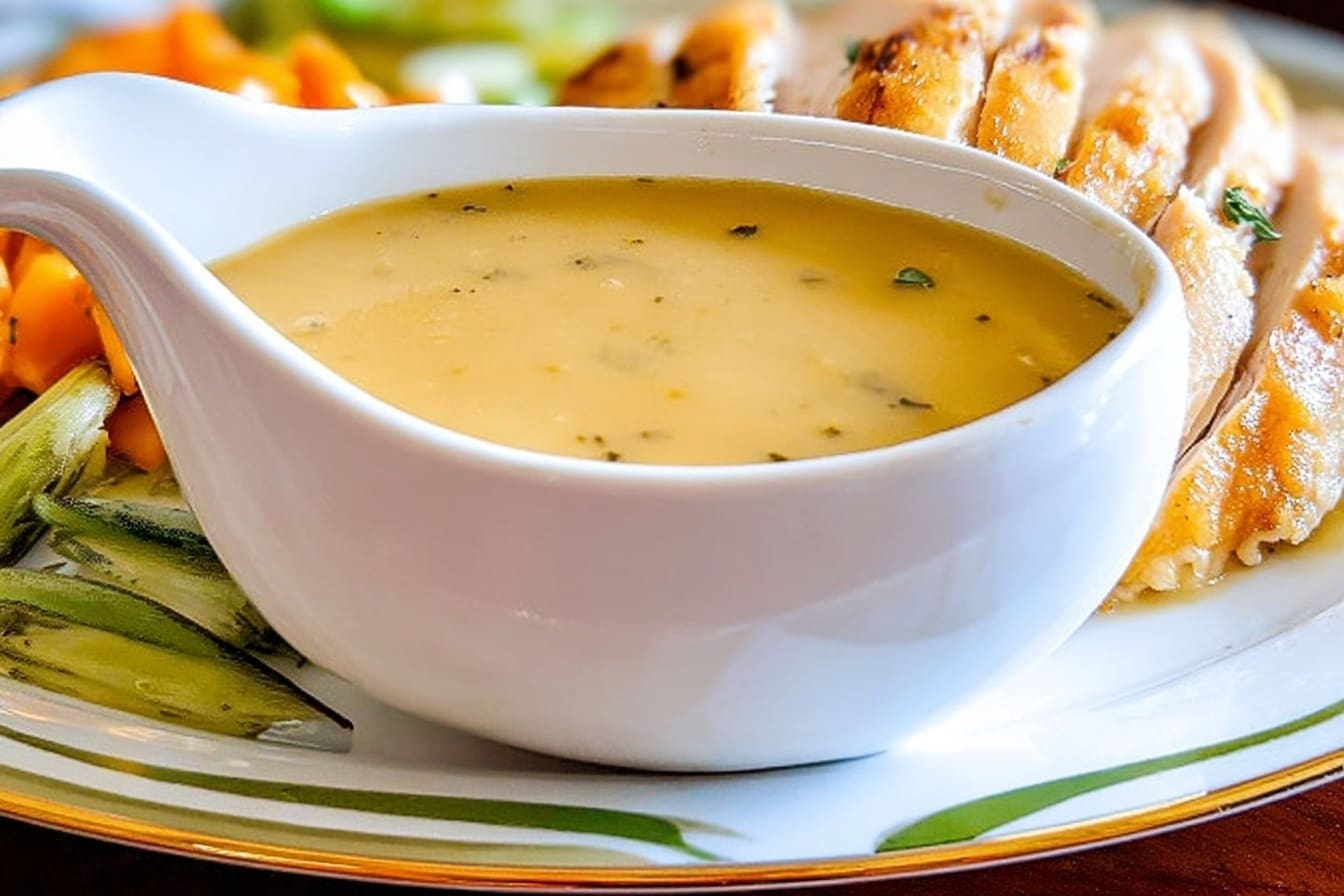
Serve your homemade gravy in a warmed gravy boat or pitcher to maintain temperature. A small garnish of fresh herbs (parsley, chives, or thyme) adds a pop of color and signals freshness. For holiday meals, consider offering the gravy tableside so guests can control their portion sizes.
Make-Ahead Options
Gravy can be made up to two days ahead and refrigerated. Store in an airtight container and reheat gently over low heat, whisking in a tablespoon of broth to restore consistency. For large gatherings, make a double batch the flavors often improve overnight as the seasonings meld together.
How to Store Turkey Gravy Recipe: Best Practices
Refrigeration
Store cooled gravy in an airtight container in the refrigerator for up to 4 days. Before storing, let the gravy cool to room temperature, but don’t leave it out longer than 2 hours. The gravy will thicken considerably when cold due to the starch setting this is completely normal and reversible.
Freezing
For longer storage, freeze gravy in portion-sized containers or freezer bags for up to 3 months. Label each container with the date. Thaw frozen gravy overnight in the refrigerator before reheating. Note that cream-based gravies don’t freeze as well and may separate upon thawing.
Reheating
Reheat gravy slowly in a saucepan over low heat. Add 1-2 tablespoons of broth or water per cup of gravy while whisking to restore the smooth consistency. Avoid using high heat or microwaving, as these methods can cause the gravy to separate or develop hot spots. The gravy should reach 165°F internally before serving. According to WebMD, proper food handling and storage are essential for maintaining food safety.
Meal Prep Considerations
If you’re planning meals for the week, consider making a larger batch of gravy to portion out for different dishes. It pairs wonderfully with leftovers like turkey sandwiches, pot pies, or open-faced hot turkey sandwiches. Gravy also freezes well in ice cube trays pop out individual portions as needed for quick weekday meals.
FAQs: Frequently Asked Questions About Turkey Gravy Recipe
How do I make turkey gravy if I don’t have enough pan drippings?
If you have less than 2 cups of pan drippings, supplement with chicken or turkey broth to reach the full amount. Start by melting 1/4 cup butter in a saucepan over medium heat if drippings are minimal. Stir in 1/4 cup flour to form a roux, cooking for 2 minutes until golden. Gradually whisk in your combined drippings and broth (total 2 cups), plus salt, pepper, and optional herbs like thyme. Simmer 5-10 minutes until thickened. This method keeps the rich flavor intact. For best results, taste and adjust seasoning before serving. Makes about 2 cups, perfect for 8-10 servings. (78 words)
How can I avoid lumps in my turkey gravy?
Prevent lumps by preparing a smooth roux first: melt fat from drippings or 1/4 cup butter, whisk in 1/4 cup flour, and cook 2 minutes until bubbly and lightly browned. Slowly add 2 cups warm broth or drippings while whisking constantly to incorporate fully. Use a flat whisk for better coverage. Bring to a simmer over medium heat, stirring until it thickens (5-8 minutes). If small lumps appear, strain through a fine-mesh sieve. Always whisk vigorously during addition to ensure silky texture every time. (92 words)
How do I remove the raw flour taste from turkey gravy?
Eliminate raw flour taste by cooking the roux properly. After removing excess fat from pan drippings, whisk in equal parts flour (about 1/4 cup each) over medium heat. Stir continuously for 2-3 minutes until the mixture turns golden and develops a nutty aroma—this toasts the flour. Then, gradually add 2 cups liquid (drippings plus broth), whisking to avoid lumps. Simmer 5-10 minutes more. Skipping this step leaves a pasty flavor; proper cooking builds depth. Season with salt, pepper, and giblet bits if available for authentic taste. (96 words)
Can I make turkey gravy without pan drippings?
Yes, make excellent turkey gravy without drippings using butter and stock. Melt 1/4 cup butter in a saucepan, whisk in 1/4 cup flour, and cook 2 minutes for roux. Slowly add 2 cups turkey or chicken broth, stirring until smooth. Simmer 5-10 minutes to thicken. Boost flavor with 1 tsp minced garlic, 1/2 tsp poultry seasoning, salt, and pepper. For extra richness, stir in a splash of Worcestershire sauce. This works for pre-roasted turkey or make-ahead prep. Yields 2 cups; reheat gently to serve. (98 words)
How do I store and reheat leftover turkey gravy?
Store cooled turkey gravy in an airtight container in the fridge for up to 4 days or freeze in portions for 3 months. It thickens when cold due to starch setting. To reheat, place in a saucepan over low heat, adding 1-2 tbsp broth or water per cup while whisking to restore smoothness—avoid microwaving to prevent separation. Simmer gently until hot (165°F internal temp). For freezing, use freezer bags; thaw overnight in fridge before reheating. Always stir well and taste for seasoning adjustments post-reheat. (92 words)

Turkey Gravy Recipe
🦃 Silky lump-free turkey gravy – elevates Thanksgiving drippings to pro silky pour in 13 min!
🍲 Versatile chicken/beef subs, whisk magic no stress; thickens perfect as cools!
- Total Time: 13 minutes
- Yield: 8 servings
Ingredients
– ½ cup turkey pan drippings for authentic roasted flavor foundation
– 2 tablespoons butter for richness and roux base
– ¼ cup all-purpose flour for thickening
– 1 ½ cups chicken broth for liquid volume and additional flavor
– Pinch of freshly cracked black pepper for subtle warmth and complexity
– Salt to taste for bringing all flavors together
Instructions
1-Step One: Collect and Strain the Pan Drippings After removing your turkey from the roasting pan, carefully pour all the liquid and browned bits into a heat-proof container. Place a fine mesh strainer over a liquid measuring cup and pour the drippings through it. This removes any solids, herbs, or burnt bits that could make your gravy grainy. Let the strained liquid rest for 3 to 5 minutes undisturbed. During this time, the fat will naturally separate and rise to the top, making it easy to remove. The fat layer will be clearly visible as a lighter, oily substance floating above the darker, flavorful juices below. This separation step is crucial because it gives you control over how much fat goes into your gravy. Too much fat makes it greasy; too little prevents proper thickening.
2-Step Two: Separate the Fat from the Drippings Using a spoon, carefully skim off approximately 3 tablespoons of the separated fat from the top of your measuring cup. Transfer this fat to a medium saucepan. If your turkey didn’t produce enough fat (which can happen with smaller birds), simply add butter to make up the difference. The combination of turkey fat and butter creates the ideal roux foundation. Don’t discard the remaining drippings beneath the fat layer! Those dark, concentrated juices hold intense turkey flavor that will make your gravy taste authentic and robust. Save these for adding later in the process.
3-Step Three: Create the Roux Base Heat your saucepan over medium heat, allowing the collected fat and butter to melt completely. Once melted and bubbling gently, sprinkle in the ¼ cup of all-purpose flour. Immediately begin whisking with a flat whisk or regular whisk, combining the flour and fat into a smooth paste. Continue whisking for approximately 1 ½ to 2 minutes until the mixture turns a golden brown color. Important: Cooking the roux until golden brown is essential for removing that raw flour taste. You’ll know it’s ready when it smells slightly nutty and has a warm, toasted appearance. Rushing this step results in pasty, floury-tasting gravy. The proper roux should be smooth and cohesive, coating the bottom of the pan. It shouldn’t appear dry or crumbly. If it does, add a touch more butter. If it’s too runny, sprinkle in a bit more flour.
4-Step Four: Add the Liquid Gradually This step requires patience and constant whisking. Begin adding the remaining pan drippings and chicken broth to your roux, but do this slowly about ¼ cup at a time at first. Whisk vigorously as each addition integrates into the roux. The initial additions will be thick and pasty, but as you continue adding liquid, the mixture will smooth out and become pourable. Once you’ve added about half the liquid, you can pour in the remainder more quickly while maintaining steady whisking motion. This gradual addition technique prevents those dreaded lumps from forming. The constant whisking motion creates friction that breaks down any flour particles trying to clump together.
5-Step Five: Simmer and Season Bring your gravy mixture to a gentle boil, then immediately reduce the heat to medium-low. Simmer for about 5 minutes, whisking frequently to prevent scorching on the bottom. During this time, the flour granules will swell and release their starch, thickening the gravy to the perfect consistency. The gravy will continue thickening as it simmers and even more as it cools. Test the consistency by dipping a spoon the gravy should coat the back of it rather than running off like water. Season with salt and freshly cracked black pepper to taste, remembering that the pan drippings already contain some salt.
6-Step Six: Serve and Enjoy Remove the saucepan from heat and let it rest for a minute or two. The gravy will thicken slightly during this resting period. Give it a final whisk before transferring to your serving vessel. Pour generously over sliced turkey, mashed potatoes, or anything else that could use a savory boost. If you’re making gravy ahead of time, it can be reheated gently with a splash of additional broth to restore the perfect consistency.
Last Step:
Please leave a rating and comment letting us know how you liked this recipe! This helps our business to thrive and continue providing free, high-quality recipes for you.Notes
🥄 Roux golden brown = nutty depth, kills raw flour.
🌊 Slow whisk drippings/broth = zero lumps guaranteed.
⏳ Thickens cooling; simmer extra if want thicker now.
- Prep Time: 5 minutes
- Cook Time: 8 minutes
- Category: Side Dish
- Method: Stovetop
- Cuisine: American
- Diet: Omnivore
Nutrition
- Serving Size: ¼ cup
- Calories: 47 kcal
- Sugar: 0g
- Sodium: 207mg
- Fat: 3g
- Saturated Fat: 2g
- Unsaturated Fat: 1g
- Trans Fat: 0g
- Carbohydrates: 4g
- Fiber: 0.1g
- Protein: 1g
- Cholesterol: 10mg