

Why You’ll Love This Thanksgiving Turkey Recipe
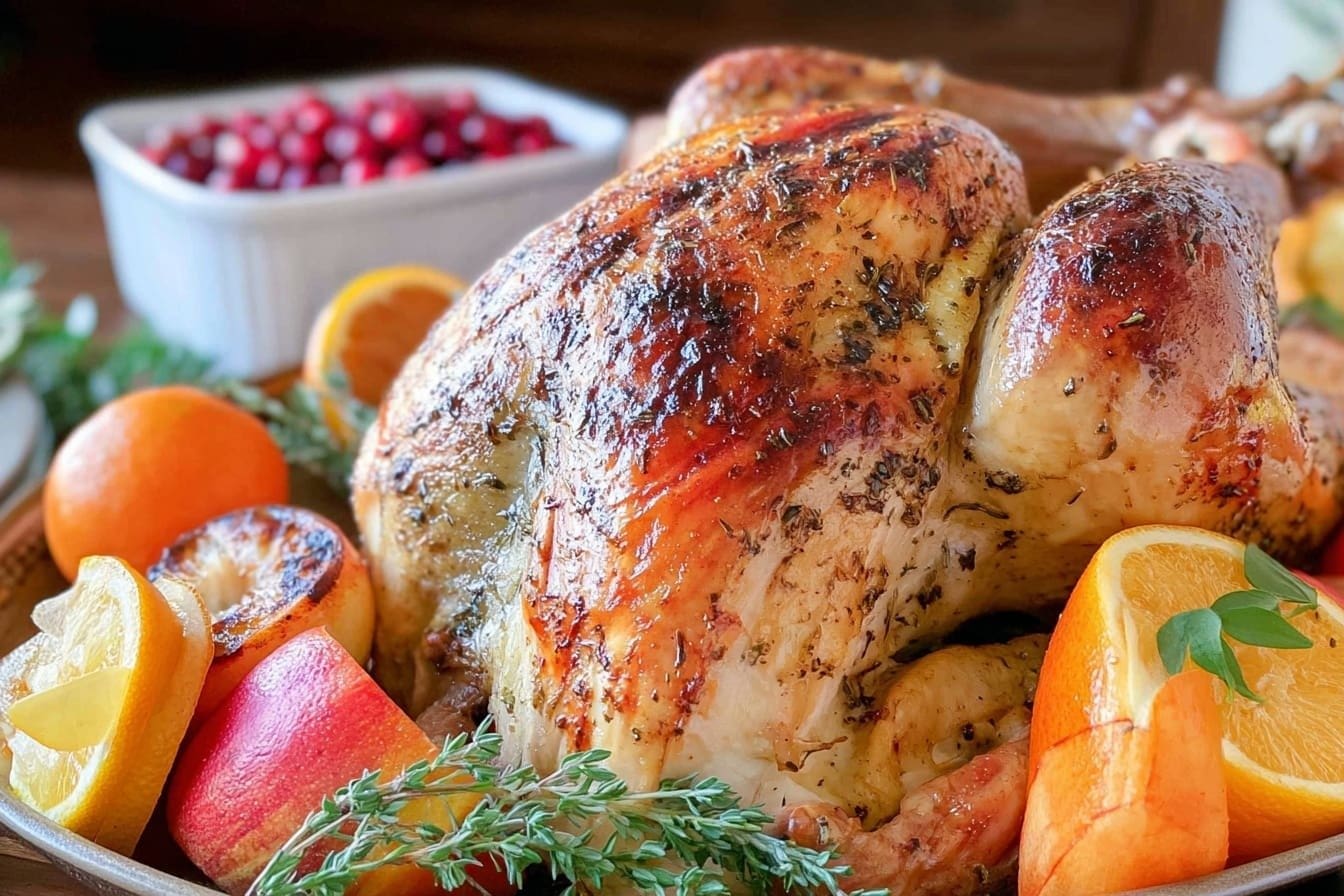
If you want a Thanksgiving Turkey Recipe that feels calm, doable, and still gives you a beautiful holiday bird, this one is for you. It keeps the process simple without cutting corners on flavor, which is exactly what busy home cooks need when the kitchen is full and the clock is moving fast. You get a juicy turkey, fragrant herbs, and rich pan drippings for gravy, all with a method that feels easy to follow from start to finish.
- Easy to prepare: This Thanksgiving Turkey Recipe uses a straightforward herb butter, basic aromatics, and a simple roast at 325°F. There is no fussy basting routine, and the hands-on time is only about 20 minutes.
- Great for gatherings: A 12 to 20 pound turkey feeds a crowd, making it a smart choice for family dinners, church groups, and potlucks where people show up hungry.
- Full of classic flavor: Fresh rosemary, thyme, sage, lemon, onion, apple, and garlic create that warm holiday taste everyone expects from a traditional roast turkey.
- Helpful for leftovers: Planning 1.5 pounds per person gives you extra slices for sandwiches, casseroles, soups, and next-day meals.
Simple holiday cooking is often the best holiday cooking. When the method is clear, the turkey has room to shine.
This is the kind of Thanksgiving Turkey Recipe that works for beginners, seasoned cooks, and anyone who wants less stress and more time at the table. If you enjoy practical holiday dishes, you might also like my loaded mashed potato casserole for a cozy side dish that feeds a crowd.
Jump to:
- Why You’ll Love This Thanksgiving Turkey Recipe
- Essential Ingredients for Thanksgiving Turkey Recipe
- Main Ingredients
- Herb Butter
- Optional Base for the Pan
- Special Dietary Options
- How to Prepare the Perfect Thanksgiving Turkey Recipe: Step-by-Step Guide
- First Step: Thaw and plan ahead
- Second Step: Bring the turkey to room temperature
- Third Step: Preheat the oven and mix the herb butter
- Fourth Step: Prep the turkey cavity
- Fifth Step: Add the butter under and over the skin
- Sixth Step: Set up the roasting pan
- Seventh Step: Roast low and steady
- Eighth Step: Watch the skin and tent if needed
- Ninth Step: Check for doneness with a thermometer
- Tenth Step: Rest before carving
- Final Step: Carve and serve
- Turkey Roasting Timeline at a Glance
- Dietary Substitutions to Customize Your Thanksgiving Turkey Recipe
- Protein and Main Component Alternatives
- Vegetable, Sauce, and Seasoning Modifications
- Mastering Thanksgiving Turkey Recipe: Advanced Tips and Variations
- Pro cooking techniques
- Flavor variations
- Presentation tips
- Make-ahead options
- How to Store Thanksgiving Turkey Recipe: Best Practices
- Refrigeration
- Freezing
- Reheating
- Meal prep considerations
- FAQs: Frequently Asked Questions About Thanksgiving Turkey Recipe
- What size turkey should I buy for Thanksgiving?
- How long does it take to thaw a frozen turkey?
- Should I wash my turkey before cooking?
- How do I know when my Thanksgiving turkey is done cooking?
- Does turkey need to rest after roasting?
- Thanksgiving Turkey Recipe
- Ingredients
- Instructions
- Last Step:
- Notes
- Nutrition
- Did you make this recipe?
Essential Ingredients for Thanksgiving Turkey Recipe
One of the best things about this Thanksgiving Turkey Recipe is that the ingredient list is familiar and easy to shop for. You do not need a long list of hard-to-find items. Instead, you get a few simple ingredients that work together to keep the meat juicy and flavorful.
Main Ingredients
- 1 turkey weighing 12 to 20 pounds: The star of the meal. This size range works well for a family gathering and gives you enough meat for leftovers.
- 1 peeled and quartered onion: Adds savory flavor from inside the cavity and helps season the drippings.
- 1 quartered lemon: Brings brightness and a gentle citrus note to balance the rich turkey meat.
- 1 quartered apple, any preferred variety: Adds subtle sweetness and a light fruity aroma while roasting.
- Fresh rosemary, thyme, and sage, about 0.75 ounces each: These herbs create the classic holiday flavor people love in a roasted turkey.
Herb Butter
- 1 cup softened unsalted butter: Helps keep the turkey moist and gives the skin rich flavor.
- 1 teaspoon salt: Seasons the butter so the flavor reaches every bite.
- 1/2 teaspoon black pepper: Adds a little warmth without overpowering the herbs.
- 6 to 8 cloves garlic, minced: Brings deep savory flavor that pairs well with the herbs.
- Fresh chopped herbs, rosemary, thyme, sage: Mix these into the butter for a fragrant coating under and over the skin.
Optional Base for the Pan
- Chopped carrots: Useful if you want a vegetable base under the turkey.
- Extra onion: Helps lift the bird and flavors the pan juices.
- Celery: Adds extra aroma and makes the drippings even better for gravy.
Special Dietary Options
- Vegan: This recipe is built around turkey, so it is not vegan as written. For a plant-based holiday main, try a stuffed squash or lentil loaf instead.
- Gluten-free: The recipe is naturally gluten-free as long as your butter, seasonings, and gravy ingredients are gluten-free.
- Low-calorie: Use a little less herb butter on the skin and serve smaller portions with extra vegetables on the side.
If you are looking for another main dish to serve alongside holiday meals, my herb butter chicken recipe uses a similar flavor profile and can be a nice option for smaller gatherings.
How to Prepare the Perfect Thanksgiving Turkey Recipe: Step-by-Step Guide
This Thanksgiving Turkey Recipe is easy to handle when you break it into a few clear steps. The biggest thing to remember is to give yourself enough thawing time and to keep the bird dry before roasting. That is what helps you get crisp skin and juicy meat without extra fuss.
First Step: Thaw and plan ahead
If your turkey is frozen, thaw it in the refrigerator for 24 hours per 5 pounds of turkey weight, plus an extra day for safety. That means a 15-pound turkey needs about four days in the fridge. Keep it in a pan or tray while thawing so any drips stay contained. This is the kind of step that saves stress later because you are not rushing on the day you cook.
Second Step: Bring the turkey to room temperature
About 1 hour before roasting, take the turkey out of the refrigerator so it can lose some of its chill. This helps the bird cook more evenly. While it rests on the counter, gather your herbs, butter, and aromatics so everything is ready when you need it. If you are feeding a big crowd, this is a good time to check your side dishes too.
Third Step: Preheat the oven and mix the herb butter
Set your oven to 325°F and place a rack in the center. In a bowl, mix the softened butter, minced garlic, salt, black pepper, and chopped rosemary, thyme, and sage. Stir until everything is evenly blended. The butter should be soft enough to spread easily, almost like a thick paste. If needed, let it sit at room temperature a little longer.
Fourth Step: Prep the turkey cavity
Remove the neck and giblets from the cavity and either discard them or save them for gravy. Then pat the turkey dry inside and out with paper towels. Do not wash the bird, since that can spread bacteria around your sink and counters. Season the cavity with salt and pepper, then stuff it with the quartered onion, lemon, apple, and remaining herbs. This adds flavor from the inside while the turkey roasts.
Fifth Step: Add the butter under and over the skin
Gently loosen the skin over the breast with your fingers. Spread some of the herb butter underneath the skin so it can melt into the meat while roasting. Then tuck the wings under the body to keep them from burning. If you have extra butter left, microwave it briefly until it melts and brush it over the entire turkey skin, including the legs and wings. This gives the bird a lovely golden finish.
Sixth Step: Set up the roasting pan
Place the turkey on a roasting rack set inside a pan. If you do not have a rack, you can set the turkey on chopped vegetables like carrots, onion, and celery in a disposable pan or casserole dish. That works just fine and still gives you flavor in the drippings. The goal is simply to keep the turkey raised a bit so heat can circulate around it.
Seventh Step: Roast low and steady
Roast the turkey at 325°F for 13 to 15 minutes per pound. A 12-pound bird may take around 3 hours, while a larger bird closer to 20 pounds may need more time. Start checking the temperature near the end of the estimated cook time, not by the clock alone. If your oven runs hot or you use convection, begin checking earlier, around the 2-hour mark.
Eighth Step: Watch the skin and tent if needed
As the turkey roasts, the skin should slowly turn golden. If the breast starts to brown too quickly, loosely tent that area with foil halfway through cooking. This keeps the skin from getting too dark before the meat is done. There is no need to baste, since basting can steam the skin and stretch the cooking time.
Ninth Step: Check for doneness with a thermometer
The turkey is done when the thickest part of the thigh and the breast both reach 165°F internally. Use a meat thermometer for accuracy, since roasting times can change depending on the size and shape of the bird. Check in a few spots to make sure the reading is reliable. Clear juices and legs that move easily are also good signs, but the thermometer is the safest way to know for sure.
Tenth Step: Rest before carving
When the turkey comes out of the oven, let it rest for 20 to 30 minutes before carving. This gives the juices time to settle back into the meat, which helps every slice stay moist. Set the turkey on a cutting board and save the pan drippings for gravy. If you want a comforting side to go with it, try serving it with vegetarian lasagna for a filling holiday table spread.
Final Step: Carve and serve
Carve the turkey after resting, starting with the breast and then moving to the legs and wings. Use the drippings to make gravy, and serve the turkey while it is warm and juicy. This method is simple enough for a weeknight mindset, but special enough for a holiday feast.
Turkey Roasting Timeline at a Glance
| Step | Time | What to Do |
|---|---|---|
| Thawing | 24 hours per 5 pounds, plus 1 extra day | Thaw turkey in the refrigerator |
| Room temperature rest | 1 hour | Let the turkey sit out before roasting |
| Prep | 20 minutes | Mix herb butter and prepare the bird |
| Roasting | About 3 hours 30 minutes | Roast at 325°F for 13 to 15 minutes per pound |
| Resting | 20 to 30 minutes | Let juices settle before carving |
Dietary Substitutions to Customize Your Thanksgiving Turkey Recipe
Protein and Main Component Alternatives
This recipe centers on a classic roast turkey, but there are still a few ways to adapt the meal for different needs. If you are cooking for a smaller group, choose a bird closer to 12 pounds. If you are serving a crowd and want extra leftovers, go toward the higher end of the range.
- Smaller turkey: Use a 12 to 14 pound bird for smaller families or couples who want leftovers without too much waste.
- Turkey breast only: If you prefer white meat, you can use the same herb butter method on a bone-in turkey breast.
- Roasted chicken: For a lower-cost alternative, the same herb butter flavor works well on chicken, especially if you want a smaller holiday main.
Vegetable, Sauce, and Seasoning Modifications
The aromatics are easy to swap based on what you have on hand. The goal is to keep the roasting pan flavorful while still staying simple.
- Vegetable swaps: Use carrots, onion, and celery under the turkey, or add parsnips for a sweeter flavor.
- Herb changes: If you do not have all three herbs, rosemary and thyme still work nicely, with sage added if available.
- Butter changes: For a lighter finish, use a little less butter on the skin and more in the cavity.
- Stuffing note: Cook stuffing separately for better food safety and to help the turkey roast evenly.
For another hearty meal that fits well with holiday leftovers, you could also check out Mexican enchilada lasagna, which makes a great next-day dinner after a big gathering.
Mastering Thanksgiving Turkey Recipe: Advanced Tips and Variations
Once you have the basics down, a few small tricks can make this Thanksgiving Turkey Recipe even better. These are the kind of practical tips that help you cook with more confidence, especially when you are serving guests and want a smooth day in the kitchen.
Pro cooking techniques
- Use a meat thermometer: Do not rely on color alone. Temperature tells the truth.
- Skip the baste: Butter rubbed over the skin is plenty. Basting only adds extra oven opening and can dry out the bird.
- Try a disposable pan: If cleanup matters, a foil pan works fine with a vegetable base underneath.
- Check early in convection ovens: Convection heat moves faster, so start checking a little sooner than you would with a standard oven.
Flavor variations
You can keep the classic herb flavor or make small changes based on what your family likes. Add extra garlic if you enjoy a stronger savory taste. If you want a slightly sweeter note, use a very crisp apple in the cavity. A bit more sage gives the bird a deeper holiday aroma, while extra lemon brightens the flavor.
Presentation tips
For a pretty serving platter, place carved turkey slices in the center and spoon some gravy over the top. Add fresh herb sprigs around the edges for a simple holiday look. If you have roasted carrots or onions from the pan, tuck them around the meat for color and texture.
Make-ahead options
You can mix the herb butter a day ahead and keep it chilled. You can also thaw the bird several days before cooking and keep it safely in the fridge until roasting day. If you are managing a busy holiday schedule, that little bit of planning goes a long way. It lets you focus on sides, guests, and the rest of the meal without feeling behind.
How to Store Thanksgiving Turkey Recipe: Best Practices
Leftover turkey is one of the best parts of the holiday meal, especially when you planned for extra. A little storage know-how helps you keep the meat safe and tasty for later meals.
Refrigeration
Cool leftover turkey quickly, then store it in shallow airtight containers in the refrigerator. It is best eaten within 3 to 4 days. Keep the meat and gravy separate if possible so the turkey does not get soggy.
Freezing
For longer storage, freeze sliced turkey in freezer-safe bags or containers. Press out as much air as you can before sealing. Label with the date so you can track freshness. Frozen turkey is best used within 2 to 3 months for good quality.
Reheating
Reheat turkey gently so it stays moist. Add a spoonful of broth or gravy before warming, then cover the dish and heat in the oven or microwave until just hot. Try not to overcook it, since that can dry out the slices.
Meal prep considerations
Leftover turkey works well for sandwiches, soups, casseroles, and salads. You can portion it into smaller containers right after dinner if you know you will use it for meal prep later in the week. That makes busy weekdays easier and helps cut down on waste.
FAQs: Frequently Asked Questions About Thanksgiving Turkey Recipe
What size turkey should I buy for Thanksgiving?
For Thanksgiving dinner, plan for 1 to 1.5 pounds of turkey per person. This accounts for the main meal plus generous leftovers. A 12- to 15-pound bird serves 8 to 10 people comfortably. If you’re feeding 6 adults and a few kids, a 10- to 12-pound turkey works well. Always round up slightly for unexpected guests or bigger appetites. Fresh turkeys cook faster than frozen ones, so check availability at your store. Weigh your guest list and consider if you want bones for stock afterward. Buy from trusted brands like Butterball for consistent quality. This sizing ensures juicy slices for everyone without waste. (92 words)
How long does it take to thaw a frozen turkey?
Thaw a frozen turkey in the refrigerator at 40°F or below, allowing 24 hours per 4 to 5 pounds. Add an extra day for safety—e.g., a 12-pound turkey needs 3 to 4 days. Place it in its original packaging on a rimmed baking sheet to catch drips. For faster thawing, use a cold water bath: submerge in its bag, change water every 30 minutes, and allocate 30 minutes per pound (about 6 hours for 12 pounds). Never thaw at room temperature to avoid bacterial growth. Once thawed, cook within 1-2 days. Mark your calendar to start early for stress-free prep. (98 words)
Should I wash my turkey before cooking?
No, do not wash your turkey before cooking—it spreads bacteria like salmonella around your sink and counters via splashing. The USDA advises against it. Instead, remove the turkey from its packaging in the sink, discard the giblet packet and neck, and pat the skin dry with paper towels. This removes excess moisture for crispier skin. Season inside and out right away. If concerned about surface bacteria, cooking to 165°F internally kills them safely. Dry the skin thoroughly, rub with oil or herb butter, and roast. This simple step prevents cross-contamination and yields better results. (96 words)
How do I know when my Thanksgiving turkey is done cooking?
Check the turkey’s doneness with an instant-read thermometer inserted into the thickest part of the thigh, avoiding bone—aim for 165°F. Breast meat should reach 160°F, as it carries over to 165°F while resting. Roasting times vary: 13 minutes per pound at 325°F for an unstuffed bird. Start checking after 2.5 hours for a 12-pounder. The legs should wiggle freely, and juices run clear. If skin browns too fast, tent with foil. Remove from oven, rest 20-30 minutes under foil. This ensures safe, juicy meat every time without guesswork. (98 words)
Does turkey need to rest after roasting?
Yes, rest your roasted turkey for 20 to 40 minutes tented loosely with foil. This allows juices to redistribute for moist, tender slices. Skipping rest leads to dry meat as fluids escape during carving. Place it on a cutting board over a rimmed pan to catch drippings for gravy. Minimum 15 minutes for smaller birds, up to 45 for large ones. Keep it warm by covering; internal temp rises 5-10°F. Carve breast first into thin slices against the grain, then legs and wings. Resting makes carving easier and elevates your Thanksgiving feast. (92 words)
Thanksgiving Turkey Recipe
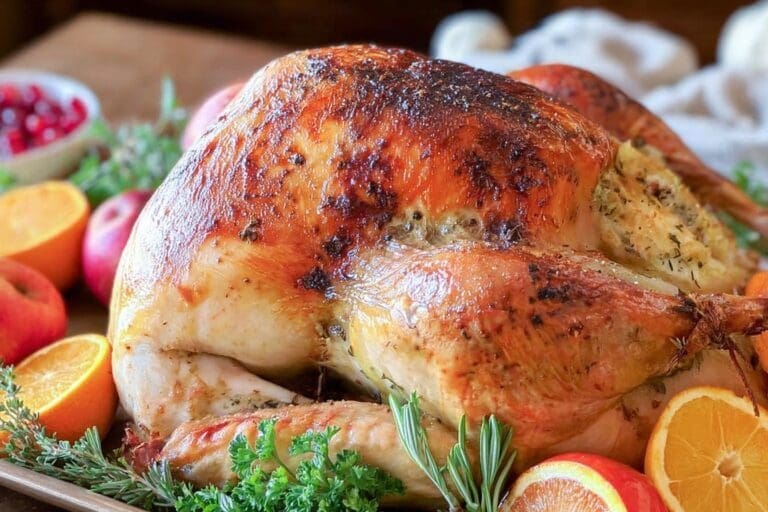
🦃 Savor perfectly juicy, herb-infused turkey with crispy skin and effortless prep, delivering a stress-free holiday centerpiece that wows every guest!
🦃 This no-fuss roast guarantees moist meat using simple aromatics and butter, freeing time for sides while ensuring foolproof results for Thanksgiving feasts.
- Total Time: 3 hours 50 minutes
- Yield: 10-12 servings
Ingredients
– 1 turkey weighing 12 to 20 pounds
– 1 peeled and quartered onion
– 1 quartered lemon
– 1 quartered apple, any preferred variety
– Fresh rosemary, thyme, and sage, about 0.75 ounces each
– 1 cup softened unsalted butter
– 1 teaspoon salt
– 1/2 teaspoon black pepper
– 6 to 8 cloves garlic, minced
– Fresh chopped herbs, rosemary, thyme, sage
– Chopped carrots
– Extra onion
– Celery
Instructions
1-First Step: Thaw and plan ahead If your turkey is frozen, thaw it in the refrigerator for 24 hours per 5 pounds of turkey weight, plus an extra day for safety. That means a 15-pound turkey needs about four days in the fridge. Keep it in a pan or tray while thawing so any drips stay contained. This is the kind of step that saves stress later because you are not rushing on the day you cook.
2-Second Step: Bring the turkey to room temperature About 1 hour before roasting, take the turkey out of the refrigerator so it can lose some of its chill. This helps the bird cook more evenly. While it rests on the counter, gather your herbs, butter, and aromatics so everything is ready when you need it. If you are feeding a big crowd, this is a good time to check your side dishes too.
3-Third Step: Preheat the oven and mix the herb butter Set your oven to 325°F and place a rack in the center. In a bowl, mix the softened butter, minced garlic, salt, black pepper, and chopped rosemary, thyme, and sage. Stir until everything is evenly blended. The butter should be soft enough to spread easily, almost like a thick paste. If needed, let it sit at room temperature a little longer.
4-Fourth Step: Prep the turkey cavity Remove the neck and giblets from the cavity and either discard them or save them for gravy. Then pat the turkey dry inside and out with paper towels. Do not wash the bird, since that can spread bacteria around your sink and counters. Season the cavity with salt and pepper, then stuff it with the quartered onion, lemon, apple, and remaining herbs. This adds flavor from the inside while the turkey roasts.
5-Fifth Step: Add the butter under and over the skin Gently loosen the skin over the breast with your fingers. Spread some of the herb butter underneath the skin so it can melt into the meat while roasting. Then tuck the wings under the body to keep them from burning. If you have extra butter left, microwave it briefly until it melts and brush it over the entire turkey skin, including the legs and wings. This gives the bird a lovely golden finish.
6-Sixth Step: Set up the roasting pan Place the turkey on a roasting rack set inside a pan. If you do not have a rack, you can set the turkey on chopped vegetables like carrots, onion, and celery in a disposable pan or casserole dish. That works just fine and still gives you flavor in the drippings. The goal is simply to keep the turkey raised a bit so heat can circulate around it.
7-Seventh Step: Roast low and steady Roast the turkey at 325°F for 13 to 15 minutes per pound. A 12-pound bird may take around 3 hours, while a larger bird closer to 20 pounds may need more time. Start checking the temperature near the end of the estimated cook time, not by the clock alone. If your oven runs hot or you use convection, begin checking earlier, around the 2-hour mark.
8-Eighth Step: Watch the skin and tent if needed As the turkey roasts, the skin should slowly turn golden. If the breast starts to brown too quickly, loosely tent that area with foil halfway through cooking. This keeps the skin from getting too dark before the meat is done. There is no need to baste, since basting can steam the skin and stretch the cooking time.
9-Ninth Step: Check for doneness with a thermometer The turkey is done when the thickest part of the thigh and the breast both reach 165°F internally. Use a meat thermometer for accuracy, since roasting times can change depending on the size and shape of the bird. Check in a few spots to make sure the reading is reliable. Clear juices and legs that move easily are also good signs, but the thermometer is the safest way to know for sure.
10-Tenth Step: Rest before carving When the turkey comes out of the oven, let it rest for 20 to 30 minutes before carving. This gives the juices time to settle back into the meat, which helps every slice stay moist. Set the turkey on a cutting board and save the pan drippings for gravy. If you want a comforting side to go with it, try serving it with vegetarian lasagna for a filling holiday table spread.
11-Final Step: Carve and serve Carve the turkey after resting, starting with the breast and then moving to the legs and wings. Use the drippings to make gravy, and serve the turkey while it is warm and juicy. This method is simple enough for a weeknight mindset, but special enough for a holiday feast.
Last Step:
Please leave a rating and comment letting us know how you liked this recipe! This helps our business to thrive and continue providing free, high-quality recipes for you.Notes
🧊 Skip washing turkey; pat dry to avoid cross-contamination.
🌡️ No basting needed—it steams the skin and prolongs cooking.
📊 Always use a meat thermometer for perfect doneness.
- Prep Time: 20 minutes
- Resting Time: 30 minutes
- Cook Time: 3 hours 30 minutes
- Category: Main Dishes
- Method: Roasted
- Cuisine: American
- Diet: Gluten Free
Nutrition
- Serving Size: 1 serving
- Calories: 576 kcal
- Sugar: 1g
- Sodium: 518mg
- Fat: 30g
- Saturated Fat: 12g
- Carbohydrates: 3g
- Fiber: 0g
- Protein: 70g
- Cholesterol: 264mg