

Benefits and Advantages of Thai Red Curry
Thai Red Curry is loved for its perfect blend of rich, aromatic spices and wholesome ingredients, making it a flavorful and nourishing choice for any meal. The dish is relatively simple to prepare, requiring just a few key ingredients and straightforward cooking steps, making it accessible for cooks at all skill levels. The fresh herbs and spices such as lemongrass, galangal, and red chili peppers deliver antioxidants and anti-inflammatory benefits that support overall wellness.
The use of coconut milk adds satisfying, heart-healthy fats, creating a creamy texture that balances the bold spices without heaviness. Including lean protein like chicken and a variety of fresh vegetables ensures a balanced, nutrient-rich meal that promotes satiety. Thai Red Curry is highly versatile–it can be adapted to vegan, gluten-free, or low-calorie diets by swapping ingredients without losing depth of flavor. The aromatic spices help digestion and invigorate the palate, making this dish both comforting and healthful.
Its complex yet harmonious flavors and nutritional profile make Thai Red Curry a standout in Thai cuisine and a reliable crowd-pleaser in homemade meals.
Jump to:
- Benefits and Advantages of Thai Red Curry
- Essential Ingredients for Thai Red Curry
- Dietary Substitutions to Customize Your Thai Red Curry
- How to Prepare the Perfect Thai Red Curry: Step-by-Step Guide
- Mastering Thai Red Curry: Advanced Tips and Variations
- How to Store Thai Red Curry: Best Practices
- Nutritional Value of Thai Red Curry
- FAQs: Frequently Asked Questions About Thai Red Curry
- What makes Thai red curry paste different from other curry pastes?
- Can I make Thai red curry without using kaffir lime leaves?
- How can I adjust the spiciness of Thai red curry for milder tastes?
- What vegetables work best in Thai red curry, and can I substitute them?
- How long can I store leftover Thai red curry, and what’s the best way to reheat it?
- Thai Red Curry
- Ingredients
- Instructions
- Last Step:
- Notes
- Nutrition
- Did you make this recipe?
Essential Ingredients for Thai Red Curry
| Quantity | Ingredient | Description |
|---|---|---|
| 5 to 6 tablespoons | Thai red curry paste | Spicy blend of red chilies, garlic, lemongrass, and spices |
| 2 large cloves | Garlic, minced (if using jar paste) | Enhances aroma and flavor depth |
| 2 teaspoons | Fresh ginger, finely grated (if using jar paste) | Warmth and slight zest |
| 1 tablespoon | Lemongrass paste or fresh lemongrass | Citrusy, fresh herbaceous note |
| 3 tablespoons | Vegetable oil (canola, peanut, or coconut oil preferred) | For frying curry paste and aromatics |
| 1 cup (250 ml) | Low sodium chicken broth or stock | Base liquid for the curry sauce |
| 400 ml (14 oz) | Full-fat coconut milk | Creamy texture and rich flavor |
| 6 | Kaffir lime leaves | Fragrant citrus aroma enhancing authenticity |
| 1 tablespoon | Sugar (white, brown, or palm sugar) | Balances heat and acidity |
| 2 teaspoons | Fish sauce (or tamari/soy sauce for vegetarian) | Adds umami and saltiness |
| 350 grams (12 oz) | Boneless, skinless chicken thighs, sliced | Protein source, tender and juicy |
| 150 grams (5 oz) | Pumpkin or butternut squash, cubed | Adds sweetness and texture |
| 120 grams (4 oz) | Green beans, trimmed and cut | Provides crunch and nutrition |
| Optional | Bell peppers, carrots, kale, bamboo shoots | Customize vegetables for flavor and variety |
| Optional | Thai basil, cilantro, chili slices, lime juice | Garnishes for freshness and spice |
Dietary Substitutions to Customize Your Thai Red Curry
Thai Red Curry’s versatility allows for easy adaptations to suit various dietary preferences or restrictions:
- For a vegan or vegetarian version: Replace chicken broth with vegetable broth, omit fish sauce or use tamari/soy sauce, and substitute chicken with firm tofu or baked tempeh to maintain protein content.
- For gluten-free needs: Use tamari or coconut aminos instead of regular soy sauce or fish sauce to avoid gluten contamination.
- To reduce calories: Use light coconut milk in place of full-fat and increase the amount of vegetables to bulk the dish while keeping calories lower.
- For nut allergies: Avoid peanut oil and use vegetable oils like canola or sunflower oil instead.
- Adjusting heat level: Modify the amount of red curry paste or add fresh chili slices, sriracha, or chili garlic sauce according to spice tolerance. Adding extra coconut milk helps mellow the heat.
These substitutions preserve the authentic taste and texture of Thai Red Curry while making it inclusive and accommodating to a wide range of dietary needs.
For more guidance on crafting flavorful curries, explore Authentic Thai Red Curry Recipe.
How to Prepare the Perfect Thai Red Curry: Step-by-Step Guide
- Prepare Ingredients: Slice chicken thighs into roughly 0.75-inch thick pieces. Gather and chop vegetables like pumpkin, green beans, bell peppers, carrots, or any preferred options. Measure out 5-6 tablespoons of red curry paste and prepare aromatics if using jar paste (minced garlic, grated ginger, lemongrass).
- Sauté Curry Paste: Heat 3 tablespoons of vegetable oil in a large, heavy skillet or deep pan over medium-high heat. Add the red curry paste and aromatics, cooking for about 2 minutes until fragrant and slightly dry.
- Add Broth: Pour in 1 cup of low-sodium chicken broth. Stir well to dissolve the curry paste, then simmer rapidly for about 3 minutes until the liquid reduces by half.
- Incorporate Coconut Milk and Seasonings: Stir in 400 ml full-fat coconut milk, add 6 kaffir lime leaves, 1 tablespoon sugar, and 2 teaspoons fish sauce or tamari. Mix thoroughly.
- Add Chicken and Simmer: Place chicken pieces into the curry in a single layer. Bring to a simmer, reduce heat to medium, and cook for 8 to 10 minutes until the sauce thickens and chicken is cooked through.
- Add Vegetables: Add vegetables like pumpkin cubes, green beans, or bell pepper strips. Simmer for an additional 3 to 10 minutes until vegetables are tender and sauce reaches your preferred consistency.
- Final Touches: Remove from heat and stir in fresh Thai basil leaves and a squeeze of fresh lime juice if desired for brightness and aroma.
- Serve: Serve hot over steamed jasmine rice, brown rice, or noodles. Garnish with fresh chili slices and coriander leaves as preferred.
Following these steps ensures a flavorful, authentic Thai Red Curry with juicy chicken and vibrant vegetables, customizable to your taste and dietary preferences.
Mastering Thai Red Curry: Advanced Tips and Variations
To deepen the flavors of your Thai Red Curry, consider roasting fresh red chilies before blending them into the curry paste for a smoky depth. Adding kaffir lime leaves or fresh galangal intensifies the authentic aroma of the curry. Balance spiciness by adjusting the curry paste quantity; mixing in coconut cream can soften heat and add richness.
Try alternative proteins like duck, beef, or seafood for unique tastes and textures. Vegetables can be varied with kale, bamboo shoots, broccoli, or snap peas just adjust cooking times accordingly. For a low-carb option, serve the curry over spiralized vegetables instead of rice. Slow-cooking enhances flavor melding but may reduce herb brightness. Garnishing with fresh cilantro, sliced chilies, or lime juice adds fresh contrast.
Tip: Use coconut oil for authentic aroma or substitute with canola or peanut oil if preferred. Don’t skip the sugar; palm or coconut sugar adds essential depth. Explore these ideas to tailor the curry to your culinary style while maintaining its signature rich flavor.
How to Store Thai Red Curry: Best Practices
Store leftover Thai Red Curry properly to maintain freshness and flavor. Transfer cooled curry into airtight containers within two hours of cooking. Refrigerate for up to 3 days. For longer storage, portion into freezer-safe containers or bags, leaving room for expansion. Frozen curry lasts up to 1 month.
Thaw frozen curry overnight in the refrigerator, then reheat gently on the stove over medium-low heat, stirring occasionally for even heat distribution. Avoid multiple reheatings to preserve texture and flavor. To restore vibrancy, add fresh herbs or a splash of coconut milk when reheating.
Microwaving is convenient but use medium power and stir regularly to avoid hot spots or texture loss. These practices keep your Thai Red Curry delicious and safe to enjoy later.
Nutritional Value of Thai Red Curry
| Nutrient | Approximate Amount per Serving | Benefits |
|---|---|---|
| Calories | ~530 kcal | Moderate energy for filling meals |
| Protein | 20-25 grams | Supports muscle repair, mainly from chicken |
| Fat | 30-35 grams (mostly from coconut milk) | Healthy fats including medium-chain triglycerides |
| Carbohydrates | 20-25 grams | Includes fiber from vegetables |
| Vitamins & Minerals | Vitamin A, C, potassium, antioxidants | Supports immune function and overall health |
This dish balances diverse nutrients, fitting well into a varied diet. Adjust ingredients to fit specific calorie or dietary needs. Learn more about Health Benefits of Chicken Thighs and Using Kaffir Lime Leaves in Cooking.
FAQs: Frequently Asked Questions About Thai Red Curry
What makes Thai red curry paste different from other curry pastes?
Thai red curry paste is made primarily from dried red chilies, garlic, shallots, lemongrass, galangal, shrimp paste, and other spices. This combination creates a rich, fragrant, and mildly spicy flavor distinct from green or yellow curry pastes, which use different chilies and herbs. The shrimp paste adds a savory depth, and the red chilies give it its characteristic color and moderate heat level.
Can I make Thai red curry without using kaffir lime leaves?
Yes, you can omit kaffir lime leaves, but doing so will reduce the dish’s bright citrus aroma that balances the richness of the curry. If fresh kaffir lime leaves aren’t available, dried leaves are an acceptable substitute. Alternatively, adding a small amount of lime zest can help replicate some citrus notes.
How can I adjust the spiciness of Thai red curry for milder tastes?
To lower the heat, add extra coconut milk or cream, which dilutes the spiciness and creates a creamier curry. You can also reduce the amount of red curry paste used or remove some chili seeds from the paste before cooking. Serving the curry with plain rice helps balance the heat as well.
What vegetables work best in Thai red curry, and can I substitute them?
Traditional vegetables include pumpkin, green beans, bamboo shoots, and eggplant. However, the recipe is flexible, and you can substitute with zucchini, bell peppers, carrots, or broccoli based on preference and seasonality. Just adjust cooking times since some vegetables cook faster or slower to maintain the right texture.
How long can I store leftover Thai red curry, and what’s the best way to reheat it?
Leftover Thai red curry can be stored in an airtight container in the refrigerator for up to 3 days. Reheat gently on the stove over medium heat to avoid breaking the sauce, adding a splash of coconut milk or water if it thickens too much. Microwaving is also convenient—use medium power and stir occasionally for even heating.

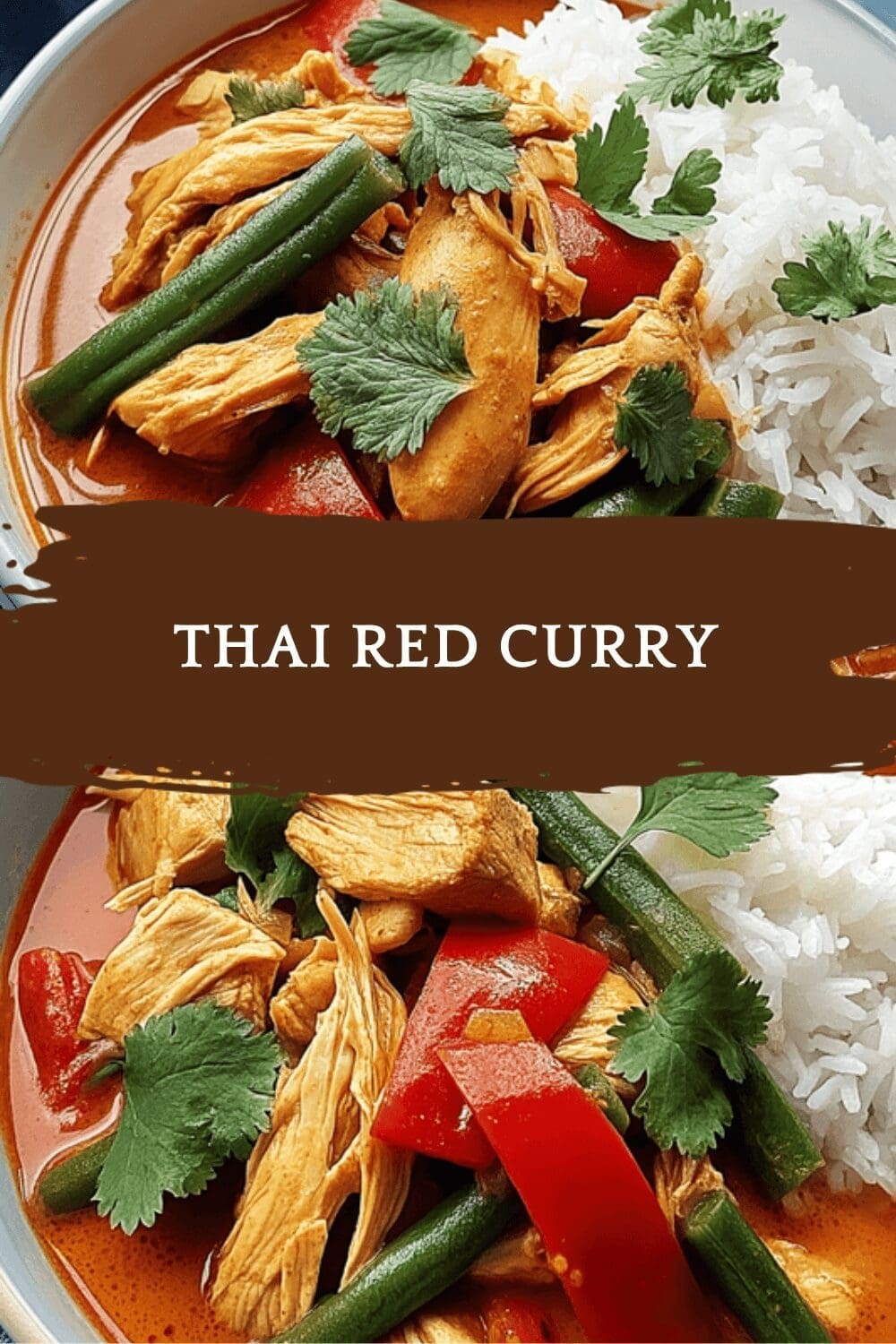
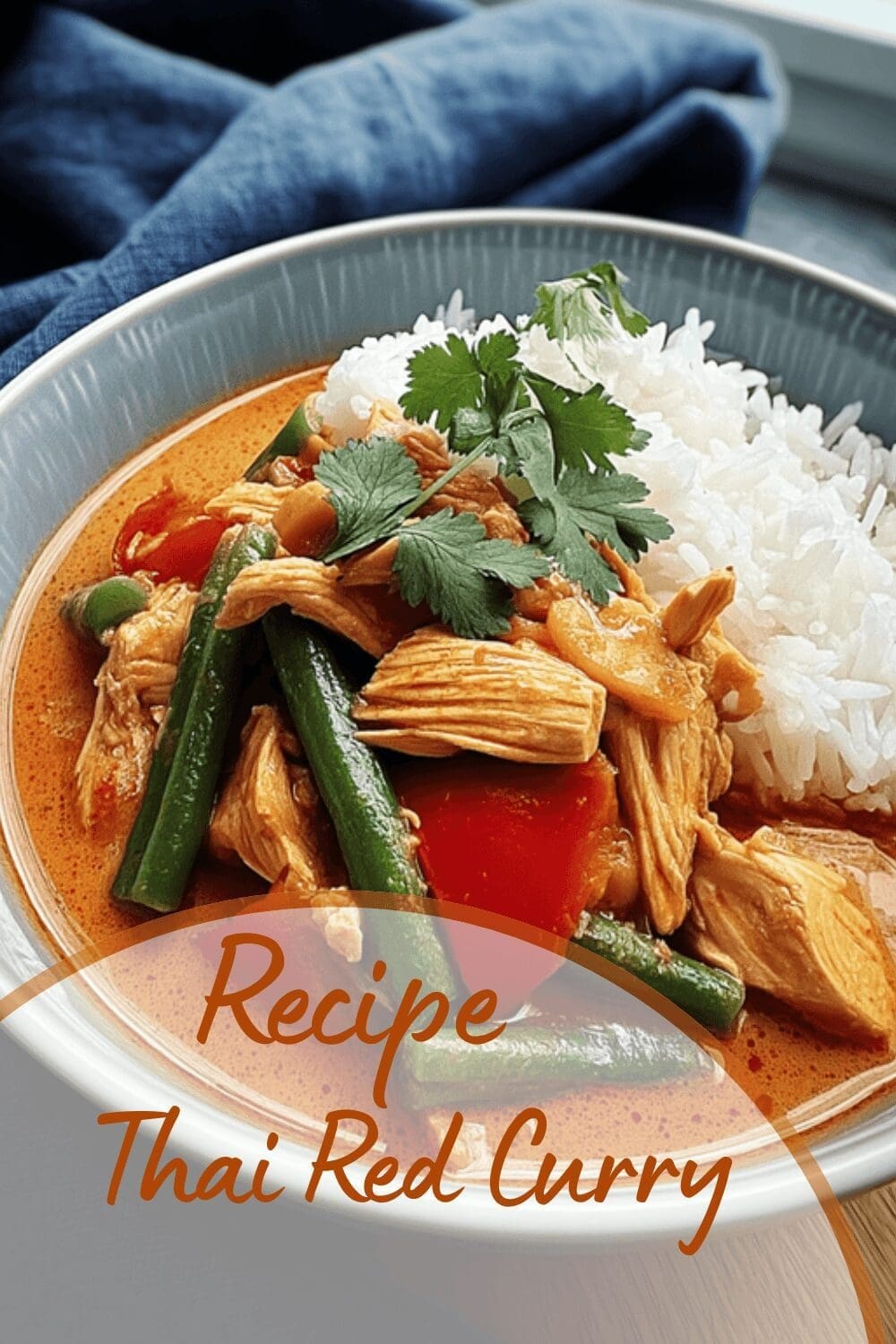
Thai Red Curry
🌶️ Dive into the aromatic experience of Thai Red Curry, an irresistible blend of spices and silky coconut milk.
🍛 A versatile dish loaded with chicken and vegetables, offering a wholesome meal right at home!
- Total Time: 40 minutes
- Yield: 4 servings 1x
Ingredients
5 to 6 tablespoons Thai red curry paste
2 large garlic cloves, minced (if using jar paste)
2 teaspoons fresh ginger, finely grated (if using jar paste)
1 tablespoon lemongrass paste or finely chopped fresh lemongrass (if using jar paste)
3 tablespoons vegetable oil
1 cup low sodium chicken broth
400 ml full fat coconut milk
6 kaffir lime leaves
1 tablespoon sugar
2 teaspoons fish sauce, plus extra to taste
350 grams boneless, skinless chicken thighs, cut into slices
150 grams pumpkin or butternut squash, cubed
120 grams green beans, trimmed and cut
Optional vegetables: red and yellow bell peppers, carrots, kale, bamboo shoots
Optional garnishes: Thai basil leaves, fresh coriander, fresh red chili slices, fresh lime juice
Instructions
1. Heat oil in a large skillet over medium-high heat.
2. Add curry paste with garlic, ginger, and lemongrass paste (if using jar paste). Cook until fragrant, about 2 minutes.
3. Stir in chicken broth, simmer rapidly until reduced by half, about 3 minutes.
4. Add coconut milk, kaffir lime leaves, sugar, and fish sauce. Stir well before adding chicken in a single layer.
5. Bring to a simmer, reduce heat to medium, and cook for 8 to 10 minutes until chicken is cooked through.
6. Adjust seasoning with extra fish sauce or sugar if needed. Add vegetables and simmer 3 to 10 minutes until tender.
7. Remove from heat, stir in Thai basil leaves and lime juice if using.
8. Serve hot over steamed jasmine rice or noodles, garnish with chili slices and coriander.
Last Step:
Please leave a rating and comment letting us know how you liked this recipe! This helps our business to thrive and continue providing free, high-quality recipes for you.Notes
🍗 Chicken thighs are juicier, but breast or tenderloins work too.
🥦 Use a variety of vegetables based on your preference and adjust cooking times.
🥥 Coconut oil enhances flavor, but other vegetable oils are fine substitutes.
- Prep Time: 10 minutes
- Simmering Time: 10 minutes
- Cook Time: 30 minutes
- Category: Main Course
- Method: Simmering
- Cuisine: Thai
- Diet: Gluten-Free
Nutrition
- Serving Size: 1 bowl
- Calories: 530
- Sugar: 5g
- Sodium: 700mg
- Fat: 35g
- Saturated Fat: 18g
- Unsaturated Fat: 15g
- Trans Fat: 0g
- Carbohydrates: 22g
- Fiber: 3g
- Protein: 35g
- Cholesterol: 90mg


