

Why You’ll Love This Stuffing Recipe
There’s something truly magical about a homemade stuffing recipe that brings everyone running to the dinner table. This buttery herb stuffing delivers all the comfort and flavor you crave without requiring hours of complicated preparation. Whether you’re planning a Thanksgiving feast or simply want a delicious side dish for a Sunday family dinner, this recipe hits all the right notes.
What makes this dish truly special is how it brings people together. When you bring this golden, aromatic stuffing to a potluck or family gathering, you can bet it will disappear fast. The combination of fresh herbs, quality bread, and generous butter creates a depth of flavor that store-bought versions simply cannot match. Plus, the leftovers (if you have any) taste even better the next day, making it perfect for meal planning.
Key Benefits at a Glance
- Ease of preparation: With just 45 minutes of hands-on prep time and straightforward steps, even beginner cooks can create this impressive dish. The recipe uses simple techniques like sautéing vegetables and baking, so you do not need any special equipment or advanced skills.
- Incredible flavor profile: The trio of fresh sage, parsley, and rosemary infuses every bite with herbaceous goodness, while the generous amount of butter creates those coveted crispy edges and a soft, savory interior that people cannot stop talking about.
- Versatility: This stuffing recipe adapts easily to different dietary preferences. You can swap chicken stock for vegetable stock to make it vegetarian, use gluten-free bread for those with sensitivities, and adjust the herbs to suit your family’s taste preferences.
- Make-ahead convenience: Prepare this dish up to a day in advance and simply reheat when ready to serve. This makes it an ideal choice for busy holiday cooking when oven space and time are both at a premium.
Jump to:
- Why You’ll Love This Stuffing Recipe
- Key Benefits at a Glance
- Essential Ingredients for Stuffing Recipe
- Complete Ingredient List
- Dietary Substitutions
- How to Prepare the Perfect Stuffing Recipe: Step-by-Step Guide
- Step 1: Prepare Your Bread
- Step 2: Preheat and Prepare Your Baking Dish
- Step 3: Sauté the Vegetables and Herbs
- Step 4: Combine and Bind
- Step 5: Transfer and Bake
- Dietary Substitutions to Customize Your Stuffing Recipe
- Protein and Main Component Alternatives
- Vegetable, Sauce, and Seasoning Modifications
- Mastering Stuffing Recipe: Advanced Tips and Variations
- Pro Cooking Techniques
- Creative Variations to Try
- Leftover Transformation Ideas
- How to Store Stuffing Recipe: Best Practices
- Refrigeration Guidelines
- Freezing for Long-Term Storage
- Make-Ahead Strategies
- FAQs: Frequently Asked Questions About Stuffing Recipe
- Stuffing Recipe
- Ingredients
- Instructions
- Last Step:
- Notes
- Nutrition
- Did you make this recipe?
Essential Ingredients for Stuffing Recipe
Creating the perfect stuffing starts with gathering quality ingredients. Each component plays a vital role in achieving that ideal balance of textures and flavors. The bread forms the foundation, while the vegetables add moisture and sweetness, and the herbs bring that unmistakable savory aroma everyone associates with comfort food.
Complete Ingredient List
Main Ingredients:
- 18 to 24 ounces bread cubes (1.5 loaves, about 12 to 14 cups), preferably toasted or stale The bread is your base, and using a mix of stale and toasted bread creates the perfect texture contrast.
- 1 cup diced celery Adds essential crunch and aromatic flavor that balances the richness.
- 3 cups diced sweet onion (about 2 large onions) Provides natural sweetness and moisture as they cook down.
- 6 minced garlic cloves Delivers robust, savory depth to every bite.
- Kosher salt and pepper to taste Essential seasonings that bring out all the other flavors.
- 3 tablespoons chopped fresh sage The classic herb that defines traditional stuffing flavor.
- 3 tablespoons chopped fresh parsley Adds fresh, bright notes and beautiful color.
- 3 tablespoons chopped fresh rosemary Contributes piney, aromatic complexity.
- 2 1/2 cups chicken or vegetable stock Provides moisture and rich, savory backbone.
- 2 eggs Helps bind everything together while adding richness.
- Butter (for sautéing vegetables and brushing the baking dish) Creates golden edges and ensures nothing sticks.
- Mixture of fresh herbs for sprinkling on top Optional garnish that adds a pop of fresh flavor and visual appeal.
Dietary Substitutions
For those with dietary restrictions, this stuffing recipe offers plenty of flexibility. Vegetarians can use vegetable stock instead of chicken stock for an equally delicious result. If you need a gluten-free version, simply substitute your favorite gluten-free bread cubes. For a lighter version, you can reduce the butter amount slightly, though the crispy edges will not be quite as pronounced.
How to Prepare the Perfect Stuffing Recipe: Step-by-Step Guide
Making this stuffing recipe is simpler than you might think. The process involves just a few key steps that build layers of flavor. Following these directions carefully will help you achieve that perfect combination of crispy top and tender, flavorful interior that makes stuffing so irresistible.
Step 1: Prepare Your Bread
The foundation of any great stuffing starts with the bread. You have several options here, and each creates slightly different results. If you have time, let your bread sit out on the counter for a day or two to become stale naturally. This creates the ideal texture because stale bread holds its shape better during mixing and baking.
If you are short on time, you can toast fresh bread cubes in the oven at 350°F for about 15 minutes. This quick method works beautifully and gives you more control over how dry the bread becomes. For the best texture, consider using a combination of bread types. A mix of sourdough and Italian bread creates wonderful depth and varied texture throughout the dish. Sourdough adds a subtle tang while Italian bread contributes a softer, more neutral base.
Step 2: Preheat and Prepare Your Baking Dish
Preheat your oven to 350°F while you prepare the other components. This temperature allows the stuffing to cook through evenly without drying out or burning on top. For the baking dish, a 9×13-inch pan works perfectly for this recipe and creates the ideal depth for even cooking.
Brush the baking dish generously with melted butter, olive oil, or nonstick spray. Taking this step ensures easy serving and cleanup later. Butter adds the most flavor, but any of these options will prevent sticking. This small preparation makes a big difference in the final presentation.
Step 3: Sauté the Vegetables and Herbs
In a large skillet or Dutch oven, melt a generous amount of butter over medium heat. Add the diced sweet onion, celery, and minced garlic along with a pinch of kosher salt and pepper. The salt helps draw out moisture from the vegetables and seasons them from the inside out.
Sauté this mixture for 8 to 10 minutes until the vegetables are softened and the onions become translucent. You want them tender but not browned or caramelized. The kitchen will start smelling absolutely wonderful at this point. Once the vegetables are soft, add the chopped fresh sage, parsley, and rosemary. Cook for just one more minute to release their aromatic oils. This brief cooking time preserves the fresh herb flavor while distributing it evenly throughout the mixture.
Step 4: Combine and Bind
Stir one cup of stock into the vegetable and herb mixture, scraping up any browned bits from the bottom of the pan. These bits contain concentrated flavor that you want to capture. Remove from heat and pour this mixture over your prepared bread cubes in a large bowl. Toss everything gently to combine, making sure each bread cube gets coated with the flavorful vegetable mixture.
In a separate bowl or measuring cup, whisk together the remaining 1 1/2 cups of stock with the two eggs. This creates your binding liquid that will hold everything together during baking. Pour this mixture over the bread and vegetables, tossing again until evenly distributed. The bread should feel moist but not soggy. If it seems too dry, you can add a splash more stock.
Step 5: Transfer and Bake
Transfer the entire mixture to your prepared baking dish, spreading it evenly. The depth should be fairly consistent for even baking. If you want those coveted crispy edges, make sure the stuffing reaches all corners of the pan. Bake for 45 to 50 minutes until the internal temperature reaches 160°F and the top is golden brown.
Keep an eye on the stuffing during the last 15 minutes of baking. If the top is browning too quickly, cover loosely with aluminum foil. This prevents over-browning while allowing the center to finish cooking through. When done, the stuffing should have crispy, golden edges and a soft, moist interior. Let it rest for about 10 minutes before serving to allow the flavors to settle.
Pro Tip: This stuffing recipe pairs beautifully with oven-baked chicken legs for a complete meal that feeds a hungry crowd without keeping you in the kitchen all day.
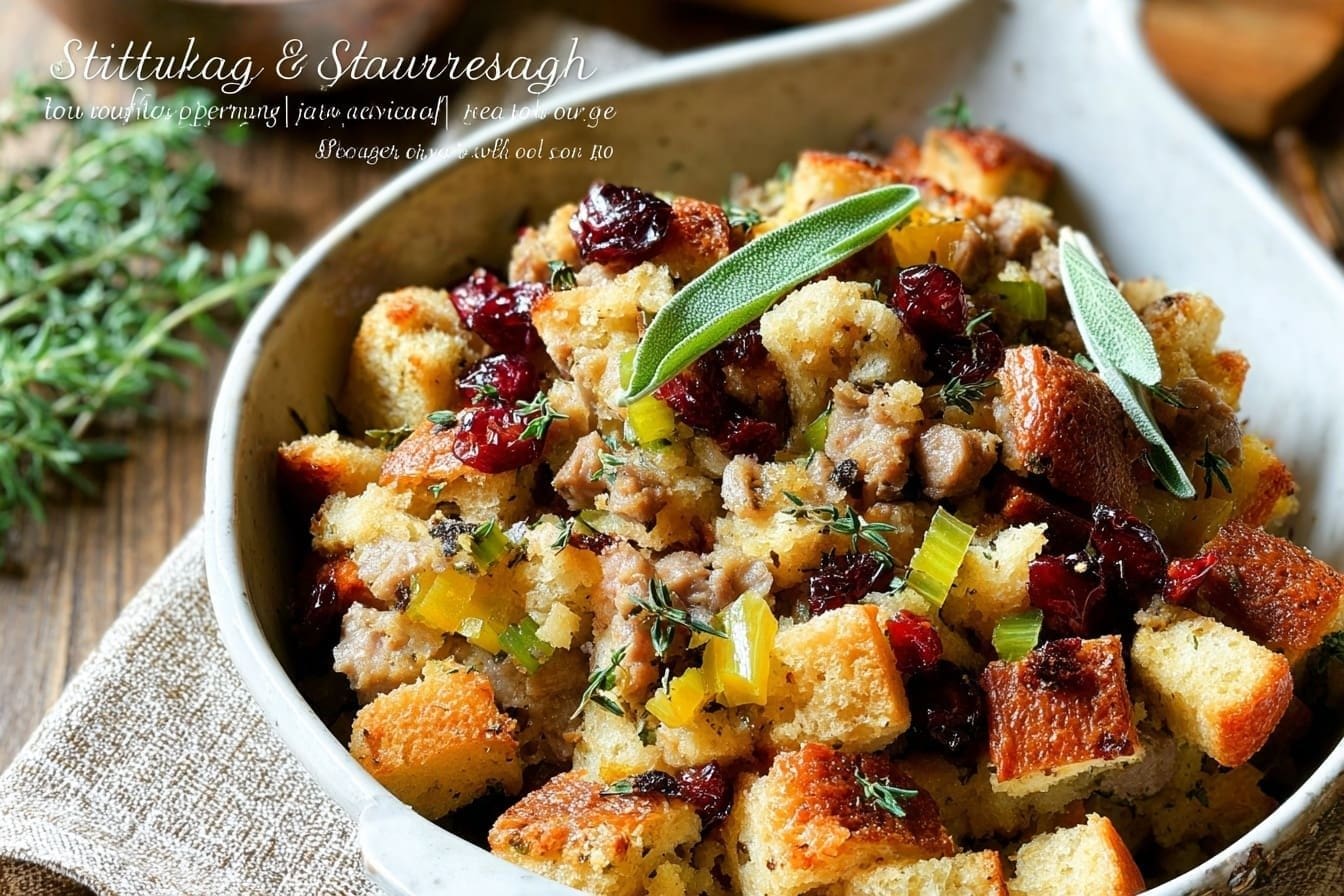
Dietary Substitutions to Customize Your Stuffing Recipe
Protein and Main Component Alternatives
While this classic stuffing recipe stands beautifully on its own, some cooks enjoy adding protein to make it a more substantial dish. Cooked and crumbled sausage makes a traditional addition that many families love. Simply brown the sausage before adding the vegetables and continue with the recipe as written. About one pound of sausage works well with this quantity.
For those seeking plant-based protein options, consider adding sautéed mushrooms for umami depth or cooked wild rice for additional texture and nutrition. Some cooks like to fold in chopped pecans or walnuts for crunch and protein. These additions work particularly well for vegetarian holiday tables where guests might want something more filling.
Vegetable, Sauce, and Seasoning Modifications
The vegetable base offers endless possibilities for customization. Diced carrots add natural sweetness and beautiful color to the dish. Some families include chopped apples for a sweet and savory twist that pairs wonderfully with poultry. Mushrooms contribute earthiness and create a heartier texture when you want a more substantial side dish.
For seasoning variations, consider the flavors that complement your main dish. Thyme works beautifully alongside the sage and rosemary, or you can substitute poultry seasoning for a more traditional flavor profile. If you enjoy a bit of heat, a pinch of cayenne or some diced jalapeño adds unexpected warmth. The key is tasting as you go and adjusting to your family’s preferences.
Dried herbs work as substitutes when fresh are not available. Use about one-third the amount called for with fresh herbs, so one tablespoon each of dried sage, parsley, and rosemary would replace the three tablespoons of fresh. While fresh herbs provide brighter flavor, dried herbs still deliver satisfying results.
Mastering Stuffing Recipe: Advanced Tips and Variations
Pro Cooking Techniques
Creating truly outstanding stuffing comes down to a few key techniques that separate good from great. The bread texture matters enormously. Using a combination of stale bread and fresh bread cubes creates varied texture throughout the dish. Some pieces become soft and tender while others maintain a bit more structure, giving you the best of both worlds in every bite.
Temperature management also plays a crucial role. Letting refrigerated stuffing sit at room temperature for about an hour before reheating ensures even warming throughout. Cold stuffing straight from the refrigerator often reheats unevenly, with hot spots and cold spots that diminish the eating experience.
| Technique | Result | Why It Works |
|---|---|---|
| Mix bread types | Complex texture | Different breads absorb moisture differently |
| Generous butter on edges | Crispy golden crust | Fat promotes browning and crispness |
| Room temp before baking | Even cooking | Eliminates cold spots |
| Fresh vs dried herbs | Brighter flavor | Fresh herbs have volatile oils intact |
Creative Variations to Try
Once you master the basic recipe, the variations become endless. Cornbread stuffing offers a distinctly Southern twist with its sweeter flavor profile and crumbly texture. Simply substitute cornbread cubes for half or all of the regular bread. Oyster stuffing brings coastal tradition to your table, with plump oysters adding briny richness.
For something completely different, consider a Mediterranean variation. Add sun-dried tomatoes, olives, and feta cheese. Substitute oregano for the sage and serve alongside lamb or roasted vegetables. Apple and sausage stuffing combines savory and sweet, with chunks of tart apple balancing rich sausage in every bite.
Leftover Transformation Ideas
The creativity does not have to stop when dinner ends. This stuffing makes incredible leftovers that can transform into entirely new meals. Press leftover stuffing into a waffle iron for crispy stuffing waffles, perfect topped with a fried egg for breakfast. Form into patties and pan-fry for stuffing cakes that work as a side dish or sandwich base.
Stuffing also makes an excellent filling for bell peppers. Simply halve the peppers, remove seeds, fill with leftover stuffing, and bake until the peppers are tender. For a heartier meal, use stuffing as a base for open-faced sandwiches topped with turkey and gravy. These creative uses ensure nothing goes to waste.
According to classic stuffing traditions, the key to memorable stuffing lies in achieving that perfect balance between crispy top and moist interior, which this recipe delivers beautifully every time.
How to Store Stuffing Recipe: Best Practices
Refrigeration Guidelines
Proper storage keeps your stuffing safe and delicious for enjoying later. After serving, transfer leftover stuffing to airtight containers within two hours of cooking. Bacteria grow rapidly at room temperature, so prompt refrigeration is essential for food safety. Properly stored, stuffing keeps in the refrigerator for three to four days.
For best reheating results, let refrigerated stuffing sit at room temperature for about an hour before warming. This step promotes even heating and prevents the outside from drying out while the center remains cold. Cover with foil when reheating to maintain moisture, removing it for the last few minutes if you want to re-crisp the top.
Freezing for Long-Term Storage
Stuffing freezes remarkably well, making it perfect for meal prep or saving leftovers from large gatherings. Portion the cooled stuffing into freezer-safe containers or heavy-duty freezer bags. Remove as much air as possible to prevent freezer burn. Label with the date and use within three months for best quality.
When ready to use frozen stuffing, thaw overnight in the refrigerator for safest results. You can also reheat directly from frozen, though this takes longer and requires careful temperature monitoring. Bake at 350°F until heated through to 165°F, covering with foil for most of the cooking time to prevent drying.
Make-Ahead Strategies
For busy cooks, this recipe offers excellent make-ahead flexibility. You can prepare the entire dish up to one day before baking. Simply assemble everything, cover tightly, and refrigerate. When ready to serve, add about 10 extra minutes to the baking time since you are starting with a cold dish.
Alternatively, prep components separately in advance. Cube and toast the bread up to a week ahead, storing in an airtight container. Chop vegetables and herbs a day or two before, keeping them refrigerated. On cooking day, simply combine and bake. This strategy makes holiday cooking much more manageable.
FAQs: Frequently Asked Questions About Stuffing Recipe
Print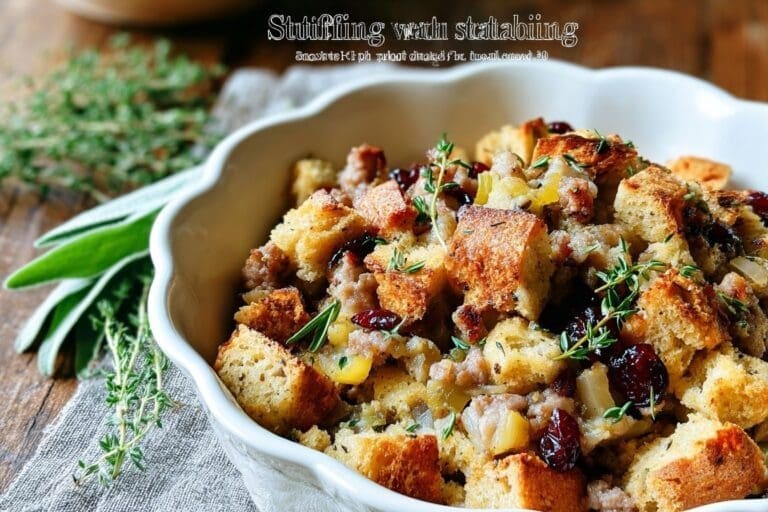
Stuffing Recipe
🥖 Golden crunchy edges meet soft, buttery herb-infused center – irresistible Thanksgiving stuffing upgrade!
🌿 Fresh sage, rosemary & parsley burst with flavor; make-ahead side serves 10 effortlessly!
- Total Time: 1 hour 35 minutes
- Yield: 10 servings
Ingredients
– 18 to 24 ounces bread cubes (1.5 loaves, about 12 to 14 cups), preferably toasted or stale
– 1 cup diced celery
– 3 cups diced sweet onion (about 2 large onions)
– 6 minced garlic cloves
– Kosher salt and pepper to taste
– 3 tablespoons chopped fresh sage
– 3 tablespoons chopped fresh parsley
– 3 tablespoons chopped fresh rosemary
– 2 1/2 cups chicken or vegetable stock
– 2 eggs
– Butter for sautéing vegetables and brushing the baking dish
– Mixture of fresh herbs for sprinkling on top
Instructions
1-Step 1: Prepare Your Bread The foundation of any great stuffing starts with the bread. You have several options here, and each creates slightly different results. If you have time, let your bread sit out on the counter for a day or two to become stale naturally. This creates the ideal texture because stale bread holds its shape better during mixing and baking. If you are short on time, you can toast fresh bread cubes in the oven at 350°F for about 15 minutes. This quick method works beautifully and gives you more control over how dry the bread becomes. For the best texture, consider using a combination of bread types. A mix of sourdough and Italian bread creates wonderful depth and varied texture throughout the dish. Sourdough adds a subtle tang while Italian bread contributes a softer, more neutral base.
2-Step 2: Preheat and Prepare Your Baking Dish Preheat your oven to 350°F while you prepare the other components. This temperature allows the stuffing to cook through evenly without drying out or burning on top. For the baking dish, a 9×13-inch pan works perfectly for this recipe and creates the ideal depth for even cooking. Brush the baking dish generously with melted butter, olive oil, or nonstick spray. Taking this step ensures easy serving and cleanup later. Butter adds the most flavor, but any of these options will prevent sticking. This small preparation makes a big difference in the final presentation.
3-Step 3: Sauté the Vegetables and Herbs In a large skillet or Dutch oven, melt a generous amount of butter over medium heat. Add the diced sweet onion, celery, and minced garlic along with a pinch of kosher salt and pepper. The salt helps draw out moisture from the vegetables and seasons them from the inside out. Sauté this mixture for 8 to 10 minutes until the vegetables are softened and the onions become translucent. You want them tender but not browned or caramelized. The kitchen will start smelling absolutely wonderful at this point. Once the vegetables are soft, add the chopped fresh sage, parsley, and rosemary. Cook for just one more minute to release their aromatic oils. This brief cooking time preserves the fresh herb flavor while distributing it evenly throughout the mixture.
4-Step 4: Combine and Bind Stir one cup of stock into the vegetable and herb mixture, scraping up any browned bits from the bottom of the pan. These bits contain concentrated flavor that you want to capture. Remove from heat and pour this mixture over your prepared bread cubes in a large bowl. Toss everything gently to combine, making sure each bread cube gets coated with the flavorful vegetable mixture. In a separate bowl or measuring cup, whisk together the remaining 1 1/2 cups of stock with the two eggs. This creates your binding liquid that will hold everything together during baking. Pour this mixture over the bread and vegetables, tossing again until evenly distributed. The bread should feel moist but not soggy. If it seems too dry, you can add a splash more stock.
5-Step 5: Transfer and Bake Transfer the entire mixture to your prepared baking dish, spreading it evenly. The depth should be fairly consistent for even baking. If you want those coveted crispy edges, make sure the stuffing reaches all corners of the pan. Bake for 45 to 50 minutes until the internal temperature reaches 160°F and the top is golden brown. Keep an eye on the stuffing during the last 15 minutes of baking. If the top is browning too quickly, cover loosely with aluminum foil. This prevents over-browning while allowing the center to finish cooking through. When done, the stuffing should have crispy, golden edges and a soft, moist interior. Let it rest for about 10 minutes before serving to allow the flavors to settle.
Last Step:
Please leave a rating and comment letting us know how you liked this recipe! This helps our business to thrive and continue providing free, high-quality recipes for you.Notes
🍞 Mix stale and fresh bread types for perfect chewy-crisp texture contrast.
🧈 Use generous butter for signature rich flavor and crunchy edges.
⏰ Assemble 1 day ahead, refrigerate covered, then bake fresh for holidays.
- Prep Time: 45 minutes
- Cook Time: 50 minutes
- Category: Side Dish
- Method: Oven
- Cuisine: American
- Diet: Vegetarian
Nutrition
- Serving Size: 1 cup
- Calories: 350 kcal
- Sugar: 4g
- Sodium: 650mg
- Fat: 18g
- Saturated Fat: 10g
- Unsaturated Fat: 7g
- Trans Fat: 0g
- Carbohydrates: 40g
- Fiber: 3g
- Protein: 9g
- Cholesterol: 70mg


