

Why You’ll Love This Roasted Spring Vegetables Recipe
Roasted Spring Vegetables are the kind of side dish that fits almost any table. They bring together tender potatoes, sweet leeks, crisp asparagus, and bright lemon in a way that feels fresh, simple, and comforting all at once. If you need a dish that looks colorful, tastes great, and comes together with very little fuss, this one is a keeper.
- Easy prep: This roasted spring vegetables recipe takes just 10 minutes to prep and 35 minutes to roast. You simply chop, season, and let the oven do the work, which makes it a great choice for busy weeknights or last-minute gatherings.
- Good-for-you ingredients: With asparagus, cauliflower, leeks, and potatoes, this dish brings fiber, potassium, vitamin C, and other helpful nutrients to the plate. It is a smart way to add more vegetables to dinner without making things complicated.
- Flexible for many diets: Roasted spring vegetables can be served as a vegan side, paired with chicken or fish, or changed up with seasonal produce. You can also swap in carrots, broccoli, Brussels sprouts, or beets depending on what you have.
- Fresh flavor in every bite: Lemon slices add a gentle brightness while the vegetables roast, giving the dish a sweet, savory finish that tastes clean and lively. The edges turn golden, the leeks soften, and the asparagus stays just tender.
When you want a simple vegetable side that still feels special, roasted spring vegetables are hard to beat.
If you enjoy easy, crowd-friendly meals like this, you may also like the cozy ideas in our oven baked chicken legs recipe or a hearty make-ahead option such as loaded mashed potato casserole.
For a quick look at spring produce and nutrition, this article from Atlantic Health is helpful and easy to read.
Jump to:
- Why You’ll Love This Roasted Spring Vegetables Recipe
- Ingredients for Roasted Spring Vegetables
- Helpful ingredient notes
- How to Prepare the Perfect Roasted Spring Vegetables: Step-by-Step Guide
- Step 1: Prepare the vegetables
- Step 2: Heat the oven
- Step 3: Season the first vegetables
- Step 4: Roast in stages
- Step 5: Finish and serve
- Tips for Perfect Roasted Spring Vegetables
- Serving Suggestions and Variations for Roasted Spring Vegetables
- Easy ways to serve them
- Simple variations
- Storage and Reheating Roasted Spring Vegetables
- Nutrition facts per serving
- Recipe Summary
- Frequently Asked Questions
- What vegetables work best for roasted spring vegetables?
- How do you roast spring vegetables step by step?
- Which vegetables to add first and last when roasting spring veggies?
- How to store and reheat leftover roasted spring vegetables?
- Can I adapt roasted spring vegetables recipe for other seasons?
- Roasted Spring Vegetables
- Ingredients
- Instructions
- Last Step:
- Notes
- Nutrition
- Did you make this recipe?
Ingredients for Roasted Spring Vegetables
Here is everything you need for these Roasted Spring Vegetables. The ingredient list is built for 4 servings and keeps the flavors fresh, simple, and balanced.
- 1 1/2 pounds new potatoes, quartered
- 4 cups cauliflower, broken into florets
- 2 large leeks, about 1 1/2 cups chopped, cut into half moons
- 1 to 2 tablespoons avocado oil or olive oil
- Sea salt to taste
- Black pepper to taste
- 1 pound asparagus, ends trimmed and cut into 2-inch pieces
- 1 lemon, thinly sliced
- Optional: chopped fresh herbs such as Italian parsley, fresh dill, spring onions, or fresh thyme for garnish
Helpful ingredient notes
You can use avocado oil or olive oil, depending on what you keep in the pantry. If you want to change the flavor, fresh thyme and dill work especially well with lemon. The recipe is also easy to adapt with beets, carrots, broccoli, or Brussels sprouts if you want to match the season or use what is already on hand.
How to Prepare the Perfect Roasted Spring Vegetables: Step-by-Step Guide
Making Roasted Spring Vegetables is all about timing. Some vegetables need a little more time in the oven, while others cook faster and should be added later. That simple trick helps everything finish at the same time, with nice browned edges and tender centers.
Step 1: Prepare the vegetables
Start by washing and chopping all the produce. Quarter the new potatoes, break the cauliflower into florets, slice the leeks into half moons, and trim the asparagus into 2-inch pieces. Keep the cuts as even as possible so the vegetables roast at a similar pace.
Step 2: Heat the oven
Preheat the oven to 425 degrees Fahrenheit. Line a baking tray with parchment paper so cleanup stays easy and the vegetables do not stick. A hot oven is key for getting that sweet roasted flavor and golden color.
Step 3: Season the first vegetables
Place the potatoes, cauliflower, and leeks on the baking tray. Drizzle them with avocado oil or olive oil, then season generously with sea salt and black pepper. Toss well so every piece gets a light coating of oil and seasoning.
Step 4: Roast in stages
Roast the vegetables for 25 minutes. Then add the asparagus to the tray and toss it with the roasted vegetables. Top everything with the thin lemon slices, then return the tray to the oven for 10 more minutes. This gives the potatoes and leeks time to soften while the asparagus stays bright and tender.
Step 5: Finish and serve
When the vegetables are done, taste and add a little more salt or pepper if needed. Garnish with chopped fresh herbs such as Italian parsley, fresh dill, spring onions, or fresh thyme. Serve hot while the edges are still crisp.
For even roasting, do not crowd the pan. If the vegetables are piled up too much, they will steam instead of brown.
Tips for Perfect Roasted Spring Vegetables
A few small habits can make a big difference in this roasted spring vegetables recipe. These easy tips help you get better color, better texture, and better flavor every time.
- Cut vegetables in similar sizes: This helps the potatoes, cauliflower, and leeks roast evenly. Larger chunks will take longer, while smaller pieces may brown too fast.
- Use a hot oven: A 425 degree oven creates caramelization and helps the vegetables get golden on the edges.
- Do not crowd the pan: Spread the vegetables out in a single layer. If needed, use two pans instead of piling everything onto one tray.
- Add quick-cooking vegetables later: Asparagus should go in after the first 25 minutes so it keeps its color and texture.
- Try different herbs: Parsley, dill, thyme, or spring onions all bring a fresh finish. You can also use chopped basil if that is what you have.
- Use lemon for brightness: The lemon slices soften in the oven and add a light sweet-tart flavor as they roast.
- Change the vegetables with the season: This recipe also works with carrots, broccoli, Brussels sprouts, sweet potatoes, or red onion, depending on the time of year.
If you want another cozy side dish to pair with roasted vegetables, try the rich flavor of creamy Brussels sprouts bake.
Serving Suggestions and Variations for Roasted Spring Vegetables
These Roasted Spring Vegetables are easy to serve in more than one way. They work well as a simple side dish, but they also fit into lunches, grain bowls, and meal prep. That makes them a good choice for home cooks, busy parents, students, and anyone who likes food that does more than one job.
Easy ways to serve them
- Serve beside roasted chicken, fish, or pork for a balanced dinner.
- Spoon over rice, quinoa, or farro for a meatless bowl.
- Fold into a salad with greens, feta, or goat cheese.
- Add to a brunch spread with eggs and toast.
Simple variations
- Vegan version: Keep the recipe as written and finish with fresh herbs.
- Protein-packed meal: Add marinated chicken breast chunks with the potatoes and leeks so everything roasts together.
- Fall version: Swap in sweet potatoes, Brussels sprouts, red onion, and broccoli, then add the lemon slices during the last 10 minutes.
- Seasonal mix-up: Try beets, carrots, or broccoli when spring produce is not available.
Roasted vegetables also go nicely with a main dish like herb butter chicken or alongside a simple grain dish such as parmesan risotto. For another roasted vegetable method, you can also compare this with oven roasted vegetables from Well Plated.
Storage and Reheating Roasted Spring Vegetables
Leftover Roasted Spring Vegetables keep well, which makes them great for meal prep. Let them cool fully, then store them in an airtight container in the refrigerator for up to 5 days. For best texture, reheat them on a parchment-lined baking sheet in a 425 degree oven for 10 to 15 minutes until hot.
If you want to keep the vegetables crisp, avoid the microwave. A quick oven reheat helps bring back that roasted texture. Fresh herbs or a squeeze of lemon after reheating can brighten the flavor again.
Nutrition facts per serving
| Nutrient | Amount |
|---|---|
| Calories | 162 |
| Carbohydrates | 31 grams |
| Protein | 5 grams |
| Fat | 3 grams |
| Sodium | 41 milligrams |
| Potassium | 872 milligrams |
| Fiber | 5 grams |
| Sugar | 3 grams |
| Vitamin A | 1055 IU |
| Vitamin C | 103.5 milligrams |
| Calcium | 95 milligrams |
| Iron | 2.8 milligrams |
Recipe Summary
Prep time: 10 minutes
Cook time: 35 minutes
Total time: 45 minutes
Servings: 4
This roasted spring vegetables recipe is a great example of how a few simple ingredients can create a colorful dish that feels fresh, filling, and easy to share.
Frequently Asked Questions
What vegetables work best for roasted spring vegetables?
For roasted spring vegetables, start with heartier options like new potatoes, leeks, radishes, carrots, or baby carrots, which roast for 30-35 minutes at 425°F. Add tender greens and shoots such as asparagus, broccoli, broccolini, snap peas, snow peas, or Swiss chard in the last 10 minutes to keep them crisp. Other great additions include cauliflower, turnips, parsnips, rutabagas, or peeled beets for the full roast time. Toss everything in olive oil, salt, and pepper before baking on a parchment-lined sheet pan. This mix highlights spring’s fresh flavors—aim for 1-2 pounds total for 4 servings. Pro tip: Cut denser veggies into even 1-inch pieces for uniform cooking. (92 words)
How do you roast spring vegetables step by step?
Preheat oven to 425°F. Chop 1-2 pounds of spring veggies: start with potatoes, leeks, carrots, radishes (1-inch pieces). Toss with 2-3 tbsp olive oil, salt, pepper on a parchment-lined baking sheet. Roast 25-30 minutes, stirring halfway. Add quick-cookers like asparagus, broccoli, or peas; roast another 10 minutes until tender and caramelized. Total time: 35-40 minutes. Check doneness with a fork—edges should be golden. Drizzle with lemon juice post-roast for brightness. Serves 4 as a side. Common mistake: overcrowd the pan, which steams instead of roasts—use two sheets if needed. Pair with grilled chicken or fish. (112 words)
Which vegetables to add first and last when roasting spring veggies?
Add longer-cooking veggies first: potatoes, sweet potatoes, cauliflower, leeks, carrots, radishes, beets, turnips, or parsnips for 25-35 minutes at 425°F. These need time to soften and crisp. In the last 10 minutes, add faster-cooking ones like asparagus, broccoli, broccolini, snap peas, snow peas, or Swiss/rainbow chard to avoid mushiness. Always cut to similar sizes, toss in oil, and stir midway. This staggered method prevents overcooking delicate springs. For example, roast potatoes and leeks first, then toss in asparagus. Results in perfectly textured medley every time. (98 words)
How to store and reheat leftover roasted spring vegetables?
Let roasted spring vegetables cool completely, then transfer to an airtight container. Store in the fridge up to 5 days or freeze for 1 month. To reheat, preheat oven to 425°F, spread on a parchment-lined baking sheet, and heat 10-15 minutes, stirring once, until hot and crispy. Avoid microwave—it sogs them up. For best flavor, add fresh herbs or a squeeze of lemon before reheating. Leftovers make great salad toppers, frittata add-ins, or grain bowl bases. Note: Dairy-based toppings like cheese won’t freeze well. (94 words)
Can I adapt roasted spring vegetables recipe for other seasons?
Yes, swap for seasonal produce while keeping the 425°F method. Fall: Start with sweet potatoes, Brussels sprouts, red onions (30 minutes), add broccoli, top with lemon slices last 10 minutes. Winter: Beets, parsnips, rutabagas first; kale or cabbage later. Summer: Zucchini, bell peppers, cherry tomatoes full time; eggplant last 10. Sweet potatoes cook like new potatoes—add leeks with them. Always oil-toss, stagger timings. This flexibility makes one technique work year-round, preserving freshness. Link to our fall roasted veggies guide for full recipes. Nutrition bonus: Roasting retains 90% more vitamins than boiling. (102 words)
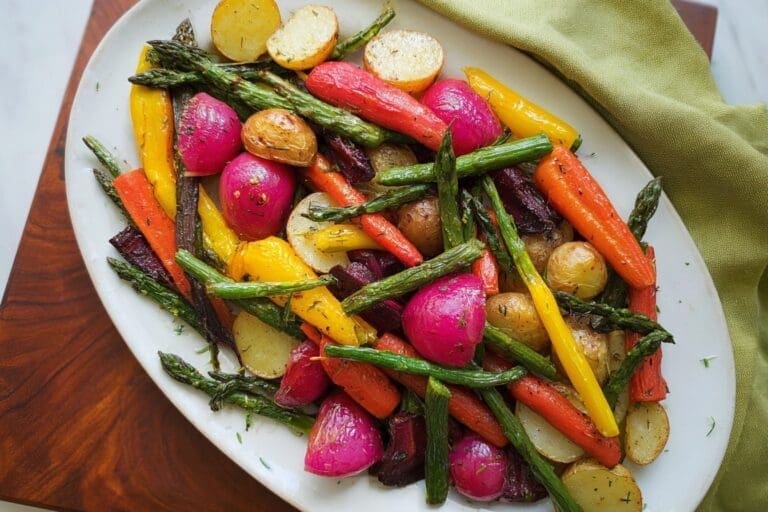
Roasted Spring Vegetables
🌱 Bursting with fresh spring flavors, this roasted vegetable dish delivers essential vitamins and fiber for a healthy meal boost!
🍋 Perfectly roasted to caramelized perfection, it’s an easy, vibrant side that celebrates seasonal produce everyone will love!
- Total Time: 45 minutes
- Yield: 6 servings
Ingredients
Instructions
1-Step 1: Prepare the vegetablesStart by washing and chopping all the produce. Quarter the new potatoes, break the cauliflower into florets, slice the leeks into half moons, and trim the asparagus into 2-inch pieces. Keep the cuts as even as possible so the vegetables roast at a similar pace.
2-Step 2: Heat the ovenPreheat the oven to 425 degrees Fahrenheit. Line a baking tray with parchment paper so cleanup stays easy and the vegetables do not stick. A hot oven is key for getting that sweet roasted flavor and golden color.
3-Step 3: Season the first vegetablesPlace the potatoes, cauliflower, and leeks on the baking tray. Drizzle them with avocado oil or olive oil, then season generously with sea salt and black pepper. Toss well so every piece gets a light coating of oil and seasoning.
4-Step 4: Roast in stagesRoast the vegetables for 25 minutes. Then add the asparagus to the tray and toss it with the roasted vegetables. Top everything with the thin lemon slices, then return the tray to the oven for 10 more minutes. This gives the potatoes and leeks time to soften while the asparagus stays bright and tender.
5-Step 5: Finish and serveWhen the vegetables are done, taste and add a little more salt or pepper if needed. Garnish with chopped fresh herbs such as Italian parsley, fresh dill, spring onions, or fresh thyme. Serve hot while the edges are still crisp.
Last Step:
Please leave a rating and comment letting us know how you liked this recipe! This helps our business to thrive and continue providing free, high-quality recipes for you.Notes
🥦 Adapt this recipe using other spring vegetables like beets, carrots, or broccoli for endless variety!
⏲️ Roast denser vegetables like potatoes first, adding quicker-cooking asparagus later to avoid overcooking.
🍋 Lemon slices infuse a bright, sweet citrus flavor as they roast with the vegetables.
- Prep Time: 10 minutes
- Cook Time: 35 minutes
- Category: Side Dish
- Method: Roasting
- Cuisine: American
- Diet: Vegan
Nutrition
- Serving Size: 1 1/2 cups
- Calories: 162 kcal
- Sugar: 3g
- Sodium: 41mg
- Fat: 3g
- Saturated Fat: 0.5g
- Unsaturated Fat: 2g
- Trans Fat: 0g
- Carbohydrates: 31g
- Fiber: 5g
- Protein: 5g
- Cholesterol: 0mg


