

Why You’ll Love This Pernil
Imagine pulling apart tender, flavorful pork that’s perfect for family gatherings or a simple weeknight meal. This pernil recipe Puerto Rican style is straightforward to make, requiring minimal steps and a slow roasting time that fits well into busy schedules. Packed with essential nutrients, this pernil dish offers a balanced nutritional profile that supports overall wellness while delivering that satisfying, hearty taste everyone craves.
One of the best parts about this slow roasted pernil recipe is its versatility, allowing you to adapt it to various dietary needs like vegan, gluten-free, or low-calorie options without losing the rich, savory flavor. Whether you’re a busy parent juggling after-school activities or a food enthusiast exploring new tastes, this dish brings people together around the table. It’s no wonder this Puerto Rican slow roasted pork shoulder recipe has become a go-to for creating those memorable moments.
For instance, I remember the first time I made pernil for a neighborhood potluck, and it was a hit everyone kept coming back for seconds, sharing stories and laughs over plates of juicy pork. This recipe’s distinctive blend of seasonings and slow roasting technique sets it apart, making every bite a celebration of flavor and tradition. If you’re looking to impress at your next event, this pernil will steal the show.
Health and Ease Benefits
Pernil isn’t just tasty; it’s also a smart choice for health-conscious eaters. The pork provides protein that helps keep you full, while herbs like oregano add a boost of antioxidants. Plus, with simple prep that anyone can handle, even students or working professionals can whip this up with ease. Let’s dive into what makes this recipe so special for everyday life.
Jump to:
- Why You’ll Love This Pernil
- Health and Ease Benefits
- Essential Ingredients for Pernil
- The Full Ingredient List
- Special Dietary Options
- How to Prepare the Perfect Pernil: Step-by-Step Guide
- Dietary Substitutions to Customize Your Pernil
- Mastering Pernil: Advanced Tips and Variations
- Flavor and Prep Hacks
- How to Store Pernil: Best Practices
- Tips for Longevity
- FAQs: Frequently Asked Questions About Pernil
- What is pernil and where does this dish come from?
- How long and at what temperature should I roast pernil for the best results?
- What is cuero on pernil, and how can I get it crispy?
- What are traditional side dishes to serve with pernil?
- How should I store and reheat leftover pernil to keep it flavorful?
- Pernil
- Ingredients
- Instructions
- Last Step:
- Notes
- Nutrition
- Did you make this recipe?
Essential Ingredients for Pernil
Gathering the right ingredients is key to making an authentic Puerto Rican style pernil that bursts with flavor. Below is a complete list based on the traditional slow roasted pork shoulder recipe, ensuring you have everything needed for success. I’ll walk you through each one so you can see how they come together to create that perfect dish.
The Full Ingredient List
- 1 (7-pound) bone-in or boneless pork shoulder
- ¼ cup vegetable or canola oil
- 12 cloves garlic
- ¼ cup fresh oregano
- 1 tablespoon dried oregano
- 2 tablespoons Adobo seasoning (powdered)
- 1 tablespoon paprika
- 1 teaspoon kosher salt (plus more for seasoning)
- ½ teaspoon freshly ground black pepper (plus more for seasoning)
- Juice of 2 lemons and 1 orange
These ingredients form the heart of a slow roasted pernil recipe, blending bold flavors that make the meat tender and irresistible. For a personal touch, I often add a bit extra garlic because, let’s face it, more garlic means more fun in the kitchen!
Special Dietary Options
If you’re adapting this for different needs, consider these tips. For vegan versions, swap the pork with jackfruit to keep that hearty texture. Gluten-free folks can stick to the list as is, since most items are naturally safe, but double-check your Adobo seasoning. This flexibility makes pernil a favorite among diet-conscious individuals and families.
| Ingredient Category | Purpose in Recipe |
|---|---|
| Main Protein | Pork shoulder for rich flavor and tenderness |
| Herbs and Spices | Add depth and aroma, like oregano and garlic |
| Acids | Lemon and orange juice for brightness and tenderizing |
How to Prepare the Perfect Pernil: Step-by-Step Guide
Getting pernil just right starts with careful prep, and this Puerto Rican style method ensures juicy, flavorful results every time. Begin by scoring the fat on the pork shoulder in a crisscross pattern with about 20 one-inch deep slits all over the meat for better marinade absorption. Place it in a large shallow roasting pan to get ready for the magic.
Next, combine ¼ cup vegetable or canola oil, 12 cloves garlic, ¼ cup fresh oregano, 1 tablespoon dried oregano, 2 tablespoons Adobo seasoning, 1 tablespoon paprika, 1 teaspoon kosher salt, and ½ teaspoon freshly ground black pepper into a flavorful rub. Massage this mixture all over the pork and into those slits for maximum taste. For added variety, you might try a similar pork dish with a crispy twist if you’re in the mood for something different.
- Cover the pork with foil and refrigerate overnight to let those flavors soak in deeply.
- Bring the pork to room temperature for about 1 hour before cooking to ensure even roasting.
- Preheat your oven to 300°F (150°C) and bake the pork covered for 3 hours until it’s well on its way to tenderness.
- Remove the foil and continue baking uncovered for 3 to 4 hours, checking that the internal temperature reaches at least 165°F (74°C) for safety and perfect texture.
- For a crispier exterior, crank the oven up to 375°F (190°C) and roast for another 20 to 30 minutes it’s like giving your pernil a golden tan!
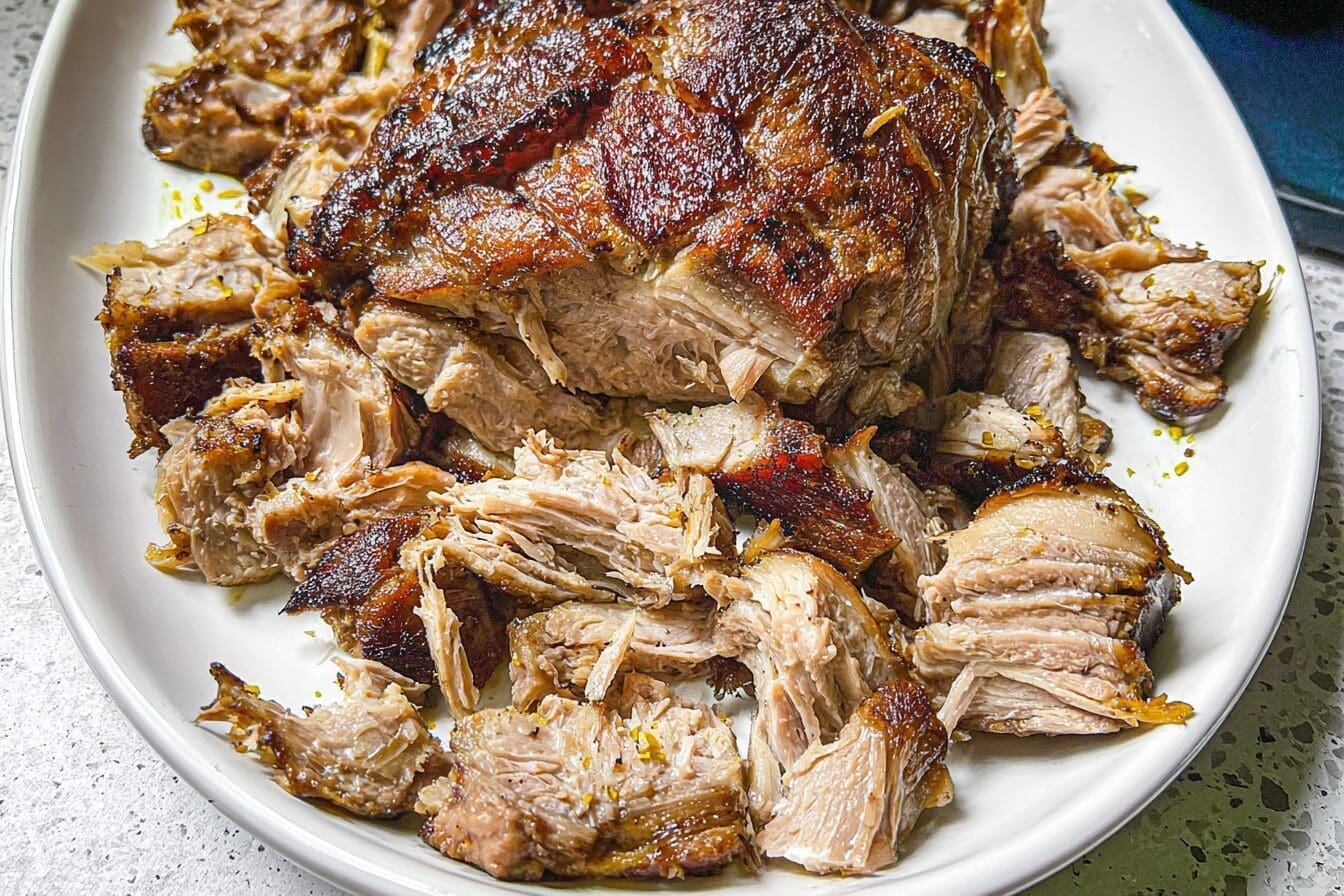
- Let it rest for at least 20 minutes, then pull it apart into chunks and sprinkle with the juice of 2 lemons and 1 orange, seasoning with extra salt and pepper to taste.
- Serve warm or hot, perhaps with sides that complement your dietary needs, like gluten-free grains.
This step-by-step for slow roasted pernil recipe really shines when you take your time, just like I do when cooking for friends it turns a simple meal into a story. Remember, the key is patience; that low and slow approach makes all the difference.
Dietary Substitutions to Customize Your Pernil
Making pernil work for everyone is easy with a few tweaks, especially if you’re dealing with dietary restrictions. For protein alternatives, substitute the pork shoulder with turkey thigh for a leaner option that still delivers great flavor. If you’re going plant-based, jackfruit or seitan can mimic that tender texture without missing a beat.
When it comes to vegetables and seasonings, swap in roasted seasonal veggies for traditional sides to add freshness and nutrition. You could replace the herbs in the marinade with cilantro or basil for a new twist that keeps things exciting. For gluten-sensitive eaters, use gluten-free soy sauce alternatives in your seasoning mix to keep the dish safe and delicious.
A fun story: Once, at a family reunion, I adapted this recipe for my cousin who’s vegan, and everyone loved the jackfruit version so much it became a regular request. These changes make pernil accessible for busy parents, seniors, or anyone watching their diet, proving good food is for all.
Mastering Pernil: Advanced Tips and Variations
Taking your pernil to the next level involves some pro cooking techniques, like slow roasting with intermittent basting to keep the meat moist and packed with flavor. If you want to experiment, try adding smoked paprika or chipotle for a smoky twist that elevates the taste without much effort. Presentation is key too garnish with fresh herbs and sliced lime to make your dish look as good as it tastes.
Make-ahead options are a game-changer for community organizers or working professionals; marinate the pernil up to 24 hours in advance and cook it when you’re ready. For more inspiration on roasting meats, check out this delicious pork cutlet recipe that pairs well with pernil flavors. Remember, the beauty of this Puerto Rican slow roasted pork shoulder recipe lies in its adaptability for baking enthusiasts and food lovers alike.
Flavor and Prep Hacks
One tip I swear by is basting every hour during cooking; it locks in juices and prevents dryness. For variations, if you’re into spicy foods, a dash of chipotle can turn your pernil into a bold statement. These advanced moves make pernil not just a meal, but a customizable tradition.
How to Store Pernil: Best Practices
Proper storage keeps your pernil tasting fresh and delicious for days after cooking. Store cooked pernil in airtight containers in the refrigerator for up to 4 days to lock in that wonderful flavor. If you’re planning ahead, freezing works great wrap it tightly in foil and seal in freezer bags for up to 3 months.
When reheating, do it gently in the oven at 325°F (165°C) covered with foil to avoid drying out the meat and keep it juicy For meal prep, slice the pernil before freezing for easy portioning and quicker thawing times. This method is perfect for travelers or families who like to plan ahead, ensuring you always have a tasty option on hand.
Tips for Longevity
I’ve found that labeling your containers with dates helps avoid waste, especially in busy households. Whether you’re a student or a senior, these practices make pernil a convenient choice for any occasion for learning about pork nutrition benefits.
FAQs: Frequently Asked Questions About Pernil
What is pernil and where does this dish come from?
Pernil is a slow-roasted pork shoulder or leg seasoned with salt, pepper, oregano, and garlic. It originates from Puerto Rican and Dominican cuisines and is a traditional holiday favorite. Variations of pernil also exist in Cuban cooking. The pork is cooked until tender and often features a flavorful crispy skin called cuero.
How long and at what temperature should I roast pernil for the best results?
For tender pernil, roast it low and slow. A common method is cooking at 300°F for about 6 hours. Alternatively, some prefer 10 hours at 200°F followed by 45 minutes at 350°F to develop a crispy crust. The maximum roasting temperature should not exceed 350°F to keep the pork moist.
What is cuero on pernil, and how can I get it crispy?
Cuero is the crispy skin that forms on the outer layer of pernil during roasting. To achieve crispy cuero, roast the pork uncovered toward the end of cooking and consider scoring the skin beforehand. Applying salt and keeping the skin dry before cooking also helps create that sought-after crunch.
What are traditional side dishes to serve with pernil?
Pernil is often served with Puerto Rican staples like arroz con gandules (rice with pigeon peas) and mofongo (fried plantain mash). Other popular sides include roasted vegetables, beans, and fresh salads. These complement the rich, flavorful pork and balance the meal well.
How should I store and reheat leftover pernil to keep it flavorful?
Store leftover pernil in an airtight container or freezer-safe bag. It will keep in the refrigerator for up to 5 days or can be frozen for 4-6 months. To reheat, cover the meat with foil and warm in a low oven until heated through, which helps retain moisture without drying out the pork.
Pernil
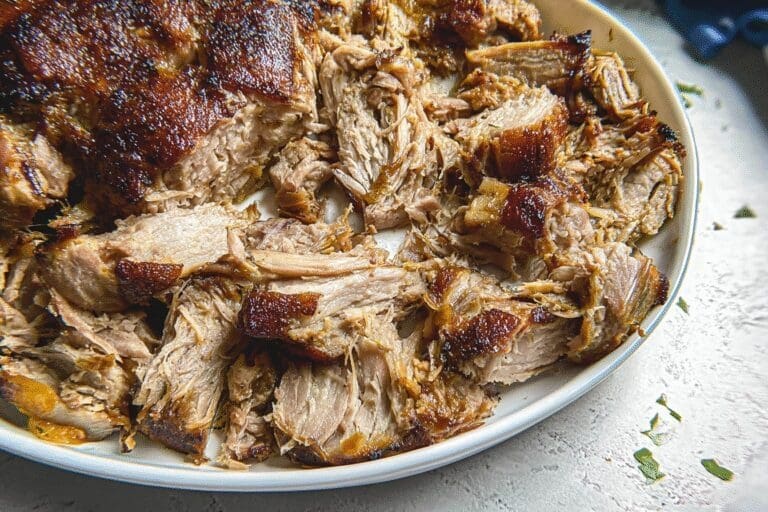
🐖 Enjoy the rich, tender flavors of Pernil, a traditional Puerto Rican slow-roasted pork shoulder with a perfectly crispy exterior.
🍋 This recipe offers a flavorful, juicy dish that’s perfect for festive occasions or hearty family meals.
- Total Time: 18 hours 15 minutes
- Yield: 10–12 servings 1x
Ingredients
1 (7-pound) bone-in or boneless pork shoulder for rich flavor and tenderness
¼ cup vegetable or canola oil
12 cloves garlic to add depth and aroma
¼ cup fresh oregano to add depth and aroma
1 tablespoon dried oregano to add depth and aroma
2 tablespoons Adobo seasoning (powdered)
1 tablespoon paprika
1 teaspoon kosher salt (plus more for seasoning)
½ teaspoon freshly ground black pepper (plus more for seasoning)
Juice of 2 lemons and 1 orange for brightness and tenderizing
Instructions
1-Cover the pork with foil and refrigerate overnight to let those flavors soak in deeply.
2-Bring the pork to room temperature for about 1 hour before cooking to ensure even roasting.
3-Preheat your oven to 300°F (150°C) and bake the pork covered for 3 hours until it’s well on its way to tenderness.
4-Remove the foil and continue baking uncovered for 3 to 4 hours, checking that the internal temperature reaches at least 165°F (74°C) for safety and perfect texture.
5-For a crispier exterior, crank the oven up to 375°F (190°C) and roast for another 20 to 30 minutes it’s like giving your pernil a golden tan!
6-Let it rest for at least 20 minutes, then pull it apart into chunks and sprinkle with the juice of 2 lemons and 1 orange, seasoning with extra salt and pepper to taste.
7-Serve warm or hot, perhaps with sides that complement your dietary needs, like gluten-free grains.
Last Step:
Please leave a rating and comment letting us know how you liked this recipe! This helps our business to thrive and continue providing free, high-quality recipes for you.Notes
🔪 Scoring the fat allows the marinade to deeply flavor the pork.
🥄 Marinating overnight enhances the flavor and tenderness.
🔥 Increasing the oven temperature at the end creates a delicious crispy crust.
- Prep Time: 15 minutes
- Marinating time: 12 hours
- Cook Time: 6 hours
- Category: Main Dish
- Method: Roasting, marinating
- Cuisine: Puerto Rican
- Diet: Gluten-Free
Nutrition
- Serving Size: 6 ounces
- Calories: 480 kcal
- Sugar: 1 g
- Sodium: 720 mg
- Fat: 35 g
- Saturated Fat: 12 g
- Unsaturated Fat: 20 g
- Trans Fat: 0 g
- Carbohydrates: 2 g
- Fiber: 0 g
- Protein: 40 g
- Cholesterol: 120 mg


