

Pancit Bihon Recipe: Why This Filipino Noodle Dish Belongs on Your Table
Pancit Bihon is one of those meals that feels right at home at family dinners, birthday parties, potlucks, and busy weeknights. This pancit bihon recipe brings together tender rice noodles, savory meat, and crisp vegetables in a way that is comforting, filling, and easy to share. If you are looking for filipino pancit that works for a crowd and still tastes great the next day, this dish is a strong pick.
For readers who love practical meals, pancit bihon checks a lot of boxes. It is quick enough for weeknights, flexible enough for different diets, and hearty enough to feed a group without much fuss. The noodles soak up the broth and soy sauce beautifully, while the pork, chicken, and vegetables give each bite a balanced mix of flavor and texture.
Pancit Bihon is more than just noodles. It is a dish that stretches to feed many people, travels well for gatherings, and always feels special when served hot.
This version keeps the cooking process simple, but it still gives you the savory depth you want from classic pancit guisado. Since it serves 8, it is especially handy for church events, family reunions, office lunches, and make-ahead meal planning.
| Recipe Detail | Information |
|---|---|
| Prep Time | 15 minutes |
| Cook Time | 40 minutes |
| Total Time | 55 minutes |
| Servings | 8 |
What makes this pancit bihon recipe so appealing
- Easy to prepare: The steps are straightforward, and the total cook time is just under an hour.
- Good for sharing: A single batch serves 8, making it ideal for gatherings and potlucks.
- Balanced and filling: You get noodles, protein, and vegetables all in one pan.
- Full of flavor: Garlic, onion, soy sauce, chicken powder, pork, and chicken create that familiar savory taste people love in pancit bihon guisado recipe.
If you enjoy hearty dishes that feed a group, you may also like this chicken green vegetable pilaf for another family-style meal. For another quick dinner idea with a comforting flavor profile, try this fastest noodle stir fry.
Jump to:
- Pancit Bihon Recipe: Why This Filipino Noodle Dish Belongs on Your Table
- What makes this pancit bihon recipe so appealing
- Essential Ingredients for Pancit Bihon
- Main ingredients
- Special dietary options
- How to Prepare the Perfect Pancit Bihon: Step-by-Step Guide
- First step: Prep everything before turning on the heat
- Second step: Build the flavor base
- Third step: Cook the meats
- Fourth step: Add liquid and simmer
- Fifth step: Cook the vegetables
- Sixth step: Season the broth
- Seventh step: Cook the bihon noodles
- Eighth step: Return the meat and vegetables
- Final step: Serve hot
- Dietary Substitutions to Customize Your Pancit Bihon
- Protein and main component alternatives
- Vegetable, sauce, and seasoning modifications
- Mastering Pancit Bihon: Advanced Tips and Variations
- Pro cooking techniques
- Flavor variations
- Presentation tips
- Make-ahead options
- How to Store Pancit Bihon: Best Practices
- Nutrition Information for Pancit Bihon
- FAQs: Frequently Asked Questions About Pancit Bihon
- What is Pancit Bihon?
- Where does Pancit Bihon originate from?
- How do you cook Pancit Bihon at home?
- What should you serve with Pancit Bihon?
- How do you store and reheat leftover Pancit Bihon?
- Pancit Bihon
- Ingredients
- Instructions
- Last Step:
- Notes
- Nutrition
- Did you make this recipe?
Essential Ingredients for Pancit Bihon
One reason this easy pancit bihon recipe works so well is that it uses simple ingredients you can find in many grocery stores. The key is to keep the measurements accurate so the noodles cook properly and the sauce stays balanced.
Main ingredients
- 1 lb pancit bihon rice noodles – The base of the dish. These thin rice noodles soak up the broth and sauce while staying light.
- 1/2 lb pork, cut into small thin slices – Adds richness and a savory bite.
- 1/2 lb chicken, cooked, deboned, and cut into thin slices – Brings protein and a tender texture.
- 1/8 lb snow peas – Gives a crisp, fresh bite.
- 1 cup carrot – Adds color, sweetness, and a little crunch.
- 1/2 small cabbage, chopped – Adds volume and soft texture.
- 1 cup celery leaves, chopped finely – Brings a fresh, fragrant finish.
- 1 onion, chopped – Helps build the flavor base.
- 1/2 tbsp garlic, minced – Creates the aromatic start that makes the kitchen smell amazing.
- 2 teaspoons chicken powder – Adds seasoning and depth to the broth.
- 5 tbsp soy sauce – Gives the dish its salty, umami taste.
- 3 to 4 cups water – Forms the cooking liquid that flavors the noodles.
- 3 tbsp cooking oil – Used for sautéing the aromatics and meats.
Special dietary options
- Vegan: Replace pork and chicken with tofu, mushrooms, or plant-based chicken. Use vegetable broth instead of chicken powder.
- Gluten-free: This dish is naturally friendly for gluten-free eaters when you use gluten-free soy sauce and confirm your chicken powder is gluten-free.
- Low-calorie: Use extra vegetables, reduce the oil slightly, and choose lean chicken breast or skip the pork for a lighter bowl.
For another crowd-friendly recipe idea, you might enjoy these fresh avocado salad ideas as a side dish alongside pancit.
How to Prepare the Perfect Pancit Bihon: Step-by-Step Guide
This simple pancit bihon guisado method is easy to follow, even if you are new to Filipino cooking. The biggest trick is to keep an eye on the noodles so they absorb the liquid without turning mushy.
First step: Prep everything before turning on the heat
Start by gathering and measuring all ingredients. Slice the pork into small thin pieces, cut the cooked chicken into thin slices, chop the onion, mince the garlic, and prepare the vegetables. Having everything ready makes the cooking process smooth because pancit moves quickly once the heat is on.
Soak the pancit bihon in water for about 10 minutes. This softens the noodles just enough so they cook evenly later. If you are short on time, a brief soak helps, but it is not always necessary, especially if you are comfortable adding them directly to the broth.
Second step: Build the flavor base
Heat 3 tablespoons of cooking oil in a large wok over medium heat. Add the minced garlic and chopped onion, then sauté until aromatic. You want the onion to turn soft and the garlic to smell fragrant, not browned too dark. This first step lays the foundation for the savory flavor of the whole dish.
At this point, the kitchen should already smell inviting. That mix of garlic and onion is classic in filipino pancit bihon noodles, and it helps the dish taste rich without needing a long ingredient list.
Third step: Cook the meats
Add the pork slices and cooked chicken to the wok. Stir and cook for about 2 minutes until the pork looks browned and the chicken heats through. Since the chicken is already cooked and deboned, it only needs time to absorb flavor and warm up. If you want a deeper taste, let the pork sear lightly before moving on.
This is also the stage where you could add sliced Chinese sausage, also called Chorizo Macau, if you want extra flavor. Slice it thinly and sauté it with the meats. It brings a slightly sweet and smoky note that many people love in pancit guisado.
Fourth step: Add liquid and simmer
Sprinkle in 2 teaspoons of chicken powder, then pour in 3 to 4 cups of water. Stir everything well and bring it to a gentle simmer. Let it cook for about 15 minutes so the pork becomes tender and the broth picks up flavor from the meat and aromatics.
As the mixture simmers, check that the heat stays steady but not too strong. You want a gentle bubble, not a hard boil. That helps the meat stay juicy and gives the broth time to develop a deeper taste.
Fifth step: Cook the vegetables
Add the carrots, snow peas, cabbage, and finely chopped celery leaves. Simmer for a few minutes until the vegetables are tender but still bright. The carrots should soften slightly, the cabbage should wilt, and the snow peas should keep a bit of snap.
Once the vegetables are cooked, remove all ingredients except the liquid and set them aside. This step may seem unusual, but it helps the noodles cook evenly in the broth without overcooking the vegetables. It also keeps the final texture clean and balanced.
Sixth step: Season the broth
Add 5 tablespoons of soy sauce to the liquid and mix well. Taste the broth if you like, and adjust only if needed. The soy sauce should make the liquid savory and slightly dark, which is exactly what you want for pancit bihon recipe flavor.
Good pancit starts with a well-seasoned broth. If the liquid tastes balanced before the noodles go in, the whole dish will taste better.
Seventh step: Cook the bihon noodles
Place the soaked pancit bihon into the pot. Stir gently so the noodles separate and absorb the liquid. Cook until the liquid evaporates completely, tossing the noodles as they soften. This part takes attention because the noodles can go from perfect to mushy quickly if overcooked.
Keep the heat medium to medium-high and continue stirring until the noodles are tender and the bottom of the wok looks mostly dry. If the pan gets too dry before the noodles are ready, add a small splash of water, but only as needed.
Eighth step: Return the meat and vegetables
Add the pork, chicken, and vegetables back into the wok. Toss everything together and cook for 1 to 2 minutes so the flavors come together. This final toss warms the meat and vegetables without softening them too much.
At this stage, the dish should look colorful, glossy, and ready to serve. The noodles should be coated with flavor, not swimming in liquid.
Final step: Serve hot
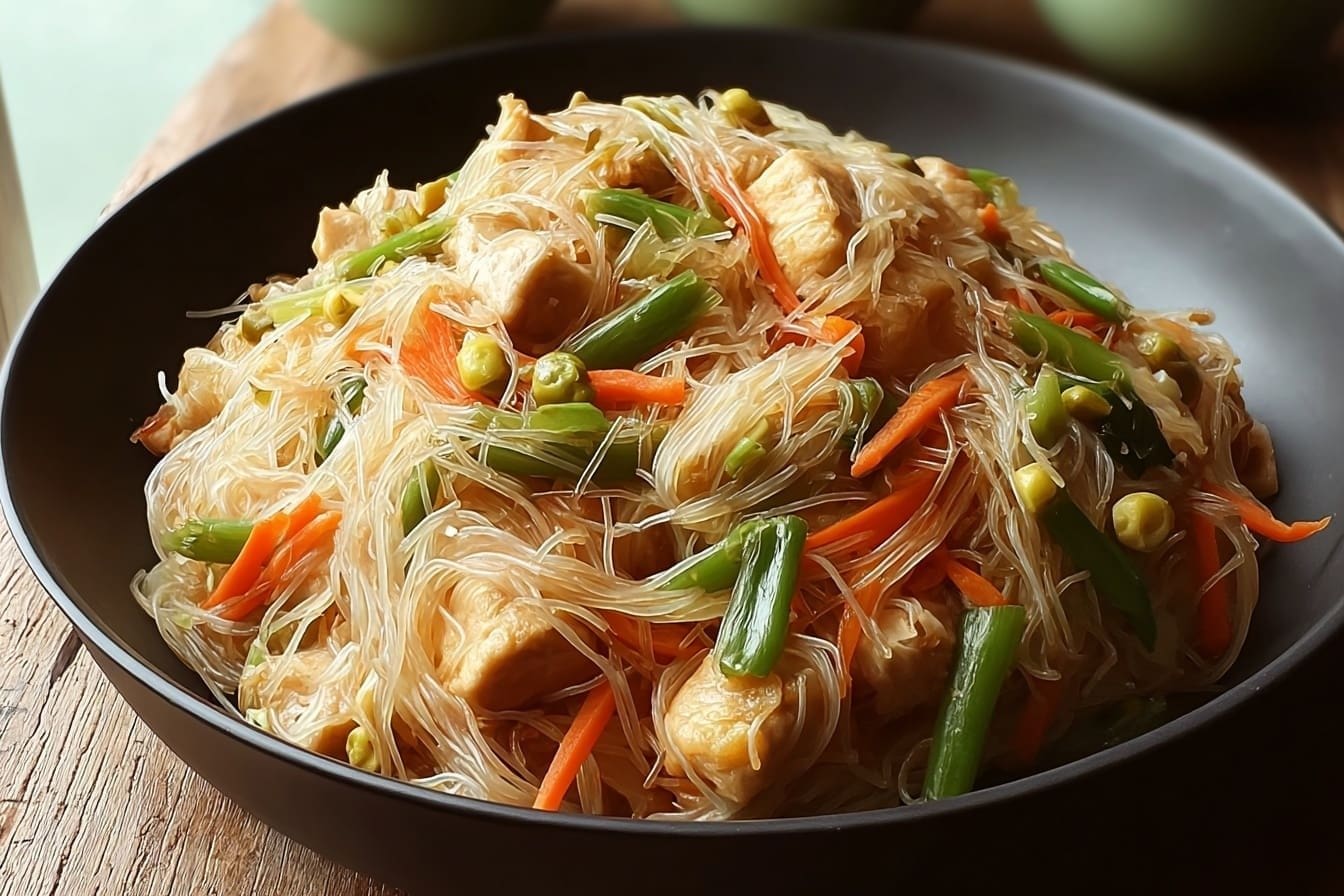
Transfer the pancit bihon to a serving platter and serve right away. It tastes best when warm and freshly cooked. If you want, add calamansi or lemon on the side for a bright citrus finish that cuts through the savory sauce.
This dish serves 8, making it a smart choice when you need something filling and easy to portion. It is a reliable recipe for gatherings because it can sit on a buffet table and still hold up well for a while.
Dietary Substitutions to Customize Your Pancit Bihon
Protein and main component alternatives
If you do not have pork or chicken on hand, you can still make a satisfying bowl of pancit bihon. Shrimp works well and cooks quickly, while tofu can make the dish vegetarian. Thinly sliced beef can also be used if you want a richer flavor, though it will change the classic taste a bit.
For a lighter version, use only chicken and skip the pork. You can also add more vegetables to make the dish feel fuller without adding much extra fat. That works well for busy families, students, and anyone who wants a more balanced meal.
Vegetable, sauce, and seasoning modifications
You can swap snow peas for snap peas if that is what you have in the fridge. Bell peppers are optional, but they add nice color and a sweet flavor. If you want a more traditional finish, keep the vegetables simple and let the broth, noodles, and meat do most of the work.
For seasoning, use gluten-free soy sauce if needed. If you want less sodium, start with less soy sauce and taste as you cook. You can also keep the dish milder by using less chicken powder and letting the vegetables and meat add more of the flavor.
Mastering Pancit Bihon: Advanced Tips and Variations
Pro cooking techniques
For the best texture, do not over-soak the noodles. A short soak is helpful, but if the noodles are very thin, they may only need a little time in water before going into the wok. Also, keep the heat steady so the liquid reduces evenly.
If you want a slightly more toasted flavor, let the noodles sit in the pan for a few seconds before tossing. Just do not let them stick or brown too much. The goal is a tender noodle with just enough bite to hold up under the sauce.
Flavor variations
Chorizo Macau is one of the easiest ways to add a deeper, slightly sweet taste. You can also add more vegetables, such as bell peppers, for color and a fresh bite. If you like a stronger umami note, add a little extra soy sauce at the end instead of during the simmer.
For families who love mixed textures, serve the dish with fried spring rolls or simple grilled chicken on the side. If you need another easy dish for a spread, this easy macaroni salad pairs well with picnic-style meals and casual gatherings.
Presentation tips
Use tongs to lift the noodles into a mound on a large platter. Then spoon the meat and vegetables over the top so the colors show well. A few citrus wedges on the side can brighten the whole plate and make it look ready for a celebration.
For a party table, the best pancit is the one that looks generous, colorful, and easy to serve.
Make-ahead options
You can chop the vegetables and slice the meat a day ahead to save time. The noodles can also be soaked briefly before cooking if you plan to move quickly at dinner time. This makes the recipe useful for weeknights, potlucks, and church meals where you need something dependable.
How to Store Pancit Bihon: Best Practices
Let the pancit cool to room temperature before storing it in an airtight container. For safety, do not leave it out for more than 2 hours before refrigerating or freezing. In the fridge, it keeps well for up to 5 days.
If you want to freeze it, portion it into smaller containers so it thaws more evenly later. To reheat frozen pancit, thaw it first if needed, then cover it to keep it from drying out. Microwave for 1 to 2 minutes, stirring if needed, until hot.
You can also reheat it on the stovetop with a splash of water or broth. Heat it gently so the noodles do not break apart. This works well for meal prep because the dish stays convenient and easy to serve later.
Nutrition Information for Pancit Bihon
Here is the nutrition breakdown for one serving, based on 8 servings total. Keep in mind that values can vary a little depending on the brands you use and any substitutions you make.
| Nutrient | Per Serving |
|---|---|
| Calories | 240 kcal |
| Carbohydrates | 23 g |
| Protein | 13 g |
| Fat | 11 g |
| Saturated Fat | 4 g |
| Polyunsaturated Fat | 2 g |
| Monounsaturated Fat | 5 g |
| Trans Fat | 0.03 g |
| Cholesterol | 42 mg |
| Sodium | 845 mg |
| Potassium | 423 mg |
| Fiber | 3 g |
| Sugar | 4 g |
| Vitamin A | 2980 IU |
| Vitamin C | 29 mg |
| Calcium | 62 mg |
| Iron | 1 mg |
If you are interested in the nutrition side of chicken, this WebMD guide to the health benefits of chicken is a helpful read. For more on pork nutrition, see this Healthline overview of pork.
FAQs: Frequently Asked Questions About Pancit Bihon
What is Pancit Bihon?
Pancit Bihon, also known as Pancit Bihon Guisado, is a classic Filipino noodle dish featuring thin rice vermicelli noodles (bihon) stir-fried with proteins like pork, chicken, or shrimp, and vegetables such as carrots, cabbage, green beans, and celery. Seasoned with soy sauce, garlic, onions, and broth, it delivers savory, umami flavors with a slight crispness from the veggies. This dish symbolizes long life in Filipino culture due to the long noodles and is a must-have at birthdays, fiestas, and family gatherings. It’s quick to prepare, gluten-free thanks to rice noodles, and serves 4-6 people easily. Pair it with calamansi for a citrus kick that balances the richness. Total prep and cook time is about 30 minutes, making it ideal for weeknight dinners or potlucks.
Where does Pancit Bihon originate from?
Pancit Bihon traces its roots to Chinese immigrants who brought noodle-making traditions to the Philippines centuries ago. The word “pancit” derives from the Hokkien phrase “piansit,” meaning “convenience food” or “something cooked fast.” Filipinos adapted wheat noodles using abundant local rice flour, creating lightweight bihon noodles that cook quicker and suit the tropical climate. Introduced during Spanish colonial times via Fujianese traders, it evolved into regional variations like Bihon Guisado in Luzon. Today, it’s a national staple, with over 1,000 noodle recipes across the archipelago, blending Chinese stir-fry techniques with Filipino flavors like patis (fish sauce) and fresh veggies for a unique Pinoy twist that’s beloved worldwide.
How do you cook Pancit Bihon at home?
Start by soaking 8 oz bihon noodles in warm water for 10 minutes, then drain. In a wok over medium heat, sauté 3 minced garlic cloves and 1 chopped onion in 2 tbsp oil until fragrant. Add ½ lb sliced pork or chicken, cooking until browned. Stir in 1 tsp chicken powder, 2 cups water or broth, and simmer 5 minutes. Separately blanch sliced carrots, snow peas, cabbage, and celery in the broth for 1-2 minutes, then remove veggies and meat, reserving liquid. Mix in ¼ cup soy sauce and drained noodles; cook on high, tossing until liquid absorbs (about 5 minutes). Return meat and veggies, season with pepper, and toss 2 more minutes. Garnish with green onions and lemon. Serves 4; avoid overcooking noodles to prevent mushiness.
What should you serve with Pancit Bihon?
Serve Pancit Bihon hot straight from the wok for best texture, alongside pandesal (Filipino bread rolls) or slices of puto (steamed rice cake) to soak up sauces. Classic pairings include crispy lumpiang shanghai (spring rolls), fried chicken, or grilled meats for parties. Squeeze fresh calamansi or lemon over top for tangy brightness that cuts through the savory soy notes. For drinks, iced tea, buko juice (young coconut water), or soda complement its flavors perfectly. At celebrations, it’s often part of a buffet with rice, adobo, or kinilaw (ceviche). This setup feeds 6-8 guests economically—noodles stretch far—and keeps the meal festive. For vegetarians, swap meat for tofu and pair with ensaladang talong (eggplant salad).
How do you store and reheat leftover Pancit Bihon?
Cool Pancit Bihon to room temperature within 2 hours to avoid bacteria, then transfer to an airtight container. Refrigerate for up to 3-5 days or freeze for 1-2 months—noodles hold shape well frozen. To reheat, thaw overnight in fridge if frozen. Microwave portions covered with a damp paper towel for 1-2 minutes, stirring halfway, or stovetop: add a splash of water or broth to a pan, cover, and heat on medium for 3-5 minutes while tossing to revive crispness. Avoid high heat to prevent drying. Check for off smells before eating; discard if slimy. Pro tip: Store separately from sauces if possible. This keeps it fresh-tasting, reducing waste for busy households.
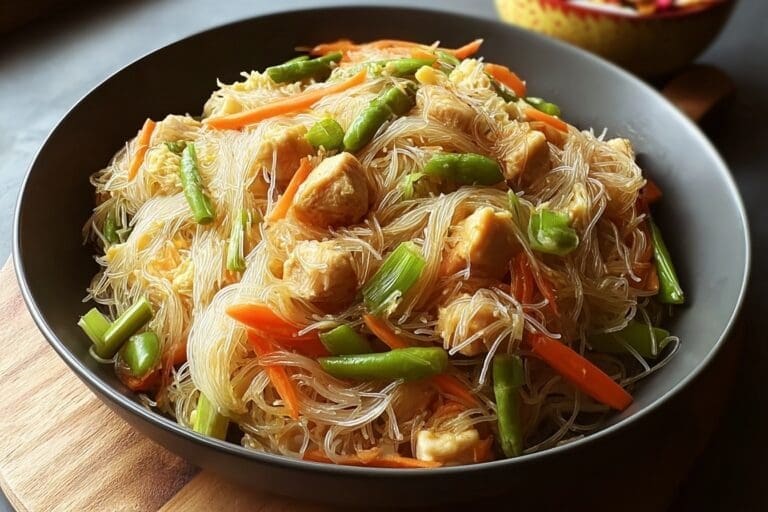
Pancit Bihon
🍜🐔 Flavorful Pancit Bihon Guisado Recipe blends tender pork, chicken, and crisp veggies in savory soy broth – balanced, veggie-rich Filipino comfort!
🇵🇭 Easy Filipino Noodles ready in 55 minutes for quick family feasts packed with protein and crunch!
- Total Time: 55 minutes
- Yield: 8 servings
Ingredients
– 1 lb pancit bihon rice noodles
– 1/2 lb pork, cut into small thin slices
– 1/2 lb chicken, cooked, deboned, and cut into thin slices
– 1/8 lb snow peas
– 1 cup carrot
– 1/2 small cabbage, chopped
– 1 cup celery leaves, chopped finely
– 1 onion, chopped
– 1/2 tbsp garlic, minced
– 2 teaspoons chicken powder
– 5 tbsp soy sauce
– 3 to 4 cups water
– 3 tbsp cooking oil
Instructions
1-First step: Prep everything before turning on the heat Start by gathering and measuring all ingredients. Slice the pork into small thin pieces, cut the cooked chicken into thin slices, chop the onion, mince the garlic, and prepare the vegetables. Having everything ready makes the cooking process smooth because pancit moves quickly once the heat is on. Soak the pancit bihon in water for about 10 minutes. This softens the noodles just enough so they cook evenly later. If you are short on time, a brief soak helps, but it is not always necessary, especially if you are comfortable adding them directly to the broth.
2-Second step: Build the flavor base Heat 3 tablespoons of cooking oil in a large wok over medium heat. Add the minced garlic and chopped onion, then sauté until aromatic. You want the onion to turn soft and the garlic to smell fragrant, not browned too dark. This first step lays the foundation for the savory flavor of the whole dish. At this point, the kitchen should already smell inviting. That mix of garlic and onion is classic in filipino pancit bihon noodles, and it helps the dish taste rich without needing a long ingredient list.
3-Third step: Cook the meats Add the pork slices and cooked chicken to the wok. Stir and cook for about 2 minutes until the pork looks browned and the chicken heats through. Since the chicken is already cooked and deboned, it only needs time to absorb flavor and warm up. If you want a deeper taste, let the pork sear lightly before moving on. This is also the stage where you could add sliced Chinese sausage, also called Chorizo Macau, if you want extra flavor. Slice it thinly and sauté it with the meats. It brings a slightly sweet and smoky note that many people love in pancit guisado.
4-Fourth step: Add liquid and simmer Sprinkle in 2 teaspoons of chicken powder, then pour in 3 to 4 cups of water. Stir everything well and bring it to a gentle simmer. Let it cook for about 15 minutes so the pork becomes tender and the broth picks up flavor from the meat and aromatics. As the mixture simmers, check that the heat stays steady but not too strong. You want a gentle bubble, not a hard boil. That helps the meat stay juicy and gives the broth time to develop a deeper taste.
5-Fifth step: Cook the vegetables Add the carrots, snow peas, cabbage, and finely chopped celery leaves. Simmer for a few minutes until the vegetables are tender but still bright. The carrots should soften slightly, the cabbage should wilt, and the snow peas should keep a bit of snap. Once the vegetables are cooked, remove all ingredients except the liquid and set them aside. This step may seem unusual, but it helps the noodles cook evenly in the broth without overcooking the vegetables. It also keeps the final texture clean and balanced.
6-Sixth step: Season the broth Add 5 tablespoons of soy sauce to the liquid and mix well. Taste the broth if you like, and adjust only if needed. The soy sauce should make the liquid savory and slightly dark, which is exactly what you want for pancit bihon recipe flavor. Good pancit starts with a well-seasoned broth. If the liquid tastes balanced before the noodles go in, the whole dish will taste better.
7-Seventh step: Cook the bihon noodles Place the soaked pancit bihon into the pot. Stir gently so the noodles separate and absorb the liquid. Cook until the liquid evaporates completely, tossing the noodles as they soften. This part takes attention because the noodles can go from perfect to mushy quickly if overcooked. Keep the heat medium to medium-high and continue stirring until the noodles are tender and the bottom of the wok looks mostly dry. If the pan gets too dry before the noodles are ready, add a small splash of water, but only as needed.
8-Eighth step: Return the meat and vegetables Add the pork, chicken, and vegetables back into the wok. Toss everything together and cook for 1 to 2 minutes so the flavors come together. This final toss warms the meat and vegetables without softening them too much. At this stage, the dish should look colorful, glossy, and ready to serve. The noodles should be coated with flavor, not swimming in liquid.
9-Final step: Serve hot Transfer the pancit bihon to a serving platter and serve right away. It tastes best when warm and freshly cooked. If you want, add calamansi or lemon on the side for a bright citrus finish that cuts through the savory sauce. This dish serves 8, making it a smart choice when you need something filling and easy to portion. It is a reliable recipe for gatherings because it can sit on a buffet table and still hold up well for a while.
Last Step:
Please leave a rating and comment letting us know how you liked this recipe! This helps our business to thrive and continue providing free, high-quality recipes for you.Notes
🌭 Add sliced Chinese sausage when sautéing meats for extra flavor.
❄️ Cool completely before storing in airtight container; refrigerate up to 5 days.
🌶️ Toss in bell peppers for color and a slight sweet crunch.
- Prep Time: 15 minutes
- Cook Time: 40 minutes
- Category: Main Dish
- Method: Stovetop
- Cuisine: Filipino
- Diet: Balanced
Nutrition
- Serving Size: 1/8 recipe
- Calories: 240 kcal
- Sugar: 4g
- Sodium: 845mg
- Fat: 11g
- Saturated Fat: 4g
- Unsaturated Fat: 7g
- Trans Fat: 0g
- Carbohydrates: 23g
- Fiber: 3g
- Protein: 13g
- Cholesterol: 42mg


