

Why You’ll Love This Nepali Momo
Learn more about chicken nutrition and health benefits as you plan the meat filling for this dish. Nepali Momo is one of the most satisfying dumplings in Himalayan cooking because it brings together simple ingredients, efficient preparation, and a deeply savory taste. These steamed dumplings are rooted in Tibetan and Nepali cuisine and are now enjoyed across Nepal and surrounding regions in many forms.
- Ease of preparation: The dough uses only white flour and water, and the filling comes together quickly. Most home cooks can prepare the dough and filling in 20 to 30 minutes, then steam each batch in 10 to 15 minutes.
- Health benefits: Steaming keeps the dumplings light, while vegetable fillings and lean meats offer a balanced option for lunch, dinner, or a shared snack. Each momo can range from 35 to 100 calories, depending on size and filling.
- Versatility: Nepali Momo can be made with chicken, buffalo, mutton, cabbage, mushrooms, paneer, or potatoes. It also works well for vegetarian, lower-calorie, or meat-rich meal plans.
- Distinctive flavor: The filling often includes onion, garlic, ginger, cilantro, and green chilies, which gives the dumplings a fragrant and lively taste. Chili garlic sauce, tomato chutney, and pickled vegetables add more depth at the table.
For the best texture, keep the filling moist but not wet, steam over simmering water, and pair the dumplings with a bold dipping sauce.
This dish also fits well into shared meals for families, potlucks, and community gatherings because it can be cooked in batches and served hot with several accompaniments. Whether you prefer steamed momos, kothey momo, or jhol momo, the recipe adapts easily to different tastes.
Jump to:
- Why You’ll Love This Nepali Momo
- Essential Ingredients for Nepali Momo
- Vegetarian filling options
- Special dietary options
- How to Prepare the Perfect Nepali Momo: Step-by-Step Guide
- First Step: Mix the dough
- Second Step: Prepare the filling
- Third Step: Roll the wrappers
- Fourth Step: Fill and shape the momos
- Fifth Step: Steam the momos
- Sixth Step: Try other serving styles
- Final Step: Serve with sauces and accompaniments
- Dietary Substitutions to Customize Your Nepali Momo
- Protein and main component alternatives
- Vegetable, sauce, and seasoning modifications
- Mastering Nepali Momo: Advanced Tips and Variations
- Pro cooking techniques
- Flavor variations
- Presentation tips
- Make-ahead options
- How to Store Nepali Momo: Best Practices
- FAQs: Frequently Asked Questions About Nepali Momo
- What are Nepali momos?
- What fillings are used in Nepali momos?
- How do you cook Nepali momos?
- What sauces go with Nepali momos?
- What are popular variations of Nepali momos?
- Nepali Momo
- Ingredients
- Instructions
- Last Step:
- Notes
- Nutrition
- Did you make this recipe?
Essential Ingredients for Nepali Momo
The ingredient list below covers both the wrapper and the filling, using the classic Nepali style that makes these dumplings so popular.
| Ingredient | Amount | Purpose |
|---|---|---|
| All-purpose flour | 2 cups | Creates the soft wrapper for the dumplings. |
| Water | 3/4 cup, plus more as needed | Forms the dough. |
| Salt | 1/2 teaspoon | Seasoning for the dough. |
| Ground chicken, buffalo, or mutton | 1 pound | Main protein for the filling. |
| Finely chopped onion | 1 medium onion | Adds sweetness and moisture. |
| Garlic, minced | 2 teaspoons | Brings sharp, savory flavor. |
| Ginger, minced | 2 teaspoons | Gives warmth and aroma. |
| Cilantro, finely chopped | 1/4 cup | Fresh herb flavor. |
| Green chilies, finely chopped | 1 to 2 tablespoons | Provides heat. |
| Puréed aromatic herbs or vegetables | 2 tablespoons | Deepens flavor and improves texture. |
| Oil | 1 tablespoon | Keeps meat fillings juicy. |
| Black pepper | 1/2 teaspoon | Adds gentle spice. |
| Cumin | 1 teaspoon | Classic warm seasoning. |
| Baking soda or yeast | 1/4 teaspoon baking soda or 1/2 teaspoon yeast | Makes the dough softer. |
Vegetarian filling options
- 2 cups shredded cabbage
- 1 cup finely chopped mushrooms
- 1 cup crumbled paneer cheese
- 1 cup grated or finely chopped potatoes
- 1 medium onion, finely chopped
- 2 teaspoons minced garlic
- 2 teaspoons minced ginger
- 1/4 cup cilantro, chopped
- 1 to 2 tablespoons green chilies, chopped
- 1 tablespoon oil
- 1/2 teaspoon salt
- 1/2 teaspoon black pepper
Special dietary options
- Vegan: Replace meat with cabbage, mushrooms, potatoes, or crumbled tofu instead of paneer.
- Gluten-free: Use a gluten-free flour blend that can be rolled thin, though the dough may need extra resting time.
- Low-calorie: Choose vegetable fillings, reduce oil, and keep wrappers thin for lighter dumplings.
For dipping sauces, plan on tomato-based chutney, chili garlic sauce, sesame-peanut achar, or pickled vegetables. If you want a spice-forward sauce, a garlic-rich chutney also works well. Garlic is widely valued in cooking for its bold flavor, and you can read more about it here: the proven health benefits of garlic.
How to Prepare the Perfect Nepali Momo: Step-by-Step Guide
Nepali Momo is not difficult, but it does reward careful handling. The dough should be soft and elastic, the filling should be well mixed, and the sealing should be tight enough to keep the juices inside while steaming. If you work in batches and keep the wrappers covered, the whole process feels organized and manageable.
First Step: Mix the dough
In a large bowl, combine 2 cups of all-purpose flour, 1/2 teaspoon of salt, and 1/4 teaspoon of baking soda or 1/2 teaspoon of yeast if you want a softer result. Add 3/4 cup of water gradually while mixing until the dough starts to form. Knead for 8 to 10 minutes until smooth and elastic. Cover the dough with a damp cloth and let it rest for 15 to 20 minutes.
That rest period matters because it helps the gluten relax, making the wrappers easier to roll. If the dough feels dry, add a teaspoon of water at a time. If it feels sticky, dust lightly with flour, but avoid adding too much because dry dough can crack when folded.
Second Step: Prepare the filling
Place 1 pound of ground chicken, buffalo, or mutton in a mixing bowl. Add 1 medium finely chopped onion, 2 teaspoons minced garlic, 2 teaspoons minced ginger, 1/4 cup chopped cilantro, 1 to 2 tablespoons chopped green chilies, 2 tablespoons puréed aromatic herbs or vegetables, 1 tablespoon oil, 1/2 teaspoon salt, 1/2 teaspoon black pepper, and 1 teaspoon cumin. Mix thoroughly until the filling looks cohesive and slightly sticky.
Using a little oil in the filling helps keep the meat juicy during steaming. Fatty meat also works well because it stays tender and gives a richer taste. If you prefer a more aromatic filling, add a small amount of puréed herbs or vegetables so the mixture becomes smoother and more fragrant.
The filling should be well seasoned and moist, but not watery. Excess liquid can weaken the wrapper and cause the momo to burst.
Third Step: Roll the wrappers
Divide the rested dough into small pieces about the size of a walnut. Roll each piece into a smooth ball, then flatten it into a thin circular disc about 3 inches across. Keep the center slightly thicker than the edges if possible, since that gives a stronger seal. Cover the unused dough pieces so they do not dry out.
This step moves quickly once you find a rhythm. Many home cooks roll a few wrappers at a time, fill them, and then return to the next set. That approach keeps the dough soft and helps prevent cracking.
Fourth Step: Fill and shape the momos
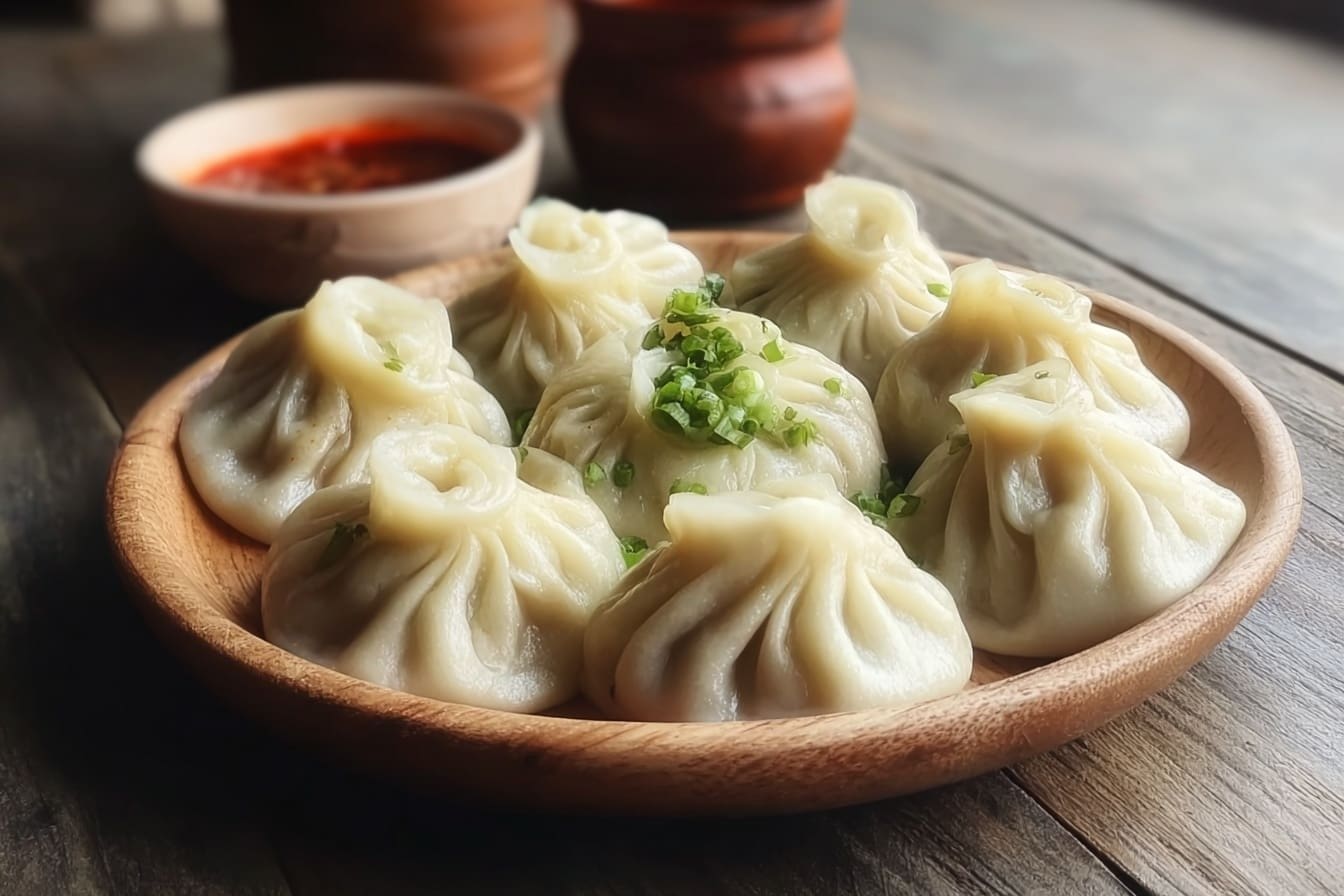
Place about 1 tablespoon of filling in the center of each wrapper. Do not overfill, because too much filling makes sealing difficult and may cause tearing during steaming. Bring the edges together and pinch firmly to seal. Traditional Nepali momos are often round, though crescent shapes are also common.
For round pockets, gather the wrapper edges up and twist the top closed. For crescent shapes, fold the wrapper in half and seal along the curved edge with pleats. Either shape works well as long as the dumpling is sealed tightly. Place the finished momos on a tray lined with parchment paper or lightly oiled cabbage leaves.
Fifth Step: Steam the momos
Bring water to a steady simmer in a bamboo steamer or metal steamer. Line the tray with cabbage leaves or parchment with small holes to prevent sticking. Arrange the momos with a little space between them, then steam for 10 to 15 minutes, depending on size. The wrappers should look glossy and slightly translucent when done.
Keep the water at a simmer rather than a vigorous boil. Gentle steam keeps the dumplings tender and helps them cook evenly. If you are making several batches, wipe excess condensation from the lid before opening the steamer to prevent water from dripping onto the momos.
Sixth Step: Try other serving styles
Classic steamed momos are the most common version, but two other styles are especially popular. For kothey momo, steam the dumplings first, then pan-fry them in a little oil until the bottoms turn golden and crisp. For jhol momo, place the steamed dumplings in a spicy vegetable soup or broth and serve them hot.
These variations give you different textures from the same base recipe. Steamed momos stay soft and delicate, kothey momo adds crunch, and jhol momo provides a warm, saucy finish that is especially welcome in colder weather.
Final Step: Serve with sauces and accompaniments
Serve Nepali Momo with chili garlic sauce, tomato chutney, sesame-peanut achar, or pickled vegetables. A small bowl of dipping sauce on the side helps balance the dumpling wrapper and the savory filling. For a full meal, add a simple salad or a clear soup.
For planning purposes, expect about 20 to 30 minutes for dough and filling preparation, plus 10 to 15 minutes of steaming per batch. Total time is usually around 40 to 50 minutes, depending on the quantity and your skill level. A typical batch of 20 to 25 momos is enough for about 4 servings.
Dietary Substitutions to Customize Your Nepali Momo
Protein and main component alternatives
Not every cook has access to buffalo or mutton, and many households prefer lighter or meat-free versions. Ground chicken is the easiest substitute because it is widely available and cooks quickly. Pork, beef, or turkey can also be used where appropriate, though the texture and fat content will change the final result.
For a vegetarian or vegan version, use cabbage, mushrooms, potatoes, paneer, or crumbled tofu. A mix of vegetables often gives better texture than a single filling. Cabbage and mushrooms work especially well together because they bring both moisture and earthiness.
Vegetable, sauce, and seasoning modifications
If you want a milder flavor, reduce the green chilies and use more cilantro, onion, and ginger. If you want a deeper taste, add finely puréed herbs, extra garlic, or a small amount of cumin and turmeric. Some cooks also add a touch of milk solids and sugar for a sweeter regional variation.
Sauce choices can also be adjusted. Tomato chutney gives freshness, chili garlic sauce adds heat, and sesame or peanut sauce adds richness. For a lighter plate, choose pickled vegetables or a thin broth. If you are watching calories, steam the momos and keep the sauce portion modest.
Mastering Nepali Momo: Advanced Tips and Variations
Once you are comfortable with the basic method, small refinements can make a clear difference in flavor and texture. A few careful choices help the dumplings stay juicy, cook evenly, and look more polished when served.
Pro cooking techniques
Use fatty meat when possible, or add a small amount of oil to leaner meat so the filling does not turn dry. Finely puréed herbs or vegetables can be mixed into the filling for extra aroma and a softer texture. If the wrapper keeps shrinking while rolling, let the dough rest a little longer before shaping.
When steaming, leave enough space for the dumplings to expand slightly. Overcrowding can cause them to stick together or cook unevenly. A well-lined steamer basket also helps prevent tearing when you lift the momos out.
Flavor variations
Popular variations include kothey momo, jhol momo, c-momo, open momo, and sadheko momo. Kothey momo gives a crisp base, jhol momo adds spicy broth, and sadheko momo turns the dumpling into a cold, spiced salad. Cheese-filled versions, especially with paneer, are also widely loved.
You can also experiment with prawn, turkey, or mixed vegetable fillings if you want a different profile. In Nepali homes and street stalls alike, the shape stays typically round, but the fillings change with season, region, and family preference.
Presentation tips
Serve the momos on a warm platter with a small bowl of sauce in the center. Garnish with chopped cilantro or thinly sliced chilies for color. If you are serving a group, arrange a mix of steamed and fried momos so guests can compare the textures.
A simple cabbage leaf lining or a bed of greens makes the plate look neat and also helps keep the dumplings from sticking. For gatherings, set out several sauces so each person can choose a heat level that suits them.
Make-ahead options
The dough can be made ahead and kept covered for a short time, and the filling can be mixed several hours in advance. You can also shape the momos and refrigerate them on a tray before steaming. For busy schedules, this is one of the most practical parts of the recipe.
Many home cooks prepare a large batch and freeze the uncooked momos in a single layer before transferring them to a freezer bag. That method makes weeknight meals easier and is especially useful for students, working professionals, and families preparing food for gatherings.
How to Store Nepali Momo: Best Practices
Proper storage helps preserve texture and flavor, especially when you are making a large batch. Since momos are best when freshly steamed, careful reheating matters almost as much as the original cooking method.
- Refrigeration: Store cooked momos in an airtight container for up to 3 days. Keep the sauce separate so the wrappers do not soften too much.
- Freezing: Freeze uncooked momos on a tray until firm, then move them to a freezer-safe bag. They can usually be steamed straight from frozen, with a few extra minutes added to the cooking time.
- Reheating: Steam refrigerated momos for a few minutes until hot. Avoid microwaving if possible, since it can make the wrapper rubbery.
- Meal prep considerations: For batch cooking, shape the dumplings first and freeze them before steaming. This keeps them ready for quick meals later in the week.
If you are packing momos for lunch or a group meal, allow them to cool before sealing the container. That simple step helps reduce condensation and keeps the wrappers from turning soggy.
FAQs: Frequently Asked Questions About Nepali Momo
What are Nepali momos?
Nepali momos are steamed dumplings filled with savory ingredients, a staple in Nepali cuisine influenced by Tibetan roots. They feature a thin wrapper made from all-purpose flour and water, wrapped around fillings like minced chicken, buffalo, vegetables, or cheese. Typically round in shape, they differ from half-moon Tibetan styles. Momos are enjoyed as street food or meals, often with spicy sauces. In Nepal, they’re ubiquitous in cities like Kathmandu, served hot from steamers. For home cooking, prepare dough by kneading 2 cups flour with ¾ cup water, roll into 3-inch circles, add 1 tbsp filling per momo, pinch to seal, and steam for 10-12 minutes. This yields about 20-25 momos, perfect for 4 servings. They’re versatile for vegetarians too, using cabbage and onions.
What fillings are used in Nepali momos?
Common Nepali momo fillings include minced meats like chicken, buffalo, pork, or beef, mixed with onions, garlic, ginger, cilantro, and spices such as cumin and turmeric. Vegetarian options feature cabbage, carrots, mushrooms, potatoes, leeks, or paneer cheese. For sweetness, some use milk solids and sugar. A basic chicken filling recipe: sauté 1 lb ground chicken with 1 chopped onion, 2 tsp garlic-ginger paste, salt, pepper, and green chilies until cooked; cool before wrapping. Buffaloes momo, popular in Nepal, uses lean buffalo meat for a richer flavor. Fillings total about 1-2 tsp per wrapper to avoid bursting during steaming. These provide protein-packed bites, with veggie versions offering 150-200 calories per 6 momos.
How do you cook Nepali momos?
Nepali momos are traditionally steamed in a bamboo steamer over boiling water for 10-15 minutes until the wrappers turn translucent and fillings cook through. First, prepare by pleating edges tightly to seal. For fried momos (kothey), steam first then pan-fry in oil until golden and crispy, about 3-5 minutes per side. Jhol momo simmers steamed momos in spicy vegetable broth. Use a metal or bamboo steamer lined with cabbage leaves to prevent sticking; stack multiple layers. Test doneness by poking a toothpick through—no raw dough. Avoid overfilling to prevent explosions. Freshly cooked momos stay juicy; reheat by steaming briefly. This method preserves nutrients, making them a healthy snack at around 50 calories per steamed momo.
What sauces go with Nepali momos?
Nepali momos pair best with tomato-based chutney, chili-garlic sauce, or sesame-peanut achar. A quick tomato chutney recipe: blend 4 tomatoes, 5 garlic cloves, 3-5 dried red chilies, 1 tsp cumin seeds, salt, and a splash of oil; simmer 10 minutes until thick. Pickled daikon radish adds crunch, while soybean or sesame sauces offer nutty depth. In Nepal, spicy jhol achar broth complements jhol momos. Serve 2-3 tbsp sauce per 8 momos for dipping. Adjust heat with fresh chilies for mild or fiery tastes. These sauces cut through the dough’s richness, enhancing flavors—chili garlic boosts metabolism with capsaicin. Store sauces in the fridge for up to a week; pair milder ones with veggie momos.
What are popular variations of Nepali momos?
Popular Nepali momo variations include steamed (classic), fried kothey (steamed then pan-fried for crunch), jhol momo (in spicy broth), c-momo (chili sauce-coated), open momo (topped, not sealed), and sadheko momo (cold salad with onions and spices). Tingmo is a plain steamed bread side. Shapes are round for Nepali styles. Vegans love potato-mushroom fills; try shoko momo with cheese. For home, make kothey by frying steamed momos in 2 tbsp oil with onions. Jhol momo: simmer momos in broth of tomatoes, chilies, and veggies for 5 minutes. These adapt to tastes—fried versions add 50 extra calories. In Kathmandu, street vendors sell over 1,000 daily, showing their popularity. Experiment with fillings for fusion like prawn momos.

Nepali Momo
🥟 Juicy Momo Recipe steams tender dumplings packed with spiced chicken and veggies – authentic flavor explosion for snacks or meals!
🍲 Authentic Steamed Dumplings Guide is simple, customizable (veggie/meat), and party-perfect with fiery chutney!
- Total Time: 1 hour 15 minutes
- Yield: 4 servings
Ingredients
– 2 cups all-purpose flour for soft wrapper
– 3/4 cup, plus more as needed water for dough
– 1/2 teaspoon salt for seasoning the dough
– 1 pound ground chicken, buffalo, or mutton for main protein
– 1 medium finely chopped onion for sweetness and moisture
– 2 teaspoons minced garlic for sharp savory flavor
– 2 teaspoons minced ginger for warmth and aroma
– 1/4 cup finely chopped cilantro for fresh herb flavor
– 1 to 2 tablespoons finely chopped green chilies for heat
– 2 tablespoons puréed aromatic herbs or vegetables for flavor and texture
– 1 tablespoon oil for keeping meat juicy
– 1/2 teaspoon black pepper for gentle spice
– 1 teaspoon cumin for classic warm seasoning
– 1/4 teaspoon baking soda or 1/2 teaspoon yeast for softer dough
– 2 cups shredded cabbage
– 1 cup finely chopped mushrooms
– 1 cup crumbled paneer cheese
– 1 cup grated or finely chopped potatoes
– 1 medium onion, finely chopped
– 2 teaspoons minced garlic
– 2 teaspoons minced ginger
– 1/4 cup cilantro, chopped
– 1 to 2 tablespoons green chilies, chopped
– 1 tablespoon oil
– 1/2 teaspoon salt
– 1/2 teaspoon black pepper
Instructions
1-First Step: Mix the dough In a large bowl, combine 2 cups of all-purpose flour, 1/2 teaspoon of salt, and 1/4 teaspoon of baking soda or 1/2 teaspoon of yeast if you want a softer result. Add 3/4 cup of water gradually while mixing until the dough starts to form. Knead for 8 to 10 minutes until smooth and elastic. Cover the dough with a damp cloth and let it rest for 15 to 20 minutes.
2-Second Step: Prepare the filling Place 1 pound of ground chicken, buffalo, or mutton in a mixing bowl. Add 1 medium finely chopped onion, 2 teaspoons minced garlic, 2 teaspoons minced ginger, 1/4 cup chopped cilantro, 1 to 2 tablespoons chopped green chilies, 2 tablespoons puréed aromatic herbs or vegetables, 1 tablespoon oil, 1/2 teaspoon salt, 1/2 teaspoon black pepper, and 1 teaspoon cumin. Mix thoroughly until the filling looks cohesive and slightly sticky.
3-Third Step: Roll the wrappers Divide the rested dough into small pieces about the size of a walnut. Roll each piece into a smooth ball, then flatten it into a thin circular disc about 3 inches across. Keep the center slightly thicker than the edges if possible, since that gives a stronger seal. Cover the unused dough pieces so they do not dry out.
4-Fourth Step: Fill and shape the momos Place about 1 tablespoon of filling in the center of each wrapper. Do not overfill, because too much filling makes sealing difficult and may cause tearing during steaming. Bring the edges together and pinch firmly to seal. Traditional Nepali momos are often round, though crescent shapes are also common. For round pockets, gather the wrapper edges up and twist the top closed. For crescent shapes, fold the wrapper in half and seal along the curved edge with pleats. Either shape works well as long as the dumpling is sealed tightly. Place the finished momos on a tray lined with parchment paper or lightly oiled cabbage leaves.
5-Fifth Step: Steam the momos Bring water to a steady simmer in a bamboo steamer or metal steamer. Line the tray with cabbage leaves or parchment with small holes to prevent sticking. Arrange the momos with a little space between them, then steam for 10 to 15 minutes, depending on size. The wrappers should look glossy and slightly translucent when done. Keep the water at a simmer rather than a vigorous boil. Gentle steam keeps the dumplings tender and helps them cook evenly. If you are making several batches, wipe excess condensation from the lid before opening the steamer to prevent water from dripping onto the momos.
6-Sixth Step: Try other serving styles Classic steamed momos are the most common version, but two other styles are especially popular. For kothey momo, steam the dumplings first, then pan-fry them in a little oil until the bottoms turn golden and crisp. For jhol momo, place the steamed dumplings in a spicy vegetable soup or broth and serve them hot.
7-Final Step: Serve with sauces and accompaniments Serve Nepali Momo with chili garlic sauce, tomato chutney, sesame-peanut achar, or pickled vegetables. A small bowl of dipping sauce on the side helps balance the dumpling wrapper and the savory filling. For a full meal, add a simple salad or a clear soup.
Last Step:
Please leave a rating and comment letting us know how you liked this recipe! This helps our business to thrive and continue providing free, high-quality recipes for you.Notes
🥬 Add finely chopped cabbage or mushrooms to filling for juicier veggie-packed momos.
🛢️ Mix a teaspoon of oil into meat filling for extra tenderness and moisture.
💨 Steam over cabbage leaves to prevent sticking and infuse subtle flavor.
- Prep Time: 30 minutes
- Rest dough: 30 minutes
- Cook Time: 15 minutes
- Category: Appetizer
- Method: Steaming
- Cuisine: Nepali
- Diet: High Protein
Nutrition
- Serving Size: 6 momos
- Calories: 450 kcal
- Sugar: 2g
- Sodium: 600mg
- Fat: 15g
- Saturated Fat: 3g
- Unsaturated Fat: 11g
- Trans Fat: 0g
- Carbohydrates: 50g
- Fiber: 3g
- Protein: 25g
- Cholesterol: 70mg


