

Why You Will Love This Nasi Dagang
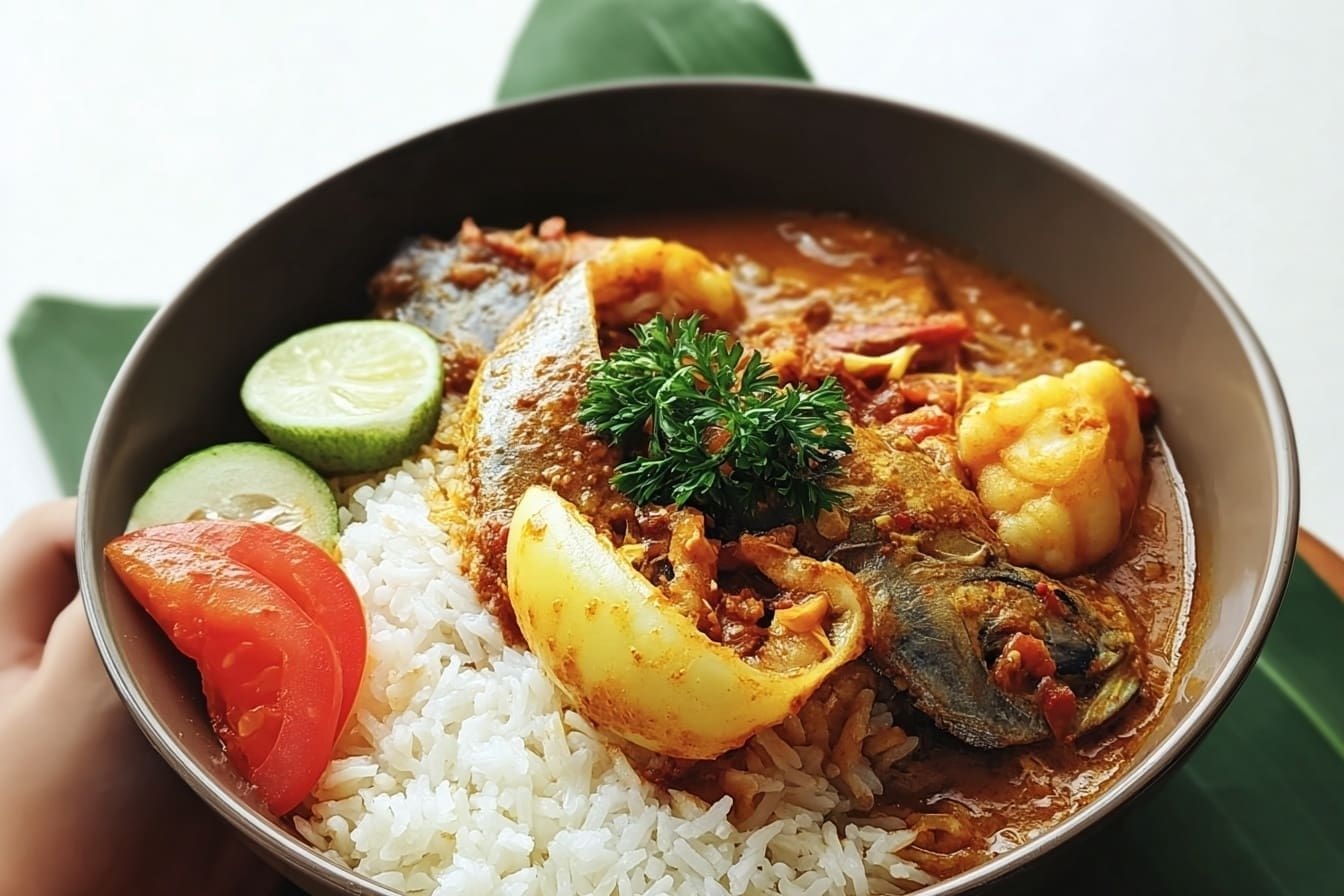
Nasi Dagang is a traditional Malaysian rice dish from Terengganu and Kelantan that has remained popular in southern Thailand and parts of Indonesia. It is typically served hot or at room temperature as a main course or breakfast staple, with coconut milk-steamed rice, rich fish curry, fried coconut, eggs, and pickled vegetables. This nasi dagang recipe is valued for its balanced flavors, satisfying texture, and cultural significance.
- Easy to prepare in stages: The rice is soaked first, then steamed with coconut milk and fenugreek seeds, while the curry and toppings cook separately. This makes the dish manageable for home cooks who like organized, step-by-step cooking.
- Balanced nutrition: The dish combines carbohydrates from rice, protein from fish and eggs, healthy fats from coconut milk, and vitamins from vegetables and herbs. That makes it filling without feeling one-dimensional.
- Flexible for different needs: The recipe can be adapted with chicken, prawns, or even plant-based substitutes. It also suits readers looking for a traditional Malaysian nasi dagang recipe that can be adjusted for family meals.
- Distinctive aroma and flavor: Coconut milk, lemongrass, turmeric, chili paste, and fenugreek create a layered taste that is rich, savory, and lightly fragrant. The fried coconut topping adds crunch and depth.
Nasi Dagang is more than a meal. It is a regional staple that reflects coastal Malay food traditions and remains especially associated with Terengganu nasi dagang and kelantan nasi dagang styles.
If you enjoy comforting breakfast dishes and communal meals, you may also like these instant pot hard boiled eggs for quick meal prep, or serve the dish alongside a simple breakfast spread such as crispy hash browns for a broader brunch table.
Jump to:
- Why You Will Love This Nasi Dagang
- Essential Ingredients for Nasi Dagang
- Rice Base
- Fish Curry
- Fried Coconut Topping
- Eggs and Pickled Vegetables
- Optional Additions
- Special Dietary Options
- How to Prepare the Perfect Nasi Dagang: Step-by-Step Guide
- First Step: Soak and prepare the rice
- Second Step: Mix the rice with coconut milk and aromatics
- Third Step: Steam the rice until tender
- Fourth Step: Prepare the fish curry
- Fifth Step: Make the fried coconut topping
- Sixth Step: Prepare the eggs and pickles
- Final Step: Assemble and serve
- Dietary Substitutions to Customize Your Nasi Dagang
- Protein and Main Component Alternatives
- Vegetable, Sauce, and Seasoning Modifications
- Mastering Nasi Dagang: Advanced Tips and Variations
- Pro cooking techniques
- Flavor variations
- Presentation tips
- Make-ahead options
- How to Store Nasi Dagang: Best Practices
- Refrigeration
- Freezing
- Reheating
- Meal prep considerations
- FAQs: Frequently Asked Questions About Nasi Dagang
- What is Nasi Dagang?
- Where did Nasi Dagang originate?
- How do you make Nasi Dagang at home?
- What are the main ingredients in Nasi Dagang?
- Is Nasi Dagang healthy?
- Nasi Dagang
- Ingredients
- Instructions
- Last Step:
- Notes
- Nutrition
- Did you make this recipe?
Essential Ingredients for Nasi Dagang
The ingredients for this easy homemade nasi dagang recipe are built around steamed rice, coconut-rich curry, and fresh accompaniments. Because the source does not provide exact measurements for every item, the list below uses typical home-cooking amounts and includes the full ingredient set mentioned in the prompt.
Rice Base
- 2 cups rice, soaked for 3 to 4 hours
- 1 1/2 cups coconut milk for steaming the rice
- 1 teaspoon fenugreek seeds
- 2 small shallots, sliced
- 1/2 teaspoon salt
Fish Curry
- 500 g fish, such as tuna or ikan tongkol
- 2 cups coconut milk
- 2 stalks lemongrass, bruised
- 2 tablespoons chili paste
- 1 teaspoon turmeric powder
- 2 turmeric leaves, sliced if available
- 1 tablespoon tamarind juice or paste, optional but common
- Salt to taste
Fried Coconut Topping
- 1 cup fresh grated coconut
- 2 shallots, thinly sliced
- 1 tablespoon oil
- Pinch of salt
Eggs and Pickled Vegetables
- 4 hard-boiled eggs, peeled and sliced
- 1 cucumber, sliced
- 2 carrots, thinly sliced
- 2 red chilies, sliced
- 1/2 cup rice vinegar
- 2 tablespoons sugar
- 1/2 teaspoon salt
Optional Additions
- Sambal, for serving
- Herb-boiled eggs, for the Thailand variant
- Gulai lemak ikan salai, for the Indonesian variant
- Extra ulam or fresh herbs, if serving as a fuller meal
| Component | Main Ingredients | Role in the Dish |
|---|---|---|
| Rice | Rice, coconut milk, fenugreek, shallots | Creates the fragrant base |
| Fish curry | Fish, lemongrass, chili paste, turmeric, coconut milk | Provides spice and richness |
| Topping | Fried grated coconut and shallots | Adds texture and aroma |
| Accompaniments | Eggs and pickled vegetables | Balance creaminess with freshness |
Special Dietary Options
- Vegan: Replace fish with tempeh, jackfruit, or mushrooms, and use plant-based sambal without shrimp paste.
- Gluten-free: The dish is naturally gluten-free when sauces and chili pastes are checked for additives.
- Low-calorie: Use light coconut milk, reduce the fried coconut topping, and increase cucumber and herb portions.
How to Prepare the Perfect Nasi Dagang: Step-by-Step Guide
This resepi nasi dagang follows the traditional sequence used in Malaysian homes. The main idea is to treat the rice, curry, and toppings as separate parts that come together at serving time. The process takes planning, but each stage is straightforward, and the final result is deeply aromatic and satisfying.
First Step: Soak and prepare the rice
Begin by rinsing the rice until the water runs mostly clear. Then soak it for 3 to 4 hours, which helps the grains soften and cook more evenly. This step is especially important for glutinous rice or the purple wild rice used in some kelantan nasi dagang variations. Drain the rice well after soaking so it does not become overly wet during steaming.
Second Step: Mix the rice with coconut milk and aromatics
Transfer the soaked rice to a large bowl. Add the coconut milk, fenugreek seeds, sliced shallots, and salt. Stir gently so the grains are coated without breaking. Fenugreek gives the rice its classic fragrant note, while the shallots add mild sweetness. If you are making a Terengganu style version, the rice is often white and straightforward. In a Kelantan version, the rice may be darker, stickier, and richer.
Third Step: Steam the rice until tender
Place the rice mixture in a steamer lined with muslin or a clean cloth if needed. Steam for about 20 to 25 minutes, then lift and fluff the rice. Add a little more coconut milk if the grains look dry. Steam again for another 20 to 30 minutes until the rice is fully cooked and creamy. This two-stage steaming method is one of the key traits of an authentic terengganu nasi dagang.
The rice should be tender but still distinct, with a creamy finish rather than a wet or mushy texture.
Fourth Step: Prepare the fish curry
While the rice steams, make the curry. Heat a pot over medium heat and add a small amount of oil if needed. Cook the chili paste briefly to remove any raw taste, then add lemongrass, turmeric, turmeric leaves, coconut milk, and fish. If you are making nasi dagang with ikan tenggiri curry style flavors, mackerel or tuna work well. Simmer gently for about 30 minutes until the fish is cooked and the curry has thickened slightly. Stir occasionally so the coconut milk does not separate.
Fifth Step: Make the fried coconut topping
Heat a pan and add a small amount of oil. Fry the sliced shallots until they soften, then add the grated coconut. Stir constantly over low to medium heat until the coconut becomes golden and fragrant. Keep the heat moderate so it does not burn. This topping, often called kelapa goreng, adds a toasted aroma and a pleasant contrast to the creamy rice and curry.
Sixth Step: Prepare the eggs and pickles
Boil the eggs until firm, then cool them in cold water, peel, and slice. For the pickled vegetables, combine cucumber, carrots, and chilies with rice vinegar, sugar, and salt. Let them stand for 15 to 20 minutes. The quick pickle should taste bright, lightly sweet, and tangy. This element cuts through the richness of the coconut milk and makes each bite feel balanced.
Final Step: Assemble and serve
Spoon the rice onto serving plates or a shallow platter. Top with fish curry, fried coconut, sliced eggs, and pickled vegetables. Add sambal if desired. The dish may be served hot or at room temperature, which makes it suitable for breakfast, lunch, or community gatherings. For readers who enjoy serving crowd-friendly dishes, this style of plated meal sits well beside other portable favorites such as chicken waffle sliders at a brunch table, although Nasi Dagang remains firmly rooted in Malaysian tradition.
Dietary Substitutions to Customize Your Nasi Dagang
Protein and Main Component Alternatives
If tuna is not available, chicken and prawns are the most practical substitutions. Chicken gives a mild flavor and works well for diners who prefer less fishiness, while prawns cook quickly and pair nicely with coconut milk. For a plant-based version, tempeh or mushrooms can replace the fish in the curry, and the dish still keeps much of its rich texture. Some Indonesian versions use gulai lemak ikan salai, which brings a smoky note from smoked fish. For those who want a lighter breakfast plate, smaller portions of rice can be paired with more vegetables and herbs.
Vegetable, Sauce, and Seasoning Modifications
Vegetables can be adjusted according to season and preference. Cucumber, carrots, and chilies are standard, but daikon, cabbage, or bean sprouts can also be quick-pickled. If you want less heat, reduce the chili paste and serve sambal on the side. For a stronger aroma, add extra lemongrass or turmeric leaves. Those who follow a lower-fat approach can use light coconut milk in the rice and curry, although the dish will be less rich. If you want a fuller spread for a family meal, pair the dish with fresh herbs or a simple side that travels well, such as one of the make-ahead recipes on your table.
Mastering Nasi Dagang: Advanced Tips and Variations
Good nasi dagang recipe results depend on careful texture control and thoughtful seasoning. The dish looks simple, but small adjustments make a clear difference in the final bowl. These tips help home cooks create a version that is aromatic, balanced, and close to the traditional standard.
Pro cooking techniques
Soak the rice long enough for even hydration, then drain well before steaming. If the rice seems dry after the first steam, add a small splash of coconut milk and steam again. This repeated steaming is central to achieving the creamy mouthfeel associated with the dish. Also, simmer the curry gently rather than boiling it hard, since high heat can split the coconut milk.
Flavor variations
Terengganu styles are often simpler and more direct, while Kelantan versions may use purple glutinous wild rice and a stickier texture. Some cooks add more coconut milk for a richer finish, while others prefer a lighter balance that lets the fish curry stand out. You may also use sambal as a sharper condiment, or herb-boiled eggs in the Thailand variant for a more aromatic plate.
Presentation tips
For a polished serving, shape the rice into a neat mound and place the curry beside or over it. Arrange the eggs and pickled vegetables in visible sections so the plate shows contrast in color and texture. A small garnish of herbs or fried shallots can make the dish look more inviting. This is especially useful if you are preparing food for a potluck, church event, or community lunch.
Make-ahead options
Several parts of the dish can be prepared in advance. The curry can be cooked a day ahead and gently reheated, and the pickles can be mixed earlier in the day. The rice is best steamed close to serving time, but the soaking stage can be done in the morning for an evening meal. If you need quick breakfast support during busy weekdays, pairing make-ahead savory dishes with items like sausage and egg stuffed potatoes can help build a filling menu for several days.
How to Store Nasi Dagang: Best Practices
Nasi Dagang stores well when the components are kept separate. Since the rice, curry, and pickles have different textures, dividing them helps preserve quality and taste. This makes the dish practical for meal prep, family leftovers, and planning ahead for gatherings.
Refrigeration
Store the rice and curry in separate airtight containers. Keep them in the refrigerator for up to 3 days. The fried coconut topping should also be stored separately so it stays crisp. Pickled vegetables can last a little longer, usually up to 5 days, if kept chilled in a sealed container.
Freezing
The fish curry freezes best. Cool it fully before transferring to a freezer-safe container, then freeze for up to 2 months. Rice can also be frozen, though the texture may soften slightly after thawing. Pickles and eggs are not ideal for freezing, so prepare those fresh when possible.
Reheating
Reheat the curry gently on the stove over low heat, adding a splash of coconut milk or water if needed. Steam the rice again or microwave it with a damp cover so it does not dry out. Warm only the amount you plan to serve. Assemble the toppings just before eating so the fried coconut stays crunchy.
Meal prep considerations
If you are cooking for a busy household, prepare the curry and pickles in advance, then steam the rice the day you plan to serve it. This approach reduces stress while keeping the final meal fresh. Nasi Dagang is an excellent choice for batch cooking because it can be divided into portions and eaten throughout the week.

FAQs: Frequently Asked Questions About Nasi Dagang
What is Nasi Dagang?
Nasi Dagang is a traditional Malaysian dish originating from the east coast states of Terengganu and Kelantan. It features glutinous rice cooked in rich coconut milk until fluffy and aromatic, paired with spicy fish curry made from ikan tongkol (longtail tuna) or mackerel. The meal includes sambal tumis (spicy fried chili paste), ulam (fresh herbs like daun kesum), hard-boiled eggs, and acar awak (sweet pickled vegetables). Often enjoyed during festivals like Eid, it balances creamy rice with bold, tangy flavors. A single serving provides about 600-800 calories, making it hearty for breakfast or lunch. To try it authentically, visit beachside stalls in Kuala Terengganu where it’s freshly prepared daily.
Where did Nasi Dagang originate?
Nasi Dagang traces its roots to the fishing communities of Terengganu and Kelantan on Malaysia’s east coast. The name “Nasi Dagang” means “trader’s rice,” linked to ancient Malay traders who carried it on voyages for its long shelf life. It gained popularity during Islamic festivals, symbolizing abundance with seafood from the South China Sea. Today, it’s a breakfast staple in these regions, with variations like Nasi Dagang Kelantan using more coconut and Nasi Dagang Terengganu featuring thicker curry. UNESCO recognizes similar Malay cuisines, highlighting its cultural importance. For the best experience, head to Pasar Payang in Kuala Terengganu or home-style eateries in Kota Bharu.
How do you make Nasi Dagang at home?
To make Nasi Dagang for 4 servings, soak 2 cups glutinous rice overnight, then cook with 2 cups coconut milk, 1 tsp fenugreek seeds, and salt over low heat for 20-25 minutes until dry and fragrant. For the curry, fry blended onions, garlic, ginger, chilies, turmeric, and belacan (shrimp paste), add 500g tuna chunks, tamarind juice, and coconut milk; simmer 15 minutes. Serve with sambal (blend dried chilies, shallots, garlic, fry crisp), sliced cucumber, herbs, and pickled veggies (carrots, cucumber in vinegar-sugar brine). Total time: 1 hour prep + cooking. Use fresh coconut milk for authenticity—store-bought works but dilute 1:1 with water. This recipe yields restaurant-quality results with minimal equipment.
What are the main ingredients in Nasi Dagang?
Key ingredients for Nasi Dagang include glutinous rice, thick coconut milk, fenugreek seeds for the rice base. The curry calls for ikan tongkol or mackerel, red onions, garlic, ginger, dried chilies, turmeric powder, belacan, tamarind paste, and more coconut milk. Accompaniments feature sambal tumis (dried chilies, shallots, garlic), ulam herbs (laksa leaves or Vietnamese mint), hard-boiled eggs, and acar (cucumber, carrots, cauliflower pickled in vinegar, sugar, turmeric). Optional: keropok (fish crackers). These create a mix of creamy, spicy, sour, and crunchy textures. Source sustainable fish for best flavor; a full recipe uses about 1 liter coconut milk total, keeping it gluten-free and naturally vegan-adaptable by swapping fish for tempeh.
Is Nasi Dagang healthy?
Nasi Dagang can be a nutritious meal when balanced. The glutinous rice offers sustained energy from complex carbs (about 70g per serving), while coconut milk provides medium-chain triglycerides for quick energy and lauric acid for immunity. Fish curry delivers omega-3s (200-300mg per portion) for heart health, plus protein (25g+). Veggies and herbs add fiber, vitamins A and C. However, watch sodium from belacan and calories from coconut fat (400-500 per serving). Make it healthier by using light coconut milk, lean fish, extra ulam, and brown glutinous rice. Studies on Malaysian diets show such dishes support active lifestyles if portioned right—pair with walking for optimal benefits. Consult a nutritionist for personalized advice.

Nasi Dagang
🍚🥥 Indulge in creamy Nasi Dagang Recipe with coconut-steamed glutinous rice – aromatic, satisfying Malaysian comfort for breakfast or dinner!
🌶️ Traditional Malaysian Glutinous Rice Delight pairs fluffy rice with spicy fish curry, crunchy toppings for balanced nutrition and bold flavors!
- Total Time: 4 hours 30 minutes
- Yield: 4 servings
Ingredients
– 2 cups rice
– 1 1/2 cups coconut milk for steaming the rice
– 1 teaspoon fenugreek seeds
– 2 small shallots
– 1/2 teaspoon salt
– 500 g fish such as tuna or ikan tongkol
– 2 cups coconut milk
– 2 stalks lemongrass
– 2 tablespoons chili paste
– 1 teaspoon turmeric powder
– 2 turmeric leaves
– 1 tablespoon tamarind juice or paste
– Salt to taste
– 1 cup fresh grated coconut
– 2 shallots
– 1 tablespoon oil
– Pinch of salt
– 4 hard-boiled eggs
– 1 cucumber
– 2 carrots
– 2 red chilies
– 1/2 cup rice vinegar
– 2 tablespoons sugar
– 1/2 teaspoon salt
– Sambal for serving
– Herb-boiled eggs for the Thailand variant
– Gulai lemak ikan salai for the Indonesian variant
– Extra ulam or fresh herbs
Instructions
1-First Step: Soak and prepare the rice Begin by rinsing the rice until the water runs mostly clear. Then soak it for 3 to 4 hours, which helps the grains soften and cook more evenly. This step is especially important for glutinous rice or the purple wild rice used in some kelantan nasi dagang variations. Drain the rice well after soaking so it does not become overly wet during steaming.
2-Second Step: Mix the rice with coconut milk and aromatics Transfer the soaked rice to a large bowl. Add the coconut milk, fenugreek seeds, sliced shallots, and salt. Stir gently so the grains are coated without breaking. Fenugreek gives the rice its classic fragrant note, while the shallots add mild sweetness. If you are making a Terengganu style version, the rice is often white and straightforward. In a Kelantan version, the rice may be darker, stickier, and richer.
3-Third Step: Steam the rice until tender Place the rice mixture in a steamer lined with muslin or a clean cloth if needed. Steam for about 20 to 25 minutes, then lift and fluff the rice. Add a little more coconut milk if the grains look dry. Steam again for another 20 to 30 minutes until the rice is fully cooked and creamy. This two-stage steaming method is one of the key traits of an authentic terengganu nasi dagang.
4-Fourth Step: Prepare the fish curry While the rice steams, make the curry. Heat a pot over medium heat and add a small amount of oil if needed. Cook the chili paste briefly to remove any raw taste, then add lemongrass, turmeric, turmeric leaves, coconut milk, and fish. If you are making nasi dagang with ikan tenggiri curry style flavors, mackerel or tuna work well. Simmer gently for about 30 minutes until the fish is cooked and the curry has thickened slightly. Stir occasionally so the coconut milk does not separate.
5-Fifth Step: Make the fried coconut topping Heat a pan and add a small amount of oil. Fry the sliced shallots until they soften, then add the grated coconut. Stir constantly over low to medium heat until the coconut becomes golden and fragrant. Keep the heat moderate so it does not burn. This topping, often called kelapa goreng, adds a toasted aroma and a pleasant contrast to the creamy rice and curry.
6-Sixth Step: Prepare the eggs and pickles Boil the eggs until firm, then cool them in cold water, peel, and slice. For the pickled vegetables, combine cucumber, carrots, and chilies with rice vinegar, sugar, and salt. Let them stand for 15 to 20 minutes. The quick pickle should taste bright, lightly sweet, and tangy. This element cuts through the richness of the coconut milk and makes each bite feel balanced.
7-Final Step: Assemble and serve Spoon the rice onto serving plates or a shallow platter. Top with fish curry, fried coconut, sliced eggs, and pickled vegetables. Add sambal if desired. The dish may be served hot or at room temperature, which makes it suitable for breakfast, lunch, or community gatherings. For readers who enjoy serving crowd-friendly dishes, this style of plated meal sits well beside other portable favorites such as chicken waffle sliders at a brunch table, although Nasi Dagang remains firmly rooted in Malaysian tradition.
Last Step:
Please leave a rating and comment letting us know how you liked this recipe! This helps our business to thrive and continue providing free, high-quality recipes for you.Notes
⏲️ Soak rice 3-4 hours minimum for perfect sticky, glutinous texture.
🥥 Steam rice twice with coconut milk refreshes creaminess every time.
🌴 Fresh grated coconut fries up fragrant – don’t skip this crunchy topping!
- Prep Time: 30 minutes
- Soak: 3-4 hours
- Cook Time: 1 hour
- Category: Main Dish
- Method: Steaming
- Cuisine: Malaysian
- Diet: Gluten-Free
Nutrition
- Serving Size: 1 bowl
- Calories: 700 kcal
- Sugar: 10g
- Sodium: 800mg
- Fat: 35g
- Saturated Fat: 25g
- Unsaturated Fat: 8g
- Trans Fat: 0g
- Carbohydrates: 80g
- Fiber: 4g
- Protein: 25g
- Cholesterol: 150mg


