

Why You’ll Love This Kung Pao Beef
This Kung Pao Beef recipe combines the bold flavors that make every meal exciting, perfect for gatherings where good food brings people together. It’s a dish that’s easy to whip up in just about 30 minutes, including 10 minutes of prep and 20 minutes of cooking, so it’s ideal for busy parents and working professionals. Whether you’re cooking for family dinners or potlucks, this savory and spicy stir-fry is packed with fresh veggies and lean protein, making it a hit among health-conscious eaters.
One reason to try this recipe is its simplicity, as it uses straightforward ingredients that are simple to find at your local store. You’ll appreciate how this dish delivers a balanced mix of spicy sauce, tangy notes, and crispy peanuts in every bite, appealing to food enthusiasts and community organizers alike. Plus, with one serving offering about 295 calories, 35 grams of protein, and just 5 grams of sugar, it’s a nutritious option that fits into a balanced diet without sacrificing taste.
Another highlight is the recipe’s versatility for different needs, like swapping ingredients for vegan or gluten-free versions. This means seniors, newlyweds, or anyone hosting a group can adapt it easily to create memorable moments around the table. Overall, Kung Pao Beef stands out as a flavorful, speedy meal that supports wellness and brings the community closer through shared, delicious food.
Jump to:
- Why You’ll Love This Kung Pao Beef
- Essential Ingredients for Kung Pao Beef
- How to Prepare the Perfect Kung Pao Beef: Step-by-Step Guide
- Dietary Substitutions to Customize Your Kung Pao Beef
- Protein and Main Component Alternatives
- Vegetable, Sauce, and Seasoning Modifications
- Mastering Kung Pao Beef: Advanced Tips and Variations
- Pro Cooking Techniques
- Flavor Variations
- How to Store Kung Pao Beef: Best Practices
- FAQs: Frequently Asked Questions About Kung Pao Beef
- What is Kung Pao beef and where did it originate?
- How do I cook Kung Pao beef at home?
- Can I use other meats besides beef for Kung Pao?
- What vegetables work best in Kung Pao beef?
- How long does Kung Pao beef last in the fridge and how should I store it?
- Kung Pao Beef
- Ingredients
- Instructions
- Last Step:
- Notes
- Nutrition
- Did you make this recipe?
Essential Ingredients for Kung Pao Beef
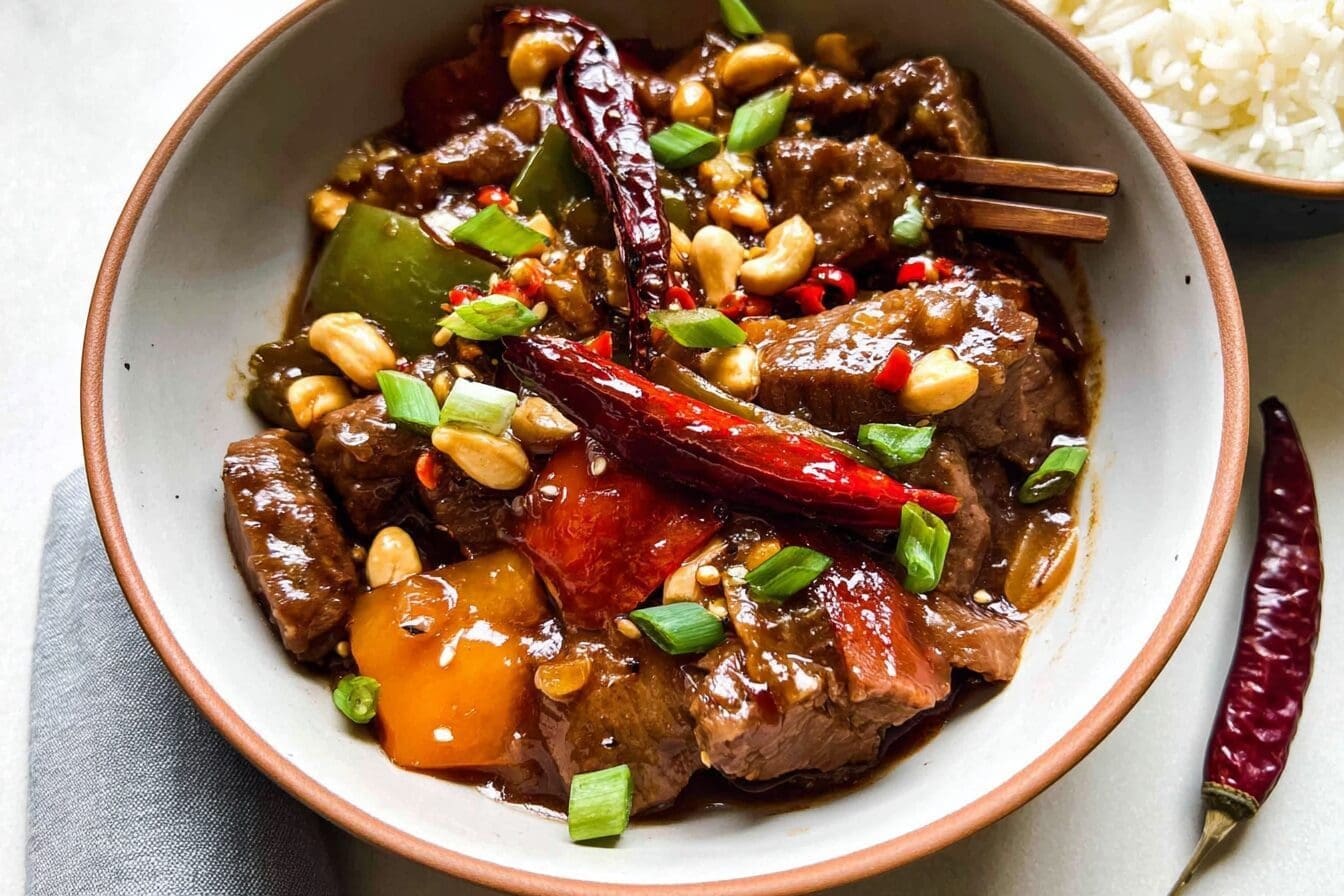
To make this Kung Pao Beef, you’ll need a selection of fresh ingredients that come together to create a spicy, tangy sauce with crispy peanuts. The key is using high-quality items like thinly sliced flank steak for that tender protein base, along with vibrant vegetables and aromatic spices. This section outlines everything required, ensuring your dish turns out just right for home cooks and busy families.
Here’s a structured list of all the ingredients mentioned, with precise measurements to make preparation straightforward:
- 1 1/4 pounds (567 grams) thinly sliced flank steak
- Red and green bell peppers, cut into 1-inch pieces
- Onions, cut into 1/2-inch pieces
- Minced garlic (amount as needed for flavor)
- 4 to 6 dried red chilies, seeded and halved
- Roasted unsalted peanuts
- Vegetable oil, for cooking
- Cornstarch, for coating the steak
- Salt, for coating the steak
- Pepper, for coating the steak
- Low sodium soy sauce, for the sauce
- Hoisin sauce, for the sauce
- Toasted sesame oil, for the sauce
- Granulated sugar, for the sauce
- Cornstarch, for the sauce
- Water, for the sauce
How to Prepare the Perfect Kung Pao Beef: Step-by-Step Guide
Getting Kung Pao Beef right at home is easier than you might think, and it only takes about 30 minutes from start to finish. Begin by preparing your ingredients to ensure everything flows smoothly in the kitchen. This guide walks you through each step, helping busy parents and students create a spicy sauce that’s full of tangy vibes and crispy peanuts for a meal everyone will enjoy. For more ideas on stir-fries, check out our Mongolian beef and broccoli recipe that pairs well with this one.
First, coat the 1 1/4 pounds of thinly sliced flank steak with cornstarch, salt, and pepper, then let it sit for a few minutes. Next, heat vegetable oil in a large pan over medium-high heat and stir-fry the dried red chilies until they release their aroma. Add the coated steak and cook until it’s browned and just done, which takes about 3-4 minutes. Follow by tossing in the bell peppers, onions, and minced garlic, stirring constantly to mix the flavors.
Once the veggies are tender, stir in the roasted unsalted peanuts. In a separate bowl, whisk together the sauce ingredients: low sodium soy sauce, hoisin sauce, toasted sesame oil, granulated sugar, cornstarch, and water, then pour it over the mix in the pan. Let it cook for another 1-2 minutes until the sauce thickens and coats everything evenly, creating that irresistible spicy and tangy sauce. Finally, serve it hot over steamed rice for a complete, nutritious meal with about 35 grams of protein per serving. Remember, for a vegan twist, swap the beef for tofu and adjust cooking times as needed.
Dietary Substitutions to Customize Your Kung Pao Beef
One of the best parts of Kung Pao Beef is how easy it is to tweak for different preferences, making it a go-to for diet-conscious individuals and families. Whether you’re dealing with allergies or just want to lighten things up, simple swaps can keep that spicy sauce and crispy peanuts front and center. This section covers options to make the dish work for everyone at your gathering.
Protein and Main Component Alternatives
- Use tofu or tempeh as a plant-based protein substitute to maintain that tender texture.
- Swap flank steak with chicken breast for a leaner option that still absorbs the tangy sauce well.
- Opt for seitan if you’re looking for a wheat-based vegan choice that holds up in stir-fries.
Vegetable, Sauce, and Seasoning Modifications
- Replace peanuts with cashews for a different crunch, or leave them out for nut allergies while keeping the dish exciting.
- Add fresh bell peppers, zucchini, or snap peas alongside the originals to boost veggies and balance the spicy flavors.
- Use tamari in place of low sodium soy sauce for gluten sensitivities, ensuring the sauce remains savory and tangy.
These changes help preserve the essence of Kung Pao Beef, with its blend of spicy and tangy elements, while making it accessible for travelers or seniors on the go.
Mastering Kung Pao Beef: Advanced Tips and Variations
Once you’re comfortable with the basics, you can elevate your Kung Pao Beef game with some pro techniques and creative twists. High heat in a wok brings out that perfect sear on the flank steak, enhancing the crispy peanuts and spicy sauce for a truly authentic taste. This section dives into ways to refine your recipe, making it a staple for food enthusiasts and baking groups alike.
Pro Cooking Techniques
Use a well-seasoned wok to achieve that smoky flavor, and marinate the beef longer for extra tenderness. For instance, adding a bit of sesame oil early can amplify the tangy notes in the sauce.
| Technique | Benefit |
|---|---|
| High heat stir-frying | Creates a better sear on the steak and veggies |
| Double marinating | Enhances flavor absorption in the protein |
Flavor Variations
Experiment with additions like Szechuan peppercorns to boost the heat in your spicy sauce, or try rice vinegar for more tang. These tweaks keep the dish fresh and exciting for every occasion.
How to Store Kung Pao Beef: Best Practices
Keeping your Kung Pao Beef fresh means storing it properly to enjoy leftovers without losing that spicy, tangy punch. This quick guide helps working professionals and students make the most of meal prep. For example, if you have extra, it stores well for quick meals later in the week.
- Refrigerate in an airtight container for up to 3 days to keep flavors intact.
- Freeze portions in freezer-safe bags for up to 2 months, ideal for busy parents.
- Reheat on the stovetop with a splash of water to maintain the sauce’s consistency.
FAQs: Frequently Asked Questions About Kung Pao Beef
What is Kung Pao beef and where did it originate?
Kung Pao beef is a spicy stir-fry dish from China’s Sichuan province. It features tender beef slices cooked with dried red chili peppers, peanuts, and vegetables like bell peppers and green onions. Classic recipes include Sichuan peppercorns, giving the dish its signature spicy and numbing flavor. This dish is known for its balance of heat, sweetness, and savory notes.
How do I cook Kung Pao beef at home?
To make Kung Pao beef, start by slicing flank steak thinly and coating it lightly with cornstarch, salt, and pepper. Stir-fry the beef until browned, then remove it from the pan. Cook chopped vegetables like bell peppers and green onions until tender, then return the beef to the pan. Add dried chili peppers and peanuts, pour in a sauce made from soy sauce, rice vinegar, and a touch of sugar, and cook until the sauce thickens and coats everything evenly.
Can I use other meats besides beef for Kung Pao?
Yes, you can substitute beef with chicken breasts, thighs, or shrimp in Kung Pao recipes. Adjust cooking times accordingly—shrimp cooks fastest, while chicken thighs need slightly more time. The same spicy sauce and method remain suitable, making this dish versatile for different proteins.
What vegetables work best in Kung Pao beef?
Common vegetables in Kung Pao beef include bell peppers, zucchini, and green onions. You can also add water chestnuts for crunch or mushrooms for an earthy flavor. Choose fresh, colorful vegetables to add texture and balance the heat from the chilies.
How long does Kung Pao beef last in the fridge and how should I store it?
Kung Pao beef can be stored in an airtight container in the refrigerator for up to four days. To maintain the best flavor and texture, cool the dish to room temperature before refrigerating and reheat gently on the stovetop or microwave when ready to eat.

Kung Pao Beef
🥩 Kung Pao Beef features tender flank steak stir-fried with vibrant bell peppers and crunchy peanuts, delivering a perfect balance of spicy and tangy flavors.
🔥 This quick and easy recipe offers a protein-rich, savory meal that’s ideal for a satisfying dinner served over steamed rice.
- Total Time: 30 minutes
- Yield: 4 servings 1x
Ingredients
1 1/4 pounds (567 grams) thinly sliced flank steak
Red and green bell peppers, cut into 1-inch pieces
Onions, cut into 1/2-inch pieces
Minced garlic for flavor
4 to 6 dried red chilies, seeded and halved
Roasted unsalted peanuts
Vegetable oil for cooking
Cornstarch for coating the steak
Salt for coating the steak
Pepper for coating the steak
Low sodium soy sauce for the sauce
Hoisin sauce for the sauce
Toasted sesame oil for the sauce
Granulated sugar for the sauce
Cornstarch for the sauce
Water for the sauce
Instructions
1-First, coat the 1 1/4 pounds of thinly sliced flank steak with cornstarch, salt, and pepper, then let it sit for a few minutes.
2-Next, heat vegetable oil in a large pan over medium-high heat and stir-fry the dried red chilies until they release their aroma.
3-Add the coated steak and cook until it’s browned and just done, which takes about 3-4 minutes.
4-Follow by tossing in the bell peppers, onions, and minced garlic, stirring constantly to mix the flavors.
5-Once the veggies are tender, stir in the roasted unsalted peanuts.
6-In a separate bowl, whisk together the sauce ingredients: low sodium soy sauce, hoisin sauce, toasted sesame oil, granulated sugar, cornstarch, and water, then pour it over the mix in the pan.
7-Let it cook for another 1-2 minutes until the sauce thickens and coats everything evenly, creating that irresistible spicy and tangy sauce.
8-Finally, serve it hot over steamed rice for a complete, nutritious meal with about 35 grams of protein per serving.
Remember, for a vegan twist, swap the beef for tofu and adjust cooking times as needed.
Last Step:
Please leave a rating and comment letting us know how you liked this recipe! This helps our business to thrive and continue providing free, high-quality recipes for you.Notes
🌶 Adjust the quantity of dried red chilies to control the spiciness.
🥜 Toast peanuts lightly to enhance their crunch and flavor.
🍚 Serve with steamed rice to balance the bold flavors of the dish.
- Prep Time: 10 minutes
- Cook Time: 20 minutes
- Category: Main Course, Stir-Fry
- Method: Stir-frying
- Cuisine: Chinese
Nutrition
- Serving Size: 1 serving
- Calories: 295 kcal
- Sugar: 5 g
- Sodium: 788 mg
- Fat: 15 g
- Saturated Fat: 2 g
- Trans Fat: 0 g
- Carbohydrates: 12 g
- Fiber: 3 g
- Protein: 35 g
- Cholesterol: 173 mg


