

Why You’ll Love This Korean Naengmyeon
Korean Naengmyeon is the kind of meal that feels almost magical on a hot day. This chilled noodle soup is light, cool, and deeply satisfying, with a gentle balance of sweetness, tanginess, and savory flavor that keeps you coming back for another slurp. If you have ever finished a big Korean BBQ meal and thought, “I need something refreshing now,” Mul Naengmyeon is exactly what you want.
It is also a smart choice for home cooks who want a dish that looks impressive without being fussy. The broth can be made ahead, the noodles cook quickly, and the toppings are simple but beautiful. That makes this Naengmyeon Recipe a great fit for busy weeknights, summer lunches, and even special gatherings with family and friends.
- Easy to prepare: Once the broth is chilled, the rest comes together fast. That makes this Korean Cold Noodles dish practical for busy parents, students, and working professionals.
- Refreshing and light: The chilled broth, crisp cucumber, juicy pear, and cool noodles make Korean Naengmyeon perfect for summer or warm-weather meals.
- Flexible for different diets: You can adjust the broth, toppings, and seasoning to fit your needs, including lighter, lower-calorie, or more vegetable-forward versions.
- Distinctive flavor: The mild, sweet, tangy, and savory taste gives Mul Naengmyeon its signature charm, especially after rich foods like Korean BBQ.
When the weather gets sticky, Korean Naengmyeon is the kind of bowl that cools you down and still leaves you satisfied.
If you enjoy make-ahead meals that travel well and feed a crowd, this dish fits right in with the kind of recipes that make gatherings easier and more memorable. For another filling and practical dinner idea, you might also like these low-carb meatballs from Cooky Cooky.
Jump to:
- Why You’ll Love This Korean Naengmyeon
- Essential Ingredients for Korean Naengmyeon
- Noodles and Toppings
- Naengmyeon Broth
- Special Dietary Options
- How to Prepare the Perfect Korean Naengmyeon: Step-by-Step Guide
- First Step: Prep the beef for the broth
- Second Step: Strain, cool, and slice the beef
- Third Step: Build the chilled broth
- Fourth Step: Cook and chill the noodles
- Final Step: Assemble and serve right away
- Dietary Substitutions to Customize Your Korean Naengmyeon
- Protein and Main Component Alternatives
- Vegetable, Sauce, and Seasoning Modifications
- Mastering Korean Naengmyeon: Advanced Tips and Variations
- Pro cooking techniques
- Flavor variations
- Presentation tips
- Make-ahead options
- How to Store Korean Naengmyeon: Best Practices
- Refrigeration
- Freezing
- Reheating
- Meal prep considerations
- FAQs: Frequently Asked Questions About Korean Naengmyeon
- What is Korean naengmyeon?
- What’s the difference between mul naengmyeon and bibim naengmyeon?
- What is dongchimi mul naengmyeon?
- How can I save time making naengmyeon broth?
- Are there store-bought options for naengmyeon noodles and broth?
- Korean Naengmyeon
- Ingredients
- Instructions
- Last Step:
- Notes
- Nutrition
- Did you make this recipe?
Essential Ingredients for Korean Naengmyeon
This Korean Naengmyeon Recipe uses a mix of broth ingredients, noodles, and fresh toppings. Each item plays a role in building the cool, clean flavor that makes Mul Naengmyeon so popular.
Noodles and Toppings
- 200 grams dried naengmyeon noodles, Korean buckwheat noodles, for the chewy base of the bowl
- 50 grams Korean or nashi pear, peeled, cored, and thinly sliced, for subtle sweetness and crunch
- 40 grams pickled radish or dongchimi radish, thinly sliced, for tang and color
- 40 grams cucumber, julienned, for freshness and a crisp bite
- 1 hard boiled egg, halved, for richness and a classic finish
- Toasted sesame seeds, to garnish
- Mustard paste, optional, for extra sharpness
- White vinegar or apple cider vinegar, optional, for added tang at the table
Naengmyeon Broth
- 4 cups water, for simmering the beef broth
- 150 grams beef brisket, for a savory broth and sliced topping
- 20 grams onion, peeled, to add sweetness and depth
- 5 grams green onion, white part, for gentle onion flavor
- 10 whole black peppercorns, for a light peppery note
- 2 cups dongchimi, radish water kimchi brine, for the classic refreshing base
- 2 tablespoons white vinegar or apple cider vinegar, to brighten the broth
- 1 tablespoon Korean or nashi pear juice, strained from grated pear, for mild sweetness
- 1 1/2 tablespoons fine sugar, to balance the tang
- 1/2 teaspoon fine sea salt, for seasoning
- 1/4 teaspoon mustard powder, for that subtle sharp finish
Special Dietary Options
- Vegan: Swap the beef broth for a chilled vegetable broth with dongchimi brine if available, then top with mushrooms, extra cucumber, pear, and radish.
- Gluten-free: Check the noodle package carefully and choose gluten-free naengmyeon noodles if available. Buckwheat-based noodles can vary by brand.
- Low-calorie: Use extra cucumber, a smaller portion of noodles, less sugar, and a lighter broth portion.
For a handy side dish that works well alongside this meal, try roasted cauliflower if you want something simple and crowd-friendly.
How to Prepare the Perfect Korean Naengmyeon: Step-by-Step Guide
Making Homemade Mul Naengmyeon is mostly about patience, especially when it comes to chilling the broth. The good news is that the hands-on work is simple, and most of the flavor comes from a few smart techniques. If you can simmer, chill, and assemble, you can make this Korean Cold Noodle Soup Recipe with confidence.
First Step: Prep the beef for the broth
Start by soaking 150 grams of beef brisket in water for 10 minutes. This helps draw out blood and gives you a cleaner broth. Drain the beef, then place it in a pot with 4 cups water, 20 grams peeled onion, 5 grams green onion white part, and 10 whole black peppercorns.
Bring the pot to a boil over high heat. As soon as it starts bubbling, skim off any scum that rises to the top. That step matters because it keeps the broth clear and smooth. Reduce the heat and simmer for about 1 hour, or until the brisket is tender. If you are cooking for a crowd, this is a great make-ahead base that can be done earlier in the day.
Second Step: Strain, cool, and slice the beef
Once the beef is cooked, strain the broth and let it cool for about 30 minutes. Remove the brisket, trim away any excess fat, and slice it thinly. Thin slices work best because they are easier to eat with the noodles and fit the delicate style of Pyongyang Naengmyeon Recipe serving.
If you want to save time later, you can refrigerate the sliced beef separately. That makes assembly much easier, especially if you are serving this at lunch or after a barbecue meal. The broth can keep its flavor while the topping stays neat and ready.
Third Step: Build the chilled broth
Mix the beef broth with 2 cups dongchimi brine in a large container. Then stir in 2 tablespoons white vinegar or apple cider vinegar, 1 tablespoon pear juice, 1 1/2 tablespoons fine sugar, 1/2 teaspoon fine sea salt, and 1/4 teaspoon mustard powder. Taste the broth and adjust it a little if needed. It should taste a bit sweeter and tangier than you might expect, because the flavor softens once it is poured over noodles.
Cover the broth and freeze it lightly for 3 to 4 hours, or overnight if you are planning ahead. The goal is a cold, slightly slushy texture. If it freezes too much, let it thaw a bit before serving. Some cooks like to shave in a little ice for an extra frosty bowl, especially on very hot days.
The broth is the heart of Korean Naengmyeon. If it tastes lively before chilling, it usually tastes just right once served.
Fourth Step: Cook and chill the noodles
Cook 200 grams dried naengmyeon noodles according to the package directions until they are tender but still bouncy. These noodles can be a little finicky, so do not overcook them. They should have a springy texture that feels pleasantly chewy, not mushy.
Rinse the noodles under cold running water several times, and if you want, finish with ice water to cool them down fully. This step also helps wash away extra starch and keeps the noodles from clumping together. Drain them well, then divide them into serving bowls.
If you like learning more about the ingredients behind this dish, Healthline has a helpful overview of buckwheat and its nutrition facts. It is a good read for anyone curious about why these noodles are such a smart base.
Final Step: Assemble and serve right away
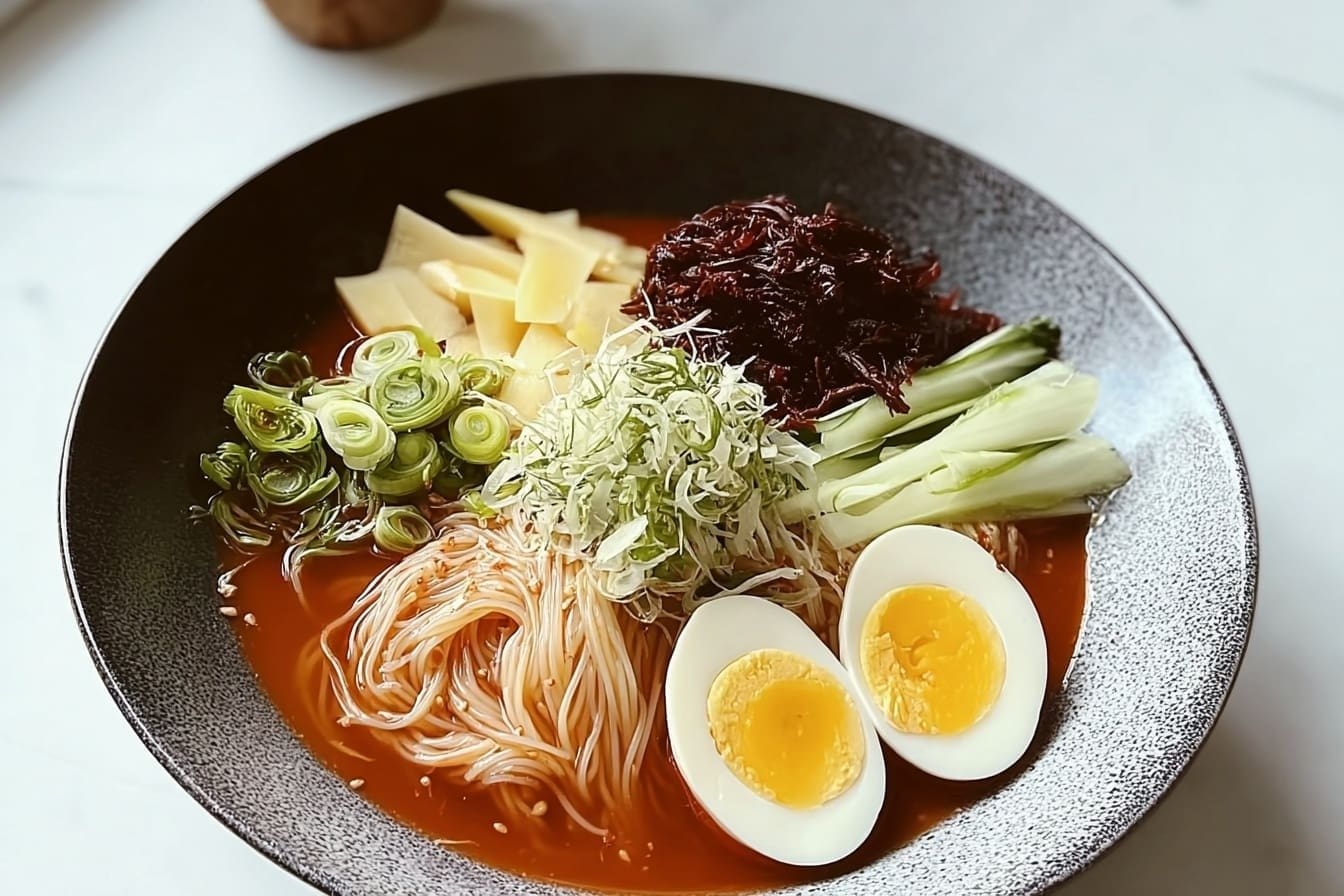
Pour the chilled broth over the noodles. Top each bowl with sliced beef, 40 grams pickled radish, 40 grams julienned cucumber, 50 grams sliced pear, and 1 halved hard boiled egg. Sprinkle toasted sesame seeds over the top for a little nutty finish.
Serve immediately while the broth is still cold. At the table, offer mustard paste and extra vinegar so everyone can adjust the flavor to taste. Some people like a sharper, more tangy bowl, while others prefer the gentle sweetness as is. Either way, this Korean Cold Noodles dish is all about refreshing balance.
Dietary Substitutions to Customize Your Korean Naengmyeon
Protein and Main Component Alternatives
If you want to change up the protein in your Naengmyeon Recipe, you have a few easy options. Thinly sliced chicken breast can work for a lighter version, though the broth will taste a little different. Leftover roast beef is another smart shortcut if you are short on time.
For a meat-free bowl, skip the brisket and use a chilled vegetable broth with dongchimi brine, if available. Add mushrooms for a savory bite. Soft tofu can also be a nice topping for people who want more protein without beef. This keeps the spirit of Mul Naengmyeon while making it more flexible for different eating styles.
Vegetable, Sauce, and Seasoning Modifications
The toppings are easy to adjust based on the season or what you have in the fridge. If you cannot find Korean pear, use nashi pear or even a crisp apple in a pinch. If dongchimi radish is not available, pre-pickled radish from Korean grocery stores works well and saves time.
For extra freshness, add shredded lettuce, thin radish sticks, or more cucumber. If you like a bolder bite, increase the mustard paste slightly or serve with more vinegar. For a lower-sugar broth, reduce the sugar a little at first, then taste after chilling. This is one of those Korean Naengmyeon Recipe styles that welcomes a little personal taste without losing its identity.
Mastering Korean Naengmyeon: Advanced Tips and Variations
Once you have made Mul Naengmyeon once or twice, a few small tricks can make the bowl even better. The biggest one is broth balance. A broth that tastes a touch too strong before chilling often lands perfectly once it is icy and poured over noodles. That is why many cooks season the broth a bit sweeter and tangier from the start.
Pro cooking techniques
For a cleaner broth, skim thoroughly during the simmer and cool it before mixing with the dongchimi brine. If you want a colder final bowl, chill the serving bowls in the fridge before assembling. That tiny step helps the Korean Cold Noodles stay refreshing longer.
Flavor variations
You can add a little extra pear juice for more sweetness or a splash more vinegar for sharper brightness. Some home cooks like a stronger mustard kick, while others keep it mild and soothing. If you prefer a Pyongyang Naengmyeon Recipe style with a softer profile, hold back on the vinegar and let the broth lead with beef and radish notes.
Presentation tips
Keep the toppings tidy and arranged in little sections so the bowl looks as good as it tastes. A neat pile of cucumber, a fan of pear slices, and a bright egg half make the dish feel special. That kind of presentation is perfect for family dinners, potlucks, or church gatherings where food should look inviting right away.
Make-ahead options
The broth freezes very well in portions, which is great for busy weeks. You can also pre-slice the beef and prep the toppings earlier in the day. Then, when it is time to eat, all you need to do is boil the noodles, chill them, and assemble.
How to Store Korean Naengmyeon: Best Practices
Korean Naengmyeon is best eaten fresh, but a few parts can be stored safely for later. Keep the broth, noodles, and toppings separate whenever possible. That way the noodles do not soak up too much liquid and lose their chewy texture.
Refrigeration
Store the chilled broth in a covered container in the refrigerator for up to 3 days. Keep the sliced beef in a separate sealed container and use it within the same time frame. The vegetables and pear are best sliced close to serving time, though cucumber can be prepped a little ahead if needed.
Freezing
The broth freezes well for longer storage. Pour it into airtight containers or freezer-safe bags and freeze in portions for up to 3 months. Thaw overnight in the fridge and stir before serving. The noodles do not freeze well after cooking, so cook those fresh when you are ready.
Reheating
This dish is meant to be eaten cold, so there is no reheating in the usual sense. Instead, if the broth is too frozen, let it sit at room temperature for a few minutes or add a little cold water. Then stir until it is lightly slushy again.
Meal prep considerations
If you are making this for meal prep, store each component in separate containers. That makes it easy to assemble a fresh bowl later in the week. It is a nice option for packed lunches, summer meals, or a quick post-Korean BBQ dinner.
FAQs: Frequently Asked Questions About Korean Naengmyeon
What is Korean naengmyeon?
Korean naengmyeon is a refreshing cold noodle dish popular during summer. It features thin buckwheat or potato starch noodles served chilled. There are two main types: mul naengmyeon, which comes in a tangy, ice-cold beef or kimchi broth topped with cucumber slices, Asian pear, pickled radish, boiled egg, and beef; and bibim naengmyeon, a dry version mixed with spicy gochujang sauce, vegetables, and egg. Originating from North Korea, it’s now a staple across Korea for its cooling effect. To enjoy at home, rinse noodles in ice water after boiling for the perfect chewy texture. Pair with kimchi for extra crunch. (87 words)
What’s the difference between mul naengmyeon and bibim naengmyeon?
Mul naengmyeon is served in a light, chilled broth made from beef stock or radish water kimchi, offering a mild, refreshing taste with toppings like sliced pear, cucumber, and egg. Bibim naengmyeon skips the broth, mixing cold noodles with spicy gochujang sauce, vinegar, mustard, vegetables, and sometimes fruit for a bold, fiery kick. Mul suits those wanting a soothing cool-down, while bibim appeals to spice lovers. Both use buckwheat noodles for chewiness. Start with mul if you’re new—adjust spiciness in bibim by diluting sauce with ice water. (92 words)
What is dongchimi mul naengmyeon?
Dongchimi mul naengmyeon is a variation of mul naengmyeon using dongchimi, a watery radish kimchi fermented in brine, as the base for its broth. This creates an extra crisp, tangy flavor from the radish’s natural sweetness and mild fermentation. Prepare by simmering dongchimi liquid with beef bones for depth, then chill thoroughly with ice. Top buckwheat noodles with julienned radish from the kimchi, pear, cucumber, and half a boiled egg. It’s lighter than beef-based versions, ideal for hot days. Make ahead: ferment dongchimi 3-5 days in fridge for best taste. (94 words)
How can I save time making naengmyeon broth?
Save time on naengmyeon broth by prepping it in advance. For mul naengmyeon, simmer beef brisket, bones, and dongchimi or radish kimchi for 1-2 hours, strain, season with salt and vinegar, then cool and freeze in portions for up to 3 months. Thaw overnight in the fridge and add ice before serving. Use a pressure cooker to cut simmering to 30 minutes. For quicker results, blend store-bought beef broth with kimchi juice and chill. This method keeps the authentic tangy chill without daily effort—perfect for weeknight meals. (96 words)
Are there store-bought options for naengmyeon noodles and broth?
Yes, find store-bought naengmyeon noodles and broth at Korean markets or online. Brands like Ottogi or Nongshim offer dried buckwheat noodles that cook in 3-4 minutes—rinse in ice water post-boil for authenticity. Pre-made mul broth packets (e.g., CJ Bibigo) provide beef or dongchimi flavors; just dilute with water, chill, and add ice. They taste close to homemade but may have added MSG—check labels. Customize with fresh toppings like pear and egg. For vegan options, seek vegetable-based broths. Stock up for easy summer prep. (92 words)

Korean Naengmyeon
🥶🍜 Mul Naengmyeon Recipe: Korean Cold Noodle Soup refreshes icy dongchimi-beef broth bouncy buckwheat noodles crisp pear radish cucumber – summer chill bliss!
🌿 1.5hr prep-freeze magic: light savory-sweet tang post-BBQ hydrate, authentic Korean cool crave!
- Total Time: 4 hours 25 minutes
- Yield: 2 servings
Ingredients
– 200 grams dried naengmyeon noodles, Korean buckwheat noodles for the chewy base of the bowl
– 50 grams Korean or nashi pear for subtle sweetness and crunch
– 40 grams pickled radish or dongchimi radish for tang and color
– 40 grams cucumber for freshness and a crisp bite
– 1 hard boiled egg for richness and a classic finish
– Toasted sesame seeds to garnish
– Mustard paste, optional for extra sharpness
– White vinegar or apple cider vinegar, optional for added tang at the table
– 4 cups water for simmering the beef broth
– 150 grams beef brisket for a savory broth and sliced topping
– 20 grams onion to add sweetness and depth
– 5 grams green onion, white part for gentle onion flavor
– 10 whole black peppercorns for a light peppery note
– 2 cups dongchimi, radish water kimchi brine for the classic refreshing base
– 2 tablespoons white vinegar or apple cider vinegar to brighten the broth
– 1 tablespoon Korean or nashi pear juice for mild sweetness
– 1 1/2 tablespoons fine sugar to balance the tang
– 1/2 teaspoon fine sea salt for seasoning
– 1/4 teaspoon mustard powder for that subtle sharp finish
Instructions
1-First Step: Prep the beef for the broth Start by soaking 150 grams of beef brisket in water for 10 minutes. This helps draw out blood and gives you a cleaner broth. Drain the beef, then place it in a pot with 4 cups water, 20 grams peeled onion, 5 grams green onion white part, and 10 whole black peppercorns. Bring the pot to a boil over high heat. As soon as it starts bubbling, skim off any scum that rises to the top. That step matters because it keeps the broth clear and smooth. Reduce the heat and simmer for about 1 hour, or until the brisket is tender. If you are cooking for a crowd, this is a great make-ahead base that can be done earlier in the day.
2-Second Step: Strain, cool, and slice the beef Once the beef is cooked, strain the broth and let it cool for about 30 minutes. Remove the brisket, trim away any excess fat, and slice it thinly. Thin slices work best because they are easier to eat with the noodles and fit the delicate style of Pyongyang Naengmyeon Recipe serving. If you want to save time later, you can refrigerate the sliced beef separately. That makes assembly much easier, especially if you are serving this at lunch or after a barbecue meal. The broth can keep its flavor while the topping stays neat and ready.
3-Third Step: Build the chilled broth Mix the beef broth with 2 cups dongchimi brine in a large container. Then stir in 2 tablespoons white vinegar or apple cider vinegar, 1 tablespoon pear juice, 1 1/2 tablespoons fine sugar, 1/2 teaspoon fine sea salt, and 1/4 teaspoon mustard powder. Taste the broth and adjust it a little if needed. It should taste a bit sweeter and tangier than you might expect, because the flavor softens once it is poured over noodles. Cover the broth and freeze it lightly for 3 to 4 hours, or overnight if you are planning ahead. The goal is a cold, slightly slushy texture. If it freezes too much, let it thaw a bit before serving. Some cooks like to shave in a little ice for an extra frosty bowl, especially on very hot days.
4-Fourth Step: Cook and chill the noodles Cook 200 grams dried naengmyeon noodles according to the package directions until they are tender but still bouncy. These noodles can be a little finicky, so do not overcook them. They should have a springy texture that feels pleasantly chewy, not mushy. Rinse the noodles under cold running water several times, and if you want, finish with ice water to cool them down fully. This step also helps wash away extra starch and keeps the noodles from clumping together. Drain them well, then divide them into serving bowls.
5-Final Step: Assemble and serve right away Pour the chilled broth over the noodles. Top each bowl with sliced beef, 40 grams pickled radish, 40 grams julienned cucumber, 50 grams sliced pear, and 1 halved hard boiled egg. Sprinkle toasted sesame seeds over the top for a little nutty finish. Serve immediately while the broth is still cold. At the table, offer mustard paste and extra vinegar so everyone can adjust the flavor to taste. Some people like a sharper, more tangy bowl, while others prefer the gentle sweetness as is. Either way, this Korean Cold Noodles dish is all about refreshing balance.
Last Step:
Please leave a rating and comment letting us know how you liked this recipe! This helps our business to thrive and continue providing free, high-quality recipes for you.Notes
🥬 Dongchimi brine essential – authentic refresh!
⏰ Freeze broth portions ahead – quick serve!
🌶️ Mustard/vinegar side – customize tang!
- Prep Time: 10 minutes
- Freezing: 3-4 hours
- Cook Time: 1 hour 15 minutes
- Category: Soup
- Method: Chilled
- Cuisine: Korean
- Diet: Low Fat
Nutrition
- Serving Size: 1 serving
- Calories: 571 kcal
- Sugar: 14g
- Sodium: 963mg
- Fat: 8g
- Saturated Fat: 2g
- Unsaturated Fat: 6g
- Trans Fat: 0g
- Carbohydrates: 103g
- Fiber: 3g
- Protein: 19g
- Cholesterol: 139mg


