

Why You’ll Love This Korean Naengmyeon Cold Noodle Soup
If you love cool, refreshing meals with a little tang and a lot of texture, Korean Naengmyeon Cold Noodle Soup is a dish worth making at home. It is light enough for hot days, but still filling enough to feel like a real meal. The mix of chewy noodles, chilled broth, crisp vegetables, and tender beef gives every bite something different to enjoy.
- Easy to prepare: The hands-on work is simple, and most of the time is spent simmering the broth or chilling it. Once the broth is ready, the rest comes together fast.
- Good balance for everyday eating: With protein from beef, fiber from vegetables, and a satisfying noodle base, this dish can fit into a balanced meal plan. Buckwheat noodles are also a smart choice for many home cooks looking for a hearty but lighter noodle bowl. For more on buckwheat, see this helpful buckwheat nutrition guide.
- Flexible for different lifestyles: You can make it with beef brisket, or swap in plant-based options if you need a meatless version. You can also adjust the vinegar, sugar, and mustard to fit your taste.
- Distinctive flavor: The chilled dongchimi broth brings a clean, tangy taste that feels extra refreshing. It is the kind of meal that wakes up your palate without feeling heavy.
For a lot of home cooks, the best part of Korean Naengmyeon Cold Noodle Soup is how special it feels with very basic kitchen steps.
This dish also fits well with the kind of cooking many busy households need. It can be made ahead, served fast, and packed with flavor without a long ingredient list. If you enjoy make-ahead meals for gatherings, you may also like a few of the hearty recipes on Cooky Cooky’s noodle and dinner ideas.
Jump to:
- Why You’ll Love This Korean Naengmyeon Cold Noodle Soup
- Essential Ingredients for Korean Naengmyeon Cold Noodle Soup
- Noodles and Toppings
- Naengmyeon Broth
- Special Dietary Options
- How to Prepare the Perfect Korean Naengmyeon Cold Noodle Soup: Step-by-Step Guide
- First Step: Prep the beef and build the broth
- Second Step: Cool and slice the beef
- Third Step: Build the chilled broth
- Fourth Step: Cook and rinse the noodles
- Final Step: Assemble and serve
- Dietary Substitutions to Customize Your Korean Naengmyeon Cold Noodle Soup
- Protein and Main Component Alternatives
- Vegetable, Sauce, and Seasoning Modifications
- Mastering Korean Naengmyeon Cold Noodle Soup: Advanced Tips and Variations
- Pro cooking techniques
- Flavor variations
- Presentation tips
- Make-ahead options
- How to Store Korean Naengmyeon Cold Noodle Soup: Best Practices
- Nutrition and Timing
- FAQs: Frequently Asked Questions About Korean Naengmyeon Cold Noodle Soup
- What is mul naengmyeon cold noodle soup?
- What’s the difference between mul naengmyeon and bibim naengmyeon?
- What are common toppings for mul naengmyeon?
- How do you prepare noodles for mul naengmyeon?
- Can you make mul naengmyeon broth ahead and what are shortcuts?
- Korean Naengmyeon Cold Noodle Soup
- Ingredients
- Instructions
- Last Step:
- Notes
- Nutrition
- Did you make this recipe?
Essential Ingredients for Korean Naengmyeon Cold Noodle Soup
Here is everything you need for authentic Korean Naengmyeon Cold Noodle Soup. The ingredients are split into noodles and toppings, plus the broth, so it is easier to prep and organize before you start cooking.
Noodles and Toppings
- 200 grams (7 ounces) dried naengmyeon, Korean buckwheat noodles – the chewy base of the dish
- 50 grams (1.7 ounces) Korean or nashi pear, peeled, cored, and thinly sliced – adds sweetness and crunch
- 40 grams (1.4 ounces) pickled radish or dongchimi radish, thinly sliced – gives tang and color
- 40 grams (1.4 ounces) cucumber, julienned – brings a cool, crisp bite
- 1 hard boiled egg, halved – adds protein and makes the bowl look complete
- Toasted sesame seeds for garnish – adds nutty flavor
- Mustard paste, optional – for extra heat and sharpness
- White vinegar or apple cider vinegar, optional – for extra brightness at the table
Naengmyeon Broth
- 4 cups water – the base for the beef broth
- 150 grams (5.3 ounces) beef brisket – gives the broth depth and provides a tender topping
- 20 grams (0.7 ounces) onion, peeled – adds sweetness and body
- 5 grams (0.2 ounces) green onion, white part – adds a mild onion note
- 10 whole black peppercorns – gives gentle spice
- 2 cups dongchimi, radish water kimchi brine – creates the classic tangy, chilled broth flavor
- 2 tablespoons white vinegar or apple cider vinegar – sharpens the broth
- 1 tablespoon Korean or nashi pear juice, from grated and strained pear – adds soft sweetness
- 1.5 tablespoons fine sugar – balances the sour notes
- 0.5 teaspoon fine sea salt – seasons the broth
- 0.25 teaspoon mustard powder – adds subtle heat
Special Dietary Options
- Vegan: Swap the beef brisket for mushrooms or a light vegetable stock. Use a vegan-friendly dongchimi-style brine if available, and keep the toppings focused on pear, cucumber, and radish.
- Gluten-free: Choose certified gluten-free naengmyeon noodles if needed, since some brands may contain wheat. Double-check your vinegar and mustard powder labels.
- Low-calorie: Use a smaller portion of noodles, go lighter on sugar, and add extra cucumber and radish for volume without much extra heaviness.
How to Prepare the Perfect Korean Naengmyeon Cold Noodle Soup: Step-by-Step Guide
Making Korean Naengmyeon Cold Noodle Soup is really about good prep and careful chilling. The broth needs time to cool, and the noodles need to stay bouncy, not soft or sticky. Once you get those two parts right, the rest is easy.
First Step: Prep the beef and build the broth
Start by soaking the 150 grams of beef brisket in water for 10 minutes to draw out blood, then drain it well. This small step helps the broth stay cleaner and less cloudy. In a medium pot, add 4 cups of water, the brisket, 20 grams of peeled onion, 5 grams of the white part of green onion, and 10 whole black peppercorns.
Bring the pot to a boil over high heat. As soon as foam or scum rises to the top, skim it off with a spoon. This keeps the broth smoother in flavor and appearance. Once it comes to a boil, lower the heat to medium-low and simmer for about 1 hour, or until the brisket is tender enough to slice easily.
Second Step: Cool and slice the beef
After the brisket is cooked, strain the broth and let it cool for about 30 minutes. Remove the brisket and let it cool until it is comfortable to handle. Trim away any fat, then slice the beef thinly against the grain. Thin slices work best because they stay tender and lay nicely on top of the noodles.
While the beef cools, you can prep the toppings. Slice the Korean or nashi pear, cut the pickled radish or dongchimi radish into thin pieces, and julienne the cucumber. Halve the hard boiled egg and set everything aside in the fridge if you have room. Cold toppings help keep the whole bowl extra refreshing.
Third Step: Build the chilled broth
Now mix the strained beef broth with 2 cups of dongchimi brine in a bowl. Add 2 tablespoons white vinegar or apple cider vinegar, 1 tablespoon pear juice, 1.5 tablespoons fine sugar, 0.5 teaspoon fine sea salt, and 0.25 teaspoon mustard powder. Stir well and taste. You may want a little more vinegar or sugar depending on how strong your dongchimi brine is.
Cover the bowl and place it in the freezer for 3 to 4 hours, or overnight if that works better for your schedule. The broth should get very cold and slightly slushy at the edges. If it freezes more than you want, just let it sit at room temperature or in the refrigerator until it is icy but pourable. If needed, shave off a few ice flakes before serving for the right texture.
The broth should taste a little stronger than you think, because the noodles will mellow it once everything is in the bowl.
Fourth Step: Cook and rinse the noodles
Cook the 200 grams of dried naengmyeon according to the package directions until they are chewy and bouncy. These noodles cook fast, so keep an eye on them. Once they are done, drain them right away and rinse under cold running water several times. This step removes starch and helps the noodles stay springy instead of gummy.
If you want them even colder, chill them with ice cubes during the final rinse. Drain thoroughly so the broth does not get watered down. Then divide the noodles into serving bowls. Chilled stainless steel bowls are a nice touch if you have them, especially for a classic restaurant-style feel.
Final Step: Assemble and serve
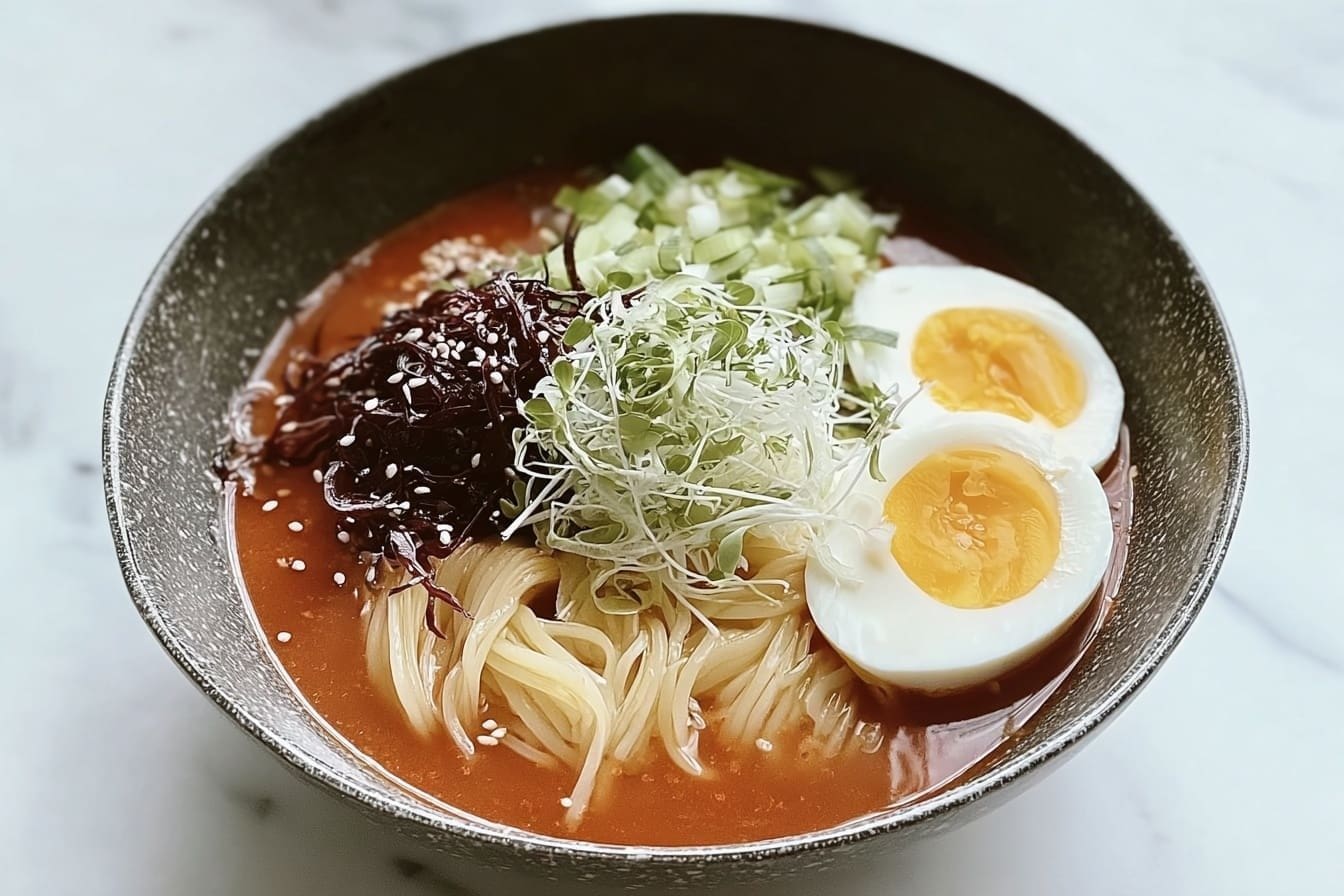
Pour the chilled broth over the noodles. Arrange the sliced beef, pickled radish, cucumber, pear, and halved boiled egg on top. Sprinkle with toasted sesame seeds for a little nuttiness and visual appeal. Serve right away while everything is cold and crisp.
If you like a sharper flavor, add mustard paste and a splash of white vinegar or apple cider vinegar at the table. Some people love a more tangy bowl, while others prefer the broth as it is. Either way, Korean Naengmyeon Cold Noodle Soup is at its best the moment it is served.
Dietary Substitutions to Customize Your Korean Naengmyeon Cold Noodle Soup
Protein and Main Component Alternatives
If you do not want to use beef brisket, there are a few easy swaps that still keep the spirit of the dish. Thinly sliced chicken breast can work if you want a lighter protein, though the broth will be a bit different from the classic version. For a vegetarian or vegan bowl, use chilled mushroom broth and add tofu, marinated seitan, or extra cucumber and pear for body.
If you cannot find Korean buckwheat noodles, look for another chewy cold noodle that holds up in icy broth. Some stores carry potato starch noodles, which also give that bouncy texture many people love. Just be sure to check the package directions, since cooking times can vary a lot.
Vegetable, Sauce, and Seasoning Modifications
The toppings are easy to change based on what is in your kitchen. If nashi pear is not available, use an Asian pear, crisp apple, or more cucumber for freshness. If you cannot find dongchimi radish, pre-pickled radish from the store works well and saves time.
For extra heat, increase the mustard paste slightly or add a little more mustard powder to the broth. For a milder bowl, cut back on vinegar and keep the sugar balanced. If you enjoy Korean flavors, you might also like serving this with beef skirt steak ssam wraps for a full meal that feels festive and fun.
Mastering Korean Naengmyeon Cold Noodle Soup: Advanced Tips and Variations
Pro cooking techniques
The biggest secret to a great bowl is temperature. Cold broth, cold noodles, and cold toppings make the dish taste brighter and more refreshing. Chill your serving bowls if you can, and use ice water during the noodle rinse. If your broth starts to taste too mild after freezing, add a touch more vinegar and salt before serving.
Another useful trick is to slice the beef as thinly as possible after it cools. Thin slices feel more tender and are easier to eat with the noodles. If the broth looks cloudy, strain it again for a cleaner finish.
Flavor variations
Some cooks like to add a little more pear juice for sweetness, while others prefer a sharper, more savory broth. You can also adjust the mustard powder depending on how much bite you want. A tiny bit goes a long way.
For a more filling meal, add extra brisket or serve the soup with a side dish like crispy air fryer French fries for a fun contrast in temperature and texture, though the soup itself is usually the star.
Presentation tips
Keep the toppings neat and separate so the bowl looks inviting. Place the beef in one section, the pear and cucumber in another, and the egg half on top or to the side. A small sprinkle of sesame seeds gives the finish a polished look without much work.
Make-ahead options
The broth is the best part to make ahead. In fact, it gets even better after a few hours in the fridge or freezer. You can also prep the toppings earlier in the day and store them in sealed containers. When it is time to eat, just cook the noodles, pour, and serve.
How to Store Korean Naengmyeon Cold Noodle Soup: Best Practices
If you have leftovers, store the broth and noodles separately when possible. The noodles hold their texture better that way. Keep the broth in an airtight container in the refrigerator for up to 3 days, and keep the sliced beef and toppings chilled in separate containers.
For longer storage, freeze the broth in portions and thaw it in the refrigerator before serving. The cooked beef can also be frozen, but the noodles are best cooked fresh. Reheating is not needed for this dish, since Korean Naengmyeon Cold Noodle Soup is meant to be served cold. If you are meal prepping, freeze the broth in single-serving containers so assembly stays quick on busy days.
Cold noodle soup works best when you treat the broth like a make-ahead base and cook the noodles right before eating.
Nutrition and Timing
| Category | Details |
|---|---|
| Prep time | 10 minutes |
| Cook time | About 1 hour 15 minutes |
| Freezing time | 3 to 4 hours, or overnight |
| Total time | About 1 hour 25 minutes plus freezing time |
| Calories | 571 kcal per serving |
| Carbohydrates | 103 g |
| Protein | 19 g |
| Fat | 8 g |
| Fiber | 3 g |
| Sodium | 963 mg |
This dish is satisfying, cooling, and a little nostalgic for anyone who loves Korean BBQ-style meals. It is often enjoyed after grilled meat because the cold broth feels so refreshing. The beef, noodles, and toppings make it a full meal, not just a side dish.

FAQs: Frequently Asked Questions About Korean Naengmyeon Cold Noodle Soup
What is mul naengmyeon cold noodle soup?
Mul naengmyeon is a classic Korean cold noodle dish featuring buckwheat or potato starch noodles served in a chilled, tangy broth. The broth is typically made from beef stock or dongchimi (radish water kimchi) brine, creating a refreshing, mild flavor perfect for hot summer days. Common toppings include thin slices of cucumber, Asian pear, pickled radish, boiled beef, and half a hard-boiled egg. To serve, chill stainless steel bowls in the freezer for an icy effect. This dish originated in North Korea and became popular in South Korea post-Korean War. It’s light yet satisfying, with about 400-500 calories per bowl, making it a healthy option. Prepare by boiling noodles briefly, rinsing in ice water, and pouring over super-chilled broth. Adjust tanginess with vinegar and mustard oil for authenticity. (98 words)
What’s the difference between mul naengmyeon and bibim naengmyeon?
Mul naengmyeon features noodles swimming in a cold, clear broth flavored with dongchimi or beef, offering a cool, subtle taste ideal for cooling down. Bibim naengmyeon, in contrast, is a dry mix of the same noodles tossed with spicy gochujang sauce, vegetables, and egg, delivering bold heat without liquid. Mul suits those who prefer mild refreshment, while bibim appeals to spice lovers. Both use similar toppings like pear, radish, and beef, but mul’s broth dilutes flavors for balance. If you’re new, start with mul for its simplicity—mix vinegar, sugar, and mustard into the broth tableside. In Korea, mul is summer staple; bibim year-round. Experiment by adding bibim sauce to mul for a hybrid. (112 words)
What are common toppings for mul naengmyeon?
Standard toppings for mul naengmyeon add crunch, sweetness, and protein to the chilled noodles and broth. Slice English cucumbers thinly for freshness, matchstick-cut Asian pears or nashi pears for natural sweetness, and add yellow pickled radish (danmuji) for tang. Top with thinly sliced boiled beef brisket, a hard-boiled egg half, and a sprinkle of toasted sesame seeds. Optional adds include green onions and mustard greens. Prep tips: Chill toppings beforehand. Slice beef post-boiling and chilling for tenderness. Use store-bought pickled radish to save time. Arrange toppings neatly around the noodles in the bowl for visual appeal. This combo keeps the dish under 500 calories while providing balanced textures—crisp veggies against slippery noodles. (108 words)
How do you prepare noodles for mul naengmyeon?
Start by bringing a pot of water to a rolling boil. Add naengmyeon noodles (buckwheat or sweet potato starch) and cook 3-5 minutes per package, stirring to prevent sticking. Immediately drain and rinse under cold running tap water, then plunge into an ice bath for 1-2 minutes to stop cooking and achieve a chewy texture. Drain thoroughly, lightly toss with a touch of sesame oil to prevent clumping. Divide into chilled bowls, pour over ice-cold broth, and add toppings. Serve right away as noodles toughen if they sit. Pro tip: Freeze bowls 30 minutes prior for extra chill. This method ensures the signature slippery, bouncy bite central to authentic Korean naengmyeon. Yields 2-4 servings. (114 words)
Can you make mul naengmyeon broth ahead and what are shortcuts?
Yes, mul naengmyeon broth stores well—prepare a batch, cool, portion into freezer bags, and freeze up to 3 months. Thaw overnight in fridge and chill before serving. For seasoning, blend dongchimi brine or beef stock with rice vinegar (2 tbsp per liter), pear juice or puree (1 tbsp), sugar (1 tsp), salt (1/2 tsp), and mustard powder (1/2 tsp). Taste and adjust; make it tangier as noodles dilute it. Shortcuts: Buy pre-made naengmyeon broth concentrate from Korean markets (dilute with water, chill). Use store-bought dongchimi and pickled radish. Skip homemade beef by subbing mushroom stock for vegan. Always strain broth for clarity. This saves hours while keeping flavors authentic. (118 words)

Korean Naengmyeon Cold Noodle Soup
🥶🍜 Refreshing Mul Naengmyeon Recipe cools you down with chewy buckwheat noodles in tangy dongchimi broth – light, hydrating perfection for summer!
🇰🇷 Authentic Korean Cold Noodle Soup balances sweet-sour notes with crisp veggies and tender beef for an effortless, flavorful chill-out meal!
- Total Time: 4 hours 45 minutes
- Yield: 2 servings
Ingredients
– 200 grams (7 ounces) dried naengmyeon, Korean buckwheat noodles for the chewy base of the dish
– 50 grams (1.7 ounces) Korean or nashi pear, peeled, cored, and thinly sliced for sweetness and crunch
– 40 grams (1.4 ounces) pickled radish or dongchimi radish, thinly sliced for tang and color
– 40 grams (1.4 ounces) cucumber, julienned for a cool, crisp bite
– 1 hard boiled egg, halved for protein and completing the bowl look
– Toasted sesame seeds for garnish for nutty flavor
– Mustard paste, optional for extra heat and sharpness
– White vinegar or apple cider vinegar, optional for extra brightness at the table
– 4 cups water for the beef broth base
– 150 grams (5.3 ounces) beef brisket for broth depth and tender topping
– 20 grams (0.7 ounces) onion, peeled for sweetness and body
– 5 grams (0.2 ounces) green onion, white part for a mild onion note
– 10 whole black peppercorns for gentle spice
– 2 cups dongchimi, radish water kimchi brine for classic tangy, chilled broth flavor
– 2 tablespoons white vinegar or apple cider vinegar for sharpening the broth
– 1 tablespoon Korean or nashi pear juice, from grated and strained pear for soft sweetness
– 1.5 tablespoons fine sugar for balancing the sour notes
– 0.5 teaspoon fine sea salt for seasoning the broth
– 0.25 teaspoon mustard powder for subtle heat
Instructions
1-First Step: Prep the beef and build the broth Start by soaking the 150 grams of beef brisket in water for 10 minutes to draw out blood, then drain it well. This small step helps the broth stay cleaner and less cloudy. In a medium pot, add 4 cups of water, the brisket, 20 grams of peeled onion, 5 grams of the white part of green onion, and 10 whole black peppercorns. Bring the pot to a boil over high heat. As soon as foam or scum rises to the top, skim it off with a spoon. This keeps the broth smoother in flavor and appearance. Once it comes to a boil, lower the heat to medium-low and simmer for about 1 hour, or until the brisket is tender enough to slice easily.
2-Second Step: Cool and slice the beef After the brisket is cooked, strain the broth and let it cool for about 30 minutes. Remove the brisket and let it cool until it is comfortable to handle. Trim away any fat, then slice the beef thinly against the grain. Thin slices work best because they stay tender and lay nicely on top of the noodles. While the beef cools, you can prep the toppings. Slice the Korean or nashi pear, cut the pickled radish or dongchimi radish into thin pieces, and julienne the cucumber. Halve the hard boiled egg and set everything aside in the fridge if you have room. Cold toppings help keep the whole bowl extra refreshing.
3-Third Step: Build the chilled broth Now mix the strained beef broth with 2 cups of dongchimi brine in a bowl. Add 2 tablespoons white vinegar or apple cider vinegar, 1 tablespoon pear juice, 1.5 tablespoons fine sugar, 0.5 teaspoon fine sea salt, and 0.25 teaspoon mustard powder. Stir well and taste. You may want a little more vinegar or sugar depending on how strong your dongchimi brine is. Cover the bowl and place it in the freezer for 3 to 4 hours, or overnight if that works better for your schedule. The broth should get very cold and slightly slushy at the edges. If it freezes more than you want, just let it sit at room temperature or in the refrigerator until it is icy but pourable. If needed, shave off a few ice flakes before serving for the right texture.
4-Fourth Step: Cook and rinse the noodles Cook the 200 grams of dried naengmyeon according to the package directions until they are chewy and bouncy. These noodles cook fast, so keep an eye on them. Once they are done, drain them right away and rinse under cold running water several times. This step removes starch and helps the noodles stay springy instead of gummy. If you want them even colder, chill them with ice cubes during the final rinse. Drain thoroughly so the broth does not get watered down. Then divide the noodles into serving bowls. Chilled stainless steel bowls are a nice touch if you have them, especially for a classic restaurant-style feel.
5-Final Step: Assemble and serve Pour the chilled broth over the noodles. Arrange the sliced beef, pickled radish, cucumber, pear, and halved boiled egg on top. Sprinkle with toasted sesame seeds for a little nuttiness and visual appeal. Serve right away while everything is cold and crisp. If you like a sharper flavor, add mustard paste and a splash of white vinegar or apple cider vinegar at the table. Some people love a more tangy bowl, while others prefer the broth as it is. Either way, Korean Naengmyeon Cold Noodle Soup is at its best the moment it is served.
Last Step:
Please leave a rating and comment letting us know how you liked this recipe! This helps our business to thrive and continue providing free, high-quality recipes for you.Notes
🥒 Use quality dongchimi brine for that signature tangy refreshment.
⚡ Customize broth sourness, sweetness, and salt before chilling.
❄️ Freeze broth ahead in portions for quick anytime assembly.
- Prep Time: 10 minutes
- Chill: 3-4 hours
- Cook Time: 1 hour 15 minutes
- Category: Soup
- Method: Stovetop
- Cuisine: Korean
- Diet: Low Fat
Nutrition
- Serving Size: 1 bowl
- Calories: 571 kcal
- Sugar: 14g
- Sodium: 963mg
- Fat: 8g
- Saturated Fat: 2g
- Unsaturated Fat: 6g
- Trans Fat: 0g
- Carbohydrates: 103g
- Fiber: 3g
- Protein: 19g
- Cholesterol: 139mg


