

Why You’ll Love This Jambalaya
If you want a Jambalaya recipe that fits busy weeknights, potlucks, and family dinners, this one checks every box. It cooks in one pan, uses simple pantry staples, and brings big Louisiana flavor without a lot of fuss. The mix of chicken, andouille sausage, rice, and vegetables turns into a hearty meal that feels special but still stays easy enough for everyday cooking.
- Easy preparation: This jambalaya comes together in about 55 minutes, and most of that time is hands-off simmering. You brown the meat, stir in the vegetables, then let the rice soak up all the flavor.
- Good balanced meal: With chicken, sausage, rice, and vegetables in one skillet, you get protein, carbs, and a solid helping of flavor in every serving. It is a filling meal that works well for active families and hungry guests.
- Flexible for many diets: You can swap the sausage, add shrimp, use gluten-free flour, or cook brown rice separately if that works better for your table.
- Bold comfort food flavor: The Cajun seasoning, diced tomatoes, garlic, celery, onion, and peppers make this dish taste smoky, savory, and just a little spicy.
When you want a meal that feels like a celebration but still fits a regular weeknight, Jambalaya is a smart choice.
If you enjoy hearty chicken dinners, you might also like our Cajun chicken pasta recipe for another flavor-packed meal that works well for family dinners.
Jump to:
- Why You’ll Love This Jambalaya
- Essential Ingredients for Jambalaya
- Special Dietary Options
- How to Prepare the Perfect Jambalaya: Step-by-Step Guide
- First Step: Brown the chicken
- Second Step: Brown the sausage
- Third Step: Make the base
- Fourth Step: Cook the vegetables
- Fifth Step: Add the seasonings and tomatoes
- Sixth Step: Add broth and rice
- Seventh Step: Simmer covered
- Eighth Step: Rest and serve
- Dietary Substitutions to Customize Your Jambalaya
- Protein and Main Component Alternatives
- Vegetable, Sauce, and Seasoning Modifications
- Mastering Jambalaya: Advanced Tips and Variations
- Pro cooking techniques
- Flavor variations
- Presentation tips
- Make-ahead options
- How to Store Jambalaya: Best Practices
- Refrigeration
- Freezing
- Reheating
- Nutrition Facts and Recipe Details
- FAQs: Frequently Asked Questions About Jambalaya
- What’s the difference between jambalaya and gumbo?
- Can you substitute sausage in a jambalaya recipe?
- How do you add shrimp to jambalaya?
- Can jambalaya be made gluten-free?
- Can you make jambalaya ahead and reheat it?
- Jambalaya
- Ingredients
- Instructions
- Last Step:
- Notes
- Nutrition
- Did you make this recipe?
Essential Ingredients for Jambalaya
Below is the full ingredient list for this Jambalaya recipe. Each item plays a role in building the classic one-pan flavor and texture.
- 1 tablespoon vegetable or canola oil – Helps brown the chicken and sausage in the skillet.
- 1 pound andouille sausage, sliced 1/4 inch thick – Adds smoky, spicy flavor to the dish.
- 1 1/2 pounds boneless skinless chicken breasts, cut into bite-size pieces – Gives the jambalaya plenty of lean protein.
- 2 tablespoons butter – Adds richness and helps start the roux.
- 2 tablespoons flour – Thickens the pan sauce and helps coat the vegetables.
- 1 yellow or white onion, chopped – Builds the savory base of the recipe.
- 4 green onions, chopped – Adds fresh flavor at the end.
- 4 cloves garlic, finely minced – Brings sharp, aromatic depth.
- 3 ribs celery, chopped – Part of the classic Cajun holy trinity.
- 1 green bell pepper, chopped – Adds sweetness and color.
- 1 1/2 teaspoons basil – Adds a mild herb note.
- 1 1/2 teaspoons cajun seasoning – Gives the rice its signature Cajun kick.
- 1 teaspoon salt – Pulls all the flavors together.
- 1/2 teaspoon fresh ground black pepper – Adds balance and gentle heat.
- 1/4 teaspoon cayenne pepper, optional for extra spice – Brings extra heat if you want it.
- 1 14.5 ounce can diced tomatoes – Adds moisture, color, and a little acidity.
- 2 1/2 cups chicken broth – Cooks the rice and adds savory flavor.
- 1 1/4 cups rice – Soaks up the broth and turns the dish into a complete meal.
Special Dietary Options
- Vegan: Use plant-based sausage, replace chicken with chickpeas or tofu, and use vegetable broth instead of chicken broth.
- Gluten-free: Swap the flour for gluten-free flour when making the roux, and check that the sausage, broth, and seasoning are labeled gluten-free.
- Low-calorie: Use turkey sausage, reduce the butter slightly, and add extra bell pepper or celery for more volume with fewer calories.
For more chicken dinner ideas that fit a busy week, take a look at our oven baked chicken legs recipe for another easy family-friendly option.
How to Prepare the Perfect Jambalaya: Step-by-Step Guide
Before you start, chop the onion, green onions, garlic, celery, and bell pepper so everything is ready to go. This recipe moves quickly once the skillet gets hot, so having the ingredients prepped first makes the process smooth and stress-free.
First Step: Brown the chicken
Heat 1 tablespoon vegetable or canola oil in a large skillet over medium-high heat. Add the chicken pieces and cook until browned on all sides, but do not cook them all the way through. This first browning step gives the jambalaya a deeper flavor and helps keep the chicken tender later on.
Once the chicken is browned, move it to a bowl and set it aside. If you are cooking for a mixed crowd, this is the point where you can decide whether you want to keep the dish mild or add the optional cayenne for more heat later.
Second Step: Brown the sausage
Add the sliced andouille sausage to the same skillet. Cook it until browned on both sides. Since the sausage is already seasoned and smoky, it gives the pan extra flavor that helps build the base of the dish.
When the sausage is browned, transfer it to the same bowl with the chicken. Keeping both meats aside for now lets you build the sauce and vegetables in the same pan without losing those good browned bits.
Third Step: Make the base
Reduce the heat to medium. Add 2 tablespoons butter and 2 tablespoons flour to the skillet, then stir well while scraping up the browned bits stuck to the bottom. Those bits are full of flavor, and stirring them into the butter and flour gives the jambalaya a richer finish.
Cook this mixture just long enough to bring the flour and butter together. If you need a gluten-free version, this is the time to use gluten-free flour instead of regular flour.
Fourth Step: Cook the vegetables
Add the onion, garlic, celery, and green bell pepper to the skillet. Sauté for about 3 minutes, stirring often. The vegetables should soften a little, but they do not need to be fully cooked yet. They will finish cooking as the rice simmers.
This mix of onion, celery, and pepper is often called the holy trinity in Cajun cooking. It gives Jambalaya its familiar savory backbone and works just as well for large family dinners as it does for casual weeknight meals.
Fifth Step: Add the seasonings and tomatoes
Stir in the basil, Cajun seasoning, diced tomatoes, salt, black pepper, and cayenne pepper if you want the extra heat. The tomatoes add color and a little tang, while the seasoning brings the classic Louisiana-style flavor people expect from jambalaya.
Taste the mixture carefully before adding the rice. If your Cajun seasoning is salty, you may want to keep the added salt on the lighter side. That small adjustment can help you match the dish to your family’s taste.
Sixth Step: Add broth and rice
Pour in the chicken broth and add the rice. Bring everything to a gentle boil, then return the reserved chicken and sausage to the skillet. Stir once or twice so the rice is spread out evenly and the meat is nestled into the liquid.
At this stage, the rice starts soaking up the broth, tomatoes, and seasonings. This is what gives Jambalaya its hearty, one-pan appeal. If you want to add shrimp, you can stir in raw jumbo shrimp here so they cook with the rice, or you can fold them in near the end if you prefer a softer texture.
Seventh Step: Simmer covered
Reduce the heat to low, cover the skillet with a fitted lid, and cook for 20 minutes. Keep the lid on so the steam stays trapped inside and the rice can cook evenly. Try not to stir during this time, since lifting the lid too often can release steam and affect the texture.
If you are using brown rice, cook it separately first because it needs more time than white rice. Add it at the end so it does not turn mushy.
Eighth Step: Rest and serve
Remove the skillet from the heat and let it rest with the lid on for 10 minutes. Then fluff the rice gently with a fork and let it rest for another 5 minutes before serving. This final rest helps the rice settle and gives the flavors a chance to come together.
Top with chopped green onions before serving for a fresh finish. If you love easy chicken meals, you might also enjoy our honey soy chicken recipe for another weeknight dinner that is simple to make and family friendly.
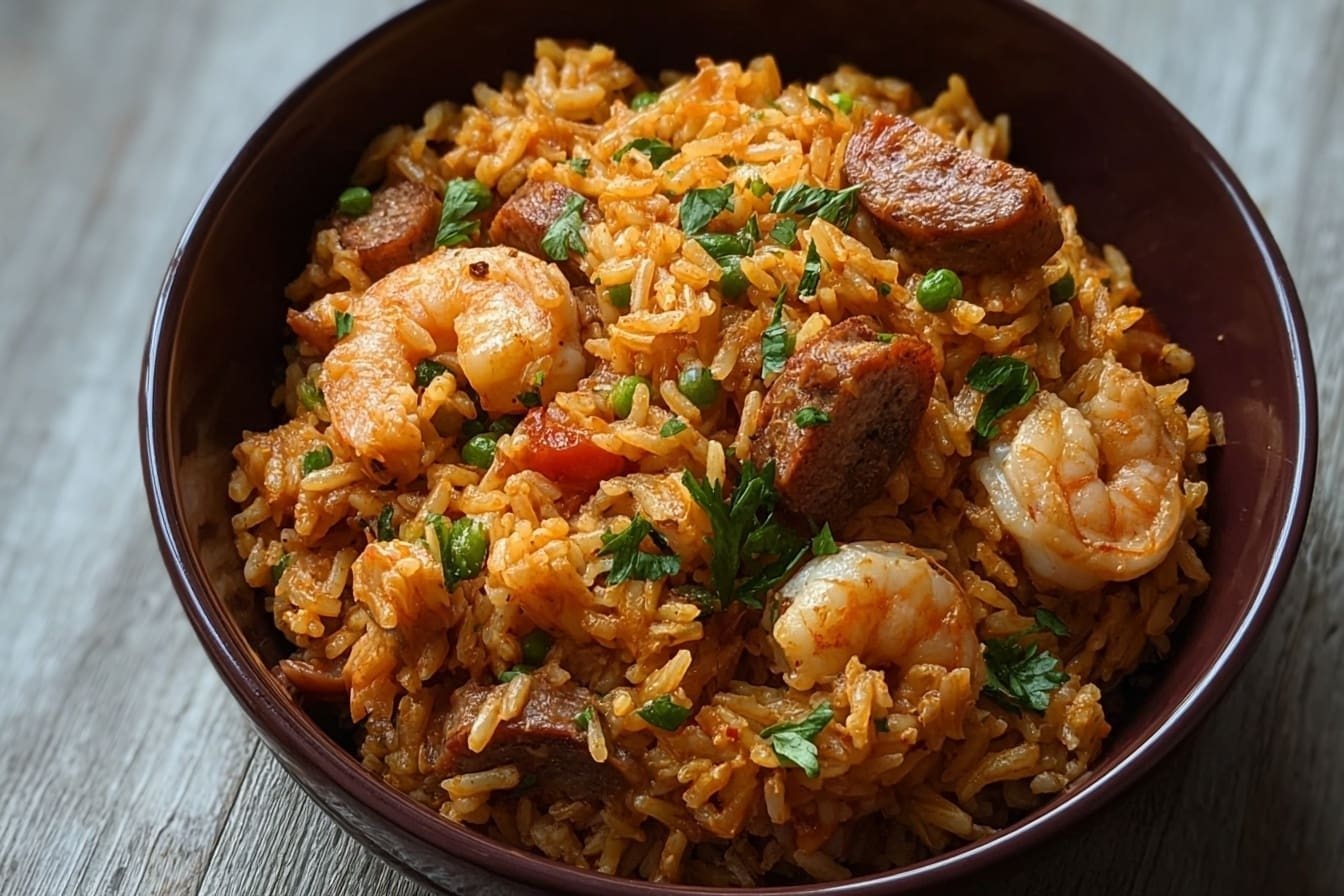
Dietary Substitutions to Customize Your Jambalaya
Protein and Main Component Alternatives
Jambalaya is easy to adjust if you need to work around allergies, preferences, or what you already have in the fridge. The main meat can change without losing the comfort-food feel that makes this recipe so popular.
- For milder sausage: Swap andouille for Polska Kielbasa or another pork sausage.
- For a leaner version: Use turkey sausage and keep the rest of the recipe the same.
- For seafood lovers: Add jumbo shrimp at the same time as the rice or stir them in just before serving.
- For a meat-free dish: Use plant-based sausage and replace chicken with chickpeas, tofu, or tempeh.
Vegetable, Sauce, and Seasoning Modifications
The vegetables and seasonings are flexible too. If you want more color, add extra bell pepper. If you want more heat, increase the cayenne a little at a time. If you like a softer flavor, reduce the Cajun seasoning and add a little extra basil.
- Gluten-free option: Use gluten-free flour for the roux.
- Lower sodium option: Choose low-sodium chicken broth and a lower-sodium sausage.
- Extra veggie option: Add chopped mushrooms or extra celery for more bulk.
- Tomato-free preference: You can reduce the diced tomatoes slightly, though the flavor will be less classic.
For more comfort food ideas that feed a crowd, check out our Mexican chicken and rice recipe, which is another great one-pan meal for busy nights.
Mastering Jambalaya: Advanced Tips and Variations
Pro cooking techniques
For the best Jambalaya, let the meat brown properly before moving on. Those browned bits at the bottom of the pan add rich flavor to the rice. Also, use a skillet or pan with a tight-fitting lid so the rice steams evenly and cooks without drying out.
If your skillet runs hot, lower the heat a little once the rice goes in. A gentle simmer is what you want. Too much heat can make the bottom scorch before the top is done. If you are cooking for guests, you can keep the pot covered and let it rest a bit longer before serving, which helps the flavor settle even more.
Flavor variations
Try different seasonings if you want a twist on the classic version. A little smoked paprika adds more depth, while extra cayenne gives a stronger kick. You can also add shrimp, sliced okra, or even a handful of chopped parsley for a fresh finish.
If you want a slightly richer dish, stir in a small pat of butter right before serving. For a lighter version, skip the extra fat and keep the tomato and broth base simple. The recipe stays flexible either way.
Presentation tips
Spoon the jambalaya into shallow bowls or onto a large platter for serving at gatherings. Sprinkle the chopped green onions over the top for color. A side of cornbread or a simple green salad also makes a nice match when you want to stretch the meal for a group.
Make-ahead options
You can chop the vegetables and slice the sausage ahead of time, then store them in the refrigerator until you are ready to cook. This makes the recipe even easier on a busy day. You can also cook the whole dish a day ahead since the flavors deepen after it sits overnight.
Jambalaya often tastes even better the next day, which makes it a strong choice for meal prep, potlucks, and church dinners.
How to Store Jambalaya: Best Practices
Storing Jambalaya the right way helps keep the rice texture pleasant and the flavor fresh. Since this is a rice-based dish with meat and vegetables, cool it quickly before packing it away.
Refrigeration
Let the jambalaya cool to room temperature, then transfer it to airtight containers. It keeps well in the refrigerator for up to 3 days. If you know you will want leftovers, portion them into smaller containers so they chill faster and reheat more evenly.
Freezing
For longer storage, freeze jambalaya in freezer-safe containers or zip-top bags. It keeps well for up to 2 months. To make thawing easier, freeze it in flat portions so it stacks neatly in the freezer. Keep in mind that rice can soften a little after freezing, but the flavor stays strong.
Reheating
Reheat leftover jambalaya on the stove or in a crock pot with a splash of chicken broth to loosen the rice. Warm it gently until it is steaming hot. You can also use the microwave for single portions, stirring halfway through so it heats evenly.
If the rice looks dry, add another spoonful of broth before serving. That quick fix helps bring back the soft, hearty texture people love.
Nutrition Facts and Recipe Details
| Item | Amount |
|---|---|
| Prep Time | 20 minutes |
| Cook Time | 35 minutes |
| Total Time | 55 minutes |
| Servings | 6 |
| Calories | 628 |
| Carbohydrates | 43g |
| Protein | 45g |
| Fat | 31g |
| Saturated Fat | 10g |
| Polyunsaturated Fat | 5g |
| Monounsaturated Fat | 12g |
| Trans Fat | 0.4g |
| Cholesterol | 148mg |
| Sodium | 1222mg |
| Potassium | 1103mg |
| Fiber | 3g |
| Sugar | 4g |
| Vitamin A | 788IU |
| Vitamin C | 28mg |
| Calcium | 81mg |
| Iron | 3mg |
FAQs: Frequently Asked Questions About Jambalaya
What’s the difference between jambalaya and gumbo?
Jambalaya and gumbo are both Cajun classics from Louisiana, but they differ in preparation and texture. Jambalaya is a one-pot rice dish where everything cooks together, similar to Spanish paella but with bold Creole flavors like Andouille sausage, chicken, tomatoes, and the “holy trinity” of bell peppers, onions, and celery. The rice absorbs all the juices for a hearty, flavorful meal. Gumbo, on the other hand, is a thicker stew made with a dark roux, okra or filé for thickening, and served over separate rice. It often includes seafood, sausage, or chicken in a brothier base. Both share the holy trinity and proteins like shrimp or sausage, but jambalaya stands alone while gumbo needs rice as a side. For beginners, start with jambalaya—it’s simpler with less cleanup. (98 words)
Can you substitute sausage in a jambalaya recipe?
Yes, you can easily swap out the traditional Andouille sausage in jambalaya for other options to suit your taste or availability. Andouille brings smoky, spicy heat, but try milder Polska Kielbasa, chorizo, or even turkey sausage for a leaner version. Use the same amount—about 1 pound sliced into rounds—to keep the balance. If vegetarian, smoked tofu or plant-based sausage works well; just sauté a bit longer to crisp it up. Always brown the sausage first in the pot to release fats that flavor the rice and veggies. Check for fully cooked sausages to avoid overcooking. This flexibility makes jambalaya great for family meals or dietary tweaks without losing its bold taste. Test spiciness and adjust cayenne pepper as needed. (112 words)
How do you add shrimp to jambalaya?
Adding shrimp to jambalaya is straightforward and boosts its seafood profile. Use 1 pound of jumbo uncooked shrimp, peeled and deveined. For best results, stir them in at the same time as the rice so they cook gently in the simmering broth—about 20-25 minutes total, until pink and opaque. Alternatively, sauté shrimp separately with garlic and butter, then fold them in at the end to keep them tender and avoid rubberiness. Season with Cajun spice for extra kick. Shrimp pairs perfectly with the sausage and holy trinity base. Pro tip: If frozen, thaw first and pat dry to prevent watery rice. This addition serves 6-8 and takes no extra time if timed right. (104 words)
Can jambalaya be made gluten-free?
Absolutely, jambalaya can be adapted to be gluten-free with simple swaps. The key is the roux—use ¼ cup gluten-free all-purpose flour (like rice or almond flour blend) instead of wheat flour when making the base. Whisk it into the fat from browned meats over medium heat until nutty and golden. Ensure your chicken broth, sausage, and spices are labeled gluten-free, as some contain hidden wheat. White rice is naturally gluten-free, so no change there. Double-check labels on Worcestershire sauce or Cajun seasoning mixes. The result tastes just as rich and comforting. This version serves 8 and stores well. Always stir frequently to prevent sticking. Perfect for celiac friends at dinner parties. (102 words)
Can you make jambalaya ahead and reheat it?
Yes, jambalaya is ideal for make-ahead prep and reheats beautifully, making it great for meal planning. Cook fully, cool to room temperature, then cover and refrigerate up to 3 days. For reheating, transfer to a crock pot or Dutch oven with ¼-½ cup chicken broth to loosen the rice. Heat on low for 20-30 minutes, stirring occasionally until steaming hot (internal temp 165°F). Microwave works for singles: cover loosely, stir halfway, 2-3 minutes per serving. Freezes well up to 2 months in airtight containers—thaw overnight before reheating. Flavors deepen overnight, so it tastes even better. Avoid drying out by adding broth. Serves leftovers for busy weeknights. (108 words)

Jambalaya
🍲 Hearty Jambalaya: Easy One Pan Recipe bursts with Cajun spices, chicken, and sausage for high-protein satisfaction in one skillet!
🔥 Bold flavors and minimal cleanup make this 55-minute family favorite ideal for busy nights or gatherings!
- Total Time: 55 minutes
- Yield: 6 servings
Ingredients
– 1 tablespoon vegetable or canola oil – Helps brown the chicken and sausage in the skillet.
– 1 pound andouille sausage, sliced 1/4 inch thick – Adds smoky, spicy flavor to the dish.
– 1 1/2 pounds boneless skinless chicken breasts, cut into bite-size pieces – Gives the jambalaya plenty of lean protein.
– 2 tablespoons butter – Adds richness and helps start the roux.
– 2 tablespoons flour – Thickens the pan sauce and helps coat the vegetables.
– 1 yellow or white onion, chopped – Builds the savory base of the recipe.
– 4 green onions, chopped – Adds fresh flavor at the end.
– 4 cloves garlic, finely minced – Brings sharp, aromatic depth.
– 3 ribs celery, chopped – Part of the classic Cajun holy trinity.
– 1 green bell pepper, chopped – Adds sweetness and color.
– 1 1/2 teaspoons basil – Adds a mild herb note.
– 1 1/2 teaspoons cajun seasoning – Gives the rice its signature Cajun kick.
– 1 teaspoon salt – Pulls all the flavors together.
– 1/2 teaspoon fresh ground black pepper – Adds balance and gentle heat.
– 1/4 teaspoon cayenne pepper, optional for extra spice – Brings extra heat if you want it.
– 1 14.5 ounce can diced tomatoes – Adds moisture, color, and a little acidity.
– 2 1/2 cups chicken broth – Cooks the rice and adds savory flavor.
– 1 1/4 cups rice – Soaks up the broth and turns the dish into a complete meal.
Instructions
1-First Step: Brown the chicken
Heat 1 tablespoon vegetable or canola oil in a large skillet over medium-high heat. Add the chicken pieces and cook until browned on all sides, but do not cook them all the way through. This first browning step gives the jambalaya a deeper flavor and helps keep the chicken tender later on.
Once the chicken is browned, move it to a bowl and set it aside. If you are cooking for a mixed crowd, this is the point where you can decide whether you want to keep the dish mild or add the optional cayenne for more heat later.
2-Second Step: Brown the sausage
Add the sliced andouille sausage to the same skillet. Cook it until browned on both sides. Since the sausage is already seasoned and smoky, it gives the pan extra flavor that helps build the base of the dish.
When the sausage is browned, transfer it to the same bowl with the chicken. Keeping both meats aside for now lets you build the sauce and vegetables in the same pan without losing those good browned bits.
3-Third Step: Make the base
Reduce the heat to medium. Add 2 tablespoons butter and 2 tablespoons flour to the skillet, then stir well while scraping up the browned bits stuck to the bottom. Those bits are full of flavor, and stirring them into the butter and flour gives the jambalaya a richer finish.
Cook this mixture just long enough to bring the flour and butter together. If you need a gluten-free version, this is the time to use gluten-free flour instead of regular flour.
4-Fourth Step: Cook the vegetables
Add the onion, garlic, celery, and green bell pepper to the skillet. Sauté for about 3 minutes, stirring often. The vegetables should soften a little, but they do not need to be fully cooked yet. They will finish cooking as the rice simmers.
This mix of onion, celery, and pepper is often called the holy trinity in Cajun cooking. It gives Jambalaya its familiar savory backbone and works just as well for large family dinners as it does for casual weeknight meals.
5-Fifth Step: Add the seasonings and tomatoes
Stir in the basil, Cajun seasoning, diced tomatoes, salt, black pepper, and cayenne pepper if you want the extra heat. The tomatoes add color and a little tang, while the seasoning brings the classic Louisiana-style flavor people expect from jambalaya.
Taste the mixture carefully before adding the rice. If your Cajun seasoning is salty, you may want to keep the added salt on the lighter side. That small adjustment can help you match the dish to your family’s taste.
6-Sixth Step: Add broth and rice
Pour in the chicken broth and add the rice. Bring everything to a gentle boil, then return the reserved chicken and sausage to the skillet. Stir once or twice so the rice is spread out evenly and the meat is nestled into the liquid.
At this stage, the rice starts soaking up the broth, tomatoes, and seasonings. This is what gives Jambalaya its hearty, one-pan appeal. If you want to add shrimp, you can stir in raw jumbo shrimp here so they cook with the rice, or you can fold them in near the end if you prefer a softer texture.
7-Seventh Step: Simmer covered
Reduce the heat to low, cover the skillet with a fitted lid, and cook for 20 minutes. Keep the lid on so the steam stays trapped inside and the rice can cook evenly. Try not to stir during this time, since lifting the lid too often can release steam and affect the texture.
If you are using brown rice, cook it separately first because it needs more time than white rice. Add it at the end so it does not turn mushy.
8-Eighth Step: Rest and serve
Remove the skillet from the heat and let it rest with the lid on for 10 minutes. Then fluff the rice gently with a fork and let it rest for another 5 minutes before serving. This final rest helps the rice settle and gives the flavors a chance to come together.
Top with chopped green onions before serving for a fresh finish. If you love easy chicken meals, you might also enjoy our honey soy chicken recipe for another weeknight dinner that is simple to make and family friendly.
Last Step:
Please leave a rating and comment letting us know how you liked this recipe! This helps our business to thrive and continue providing free, high-quality recipes for you.Notes
🌭 Swap andouille for milder Polska Kielbasa if you prefer less spice.
🦐 Add jumbo shrimp with the rice for a seafood twist – cook together or add at end.
🌾 Use gluten-free flour in the roux to make this dish fully gluten-free.
- Prep Time: 20 minutes
- Cook Time: 35 minutes
- Category: Main Dish
- Method: One-Pan
- Cuisine: Cajun
- Diet: High Protein
Nutrition
- Serving Size: 1 1/2 cups
- Calories: 628 kcal
- Sugar: 4g
- Sodium: 1222mg
- Fat: 31g
- Saturated Fat: 10g
- Unsaturated Fat: 17g
- Trans Fat: 0g
- Carbohydrates: 43g
- Fiber: 3g
- Protein: 45g
- Cholesterol: 148mg


