

Why You’ll Love This Grilled Octopus With Lemon And Oregano
If you have ever wanted to make Grilled Octopus With Lemon And Oregano at home but felt a little nervous, this is the kind of recipe that changes your mind fast. It uses simple ingredients, a short grilling time, and a bright Greek-style vinaigrette that makes every bite taste fresh and lively. Since the octopus is already cooked before it hits the grill, the final step is quick and stress-free.
- Easy to make: This grilled octopus recipe comes together in about 20 minutes total, which makes it a smart choice for busy weeknights or weekend cookouts. The grill gives the tentacles a nice char without a long cooking process.
- Good for sharing: Slice the octopus into bite-sized pieces and serve it as an appetizer for gatherings, potlucks, or a small meze-style spread. It fits right in with the community-focused meals I love sharing at CookyCooky.
- Fresh and bold flavor: The mix of olive oil, red wine vinegar, garlic, lemon, parsley, oregano, and chili flakes gives this Greek octopus recipe a bright, zippy finish that stands out from everyday seafood dishes.
- Flexible for many eaters: It works for low-carb, gluten-free, and diet-conscious meal plans, especially when you pair it with a simple salad or grilled vegetables.
When you’re grilling octopus, don’t forget to toss on some potatoes too. They soak up that lemon-oregano sauce like champs.
For a few more seafood ideas, you may also like this grilled salmon dinner or this easy BBQ shrimp recipe from the blog.
According to WebMD’s overview of octopus nutrition, octopus can be a smart seafood choice when you want plenty of protein with a lighter meal feel.
Jump to:
- Why You’ll Love This Grilled Octopus With Lemon And Oregano
- Essential Ingredients for Grilled Octopus With Lemon And Oregano
- Main Ingredients
- Special Dietary Options
- How to Prepare the Perfect Grilled Octopus With Lemon And Oregano: Step-by-Step Guide
- First Step: Make the vinaigrette
- Second Step: Prep the octopus
- Third Step: Heat the grill
- Fourth Step: Grill the octopus
- Final Step: Plate and serve
- If you are starting with raw octopus
- Dietary Substitutions to Customize Your Grilled Octopus With Lemon And Oregano
- Protein and Main Component Alternatives
- Vegetable, Sauce, and Seasoning Modifications
- Mastering Grilled Octopus With Lemon And Oregano: Advanced Tips and Variations
- Pro cooking techniques
- Flavor variations
- Presentation tips
- Make-ahead options
- How to Store Grilled Octopus With Lemon And Oregano: Best Practices
- Nutrition and Serving Notes for Grilled Octopus With Lemon And Oregano
- FAQs: Frequently Asked Questions About Grilled Octopus With Lemon And Oregano
- Should I buy fresh or frozen octopus for grilling?
- How do I boil octopus before grilling it?
- How do I grill octopus with lemon and oregano?
- What pairs well with grilled octopus with lemon and oregano?
- How do I store leftover grilled octopus?
- Grilled Octopus With Lemon And Oregano
- Ingredients
- Instructions
- Last Step:
- Notes
- Nutrition
- Did you make this recipe?
Essential Ingredients for Grilled Octopus With Lemon And Oregano
Below is the full ingredient list for this easy Greek grilled octopus recipe. Every item is listed with the exact measurement so you can shop and cook with confidence.
Main Ingredients
- 8 cooked octopus tentacles , about 1 1/2 pounds total – the star of the dish, already tender and ready for the grill.
- 1/2 cup extra virgin olive oil – forms the base of the vinaigrette and helps the octopus char beautifully.
- 1/4 cup red wine vinegar – adds tang and balance to the sauce.
- 4 garlic cloves, minced – gives the marinade a bold savory bite.
- 1 tablespoon fresh lemon juice – brightens the flavor and ties in the Greek style.
- 2 tablespoons fresh parsley, diced – adds fresh color and a clean herb note.
- 2 teaspoons dried oregano – the classic herb that makes this grilled octopus with lemon and oregano taste unmistakably Mediterranean.
- 1 teaspoon sea salt – seasons the vinaigrette and helps bring out the seafood flavor.
- 1/2 teaspoon black pepper – adds gentle heat and depth.
- 1/2 teaspoon red chili flakes – gives the sauce a little kick without overpowering the octopus.
- Grilled lemons for serving – a bright finishing touch that makes the whole plate pop.
- Olive oil for drizzling before grilling – helps the tentacles develop a nice crust on the grill.
- Salt and pepper for seasoning before grilling – keeps the flavor simple and balanced.
Special Dietary Options
- Vegan: If you’re cooking for mixed eaters, swap in grilled king oyster mushrooms or cauliflower steaks with the same lemon-oregano vinaigrette.
- Gluten-free: This recipe is naturally gluten-free as written, as long as you check that any sides or store-bought add-ons are gluten-free too.
- Low-calorie: Keep portions smaller and pair the octopus with a cucumber tomato salad instead of bread or potatoes.
| Item | Why it matters | Cook tip |
|---|---|---|
| Pre-cooked octopus | Saves time and helps keep the texture tender | Pat dry before grilling for better browning |
| Olive oil and vinegar | Creates a bright Greek-style vinaigrette | Whisk well so it stays blended |
| Oregano and lemon | Brings the classic flavor of grilled octopus recipe dishes | Add grilled lemons at serving for extra aroma |
How to Prepare the Perfect Grilled Octopus With Lemon And Oregano: Step-by-Step Guide
First Step: Make the vinaigrette
Start by whisking together 1/2 cup extra virgin olive oil, 1/4 cup red wine vinegar, 4 minced garlic cloves, 1 tablespoon fresh lemon juice, 2 tablespoons diced fresh parsley, 2 teaspoons dried oregano, 1 teaspoon sea salt, 1/2 teaspoon black pepper, and 1/2 teaspoon red chili flakes. Taste it and adjust the seasoning if needed. Set it aside while you get the grill ready.
This sauce is the heart of Grilled Octopus With Lemon And Oregano, so take a minute to taste it. If you like a sharper bite, add a little more vinegar. If you want more brightness, squeeze in a touch more lemon.
Second Step: Prep the octopus
Drizzle the 8 cooked octopus tentacles with a little olive oil, then season lightly with salt and pepper. If you’re using pre-cooked octopus, this step is fast and easy. If you started with raw octopus, it should already be poached until tender, cooled, and chilled before it reaches this stage.
For the best texture, use pre-cooked octopus whenever you can. If you are working with fresh octopus, freezing it first can help break down the fibers and make the meat more tender after cooking.
Quick tip: Octopus should feel tender enough that a knife slides in easily before it ever sees the grill.
Third Step: Heat the grill
Preheat your grill or grill pan to medium-high heat. You want enough heat to get those dark grill marks and a little char, but not so much that the octopus dries out. If you are using a gas grill, give it a few extra minutes so the grates are hot all the way through.
This is also the perfect time to toss on some lemon halves or small potatoes if you want a fuller meal. Grilled potatoes pick up the same smoky flavor and make a great side for this Greek octopus recipe.
Fourth Step: Grill the octopus
Place the tentacles on the hot grill and cook for 3 to 5 minutes, turning once if needed, until they are heated through and charred in spots. The goal is quick grilling, not long cooking. Since the octopus is already tender, the grill is just adding flavor and color.
Keep an eye on it so it does not overcook. Overcooked octopus can turn chewy, while the right amount of heat gives you that sweet spot between tender and smoky. If you are using a grill pan indoors, medium-high heat works well and still gives a nice sear.
Final Step: Plate and serve
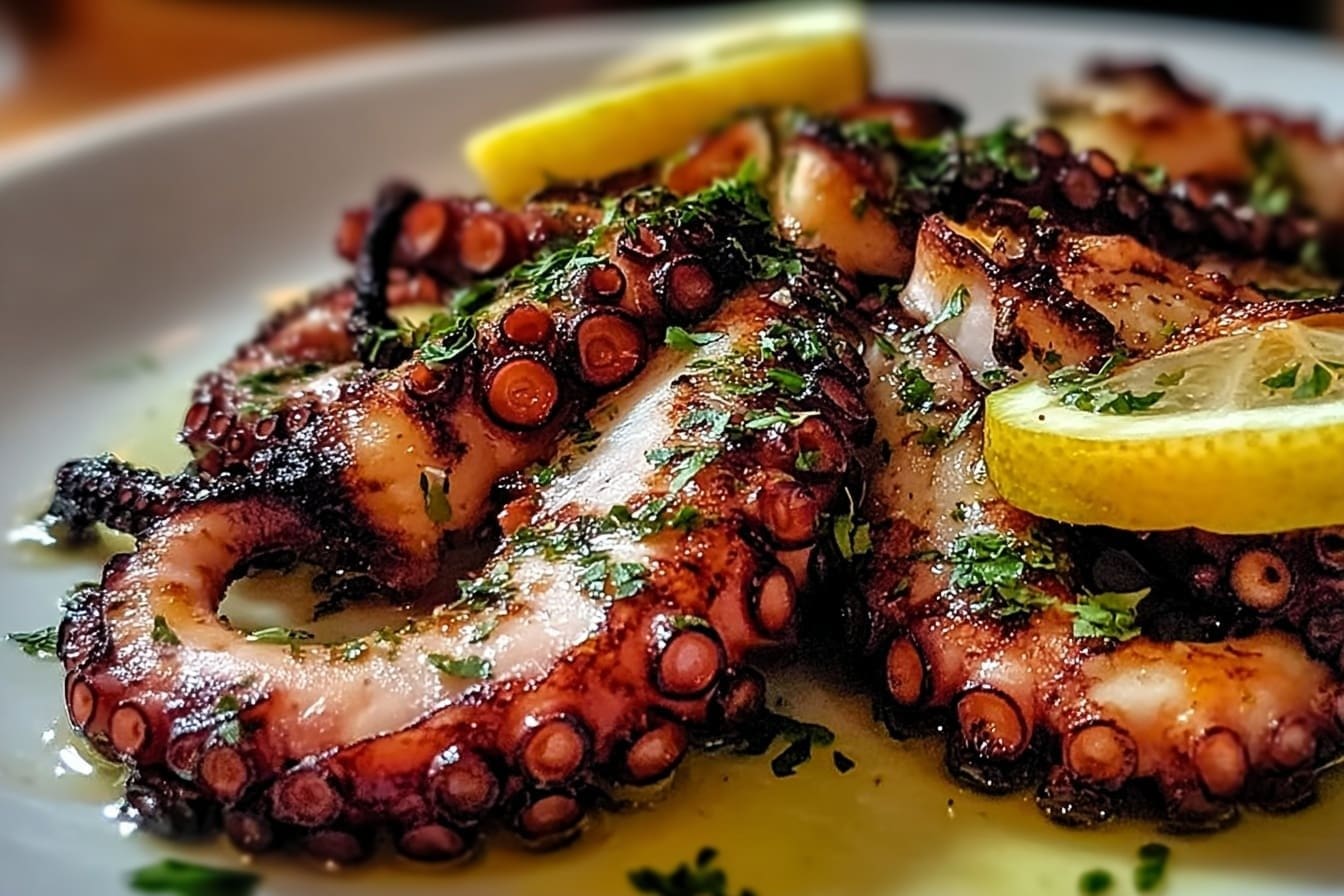
Transfer the grilled octopus to a serving dish and spoon the vinaigrette over the top. Serve with grilled lemons and lemon wedges on the side. If you made potatoes, pile them onto the platter so they can soak up the sauce too.
For appetizers, slice the tentacles into bite-sized pieces and arrange them on a platter with toothpicks. For a bigger meal, serve with rice, a Greek salad, feta, and kalamata olives. That mix turns this octopus recipe into an easy spread for family dinner or casual entertaining.
Prep time: 10 minutes
Cook time: 10 minutes
Total time: 20 minutes
If you are starting with raw octopus
Here is the simple poaching method before grilling. Put the octopus in a large pot with boiling water, onion, vinegar, bay leaves, peppercorns, and salt. Simmer for about 1 hour, or until a knife pierces the meat easily. Cool it down, refrigerate it, then grill it as directed above.
If you want another simple main dish to serve beside this one at a gathering, try garlic butter steak and potatoes for a hearty crowd-pleaser.
Dietary Substitutions to Customize Your Grilled Octopus With Lemon And Oregano
Protein and Main Component Alternatives
If octopus is hard to find, you can still make a meal with the same Greek-inspired flavor. Grilled shrimp, scallops, or firm white fish like cod can all work with the lemon, garlic, oregano, and olive oil dressing. They will cook faster than octopus, so keep a close eye on them at the grill.
For plant-based guests, grilled king oyster mushrooms or thick slices of cauliflower can give you a similar smoky edge. They pair well with the same vinaigrette and feel right at home on a meze platter.
Vegetable, Sauce, and Seasoning Modifications
You can change the sides and seasonings based on the season or what is already in your kitchen. Try grilled zucchini, bell peppers, or asparagus in place of potatoes. A cucumber dill salad also works well if you want something cooler and lighter.
If you like more heat, add extra chili flakes. If you want a softer herb flavor, swap part of the oregano for chopped mint or parsley. For a lower-sodium plate, cut back slightly on the salt and lean more on lemon juice, garlic, and fresh herbs for flavor.
Simple swaps can keep this grilled octopus recipe flexible enough for weeknights, potlucks, and special dinners alike.
Mastering Grilled Octopus With Lemon And Oregano: Advanced Tips and Variations
Pro cooking techniques
Use pre-cooked octopus for the most reliable tenderness. If you are starting from raw, freezing first helps the texture, and poaching before grilling gives you much better results than trying to grill raw tentacles straight away. A dry surface also matters, so pat the octopus well before it goes on the grill.
When grilling, think hot and fast. The tentacles only need a few minutes per side to pick up color and char. Too much time on the heat will make them firm instead of tender. If you’re grilling lemons or potatoes at the same time, turn them often so they do not burn.
Flavor variations
You can keep the classic lemon-oregano profile or make small changes to fit your mood. Add smoked paprika for a deeper flavor, swap in dill for part of the parsley, or toss the grilled octopus with a spoonful of chopped capers for extra briny punch. A little honey in the vinaigrette can also soften the vinegar if you like a gentler finish.
Presentation tips
For a pretty platter, slice the tentacles into smaller pieces and scatter grilled lemon halves, parsley, and potatoes around them. A shallow serving bowl works nicely because the vinaigrette pools at the bottom and keeps every bite juicy. If you are hosting, put toothpicks nearby so people can grab pieces easily.
Make-ahead options
The vinaigrette can be mixed a day ahead and stored in the fridge. You can also cook the octopus in advance, chill it overnight, and grill it right before serving. That makes this easy Greek grilled octopus recipe a solid choice for busy schedules, holiday meals, or dinner with guests.
How to Store Grilled Octopus With Lemon And Oregano: Best Practices
Leftovers store well if you handle them the right way. Cool the grilled octopus completely, then wrap it tightly or place it in an airtight container. Keep it in the fridge for up to 72 hours, and store it with some of the vinaigrette if you want it to stay moist.
For longer storage, freeze the octopus in a freezer-safe bag for up to 1 month. Thaw it overnight in the refrigerator before reheating. Warm it gently on the grill or in a 300°F oven for about 10 minutes. A fresh squeeze of lemon right before serving helps wake the flavor back up.
Avoid microwaving if you can, since that can make the texture tough. Leftover octopus is great on salad, tucked into wraps, or served over rice the next day. For another make-ahead friendly dish, you might like this loaded mashed potato casserole for a crowd-sized side.
Nutrition and Serving Notes for Grilled Octopus With Lemon And Oregano
Here is the nutrition information for this recipe, based on 1/3 of the full batch:
| Nutrition | Amount |
|---|---|
| Calories | 521 |
| Sugar | 0.3 g |
| Sodium | 1300.6 mg |
| Fat | 39.8 g |
| Carbohydrates | 7.7 g |
| Protein | 34.3 g |
| Cholesterol | 108.8 mg |
This grilled octopus recipe gives you a protein-rich main dish that can fit into a lot of meal plans. If you want to keep the plate lighter, serve it with salad and grilled vegetables instead of potatoes. If you want something more filling, add rice or bread on the side.
FAQs: Frequently Asked Questions About Grilled Octopus With Lemon And Oregano
Should I buy fresh or frozen octopus for grilling?
Fresh octopus works, but most experienced cooks recommend freezing it first or buying pre-frozen to break down tough fibers for tenderness. Freezing mimics the tenderizing effect of slow cooking. In this grilled octopus with lemon and oregano recipe, use either a whole frozen octopus (thaw overnight) or pre-poached tentacles. Boil fresh ones as detailed below: simmer in water with onion halves, 2 tablespoons red wine vinegar, 2 bay leaves, 10-15 peppercorns, and 1 tablespoon salt for about 1 hour until a knife pierces easily. Cool, refrigerate overnight, then grill. This ensures juicy, flavorful results every time. (72 words)
How do I boil octopus before grilling it?
Start with a large pot of water to cover the octopus fully. Add one halved onion, 2 tablespoons red wine vinegar, 2 bay leaves, 10-15 peppercorns, and 1 tablespoon salt. Bring to a boil, add the octopus, then simmer for 45-60 minutes depending on size—test by piercing tentacles with a knife; it should slide in with little resistance. Drain, cool in ice water, then refrigerate overnight. Cut into manageable pieces (two or four tentacles per side). Pat dry before marinating in lemon, oregano, olive oil, garlic, and salt. This step is key for tender grilled octopus. (98 words)
How do I grill octopus with lemon and oregano?
After boiling and chilling, marinate tentacles for 1-2 hours in a mix of 1/4 cup olive oil, juice of 2 lemons, 2 tablespoons chopped oregano, 2 minced garlic cloves, salt, and pepper. Preheat grill to high (450-500°F). Oil grates, then grill 3-4 minutes per side until charred and crispy outside, tender inside. Brush with extra marinade while cooking. Rest 5 minutes, slice if desired, and drizzle with more lemon juice. Serve warm. For indoor grill pan, use medium-high heat and cover if needed. Avoid overcooking to prevent chewiness. (102 words)
What pairs well with grilled octopus with lemon and oregano?
This Greek-inspired dish shines with simple sides. Pair with grilled potatoes tossed in olive oil and oregano, or a classic Greek salad of tomatoes, cucumbers, red onion, feta, and kalamata olives dressed in the same lemon-oregano vinaigrette. Rice pilaf or grilled pita bread soaks up the juices perfectly. For heartier meals, add roasted vegetables or hummus. As an appetizer, cut into bite-sized pieces with toothpicks and extra vinaigrette. It balances the octopus’s smokiness with fresh, tangy flavors—perfect for summer barbecues or meze platters. (94 words)
How do I store leftover grilled octopus?
Cool grilled octopus completely, then store in an airtight container or wrap tightly in plastic. Refrigerate for up to 3 days; it tastes even better on day two as flavors meld. Keep in the lemon-oregano vinaigrette to stay moist. For longer storage, freeze in a freezer bag up to 1 month—thaw overnight in fridge and reheat gently on grill or in a 300°F oven for 10 minutes. Reheat with a lemon squeeze. Avoid microwaving to prevent toughness. Great for salads, wraps, or pasta the next day. Always check for off smells before eating. (96 words)

Grilled Octopus With Lemon And Oregano
🐙 Tender Greek grilled octopus bursts with smoky char and zesty herb vinaigrette – lean protein packed flavor bomb!
🔥 Super easy 20-minute grill using pre-cooked tentacles, ideal for meze, salads, or Greek feasts.
- Total Time: 20 minutes
- Yield: 3 servings
Ingredients
– 8 cooked octopus tentacles (about 1 1/2 pounds total)
– 1/2 cup extra virgin olive oil
– 1/4 cup red wine vinegar
– 4 garlic cloves, minced
– 1 tablespoon fresh lemon juice
– 2 tablespoons fresh parsley, diced
– 2 teaspoons dried oregano
– 1 teaspoon sea salt
– 1/2 teaspoon black pepper
– 1/2 teaspoon red chili flakes
– Grilled lemons for serving
– Olive oil for drizzling before grilling
– Salt and pepper for seasoning before grilling
Instructions
1-First Step: Make the vinaigrette Start by whisking together 1/2 cup extra virgin olive oil, 1/4 cup red wine vinegar, 4 minced garlic cloves, 1 tablespoon fresh lemon juice, 2 tablespoons diced fresh parsley, 2 teaspoons dried oregano, 1 teaspoon sea salt, 1/2 teaspoon black pepper, and 1/2 teaspoon red chili flakes. Taste it and adjust the seasoning if needed. Set it aside while you get the grill ready. This sauce is the heart of Grilled Octopus With Lemon And Oregano, so take a minute to taste it. If you like a sharper bite, add a little more vinegar. If you want more brightness, squeeze in a touch more lemon.
2-Second Step: Prep the octopus Drizzle the 8 cooked octopus tentacles with a little olive oil, then season lightly with salt and pepper. If you’re using pre-cooked octopus, this step is fast and easy. If you started with raw octopus, it should already be poached until tender, cooled, and chilled before it reaches this stage. For the best texture, use pre-cooked octopus whenever you can. If you are working with fresh octopus, freezing it first can help break down the fibers and make the meat more tender after cooking.
3-Third Step: Heat the grill Preheat your grill or grill pan to medium-high heat. You want enough heat to get those dark grill marks and a little char, but not so much that the octopus dries out. If you are using a gas grill, give it a few extra minutes so the grates are hot all the way through. This is also the perfect time to toss on some lemon halves or small potatoes if you want a fuller meal. Grilled potatoes pick up the same smoky flavor and make a great side for this Greek octopus recipe.
4-Fourth Step: Grill the octopus Place the tentacles on the hot grill and cook for 3 to 5 minutes, turning once if needed, until they are heated through and charred in spots. The goal is quick grilling, not long cooking. Since the octopus is already tender, the grill is just adding flavor and color. Keep an eye on it so it does not overcook. Overcooked octopus can turn chewy, while the right amount of heat gives you that sweet spot between tender and smoky. If you are using a grill pan indoors, medium-high heat works well and still gives a nice sear.
5-Final Step: Plate and serve Transfer the grilled octopus to a serving dish and spoon the vinaigrette over the top. Serve with grilled lemons and lemon wedges on the side. If you made potatoes, pile them onto the platter so they can soak up the sauce too. For appetizers, slice the tentacles into bite-sized pieces and arrange them on a platter with toothpicks. For a bigger meal, serve with rice, a Greek salad, feta, and kalamata olives. That mix turns this octopus recipe into an easy spread for family dinner or casual entertaining.
Last Step:
Please leave a rating and comment letting us know how you liked this recipe! This helps our business to thrive and continue providing free, high-quality recipes for you.Notes
🐙 Use pre-cooked or frozen-thawed octopus for easiest tenderness; poach raw if needed.
🔥 Grill hot and fast for perfect char without toughening the meat.
🍋 Grill lemons alongside for smoky citrus squeeze that elevates flavors.
- Prep Time: 10 minutes
- Cook Time: 10 minutes
- Category: Seafood
- Method: Grilling
- Cuisine: Greek
- Diet: Pescatarian
Nutrition
- Serving Size: 2-3 tentacles
- Calories: 521 kcal
- Sugar: 0.3 g
- Sodium: 1301 mg
- Fat: 40 g
- Saturated Fat: 5 g
- Unsaturated Fat: 34 g
- Trans Fat: 0 g
- Carbohydrates: 8 g
- Fiber: 1 g
- Protein: 34 g
- Cholesterol: 109 mg


