

Why You’ll Love Filipino Sapin Sapin
Filipino Sapin Sapin is a colorful, soft, and chewy steamed glutinous rice cake topped with golden latik, and it is one of those Filipino dessert recipes that always gets people talking. It looks festive, tastes rich and coconutty, and comes together with simple pantry ingredients. If you have ever wanted a simple Filipino dessert that feels special enough for a party but still works for a cozy family snack, this Filipino Sapin Sapin recipe is a great one to keep on hand.
- Easy to prepare: The batter mixes up quickly, then each layer steams in just about 10 minutes. That makes this Sapin Sapin recipe very doable for busy parents, students, and working professionals who want a special dessert without a lot of fuss.
- Comforting and satisfying: Thanks to glutinous rice flour, coconut milk, and condensed milk, each bite is soft, chewy, and rich. The nutrition profile also gives you a dessert with some protein, potassium, calcium, and fiber, which makes it feel a little more filling than a typical sweet treat.
- Great for sharing: Filipino Sapin Sapin travels well once cooled, so it is perfect for potlucks, church gatherings, picnics, and family reunions. If you like bringing dishes that feed a crowd, this one fits right in with the kind of recipes your guests remember.
- Beautiful layers and bold flavor: The purple ube layer, yellow langka layer, and plain white layer create a lovely striped look. Topped with golden latik, this Filipino dessert layers recipe feels festive before anyone even takes a bite.
This is the kind of dessert that looks like a celebration, tastes like comfort, and brings people back for seconds.
For readers who enjoy coconut-based sweets, you may also like these toasted coconut cream pudding and coconut cupcakes recipes from Cooky Cooky.
Jump to:
- Why You’ll Love Filipino Sapin Sapin
- Essential Ingredients for Filipino Sapin Sapin
- Main Ingredients
- Special Dietary Options
- How to Prepare the Perfect Filipino Sapin Sapin: Step-by-Step Guide
- First Step: Make the latik
- Second Step: Prepare the pan
- Third Step: Mix the batter
- Fourth Step: Flavor the three layers
- Fifth Step: Steam the purple layer first
- Sixth Step: Add the yellow layer
- Seventh Step: Finish with the white layer
- Eighth Step: Cool, unmold, and top with latik
- Dietary Substitutions to Customize Your Filipino Sapin Sapin
- Protein and Main Component Alternatives
- Vegetable, Sauce, and Seasoning Modifications
- Mastering Filipino Sapin Sapin: Advanced Tips and Variations
- Pro cooking techniques
- Flavor variations
- Presentation tips
- Make-ahead options
- How to Store Filipino Sapin Sapin: Best Practices
- Refrigeration
- Freezing
- Reheating
- Meal prep considerations
- Nutrition and Serving Notes for Filipino Sapin Sapin
- FAQs: Frequently Asked Questions About Filipino Sapin Sapin
- What is sapin sapin?
- Where did sapin sapin originate?
- What ingredients do I need for homemade sapin sapin?
- How do you make sapin sapin step by step?
- How should I store sapin sapin to keep it fresh?
- Filipino Sapin Sapin
- Ingredients
- Instructions
- Last Step:
- Notes
- Nutrition
- Did you make this recipe?
Essential Ingredients for Filipino Sapin Sapin
The ingredients for Filipino Sapin Sapin are simple, but each one plays an important role in texture, color, and flavor. The batter makes soft rice layers, while the latik adds that classic toasted coconut topping. Below is a structured ingredient list so you can gather everything before you start.
Main Ingredients
- 1 cup coconut cream (kakang gata) – used for making latik, which becomes the sweet, golden topping.
- 3 1/2 cups glutinous rice flour – gives the cake its chewy kakanin texture.
- 2 cans (13.5 ounces each) coconut milk – adds richness and a deep coconut flavor to the batter.
- 1 can (14 ounces) condensed milk – sweetens the batter and helps create a creamy finish.
- 1 cup sugar – balances the coconut flavor and helps the layers set with a gentle sweetness.
- 3 drops ube flavor extract – gives the purple layer its signature ube taste and color.
- 3 drops langka flavor extract – flavors the yellow layer with sweet jackfruit notes.
Special Dietary Options
- Vegan: Use coconut condensed milk or another plant-based condensed milk instead of dairy condensed milk.
- Gluten-free: This recipe already uses glutinous rice flour, which is naturally gluten-free.
- Lower sugar: Reduce the sugar slightly if you prefer a less sweet Filipino dessert, though the texture may be a little less rich.
| Ingredient | Purpose | Why it matters |
|---|---|---|
| Coconut cream | Latik topping | Creates the toasted curds and coconut oil used for greasing |
| Glutinous rice flour | Main batter base | Gives the chewy, sticky texture |
| Coconut milk | Liquid for batter | Adds moisture and flavor |
| Condensed milk | Sweetener | Makes the dessert creamy and sweet |
| Ube and langka extracts | Flavor and color | Create the classic purple and yellow layers |
How to Prepare the Perfect Filipino Sapin Sapin: Step-by-Step Guide
Making Filipino Sapin Sapin is easier when you break it into three simple parts: make the latik, mix the batter, then steam the layers one by one. The process takes about 10 minutes of prep and 50 minutes of cook time, for a total of about 1 hour. If you have a busy day, you can even get your pan and ingredients ready ahead of time so assembly moves smoothly.
First Step: Make the latik
Start by placing 1 cup coconut cream in a saucepan over medium heat. Stir constantly as it boils, thickens, and the oil begins to separate. Keep cooking until the solids turn golden brown. This is the latik, and it gives the dessert its classic toasted coconut flavor. Drain the latik, then save the coconut oil separately because you will use it to grease the pan and brush the finished cake.
Second Step: Prepare the pan
Use the coconut oil from the latik to grease an 8 x 2-inch round baking pan. You can also use an 8 x 8 square pan or a springform pan if that works better for your kitchen setup. Grease it generously. If you want extra insurance against sticking, line the pan with banana leaves or parchment paper.
Third Step: Mix the batter
In a large bowl, combine 3 1/2 cups glutinous rice flour, 2 cans (13.5 ounces each) coconut milk, 1 can (14 ounces) condensed milk, and 1 cup sugar. Stir until the mixture is smooth and the sugar dissolves. The batter should be fairly loose and pourable. If you want the smoothest texture possible, strain it through a fine-mesh sieve before dividing it into three equal portions.
Fourth Step: Flavor the three layers
Add 3 drops ube flavor extract to one portion and mix well. Add 3 drops langka flavor extract to a second portion. Leave the third portion plain and white. This is what gives Filipino dessert layers their iconic look. If you want a more traditional version, you can also add mashed cooked ube, chopped jackfruit, or macapuno, which I will cover later.
Fifth Step: Steam the purple layer first
Pour the purple batter into the prepared pan and steam for about 10 minutes, or until it is set. Keep the steamer at a steady heat so the layer cooks evenly. If you are using a multi-tier steamer, this part goes smoothly, but a single steamer works well too. Avoid lifting the lid too often because the temperature drop can slow the setting process.
Sixth Step: Add the yellow layer
Once the purple layer is firm, gently pour the langka flavored yellow batter on top. Steam for another 10 minutes. Pour slowly so the layer stays even. If the top looks too wet after steaming, give it a little more time before adding the next layer.
Seventh Step: Finish with the white layer
Pour the plain white batter over the yellow layer and steam for about 10 minutes more, or until a toothpick comes out clean. The full cake uses about 6 cups of rice batter, which fits the pan nicely. Do not rush this step. The final layer should look set but still soft.
Eighth Step: Cool, unmold, and top with latik
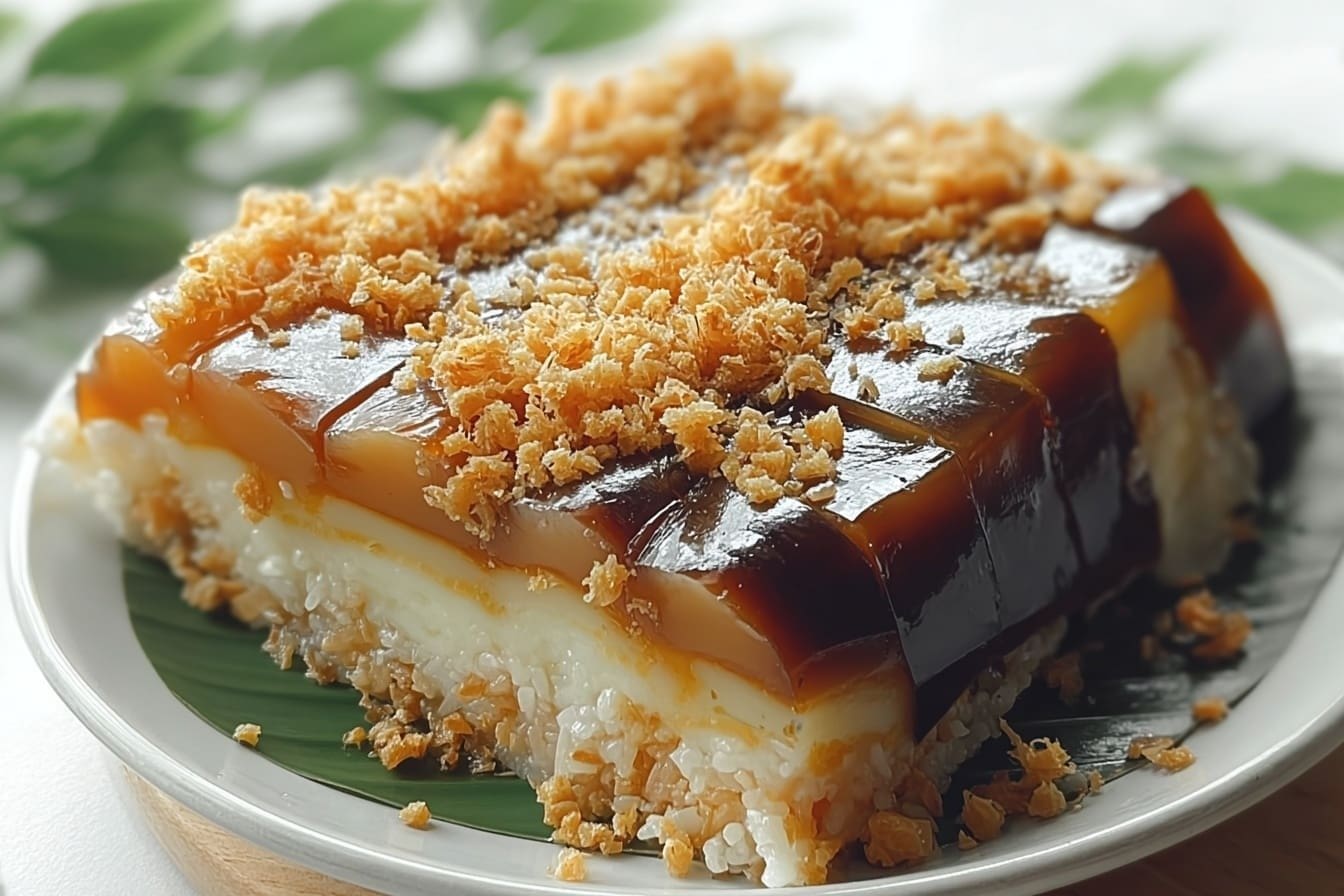
Let the cake cool completely before removing it from the pan. This helps the layers hold together and makes slicing easier. Loosen the edges with a knife, then invert the cake onto a platter so the purple layer is on top. Brush the surface generously with coconut oil and sprinkle with latik. Slice into servings and enjoy your beautiful Filipino Sapin Sapin while it is at room temperature or lightly chilled.
Tip: Do not cover the cake right after steaming. Trapped steam can create water puddles on top and make the texture soggy.
If you enjoy layered desserts, you may also like this magic three-layer custard cake for another fun, shareable treat.
Dietary Substitutions to Customize Your Filipino Sapin Sapin
One reason people love Filipino Sapin Sapin is that it can be adjusted for different needs and ingredient access. While the classic version uses coconut milk, condensed milk, and flavored extracts, there are a few easy swaps that still give you a lovely Filipino dessert.
Protein and Main Component Alternatives
This recipe does not use a traditional protein, but the main component is the rice flour batter. If you want a more traditional texture and a little more body, add 1/2 cup mashed cooked ube to the purple layer, 1/4 cup finely chopped jackfruit (langka) to the yellow layer, and 1/4 cup chopped macapuno strips to the white layer. These additions bring a more authentic feel and give each layer a pleasant bite.
For a dairy-free version, replace condensed milk with coconut condensed milk. If you want a slightly lighter dessert, use a little less sugar. For those avoiding artificial flavorings, you can rely more on natural ingredients like ube and jackfruit puree instead of extract.
Vegetable, Sauce, and Seasoning Modifications
Even though this dessert does not use vegetables or sauce in the usual sense, you can still play with the flavoring and topping. Try pandan extract for a green layer, or keep one layer plain for a simple look. Instead of only latik on top, you can add toasted coconut flakes for extra crunch. If you want a richer coconut aroma, use banana leaves in the pan, which also help the cake release cleanly.
These changes keep the spirit of Filipino Sapin Sapin while letting you work with what is already in your kitchen.
Mastering Filipino Sapin Sapin: Advanced Tips and Variations
Once you have made this Sapin Sapin recipe once, you will probably want to make it again. The good news is that the recipe is forgiving, and a few small techniques can help you get neat layers, soft texture, and a beautiful finish every time.
Pro cooking techniques
Keep the batter smooth by mixing well until the sugar dissolves fully. Straining through a fine-mesh sieve helps remove lumps and gives you a silkier finish. If your steamer runs hot, check the layers a little early so they do not overcook. Also, let each layer set before adding the next one. That is the key to clear, pretty Filipino dessert layers.
Flavor variations
If you want a more traditional version, use actual cooked ube, fresh jackfruit, and macapuno instead of just extract. You can also keep the flavors simple and let the coconut shine. Some home cooks like to add a little extra coconut milk for a softer bite, while others prefer a firmer cake that slices cleanly.
Presentation tips
For a party tray, cut the cake into diamonds or small squares and place them on a platter lined with banana leaves. Brush the top with coconut oil just before serving so the surface looks glossy. Then finish with a generous sprinkle of latik. The contrast of purple, yellow, and white makes this Filipino Sapin Sapin look especially inviting.
Make-ahead options
You can make the latik a day or two ahead and store it in a sealed container. The whole cake can also be cooked earlier in the day, cooled fully, and chilled until you are ready to serve. That makes it a smart choice for gatherings, church events, and other times when you want dessert ready before the guests arrive.
How to Store Filipino Sapin Sapin: Best Practices
Because this Filipino Sapin Sapin contains coconut milk, it should be stored properly so it stays fresh and safe. The texture is best when served the same day or within a short time after chilling, but leftovers still keep well.
Refrigeration
Store leftover Sapin Sapin in an airtight container in the refrigerator for up to 3 days. Let it cool fully first so condensation does not collect inside the container. This keeps the layers from becoming watery.
Freezing
If you want to keep it longer, freeze individual slices in freezer-safe bags or containers for up to 1 month. Separate slices with parchment paper so they do not stick together. Thaw overnight in the refrigerator before reheating.
Reheating
To soften chilled leftovers, warm them briefly by steaming for about 5 minutes or microwaving covered for about 30 seconds. Do not overheat, or the cake may dry out. A little warmth brings back the soft, chewy texture that makes this Filipino dessert so good.
Meal prep considerations
If you are making this for a potluck or church gathering, you can prepare it the day before and store it covered in the fridge. Just wait to add the latik until close to serving time if you want the topping to stay crisp. That small step keeps the dessert looking fresh and appealing.
Nutrition and Serving Notes for Filipino Sapin Sapin
One serving of Filipino Sapin Sapin contains approximately 557 calories, 80 g carbohydrates, 8 g protein, 24 g fat, 20 g saturated fat, 11 mg cholesterol, 51 mg sodium, 368 mg potassium, 2 g fiber, 35 g sugar, 90 IU vitamin A, 2.1 mg vitamin C, 113 mg calcium, and 2.8 mg iron. This makes it a rich and satisfying treat that works well as an occasional dessert or merienda snack.
Because it is quite filling, small slices are usually enough. For gatherings, cutting it into bite-size squares or diamonds works well. It pairs nicely with hot coffee, tea, or a cold glass of water, especially after a savory meal.
For the best texture, let the cake cool fully before slicing. That helps the layers stay neat and gives you cleaner pieces.

FAQs: Frequently Asked Questions About Filipino Sapin Sapin
What is sapin sapin?
Sapin sapin is a traditional Filipino steamed rice cake known for its colorful, layered appearance, with “sapin sapin” meaning “layers” or “sheets” in Tagalog. Made from glutinous rice flour and coconut milk, it features soft, chewy textures in vibrant hues like purple from ube (purple yam), yellow from langka (jackfruit), and plain white layers. The dessert gets a rich coconut flavor and is typically topped with latik, toasted coconut curds, for added crunch and taste. This kakanin, or sticky rice treat, is popular at celebrations and merienda (snack time). Each bite offers a delightful mix of sweetness and chewiness, making it a staple in Filipino cuisine. Serve it chilled or at room temperature for the best experience. (92 words)
Where did sapin sapin originate?
Sapin sapin originated in the northern Philippine province of Abra, part of the Ilocos Region, where it emerged as a beloved kakanin—a category of rice-based sweets made for special occasions. Over time, it spread nationwide, adapting to local ingredients and preferences. In Abra, early versions used simple glutinous rice and coconut, steamed in banana leaves for natural aroma. Today, it’s a fixture in markets and home kitchens across the Philippines, especially during fiestas and holidays. Its rise in popularity ties to the Filipino love for layered, visually appealing desserts that symbolize abundance. Historical accounts note it dating back to pre-colonial times, evolving with Spanish and American influences on flavors like ube. (98 words)
What ingredients do I need for homemade sapin sapin?
For a standard 8×8-inch pan of sapin sapin serving 8-10 people, gather these key ingredients: 2 cups glutinous rice flour, 1 ½ cups sugar (adjust for sweetness), 3 cups coconut milk, 2 cups water, purple food coloring or ½ cup mashed ube, yellow food coloring or ½ cup langka puree, and 1 cup latik (made by simmering 2 cups coconut cream until curds form). Optional: evaporated milk for creaminess. Mix separate batters for each layer: combine flour, sugar, coconut milk, and water, then divide and tint. Steam layers sequentially for 10-15 minutes each, starting with the bottom (purple), adding white, then yellow. Cool before topping with latik. This yields about 300 calories per slice. (112 words)
How do you make sapin sapin step by step?
Prepare three batters: Mix 2 cups glutinous rice flour, 1 ½ cups sugar, 3 cups coconut milk, and 2 cups water until smooth. Divide into three bowls; tint one purple (ube), one yellow (langka), leave one white. Grease an 8-inch round steamer pan. Steam purple batter first for 15 minutes until set. Add white layer, steam 10 minutes. Top with yellow, steam 10 more minutes. Cool completely at room temperature (about 1 hour) to prevent sogginess. Invert onto a plate, top with latik, and slice into diamonds. Total time: 1 hour active, plus cooling. Pro tip: Use a multi-tier steamer for even cooking; banana leaves add authentic flavor. Perfect for parties—makes 12 servings. (108 words)
How should I store sapin sapin to keep it fresh?
Sapin sapin must be refrigerated due to coconut milk, which spoils quickly in tropical climates—store it covered in the fridge for up to 3 days. After steaming, cool fully (2-3 hours) on a wire rack to avoid condensation puddles that make it watery. Wrap tightly in plastic or use an airtight container. For longer storage, freeze slices in freezer bags up to 1 month; thaw overnight in the fridge and warm gently in a steamer to restore chewiness. Do not leave at room temperature over 2 hours. Reheat by steaming 5 minutes or microwaving covered for 30 seconds. This keeps the soft texture and prevents mold. Discard if it smells sour or shows discoloration. (102 words)

Filipino Sapin Sapin
🍮🌈 Sapin Sapin Recipe layers vibrant ube-langka-white chewy rice cakes under golden latik – festive Filipino delight!
🥥 Coconut-rich, soft glutinous dessert: simple steam method, colorful snack perfection!
- Total Time: 1 hour 30 minutes
- Yield: 12 servings
Ingredients
– 1 cup coconut cream (kakang gata) for making latik
– 3 1/2 cups glutinous rice flour for chewy kakanin texture
– 2 cans (13.5 ounces each) coconut milk for richness and coconut flavor
– 1 can (14 ounces) condensed milk for sweetening and creamy finish
– 1 cup sugar for balancing coconut flavor
– 3 drops ube flavor extract for purple layer
– 3 drops langka flavor extract for yellow layer
Instructions
1-First Step: Make the latik Start by placing 1 cup coconut cream in a saucepan over medium heat. Stir constantly as it boils, thickens, and the oil begins to separate. Keep cooking until the solids turn golden brown. This is the latik, and it gives the dessert its classic toasted coconut flavor. Drain the latik, then save the coconut oil separately because you will use it to grease the pan and brush the finished cake.
2-Second Step: Prepare the pan Use the coconut oil from the latik to grease an 8 x 2-inch round baking pan. You can also use an 8 x 8 square pan or a springform pan if that works better for your kitchen setup. Grease it generously. If you want extra insurance against sticking, line the pan with banana leaves or parchment paper.
3-Third Step: Mix the batter In a large bowl, combine 3 1/2 cups glutinous rice flour, 2 cans (13.5 ounces each) coconut milk, 1 can (14 ounces) condensed milk, and 1 cup sugar. Stir until the mixture is smooth and the sugar dissolves. The batter should be fairly loose and pourable. If you want the smoothest texture possible, strain it through a fine-mesh sieve before dividing it into three equal portions.
4-Fourth Step: Flavor the three layers Add 3 drops ube flavor extract to one portion and mix well. Add 3 drops langka flavor extract to a second portion. Leave the third portion plain and white. This is what gives Filipino dessert layers their iconic look. If you want a more traditional version, you can also add mashed cooked ube, chopped jackfruit, or macapuno, which I will cover later.
5-Fifth Step: Steam the purple layer first Pour the purple batter into the prepared pan and steam for about 10 minutes, or until it is set. Keep the steamer at a steady heat so the layer cooks evenly. If you are using a multi-tier steamer, this part goes smoothly, but a single steamer works well too. Avoid lifting the lid too often because the temperature drop can slow the setting process.
6-Sixth Step: Add the yellow layer Once the purple layer is firm, gently pour the langka flavored yellow batter on top. Steam for another 10 minutes. Pour slowly so the layer stays even. If the top looks too wet after steaming, give it a little more time before adding the next layer.
7-Seventh Step: Finish with the white layer Pour the plain white batter over the yellow layer and steam for about 10 minutes more, or until a toothpick comes out clean. The full cake uses about 6 cups of rice batter, which fits the pan nicely. Do not rush this step. The final layer should look set but still soft.
8-Eighth Step: Cool, unmold, and top with latik Let the cake cool completely before removing it from the pan. This helps the layers hold together and makes slicing easier. Loosen the edges with a knife, then invert the cake onto a platter so the purple layer is on top. Brush the surface generously with coconut oil and sprinkle with latik. Slice into servings and enjoy your beautiful Filipino Sapin Sapin while it is at room temperature or lightly chilled.
Last Step:
Please leave a rating and comment letting us know how you liked this recipe! This helps our business to thrive and continue providing free, high-quality recipes for you.Notes
🛢️ Grease pan generously with latik oil – prevents sticky disaster!
🍌 Line with banana leaves for authentic aroma, easy release.
❄️ Cool fully before inverting – holds pretty layers intact.
- Prep Time: 10 minutes
- Cooling: 30 minutes
- Cook Time: 50 minutes
- Category: Dessert
- Method: Steaming
- Cuisine: Filipino
- Diet: Vegetarian
Nutrition
- Serving Size: 1 slice
- Calories: 557 kcal
- Sugar: 35g
- Sodium: 51mg
- Fat: 24g
- Saturated Fat: 20g
- Unsaturated Fat: 4g
- Trans Fat: 0g
- Carbohydrates: 80g
- Fiber: 2g
- Protein: 8g
- Cholesterol: 11mg


