

Why You’ll Love This Dinner Rolls Recipe
There’s something truly special about pulling a pan of golden, steaming dinner rolls from the oven. The aroma alone is enough to bring everyone to the kitchen, eagerly waiting for that first buttery bite. This dinner rolls recipe has become a beloved staple in my home, and I’m excited to share exactly why it deserves a spot in your baking repertoire too.
If you’ve ever felt nervous about working with yeast, don’t worry. This simple dough only needs a few steps, and before you know it, you’ll have soft, buttery rolls fresh from your oven that everyone will love. Whether you’re a seasoned baker or just starting out, this recipe delivers consistent, bakery-quality results every single time.
- Ease of preparation: This recipe breaks down the bread-making process into manageable steps that anyone can follow. With just 7 basic ingredients and clear instructions, you’ll feel confident working with yeast dough. The mixer does most of the work, and the hands-on time is minimal. For more inspiration on dishes that travel well to gatherings, check out these honey soy chicken rolls that pair beautifully with this recipe.
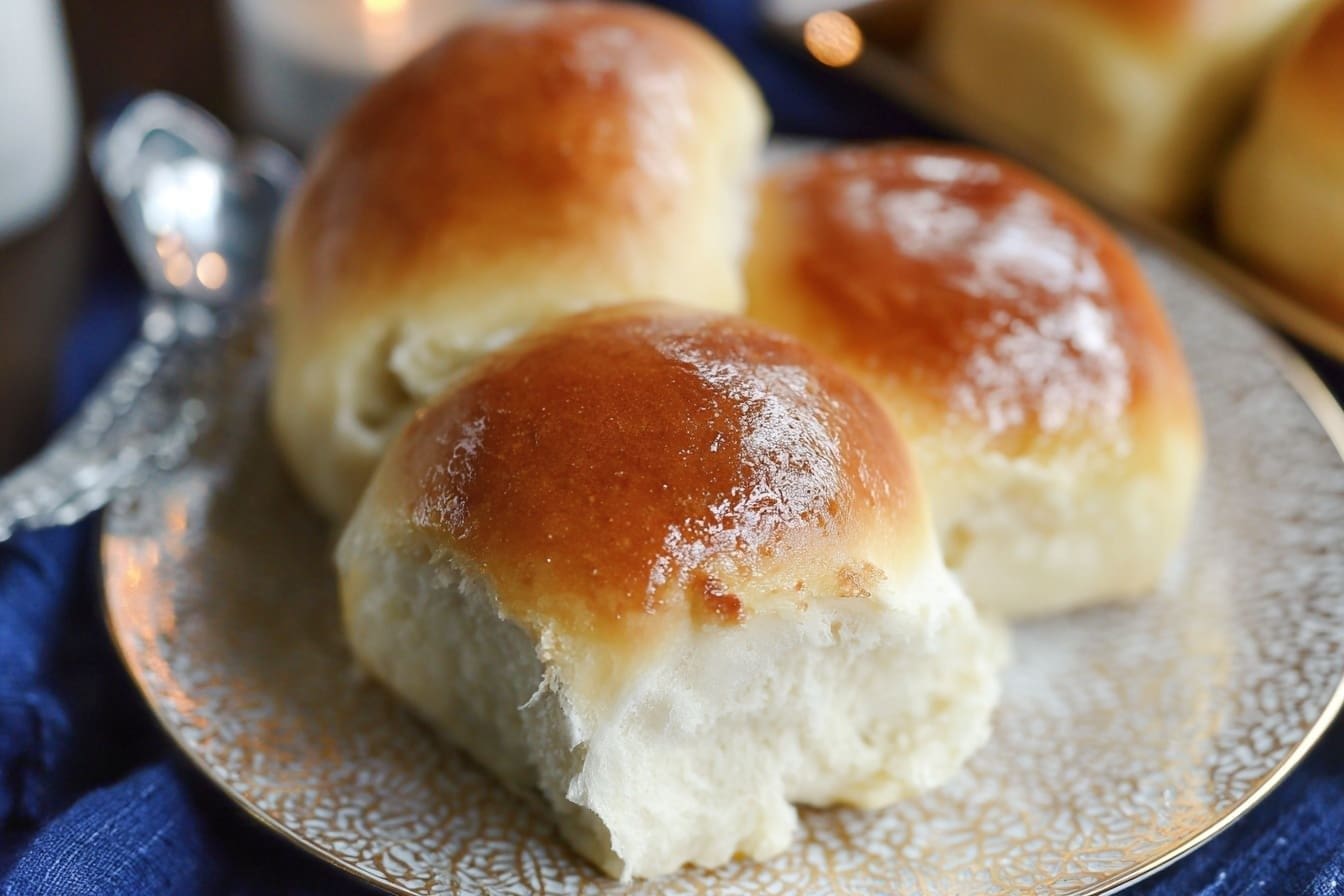
- Texture and taste: These rolls come out impossibly soft and fluffy with a tender crreamy interior and golden exterior. The combination of whole milk, butter, and egg creates a rich flavor that’s noticeably better than store-bought versions.
- Versatility: This dinner rolls recipe adapts to countless occasions. Serve them alongside Sunday roasts, use them for sliders, or enjoy them with butter and jam for breakfast. They’re perfect for holidays, potlucks, and everyday family dinners alike.
- Make-ahead friendly: The dough can be refrigerated overnight or frozen for later use, making this recipe incredibly convenient for busy schedules and holiday meal planning.
Jump to:
- Why You’ll Love This Dinner Rolls Recipe
- Essential Ingredients for Dinner Rolls Recipe
- Main Ingredients
- Optional Topping
- Special Dietary Options
- How to Prepare the Perfect Dinner Rolls Recipe: Step-by-Step Guide
- Step 1: Activate the Yeast
- Step 2: Mix the Dough
- Step 3: Knead the Dough
- Step 4: First Rise
- Step 5: Shape the Rolls
- Step 6: Second Rise
- Step 7: Bake
- Step 8: Finishing Touches
- Dietary Substitutions to Customize Your Dinner Rolls Recipe
- Flour and Main Component Alternatives
- Vegetable, Sauce, and Seasoning Modifications
- Mastering Dinner Rolls Recipe: Advanced Tips and Variations
- Pro Cooking Techniques
- Creative Shaping Options
- Make-Ahead Strategies
- Flavor Variations
- How to Store Dinner Rolls Recipe: Best Practices
- Room Temperature Storage
- Freezing Options
- Reheating Guidelines
- FAQs: Frequently Asked Questions About Dinner Rolls Recipe
- How do you make soft homemade dinner rolls from scratch?
- Can you make dinner rolls ahead of time?
- Can you freeze dinner rolls before or after baking?
- What type of flour is best for dinner rolls and how do you measure it?
- How long does dinner roll dough take to rise and what if it doesn’t double?
- Dinner Rolls Recipe
- Ingredients
- Instructions
- Last Step:
- Notes
- Nutrition
- Did you make this recipe?
Essential Ingredients for Dinner Rolls Recipe
Every great loaf of bread starts with quality ingredients, and this dinner rolls recipe is no exception. Understanding what each component brings to your final product helps you achieve those perfectly soft, bakery-style results right at home. According to Sally’s Baking Addiction, proper ingredient temperature and measurement are the foundation of successful yeast baking.
Main Ingredients
- 1 cup whole milk, warmed to about 110°F (43°C) – Whole milk provides richness and helps create a soft, tender crumb. The temperature is crucial because liquid that’s too hot will kill the yeast, while liquid that’s too cold won’t activate it properly.
- 2 and 1/4 teaspoons instant yeast (one standard packet) – Instant yeast eliminates the need for a separate proofing step and works faster than active dry yeast. It’s the key to achieving that beautiful rise.
- 2 tablespoons granulated sugar, divided – Sugar feeds the yeast and adds just enough sweetness to balance the savory notes. Using it in two stages ensures proper yeast activation and balanced flavor.
- 1 large egg – The egg enriches the dough, contributing to a softer texture and richer flavor while adding structure to the finished rolls.
- 1/4 cup unsalted butter, softened and cut into pieces – Butter creates tenderness and flavor. Unsalted butter lets you control the salt level, and softening it ensures proper incorporation.
- 1 teaspoon salt – Essential for flavor development and yeast regulation. Never skip this ingredient, as it makes all the difference in the final taste.
- 3 cups all-purpose flour or bread flour – The foundation of your dough structure. All-purpose flour creates softer rolls, while bread flour yields a slightly chewier texture with more structure.
Optional Topping
- 2 tablespoons melted unsalted butter mixed with 1 tablespoon honey – Brushing this mixture on warm rolls adds shine, extra flavor, and keeps the crust soft and appealing.
Special Dietary Options
For those with dietary restrictions, this dinner rolls recipe can be adapted with some modifications:
- Vegan: Replace whole milk with unsweetened plant milk (soy or oat work best), use a flax egg (1 tablespoon ground flaxseed mixed with 3 tablespoons water) instead of regular egg, and substitute vegan butter for dairy butter.
- Gluten-free: Use a high-quality gluten-free flour blend designed for yeast baking. Add 1 teaspoon of xanthan gum if your blend doesn’t already contain it. Note that the texture will be different from traditional rolls.
- Dairy-free: Substitute the whole milk with your preferred non-dairy milk and use a dairy-free butter alternative. Coconut milk creates particularly rich results.
How to Prepare the Perfect Dinner Rolls Recipe: Step-by-Step Guide
Making homemade dinner rolls might seem intimidating at first, but breaking the process down into clear steps makes it completely manageable. This guide walks you through every stage, from activating the yeast to pulling golden rolls from your oven.
Step 1: Activate the Yeast
Begin by whisking together 1 cup of warm milk (heated to approximately 110°F or 43°C), the entire packet of instant yeast (2 and 1/4 teaspoons), and 1 tablespoon of the granulated sugar in a large mixing bowl. Cover the bowl with a clean kitchen towel or plastic wrap and let it sit for 5 minutes. During this time, the mixture should become slightly foamy on top, indicating that your yeast is alive and active. If you’re using active dry yeast instead of instant, you may need to wait 10 minutes for full activation.
Step 2: Mix the Dough
Add the remaining 1 tablespoon of sugar, the large egg, the softened butter pieces, salt, and 1 cup of flour to your yeast mixture. Mix slowly with a dough hook attachment or wooden spoon for about 30 seconds to incorporate the wet ingredients. Scrape down the sides of the bowl, then add the remaining 2 cups of flour. Increase the mixing speed to medium and continue mixing until the dough comes together into a cohesive mass, approximately 2 minutes. The dough should be soft and slightly sticky but should pull away from the sides of the bowl. If the dough seems too wet and sticky, add flour in small increments (1 tablespoon at a time) until the proper consistency is reached.
Step 3: Knead the Dough
Kneading develops the gluten structure that gives bread its characteristic chew and texture. Continue mixing with the dough hook for 5 additional minutes, or turn the dough out onto a lightly floured surface and knead by hand for 5 minutes. The dough should become smooth, elastic, and stretchy. To test if kneading is complete, perform the windowpane test: take a small piece of dough and gently stretch it between your fingers. If it stretches thin enough to let light pass through without tearing, your dough is properly developed.
Step 4: First Rise
Lightly oil a large bowl (one that’s at least double the size of your dough ball) and place the kneaded dough inside. Cover with plastic wrap or a damp kitchen towel and set in a warm, draft-free location. Let the dough rise for 1 to 2 hours until it has doubled in size. The exact time depends on your kitchen’s temperature. A warm oven (turned off with the light on) makes an excellent rising spot if your kitchen is cool.
Step 5: Shape the Rolls
Grease a 9×13 inch baking pan or two 9-inch round cake pans with butter or cooking spray. Punch down the risen dough to release air bubbles, then turn it out onto a clean surface. Using a bench scraper or knife, divide the dough into 14 to 16 equal pieces. Shape each piece into a smooth ball by folding the edges underneath and rolling on the counter with your palm in a circular motion. Arrange the shaped rolls in your prepared pan, leaving a small amount of space between each one.
Step 6: Second Rise
Cover the pan with a kitchen towel or plastic wrap and let the shaped rolls rise for about 1 hour until they look puffy and have nearly doubled in size again. The rolls should be touching or nearly touching each other at this point. This second rise is essential for achieving the light, airy texture that makes homemade dinner rolls so irresistible.
Step 7: Bake
Preheat your oven to 350°F (177°C) with the rack positioned in the lower third of the oven. This placement ensures the bottoms bake through without over-browning the tops. Bake the rolls for 20 to 25 minutes until they’re golden brown on top. Rotate the pan halfway through baking for even color. If the tops are browning too quickly, loosely tent the pan with aluminum foil for the remaining bake time.
Step 8: Finishing Touches
As soon as the rolls come out of the oven, brush them with the optional honey butter topping (2 tablespoons melted butter mixed with 1 tablespoon honey) for extra flavor and a beautiful shine. Let the rolls cool in the pan for at least 10 minutes before serving. They’re best enjoyed warm, when the butter melts into every fluffy bite.
| Stage | Time Required | What to Look For |
|---|---|---|
| Yeast Activation | 5 minutes | Surface becomes slightly foamy |
| Mixing | 2-3 minutes | Dough comes together, pulls from bowl sides |
| Kneading | 5 minutes | Dough is smooth, passes windowpane test |
| First Rise | 1-2 hours | Dough doubles in volume |
| Second Rise | About 1 hour | Rolls are puffy and nearly doubled |
| Baking | 20-25 minutes | Golden brown on top, hollow sound when tapped |
Dietary Substitutions to Customize Your Dinner Rolls Recipe
One of the beauties of this dinner rolls recipe is its adaptability. Whether you’re accommodating dietary restrictions or simply want to experiment with different flavors, there are numerous ways to make these rolls your own.
Flour and Main Component Alternatives
The type of flour you choose significantly impacts the final texture of your rolls. All-purpose flour creates the softest, most tender results, while bread flour produces rolls with more chew and structure due to its higher protein content. For a nutritional boost, substitute up to half of the white flour with whole wheat flour, though expect a denser, heartier roll. White whole wheat flour offers a good compromise, providing whole grain benefits with a milder flavor and lighter texture than traditional whole wheat.
For gluten-sensitive bakers, several commercial gluten-free flour blends are specifically formulated for yeast baking. Look for blends containing xanthan gum or add it separately to help replicate the binding properties of gluten. Remember that gluten-free dough behaves differently and may require additional liquid and longer mixing times.
Vegetable, Sauce, and Seasoning Modifications
This basic dinner rolls recipe serves as an excellent canvas for creative flavor additions. For savory variations, try mixing in 1-2 tablespoons of fresh herbs like rosemary, thyme, or chopped chives during the final minutes of kneading. Adding 1 cup of shredded sharp cheddar cheese creates irresistible cheesy dinner rolls that pair wonderfully with soups and salads.
For garlic lovers, brush baked rolls with a mixture of melted butter, minced garlic, and chopped parsley instead of the honey butter topping. This transforms them into restaurant-style garlic knots that disappear quickly at any gathering. A sprinkle of flaky sea salt on top before baking adds a sophisticated touch that enhances all the other flavors.
Mastering Dinner Rolls Recipe: Advanced Tips and Variations
Once you’ve mastered the basic technique, these advanced tips will help you achieve even better results and expand your repertoire with creative variations.
Pro Cooking Techniques
Temperature matters: Use an instant-read thermometer to check your milk temperature. Yeast activates between 95°F and 130°F, with 110°F being ideal. Liquid above 140°F will kill the yeast completely.
Proper measuring: The spoon-and-level method prevents dense, heavy rolls. Instead of dipping your measuring cup directly into the flour bag, use a spoon to transfer flour into the cup, then level it off with a straight edge. For maximum accuracy, weigh your flour using a kitchen scale. Three cups of flour typically weighs between 360-420 grams depending on the type.
Kneading technique: When kneading by hand, use the heel of your palm to push the dough away from you, then fold it back over itself. Give the dough a quarter turn and repeat. Keep your hands and work surface lightly floured, but avoid adding too much flour, which makes tough rolls.
Creative Shaping Options
While round balls are classic, your dinner rolls recipe can take many beautiful forms:
- Cloverleaf rolls: Divide each portion into three small balls and place them in a greased muffin tin.
- Twisted rolls: Roll each portion into a 6-inch rope, fold in half, and twist the two strands together.
- Knots: Roll dough into an 8-inch rope and tie into a simple knot, tucking the ends underneath.
- Parker House style: Roll dough into an oval and fold in half, creating a fold-over shape.
Make-Ahead Strategies
Planning ahead makes entertaining so much easier. After shaping your rolls, cover the pan tightly with plastic wrap and refrigerate for up to 16 hours. The cold temperature slows yeast activity, essentially pausing the rising process. Remove the pan from the refrigerator 1-2 hours before you want to bake, allowing the rolls to come to room temperature and complete their rise. This strategy is perfect for holidays when oven space is at a premium.
The secret to the fluffiest rolls is patience during the rising stages. Rushing these steps results in dense, heavy bread. Give your dough the time it needs to develop properly, and you’ll be rewarded with light, airy rolls that everyone will rave about.
Flavor Variations
Beyond the basic recipe, consider these delicious variations for different occasions:
- Herb and garlic: Add 1 teaspoon garlic powder and 2 tablespoons mixed herbs to the dry ingredients.
- Cinnamon swirl: Roll the dough into a rectangle, brush with butter, sprinkle with cinnamon sugar, roll up, and slice into spirals.
- Everything bagel: Top shaped rolls with an everything bagel seasoning blend before the second rise.
- Onion poppy seed: Mix 2 tablespoons dried minced onion and 1 tablespoon poppy seeds into the dough.
How to Store Dinner Rolls Recipe: Best Practices
Proper storage keeps your homemade dinner rolls fresh and delicious for days, or even weeks, after baking. Understanding the best methods for short and long-term storage helps you plan ahead and reduce food waste.
Room Temperature Storage
For rolls you plan to enjoy within 2-3 days, store them at room temperature in an airtight container or resealable plastic bag. Adding a slice of white bread to the container helps maintain moisture and keeps the rolls soft. Never refrigerate baked rolls, as this actually accelerates staling by causing the starch molecules to recrystallize more quickly. If you want to see how these rolls pair with hearty main dishes, this BBQ beef tater tot casserole makes a comforting meal combination.
Freezing Options
For longer storage, freezing is your best option. You can freeze either unbaked shaped rolls or fully baked ones:
Unbaked rolls: After shaping, place rolls on a baking sheet and freeze until solid (about 2 hours). Transfer to a freezer bag, removing as much air as possible. Frozen unbaked rolls keep for up to 3 months. To bake, thaw in the refrigerator overnight, then let rise at room temperature for 4-5 hours until doubled before baking as directed.
Baked rolls: Cool completely, then wrap individually in plastic wrap and foil, or place in a freezer bag with parchment between layers. Freeze for up to 3 months. Reheat directly from frozen in a 300°F oven for 10-15 minutes.
Reheating Guidelines
To restore that fresh-baked taste and texture, wrap room temperature or thawed rolls in foil and warm in a 300°F oven for 8-10 minutes. For a quick single serving, microwave an individual roll for 10-15 seconds, though the oven method produces better results. Brushing reheated rolls with a little melted butter before serving brings back that just-baked softness.
FAQs: Frequently Asked Questions About Dinner Rolls Recipe
How do you make soft homemade dinner rolls from scratch?
Making soft homemade dinner rolls is simple with this 7-ingredient recipe. Start by combining 1 cup warm milk, 2 tablespoons sugar, 2 1/4 teaspoons active dry yeast, and let it sit for 5 minutes until foamy. Mix in 1/4 cup melted butter, 1 egg, 1 teaspoon salt, and 3-4 cups all-purpose or bread flour to form a soft dough. Knead for 5 minutes until smooth (use a mixer or by hand). Let rise 1-2 hours until doubled. Punch down, shape into 12-15 rolls, place in a greased pan, and rise another hour. Bake at 350°F for 20-25 minutes until golden. Brush with butter after baking for extra softness. This method yields fluffy, beginner-friendly rolls perfect for dinners. Total time: about 3 hours. (92 words)
Can you make dinner rolls ahead of time?
Yes, you can prepare dinner rolls ahead to save time. After mixing and kneading the dough, let it rise once (1-2 hours). Shape into rolls, place in a greased pan, cover tightly with plastic wrap, and refrigerate for up to 16 hours. The cold slows rising, so remove from the fridge 1-2 hours before baking to let them puff up at room temperature. Bake as directed at 350°F for 20-25 minutes. This works great for holidays—rolls will still be soft and fresh. Avoid refrigerating beyond 16 hours to prevent over-proofing. For even more flexibility, freeze shaped rolls (see freezing FAQ). (98 words)
Can you freeze dinner rolls before or after baking?
Freezing dinner rolls is easy and keeps them fresh. For unbaked rolls: Shape after first rise, place on a lined baking sheet, freeze 2 hours until solid, then transfer to a freezer bag for up to 3 months. Thaw in the fridge overnight, then let rise 4-5 hours at room temperature before baking at 350°F. For baked rolls: Cool completely, wrap individually in plastic and foil, or bag them, and freeze up to 3 months. Reheat in a 300°F oven for 10-15 minutes or microwave briefly. Brushing thawed baked rolls with butter revives softness. This method preserves flavor without quality loss. (102 words)
What type of flour is best for dinner rolls and how do you measure it?
Use all-purpose flour for soft, fluffy dinner rolls or bread flour for slightly chewier texture—both work without recipe changes. Bread flour’s higher protein (12-14%) gives more structure. To avoid dense rolls, spoon flour into the measuring cup and level with a knife—never scoop directly from the bag, as it packs in too much (up to 20% more), leading to tough bread. For this recipe, start with 3 cups and add up to 1 more as needed for a soft, slightly sticky dough. Accurate measuring ensures light, tender results every time. Test doneness by passing the windowpane test after kneading. (96 words)
How long does dinner roll dough take to rise and what if it doesn’t double?
Dinner roll dough needs two rises: first bulk rise after kneading takes 1-2 hours in a warm spot (75-85°F) until doubled in size. Punch down, shape into rolls, and let rise another 45-60 minutes until puffy. Factors like yeast freshness, room temperature, or altitude affect speed—use instant-read thermometer for milk at 110°F max to activate yeast without killing it. If it doesn’t double, check yeast by proofing in warm milk first; replace if inactive. Cover loosely to prevent drying. Over-risen dough collapses—bake promptly if puffy. Warm oven trick: preheat to 200°F, turn off, place dough inside with door cracked. (104 words)
Dinner Rolls Recipe
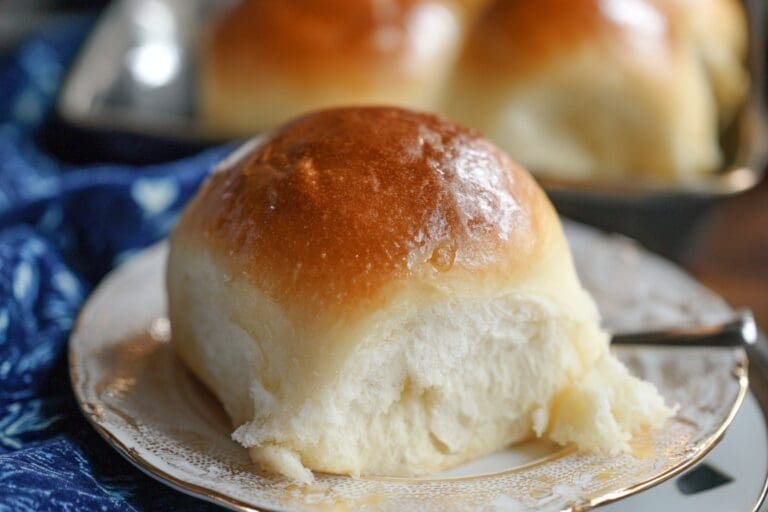
🍞 Pillowy soft, fluffy homemade dinner rolls – buttery fresh from oven, beats store-bought every time!
🥖 Easy yeast dough yields 15 perfect rolls in under 4 hours for holidays, dinners or sliders!
- Total Time: 3 hours 45 minutes
- Yield: 14-16 rolls
Ingredients
– 1 cup whole milk, warmed to about 110°F (43°C)
– 2 and 1/4 teaspoons instant yeast (one standard packet)
– 2 tablespoons granulated sugar, divided
– 1 large egg
– 1/4 cup unsalted butter, softened and cut into pieces
– 1 teaspoon salt
– 3 cups all-purpose flour or bread flour
– 2 tablespoons melted unsalted butter mixed with 1 tablespoon honey
Instructions
1-Step 1: Activate the Yeast Begin by whisking together 1 cup of warm milk (heated to approximately 110°F or 43°C), the entire packet of instant yeast (2 and 1/4 teaspoons), and 1 tablespoon of the granulated sugar in a large mixing bowl. Cover the bowl with a clean kitchen towel or plastic wrap and let it sit for 5 minutes. During this time, the mixture should become slightly foamy on top, indicating that your yeast is alive and active. If you’re using active dry yeast instead of instant, you may need to wait 10 minutes for full activation.
2-Step 2: Mix the Dough Add the remaining 1 tablespoon of sugar, the large egg, the softened butter pieces, salt, and 1 cup of flour to your yeast mixture. Mix slowly with a dough hook attachment or wooden spoon for about 30 seconds to incorporate the wet ingredients. Scrape down the sides of the bowl, then add the remaining 2 cups of flour. Increase the mixing speed to medium and continue mixing until the dough comes together into a cohesive mass, approximately 2 minutes. The dough should be soft and slightly sticky but should pull away from the sides of the bowl. If the dough seems too wet and sticky, add flour in small increments (1 tablespoon at a time) until the proper consistency is reached.
3-Step 3: Knead the Dough Kneading develops the gluten structure that gives bread its characteristic chew and texture. Continue mixing with the dough hook for 5 additional minutes, or turn the dough out onto a lightly floured surface and knead by hand for 5 minutes. The dough should become smooth, elastic, and stretchy. To test if kneading is complete, perform the windowpane test: take a small piece of dough and gently stretch it between your fingers. If it stretches thin enough to let light pass through without tearing, your dough is properly developed.
4-Step 4: First Rise Lightly oil a large bowl (one that’s at least double the size of your dough ball) and place the kneaded dough inside. Cover with plastic wrap or a damp kitchen towel and set in a warm, draft-free location. Let the dough rise for 1 to 2 hours until it has doubled in size. The exact time depends on your kitchen’s temperature. A warm oven (turned off with the light on) makes an excellent rising spot if your kitchen is cool.
5-Step 5: Shape the Rolls Grease a 9×13 inch baking pan or two 9-inch round cake pans with butter or cooking spray. Punch down the risen dough to release air bubbles, then turn it out onto a clean surface. Using a bench scraper or knife, divide the dough into 14 to 16 equal pieces. Shape each piece into a smooth ball by folding the edges underneath and rolling on the counter with your palm in a circular motion. Arrange the shaped rolls in your prepared pan, leaving a small amount of space between each one.
6-Step 6: Second Rise Cover the pan with a kitchen towel or plastic wrap and let the shaped rolls rise for about 1 hour until they look puffy and have nearly doubled in size again. The rolls should be touching or nearly touching each other at this point. This second rise is essential for achieving the light, airy texture that makes homemade dinner rolls so irresistible.
7-Step 7: Bake Preheat your oven to 350°F (177°C) with the rack positioned in the lower third of the oven. This placement ensures the bottoms bake through without over-browning the tops. Bake the rolls for 20 to 25 minutes until they’re golden brown on top. Rotate the pan halfway through baking for even color. If the tops are browning too quickly, loosely tent the pan with aluminum foil for the remaining bake time.
8-Step 8: Finishing Touches As soon as the rolls come out of the oven, brush them with the optional honey butter topping (2 tablespoons melted butter mixed with 1 tablespoon honey) for extra flavor and a beautiful shine. Let the rolls cool in the pan for at least 10 minutes before serving. They’re best enjoyed warm, when the butter melts into every fluffy bite.
Last Step:
Please leave a rating and comment letting us know how you liked this recipe! This helps our business to thrive and continue providing free, high-quality recipes for you.Notes
🥛 Whole milk gives richest flavor and ultra-soft texture.
⚖️ Spoon and level flour precisely for light, fluffy results.
❄️ Shape, freeze rolls on tray; thaw overnight, rise, bake fresh.
- Prep Time: 25 minutes
- Rise Time: 2-3 hours
- Cook Time: 20-25 minutes
- Category: Bread
- Method: Oven
- Cuisine: American
- Diet: Vegetarian
Nutrition
- Serving Size: 1 roll
- Calories: 180 kcal
- Sugar: 2g
- Sodium: 200mg
- Fat: 6g
- Saturated Fat: 3g
- Unsaturated Fat: 2g
- Trans Fat: 0g
- Carbohydrates: 28g
- Fiber: 1g
- Protein: 5g
- Cholesterol: 25mg


