

Why You’ll Love This Crispy Shrimp Tempura
If you have ever wanted to make Crispy Shrimp Tempura at home, this recipe is a great place to start. It gives you that light, airy crunch you expect from Japanese restaurant tempura, but with simple ingredients and easy steps that fit right into a busy kitchen. Even if you are new to frying, you can pull this off with a little prep and a watchful eye on the oil.
- Easy to make: The batter comes together fast with flour, cornstarch, egg, and ice cold water. Once the shrimp are prepped, the frying time is short, so dinner can be on the table in minutes.
- Lighter than many fried dishes: Tempura batter is thin and crisp, not heavy or dense. That makes this a smart choice when you want something satisfying without feeling overly rich.
- Flexible for different meals: Serve shrimp tempura as an appetizer, over rice, in a bowl, or alongside vegetables. It works well for family dinners, casual gatherings, and make-ahead meal planning.
- Clean, delicate flavor: The batter stays mild and crisp so the shrimp flavor shines through. A simple dipping sauce or a squeeze of lemon is all you need.
For readers who enjoy easy seafood recipes, you may also like this BBQ shrimp recipe for another crowd-friendly option. If you are curious about the nutrition side of shrimp, see WebMD’s shrimp nutrition overview.
Tip: The secret to great tempura is cold batter, hot oil, and quick frying. Keep those three things in mind and you are already halfway there.
Because this recipe uses simple pantry ingredients, it fits many cooking styles, from busy weeknight meals to special weekend dinners. It is a nice fit for home cooks, students, working professionals, and anyone who wants a reliable tempura recipe without a lot of fuss.
Jump to:
- Why You’ll Love This Crispy Shrimp Tempura
- Essential Ingredients for Crispy Shrimp Tempura
- Main Ingredients
- Helpful Notes on the Ingredients
- Special Dietary Options
- How to Prepare the Perfect Crispy Shrimp Tempura: Step-by-Step Guide
- First Step: Prep the shrimp
- Second Step: Dust with flour
- Third Step: Mix the tempura batter
- Fourth Step: Heat the oil
- Fifth Step: Dip and fry
- Sixth Step: Drain properly
- Final Step: Serve right away
- Dietary Substitutions to Customize Your Crispy Shrimp Tempura
- Protein and Main Component Alternatives
- Vegetable, Sauce, and Seasoning Modifications
- Mastering Crispy Shrimp Tempura: Advanced Tips and Variations
- Pro cooking techniques
- Flavor variations
- Presentation tips
- Make-ahead options
- How to Store Crispy Shrimp Tempura: Best Practices
- Refrigeration
- Freezing
- Reheating
- Meal prep considerations
- FAQs: Frequently Asked Questions About Crispy Shrimp Tempura
- What kind of shrimp should I use for crispy shrimp tempura?
- What size shrimp is best for tempura?
- How do I prepare shrimp for tempura frying?
- What’s the secret to crispy tempura batter for shrimp?
- How do I fry shrimp tempura without sogginess?
- Crispy Shrimp Tempura
- Ingredients
- Instructions
- Last Step:
- Notes
- Nutrition
- Did you make this recipe?
Essential Ingredients for Crispy Shrimp Tempura
These ingredients are all you need to make light, crispy shrimp tempura at home. Keep everything measured and ready before you start frying, because tempura works best when the batter is mixed right before cooking.
Main Ingredients
- 20 to 25 shrimp, peeled, deveined, and tail-on – The tails make the shrimp easy to handle and give the finished tempura that classic look.
- Flour for dredging – A light dusting helps the batter stick to the shrimp.
- 1 cup flour, all-purpose or cake flour – This forms the base of the tempura batter. Cake flour gives a slightly lighter texture, but all-purpose flour works well too.
- 1/4 cup cornstarch – Cornstarch helps the coating fry up crisp and delicate.
- 1 egg – The egg helps bind the batter.
- 1 1/4 cups ice cold water – Cold water keeps the batter light and prevents it from becoming heavy.
Helpful Notes on the Ingredients
The shrimp should be raw, not precooked. Raw shrimp stay tender inside while the coating becomes crisp. If you use frozen shrimp, thaw them fully in cold water, then pat them dry before prepping. The flour mixture can be made with either all-purpose flour or cake flour, depending on what you already have in the pantry.
| Ingredient | What It Does | Best Tip |
|---|---|---|
| Shrimp | Main protein | Use raw shrimp with tails on for the best texture and handling |
| Flour | Forms the base of the batter | Cake flour gives a lighter finish |
| Cornstarch | Adds crispness | Do not skip it if you want a shatteringly crisp shell |
| Egg | Binds the batter | Mix gently so the batter stays airy |
| Ice cold water | Keeps batter light | Use water straight from the fridge or with ice cubes |
Special Dietary Options
- Vegan: Replace shrimp with zucchini, sweet potato, mushrooms, or asparagus. Swap the egg for an extra spoonful of cold water and keep the batter very light. Serve with a vegan dipping sauce.
- Gluten-free: Use a gluten-free all-purpose flour blend in place of regular flour. Check that your cornstarch is certified gluten-free.
- Low-calorie: Stick with shrimp, use a thin batter, and drain well on a rack after frying. Pair with vegetables instead of heavy sauces.
How to Prepare the Perfect Crispy Shrimp Tempura: Step-by-Step Guide
Making shrimp tempura at home is much easier when you set up your workspace first. Tempura cooks quickly, so you want the shrimp prepped, the batter chilled, and the oil ready before the first piece goes in the pan.
First Step: Prep the shrimp
Start with 20 to 25 shrimp that are peeled, deveined, and tail-on. If the shrimp are frozen, thaw them in cold water first, then pat them dry with paper towels. A dry shrimp surface helps the flour cling better and keeps the oil from splattering too much.
Next, make a shallow cut along the belly side of each shrimp. This little cut helps the shrimp stay straighter when they fry, which gives you that nice long tempura shape. If the shrimp curl a lot in the pan, the cut may not be deep enough, so keep it shallow but noticeable.
Second Step: Dust with flour
Put a small amount of flour for dredging in a shallow bowl or plate. Lightly coat each shrimp, then shake off any extra. You do not want a thick layer here. The goal is just to help the batter grip the shrimp, not to create a heavy crust before the batter even goes on.
Place the coated shrimp on a tray while you make the batter. If you are working in a warm kitchen, you can put the tray in the refrigerator for a few minutes so everything stays cool.
Third Step: Mix the tempura batter
In a medium bowl, whisk together 1 cup flour, 1/4 cup cornstarch, and 1 egg. Add 1 1/4 cups ice cold water and stir gently. Do not overmix. A few small lumps are fine and actually help the batter stay light. If you stir too much, the batter can turn dense and chewy instead of crisp.
Keep the batter cold until the moment you fry. Some cooks even place the bowl over another bowl filled with ice to keep the temperature low. That small trick can make a big difference when you want a delicate tempura shell.
Fourth Step: Heat the oil
Pour enough frying oil into a deep skillet, Dutch oven, or heavy pot so the shrimp can float comfortably. Heat the oil to 350 to 375 degrees F. A thermometer is the best way to check, because tempura fries best in a hot but steady oil temperature.
If the oil is too cool, the batter absorbs too much oil and turns soggy. If it is too hot, the outside browns before the shrimp cooks through. To test the oil without a thermometer, drop in a tiny bit of batter. It should sizzle right away and rise to the top.
Fifth Step: Dip and fry
Working one shrimp at a time, dip each piece into the batter and let the excess drip off. Carefully place it into the hot oil. Fry in small batches, about 3 to 4 shrimp at a time, so the oil temperature stays steady. Crowding the pan can make the batter soft instead of crisp.
Fry the shrimp for about 2 to 3 minutes, flipping once if needed, until they turn pale golden and crisp. You are looking for a light golden color rather than deep brown. Tempura should look delicate, not dark or heavy.
Sixth Step: Drain properly
Remove the shrimp with a slotted spoon or spider strainer and place them on a wire rack set over a baking sheet. This helps air move around the shrimp so the coating stays crisp. Paper towels can trap steam underneath, so a rack works better for tempura.
If you are frying multiple batches, keep the finished shrimp warm in a 200 degree F oven while you cook the rest. This is especially helpful if you are making enough for a group.
Final Step: Serve right away
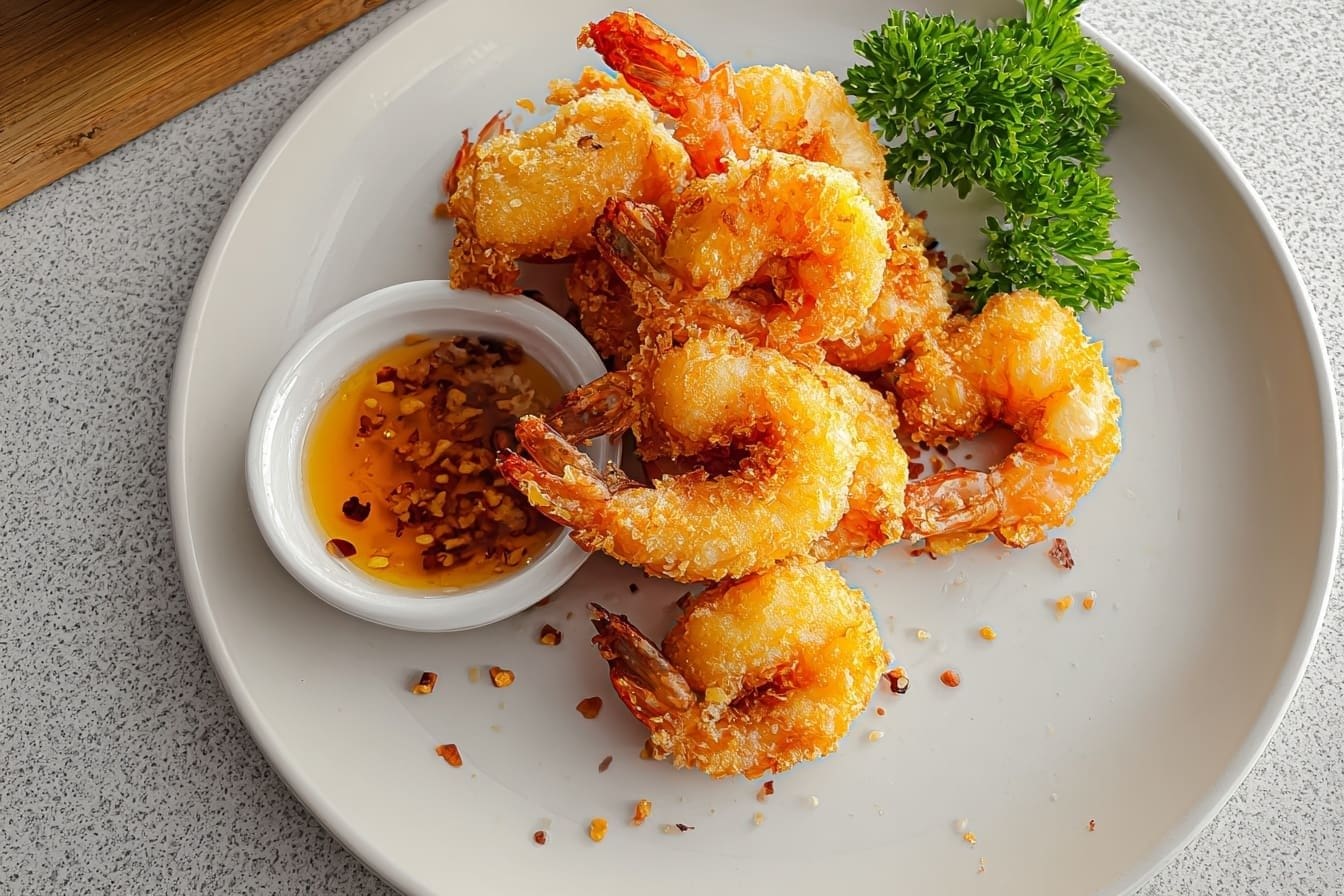
Serve the shrimp tempura immediately with dipping sauce, steamed rice, or vegetables. The coating is at its best right after frying, when it is light, crunchy, and hot. You can garnish the plate with lemon wedges, chopped green onions, or a sprinkle of sesame seeds if you like a little extra color.
For the best texture, fry in small batches and serve as soon as possible. Tempura waits for no one.
Dietary Substitutions to Customize Your Crispy Shrimp Tempura
Protein and Main Component Alternatives
If you want to change up the recipe, shrimp tempura can be adapted in several easy ways. You can swap shrimp for thin slices of chicken, fish, or even tofu, though the texture and cooking time will change. For a seafood-free version, try mushrooms, zucchini sticks, sweet potato, green beans, or onion rings. These all work well with the same light tempura batter.
If shrimp is the goal but the size is hard to find, use medium-large shrimp around 21/25 count per pound. They fry evenly and give you a good bite without turning tough. This is one reason ebi tempura remains such a favorite in Japanese cooking.
Vegetable, Sauce, and Seasoning Modifications
You can also adjust the sauce and seasoning to fit your table. Traditional tempura is often served with tentsuyu, but a simple soy dipping sauce, ponzu, or even a mild garlic sauce works well. If you want a spicier version, add a little chili paste or grated ginger to the dip.
For a lighter plate, serve the shrimp with steamed broccoli, a cucumber salad, or a bowl of rice. If you are making this for a mixed group, keep one batch plain and offer dipping sauces on the side so everyone can choose what they like.
These flexible options make crispy shrimp tempura recipe ideas work for families, potlucks, and anyone cooking for different tastes. For another recipe with bold flavor and easy serving, you may also enjoy this grilled Japanese salmon recipe.
Mastering Crispy Shrimp Tempura: Advanced Tips and Variations
Pro cooking techniques
Small details make a big difference with tempura. Keep the shrimp dry before battering, keep the batter cold, and do not stir it smooth. That slightly lumpy texture helps create a delicate shell. If your kitchen is warm, chill the flour and bowl for a few minutes before mixing.
Another helpful trick is to fry in a deep pot rather than a shallow skillet. A deeper layer of oil helps the shrimp cook more evenly and keeps the tempura from lying flat in the pan. Use a wire rack instead of paper towels so the coating stays crisp.
Flavor variations
While traditional japanese shrimp tempura is simple, you can still play with flavor. Try adding a tiny pinch of salt to the flour, or serve it with citrus dipping sauce, spicy mayo, or a soy and ginger blend. If you like a little heat, offer chili flakes at the table so everyone can season their own plate.
Presentation tips
Arrange the shrimp in a fan shape on a plate or nestle them over a small bed of shredded cabbage or rice. A few lemon wedges, chopped herbs, or sesame seeds can make the dish look polished without much effort. That kind of presentation works well for dinners, parties, and community meals.
Make-ahead options
You can prep the shrimp ahead of time by cleaning, drying, and straightening them, then storing them in the fridge until you are ready to fry. You can also measure the dry ingredients in advance. Just wait to add the ice cold water and egg until right before cooking. That way, the batter stays light and fresh.
How to Store Crispy Shrimp Tempura: Best Practices
Tempura is best fresh, but leftovers can still be handled well if you store them the right way. Let the shrimp cool completely before packing them away so trapped steam does not soften the coating.
Refrigeration
Store leftover shrimp tempura in an airtight container in the refrigerator for up to 2 days. Place parchment between layers if needed. The coating will lose some crunch, but the shrimp will still taste good.
Freezing
If you want to freeze cooked tempura, cool it fully first, then place the pieces in a single layer on a tray until firm. After that, move them to a freezer-safe bag or container. This helps prevent the pieces from sticking together.
Reheating
Reheat shrimp tempura in an oven or air fryer at 350 degrees F until warmed through and crisp again. Avoid microwaving if you can, since it makes the coating soft. A few minutes in the oven is usually enough.
Meal prep considerations
For batch cooking, prep the shrimp and dry ingredients ahead of time, but mix the batter only when you are ready to fry. That simple habit helps keep the finished tempura light and crisp, even when you are cooking for a crowd.
FAQs: Frequently Asked Questions About Crispy Shrimp Tempura
What kind of shrimp should I use for crispy shrimp tempura?
Use fresh or frozen uncooked shrimp for the best results in crispy shrimp tempura—precooked cocktail shrimp won’t work as they overcook and turn rubbery. Opt for deveined shrimp with shells removed but tails on for easy handling. Frozen bags from stores like Costco are convenient and affordable; just thaw them in cold water before prep. Larger shrimp hold up better to frying, providing a tender, juicy bite inside the crisp batter. Avoid overprocessed or breaded shrimp. Prep by patting dry, making a shallow cut along the back to straighten them, and dusting lightly with flour to help batter adhere. This simple selection ensures even cooking and maximum crunch. (92 words)
What size shrimp is best for tempura?
Medium-large shrimp around 21/25 count per pound strike the ideal balance for tempura—about 21 to 25 shrimp per pound. This size offers a tender, succulent texture without the toughness of colossal shrimp (16/20 per pound) or the batter overload of tiny ones (71/90 per pound). Smaller shrimp cook faster but can become greasy; larger ones take longer and may toughen. Shrimp sizes are based on count per pound: lower numbers mean bigger shrimp. Test with what you have, but aim for 1-2 inches long after prep. Straighten by scoring the belly side, then chill before battering for extra crispiness. (98 words)
How do I prepare shrimp for tempura frying?
Start by thawing frozen shrimp in cold water, then devein if needed and remove shells except tails. Pat completely dry with paper towels to prevent oil splatter and ensure crisp batter adhesion. Make a shallow cut along the belly (not back) to straighten them—press gently to flatten. Lightly dust with cornstarch or flour, shaking off excess. Refrigerate on a rack for 15-30 minutes to firm up. This prevents curling during frying, keeps them juicy inside, and promotes even golden browning. Avoid rinsing right before frying, as moisture ruins crispiness. Prep ahead for best results. (92 words)
What’s the secret to crispy tempura batter for shrimp?
For ultra-crispy shrimp tempura batter, use ice-cold sparkling water or club soda (about 1 cup) mixed with 3/4 cup cake flour, 1/4 cup rice flour, 1 egg yolk, and a pinch of baking powder—do not overmix for a lumpy texture. Keep all ingredients chilled; batter should be used immediately. Dip prepped shrimp briefly, letting excess drip off. Fry in 350-375°F peanut or canola oil in small batches to maintain temperature. Double-fry for extra crunch: first at 340°F for 2 minutes, rest, then 370°F for 30 seconds. Drain on a wire rack, not paper. (96 words)
How do I fry shrimp tempura without sogginess?
Heat oil to 350-375°F in a deep pot—use a thermometer for accuracy, as low temps make batter soggy. Fry 3-4 shrimp at a time for 2-3 minutes until pale gold, flipping once. Avoid overcrowding to prevent temp drop. Remove with a slotted spoon, drain on a wire rack over a baking sheet in a 200°F oven to stay crisp. Double-fry as needed: initial fry at 340°F, then second at 370°F for shatteringly crisp results. Serve immediately with tentsuyu dipping sauce (soy, dashi, mirin). Test oil with batter bits—they should sizzle and rise fast. (98 words)

Crispy Shrimp Tempura
🍤 Ultra-light crispy ebi tempura shrimp shatter with every bite – low-cal indulgence loaded with ocean-fresh flavor!
🥢 Authentic Japanese technique yields airy batter in 30 minutes, perfect fried starter or bento star.
- Total Time: 30 minutes
- Yield: 4 servings
Ingredients
– 20 to 25 shrimp, peeled, deveined, and tail-on
– Flour for dredging
– 1 cup flour, all-purpose or cake flour
– 1/4 cup cornstarch
– 1 egg
– 1 1/4 cups ice cold water
Instructions
1-First Step: Prep the shrimp Start with 20 to 25 shrimp that are peeled, deveined, and tail-on. If the shrimp are frozen, thaw them in cold water first, then pat them dry with paper towels. A dry shrimp surface helps the flour cling better and keeps the oil from splattering too much. Next, make a shallow cut along the belly side of each shrimp. This little cut helps the shrimp stay straighter when they fry, which gives you that nice long tempura shape. If the shrimp curl a lot in the pan, the cut may not be deep enough, so keep it shallow but noticeable.
2-Second Step: Dust with flour Put a small amount of flour for dredging in a shallow bowl or plate. Lightly coat each shrimp, then shake off any extra. You do not want a thick layer here. The goal is just to help the batter grip the shrimp, not to create a heavy crust before the batter even goes on. Place the coated shrimp on a tray while you make the batter. If you are working in a warm kitchen, you can put the tray in the refrigerator for a few minutes so everything stays cool.
3-Third Step: Mix the tempura batter In a medium bowl, whisk together 1 cup flour, 1/4 cup cornstarch, and 1 egg. Add 1 1/4 cups ice cold water and stir gently. Do not overmix. A few small lumps are fine and actually help the batter stay light. If you stir too much, the batter can turn dense and chewy instead of crisp. Keep the batter cold until the moment you fry. Some cooks even place the bowl over another bowl filled with ice to keep the temperature low. That small trick can make a big difference when you want a delicate tempura shell.
4-Fourth Step: Heat the oil Pour enough frying oil into a deep skillet, Dutch oven, or heavy pot so the shrimp can float comfortably. Heat the oil to 350 to 375 degrees F. A thermometer is the best way to check, because tempura fries best in a hot but steady oil temperature. If the oil is too cool, the batter absorbs too much oil and turns soggy. If it is too hot, the outside browns before the shrimp cooks through. To test the oil without a thermometer, drop in a tiny bit of batter. It should sizzle right away and rise to the top.
5-Fifth Step: Dip and fry Working one shrimp at a time, dip each piece into the batter and let the excess drip off. Carefully place it into the hot oil. Fry in small batches, about 3 to 4 shrimp at a time, so the oil temperature stays steady. Crowding the pan can make the batter soft instead of crisp. Fry the shrimp for about 2 to 3 minutes, flipping once if needed, until they turn pale golden and crisp. You are looking for a light golden color rather than deep brown. Tempura should look delicate, not dark or heavy.
6-Sixth Step: Drain properly Remove the shrimp with a slotted spoon or spider strainer and place them on a wire rack set over a baking sheet. This helps air move around the shrimp so the coating stays crisp. Paper towels can trap steam underneath, so a rack works better for tempura. If you are frying multiple batches, keep the finished shrimp warm in a 200 degree F oven while you cook the rest. This is especially helpful if you are making enough for a group.
7-Final Step: Serve right away Serve the shrimp tempura immediately with dipping sauce, steamed rice, or vegetables. The coating is at its best right after frying, when it is light, crunchy, and hot. You can garnish the plate with lemon wedges, chopped green onions, or a sprinkle of sesame seeds if you like a little extra color.
Last Step:
Please leave a rating and comment letting us know how you liked this recipe! This helps our business to thrive and continue providing free, high-quality recipes for you.Notes
🧊 Use ice-cold sparkling water for lightest, bubbliest batter – keep bowl over ice.
🔪 Shallow cuts on shrimp belly prevent curling and ensure even cooking.
🌡️ Fry at 340-350°F; too hot browns outside before inside cooks.
- Prep Time: 20 minutes
- Cook Time: 10 minutes
- Category: Seafood
- Method: Deep-Frying
- Cuisine: Japanese
- Diet: Pescatarian
Nutrition
- Serving Size: 5-6 shrimp
- Calories: 350 kcal
- Sugar: 0 g
- Sodium: 400 mg
- Fat: 20 g
- Saturated Fat: 2 g
- Unsaturated Fat: 17 g
- Trans Fat: 0 g
- Carbohydrates: 25 g
- Fiber: 1 g
- Protein: 20 g
- Cholesterol: 150 mg