Why You’ll Love This Coconut Loaf Cake
This coconut loaf cake is a delightful treat that combines simplicity with rich, tropical flavors, making it a favorite for any home baker. Imagine sinking your teeth into a slice that’s perfectly moist and infused with the sweet essence of coconut, perfect for sharing at picnics or family gatherings. It’s easy to see why this recipe fits right into my blog’s mission of bringing people together through easy-to-make dishes.
One key benefit is its straightforward preparation, which takes just about an hour from start to finish, allowing even busy parents and students to whip it up without fuss. Another plus is the health aspects, as coconut adds natural fats that support energy levels and might even aid digestion for those watching their diet. Plus, this coconut loaf cake adapts easily to various needs, like using gluten-free flour for diet-conscious folks or swapping ingredients for vegans.
- Ease of preparation: With simple steps and common ingredients, this coconut loaf cake comes together in no time, ideal for busy schedules think mixing the batter in one bowl and baking it straight. This makes it perfect for working professionals or community organizers planning events, letting you focus more on enjoying the moment.
- Health benefits: Loaded with natural coconut, which offers healthy fats and a touch of fiber, this cake supports wellness without skimping on taste. It’s a great option for seniors or health-focused individuals, as the ingredients can boost heart health when enjoyed in moderation for more on this, check out health benefits of coconut.
- Versatility: You can tweak this coconut loaf cake for different diets, like making it dairy-free or low-sugar, which suits travelers and newlyweds alike. This adaptability means it works for picnics, potlucks, or even as a quick breakfast, enhancing its appeal for everyday use.
- Distinctive flavor: The star here is the moist texture from fresh coconut, creating a tropical taste that’s hard to resist and sets it apart from plain cakes. Food enthusiasts will love how it brings a vacation vibe to your table, making every bite a celebration.
By incorporating coconut loaf cake into your baking routine, you’re not just making a dessert you’re crafting memories that align with community gatherings. This recipe’s charm lies in its ability to be both comforting and exciting, drawing in baking enthusiasts with its reliable results.
Jump to:
- Why You’ll Love This Coconut Loaf Cake
- Essential Ingredients for Coconut Loaf Cake
- Main Ingredients
- Special Dietary Options
- How to Prepare the Perfect Coconut Loaf Cake: Step-by-Step Guide
- Gathering Your Tools and Ingredients
- First Step: Mixing the Dry Ingredients
- Second Step: Creaming the Wet Ingredients
- Third Step: Incorporating the Coconut
- Fourth Step: Combining Everything
- Fifth Step: Baking the Cake
- Final Step: Cooling and Serving
- Dietary Substitutions to Customize Your Coconut Loaf Cake
- Protein and Main Component Alternatives
- Vegetable, Sauce, and Seasoning Modifications
- Mastering Coconut Loaf Cake: Advanced Tips and Variations
- Pro Cooking Techniques
- Flavor Variations
- Presentation Tips
- Make-Ahead Options
- How to Store Coconut Loaf Cake: Best Practices
- Refrigeration Guidelines
- Freezing Options
- Reheating Tips
- Meal Prep Considerations
- FAQs: Frequently Asked Questions About Coconut Loaf Cake
- Why is my coconut loaf cake dry and how can I fix it?
- How should I store coconut loaf cake and how long does it last?
- What type of coconut works best in a coconut loaf cake?
- Why does my coconut loaf cake crack on top and is it normal?
- Can I make coconut loaf cake gluten-free or dairy-free?
- Coconut Loaf Cake
- Ingredients
- Instructions
- Last Step:
- Notes
- Nutrition
- Did you make this recipe?
Essential Ingredients for Coconut Loaf Cake
Gathering the right ingredients is key to nailing that perfect moist texture in your coconut loaf cake. Each item plays a specific role, ensuring the cake turns out fluffy and full of flavor. Let’s break down what you’ll need for this tasty recipe.
Main Ingredients
- 1 1/2 cups all-purpose flour – This forms the base of the cake, providing structure and a light crumb that holds everything together nicely.
- 1 cup granulated sugar – Adds the right amount of sweetness to balance the coconut’s natural flavors, helping create a caramelized edge when baked.
- 1 cup shredded coconut (sweetened) – Infuses the cake with moisture and that signature tropical taste, making every slice irresistibly chewy.
- 1/2 cup unsalted butter, softened – Contributes to the rich, moist texture by blending fats that keep the cake tender and flavorful.
- 2 large eggs – These bind the ingredients and add lift, ensuring the cake rises properly for a fluffy result.
- 1 cup coconut milk – Provides extra creaminess and moisture, enhancing the overall tropical vibe and keeping the cake from drying out.
- 1 teaspoon baking powder – Helps the cake rise evenly, giving it a soft, airy feel that’s essential for the perfect loaf shape.
- 1/2 teaspoon salt – Balances the sweetness and brings out the coconut flavors, making the taste more vibrant.
- 1 teaspoon vanilla extract – Adds a warm, aromatic note that complements the coconut without overpowering it.
Special Dietary Options
Adapting this coconut loaf cake for different needs is simple and keeps it accessible for everyone. Whether you’re vegan, gluten-free, or watching calories, small swaps can make a big difference.
- Vegan: Replace eggs with flaxseed meal mixed with water (2 tablespoons flaxseed meal plus 6 tablespoons water per egg) for a plant-based bind, and use vegan butter instead of regular butter to maintain moisture.
- Gluten-free: Swap all-purpose flour for a gluten-free flour blend to keep the structure intact, ensuring it’s still light and not too dense for those with sensitivities.
- Low-calorie: Opt for a sugar substitute like stevia and reduce butter by half while adding more coconut milk for moisture, helping cut calories while preserving flavor.
To cover all bases, note that the above list includes every item needed, formatted clearly for easy shopping and prep. This ensures your coconut loaf cake turns out just right every time.
How to Prepare the Perfect Coconut Loaf Cake: Step-by-Step Guide
Gathering Your Tools and Ingredients
Before diving in, make sure you have a mixing bowl, loaf pan, and all your ingredients ready this sets the stage for smooth baking. Preheat your oven to 350°F to get that even heat going, which is crucial for a moist coconut loaf cake.
First Step: Mixing the Dry Ingredients
Start by combining 1 1/2 cups all-purpose flour, 1 teaspoon baking powder, and 1/2 teaspoon salt in a bowl. Stir them together until blended, which takes about 1 minute, ensuring your coconut loaf cake has the right lift and flavor base.
Second Step: Creaming the Wet Ingredients
In another bowl, beat 1/2 cup softened butter and 1 cup sugar until fluffy, about 2-3 minutes this creates a creamy texture that locks in moisture for your coconut loaf cake. Add 2 eggs one at a time, followed by 1 teaspoon vanilla extract, mixing well each time for a smooth batter.
Third Step: Incorporating the Coconut
Gradually mix in 1 cup shredded coconut and 1 cup coconut milk to the wet mixture, stirring until everything is even this step infuses that tropical taste and keeps the cake moist. For a dairy-free twist, swap coconut milk with almond milk if needed, adapting for various preferences.
Fourth Step: Combining Everything
Fold the dry ingredients into the wet ones gently, avoiding overmixing to prevent a tough cake aim for about 1 minute of stirring. This ensures your coconut loaf cake stays light and airy, perfect for baking enthusiasts experimenting with textures.
Fifth Step: Baking the Cake
Pour the batter into a greased loaf pan and smooth the top, then bake at 350°F for 50-60 minutes or until a toothpick comes out clean. Check at the 45-minute mark to avoid overbaking, which could dry out your coconut loaf cake, and consider adding extra coconut milk for added moisture if you’re adapting for dietary needs.
Final Step: Cooling and Serving
Let the cake cool in the pan for 10 minutes, then transfer to a wire rack to cool fully before slicing. Serve it warm with a dusting of powdered sugar or a simple glaze, and for more ideas on variations, try out our guide on coconut cupcakes for fun twists. This step makes your coconut loaf cake ready for any gathering, ensuring it’s moist and full of flavor.
Dietary Substitutions to Customize Your Coconut Loaf Cake
Protein and Main Component Alternatives
Swapping main ingredients can make your coconut loaf cake fit various diets while keeping it delicious. For instance, replace all-purpose flour with almond flour for a nuttier taste and added protein, which works well for those seeking low-carb options.
Another idea is to use coconut flour instead of traditional flour, as it boosts the coconut flavor and provides more fiber. These changes help maintain the moist texture, making the cake adaptable for seniors or busy parents.
Vegetable, Sauce, and Seasoning Modifications
For a fresher twist, add grated zucchini to the batter for extra moisture and nutrients, ideal for health-conscious eaters. You can also swap vanilla extract for almond extract to vary the flavor profile, or use a fruit glaze instead of sugar for a lighter touch.
These adjustments let you tailor the cake to seasonal ingredients, like adding berries in summer, and ensure it’s versatile for different preferences or restrictions.
Mastering Coconut Loaf Cake: Advanced Tips and Variations
Pro Cooking Techniques
To elevate your baking, try sifting the flour before mixing it helps create a finer crumb in your coconut loaf cake. Using room-temperature ingredients ensures even blending, leading to a more uniform rise and better moisture retention.
Flavor Variations
Experiment with adding chocolate chips for a decadent twist, or mix in lime zest to bring a citrusy note to your coconut loaf cake. For something unique, incorporate nuts like almonds to add crunch and depth, appealing to food enthusiasts looking for new flavors.
Presentation Tips
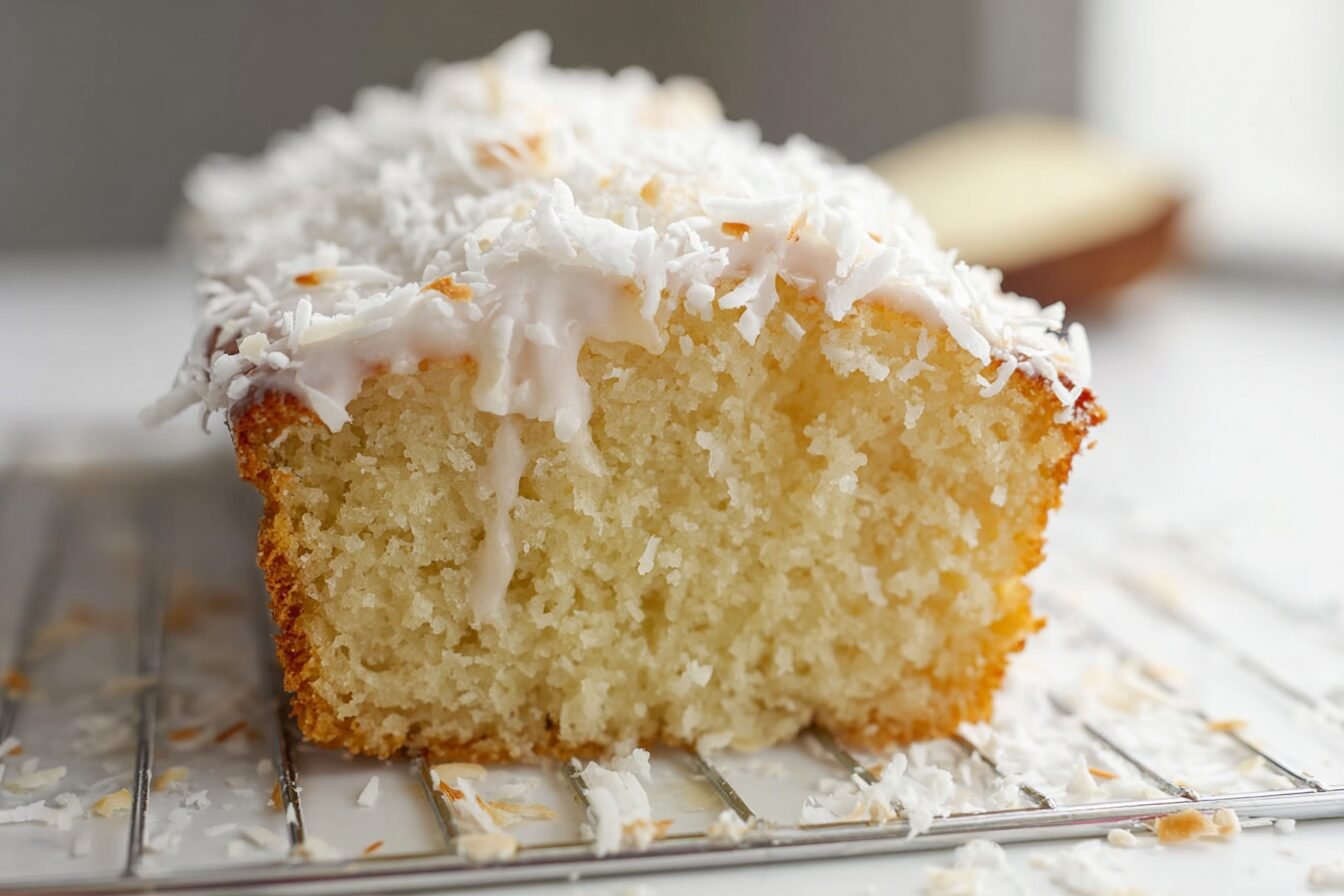
Garnish with toasted coconut shreds for a visual pop, making your coconut loaf cake look as good as it tastes. Slice it neatly and serve on a platter to impress at gatherings, turning it into a centerpiece for community events.
Make-Ahead Options
Prepare the batter in advance and store it in the fridge for up to 24 hours, saving time for working professionals. For batch baking, double the recipe and freeze portions, making it easy to have fresh coconut loaf cake on hand.
How to Store Coconut Loaf Cake: Best Practices
Refrigeration Guidelines
Keeping your coconut loaf cake fresh starts with proper refrigeration to maintain its moist texture. Wrap it tightly in plastic or use an airtight container to keep it from drying out over a couple of days.
Freezing Options
For longer storage, slice the cake and freeze individual pieces in freezer bags, preserving the flavor for up to three months. This method works great for meal prep, letting you thaw as needed without losing quality.
Reheating Tips
When reheating, warm slices in the oven at 300°F for a few minutes to restore that fresh-baked feel. Always check for safety by ensuring it’s heated through, keeping the cake moist and tasty for later enjoyment.
Meal Prep Considerations
Incorporate this into your routine by baking extras and storing them for quick treats, ideal for busy schedules. This approach ensures you always have a slice of coconut loaf cake ready for spontaneous gatherings.
FAQs: Frequently Asked Questions About Coconut Loaf Cake
Why is my coconut loaf cake dry and how can I fix it?
Your coconut loaf cake may be dry due to too much flour or overbaking. To fix this, measure flour accurately by spooning it into the measuring cup and leveling it off. Also, check your oven temperature with an oven thermometer as overheating can cause excessive moisture loss. For future cakes, consider adding an extra tablespoon of coconut milk or oil to the batter, and test for doneness a few minutes earlier than the recipe suggests.
How should I store coconut loaf cake and how long does it last?
Store coconut loaf cake in an airtight container at room temperature for up to 2 days. For longer storage, refrigerate it for 5-7 days or freeze for up to 3 months. If refrigerating, let it sit at room temperature for 30 minutes before serving for the best texture. To freeze, wrap individual slices in plastic wrap and place in a freezer bag. Thaw at room temperature or warm briefly in the oven for that freshly-baked taste.
What type of coconut works best in a coconut loaf cake?
You can use various forms of coconut in your loaf cake, each offering different benefits. Sweetened shredded coconut adds moisture and sweetness, while unsweetened provides a more pure coconut flavor. For intense flavor, use coconut extract along with shredded coconut. Coconut milk or cream in the batter creates extra richness and moisture. Toasting shredded coconut lightly before adding it to the batter enhances the nutty flavor and adds texture to your cake.
Why does my coconut loaf cake crack on top and is it normal?
Cracking on top of a coconut loaf cake is completely normal. It happens when the batter rises quickly during baking, then sets before the center has finished cooking. The rising batter pushes upward and cracks at its weakest point. This is especially common with coconut loaf cake due to the density of coconut ingredients. To minimize excessive cracking, avoid overfilling your pan (fill only 2/3 full) and ensure your oven isn’t too hot. A small crack actually shows your cake has good structure.
Can I make coconut loaf cake gluten-free or dairy-free?
Yes, you can easily adapt coconut loaf cake for dietary restrictions. For gluten-free, substitute all-purpose flour with a 1:1 gluten-free baking blend that contains xanthan gum for proper texture. To make it dairy-free, replace butter with coconut oil or a plant-based butter alternative, and use coconut milk or almond milk instead of dairy milk. Coconut is naturally dairy-free, making it an excellent choice for dairy-free baking. The result will be just as moist and flavorful with a slightly different texture.

Coconut Loaf Cake
🥥 This moist and tender coconut loaf cake delivers the perfect balance of sweetness and tropical flavor in every slice
🍰 Simple to make with everyday ingredients, this recipe guarantees a perfectly textured cake that stays moist for days
- Total Time: 2 hours 10 minutes
- Yield: 1 loaf (8-10 slices)
Ingredients
– 1 1/2 cups all-purpose flour for structure and light crumb
– 1 cup granulated sugar for sweetness and caramelization
– 1 cup shredded coconut (sweetened) for moisture and tropical taste
– 1/2 cup unsalted butter, softened for rich, moist texture
– 2 large eggs for binding and lift
– 1 cup coconut milk for creaminess and moisture
– 1 teaspoon baking powder for rising
– 1/2 teaspoon salt for balancing sweetness
– 1 teaspoon vanilla extract for warm, aromatic note
Instructions
1-Gathering Your Tools and Ingredients: Before diving in, make sure you have a mixing bowl, loaf pan, and all your ingredients ready this sets the stage for smooth baking. Preheat your oven to 350°F to get that even heat going, which is crucial for a moist coconut loaf cake.
2-First Step: Mixing the Dry Ingredients: Start by combining 1 1/2 cups all-purpose flour, 1 teaspoon baking powder, and 1/2 teaspoon salt in a bowl. Stir them together until blended, which takes about 1 minute, ensuring your coconut loaf cake has the right lift and flavor base.
3-Second Step: Creaming the Wet Ingredients: In another bowl, beat 1/2 cup softened butter and 1 cup sugar until fluffy, about 2-3 minutes this creates a creamy texture that locks in moisture for your coconut loaf cake. Add 2 eggs one at a time, followed by 1 teaspoon vanilla extract, mixing well each time for a smooth batter.
4-Third Step: Incorporating the Coconut: Gradually mix in 1 cup shredded coconut and 1 cup coconut milk to the wet mixture, stirring until everything is even this step infuses that tropical taste and keeps the cake moist. For a dairy-free twist, swap coconut milk with almond milk if needed, adapting for various preferences.
5-Fourth Step: Combining Everything: Fold the dry ingredients into the wet ones gently, avoiding overmixing to prevent a tough cake aim for about 1 minute of stirring. This ensures your coconut loaf cake stays light and airy, perfect for baking enthusiasts experimenting with textures.
6-Fifth Step: Baking the Cake: Pour the batter into a greased loaf pan and smooth the top, then bake at 350°F for 50-60 minutes or until a toothpick comes out clean. Check at the 45-minute mark to avoid overbaking, which could dry out your coconut loaf cake, and consider adding extra coconut milk for added moisture if you’re adapting for dietary needs.
7-Final Step: Cooling and Serving: Let the cake cool in the pan for 10 minutes, then transfer to a wire rack to cool fully before slicing. Serve it warm with a dusting of powdered sugar or a simple glaze, and for more ideas on variations, try out our guide on coconut cupcakes for fun twists. This step makes your coconut loaf cake ready for any gathering, ensuring it’s moist and full of flavor.
Last Step:
Please leave a rating and comment letting us know how you liked this recipe! This helps our business to thrive and continue providing free, high-quality recipes for you.Notes
🥥 For extra coconut flavor, use coconut extract instead of vanilla or add it along with the vanilla
⏰ Don’t open the oven door during the first 45 minutes of baking to prevent the cake from sinking
🌡 Room temperature ingredients mix better and create a smoother batter, so take eggs and butter out of the fridge 30 minutes before baking
- Prep Time: 15 minutes
- Cooling Time: 1 hour
- Cook Time: 55 minutes
- Category: Dessert
- Method: Baking
- Cuisine: International
- Diet: Vegetarian
Nutrition
- Serving Size: 1 slice
- Calories: 280
- Sugar: 18g
- Sodium: 200mg
- Fat: 14g
- Saturated Fat: 8g
- Unsaturated Fat: 5g
- Trans Fat: 0g
- Carbohydrates: 35g
- Fiber: 2g
- Protein: 4g
- Cholesterol: 60mg