
Perfect Cheese Scones
If there is one bake that disappears fastest at every potluck, church supper, and Sunday brunch I have ever brought it to, it is a tray of warm cheese scones. They are light and fluffy in the middle, loaded with gooey melted cheese, and finished with a golden, slightly crisp top that practically begs to be split open and buttered.

My love for them started at a small country cafe counter, where I ordered one with a pot of tea and spent the whole drive home wondering how they got that texture.
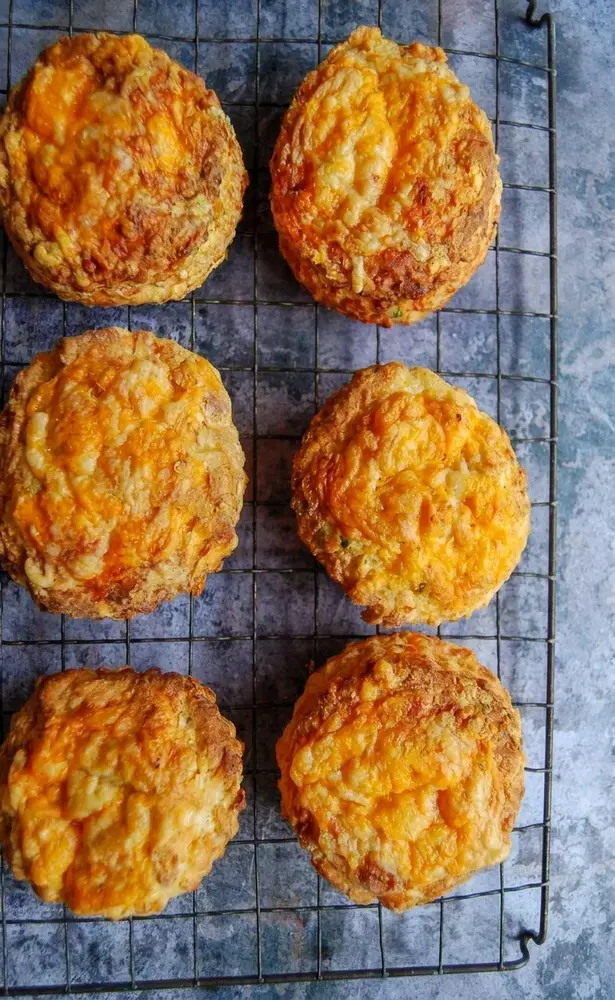
Those scones came from a local spot called Brodie CountryFare, and they set the bar for me. For months I tested batch after batch, and the version I finally landed on borrows the best ideas from two scone recipes I trust, one by Paul Hollywood and one by Felicity Cloake.
The result is the best cheese scone I have made at home, and I am happy to report that it took less time to perfect than my family’s teasing suggested it would.
My one personal twist is a handful of freshly snipped chives. They add a mild onion flavor that plays beautifully against sharp cheddar, but they are completely optional. Leave them out and the recipe still works exactly as written.

This recipe makes 10 large scones with about 10 minutes of prep and 12 to 15 minutes in a 220C (200C fan, 400F) oven. Serve them warm, and make sure the butter is close by.
Jump to:
- Perfect Cheese Scones
- ingredient list
- how to make perfect cheese scones
- make the scone dough
- baker’s tip
- baker’s tip
- bake the scones
- how do you know when cheese scones are cooked?
- top tip
- serving suggestions
- how long will cheese scones keep?
- recipe notes
- How long will cheese scones keep for?
- can you freeze homemade cheese scones?
- FAQs
- What cheese is best for cheese scones?
- How do I get my cheese scones to rise tall and fluffy?
- Can you freeze cheese scones?
- Why are my cheese scones tough?
- Perfect Cheese Scones
- Ingredients
- Instructions
- Last Step:
- Nutrition
- Did you make this recipe?
ingredient list
| Ingredient | Amount | Notes |
|---|---|---|
| Strong white bread flour or plain all purpose flour | 500 g | Bread flour gives a more substantial scone |
| Baking powder | 6 teaspoons | Must be fresh; 4 to 5 teaspoons works with a slightly lower rise |
| Dried English mustard powder | 1 tablespoon | For golden color and a cheese flavor boost |
| Fine salt | 1 teaspoon | Fine table salt is perfect here |
| Fresh chives, finely chopped | 2 tablespoons | Optional, adds a mild onion flavor |
| Butter, at room temperature | 80 g | Baking margarine works just as well |
| Full fat milk | 300 ml | Semi skimmed milk also works |
| Mature cheddar cheese, grated | 250 g | Or a mix of mature cheddar and red Leicester |
| Beaten egg yolk or milk, for glazing | 1 yolk or 1 tablespoon | Egg yolk gives a burnished finish |
| Mature cheddar cheese, for sprinkling | 25 g | Sprinkled over the tops before baking |
Flour. I reach for strong white bread flour because it gives a scone with a little more body, but plain all purpose flour is a fine substitute and the recipe works either way.
Baking powder. Six teaspoons sounds like a lot, and it is, but it is what gives these scones their proper lift. It has to be fresh, because tired baking powder will quietly sabotage your rise. If you would rather use less, four or five teaspoons will still work, just with a slightly shorter rise.
Mustard powder. One tablespoon of dried English mustard powder goes into the dry ingredients, and no, you will not taste mustard. It is there to encourage a golden color and to make the cheese flavor taste even more like cheese.
Salt. One teaspoon of fine salt balances everything. Fine table salt dissolves more evenly than coarse flakes.
Chives. Two tablespoons of finely chopped fresh chives are optional. They add a gentle onion note that I really enjoy.

Butter. 80 g of room temperature butter, or baking margarine if that is what you keep on hand.
Milk. 300 ml of full fat milk brings the dough together, and semi skimmed milk works too.
Cheese. 250 g of grated mature cheddar, or a mix of mature cheddar and red Leicester, which adds a lovely orange fleck through the dough. Another 25 g goes on top for that crisp, cheesy lid.
Glaze. One beaten egg yolk gives the golden, burnished look. A tablespoon of milk is a perfectly good alternative.
how to make perfect cheese scones
The full amounts and detailed instructions live in the printable recipe card at the bottom of this post.
make the scone dough
- Preheat the oven to 220C (200C fan, 400F), then grease and line two large baking trays.
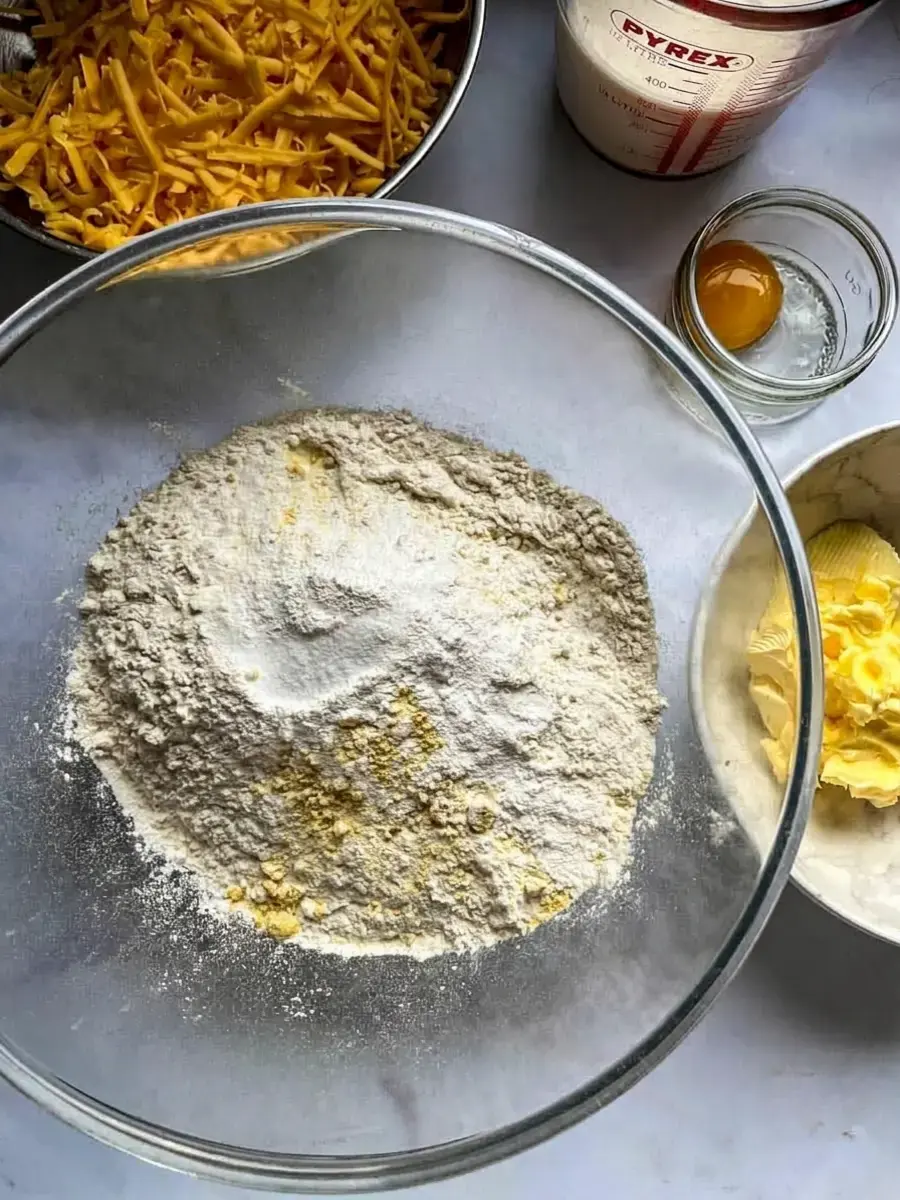
- Place the flour, baking powder, mustard powder and salt in a large bowl and stir them together.
- Rub the butter into the dry ingredients with your fingertips until the mixture resembles fine breadcrumbs.
- Add the grated cheese and the chives, if you are using them, and lightly stir everything together with your hands.
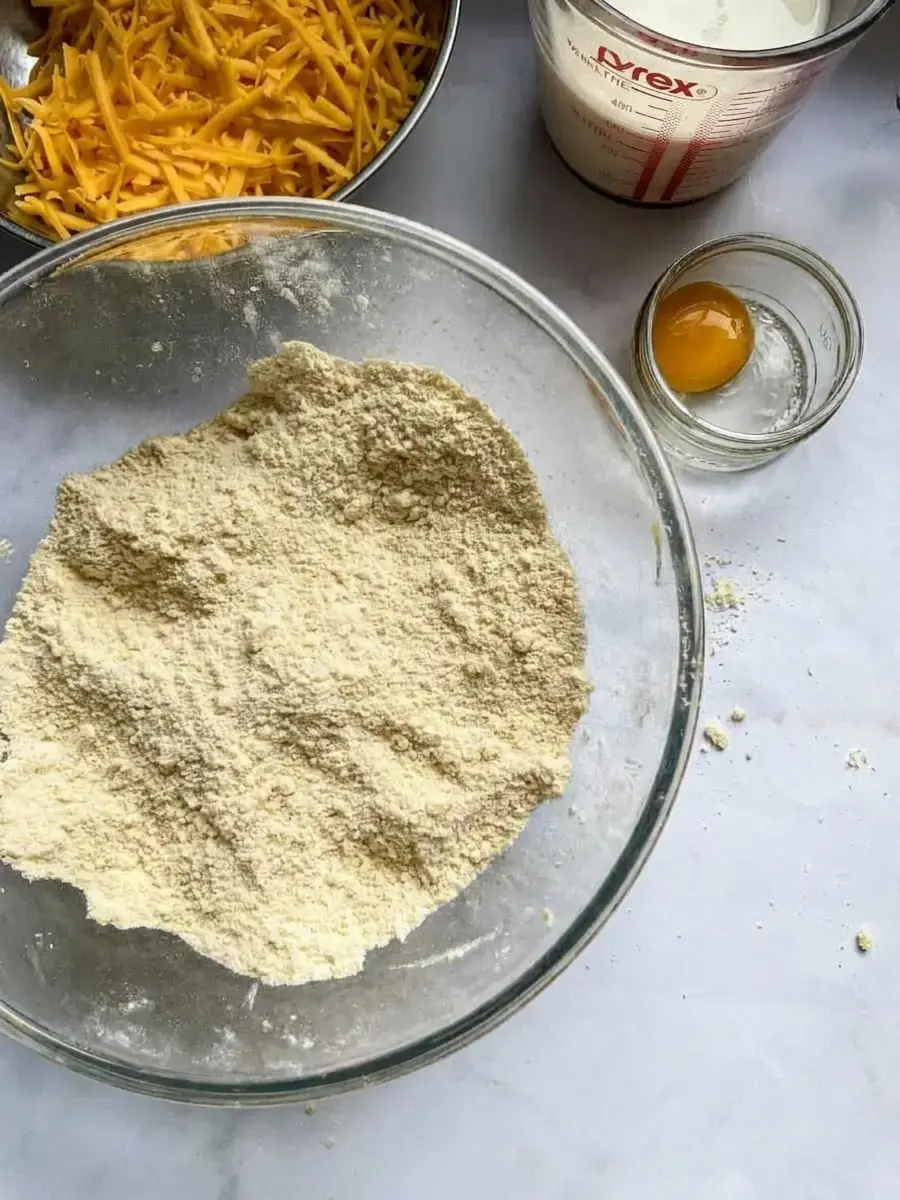
- Pour in most of the milk, keeping about 25 ml back, and mix by hand until you have a soft, moist dough with no dry crumbs left in the bowl. If the dough still seems dry, add the remaining milk.
baker’s tip
The dough is meant to be soft, moist, and a little sticky. It should not be dry, and it should not be so wet that you cannot handle it. If you spot dry crumbs at the bottom of the bowl, add milk a teaspoon at a time until everything comes together. Trust me, that small pause saves a whole batch.
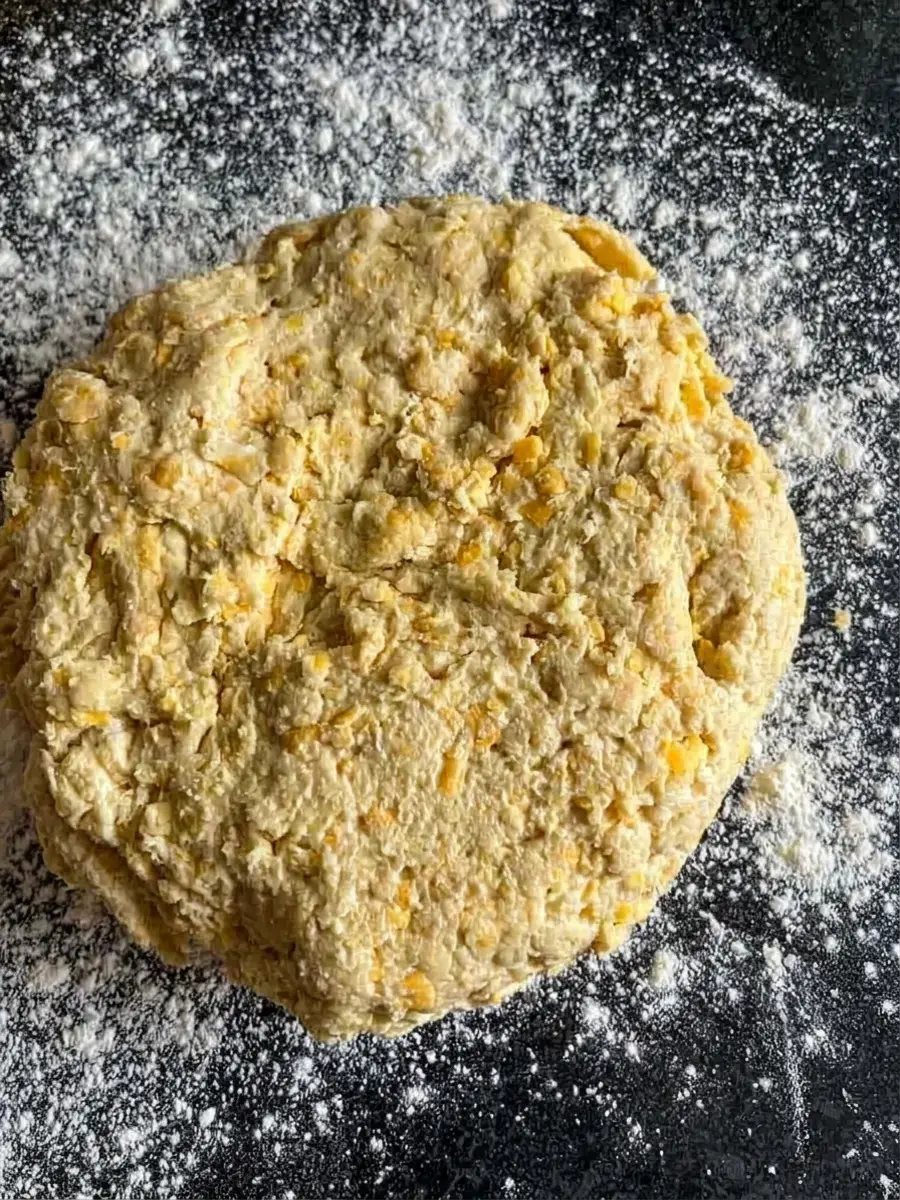
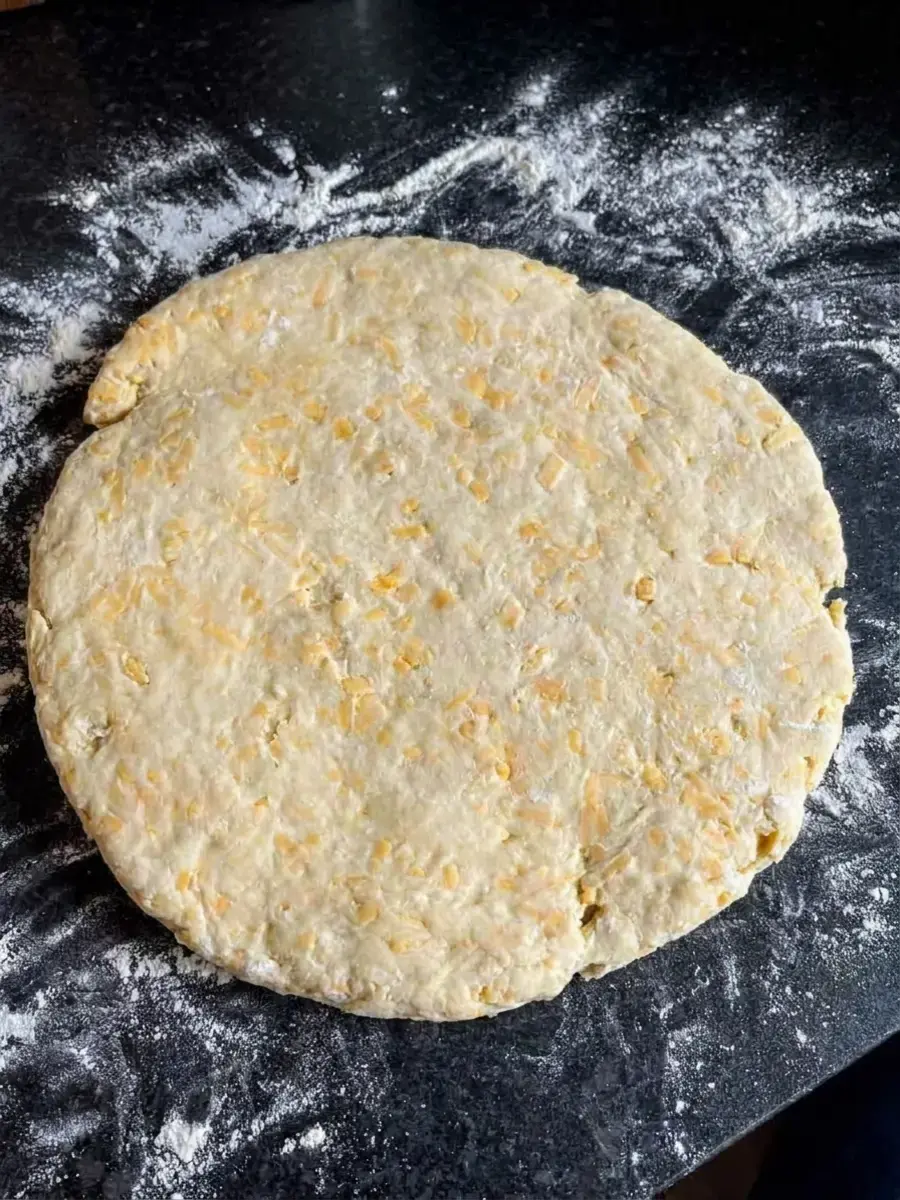
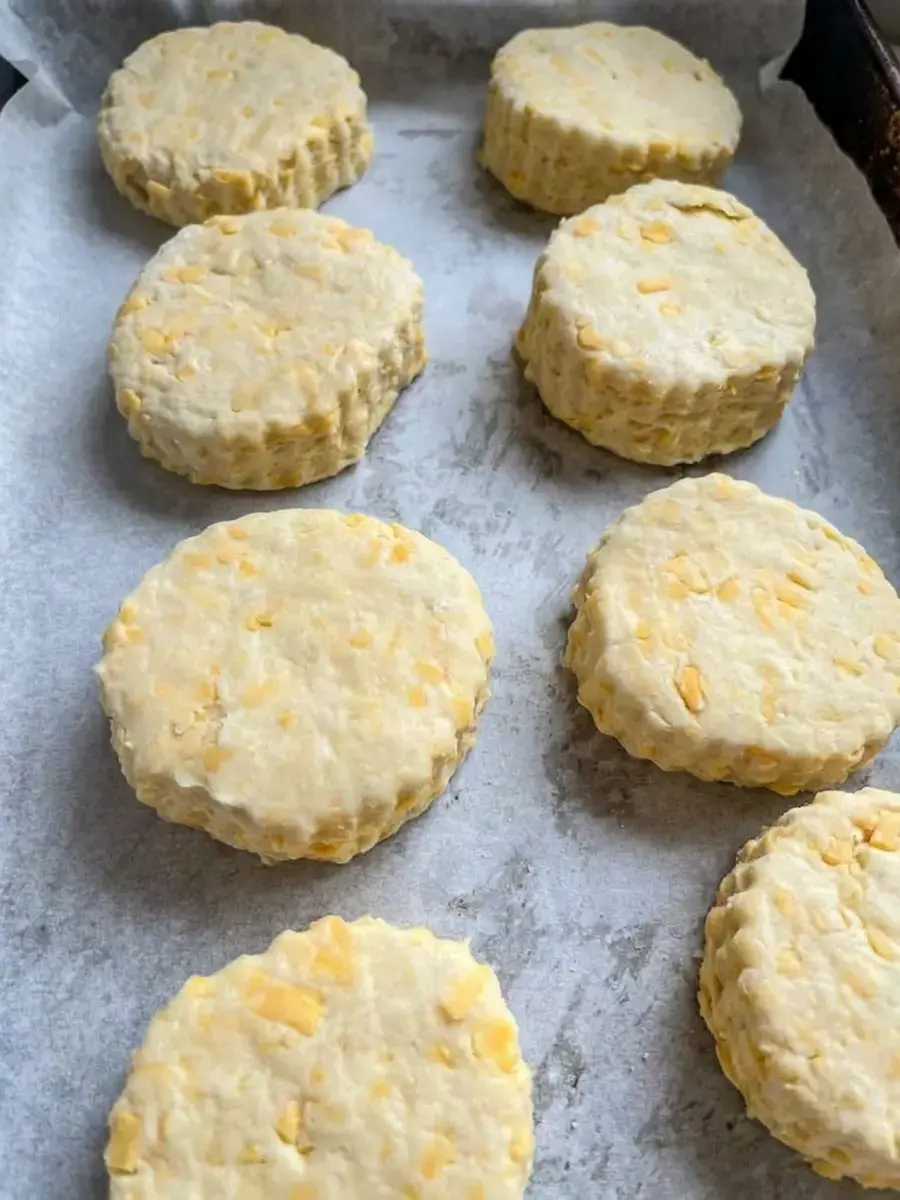
Turn the dough out onto a lightly floured surface and pat it into a rough square no less than one inch thick. Use a large cutter and press straight down without twisting, because a twisted cutter seals the edges and the scones rise unevenly.
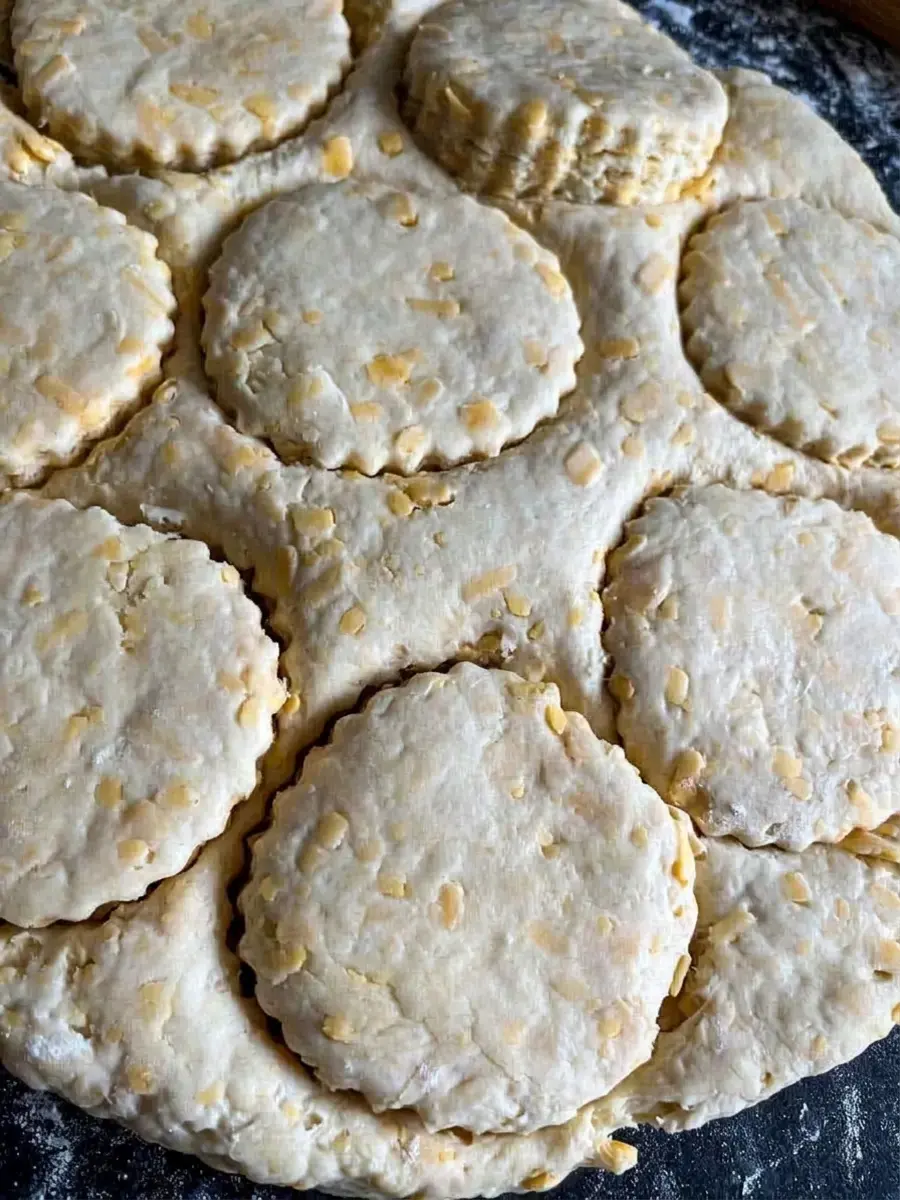
Cut as many rounds as you can, then gently press the scraps back together by hand and cut again. The less you handle the dough, the lighter your scones will be.
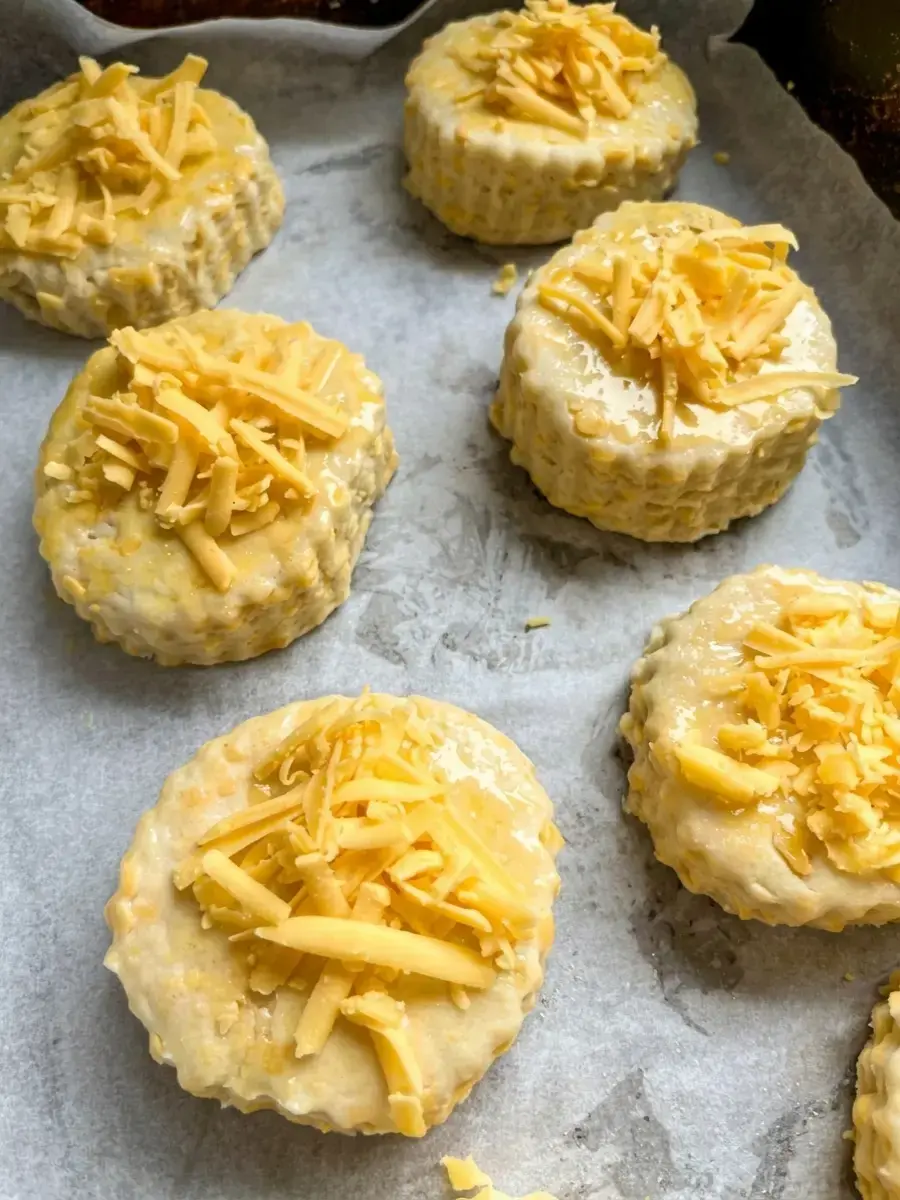
Set the scones on the lined trays, brush the tops with the beaten egg yolk or milk, and sprinkle over the 25 g of grated cheese. Try to keep the glaze off the sides so it does not run down and interfere with the rise.
baker’s tip
If you have ten spare minutes, let the shaped scones sit on the tray before they go anywhere near the oven. That short rest relaxes the gluten after all that handling, and the finished scones come out noticeably lighter.
bake the scones
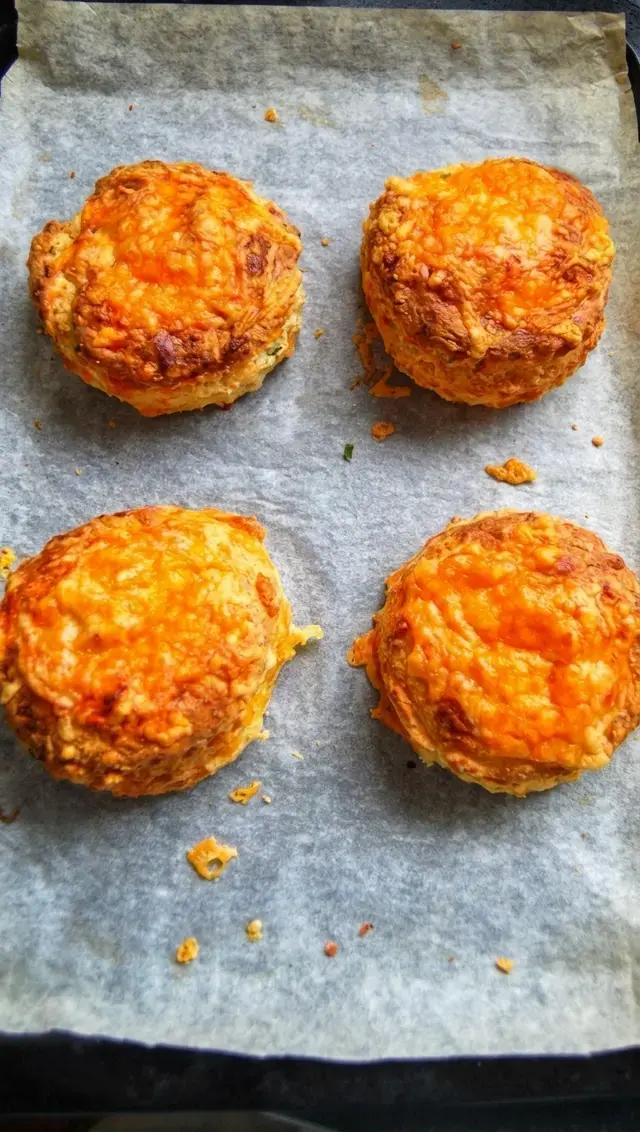
Bake in the preheated oven at 220C (200C fan, 400F) for 12 to 15 minutes, until the scones are well risen and golden. Do not wander too far from the kitchen, because the smell alone will tell you when they are close.
how do you know when cheese scones are cooked?
Properly baked cheese scones lift away from the tray easily and feel light for their size. Look for a well risen shape and a golden color across the top, and check the bottoms too, which should be golden rather than pale.
The simplest test is to tear one open by hand five to ten minutes after it comes out of the oven. It should split easily in the middle without needing a knife. If the inside looks stodgy or underdone, put it back in the oven for about five minutes.
top tip
Here is the trick that surprised me most. As soon as the scones come out of the oven, cover them on the tray with a clean tea towel for about ten minutes.
They carry on cooking gently in their own steam, and the result is a softer, more tender scone. It sounds odd. It works.
serving suggestions
My favorite way to eat these is still warm, split open, and spread with plenty of thick butter so it melts into the fluffy middle. Try them with a bowl of soup for a cozy lunch that everyone will ask for again.
They also shine with onion or tomato chutney, a slice of ham, or a little marmite. Recently I have been serving them with wild garlic butter, which is an excellent match.
how long will cheese scones keep?
Cheese scones are at their best on the day they are baked, but they are still good to eat for a day or two afterward. Because they stale fairly quickly, I warm them in the microwave for about 15 seconds before eating, which brings them right back to life.
recipe notes
Handle the dough gently above all else. Kneading develops gluten and makes tough scones, so I bring everything together by hand and pat the dough out instead of reaching for a rolling pin.
Strong white bread flour gives the best result, though plain flour works too. Baking powder on its own gave me a better rise than combinations of bicarbonate of soda and cream of tartar. Six teaspoons is not a typo, and fresh powder makes all the difference.

When you add the milk, keep about 25 ml back. Some flours drink more liquid than others, so you may need a tablespoon or so extra, and if the dough looks dry, add milk a teaspoon at a time.

If time allows, rest the shaped scones for about 10 minutes before baking so the gluten relaxes. Store baked scones in an airtight container for two to three days, where they become slightly drier but are lovely toasted. Completely cooled scones freeze well for up to five months.
Per serving, based on 10 scones: 468 calories, 53 g carbohydrates, 15 g protein, 22 g fat, 11 g saturated fat, 1 g fiber, 2 g sugar, 887 mg sodium, and 69 mg cholesterol.
How long will cheese scones keep for?
Eat them on the day you bake them if you can, because that is when they are at their very best.

After that, keep them in an airtight container for two to three days. Expect them to be a little drier by day two, and toast them to bring the texture right back.
can you freeze homemade cheese scones?
Yes, and they freeze beautifully.

Let the baked scones cool completely, then pack them into freezer bags or a freezer safe container and freeze for up to five months. Warm them through before serving.
FAQs
What cheese is best for cheese scones?
Extra sharp cheddar cheese is the best choice for cheese scones because it provides the most pronounced cheesy flavor. A combination of mature cheddar and Red Leicester adds both depth and a vibrant color, or you can use a sharp cheddar mixed with a creamy cheese like Monterey Jack. For the recipe, use 250g of grated mature cheddar or a mix of cheddar and Red Leicester, plus an extra 25g for sprinkling on top.
How do I get my cheese scones to rise tall and fluffy?
To get tall, fluffy cheese scones, handle the dough as little as possible and pat it out to a thickness of no less than 1 inch. Cut the scones using a sharp cutter pressed straight down without twisting, as twisting seals the edges and prevents an even rise. Using 6 teaspoons of baking powder, ensuring it is fresh, and baking in a hot 400°F oven also help create a high rise.
Can you freeze cheese scones?
Yes, cheese scones freeze very well for up to three months. Let the baked scones cool completely, then store them in a freezer-safe airtight bag or container. To serve, thaw them at room temperature and refresh in a warm oven for a few minutes to restore their texture.
Why are my cheese scones tough?
Cheese scones become tough when the dough is overworked, which develops too much gluten. To keep them light and tender, mix the ingredients only until a soft, moist dough forms, and handle it as little as possible when patting out and cutting the scones. The dough should be quite wet and sticky, not dry.

Perfect Cheese Scones
Perfect Cheese Scones If there is one bake that disappears fastest at every potluck, church supper, and Sunday brunch I have ever brought it to, it is a tray of warm cheese scones. They are light and fluffy in the middle, loaded with gooey melted cheese, and finished with a golden, slightly crisp top that practically begs to be split open and buttered.
- Total Time: 25 min
- Yield: 10 Large Scones 1x
Ingredients
500 g Strong White Flour OR Plain (All-purpose) Flour
6 teaspoons baking powder
1 tablespoon dried English Mustard Powder
1 teaspoon fine salt
2 tablespoons fresh chives, finely chopped
80 g butter, at room temperature
300 ml Full Fat Milk
250 g Mature Cheddar Cheese, or a mixture of a mature cheddar & red Leicester, Grated
1 Beaten Egg Yolk OR 1 Tablespoons Milk, For glazing the scones
25 g Mature Cheddar Cheese, For sprinkling over the top of the scones
Instructions
1-Preheat the oven to 220C/200Fan/400F: Preheat the oven to 220C/200Fan/400F.
2-Grease and line two large baking trays: Grease and line two large baking trays.
3-Place the flour, baking powder, mustard powder: Place the flour, baking powder, mustard powder and salt in a large bowl. Rub the butter into the dry ingredients until it resembles breadcrumbs.
4-Add the grated cheese and fresh chives: Add the grated cheese and fresh chives and lightly stir with your hands to combine.
5-Pour in most of the milk (you: Pour in most of the milk (you might not need it all so keep about 25ml back) and using your hands, lightly mix until you have a soft, moist dough and no dry crumbs remain on the bottom of the bowl. If the dough seems a little dry, add the remaining milk.
6-Turn the dough out onto a lightly: Turn the dough out onto a lightly floured surface. Lightly pat out to a rough square, no less than 1 Inch thick. Using a large cutter, cut out rounds. Don’t twist the cutter when cutting the scones or your scones will rise unevenly.
7-Repeat cutting out the scones until all: Repeat cutting out the scones until all the dough is used up. You don’t need to knead the dough when re-rolling – just simply push it back together lightly with your hands. Bear in mind that the less you handle the dough, the lighter your scones will be.
8-Place the scones on the baking trays,: Place the scones on the baking trays, brush with the beaten egg yolk or milk (try not to let the liquid run down the sides or it could affect the rise) and sprinkle over the 25g grated cheese. Immediately place in the oven and bake for 12-15 minutes or until well risen and golden on top. The smell of the scones baking will make you ravenous!
9-Delicious served warm with lots of butter,: Delicious served warm with lots of butter, ham, or chutney.
Last Step:
Please leave a rating and comment letting us know how you liked this recipe! This helps our business to thrive and continue providing free, high-quality recipes for you.- Prep Time: 10 min
- Cook Time: 15 min
- Method: bake
Nutrition
- Serving Size: 1
- Calories: 468
- Sugar: 2g
- Sodium: 887mg
- Fat: 22g
- Saturated Fat: 11g
- Carbohydrates: 53g
- Fiber: 1g
- Protein: 15g
- Cholesterol: 69mg