What is Roasted Butternut Squash and Why You Should Try It
Roasted butternut squash is a simple yet delicious dish that highlights the natural sweetness and nutty flavor of this versatile winter vegetable. If you’re looking for an easy recipe that brings out the best in seasonal produce, the roasted butternut squash recipe is perfect for beginners and experienced cooks alike. This method uses basic ingredients to create a healthy side dish that’s packed with vitamins and can be customized in many ways. By roasting, we enhance the squash’s texture, making it tender inside with crispy, caramelized edges that everyone loves.
In this article, we’ll explore everything you need to know about preparing roasted butternut squash, from gathering the right ingredients to expert tips for perfect results. Whether you’re serving it as a standalone side or incorporating it into soups, salads, or pasta, this recipe offers endless possibilities. Let’s dive into the details of this crowd-pleasing dish that aligns with healthy eating trends while keeping things straightforward and enjoyable.
Jump to:
- What is Roasted Butternut Squash and Why You Should Try It
- Ingredients for Roasted Butternut Squash
- Step-by-Step Directions for Roasting Butternut Squash
- Nutritional Benefits of Roasted Butternut Squash
- Tips and Tricks for the Perfect Roasted Butternut Squash
- Adding Fresh Herbs for Extra Flavor
- Ensuring Even Roasting
- Serving Suggestions for Roasted Butternut Squash
- Incorporating into Soups
- In Salads and Pasta Dishes
- FAQ: Common Questions About Roasted Butternut Squash
- What is the best way to store butternut squash to keep it fresh?
- How do you prepare butternut squash for cooking?
- What are some healthy ways to cook butternut squash?
- Is butternut squash nutritious, and what health benefits does it offer?
- Can you eat butternut squash raw, and how does the taste differ?
- Butternut Squash
- Ingredients
- Instructions
- Last Step:
- Notes
- Nutrition
- Did you make this recipe?
Ingredients for Roasted Butternut Squash
To make this roasted butternut squash recipe, you’ll need fresh, high-quality ingredients that are easy to find at your local grocery store or farmers’ market. Below is a complete list of everything required, ensuring you have exactly what you need for success.
- 1 butternut squash (peeled, seeds scooped, and cubed)
- Olive oil, for drizzling
- Sea salt, to taste
- Freshly ground black pepper, to taste
- Chopped fresh parsley, optional, for garnish
This list covers all the essentials, making it simple to prepare a flavorful dish without overwhelming your kitchen. For more ideas on seasonal produce, check out our guide to the best winter vegetables for additional inspiration.
Step-by-Step Directions for Roasting Butternut Squash
Follow these clear steps to roast butternut squash to perfection. This process is straightforward and takes about 45 minutes from start to finish, including prep time. Roasting brings out the squash’s natural sugars, creating a delightful caramelized flavor that pairs well with many meals.
- Preheat your oven to 400°F (200°C) and line a large baking sheet with parchment paper for easy cleanup.
- Place the cubed butternut squash on the prepared baking sheet.
- Drizzle the squash generously with olive oil and season it well with sea salt and freshly ground black pepper.
- Toss the squash cubes gently to ensure they are evenly coated with the oil and seasonings.
- Spread the cubes into a single, even layer on the baking sheet, leaving space between them for optimal roasting.
- Roast in the preheated oven for 30 to 35 minutes, or until the squash is tender and the edges are golden brown.
- Remove from the oven and garnish with chopped fresh parsley if desired. Serve hot for the best taste.
This method guarantees tender, flavorful results every time. For variations on roasting techniques, you might enjoy our tips for roasting vegetables article.
Nutritional Benefits of Roasted Butternut Squash
Roasted butternut squash isn’t just tasty it’s also a nutritional powerhouse. This recipe focuses on a healthy vegetable that’s low in calories but high in essential nutrients. Butternut squash is rich in vitamin A from its beta-carotene content, which supports eye health and immune function.
Additionally, it provides dietary fiber for better digestion and minerals like potassium for heart health. Olive oil adds healthy fats, making this dish a balanced option for any meal. While exact values depend on portion sizes, a typical serving offers around 80 calories, making it a great choice for weight management. Overall, this recipe promotes a nutrient-dense diet without compromising on flavor.
Tips and Tricks for the Perfect Roasted Butternut Squash
To achieve the best results with your roasted butternut squash, consider these helpful tips. Start by using a sturdy vegetable peeler for safe and efficient peeling, working from the stem end in long strips. If the squash is too hard to cut, soften it by piercing it several times and microwaving for 3 to 5 minutes or baking at 350°F for 10 minutes.
Remember to cut the squash into uniform 1-inch cubes for even cooking. Spacing the cubes on the baking sheet is crucial; this allows hot air to circulate, preventing steaming and ensuring crispy edges. You can also enhance flavors by adding fresh herbs like rosemary or thyme before roasting. For more advanced techniques, try experimenting with these additions for a more complex taste profile.
Adding Fresh Herbs for Extra Flavor
Enhance your roasted butternut squash by incorporating fresh herbs. Strip leaves from rosemary or thyme sprigs, chop them coarsely, and sprinkle over the coated squash before baking. This infuses the dish with aromatic notes, elevating it from simple to sophisticated. Herbs like these can withstand high heat, adding depth without overpowering the natural sweetness of the squash.
Ensuring Even Roasting
Proper spacing on the baking sheet is key to avoiding soggy results. When cubes are too close, they steam instead of roast, leading to a less desirable texture. Always aim for at least a small gap between pieces to promote caramelization and crispiness. This technique applies to many roasted vegetables, making it a versatile skill for your kitchen repertoire.
Serving Suggestions for Roasted Butternut Squash
Roasted butternut squash is incredibly versatile and can star in various dishes. As a side, it pairs wonderfully with mains like roasted chicken or grilled steak, adding a sweet, nutty contrast. Beyond that, mash the cubes for soups or fold them into salads and pasta for added texture and flavor.
Incorporating into Soups
For a creamy soup, puree the roasted squash with broth and seasonings. This creates a comforting base that’s naturally sweet and nutritious. Serve it hot, garnished with herbs or seeds for extra appeal. It’s an excellent way to use leftovers and make a quick, healthy meal.
In Salads and Pasta Dishes
Add roasted squash to grain salads for a hearty twist, tossing with greens, cheese, and nuts. In pasta, mix it into creamy sauces or baked dishes like ziti with Italian sausage. These combinations highlight the squash’s creamy texture, making everyday meals more exciting and flavorful.
FAQ: Common Questions About Roasted Butternut Squash
What is the best way to store butternut squash to keep it fresh?
Whole butternut squash should be stored in a cool, dark, and well-ventilated place, such as a pantry or cellar, where it can last up to 1-3 months. Once cut, wrap the pieces tightly in plastic wrap or place them in an airtight container and refrigerate. Cut butternut squash will stay fresh for about 4-5 days in the fridge. For longer storage, you can peel, cube, and freeze it in freezer bags or containers for up to 12 months.
How do you prepare butternut squash for cooking?
Start by washing the squash and carefully peeling the tough outer skin with a vegetable peeler. Then, cut off both ends before halving the squash lengthwise. Scoop out the seeds and fibrous strands with a spoon. You can then cube, slice, or roast the flesh according to your recipe. For quicker prep, some people microwave the whole squash for a few minutes to soften the skin before peeling.
What are some healthy ways to cook butternut squash?
Butternut squash can be roasted, steamed, boiled, or sautéed for healthy meals. Roasting with a light drizzle of olive oil and seasoning enhances its natural sweetness. Steaming helps retain nutrients and can be perfect for purees or soups. You can also blend cooked butternut squash into smoothies or use it as a low-calorie substitute for pasta or rice in dishes like risotto.
Is butternut squash nutritious, and what health benefits does it offer?
Yes, butternut squash is rich in vitamins A and C, fiber, potassium, and antioxidants. Its high vitamin A content supports eye health, while fiber promotes digestion and helps maintain steady blood sugar levels. Additionally, antioxidants in butternut squash may help reduce inflammation and boost the immune system.
Can you eat butternut squash raw, and how does the taste differ?
Butternut squash can be eaten raw, typically when grated or thinly sliced in salads. Raw squash has a mild, slightly sweet, and crunchy texture, which is firmer and less developed in flavor compared to cooked squash. Cooking softens it and releases its sweet, nutty taste, but raw preparations can add a fresh element to dishes.
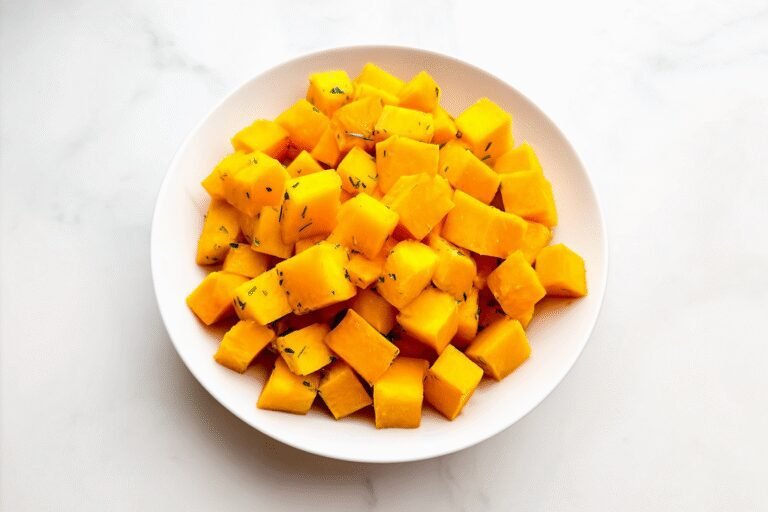
Butternut Squash
🎃 Roasted Butternut Squash with simple seasonings brings out natural sweetness and a perfect caramelized texture.
🌿 This easy recipe offers a healthy and versatile side dish that pairs well with many meals and enhances seasonal menus.
- Total Time: 40 minutes
- Yield: 4 servings 1x
Ingredients
100g plain flour for coating
2 tsp ground black pepper for seasoning
200g grated cheddar cheese
2 spring onions finely sliced
1 bunch fresh coriander chopped
200g sausages skin removed and meat crumbled
4 tsp soy sauce
2 cups cold cooked rice
2 tbsp rapeseed oil for frying
3 large eggs beaten
1 red chilli deseeded and finely chopped
Instructions
1-Preheat oven: Preheat your oven to 375°F (190°C).
2-Mix dry ingredients: In a large bowl, whisk together flour, baking soda, and salt.
3-Cream butter and sugars: In another bowl, beat the softened butter with brown sugar and white sugar until light and fluffy.
4-Add eggs and vanilla: Mix in the eggs one at a time, followed by the vanilla extract.
5-Combine wet and dry ingredients: Gradually add the flour mixture to the wet ingredients, mixing until just combined. Avoid overmixing.
6-Stir in chocolate chips: Fold in the chocolate chips evenly through the dough.
7-Scoop dough onto baking sheet: Drop rounded tablespoons of dough onto an ungreased baking sheet, spacing them about 2 inches apart.
8-Bake cookies: Bake in the preheated oven for 8-10 minutes, or until the edges are golden brown.
9-Cool cookies: Remove the baking sheet from the oven and allow the cookies to cool on the sheet for 5 minutes before transferring them to a wire rack to cool completely.
Last Step:
Please leave a rating and comment letting us know how you liked this recipe! This helps our business to thrive and continue providing free, high-quality recipes for you.Notes
🔪 Use a sturdy vegetable peeler to remove tough skin carefully.
♨️ If too hard to cut, soften the squash by microwaving or oven-warming before peeling.
📏 Cut the squash into uniform 1-inch cubes for even cooking and perfect texture.
- Prep Time: 10 minutes
- Cook Time: 30 minutes
- Category: Side Dish
- Method: Roasting
- Cuisine: American
- Diet: Vegan, Vegetarian, Gluten-Free
Nutrition
- Serving Size: 1 cup
- Calories: 82 kcal
- Sugar: 4 g
- Sodium: 150 mg
- Fat: 3.5 g
- Saturated Fat: 0.5 g
- Unsaturated Fat: 3 g
- Trans Fat: 0 g
- Carbohydrates: 12 g
- Fiber: 3 g
- Protein: 1 g
- Cholesterol: 0 mg