

Why You’ll Love This Bun Bo Hue
Bun Bo Hue is a traditional Vietnamese spicy beef and pork noodle soup that brings rich, layered flavors to your table, making it perfect for sharing at potlucks or family gatherings. If you’re a home cook looking for something hearty and authentic, this dish offers a balance of ease and excitement with its fresh herbs and bold spices. Plus, its versatility means you can tweak it to fit your lifestyle, whether you’re a busy parent or a food enthusiast exploring new tastes.
One reason you’ll love this recipe is its straightforward preparation. It saves time while delivering authentic flavors, making it ideal for community events where you want to impress without spending all day in the kitchen. This Bun Bo Hue is packed with nutritious ingredients like fresh lemongrass and proteins from beef shank and pork hocks, providing vitamins and minerals that support a wholesome meal. You can easily adapt it for different preferences, whether you’re going vegan or keeping it gluten-free, so everyone at your gathering can enjoy it.
The distinctive spicy beef and pork broth gives Bun Bo Hue its unique appeal. Picture a warm bowl filled with aromatic hints of lemongrass and chili, which sets it apart from other Vietnamese noodle soups. This makes it a crowd-pleaser for travelers or newlyweds discovering global cuisines together. Overall, it’s a recipe that feeds both body and soul, just like the hearty Midwestern casseroles we love on this blog.
Jump to:
- Why You’ll Love This Bun Bo Hue
- Essential Ingredients for Bun Bo Hue
- Main Ingredients
- How to Prepare the Perfect Bun Bo Hue: Step-by-Step Guide
- Gathering and Prepping Ingredients
- Cooking the Broth and Meats
- Assembling and Serving
- Dietary Substitutions to Customize Your Bun Bo Hue
- Mastering Bun Bo Hue: Advanced Tips and Variations
- How to Store Bun Bo Hue: Best Practices
- FAQs: Frequently Asked Questions About Bun Bo Hue
- What makes bún bò Huế different from other Vietnamese noodle soups?
- How spicy is bún bò Huế, and can the spiciness be adjusted?
- What are the traditional toppings and garnishes for bún bò Huế?
- Can bún bò Huế be made without pork blood, and what are good substitutes?
- How should the noodles for bún bò Huế be prepared for the best texture?
- Bun Bo Hue
- Ingredients
- Instructions
- Last Step:
- Notes
- Nutrition
- Did you make this recipe?
Essential Ingredients for Bun Bo Hue
Gathering the right ingredients is key to making an authentic Bun Bo Hue with its spicy beef and pork broth. This section lists everything you need, based on traditional methods, to ensure your soup turns out flavorful and true to its Vietnamese roots. Remember, using fresh, high-quality items will enhance the dish’s depth and make it a hit at your next picnic or community potluck.
Main Ingredients
- 1 lb beef shank – for rich flavor and tender meat texture
- 1 oxtail – adds depth to the broth
- 1 pork hocks – provides succulent pork elements
- Huế-style pork sausage flavored with garlic and peppercorns – quantity as needed for serving, typically 1-2 links
- Congealed pork blood cut into cubes – about 200g, boiled if raw
- Water – as needed for broth base
- Chicken broth – enough to combine with water for the base
- 3-4 stalks of bruised lemongrass – for fragrant citrus aroma
- Two halved onions – to infuse the broth with sweetness
- 1 tablespoon of shrimp paste – for umami depth
- 1 teaspoon of salt – for seasoning
- 2 teaspoons of sugar – to balance flavors
- Optional seasoning or MSG – to taste, for extra savoriness
- 2 tablespoons annatto seeds – sautéed in oil to release red color
- 2-3 finely chopped shallots – for added depth and color
- 4 cloves of garlic – sautéed until brown for robust flavor
- Dried rice noodles, medium or large thickness – about 200g, boiled according to package instructions
- Banana flower (optional) – 1 whole, thinly sliced and soaked in lemon water for 30 minutes
- 10-15 dried Thai chiles – for the saté condiment
- 2 tablespoons of oil – for sautéing annatto and saté
- 1 chopped shallot or small white onion – for saté
- 3 cloves of garlic – for saté
- 1 stalk of minced lemongrass – for saté
- 1 teaspoon Korean chile powder – for saté
- 1 teaspoon sugar – for saté
- ½ teaspoon salt – for saté
- 1 tablespoon fish sauce – for saté
This structured list covers every ingredient with precise measurements, making it simple for busy parents or working professionals to shop and prepare. For more on lemongrass benefits, check out this resource on lemongrass and its health perks. These items come together to create a broth that’s as nutritious as it is tasty.
How to Prepare the Perfect Bun Bo Hue: Step-by-Step Guide
Making Bun Bo Hue is an adventure that starts with prepping your ingredients, leading to a spicy beef and pork broth that’s worth the effort. This guide walks you through each part, so even if you’re a student new to cooking, you can handle it with ease. The whole process takes about 3 hours and 30 minutes and yields around 8 bowls, perfect for sharing at church events or family dinners.
Gathering and Prepping Ingredients
First, prepare all ingredients by slicing the beef shank, oxtail, and pork hocks, then bruise the lemongrass stalks. Soak the dried rice noodles as per package instructions, and if you’re using raw congealed pork blood, boil it for 30-45 minutes. For the optional banana flower, thinly slice it and soak in lemon water for 30 minutes to cut the bitterness trust me, it’s a simple step that makes a difference.
Cooking the Broth and Meats
Blanch the beef shank, oxtail, and pork hocks in boiling water for 5 minutes to remove impurities, then rinse them clean. Next, simmer the broth by combining water, chicken broth, bruised lemongrass, halved onions, 1 tablespoon of shrimp paste, 1 teaspoon of salt, and 2 teaspoons of sugar in a pot. Sauté 2 tablespoons of annatto seeds in oil until they release their red color, remove them, then add 2-3 chopped shallots and 4 cloves of garlic sautéed until brown to enhance the broth’s depth.
Bring the mixture to a boil and simmer the pork for about 1 hour and the beef for 2-3 hours until tender. While that’s going, make the saté condiment by soaking 10-15 dried Thai chiles in warm water, then cooking them with 2 tablespoons of oil, 1 chopped shallot, 3 cloves of garlic, 1 minced lemongrass stalk, 1 teaspoon Korean chile powder, 1 teaspoon sugar, ½ teaspoon salt, and 1 tablespoon fish sauce on medium heat until thick and fragrant. Once meats are done, cool and slice them, reserving for serving. This step-by-step approach keeps things straightforward, even for seniors or baking enthusiasts trying something new.
Assembling and Serving
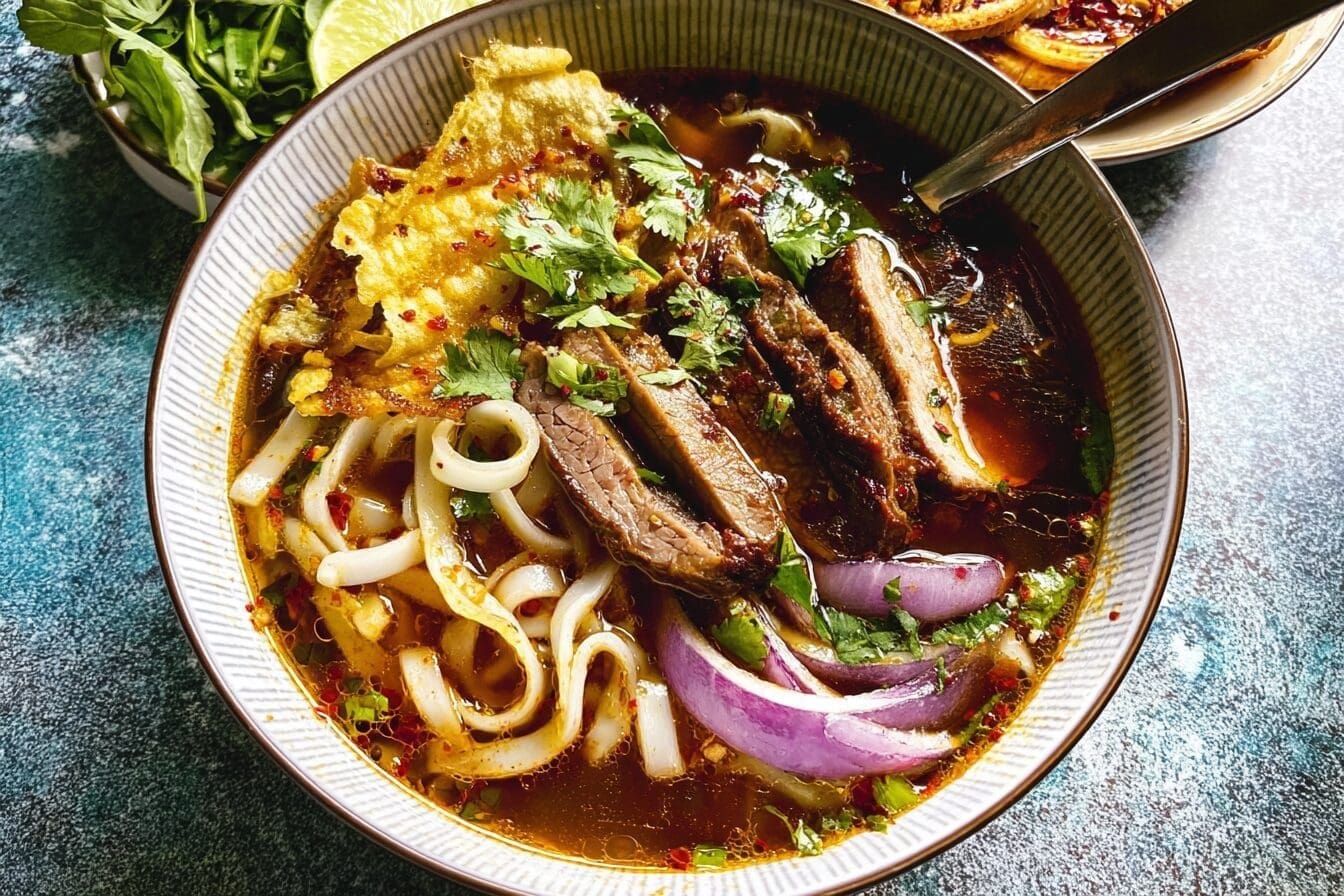
Cook the rice noodles separately until tender, then drain. To serve, place noodles in bowls, add sliced meats, pork sausage cooked separately, and ladle hot broth over the top. Garnish with fresh herbs like mint, Thai basil, bean sprouts, bird’s eye chilies or jalapeños, and lime wedges, plus the optional banana flower. Serve saté on the side so folks can adjust the spiciness to their liking for a similar flavor twist, try our Vietnamese pork cutlets recipe for another easy Asian-inspired dish.
Dietary Substitutions to Customize Your Bun Bo Hue
Bun Bo Hue’s spicy beef and pork broth can be tweaked for various needs, making it a flexible choice for diet-conscious individuals or community organizers. Whether you’re avoiding gluten or going vegan, these swaps keep the dish’s heart intact while suiting your crowd. It’s all about making food that brings people together without any fuss.
- Replace beef shank with tofu, seitan, or tempeh for vegan options.
- Use chicken breast or pork for a milder taste.
- Substitute shrimp paste with miso or soy paste for plant-based umami.
- Add seasonal vegetables like bok choy or spinach for extra nutrients.
- Opt for gluten-free tamari instead of regular soy sauce.
- Adjust chili and lemongrass to control heat and fragrance.
These changes help maintain the essence of Bun Bo Hue, so it’s still that comforting soup you love. For nutritional insights, check out details on calories in similar beef soups to guide your tweaks.
Mastering Bun Bo Hue: Advanced Tips and Variations
Once you get the basics of Bun Bo Hue down, you can level up with some pro tips to make your spicy beef and pork broth even better. Slow-simmer the broth overnight for a deeper flavor, or blanch bones multiple times for a clearer base it’s those little tricks that turn a good meal into a great one. This section dives into ways to experiment while keeping things fun and approachable.
| Technique | Benefit |
|---|---|
| Slow-simmer broth | Extracts richer flavors from lemongrass and meats |
| Add star anise | Brings a spiced aroma for new variations |
| Pre-cook noodles | Maintains texture for make-ahead meals |
Try different chili blends to amp up the heat, or serve in wide bowls with fresh herbs for a vibrant look. These ideas make Bun Bo Hue adaptable for food enthusiasts or travelers mixing in global twists.
How to Store Bun Bo Hue: Best Practices
Storing your Bun Bo Hue properly keeps that spicy beef and pork broth fresh for later, which is handy for busy parents or working professionals. Follow these tips to enjoy leftovers without losing flavor. It’s all about smart prep that fits into your routine.
- Refrigerate broth in airtight containers for up to 3 days.
- Freeze broth in portions for up to 3 months.
- Gently reheat on the stove until steaming.
- Reheat noodles separately to keep them from getting mushy.
- Cook and store ingredients individually for easy meal prep.
Proper storage means your Bun Bo Hue stays safe and tasty, ready for those impromptu gatherings.
FAQs: Frequently Asked Questions About Bun Bo Hue
What makes bún bò Huế different from other Vietnamese noodle soups?
Bún bò Huế is distinct due to its use of thick, round rice noodles and a spicy, savory broth made from both beef and pork bones. Unlike phở, which uses flat noodles and a lighter broth, bún bò Huế’s broth includes shrimp paste and chili oil, giving it a bold, spicy flavor. It is also traditionally served with toppings like pork sausage, pork hock, congealed pig’s blood, and fresh herbs, providing a unique combination of textures and tastes.
How spicy is bún bò Huế, and can the spiciness be adjusted?
Bún bò Huế is traditionally spicy, thanks to chili paste and fresh chili peppers in the broth. However, the level of heat can be adjusted easily. Many recipes prepare the broth with a moderate spice level or even without chili, allowing diners to add chili paste or fresh chilies at the table to suit their preference. This makes it approachable for both spice lovers and those sensitive to heat.
What are the traditional toppings and garnishes for bún bò Huế?
Common toppings for bún bò Huế include thinly sliced beef, pork hock, pork sausage (chả Huế), and cubes of congealed pig’s blood. It is typically garnished with fresh herbs like Thai basil, mint, and cilantro, along with shredded banana flower or cabbage, bean sprouts, lime wedges, and sliced chili. These garnishes balance the rich broth and add freshness and texture.
Can bún bò Huế be made without pork blood, and what are good substitutes?
Yes, pork blood cubes are a traditional ingredient but can be omitted if unavailable or if preferred. The dish remains flavorful without it. As a substitute, extra pork hock or tofu can add additional texture to the soup. The key flavors come from the broth and spices, so removing pork blood does not drastically change the overall taste.
How should the noodles for bún bò Huế be prepared for the best texture?
The thick, round rice noodles for bún bò Huế should be cooked according to package instructions, usually by boiling for 4-6 minutes until tender but still slightly chewy. Overcooking can make them mushy. After draining, rinse the noodles with cold water to stop cooking and prevent sticking. Add the noodles to the broth just before serving to maintain their texture and warmth.

Bun Bo Hue
🥢 Experience the rich and bold flavors of Bún Bò Huế, a traditional Vietnamese spicy beef and pork noodle soup.
🌿 This hearty recipe offers a nourishing meal with fresh herbs, tender meats, and a savory, aromatic broth that warms the soul.
- Total Time: 3 hours 30 minutes
- Yield: 8 servings
Ingredients
– 1 lb beef shank for rich flavor and tender meat texture
– 1 oxtail adds depth to the broth
– 1 pork hocks provides succulent pork elements
– Huế-style pork sausage flavored with garlic and peppercorns quantity as needed for serving, typically 1-2 links
– Congealed pork blood cut into cubes about 200g, boiled if raw
– Water as needed for broth base
– Chicken broth enough to combine with water for the base
– 3-4 stalks of bruised lemongrass for fragrant citrus aroma
– Two halved onions to infuse the broth with sweetness
– 1 tablespoon of shrimp paste for umami depth
– 1 teaspoon of salt for seasoning
– 2 teaspoons of sugar to balance flavors
– Optional seasoning or MSG to taste, for extra savoriness
– 2 tablespoons annatto seeds sautéed in oil to release red color
– 2-3 finely chopped shallots for added depth and color
– 4 cloves of garlic sautéed until brown for robust flavor
– Dried rice noodles, medium or large thickness about 200g, boiled according to package instructions
– Banana flower (optional) 1 whole, thinly sliced and soaked in lemon water for 30 minutes
– 10-15 dried Thai chiles for the saté condiment
– 2 tablespoons of oil for sautéing annatto and saté
– 1 chopped shallot or small white onion for saté
– 3 cloves of garlic for saté
– 1 stalk of minced lemongrass for saté
– 1 teaspoon Korean chile powder for saté
– 1 teaspoon sugar for saté
– ½ teaspoon salt for saté
– 1 tablespoon fish sauce for saté
Instructions
1-Gathering and Prepping Ingredients: First, prepare all ingredients by slicing the beef shank, oxtail, and pork hocks, then bruise the lemongrass stalks. Soak the dried rice noodles as per package instructions, and if you’re using raw congealed pork blood, boil it for 30-45 minutes. For the optional banana flower, thinly slice it and soak in lemon water for 30 minutes to cut the bitterness trust me, it’s a simple step that makes a difference.
2-Cooking the Broth and Meats: Blanch the beef shank, oxtail, and pork hocks in boiling water for 5 minutes to remove impurities, then rinse them clean. Next, simmer the broth by combining water, chicken broth, bruised lemongrass, halved onions, 1 tablespoon of shrimp paste, 1 teaspoon of salt, and 2 teaspoons of sugar in a pot. Sauté 2 tablespoons of annatto seeds in oil until they release their red color, remove them, then add 2-3 chopped shallots and 4 cloves of garlic sautéed until brown to enhance the broth’s depth.
3-Cooking the Broth and Meats: Bring the mixture to a boil and simmer the pork for about 1 hour and the beef for 2-3 hours until tender. While that’s going, make the saté condiment by soaking 10-15 dried Thai chiles in warm water, then cooking them with 2 tablespoons of oil, 1 chopped shallot, 3 cloves of garlic, 1 minced lemongrass stalk, 1 teaspoon Korean chile powder, 1 teaspoon sugar, ½ teaspoon salt, and 1 tablespoon fish sauce on medium heat until thick and fragrant. Once meats are done, cool and slice them, reserving for serving. This step-by-step approach keeps things straightforward, even for seniors or baking enthusiasts trying something new.
4-Assembling and Serving: Cook the rice noodles separately until tender, then drain. To serve, place noodles in bowls, add sliced meats, pork sausage cooked separately, and ladle hot broth over the top. Garnish with fresh herbs like mint, Thai basil, bean sprouts, bird’s eye chilies or jalapeños, and lime wedges, plus the optional banana flower. Serve saté on the side so folks can adjust the spiciness to their liking for a similar flavor twist, try our Vietnamese pork cutlets recipe for another easy Asian-inspired dish.
Last Step:
Please leave a rating and comment letting us know how you liked this recipe! This helps our business to thrive and continue providing free, high-quality recipes for you.Notes
🔥 Simmer meats long enough until very tender for best texture.
🌶 Customize spiciness with saté condiment served on the side.
🌿 Fresh herbs and lime wedges brighten and balance the rich broth.
- Prep Time: 30 minutes
- Cooking and simmering time: 3 hours
- Cook Time: 3 hours
- Category: Soup
- Method: Simmering, sautéing, boiling
- Cuisine: Vietnamese
- Diet: Gluten-Free option
Nutrition
- Serving Size: 1 bowl
- Calories: 1277 kcal
- Sugar: 4 g
- Sodium: 4940 mg
- Fat: 73.1 g
- Saturated Fat: 25 g
- Unsaturated Fat: 40 g
- Trans Fat: 0 g
- Carbohydrates: 61 g
- Fiber: 6 g
- Protein: 90 g
- Cholesterol: 330 mg


