

Why You’ll Love This Breakfast Skillet
This hearty breakfast skillet is a go-to meal for busy mornings because it’s simple to whip up in one pan. It combines favorite ingredients like potatoes, eggs, and meats for a dish that’s both filling and fun to eat. You’ll appreciate how it delivers great taste and nutrition without much hassle.
One of the best parts is the ease of preparation, with most steps taking just 20 to 30 minutes from start to finish. One-pan cooking cuts down on cleanup, and minimal chopping makes it perfect for quick breakfasts or casual brunches. This approach helps busy parents and students get a hot meal on the table without slowing down their day.
Plus, it offers solid health benefits by mixing lean proteins, colorful veggies, and healthy fats. Ingredients like eggs and peppers provide fiber, vitamins, and steady energy to keep you going. For diet-conscious folks, swapping in plant-based options ensures it’s a smart choice for balanced eating.
The versatility really sets it apart, as you can tweak it for different tastes or needs. Whether you’re making it vegetarian with extra beans or gluten-free with simple swaps, it’s easy to adjust. This makes it ideal for families with varied preferences, from seniors to baking enthusiasts.
And let’s not forget the flavor the mix of browned meats and caramelized onions creates something truly special. Fresh touches like herbs add a nice finish that makes every bite pop. I can’t think of a better way to start my morning with this kind of meal.
Jump to:
- Why You’ll Love This Breakfast Skillet
- Essential Ingredients for Breakfast Skillet
- How to Prepare the Perfect Breakfast Skillet: Step-by-Step Guide
- Gather and Prep Your Ingredients
- Heat and Cook the Meats
- Add and Cook the Potatoes
- Sauté Veggies and Combine
- Finish with Eggs and Cheese
- Dietary Substitutions Protein and Main Component Alternatives
- Dietary Substitutions Vegetable, Sauce, and Seasoning Modifications
- Mastering Breakfast Skillet: Advanced Tips and Variations
- Pro Cooking Techniques
- Flavor and Presentation Ideas
- How to Store Breakfast Skillet: Best Practices
- FAQs: Frequently Asked Questions About Breakfast Skillet
- What ingredients do I need to make a breakfast skillet?
- How do I cook a breakfast skillet so the potatoes are crispy?
- Can I make a breakfast skillet vegetarian or vegan-friendly?
- What are some quick tips to save time when preparing a breakfast skillet?
- How can I make a breakfast skillet healthier without sacrificing taste?
- Breakfast Skillet
- Ingredients
- Instructions
- Last Step:
- Notes
- Nutrition
- Did you make this recipe?
Essential Ingredients for Breakfast Skillet
- 8 to 10 slices bacon, chopped
- 8 breakfast sausage links
- 1 small onion, diced
- 1 red bell pepper, diced
- 3 garlic cloves, minced
- 1.5 pounds Russet potatoes (about 2 large), peeled and diced
- Salt, to taste
- Black pepper, to taste
- 6 large eggs
- 1 cup shredded cheddar cheese (or favorite cheese)
- 2 green onions, chopped (for garnish)
- Salsa, for serving (optional)
- Hot sauce, for serving (optional)
These ingredients come together to make a hearty one-pan meal that serves about 6 people in roughly 35 minutes total. They blend classic flavors like bacon and eggs with veggies for a balanced breakfast. This setup keeps things simple yet packed with what you need.
For those watching their diet, note the nutritional info per serving: about 492 calories, 38g carbohydrates, 26g protein, and 27g fat. It includes key nutrients like 52mg vitamin C and 1053mg potassium. Use this as a base and swap items as needed for your routine.
How to Prepare the Perfect Breakfast Skillet: Step-by-Step Guide
Gather and Prep Your Ingredients
First, pull together all the items and get them ready. Chop the bacon, dice the onion, bell pepper, and potatoes, and mince the garlic this keeps things moving smoothly later. For this recipe, you’ll need about 10 minutes to prep, which includes cooking the sausage links until they’re browned. Having everything set helps avoid any rush during cooking.
This step is key for busy professionals or parents who want to save time. Once prepped, you’re set for the rest of the process in one 12-inch skillet.
Heat and Cook the Meats
Start by cooking the sausage links over medium heat until they’re browned and done, then set them aside on a paper towel. Next, cook the chopped bacon until it’s crisp, leaving 3 to 4 tablespoons of grease in the pan. If the pan looks dry, add a bit of oil or butter to keep things going.
Here are some tips for the best results: learn how to cook bacon perfectly, which can make this step easier. This stage takes about 10 minutes and builds a strong base for the dish.
Add and Cook the Potatoes
Now, add the diced potatoes in a single layer and season with salt and pepper. Cook them until they’re crisp and tender, which takes 8 to 10 minutes. Stir as needed to get an even cook. This is where the real flavor starts, as the potatoes soak up the tastes from the pan.
For a quicker version, try using frozen diced hash browns as a substitute for fresh ones. It cuts down on prep time while keeping the crunch.
Sauté Veggies and Combine
Push the potatoes to one side, then add the onion, bell pepper, and garlic. Sauté for about 3 minutes until they soften. Chop the cooked sausage and bacon into bite-sized pieces and mix them back in, sprinkling with smoked paprika for extra depth.
This step adds layers of flavor and only takes a few minutes. It’s a great spot to adapt for different diets, like using sweet potatoes instead.
Finish with Eggs and Cheese
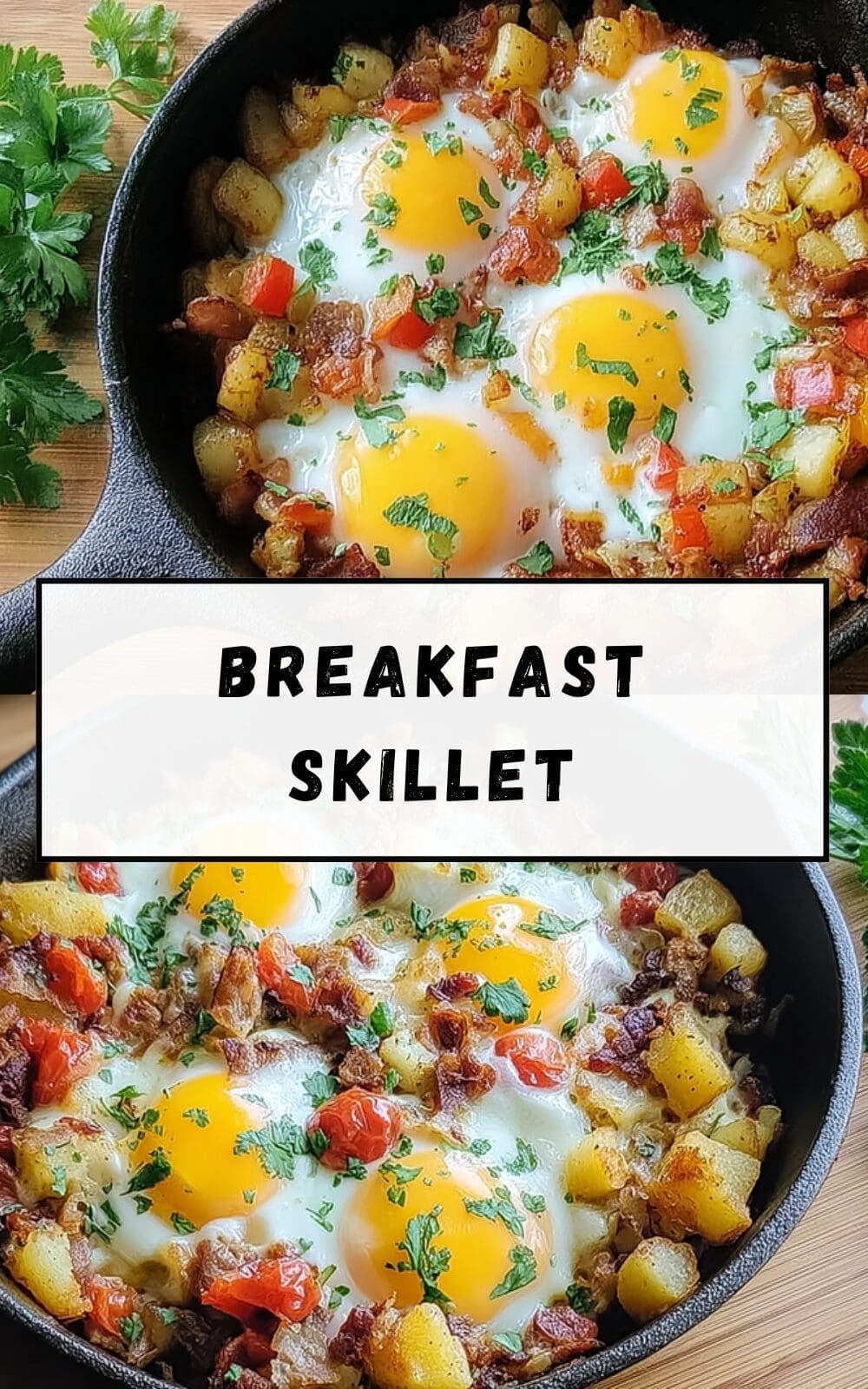
Make 6 wells in the mixture and crack an egg into each one, seasoning them with salt and pepper. Sprinkle the shredded cheese over the top, then cover and cook on low heat until the egg whites set and the cheese melts. This usually takes a few more minutes.
Garnish with chopped green onions and serve hot, maybe with salsa or hot sauce on the side. The whole process wraps up in about 30 minutes of cooking time. For storage tips, we’ll cover that later.
Dietary Substitutions Protein and Main Component Alternatives
Swapping proteins in your breakfast skillet lets you match it to what you have on hand or your diet. For meat lovers, lean ground turkey or diced chicken works great just brown it in the pan for that savory edge. If you’re going vegetarian, try extra-firm tofu or tempeh crumbles instead.
Vegan options are simple too; use a chickpea flour scramble in place of eggs to keep things hearty. Adding cooked grains like quinoa can bulk it up without overwhelming the base. This flexibility makes it ideal for diet-conscious individuals or families with mixed preferences.
Dietary Substitutions Vegetable, Sauce, and Seasoning Modifications
Switch up the veggies to keep your skillet fresh and seasonal, like using cherry tomatoes in summer or parsnips in fall. For sauces, add soy sauce and ginger for an Asian vibe or harissa for a North African twist. These changes can shift the flavor without much effort.
To cut sodium, skip extra salt and use herbs or citrus instead. Always check that spices are gluten-free if needed. This way, the dish stays adaptable for everyone from travelers to community groups.
Mastering Breakfast Skillet: Advanced Tips and Variations
Pro Cooking Techniques
Using a cast-iron skillet helps with even heat and great browning on your ingredients. Preheat it properly to get those tasty browned bits, then mix them in for extra flavor. Cook proteins separately for a nice sear before combining.
Rest the meat briefly to keep it juicy, and press tofu to get the best caramelization.
Flavor and Presentation Ideas
Try global spices like za’atar for a Mediterranean feel or curry for something Indian-inspired. Add acidity at the end with lemon or vinegar to brighten things up. For presentation, serve straight from the skillet or plate it neatly with herbs on top.
Make-ahead options include prepping components ahead and reheating them later. This saves time for weekday mornings and keeps the meal fresh.
How to Store Breakfast Skillet: Best Practices
After cooking, cool the mixture to room temperature quickly, then put it in airtight containers and refrigerate for up to 4 days. Keep eggs separate if you can, as they don’t store as well. Always label with the date to stay safe.
For freezing, portion it into bags and freeze for 2 to 3 months. Avoid freezing items with dairy or fresh herbs; add them after reheating. Thaw overnight and reheat on the stove or in the oven to keep textures nice.
Meal prep tip: Store proteins and veggies apart for easy mixing later. This works great for grab-and-go mornings.
FAQs: Frequently Asked Questions About Breakfast Skillet
What ingredients do I need to make a breakfast skillet?
A basic breakfast skillet typically includes eggs, potatoes, onions, and bell peppers. You can also add cooked sausage, bacon, or ham for protein and cheese such as cheddar or Monterey Jack for extra flavor. Fresh herbs like parsley or chives add brightness. Using pre-cooked or leftover potatoes reduces cooking time. Season with salt, pepper, and paprika for a balanced taste. This combination creates a hearty and customizable meal.
How do I cook a breakfast skillet so the potatoes are crispy?
To get crispy potatoes, start by using diced or shredded potatoes and parboil them if desired to soften slightly. Heat oil in a large skillet over medium-high heat before adding the potatoes in a single layer without overcrowding. Cook undisturbed for several minutes to develop a golden crust, then flip to brown the other side. Cooking the potatoes first before adding other ingredients ensures they stay crispy rather than steaming.
Can I make a breakfast skillet vegetarian or vegan-friendly?
Yes, a breakfast skillet can easily be made vegetarian or vegan. Skip the meat and use plant-based proteins like tofu, tempeh, or vegan sausage. Replace eggs with scrambled tofu or chickpea flour omelets for a vegan option. Use dairy-free cheese alternatives or omit cheese altogether. Load the skillet with vegetables such as mushrooms, spinach, and zucchini for a flavorful and nutritious meal.
What are some quick tips to save time when preparing a breakfast skillet?
To save time, use pre-cooked or frozen potatoes and pre-chopped veggies. Cook meats like bacon or sausage ahead of time or buy pre-cooked varieties. Use a non-stick skillet to reduce sticking and speed up cleanup. Preparing ingredients the night before or using leftovers can dramatically cut breakfast prep time, making the skillet a convenient option for busy mornings.
How can I make a breakfast skillet healthier without sacrificing taste?
To make a healthier skillet, use lean proteins such as turkey sausage or egg whites, and limit added oils by using non-stick pans or cooking sprays. Substitute potatoes with sweet potatoes or cauliflower for more fiber and nutrients. Add plenty of vegetables to increase volume and vitamins. Using low-fat cheese or reducing the amount of cheese can also lower calories while keeping the dish flavorful and satisfying.
Breakfast Skillet
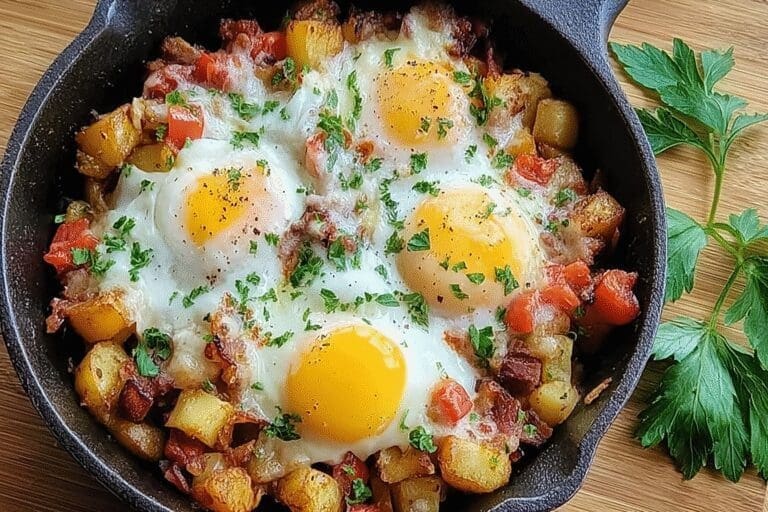
🍳 This Breakfast Skillet is a quick and flavorful one-pan meal combining potatoes, eggs, bacon, sausage, and cheese for a hearty start to your day.
🥔 Made with simple ingredients and easy steps, it’s perfect for busy mornings or weekend brunch with family and friends.
- Total Time: 40 minutes
- Yield: 6 servings
Ingredients
– 8 to 10 slices bacon, chopped
– 8 breakfast sausage links
– 1 small onion, diced
– 1 red bell pepper, diced
– 3 garlic cloves, minced
– 1.5 pounds Russet potatoes (about 2 large), peeled and diced
– Salt, to taste
– Black pepper, to taste
– 6 large eggs
– 1 cup shredded cheddar cheese (or favorite cheese)
– 2 green onions, chopped (for garnish)
– Salsa, for serving (optional)
– Hot sauce, for serving (optional)
Instructions
1-Gather and Prep Your Ingredients: First, pull together all the items and get them ready. Chop the bacon, dice the onion, bell pepper, and potatoes, and mince the garlic this keeps things moving smoothly later. For this recipe, you’ll need about 10 minutes to prep, which includes cooking the sausage links until they’re browned. Having everything set helps avoid any rush during cooking.
2-Heat and Cook the Meats: Start by cooking the sausage links over medium heat until they’re browned and done, then set them aside on a paper towel. Next, cook the chopped bacon until it’s crisp, leaving 3 to 4 tablespoons of grease in the pan. If the pan looks dry, add a bit of oil or butter to keep things going.
3-Add and Cook the Potatoes: Now, add the diced potatoes in a single layer and season with salt and pepper. Cook them until they’re crisp and tender, which takes 8 to 10 minutes. Stir as needed to get an even cook. This is where the real flavor starts, as the potatoes soak up the tastes from the pan.
4-Sauté Veggies and Combine: Push the potatoes to one side, then add the onion, bell pepper, and garlic. Sauté for about 3 minutes until they soften. Chop the cooked sausage and bacon into bite-sized pieces and mix them back in, sprinkling with smoked paprika for extra depth.
5-Finish with Eggs and Cheese: Make 6 wells in the mixture and crack an egg into each one, seasoning them with salt and pepper. Sprinkle the shredded cheese over the top, then cover and cook on low heat until the egg whites set and the cheese melts. This usually takes a few more minutes.
Last Step:
Please leave a rating and comment letting us know how you liked this recipe! This helps our business to thrive and continue providing free, high-quality recipes for you.Notes
🥔 Substitute frozen diced hash browns for fresh potatoes to reduce cooking time.
🍠 Sweet potatoes work well as an alternative to Russet potatoes for a slightly sweeter flavor.
🌭 Ground breakfast sausage can replace sausage links for a different texture and ease of preparation.
- Prep Time: 10 minutes
- Cook Time: 30 minutes
- Category: Breakfast, Brunch
- Method: Sautéing, Pan-cooking
- Cuisine: American
- Diet: Omnivore
Nutrition
- Serving Size: 1 serving
- Calories: 492
- Sugar: 4g
- Sodium: 585mg
- Fat: 27g
- Saturated Fat: 11g
- Unsaturated Fat: 12g
- Trans Fat: 0.1g
- Carbohydrates: 38g
- Fiber: 4g
- Protein: 26g
- Cholesterol: 303mg


