

Why You’ll Love This Braised Pot Roast
Imagine coming home to the rich, comforting aroma of braised pot roast that’s tender and full of flavor. This recipe is a go-to for home cooks who want a meal that feels special without much fuss. It’s perfect for busy parents or anyone planning a family gathering, as it brings people together with its hearty goodness.
One reason to try this braised pot roast is its ease of preparation. You’ll find that the process is simple and involves mostly hands-off time in the oven, letting you focus on other things while it cooks slowly. For instance, seasoning and searing take just minutes, making it a reliable choice for weeknights or events like potlucks.
- Ease of preparation: This braised pot roast comes together with straightforward steps, like dredging the roast in flour and letting it braise in the oven. It’s mostly hands-off after the initial setup, which means more time to chat with friends at your next community event. Using synonyms like “slow-cooked beef” keeps things natural and approachable.
- Health benefits: Packed with nutrients from veggies and lean cuts, this pot roast offers wellness perks such as protein for energy and vitamins from carrots and potatoes. It’s a balanced dish that fits diets for students and working professionals, promoting overall health with its mix of braised meats and sides.
- Versatility: Adapt this braised pot roast to suit various needs, like swapping ingredients for gluten-free options or lighter choices. It’s ideal for food enthusiasts and newlyweds exploring new flavors, and you can even use it in recipes for picnics by adjusting portions for easy transport.
- Distinctive flavor: What sets this pot roast apart is the deep taste from browning the meat and aromatics, plus the braising liquid that infuses everything with richness. The combination of red wine and herbs creates a standout dish that seniors and baking enthusiasts will love for its comforting warmth.
Whether you’re a busy parent juggling schedules or a community organizer hosting events, this braised pot roast will become your favorite for its forgiving nature and delicious results. For more ideas on hearty meals, check out our BBQ beef casserole recipe that pairs perfectly with family dinners.
Jump to:
- Why You’ll Love This Braised Pot Roast
- Essential Ingredients for Braised Pot Roast
- How to Prepare the Perfect Braised Pot Roast: Step-by-Step Guide
- First Step: Mise en Place and Initial Prep
- Second Step: Browning and Searing the Roast and Vegetables
- Third Step: Deglazing and Building the Braising Liquid
- Fourth Step: Combining and Braising
- Final Step: Finishing Touches and Serving
- Dietary Substitutions to Customize Your Braised Pot Roast
- Protein and Main Component Alternatives
- Vegetable, Sauce, and Seasoning Modifications
- Mastering Braised Pot Roast: Advanced Tips and Variations
- How to Store Braised Pot Roast: Best Practices
- FAQs: Frequently Asked Questions About Braised Pot Roast
- Should I sear the meat before making a braised pot roast?
- Is it better to cook a pot roast whole or cut it into smaller pieces?
- Can I use different types of meat like oxtail instead of beef chuck roast?
- What’s the best way to reheat pot roast without drying it out?
- Can I prepare braised pot roast ahead of time and reheat it later?
- Braised Pot Roast
- Ingredients
- Instructions
- Last Step:
- Notes
- Nutrition
- Did you make this recipe?
Essential Ingredients for Braised Pot Roast
Getting the ingredients right is key to making a great braised pot roast. Each item plays a role in building flavor and texture, so let’s break them down. I’ll list everything you need with exact measurements to make shopping and prepping a breeze.
- 1 beef chuck roast (3-4 pounds) – This well-marbled cut ensures tenderness during braising.
- Flour (for dredging) – Helps create a nice crust on the meat for better flavor.
- 2 tablespoons olive oil or preferred cooking oil – Used for browning, adding a rich base to the dish.
- 1 onion – Provides sweetness and depth to the braising liquid.
- 6 cloves garlic – Infuses the roast with aromatic flavor.
- 2 cups red wine – A key element for that distinctive, savory taste in your pot roast.
- ½ cup brandy or cognac – Adds complexity and enhances the overall richness.
- 2 tablespoons tomato paste – Thickens the sauce and boosts umami flavors.
- 2 cups broth (bone broth preferred) – The liquid base that keeps everything moist during cooking.
- 2 bay leaves – For subtle herbal notes that complement the braised meat.
- 2 tablespoons fresh thyme – Brings a fresh, earthy aroma to the pot roast.
- 6 to 8 small to medium potatoes – These will cook alongside the roast and become part of your meal.
- Carrots (quantity not specified) – Add color, sweetness, and nutrients; use as many as you like for your family size.
- 2 tablespoons salted butter – For making creamy mashed potatoes on the side.
- ½ cup milk or cream cheese – Helps achieve the perfect mash texture.
- 1 teaspoon garlic powder – Adds a kick of flavor to the mashed potatoes.
- Salt and pepper to taste – Essential for seasoning both the roast and potatoes.
For special dietary options, try these swaps to make your pot roast more inclusive:
- Vegan: Use a large portobello mushroom or seitan in place of the beef chuck roast for a plant-based main, and swap butter for a plant-based alternative like coconut oil.
- Gluten-free: Opt for gluten-free flour for dredging, and ensure your broth is certified gluten-free to keep the recipe safe.
- Low-calorie: Choose leaner cuts of meat and reduce the oil to just 1 tablespoon for a lighter version without sacrificing that pot roast goodness.
How to Prepare the Perfect Braised Pot Roast: Step-by-Step Guide
First Step: Mise en Place and Initial Prep
Start by gathering all your ingredients to make the process smooth. Preheat your oven to 325°F (163°C) and season the 1 beef chuck roast with salt and pepper. This step sets the foundation for a flavorful braised pot roast, and you can adapt it for dietary needs by using low-sodium seasoning.
Dredge the roast in flour to help it brown nicely, which adds to the dish’s appeal. For vegan swaps, prepare your seitan or mushrooms at this stage to ensure even cooking.
Second Step: Browning and Searing the Roast and Vegetables
Heat 2 tablespoons of olive oil in a large, oven-safe pot over medium-high heat. Add the roast and sear it on all sides for about 3-4 minutes each to lock in juices, enhancing the pot roast’s texture.
Surround the roast with 1 chopped onion, 6 cloves of garlic, and your carrots. This browning step is optional but boosts flavor, and for gluten-free versions, double-check your flour. Timing is key here aim for 5-7 minutes total to avoid overcooking.
Third Step: Deglazing and Building the Braising Liquid
Once browned, whisk 2 tablespoons of tomato paste into 2 cups of red wine and pour it over the roast. Add ½ cup brandy, 2 cups broth, 2 bay leaves, and 2 tablespoons fresh thyme to create a rich liquid base.
This step builds the sauce’s depth, and for low-calorie options, use vegetable stock instead. Keep the pot at a simmer for 2-3 minutes to deglaze, incorporating all those tasty bits from the bottom.
Fourth Step: Combining and Braising
Arrange 6 to 8 potatoes around the roast in the pot, then cover and place it in the preheated oven. Braise for 3.5 to 5 hours until everything is tender, adjusting time based on roast size.
For slow-cooker variations, transfer to the device and cook on low for about 6 hours. Dietary adaptations like vegan substitutes might reduce cooking time, so monitor closely for the perfect pot roast consistency.
Final Step: Finishing Touches and Serving
After braising, increase the oven to 425°F (218°C) and remove the potatoes. Mash them with 2 tablespoons butter, ½ cup milk, 1 teaspoon garlic powder, salt, and pepper.
Return the uncovered roast to the oven for 20 minutes to caramelize, adding broth if needed. Let it rest for 10 minutes before slicing, then serve with carrots and mashed potatoes. For gluten-free eaters, ensure all additions are compliant.
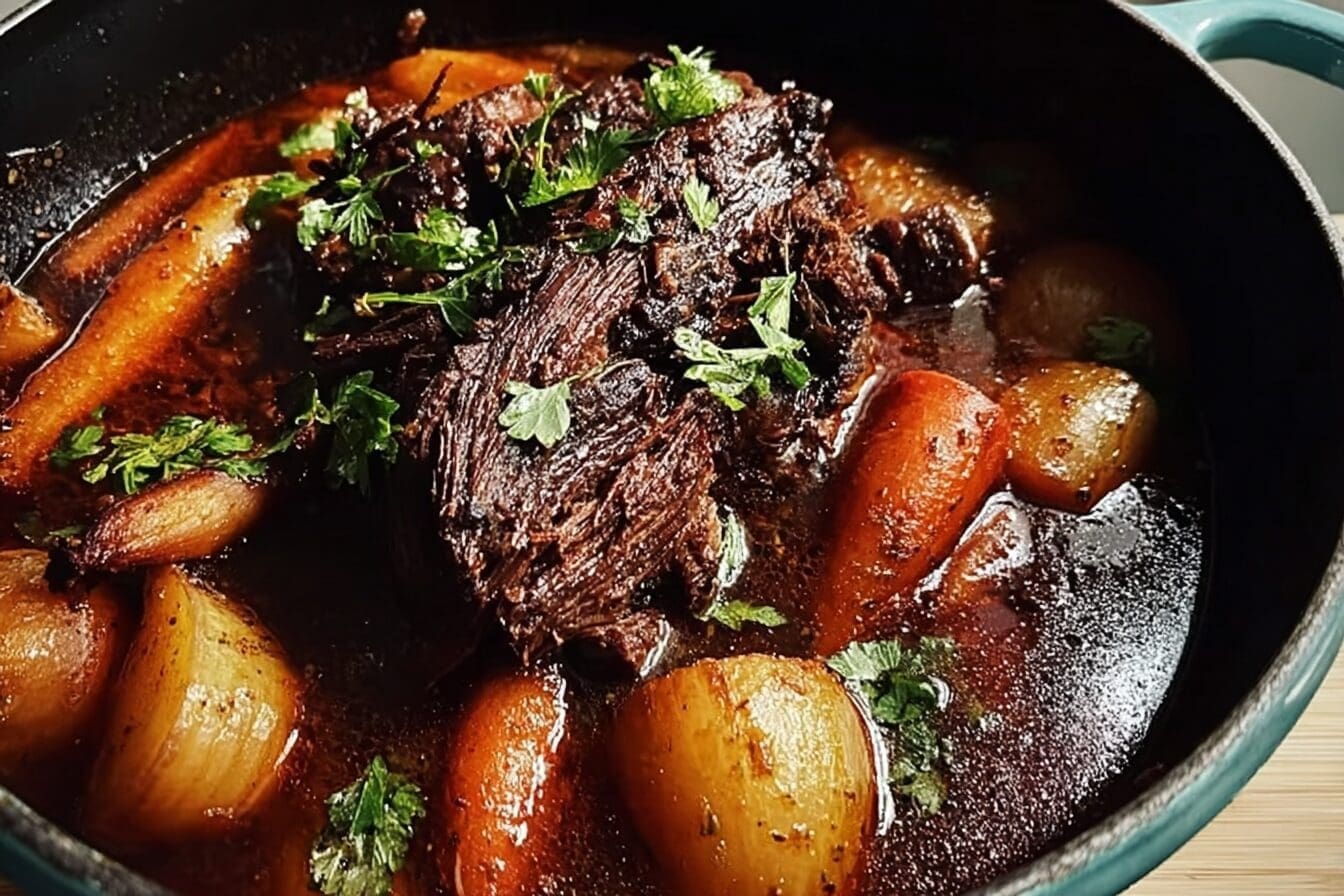
Dietary Substitutions to Customize Your Braised Pot Roast
Customizing your braised pot roast is easy and fun, allowing you to adapt for different tastes or needs. Below, I’ll cover options in two focused areas to help you make the recipe your own.
Protein and Main Component Alternatives
Swapping the main protein can change the dish while keeping that comforting pot roast feel. For example, use brisket instead of chuck roast for a similar texture, but note it might need an extra hour of braising.
Poultry like chicken thighs works well too; adjust liquid ratios to avoid drying out. For plant-based choices, seitan or tempeh can replace the beef, reducing cook time to 2-3 hours and using vegetable stock for seasoning.
Vegetable, Sauce, and Seasoning Modifications
Play with veggies by adding root varieties like turnips or winter squashes for seasonal twists. For the sauce, swap red wine with beer or tomato-based options to vary flavors, ensuring balance in your pot roast.
Herb blends can be adjusted for spice rubs, and use arrowroot for gluten-free thickening. Nightshade-free versions might skip tomato paste, maintaining the dish’s texture with careful tweaks.
Mastering Braised Pot Roast: Advanced Tips and Variations
Taking your braised pot roast to the next level is all about smart techniques. Try a reverse sear for even cooking, or combine sous-vide with braising for ultimate tenderness in your pot roast.
For flavor variations, experiment with Mediterranean herbs or Asian-inspired additions like soy and ginger. Presentation ideas include garnishing with fresh thyme and portioning for crowds, perfect for church groups.
Make-ahead strategies involve prepping the roast ahead and storing it, then finishing in the oven. These tips ensure your pot roast shines at any gathering, using subtle variations for the best results.
How to Store Braised Pot Roast: Best Practices
Proper storage keeps your braised pot roast tasty for later. For refrigeration, cool the dish quickly and store in airtight containers for up to 4 days to maintain freshness.
Freezing works for longer-term needs; portion into bags and freeze for up to 3 months. When reheating, use the oven at low heat with added liquid to keep things moist, ideal for meal prep.
| Storage Method | Duration | Tips |
|---|---|---|
| Refrigeration | Up to 4 days | Use airtight containers |
| Freezing | Up to 3 months | Portion and label clearly |
FAQs: Frequently Asked Questions About Braised Pot Roast
Should I sear the meat before making a braised pot roast?
Searing the meat before braising a pot roast is optional but can add extra flavor and a richer color to the dish. To sear, heat a small amount of oil in a hot pan and brown the roast on all sides for about 3-4 minutes per side before adding it to the braising liquid. This step helps develop a deeper taste through the Maillard reaction, but you can skip it if you’re short on time or prefer a simpler process.
Is it better to cook a pot roast whole or cut it into smaller pieces?
Cooking a pot roast whole is traditional and helps retain moisture and tenderness during the slow braising process. However, cutting the roast into chunks can reduce cooking time and make it easier to portion. Both methods work well, but whole roasts usually result in more uniform texture and presentation.
Can I use different types of meat like oxtail instead of beef chuck roast?
Yes, you can substitute beef chuck roast with other cuts like oxtail, brisket, or short ribs for braised pot roast recipes. These cuts have a good amount of connective tissue that breaks down during slow cooking, adding rich flavor and tenderness. Keep in mind that cooking times may vary depending on the cut and size.
What’s the best way to reheat pot roast without drying it out?
To reheat pot roast without drying it out, warm it gently in the oven at a low temperature (around 275°F or 135°C) covered with foil to retain moisture. Adding a splash of the cooking juices or broth before reheating also helps keep the meat tender. Alternatively, reheating on the stovetop over low heat with some liquid can prevent drying.
Can I prepare braised pot roast ahead of time and reheat it later?
Absolutely. Braised pot roast often tastes better the next day because the flavors have more time to meld. After cooking, allow the roast to cool, then store it in an airtight container in the refrigerator for up to 3-4 days. Reheat gently using the oven or stovetop methods to maintain moisture and texture.

Braised Pot Roast
🍷 This Red Wine Braised Pot Roast offers tender, flavorful beef that melts in your mouth, perfect for hearty family meals.
🥔 Paired with creamy mashed potatoes and carrots, it creates a comforting and satisfying dish that’s easy to prepare in one pot.
- Total Time: 4 hours 15 minutes
- Yield: 6 servings
Ingredients
– 1 beef chuck roast (3-4 pounds)
– Flour for dredging
– 2 tablespoons olive oil or preferred cooking oil for browning
– 1 onion
– 6 cloves garlic
– 2 cups red wine
– ½ cup brandy or cognac
– 2 tablespoons tomato paste
– 2 cups broth (bone broth preferred)
– 2 bay leaves
– 2 tablespoons fresh thyme
– 6 to 8 small to medium potatoes
– Carrots
– 2 tablespoons salted butter for making creamy mashed potatoes
– ½ cup milk or cream cheese
– 1 teaspoon garlic powder
– Salt and pepper to taste
Instructions
1-First Step: Mise en Place and Initial Prep: Start by gathering all your ingredients to make the process smooth. Preheat your oven to 325°F (163°C) and season the 1 beef chuck roast with salt and pepper. This step sets the foundation for a flavorful braised pot roast, and you can adapt it for dietary needs by using low-sodium seasoning.
1-First Step: Mise en Place and Initial Prep: Dredge the roast in flour to help it brown nicely, which adds to the dish’s appeal. For vegan swaps, prepare your seitan or mushrooms at this stage to ensure even cooking.
2-Second Step: Browning and Searing the Roast and Vegetables: Heat 2 tablespoons of olive oil in a large, oven-safe pot over medium-high heat. Add the roast and sear it on all sides for about 3-4 minutes each to lock in juices, enhancing the pot roast’s texture.
2-Second Step: Browning and Searing the Roast and Vegetables: Surround the roast with 1 chopped onion, 6 cloves of garlic, and your carrots. This browning step is optional but boosts flavor, and for gluten-free versions, double-check your flour. Timing is key here aim for 5-7 minutes total to avoid overcooking.
3-Third Step: Deglazing and Building the Braising Liquid: Once browned, whisk 2 tablespoons of tomato paste into 2 cups of red wine and pour it over the roast. Add ½ cup brandy, 2 cups broth, 2 bay leaves, and 2 tablespoons fresh thyme to create a rich liquid base.
3-Third Step: Deglazing and Building the Braising Liquid: This step builds the sauce’s depth, and for low-calorie options, use vegetable stock instead. Keep the pot at a simmer for 2-3 minutes to deglaze, incorporating all those tasty bits from the bottom.
4-Fourth Step: Combining and Braising: Arrange 6 to 8 potatoes around the roast in the pot, then cover and place it in the preheated oven. Braise for 3.5 to 5 hours until everything is tender, adjusting time based on roast size.
4-Fourth Step: Combining and Braising: For slow-cooker variations, transfer to the device and cook on low for about 6 hours. Dietary adaptations like vegan substitutes might reduce cooking time, so monitor closely for the perfect pot roast consistency.
5-Final Step: Finishing Touches and Serving: After braising, increase the oven to 425°F (218°C) and remove the potatoes. Mash them with 2 tablespoons butter, ½ cup milk, 1 teaspoon garlic powder, salt, and pepper.
5-Final Step: Finishing Touches and Serving: Return the uncovered roast to the oven for 20 minutes to caramelize, adding broth if needed. Let it rest for 10 minutes before slicing, then serve with carrots and mashed potatoes. For gluten-free eaters, ensure all additions are compliant.
Last Step:
Please leave a rating and comment letting us know how you liked this recipe! This helps our business to thrive and continue providing free, high-quality recipes for you.Notes
🔪 Cutting the roast into chunks before cooking can help promote even doneness.
⏲️ Use a slow cooker on low for about 6 hours as an alternative cooking method.
🍷 A dry red wine like Cabernet Sauvignon works best, and bourbon can substitute for brandy if desired.
- Prep Time: 15 minutes
- Cook Time: 4 hours
- Category: Main Dish
- Method: Braising, Oven Roasting
- Cuisine: American
- Diet: Contains dairy and meat; not suitable for vegetarian or vegan diets
Nutrition
- Serving Size: 1 serving
- Calories: 225 kcal
- Sugar: 2 g
- Sodium: 150 mg
- Fat: 8 g
- Saturated Fat: 3 g
- Unsaturated Fat: 4 g
- Trans Fat: 0 g
- Carbohydrates: 15 g
- Fiber: 3 g
- Protein: 25 g
- Cholesterol: 70 mg


