

Best 20+ Therapy Office Ideas You NEED to Try This Year
Ok so here is the thing about a therapy office. The room starts working before you say a single word. Long before a client settles into a chair, they have already read the light, the colors, the distance between the furniture, and whether the space feels like a place where people open up.


That is the exact problem the original roundup of therapy office ideas set out to solve. It was prompted by a friend named Maddie, who had just opened her own therapy practice and wanted an office that felt soft, calming, and warm without being cluttered. Not clinical and cold. Not a dated living room either.
After researching the options, the roundup lands on a set of moves that cover the big decisions: chairs, lighting, wall color, and even what plant belongs in the corner. The intended audience is therapists, counselors, and other practitioners who want clients to feel at ease the moment they walk in. The main categories are easy to remember:
- Comfortable seating that does not feel clinical
- Warm layered lighting instead of overhead fluorescents
- Soft wall colors such as sage, cream, and muted blue
- Plants, ceramics, and baskets for texture and storage
If you are setting up a counseling space, it also helps to borrow a few habits from home office decor ideas and clear the visual noise first with these decluttering ideas. Calm rooms are usually simple rooms. For background on why these choices matter, this guide to calming therapy office design ideas is a useful companion read.
Jump to:
- Best 20+ Therapy Office Ideas You NEED to Try This Year
- Cozy neutral seating corner
- Soft sage green accent wall
- Minimalist oak desk setup
- Calming linen curtains
- Warm table lamp styling
- Abstract art gallery wall
- Bouclé armchair moment
- Japandi inspired therapy space
- Earthy terracotta decor
- Soft cream color palette
- Rounded furniture silhouettes
- Layered area rugs
- Natural wood bookshelf
- Serene plant filled corner
- Cloud like sofa styling
- Modern coastal consultation room
- Muted blue wall paint
- Woven basket storage
- Organic ceramic decor
Cozy neutral seating corner
A neutral seating corner softens the room the second someone walks in. Two comfortable chairs, a small side table between them, and soft throw pillows are enough. Nothing in the arrangement should be screaming for attention.
This one carries more weight than it looks. Maddie’s supervisor told her that clients will feel whatever the therapist feels in the room first, which means the seating sets the tone before the session even begins.
Note from the original roundup: clients will feel whatever the therapist feels in the room first, so the space is part of the work.
Comfort beats symmetry here. You do not need matching chairs for the corner to work.
Soft sage green accent wall
Sage green shows up everywhere right now, and for good reason. It is a dusty, slightly grayed out green, which lets it act like a neutral that still has a personality.
Paint one wall, not all four. A single sage green accent wall instantly makes a space feel grounded, and it is the kind of color that lowers your heart rate a little.
Minimalist oak desk setup
The desk setup matters more than people think in a therapy office. A giant, imposing desk is the classic mistake, because it creates a literal barrier between the therapist and the person they are helping.
Go small instead. A light oak desk tucked to the side of the room, used just for notes and a laptop, keeps things human. The seating area stays the main moment, and the desk becomes furniture rather than a wall between two people.
Calming linen curtains
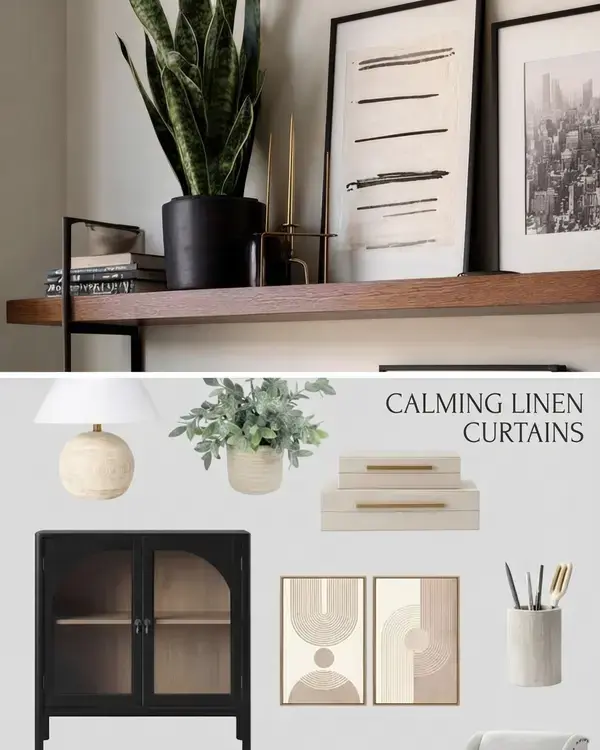
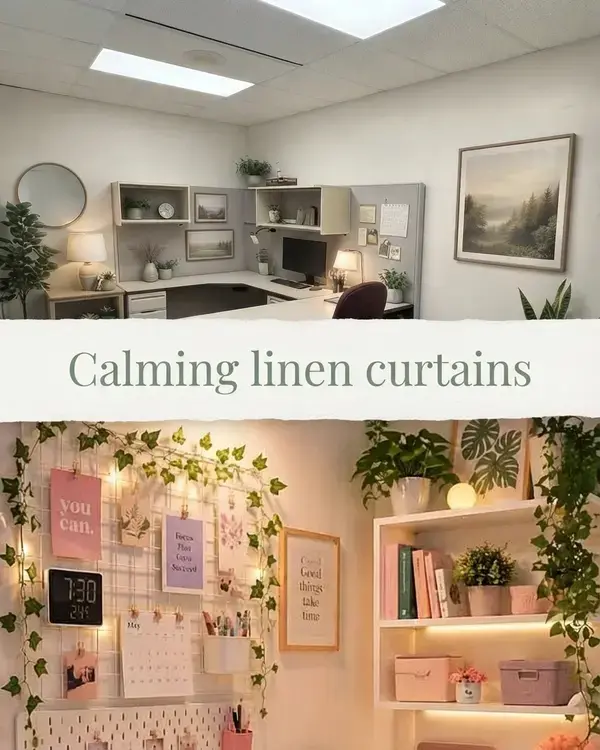
Linen curtains are worth the splurge because of how they filter light. Instead of a hard beam cutting across the room, you get a soft glow that makes everything feel calmer.
If you want a deeper look at how working therapists handle light and layout, these real therapist office decor tips are worth a scroll.

Warm table lamp styling
Overhead fluorescent office lighting is the enemy here. Scatter a couple of warm toned table lamps around the room instead, and use soft white bulbs rather than blue tinted daylight bulbs.
The roundup includes a thrift store detail worth copying. An afternoon of lamp hunting turned up a small brass lamp for $12.
Small pools of warm light do more for a nervous client than one bright ceiling fixture ever will, and lamps are easy to move around until the room finally feels right.
Abstract art gallery wall
A small gallery wall of muted abstract art makes a room feel intentional without getting too personal. Skip the giant family photo above the therapy chair.
Abstract pieces in calm tones give the eye somewhere to land. That helps a lot when the walls feel too blank but you are not ready to commit to one big statement piece.
Bouclé armchair moment
Bouclé fabric is nubby and textured, which reads as cozy and visually soft. It practically invites you to curl up.
Choose one in cream or oatmeal and place it somewhere a client can settle in. A single textured chair can carry the warmth of an entire room.
Japandi inspired therapy space
Japandi blends Japanese minimalism with Scandinavian coziness, and the result is calm, intentional, and breathable. It suits a therapy office almost too well.
Think low furniture, generous negative space, natural materials, and soft neutrals. It is the opposite of clutter, which gives the eye room to rest.
Earthy terracotta decor
Terracotta brings warmth without committing to a full color scheme. A vase, a small ceramic dish, or a terracotta toned throw pillow is plenty.
These small touches add a grounded, earthy, calming feeling, and they play nicely with wood, cream, and sage. If you worry that a room is reading cold, terracotta is one of the easiest fixes.


Soft cream color palette
A cream palette is almost foolproof: cream walls, cream curtains, a cream rug, and a chair in a slightly different cream. That sounds boring. It is not.
Layering textures is what makes it sophisticated. Vary your materials so the room does not read flat. Linen, wood, ceramic, and a little brass make the dreamiest cream room.
Rounded furniture silhouettes
Sharp, angular shapes can make a room feel aggressive without anyone knowing why. Round chairs, curved sofas, and side tables with soft edges feel more welcoming.
The roundup points to research suggesting nervous systems respond differently to curved versus angular shapes. Even if you never explain that to a client, the furniture is doing quiet work on a subconscious level.
Layered area rugs
Put a smaller patterned rug on top of a larger neutral one. Layering rugs adds warmth without looking too matchy, and it gives the floor some depth.
There is a practical benefit too. Layered rugs absorb sound, which matters in a consultation room. Footsteps and shifting chair legs should not echo while someone is opening up.
Natural wood bookshelf
A simple wood bookshelf along one wall does a lot of quiet organizing work. It can hold reference books, a few personal touches, maybe a candle and a small plant.
Do not overcrowd it. Style it as roughly 60% books and 40% breathing room and decor. Push past that balance and the shelf starts to feel chaotic instead of calm.
Serene plant filled corner
Plants add life and soften corners, and being near greenery seems to have a regulating effect on people.
- A big fiddle leaf in one corner
- A smaller trailing pothos on a shelf
- A little succulent on the desk
Use real plants if you can keep them alive. If you cannot, very good fake ones are completely fine, and nobody is checking the soil.
Cloud like sofa styling
Big puffy cloud sofas with a slipcovered look are iconic for a reason. They look like you could sink into them for hours.
If you have the space, adding one to your therapy office is an easy win. People tend to relax faster just by sitting on one.
Modern coastal consultation room
Modern coastal is not kitschy beach house decor, and it is definitely not a sign covered in shell slogans. Done properly, the style leans on pale blues, whites, light woods, and plenty of natural light, with maybe one art piece that references water.
The result is airy and breathable. It works well for psychologist office ideas when you want something uplifting rather than moody. For more options along those lines, see these psychologist office decoration ideas.
Muted blue wall paint
A dusty, muted blue is the second favorite wall color after sage. It should be neither navy nor bright. Think of the color of a quiet morning.
It creates a water meets sky feeling that emotionally lowers the temperature of a room. That makes it a strong choice for psychiatrist office ideas where stability and trust are the goal.
| Wall color | Mood it creates | Best for |
|---|---|---|
| Sage green | Grounded, neutral with personality | Rooms that feel flat |
| Soft cream | Foolproof and warm when textures are layered | Small rooms and rentals |
| Muted blue | Quiet, cooling, trustworthy | Spaces where stability is the priority |
Woven basket storage
Woven baskets hide the unattractive stuff: extra tissue boxes, fidget toys, blank intake forms. They add texture while they do it.
Use them under a console table or on the floor next to a chair. For clinic storage and medical office organization, they feel far warmer than plastic bins or a visible filing cabinet.
Organic ceramic decor
Organic ceramic decor means handmade looking vases and bowls with slightly imperfect shapes. They feel intentional without being stuffy.
Two easy examples: a small ceramic dish on a side table to hold a candle, and a textured vase on a bookshelf. Neither costs much, and both do the same job.
Details like these are what make a room feel curated instead of just decorated, and they pair well with the cream, sage, and terracotta ideas above. Pick two or three of the ideas in this list and build the room slowly.
A therapy office does not have to be finished in a weekend. It just has to feel like a place where someone can finally exhale.


